Pool safety tips matter most in quiet moments when families least expect trouble; a five-second distraction, an unlatched gate, or a toy left by the water can change everything. While pools bring immense joy, they demand proactive protection because drowning is fast, silent, and typically happens during brief lapses in supervision.
To combat these unpredictable risks, this guide details how to build an overlapping defense system rather than relying on a single precaution. You will learn how to identify hidden hazards, secure your yard, and protect your family and guests.
Supervision alone cannot prevent drowning. The American Red Cross reports that 69% of young children who drowned were not expected to be near water at the time of the incident. Drowning produces no splashing, no calling for help, just silence. By the time a lapse in attention is noticed, seconds have already passed.
That’s why pool safety demands a systems approach. Each layer you add compensates for the inevitable human error in the other.
Think of this as a framework, not a checklist. Layers compound; no single one is sufficient alone.
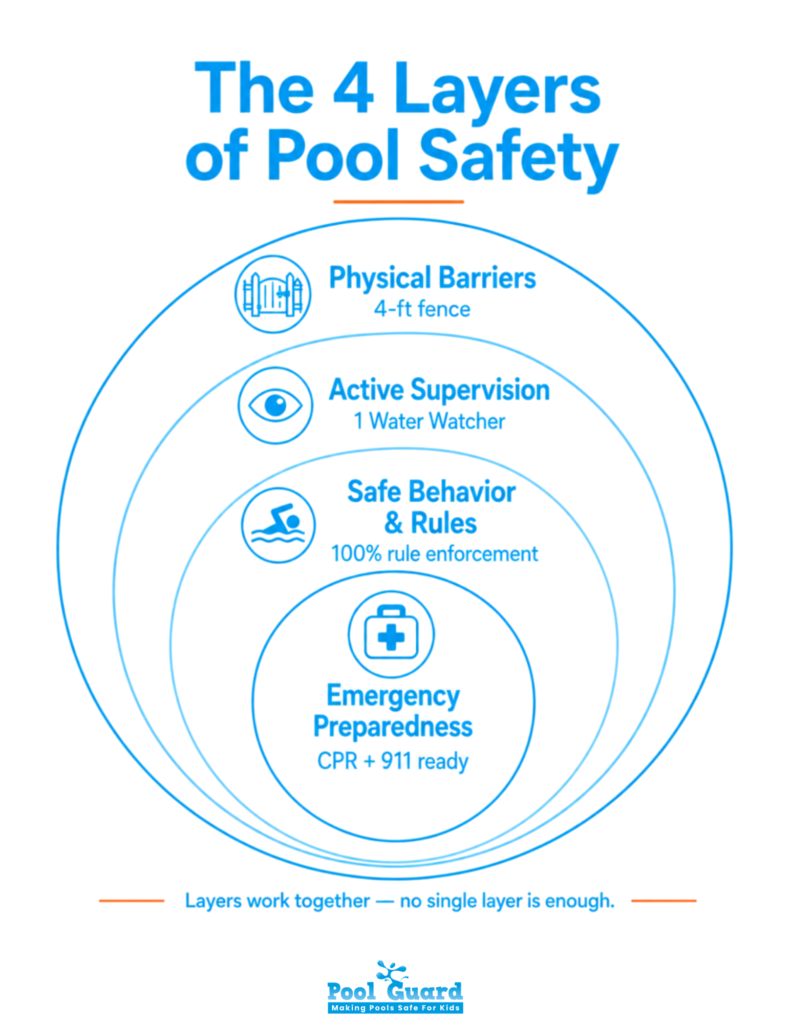
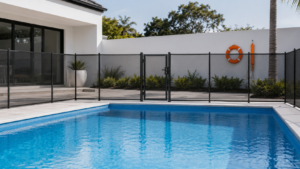
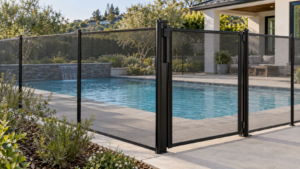
Research from the American Red Cross shows that a four-sided isolation fence, separating the pool from both the house and yard, reduces a child’s drowning risk by 83% compared to three-sided property-line fencing. The pool fence must be at least 4-5 feet tall, non-climbable, and designed with slats too narrow for a child to squeeze through.
Human error is guaranteed over time. Self-closing, self-latching gates eliminate it. Position latches above a child’s reach, and teach children that climbing or bypassing the gate is never allowed.
Install pool alarms on every house entrance with direct pool access. Motion-sensing water alarms trigger when the surface is disturbed. A secured, motorized pool safety cover adds a final physical barrier when the pool isn’t in use. These aren’t replacements for fencing; they’re backup layers.
A Water Watcher is a designated adult whose only job is watching the water – no phone, no reading, no side conversations. Rotate the role between adults at regular intervals to prevent attention drift. Even when a lifeguard is on duty, parents retain responsibility.
For children under five, “touch supervision” is the standard. Stay within an arm’s reach at all times. Distance supervision is not sufficient at this age.
Formal swim lessons reduce the risk of drowning by up to 88% in children ages 1-4. Look for programs through your local YMCA, USA Swimming chapter, or Parks and Recreation Department, as many offer free or low-cost options. The baseline goal is water competency: enter the water, get a breath, stay afloat, change position, swim a short distance, and exit safely.
The buddy system applies to everyone, including strong swimmers. Cardiac events, muscle cramps, and exhaustion affect experienced swimmers, too. No solo swimming, ever.
The Virginia Graeme Baker Pool and Spa Safety Act was named after an 8-year-old who drowned due to suction entrapment from a defective drain cover. Pool and spa drains generate enough force to trap hair, limbs, jewelry, or swimwear, even on adults. Inspect all drain covers regularly; never enter a pool with a missing, loose, or broken cover.
Keep all electronic devices away from the pool and wet surfaces, as they are the number one pool hazard. Any outdoor outlet near the pool must be equipped with a GFCI (ground-fault circuit interrupter); standard outlets are lethal near water. Outdoor speakers, entertainment systems, and extension cords should never be used poolside.
Inspect decking for protruding nails, loose boards, and cracked surfaces. Check stair handrails for structural integrity. For above-ground pools, inspect metal supports for rust or deterioration, which can indicate a risk of rupture. Ban glass containers in the pool area entirely.
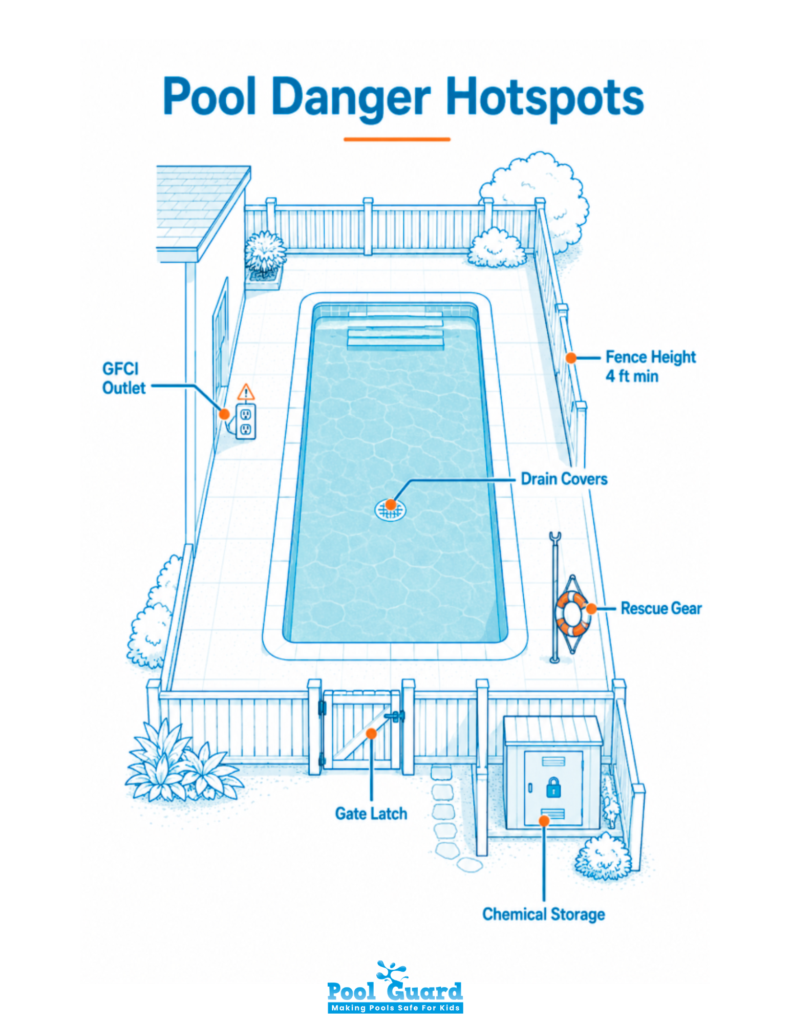
Here is a list of pool safety equipment everyone should have:
Every pool owner and caregiver should be CPR-certified. Bystanders are typically the first to respond in a drowning emergency, as professional help can take minutes to arrive. Get certified through the American Red Cross, YMCA, or a local hospital, and recertify regularly.
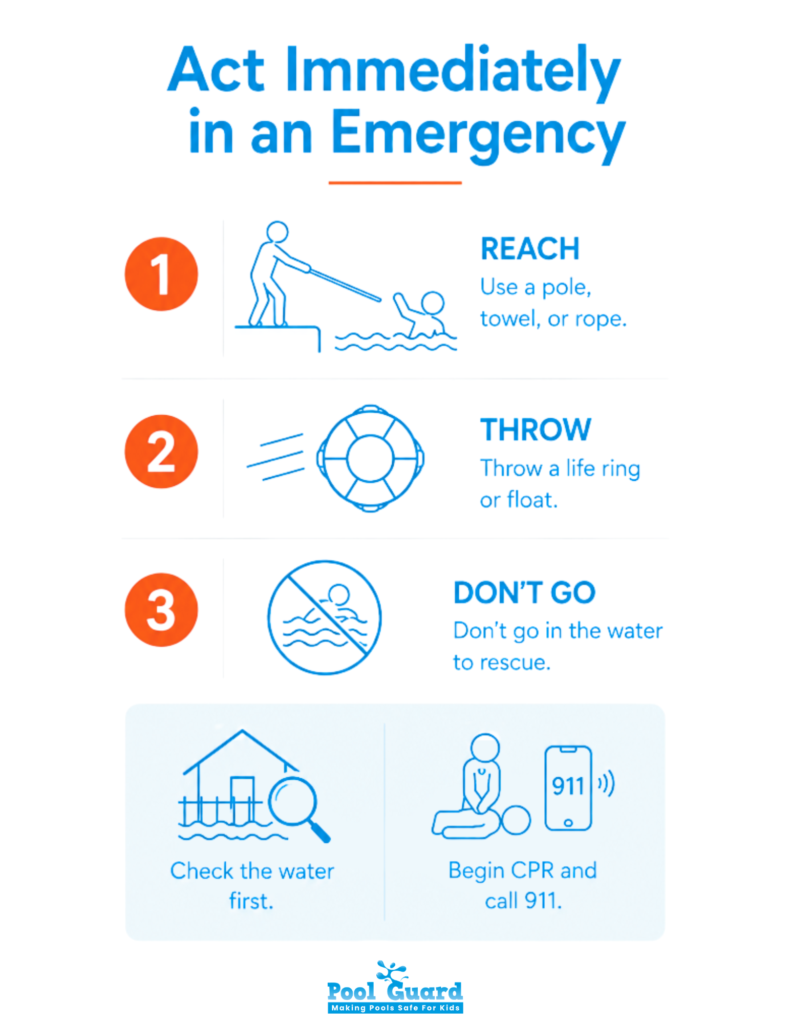
Use the Reach, Throw, Don’t Go rescue sequence:
If a child is missing anywhere on your property, check the water first. If a child is pulled from the water unconscious, begin CPR immediately and call 911.
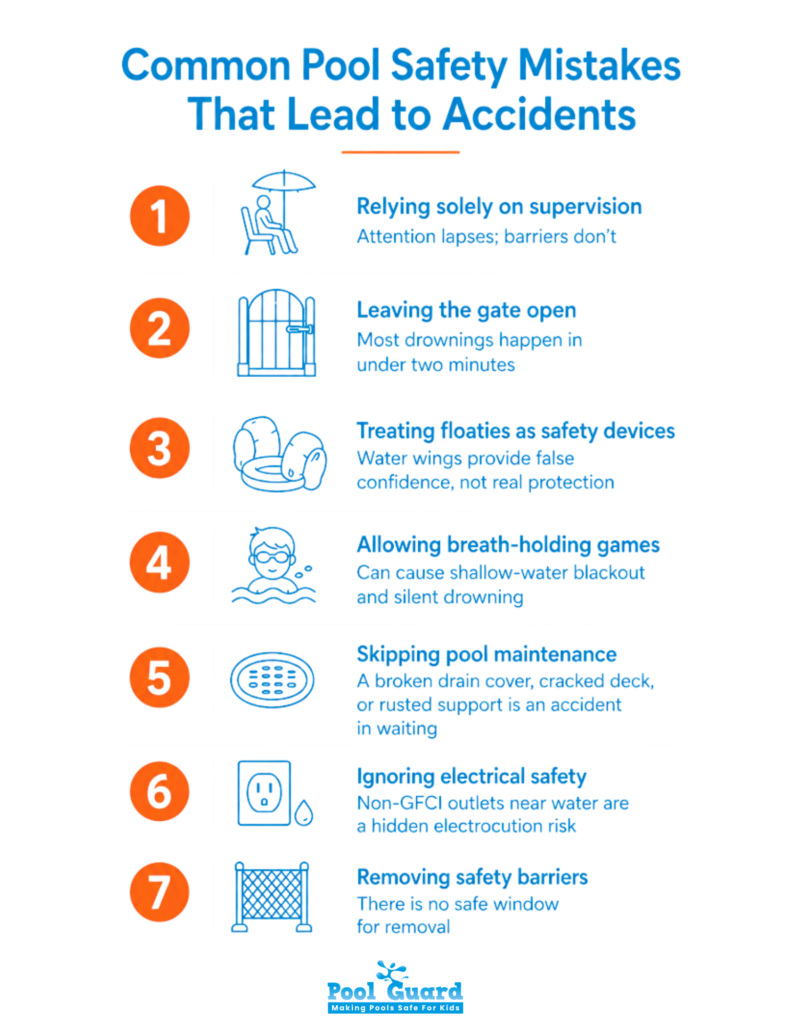
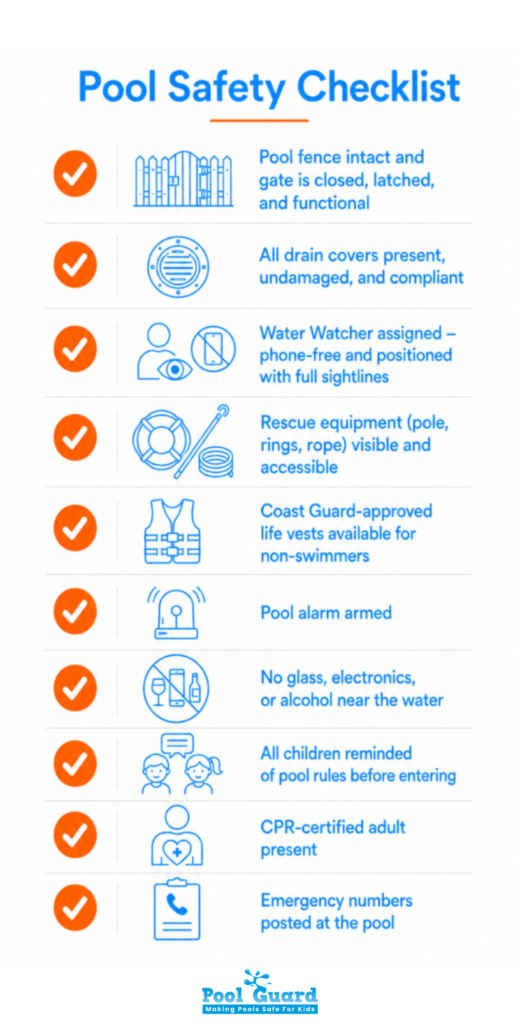
Pool safety works best when pool safety tips become everyday habits. Combining secure fences, focused supervision, and proper equipment eliminates the gaps where accidents happen. A safer pool is built on layers, not luck. With the right protections in place, your pool will remain a worry-free space for play, connection, and peace of mind.
Find your local dealer by entering your zip code above.
Please fill out the form below with your information. Your local dealer will be notified about your inquiry.
Please fill out the form below with your information. Your local dealer will be notified about your inquiry.