Austin isn’t just one of the fastest-growing cities in the U.S. — it’s also one of the most pool-driven lifestyle markets in Texas.
From soaring summer temperatures and nearly 300 sunny days per year to luxury residential construction trends, swimming pools have become a defining feature of Austin real estate and recreation. Whether you’re a homeowner considering installation, a buyer evaluating property value, or simply curious about the numbers, pool statistics for Austin reveal a fascinating story about how pools shape housing, recreation, and investment across the city.
In this guide, we’ll break down the latest data on:
If you want a data-backed picture of Austin’s pool economy, this is the most comprehensive resource available.
Austin’s climate and housing market make swimming pools a natural extension of homeownership across the city. With nearly 300 days of sunshine each year, residents enjoy one of the longest outdoor seasons in the United States, which naturally encourages investment in backyard amenities such as swimming pools.
The city also maintains an average daily temperature of around 70°F, creating comfortable conditions for outdoor living throughout much of the year. Even during winter months, Austin experiences only around 12 freezing days annually, meaning pools can remain usable far longer than in colder regions.
Because of these favorable conditions, pools in Austin are rarely viewed as simple recreational luxuries. Instead, they function as part of the city’s outdoor lifestyle infrastructure, often increasing both the enjoyment and long-term value of residential properties.
Another notable statistic highlights the strength of this demand: Austin has the highest per capita rate of luxury pool installations in Texas, reflecting the city’s strong appetite for upscale backyard amenities in growing residential neighborhoods and high-end housing developments.
One of the most important pool statistics for Austin comes from building permit data, which provides a clear picture of how demand for new pool construction is evolving across the region.
During the first quarter of 2025, Austin recorded 188 new pool construction permits, representing a 41% year-over-year decline compared with the same period in the previous year. At the county level, Travis County issued 142 permits, reflecting a 46% year-over-year decrease, which suggests the slowdown extended across the broader Austin metropolitan area.
Later in the year, the market continued to show signs of contraction, though the decline became less severe. By the third quarter of 2025, Austin recorded 727 new pool permits, representing a 25% year-over-year decline, while Travis County issued 569 permits, reflecting a decrease of more than 26% compared to the previous year.
Although construction activity cooled compared to previous years, Austin remains one of Texas’s primary residential pool markets due to its warm climate, continued population growth, and strong demand for outdoor living spaces.
Industry analysts attribute the recent slowdown in Austin’s pool construction market to several overlapping economic and housing factors.
First, the broader cooling of the housing market has reduced the pace of new residential construction, which directly affects demand for new pools. Second, rising construction costs, including materials and labor, have made large backyard projects more expensive for homeowners. Third, the surge in pool construction during the pandemic years created a temporary spike in demand that has since begun to normalize.
Additionally, higher interest rates have made financing home improvements more expensive, prompting some homeowners to delay large discretionary projects such as pool installations.
Even with these challenges, Austin’s pool market retains strong long-term fundamentals. The city’s warm climate, growing population, and continued emphasis on outdoor lifestyle amenities suggest that demand for residential pools will remain a defining feature of the local housing market for years to come.
One of the most searched questions about pool ownership is the cost of installation. Current pool statistics for Austin show that construction pricing can vary widely depending on the design, materials, and additional features included in the project.
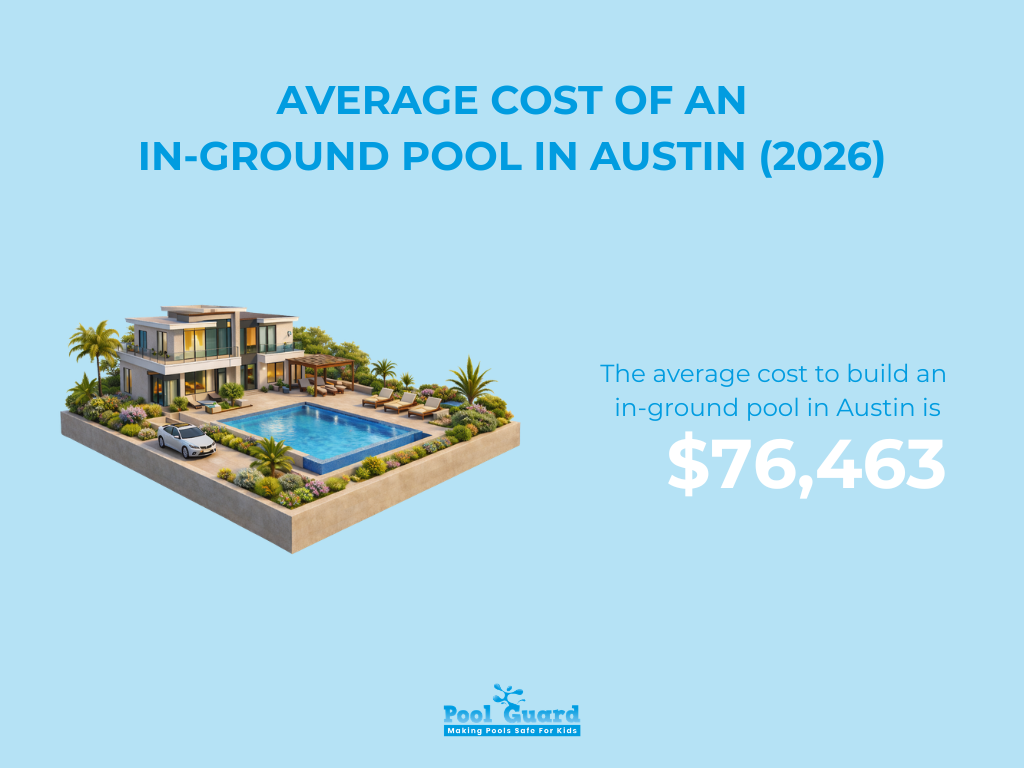
In 2026, the average cost of installing an in-ground pool in Austin is approximately $76,463. However, pricing can fluctuate depending on the size and customization level of the pool. Most homeowners typically spend between $57,312 and $101,998, although smaller projects may start around $48,000, while high-end installations can reach $134,987 or more.
Several factors influence these costs. The pool material, overall size and depth, and excavation complexity all play major roles in determining the final price. Additional elements such as landscaping, lighting, and safety fencing can also increase the overall project budget.
The material used in construction is one of the biggest drivers of pool pricing. In Austin, vinyl pools typically cost between $40,000 and $75,000, making them one of the more affordable options for homeowners. Fiberglass pools generally range from $55,000 to $100,000, offering a balance between cost and durability. Concrete pools are usually the most expensive, with installation costs typically falling between $65,000 and $120,000, largely due to their customization flexibility and long lifespan.
| Pool Type | Average Cost |
|---|---|
| Vinyl pools | $40,000–$75,000 |
| Fiberglass pools | $55,000–$100,000 |
| Concrete pools | $65,000–$120,000 |
Because of their ability to support custom shapes, luxury finishes, and integrated water features, concrete pools are the most common choice for high-end residential installations in Austin.
Labor is another significant component of pool construction expenses in the Austin market. In most projects, labor accounts for approximately 25% to 50% of the total construction cost, depending on the complexity of the design and site conditions.
Hourly labor rates for pool construction professionals in Austin generally fall between $55 and $150 per hour, reflecting the city’s growing construction industry and the increasing demand for skilled trades involved in large outdoor projects.
One of the most important pool statistics relates to how swimming pools affect resale value. According to housing data analyzed by Redfin, installing a swimming pool can significantly increase property value in the Austin market.
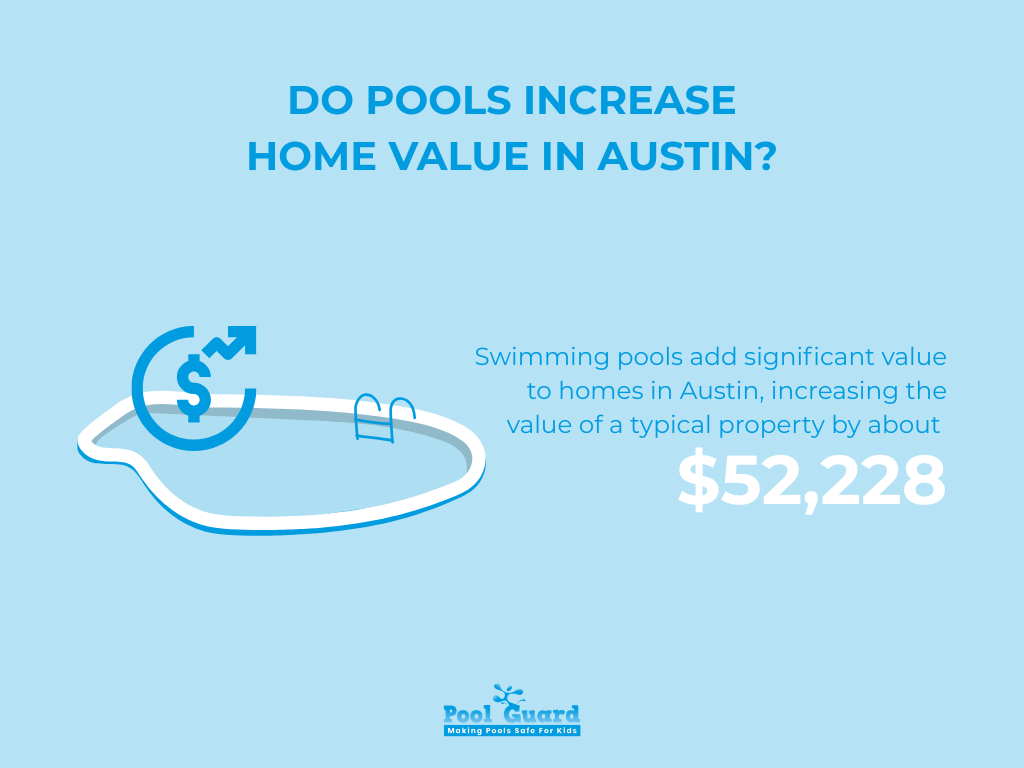
On average, a swimming pool adds approximately $52,228 to the value of a typical Austin home. This places Austin among the leading metropolitan areas in the United States for pool-related property value increases, reflecting the strong demand for outdoor living amenities in warm-climate housing markets.
| City | Value Added |
|---|---|
| Los Angeles | $95,393 |
| Austin | $52,228 |
| Houston | $35,736 |
| Charlotte | $34,917 |
| Las Vegas | $30,179 |
While the exact increase varies depending on the property and neighborhood, pools generally raise home values between 5% and 56%. Several factors influence this range, including the overall property tier, neighborhood expectations, home size, and the regional climate.
In Austin’s higher-end housing market, swimming pools are frequently viewed as expected amenities rather than optional upgrades. For many luxury properties, the presence of a pool can improve both the appeal and competitiveness of the home when it enters the resale market.
While private backyard pools dominate residential demand, Austin also maintains a large and well-developed public aquatic system that serves residents across the city. These facilities provide recreational swimming, training programs, and community gathering spaces throughout the year.
Austin currently operates 40 public swimming pools across the city, all of which are managed by the Austin Parks and Recreation Department Aquatics Division. These pools play a key role in providing accessible recreation during Austin’s long, hot summers.
In total, the Austin Parks and Recreation Department operates 45 public aquatic facilities. This network includes the iconic Barton Springs Pool, along with 7 regional pools, 3 community pools, and 22 neighborhood pools located throughout the city. In addition, the system includes one wading pool and 11 splash pads, which provide water recreation options for younger children and families.
Usage statistics show how important swimming is to Austin residents. Each year, approximately 1,200,000 visitors swim at the city’s public pools, reflecting the strong role aquatic facilities play in local recreation. More recent operational data indicates that the system recorded 1,079,812 total aquatic facility visits during the latest fiscal year, demonstrating consistently high demand for these public swimming spaces.
Operating such a large aquatic system requires a substantial seasonal workforce. Austin typically needs between 650 and 750 lifeguards each season to staff its pools and aquatic facilities. Entry-level lifeguards begin with a starting hourly wage of $13.50, and the city continues to invest in workforce development through certification programs. In 2025 alone, 1,277 lifeguards were certified, helping ensure that Austin’s public pools remain safe and fully staffed during peak swimming months.
These figures highlight the scale of Austin’s recreational swimming infrastructure and the city’s commitment to maintaining accessible aquatic facilities for its growing population.
Swimming education programs play an important role in Austin’s public aquatic system, helping residents learn essential water safety skills while encouraging community participation in swimming activities.
Each year, thousands of Austin residents participate in organized swim programs across the city. Annual participation statistics show that 3,126 individuals take part in swim lessons, reflecting strong demand for instructional swimming programs. The city also supports 21 swim teams with a total of 632 members, creating opportunities for both recreational and competitive swimming.
In addition to local teams, Austin swimmers regularly participate in competitive events. For example, 54 participants competed in TAAF swim meets, while 14 swimmers achieved placements at the state competition level, highlighting the strength of the city’s youth swimming programs.
Programs across the city also emphasize early swimming education. Through the Project SAFE initiative, which focuses on water safety and beginner swimming instruction, 262 first-grade students participated in learn-to-swim sessions. These programs play an important role in promoting water safety awareness and helping reduce the risk of drowning among young children.
Austin’s swimming culture is closely tied to Barton Springs Pool, one of the most famous natural swimming areas in Texas. Located in Zilker Park, the spring-fed pool has become a central part of the city’s outdoor lifestyle and a defining feature of Austin’s aquatic infrastructure.
The historic Barton Springs bathhouse is approximately 70 years old, reflecting decades of investment in public recreational swimming facilities. What makes the pool especially unique is its natural water system. The spring can pump up to 80 million gallons of water per day, although typical daily flow fluctuates between 10 million and 80 million gallons, depending on rainfall levels and conditions in the Edwards Aquifer.
Because of this continuous natural water flow, Barton Springs remains one of the most distinctive swimming destinations in the United States and continues to attract both residents and visitors year-round.
Water availability is another important factor influencing swimming pool ownership and long-term sustainability in Austin. Like many major Texas cities, Austin relies on a network of regional reservoirs to supply municipal water for homes, businesses, and recreational infrastructure.
As of March 10, 2026, monitored reservoirs serving the Austin region were 85.1% full, indicating stable water availability for the metropolitan area.
Current storage statistics provide additional context about the system’s capacity. At that time, total reservoir storage reached 1,930,519 acre-feet, while conservation storage stood at 1,899,676 acre-feet. The region’s total conservation capacity is 2,232,539 acre-feet, which represents the maximum level available for long-term municipal water management.
Several major reservoirs supply water to the Austin metro area.
| Reservoir | Percent Full |
|---|---|
| Buchanan | 94.4% |
| Georgetown | 76.4% |
| Stillhouse Hollow | 94.3% |
| Travis | 76.1% |
Together, these reservoirs form the backbone of Austin’s regional water system. Their relatively strong storage levels help support residential water use, including irrigation, landscaping, and swimming pool maintenance across the metropolitan area.
Another dataset compares major U.S. cities based on pool availability and overall swimming conditions. The data considers factors such as the number of pools, population-adjusted pool density, swim season length, and overall activity levels.
| Metric | Value |
|---|---|
| Total Pools | 44 |
| Pools per 100k residents | 4.4 |
| Annual swim days | 130 |
| Pools per swim day | 0.34 |
| Composite score | 1.05 |
These figures place Austin among the stronger U.S. markets for swimming activity. While the city does not have the highest number of pools overall, its combination of climate, swim season length, and residential demand creates favorable conditions for pool ownership and regular swimming use.
Despite recent construction slowdowns, long-term demand for residential pools in Austin remains strong. Several structural factors continue to support pool ownership and new installations across the metro area.
One of the most important drivers is climate. Austin’s long swim season, consistently high summer temperatures, and outdoor-focused lifestyle make backyard pools especially attractive for homeowners seeking relief from heat and opportunities for recreation at home.
Another key factor is population growth. Austin has consistently ranked among the fastest-growing metropolitan areas in the United States. As more households move into suburban developments across Central Texas, demand for outdoor amenities—including pools—continues to rise.
Housing trends also play a role. In higher-end residential developments, swimming pools are increasingly included as standard backyard features rather than optional upgrades. Builders frequently incorporate pool-ready backyard designs in order to appeal to buyers who prioritize outdoor living space.
Finally, lifestyle changes that accelerated during the pandemic continue to influence demand. During that period, Central Texas experienced roughly a 30% surge in pool demand, as homeowners invested more heavily in private outdoor spaces and home-based recreation. While demand has since normalized, the shift helped establish swimming pools as a long-term component of residential lifestyle design across the region.
The latest pool statistics for Austin highlight how strongly swimming pools are tied to the city’s climate, housing market, and lifestyle. With nearly 300 sunny days per year, Austin offers ideal conditions for pool ownership and year-round swimming activity.
From a financial perspective, installing an in-ground pool in Austin costs about $76,463 on average, with typical construction ranges between $57,312 and $101,998 depending on size, materials, and customization. Despite the investment, pools can significantly influence property value. Real estate data shows that a swimming pool adds approximately $52,228 to the value of a typical Austin home, placing the city among the leading U.S. metros for pool-related home value increases.
Austin also maintains a strong public aquatic system. The city operates 45 public aquatic facilities, and more than one million residents and visitors use public pools annually, reinforcing how important swimming is to the local community.
Although recent construction permit data shows a temporary slowdown in new pool installations, the long-term outlook remains positive due to population growth, climate conditions, and strong demand for outdoor living spaces.
Overall, the pool statistics for Austin show that pools are more than recreational features—they are long-term lifestyle investments that influence property value, housing trends, and everyday life across the Austin metro area.
Please fill out the form below with your information. Your local dealer will be notified about your inquiry.
Please fill out the form below with your information. Your local dealer will be notified about your inquiry.