Most homeowners assume any cover stretched across a pool makes it safe. It doesn’t. That misconception is exactly why drownings still happen around covered pools. A solar blanket is not a safety cover. A winter tarp is not a safety cover. Even automatic covers only qualify in certain conditions.
This guide cuts through the confusion and breaks down the core swimming pool cover types, what each is designed for, and the safety implications most people overlook. No brands, no gimmicks — just clarity.
By the end, you’ll know exactly which pool cover type fits your pool, climate, and safety requirements, and why the wrong category can increase risk rather than reduce it. Many of these risks are explained in detail within broader pool hazards every homeowner should understand.
Price tells you nothing about performance.
You need to decide what problem you’re solving:
Homeowners often buy a cover thinking it “does everything.”
It doesn’t. Every pool cover type has a specific purpose and a set of limitations. A tarp that keeps out leaves is not the same thing as a tensioned, ASTM F1346–certified barrier that prevents accidents. Choosing incorrectly often leads to long-term issues covered in pool cover maintenance best practices.
Here’s the quick diagram version before we go deep:
These are the universal categories across the pool industry, regardless of brand or design. If you’re still deciding between options, a direct comparison like pool net vs pool cover differences can help clarify which solution fits your needs.
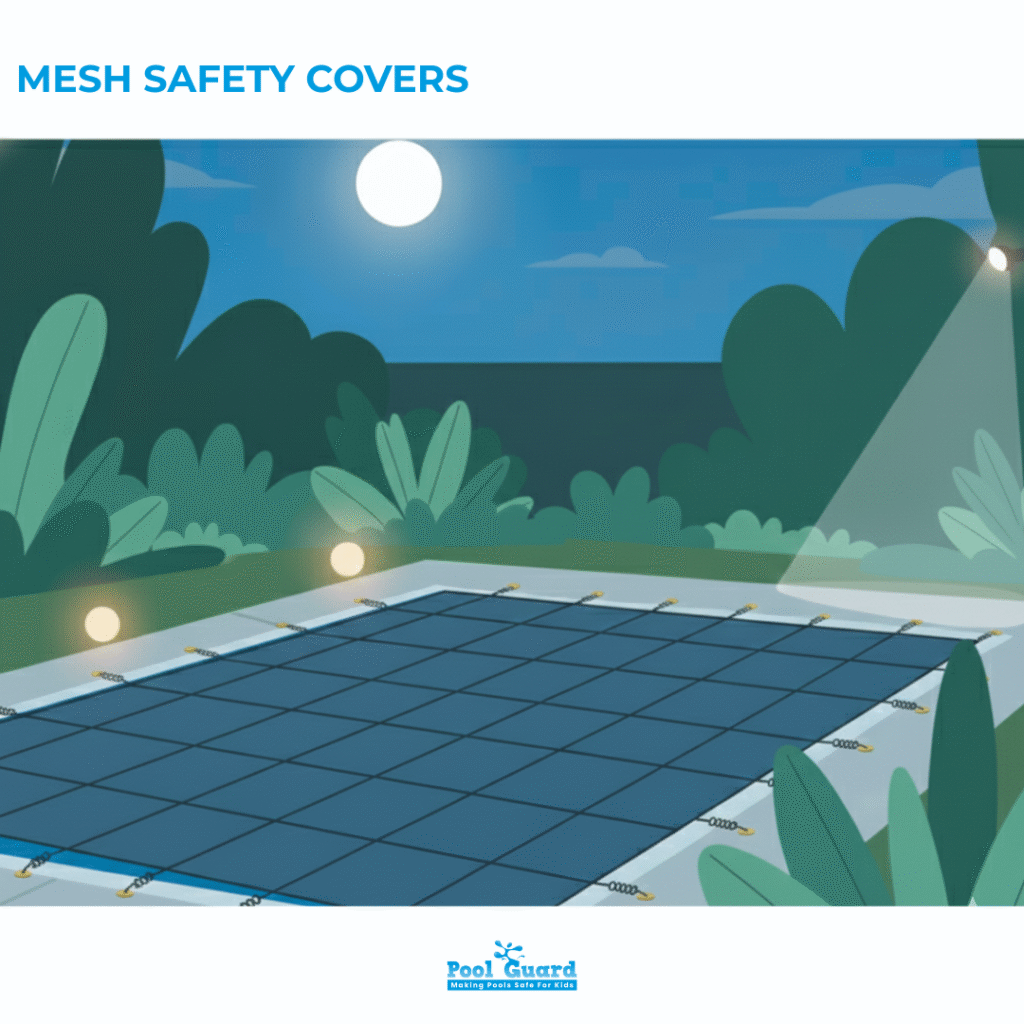
Purpose: Prevent drowning + manage debris + allow drainage
Best for: Inground pools, homes with kids or pets, snowy climates
Mesh safety covers use a tensioned anchor system drilled into the deck. When secured, the cover becomes a weight-bearing safety barrier — designed to support the load of children, pets, and adults in emergency scenarios.
How They Work
Advantages
When properly measured and installed, these covers perform best—see how to measure for a pool cover correctly before purchasing.
Limitations
Purpose: Safety + total barrier against sunlight and contaminants
Best for: Heavy debris regions, homeowners who want clean water at opening
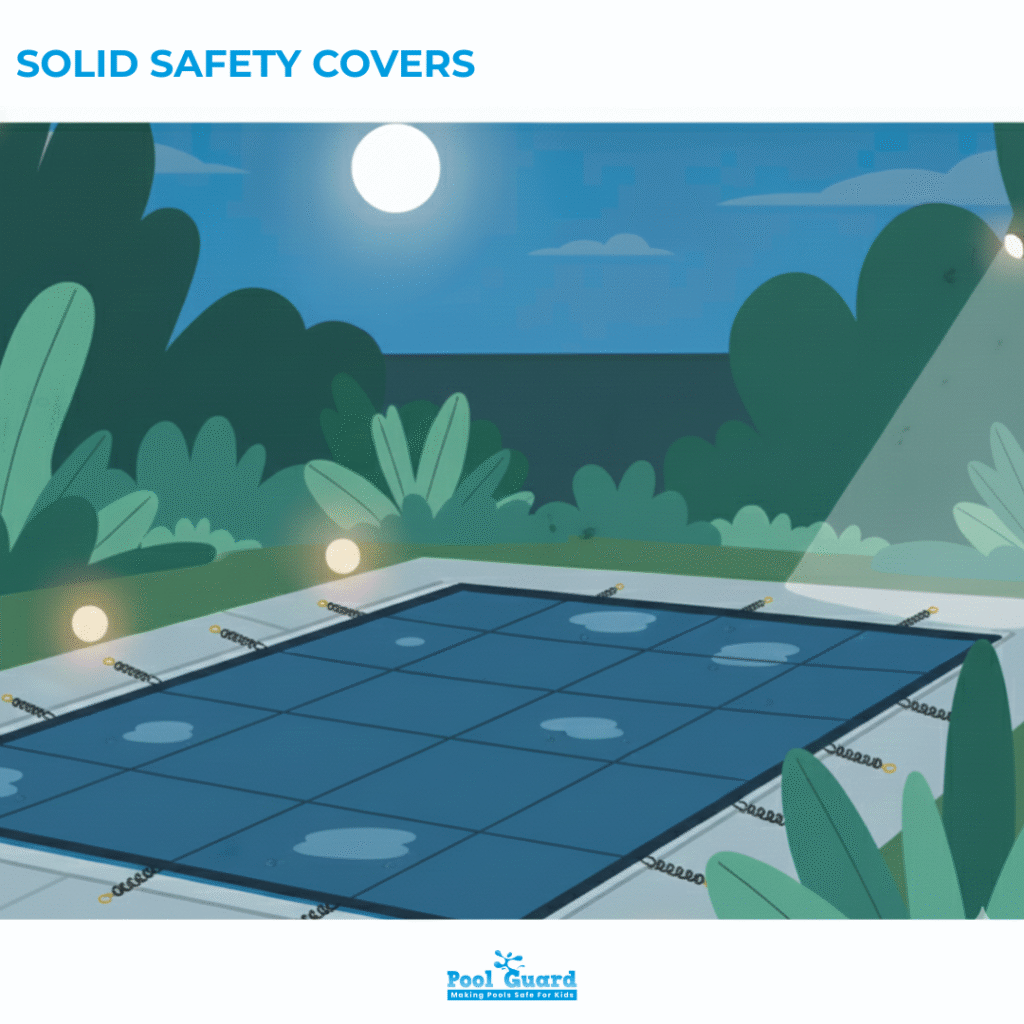
Solid safety covers work like mesh covers but use impermeable vinyl or reinforced PVC instead of porous mesh. They block all sunlight, dramatically reducing algae formation.
How They Work
Advantages
Limitations
Improper sizing or installation is one of the most common reasons homeowners later need pool cover repair guidance.
Purpose: Daily-use safety + energy conservation + evaporation control
Best for: Families using the pool often, warm climates, luxury builds
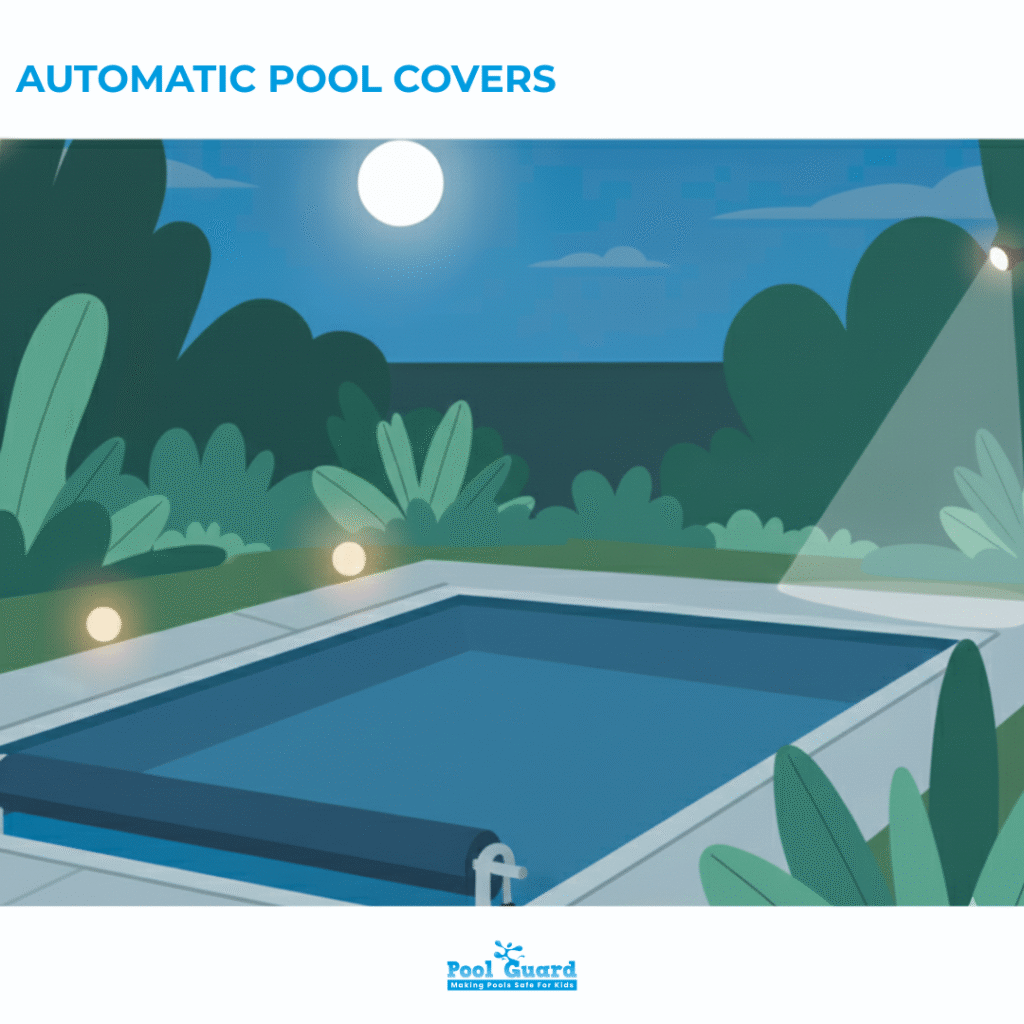
Automatic pool covers use a motorized system on tracks to slide the cover across your pool. They’re the easiest to use — and the most expensive.
How They Work
Advantages
Limitations
If you’re comparing functionality and trade-offs, reviewing automatic vs manual pool cover differences helps clarify expectations.
Purpose: Debris protection only
Best for: Above-ground pools, mild climates, temporary coverage
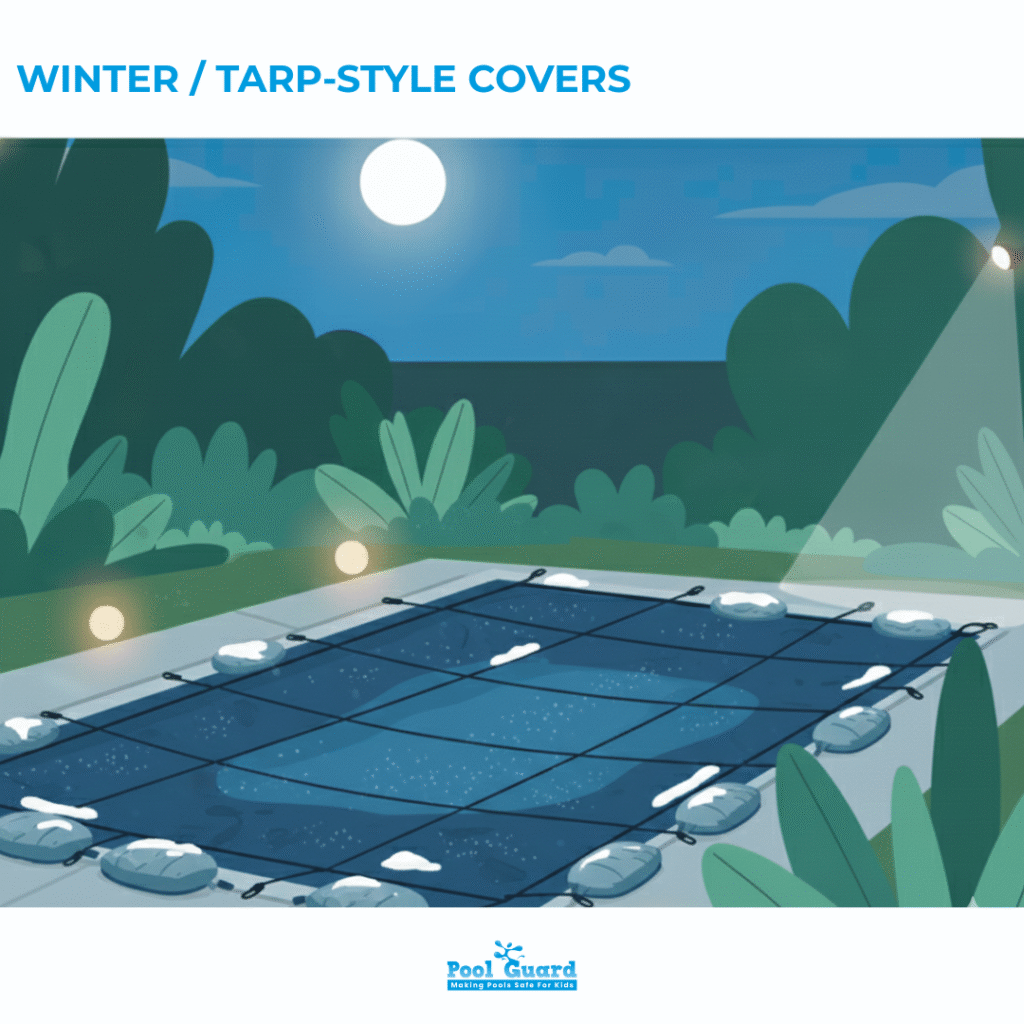
Winter covers — often called tarp covers — are the cheapest and least secure category. They are not safety covers and cannot support weight.
How They Work
Advantages
Limitations
Many homeowners overestimate these covers—see can you use a tarp as a pool cover before relying on them for protection.
Purpose: Warm water + reduce evaporation
Best for: Extending swim season, lowering utility bills, dry climates
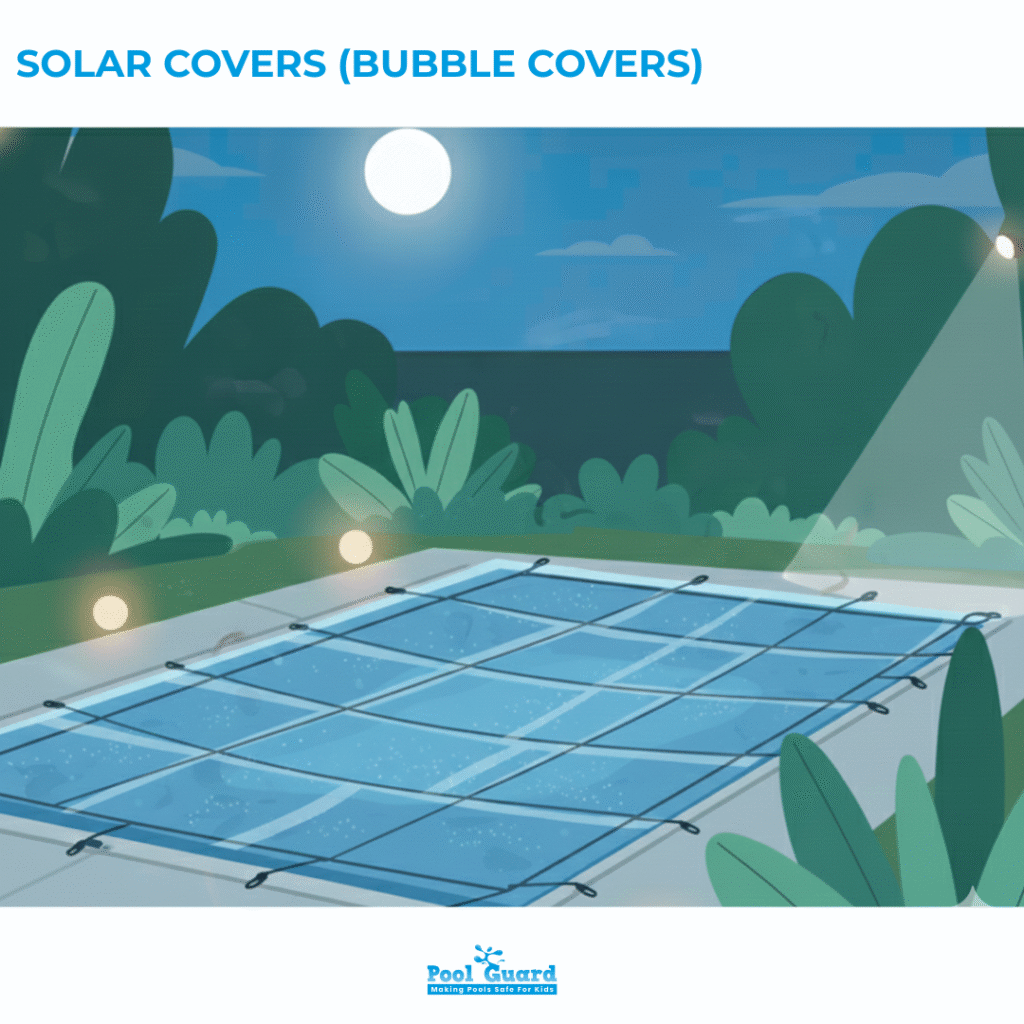
Solar blankets float directly on the water. They increase temperature by trapping UV heat, often raising water temperature by 5–15°F depending on climate and sun exposure. While effective for heat retention, their impact is closely tied to pool water evaporation rates and conditions.
How They Work
Advantages
Limitations
Why this matters:
If your primary concern is protecting children, pets, or guests, the choice is not optional: get a safety cover. Additional layered protection—like those outlined in a complete pool safety checklist—should always accompany any cover choice.
If your priority is drowning prevention → Mesh or Solid Safety Cover
If your priority is reducing heating/evaporation → Solar or Automatic Cover
If you get heavy snowfall → Mesh or Solid (never automatic alone)
If you have an above-ground pool → Winter tarp
If you want daily convenience → Automatic cover
For homeowners comparing real-world performance, our best pool covers guide provides a breakdown of top-performing options.
Pro tip: Homeowners often try to use one cover for all purposes. It doesn’t work. Match the cover type to the job.
Every cover provides benefits, but not every cover provides safety.
Your choice should reflect your real priorities:
A well-matched cover saves money, cuts maintenance, protects your family, and extends the lifespan of your pool.
If you’re evaluating safety options for your inground pool, make sure your cover type meets ASTM standards and fits your pool’s layout.
Please fill out the form below with your information. Your local dealer will be notified about your inquiry.
Please fill out the form below with your information. Your local dealer will be notified about your inquiry.