Swimming pools deliver some of the best moments of summer—exercise, laughter, backyard gatherings, and escape from the heat. But behind the fun lies a complex ecosystem of physical, environmental, mechanical, electrical, and biological hazards that most homeowners never recognize until something goes wrong. Many of these risks are preventable when layered protections—like those outlined in a complete pool safety checklist—are consistently applied.
Drowning is the danger people expect. What they overlook is that drowning has more than fifteen underlying pathways, including silent submersion, fatigue, medical events, and entrapment. Beyond that, pools hide contamination threats, structural failures, electrical faults, toxic chemical hazards, and preventable slip-and-fall injuries.
This guide breaks down the full pool hazard index, backed by CDC data, public health findings, engineering standards, and real-world risk analysis. The goal is simple: to give homeowners and facility operators an expert-level understanding of swimming pool hazards and to promote layered prevention strategies, especially barriers- fences and safety covers that protect swimmers when adults aren’t present.
According to the CDC, over 4,000 Americans die from drowning each year, and more than 8,000 experience near-fatal submersion events. Drowning is the #1 cause of accidental death for children ages 1–4. It happens silently, often without splashing or shouting, and can occur:
Drowning is fast: loss of consciousness can occur within 30 seconds. Understanding how long it takes to drown helps illustrate why immediate prevention and barriers are critical.
The U.S. Consumer Product Safety Commission notes that barriers reduce drowning risk by up to 83% when properly installed.
Pool Guard USA supports this approach through:
These physical layers prevent unsupervised access—the root cause behind most pediatric drownings. This layered approach aligns with the role of a designated water watcher during active swim time, reducing reliance on assumptions.
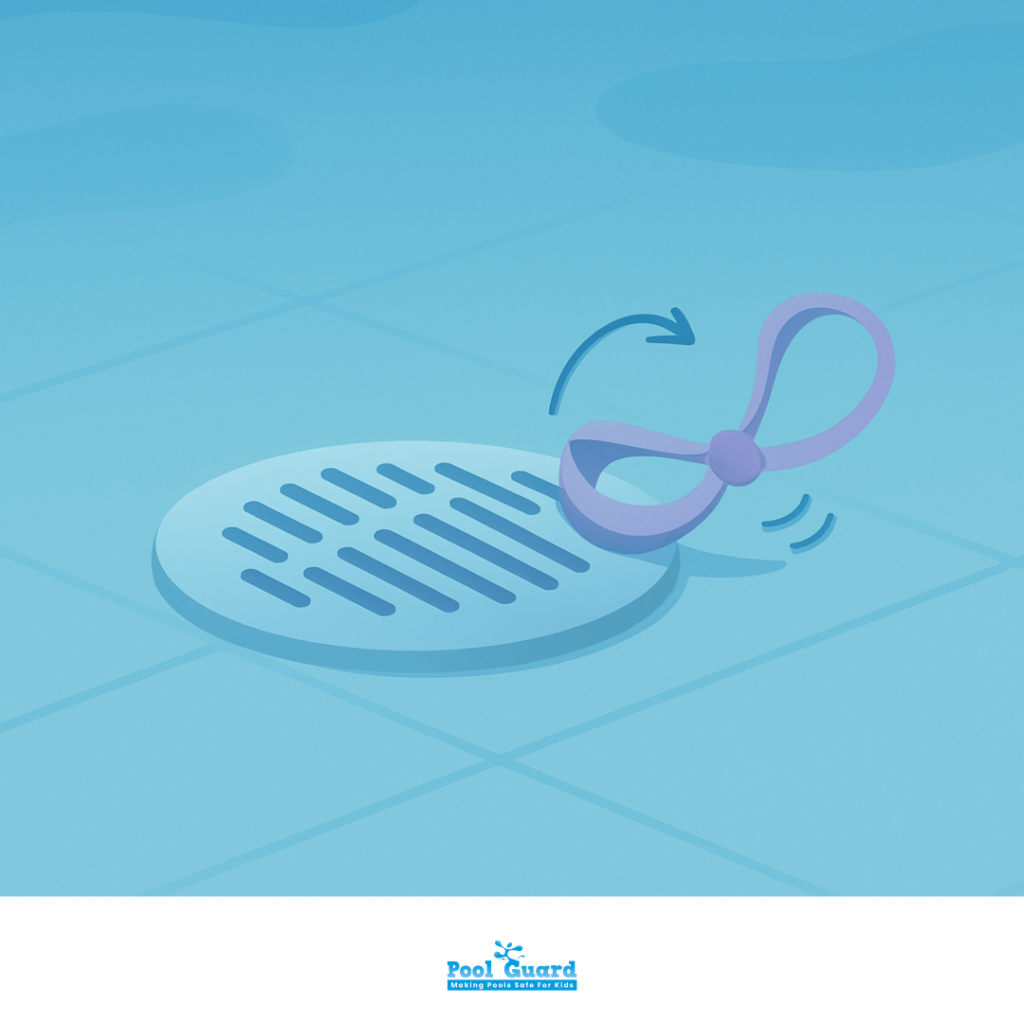
Entrapment occurs when a swimmer becomes stuck due to suction, mechanical entanglement, or body positioning over a drain.
The Virginia Graeme Baker Pool & Spa Safety Act (VGB Act) requires anti-entrapment drain covers and safer circulation systems. But many older residential pools still operate with outdated equipment. Modern systems like a safety vacuum release system (SVRS) are designed to reduce this risk when properly installed and maintained.
Homeowners should have drains inspected and upgraded to VGB-compliant covers.
Pool Guard’s role? Supplemental safety—preventing children from entering the pool unsupervised and encountering defective drains in the first place.
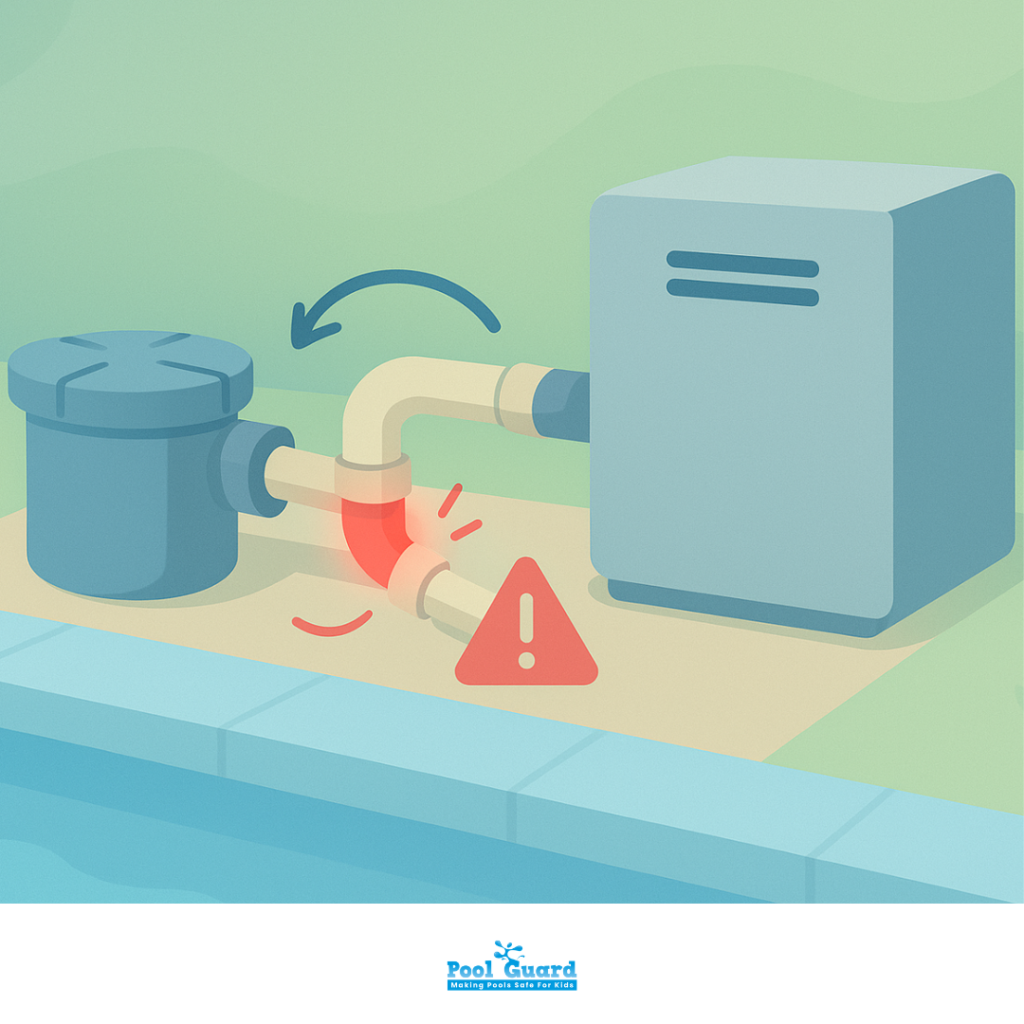
Electrical failures are one of the least recognized—but most lethal—swimming pool hazards.
Current leaks can paralyze swimmers, causing drowning. Even seemingly minor issues—like those explained in loose pool light risks—can escalate into serious electrical hazards if ignored.
Barriers help prevent swimmers from unknowingly entering an electrically compromised pool.
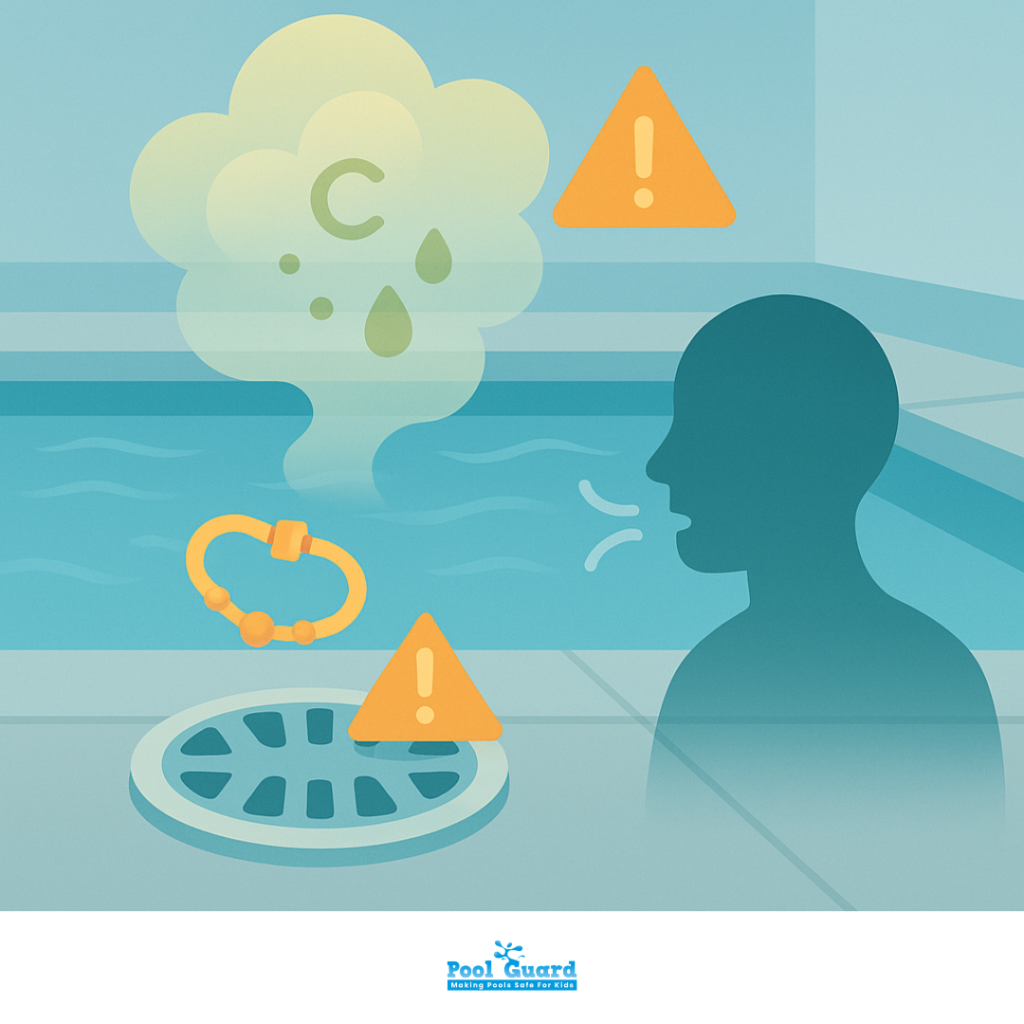
Pool chemicals keep water safe—but improper handling creates dangerous situations.
The CDC reports over 4,500 emergency room visits annually from pool chemical injuries—many involving children who gained access to chemical rooms or sheds. Broader risks tied to unsafe water conditions are also covered in can pool water make you sick, especially when maintenance is inconsistent.
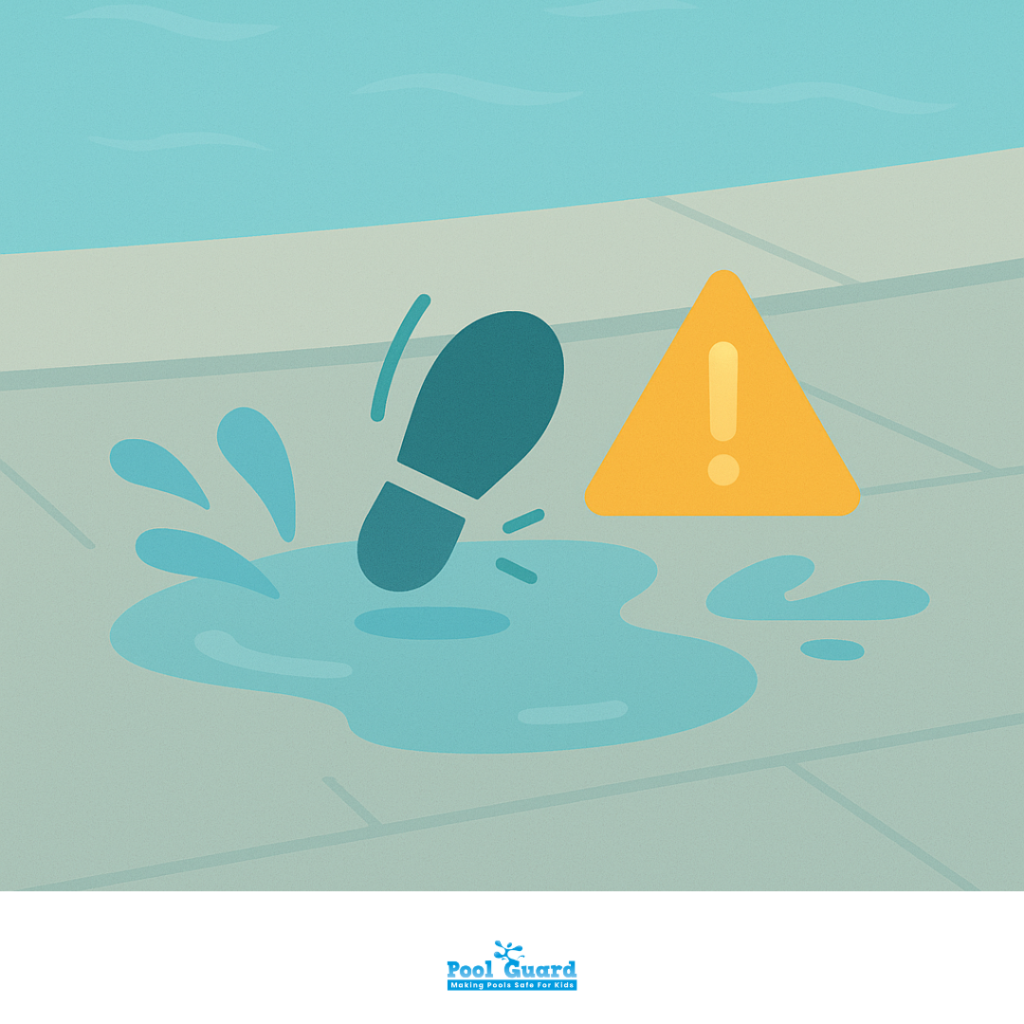
High-gloss tile, algae growth, soap residue, oils, and water accumulation make pool decks one of the highest injury zones. Falls can cause:
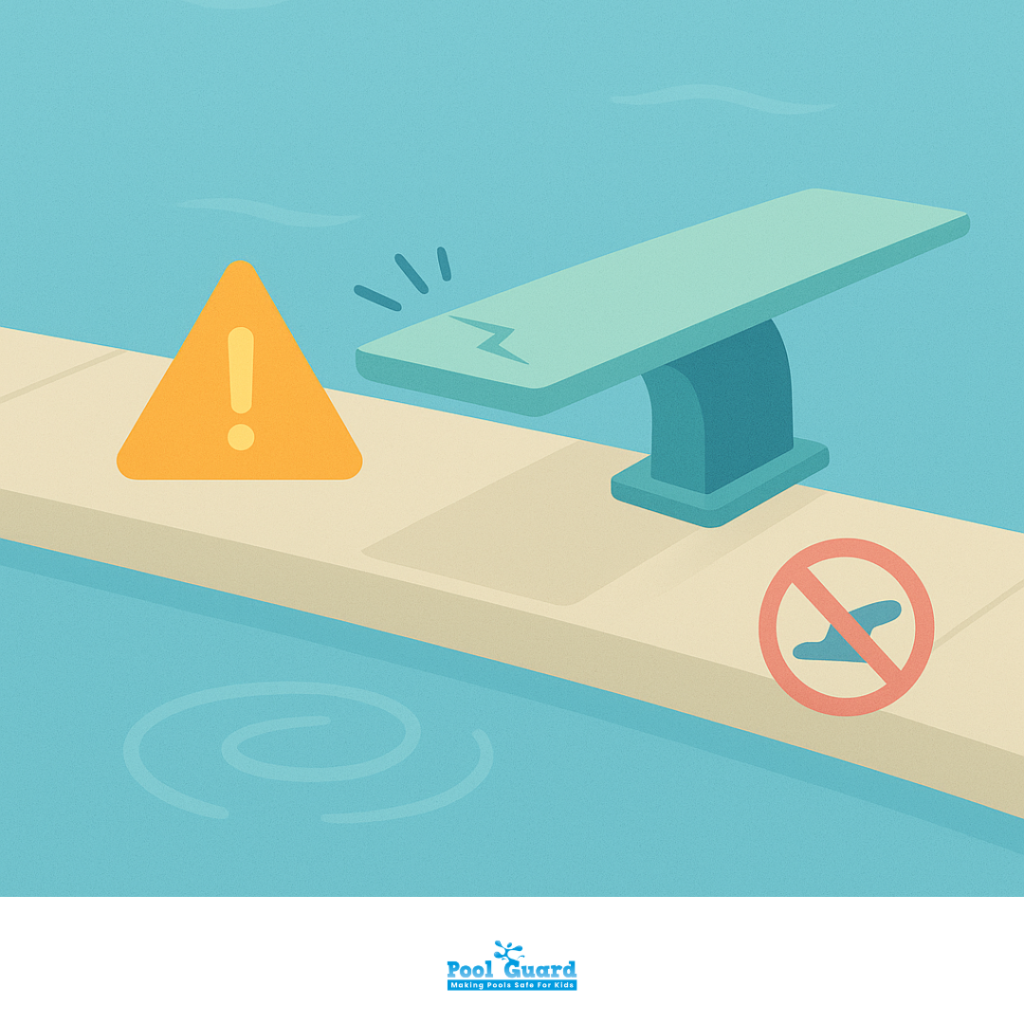
Head, neck, and spinal injuries occur when swimmers:
Follow ANSI/APSP 5 depth standards and maintain all diving structures.
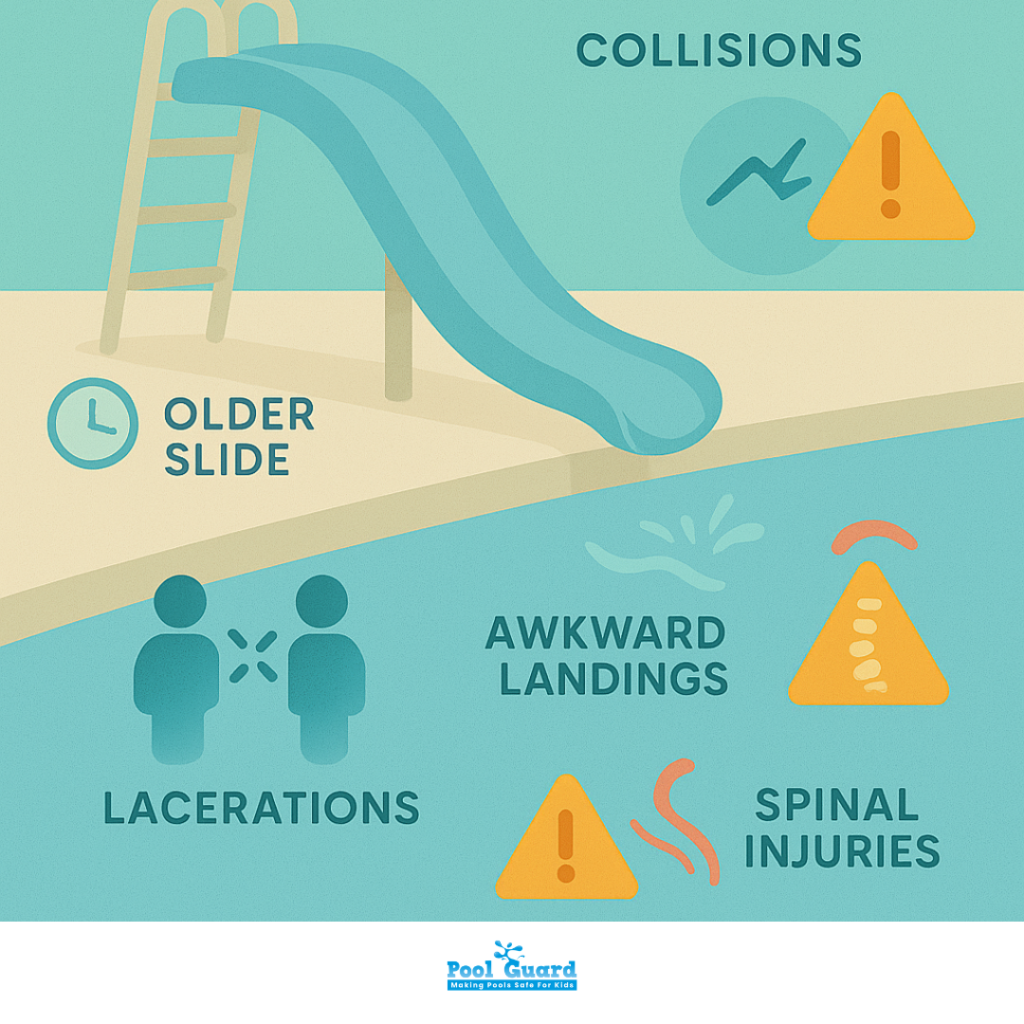
Slides can cause:
Older slides may not meet modern safety standards.
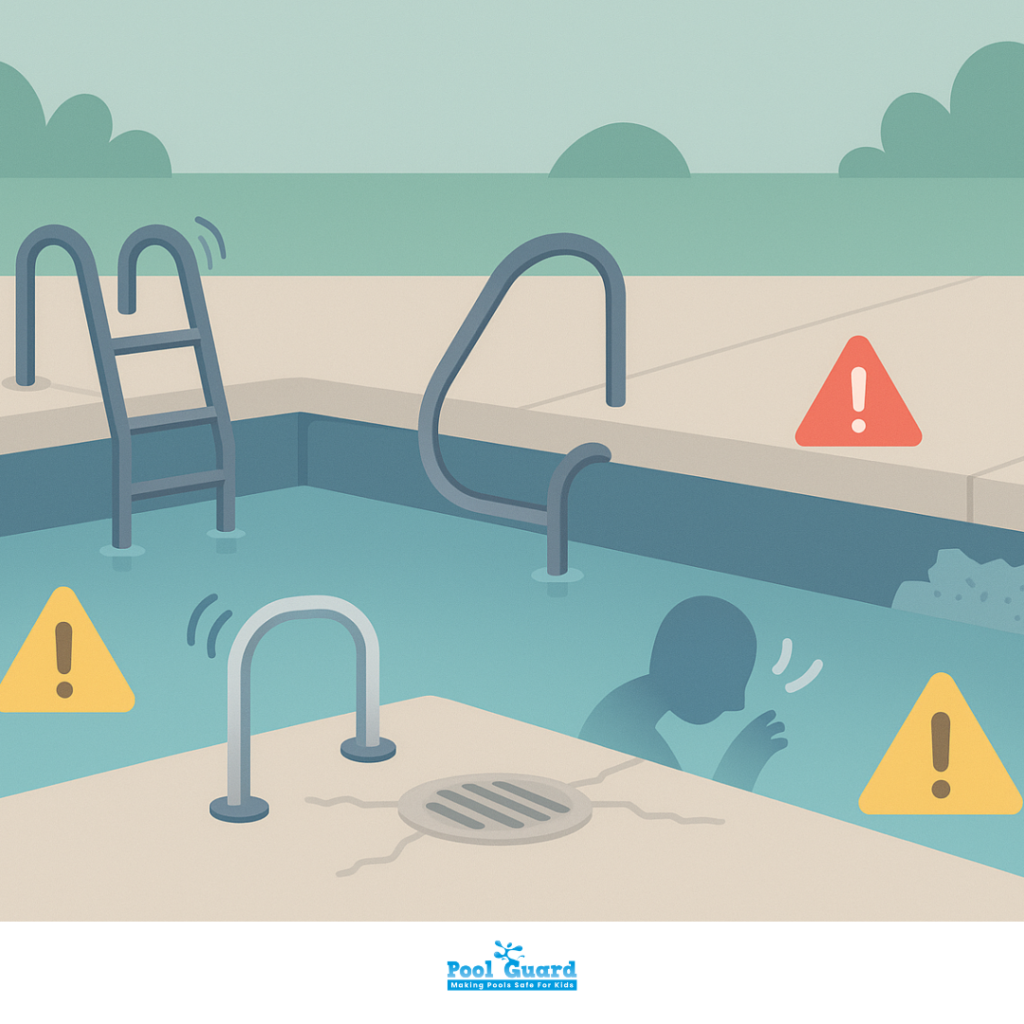
Common failures include:
These may cause falls, cuts, or entrapment.
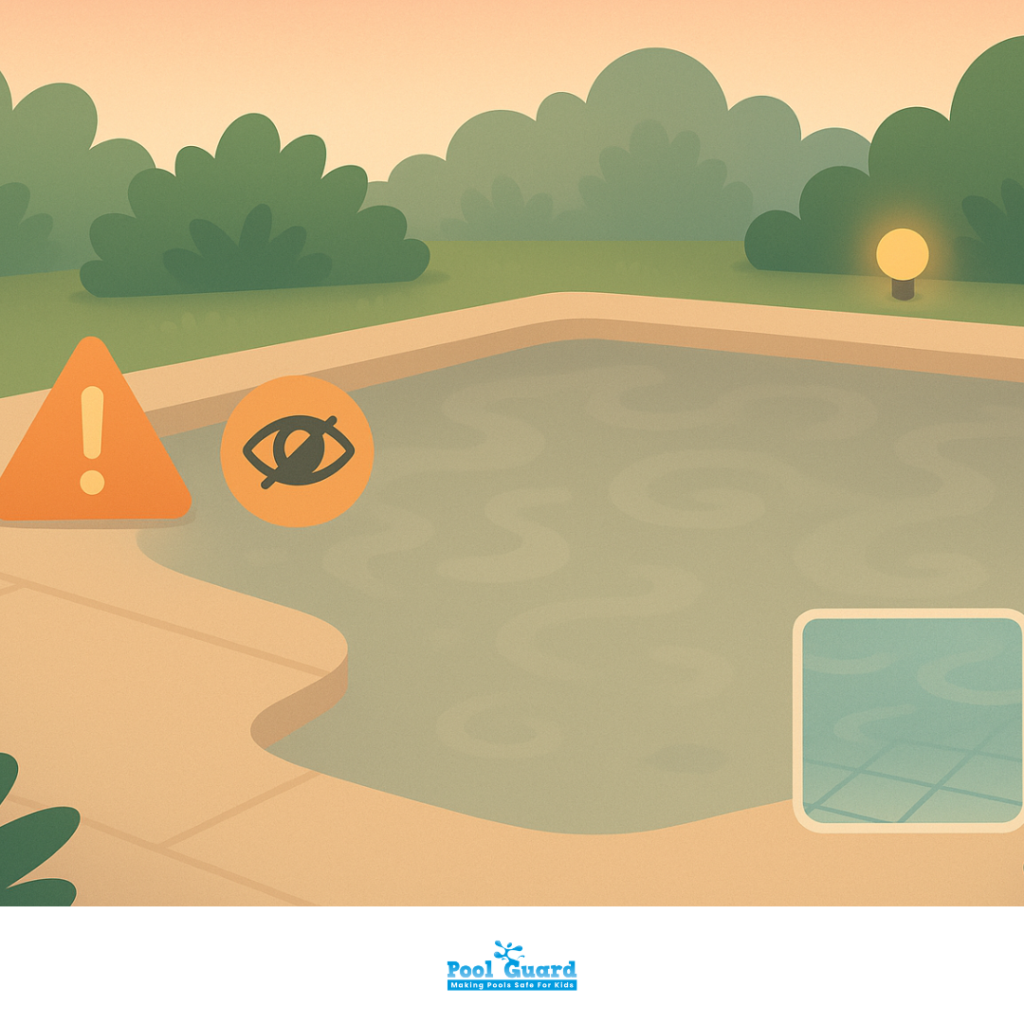
Turbidity hides bodies underwater. Every second matters in drowning response, and cloudy water:
If you can’t see the drain clearly, no one should swim. Situations like this are directly addressed in is it safe to swim in a cloudy pool, where visibility becomes a critical safety factor.
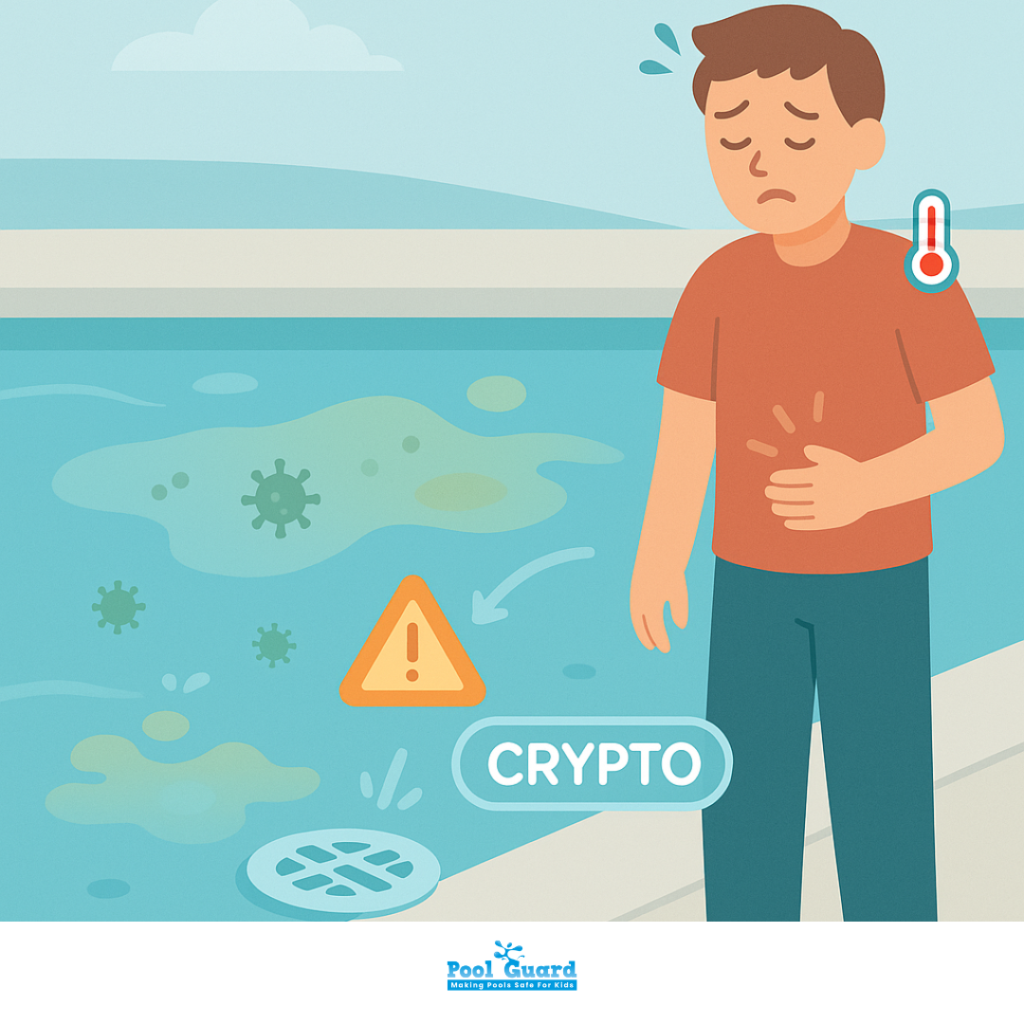
Public health agencies identify pools as potential sources of:
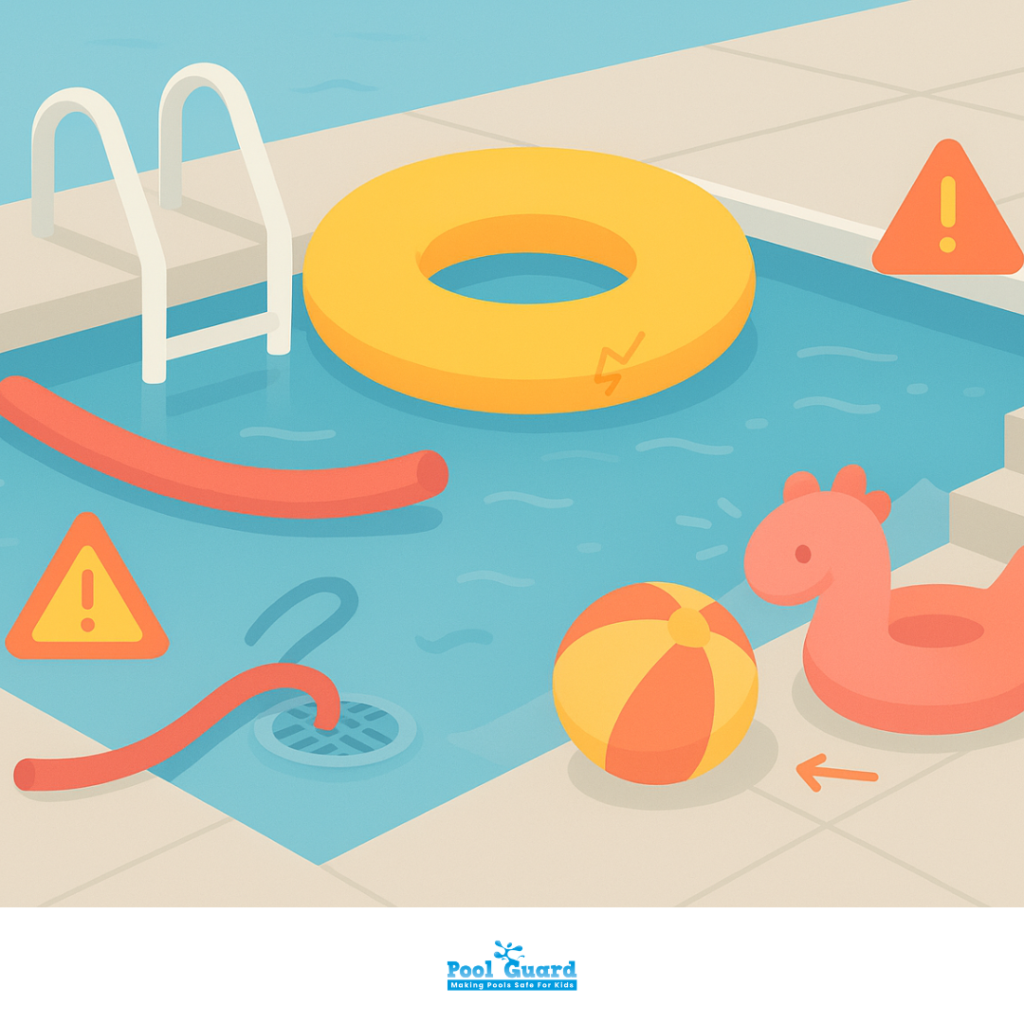
Large inflatables can:
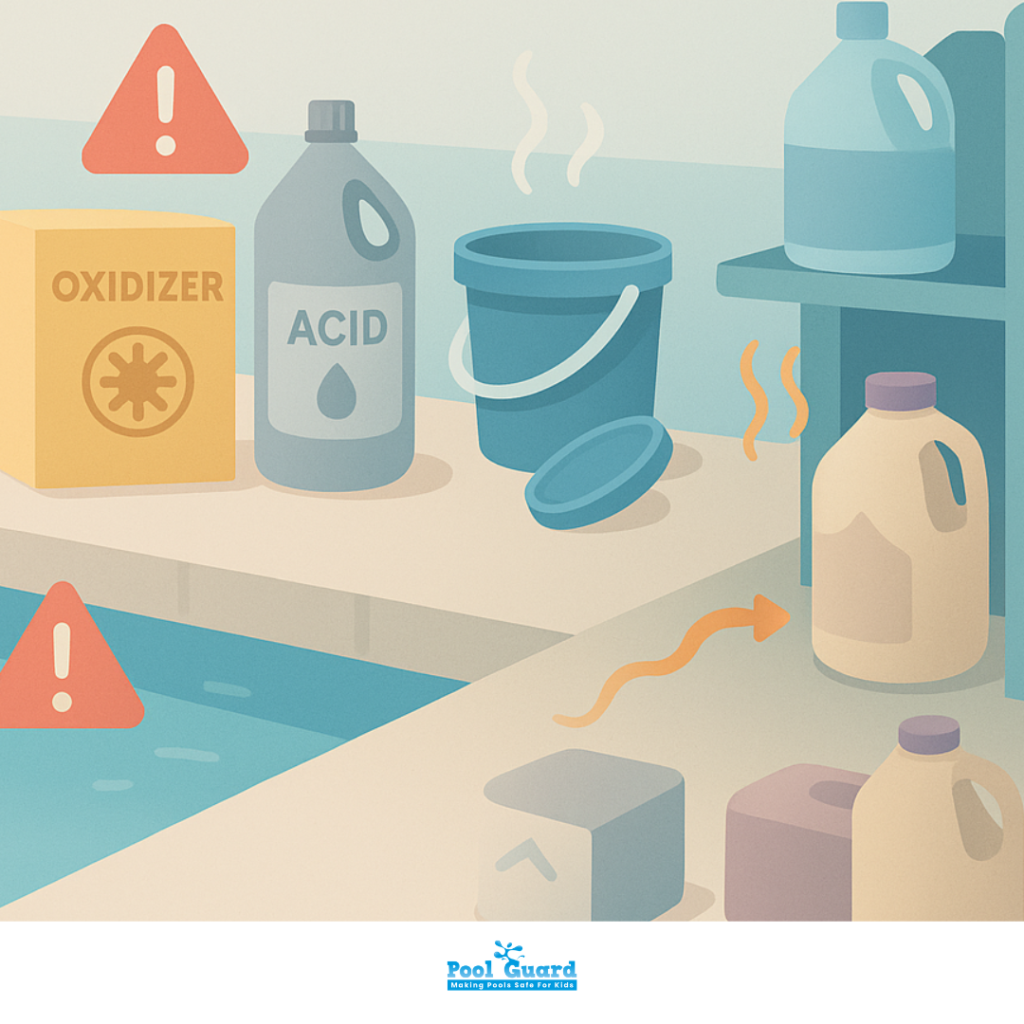
Homeowners often store pool chemicals:
This increases explosion, burn, and inhalation risks.
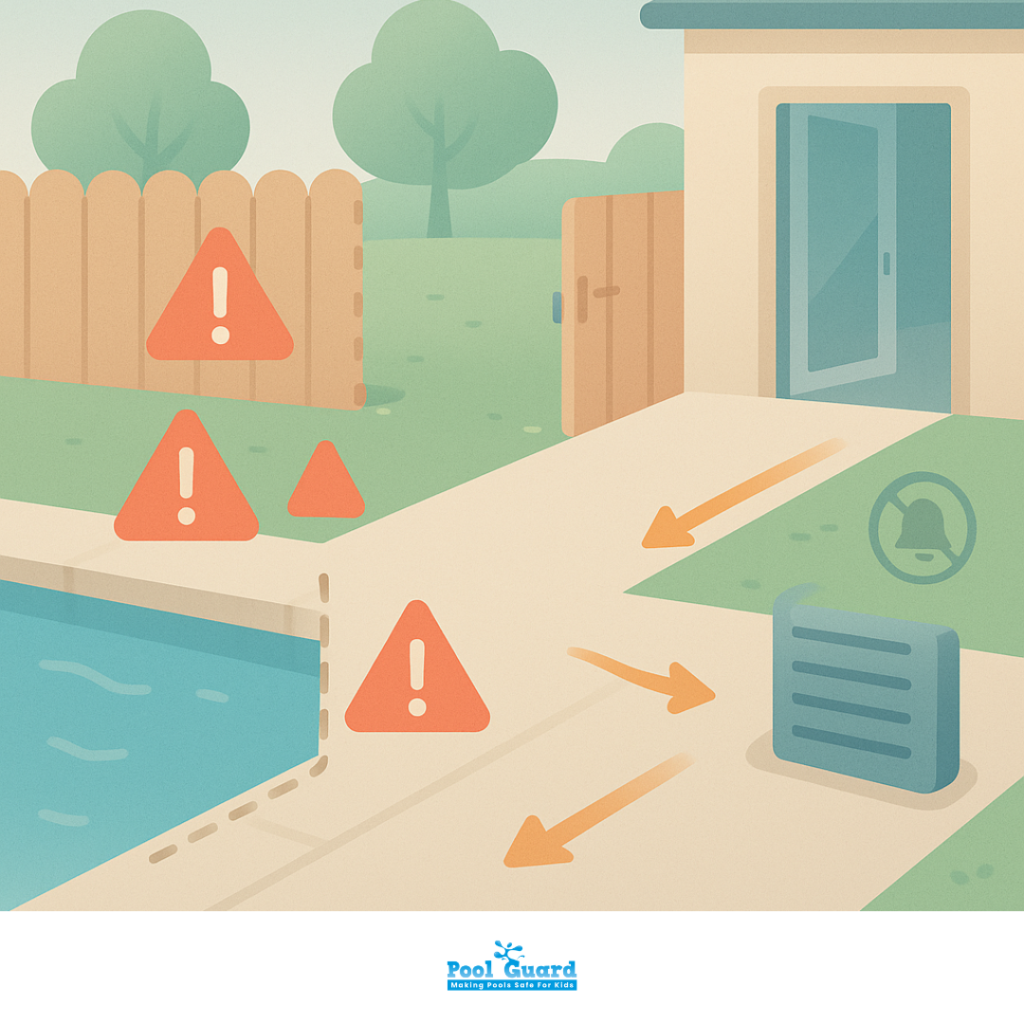
Over half of pediatric drowning deaths occur when children access pools outside of swim time.
Barriers are the single most effective intervention. Installing compliant systems like those covered in best pool fences significantly reduces unsupervised access risk.
Winter covers can sag, tear, or collect rainwater—creating a drowning hazard for children and pets. Proper upkeep, as outlined in pool cover maintenance best practices, is critical to preventing these seasonal risks.
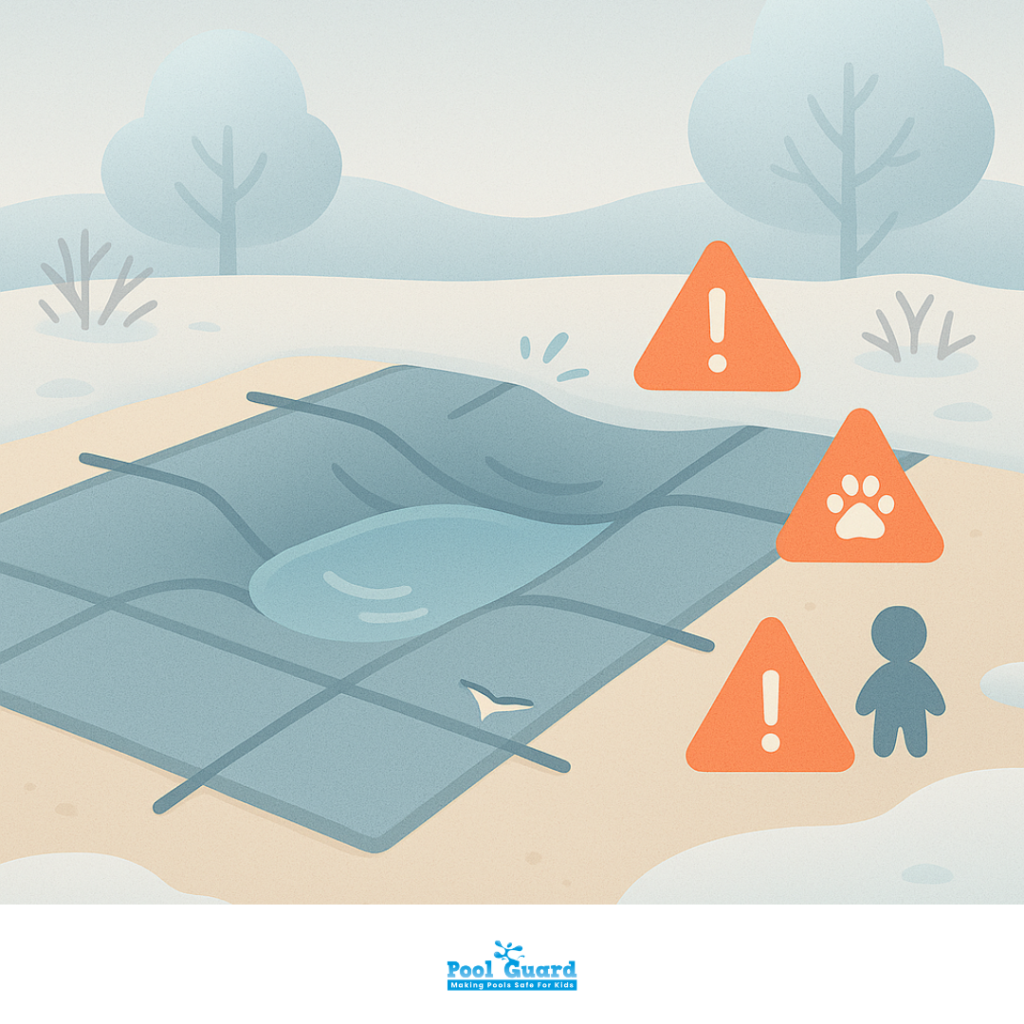
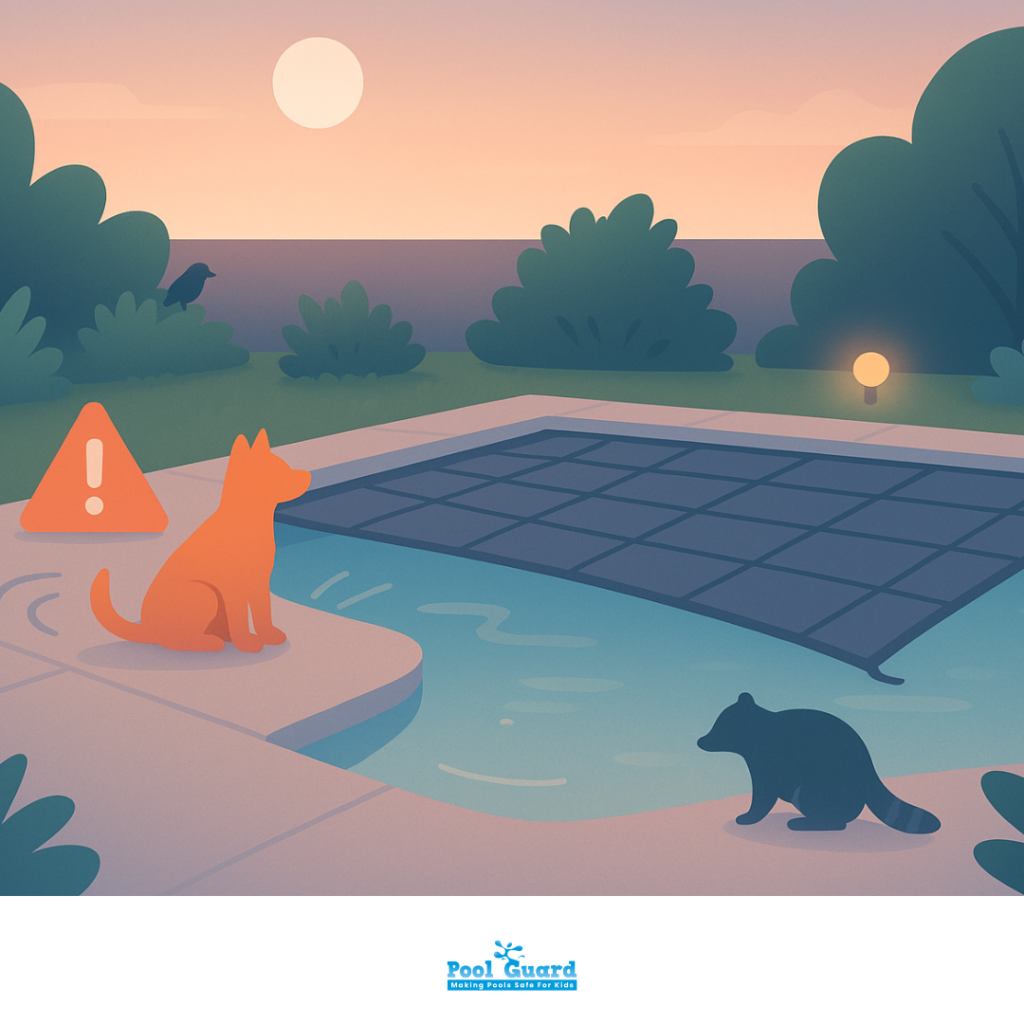
Pets and wildlife fall into pools more often than owners realize, particularly during nighttime or winter. Safety covers and nets help prevent these events. These risks are explored further in pet drowning statistics, which highlight how often these incidents occur.
✓ 4-sided isolation fence
✓ Self-closing, self-latching gate
✓ High-mounted latch (e.g., MagnaLatch)
✓ ASTM-certified safety cover or net
✓ Remove climbable furniture
✓ VGB-compliant drain covers
✓ Dual main drains or SVRS
✓ Annual electrical inspection
✓ Clear, balanced water chemistry
✓ Assign a Water Watcher during swim sessions
✓ Remove toys after use
✓ Learn CPR (AHA guidelines)
✓ Teach children to avoid drains
✓ Slip-resistant deck maintenance
✓ Properly stored pool chemicals
✓ Adequate lighting for evening visibility
You should immediately suspend swimming when:
The most preventable accidents occur when people swim during unsafe conditions.
No single device, rule, or habit eliminates all swimming pool hazards. Safety is built on multiple protective layers:
Pool Guard USA helps homeowners create safer environments through industry-leading fences, covers, and alarms that reduce the most common and severe risks: unsupervised access, accidental falls, and unnoticed submersion.
Safety isn’t one action—it’s a system. Build layers, stay vigilant, and every swimmer benefits.
Please fill out the form below with your information. Your local dealer will be notified about your inquiry.
Please fill out the form below with your information. Your local dealer will be notified about your inquiry.