Pool covers are not cosmetic accessories—they’re functional systems, and understanding how to maintain a pool cover properly over time is what prevents most repair issues in the first place. When a pool cover is damaged—torn fabric, failed straps, loose anchors, or stretched seams—the risk is not theoretical. A compromised cover can fail under weight, which is why understanding how much weight a pool cover can safely hold is critical.
According to the U.S. Consumer Product Safety Commission (CPSC), properly installed and maintained safety covers are one of the most effective layers of protection against accidental drownings. But that protection only exists if the cover’s structural integrity is intact.
That said, not every damaged pool cover is worth repairing.
Here’s the red line:
If the material is brittle from UV exposure, tearing at tension points, or failing at seams or anchors, repairs become unsafe and cost-ineffective. At that point, replacement is not upselling—it’s risk management.
This guide shows you:
Before you patch anything, identify what you’re working with. Repair methods that work on one cover type can fail catastrophically on another. If you’re unsure which type you have, reviewing the different types of pool covers and how they function can prevent costly mistakes.
A proper inspection should happen:
Look closely for:
Regular inspections should follow the same principles outlined in a full pool safety inspection checklist.
Safety warning: Never reinstall a safety cover if you’re unsure of its structural integrity. A cover that looks intact can still fail under load.
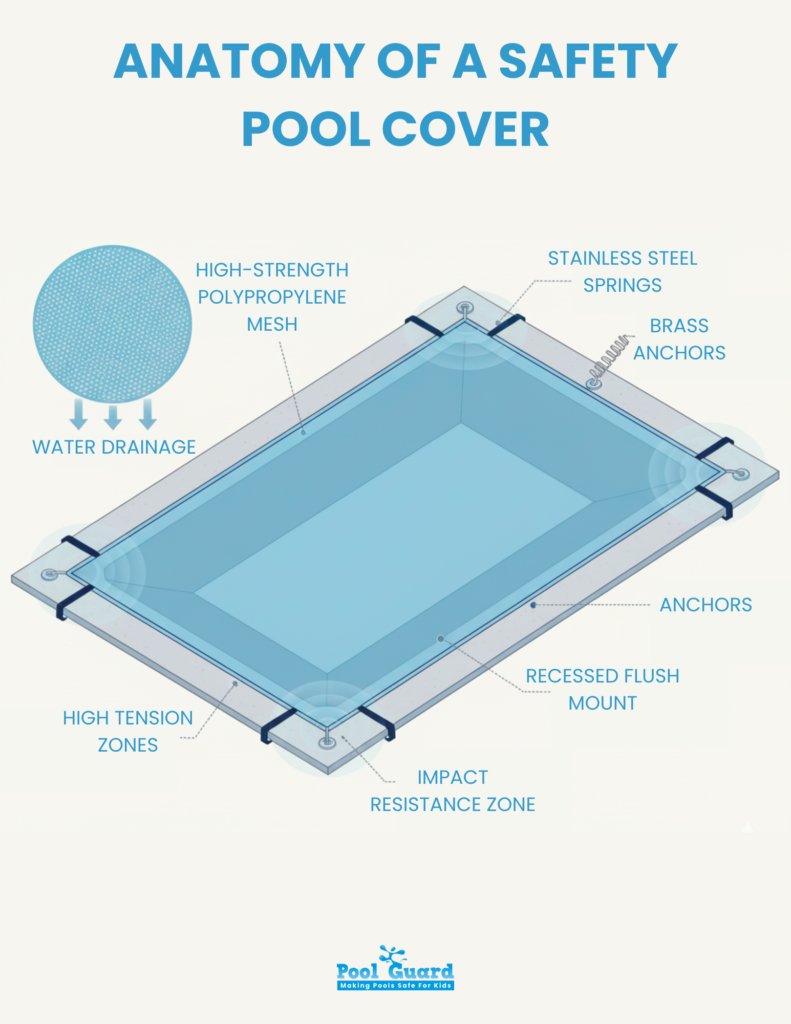
Small holes and tears—generally under 6–7 inches—are the only category of repair most homeowners should attempt themselves.
Blunt truth: If the material continues to fray or stretch after patching, the repair is a temporary bandage, not a solution.
Once damage exceeds small punctures, the options narrow—and failure risk rises.
If a tear:
…the repair will eventually fail. At that point, continued patching is sunk-cost behavior. If you’re deciding whether to repair or replace, reviewing the best pool covers available today can help you make a smarter long-term investment.
Fabric is only half the system. Hardware failures are often more dangerous.
Critical safety note: Loose or mismatched hardware turns a “safety cover” into a false sense of security.
Winter covers are not engineered for longevity.
If damage is widespread, replacement is cheaper than chasing failures all winter.
This is where most guides go soft. We won’t.
Do not repair your pool cover if:
At this stage, comparing options like pool net vs pool cover safety solutions can help determine a better long-term approach.
The truth: Sometimes discarding a failing cover saves more money—and eliminates more risk—than another repair attempt.
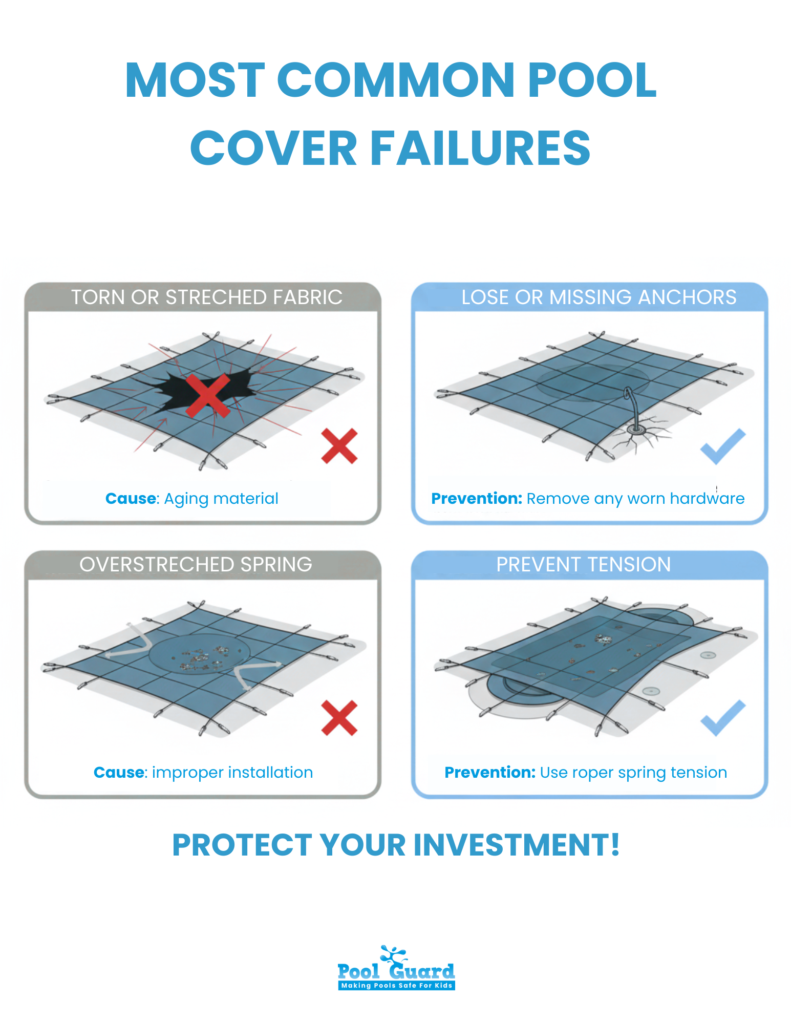
Most pool cover damage is preventable.
According to industry service data, consistent maintenance can double the usable life of a quality safety cover.
Repairing a pool cover isn’t about patching everything—it’s about knowing what’s worth fixing.
Key takeaways:
If this guide saved you time, money, or a costly mistake, share it. And if you’re evaluating whether repair or replacement makes sense for your pool, explore Pool Guard USA’s safety cover resources to make an informed decision. For long-term protection, browse Pool Guard USA’s safety cover and fence solutions designed for durability and compliance.

Find your local dealer by entering your zip code above.
Please fill out the form below with your information. Your local dealer will be notified about your inquiry.
Please fill out the form below with your information. Your local dealer will be notified about your inquiry.