If you own a pool and a dog, you’re managing a real safety risk—whether you admit it or not. Every year, dogs are injured or killed in backyard pools not because owners didn’t care, but because they overestimated training and underestimated panic, physics, and water hazards.
This guide cuts through outdated advice and sales fluff to show you exactly how to keep a dog out of a pool, including how to keep a dog off a pool cover and out of an inground pool—even when no one is watching. You’ll learn what actually works, what fails in real life, and how to build layered protection that prioritizes safety over convenience.
Dogs don’t drown because they’re bad swimmers. They drown because panic overrides training.
According to animal safety data summarized by organizations like the American Society for the Prevention of Cruelty to Animals, unsupervised water access is a leading cause of accidental pet fatalities. Pool-related incidents often involve:
These risks align closely with broader pet drowning statistics, where unsupervised access is a recurring factor.
Hard truth: A dog that “knows better” can still make a fatal mistake once.
If you remember one thing from this article, make it this:
Training reduces risk. Physical barriers prevent accidents.
The safest approach to keeping your dog out of the pool is layered protection, not wishful thinking.
We’ll break this into three tiers, ranked by reliability.
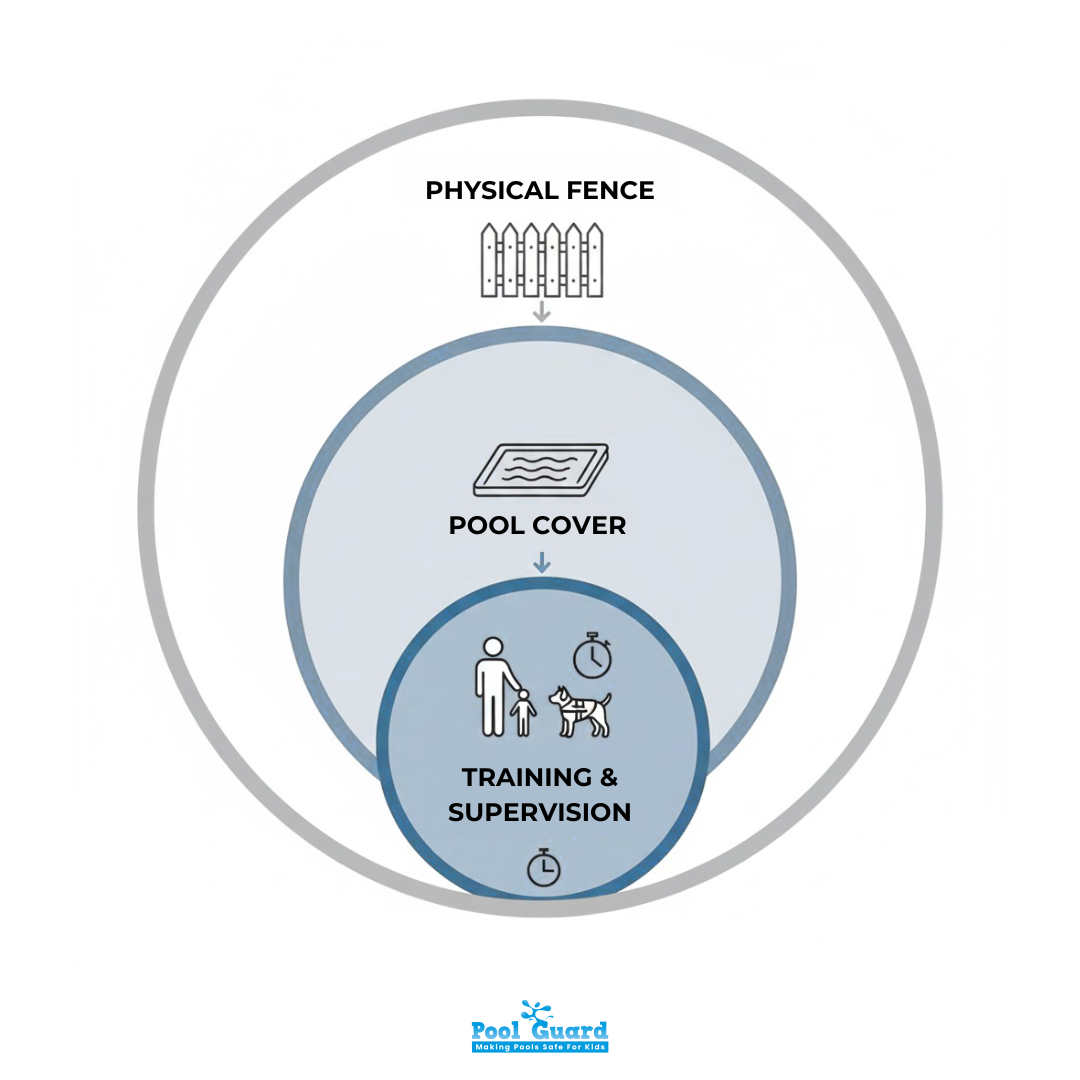
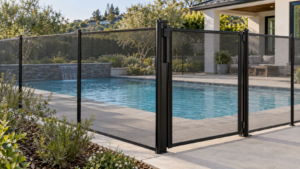
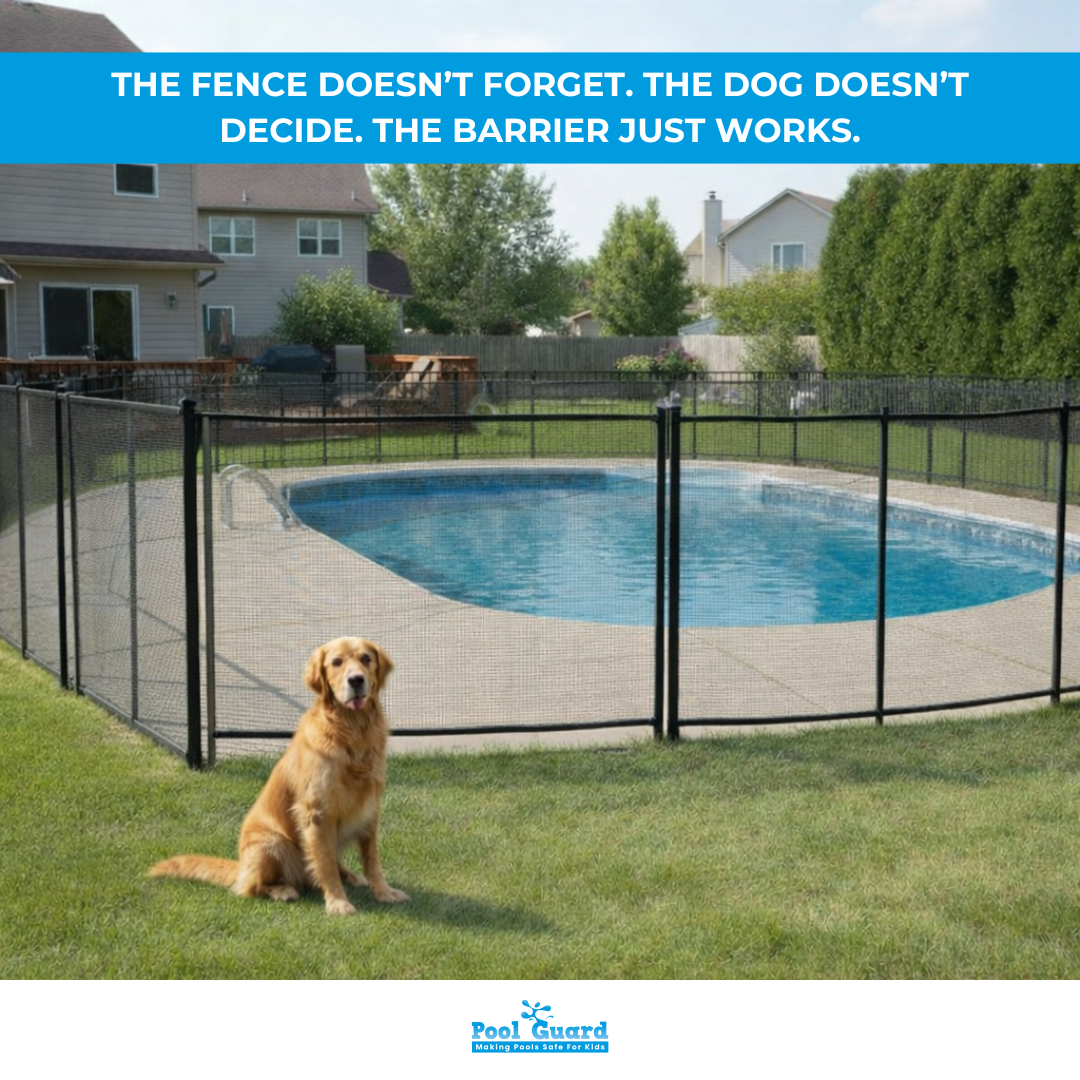
A four-sided, self-latching pool fence is the single most effective way to prevent unsupervised access. Unlike yard fencing, pool-specific safety fences create a clear, physical barrier dogs cannot “decide” to ignore, which makes it the best solution for how to keep dog out of inground pool.
Why fences work:
This is why organizations like the Centers for Disease Control and Prevention recommend physical barriers as the first line of drowning prevention – pool fence for pets.
Not all pool covers are created equal. Understanding the different types of pool covers helps clarify which options actually provide safety vs false protection.
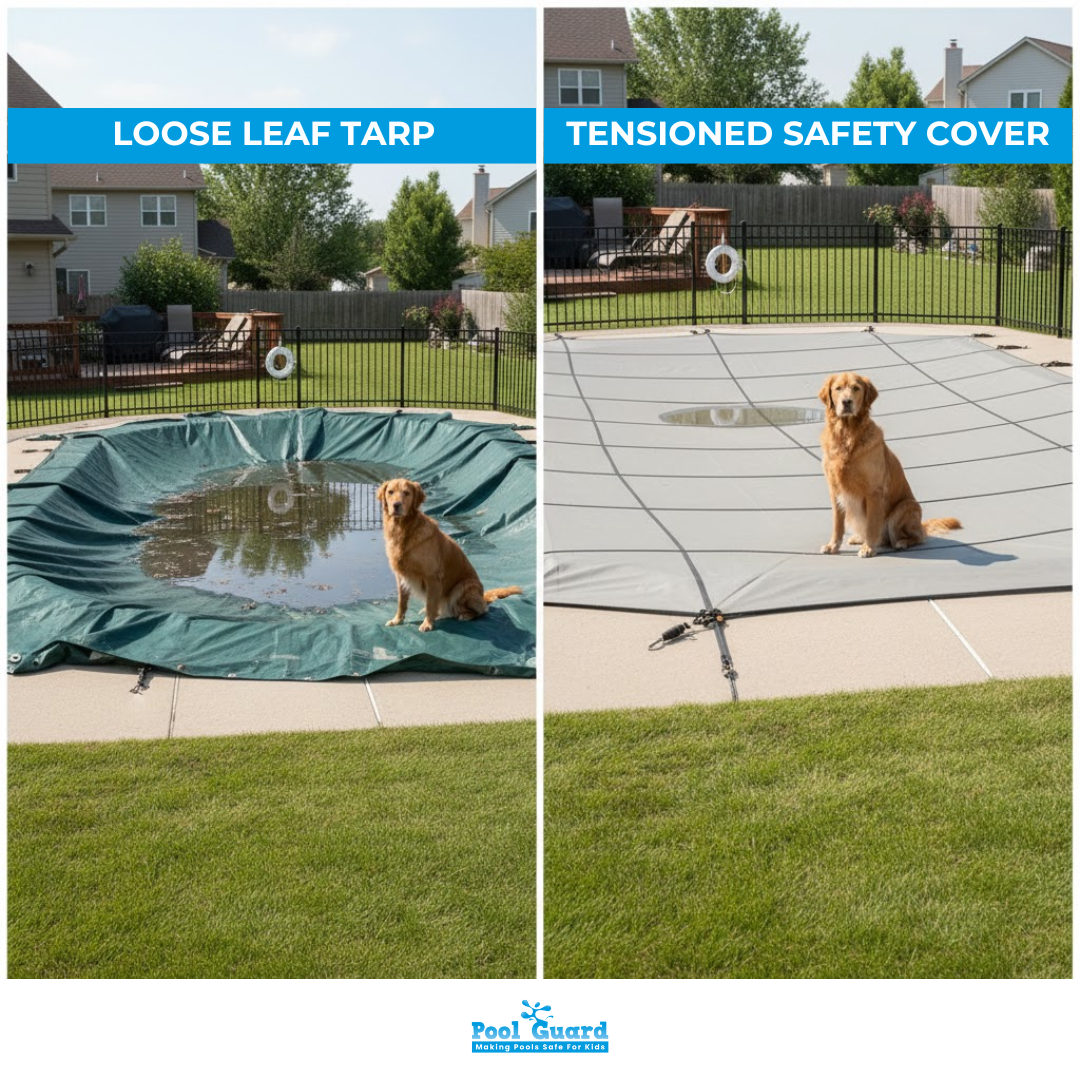
Dogs don’t distribute weight evenly. Claws can damage tension points over time. A panicking dog behaves nothing like a standing adult.
Bottom line:
A pool cover is not a substitute for a fence. It’s a secondary safeguard—never the primary one.
Surface or subsurface pool alarms can alert you when water is disturbed. They’re useful as a backup—but alarms are reactive, not preventive.
By the time an alarm sounds, the dog may already be in distress.
Training has real value when it comes to pool safety, but only if you are honest about its limitations. While training can reduce risk in controlled situations, it should never be treated as a standalone safety solution.
Dogs can be taught visual and spatial boundaries around a pool using temporary markers such as tape, rope, or landscaping edges. Consistent verbal cues like “no pool” or “leave it,” combined with short and frequent training sessions, help reinforce these boundaries over time.
This type of training can reduce casual wandering near the pool when conditions are calm. However, boundary training is unreliable during moments of high arousal, such as extreme heat, fear, excitement, or prey drive, when instinct overrides learned behavior.
Teaching commands like “leave it” and building a strong recall response, such as “come” or “here,” can help redirect a dog away from the pool when you are present and attentive. For this training to be effective, it must involve gradual exposure to the pool environment, the use of high-value rewards, and consistent practice under distraction.
What this type of training does not do is protect your dog when no one is watching. It cannot prevent a pool accident at 2 a.m. or during moments when supervision fails. Training supports safety, but it does not replace physical barriers or secure pool protection.
Spray collars, shock collars, or harsh leash corrections near pools increase risk. Startling a dog close to water can cause the very fall you’re trying to prevent.
These won’t save a dog alone—but they help.

Let’s dismantle the excuses:
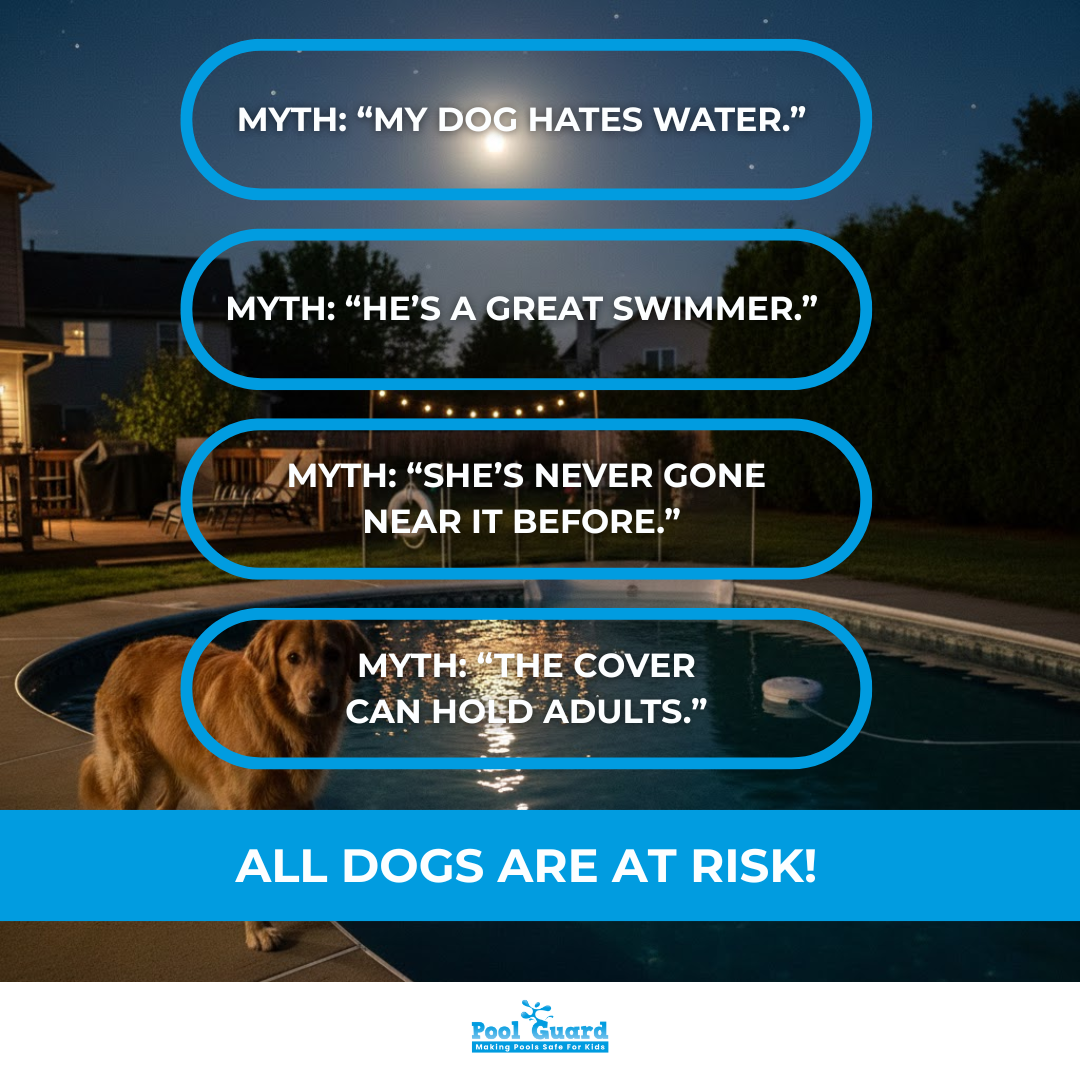
If you’re serious about keeping your dog out of the pool, following a complete pool safety checklist ensures no critical protection layer is missing.
This guide for how to keep a dog out of a pool exists because too many articles soften the truth. Don’t gamble with assumptions when proven safety measures exist.
If you found this helpful, share it with another pool owner—or explore additional pool safety resources to protect everyone in your backyard.
Engineering first. Training second. Supervision always.

Find your local dealer by entering your zip code above.
Please fill out the form below with your information. Your local dealer will be notified about your inquiry.
Please fill out the form below with your information. Your local dealer will be notified about your inquiry.