Standing water on a pool cover isn’t just annoying—it’s one of the fastest ways to destroy a cover, damage your pool, or create a real safety hazard. The good news? Once you understand why water collects and how to remove it correctly, the fix is simple and repeatable.
This guide for how to get water off a pool cover merges best practices and pool cover maintenance strategies into one authoritative resource. You’ll learn how to remove water from a pool cover, how to keep water from collecting on a pool cover in the future, and when water buildup signals a bigger problem you shouldn’t ignore.
A properly designed and professionally installed pool safety cover plays a major role in preventing sagging, water buildup, and long-term structural stress.
Water accumulation isn’t random. It happens for three predictable reasons—and understanding them helps you prevent the issue entirely.
Rainwater and melting snow are the obvious culprits, but condensation is often overlooked. Warm pool water evaporates, rises, and condenses against a cooler cover surface—especially during spring and fall temperature swings.
A pool cover that lacks proper tension or center support creates low points. Water naturally flows into these depressions and stays there, adding weight and increasing sagging in a feedback loop.
Above-ground pools are structurally more vulnerable. Their covers rely heavily on edge support and air pillows. Once water collects, the added weight can pull inward on the pool walls—sometimes enough to cause partial or total wall collapse.
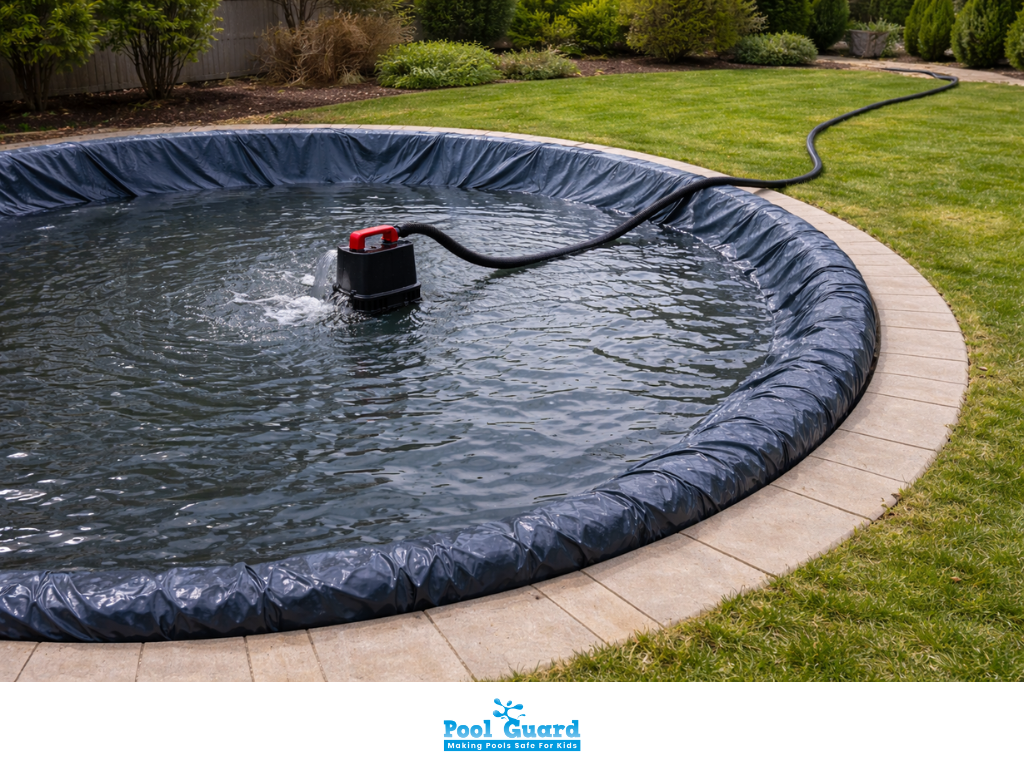
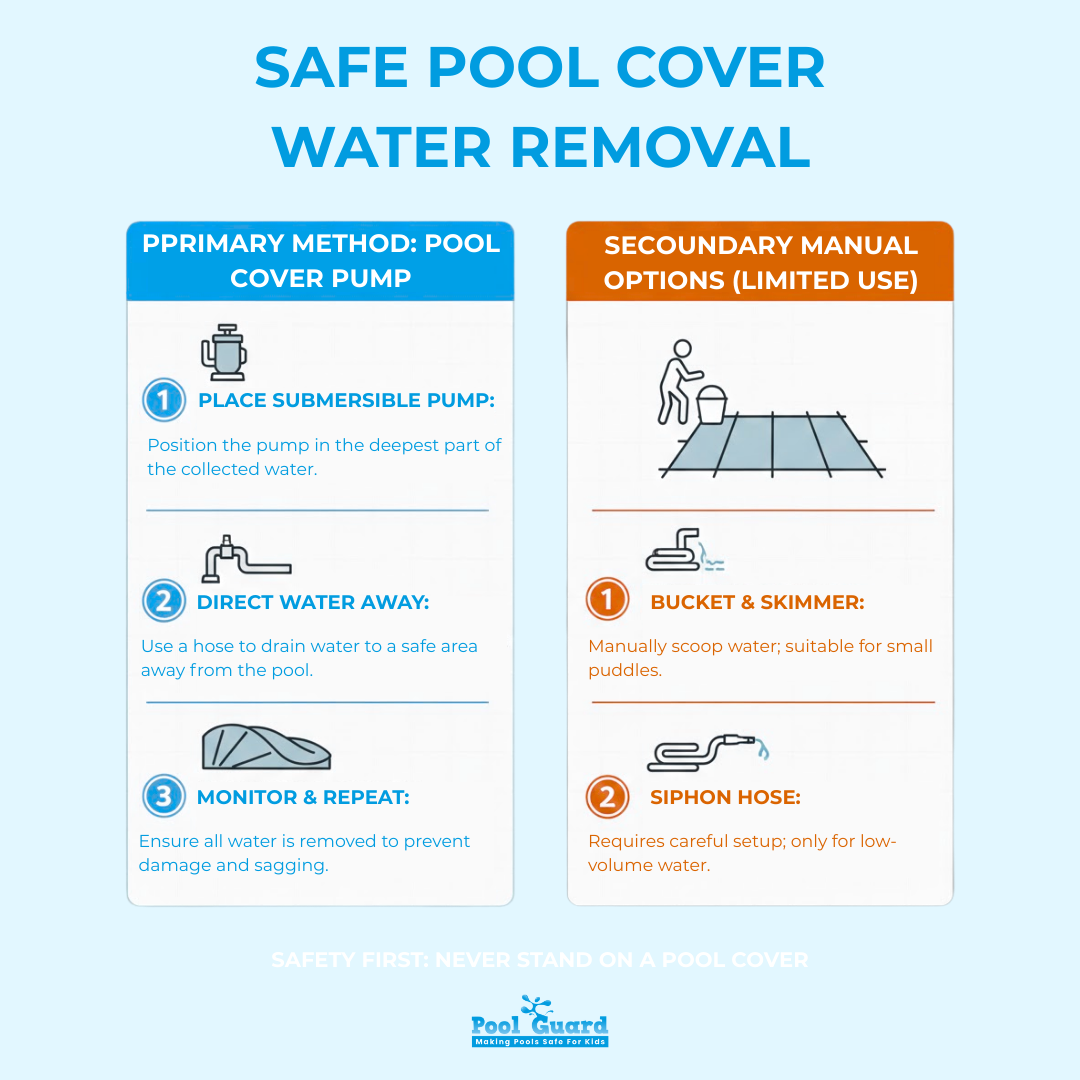
If your pool cover has more than a small amount of standing water, a pool cover pump is the most effective and lowest-risk way to remove it. Pumps eliminate water without forcing you to touch, lift, or stress the cover—reducing the chance of tearing the material or pulling on pool walls.
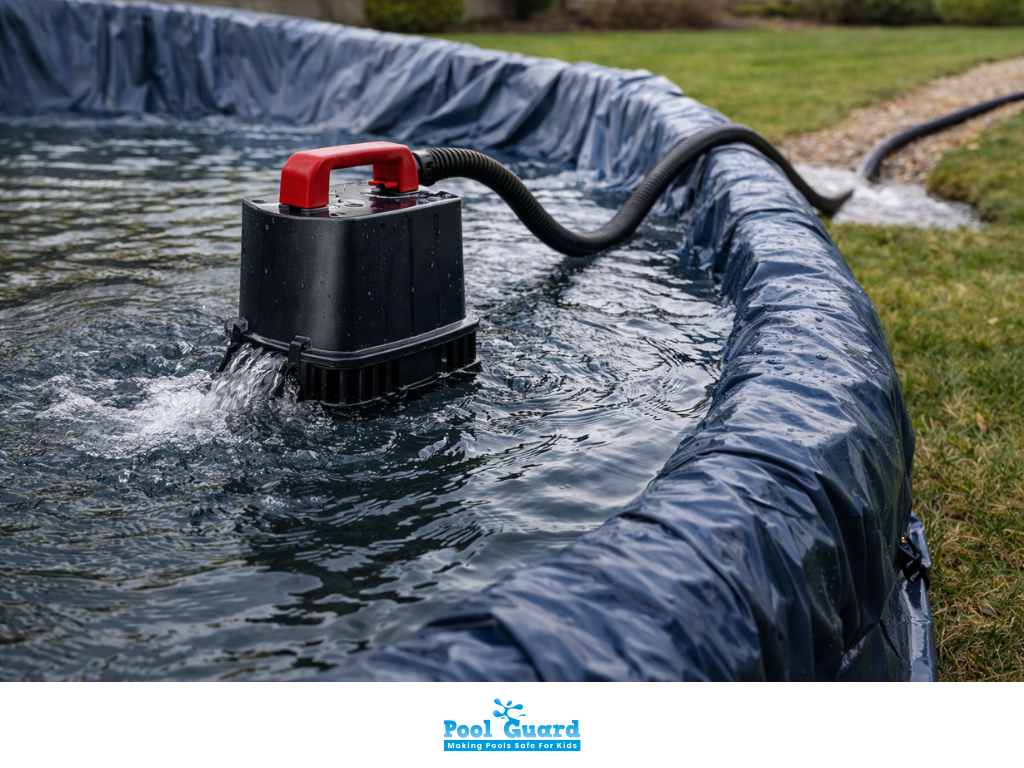
Because they work continuously and evenly, pumps are the safest option for both above-ground and in-ground pools.
When used properly, a pool cover pump is the gold standard for how to get water off the top of a pool cover safely and consistently.
Manual removal methods can work—but only in specific, low-risk situations. These approaches are best used for shallow water, short-term fixes, or final cleanup after most of the water has already been removed.
A garden hose siphon can remove small amounts of water if the cover has minimal pooling and the discharge end of the hose sits lower than the pool surface. This method relies entirely on gravity and setup speed.
A siphon should be treated as a temporary solution, not a replacement for mechanical drainage.
A wet/dry shop vacuum can be useful for removing water from corners, edges, or tight spots where pumps cannot reach. However, this method carries more risk and should be approached cautiously.
If the cover flexes under your weight, stop immediately. The risk outweighs the benefit.
There are situations where manual water removal creates more danger than it solves. In these cases, using a pump—or addressing the cover itself—is the only safe option.
Manual methods are backups—not primary solutions. If you’re reaching for them repeatedly, the problem isn’t the water—it’s the setup.
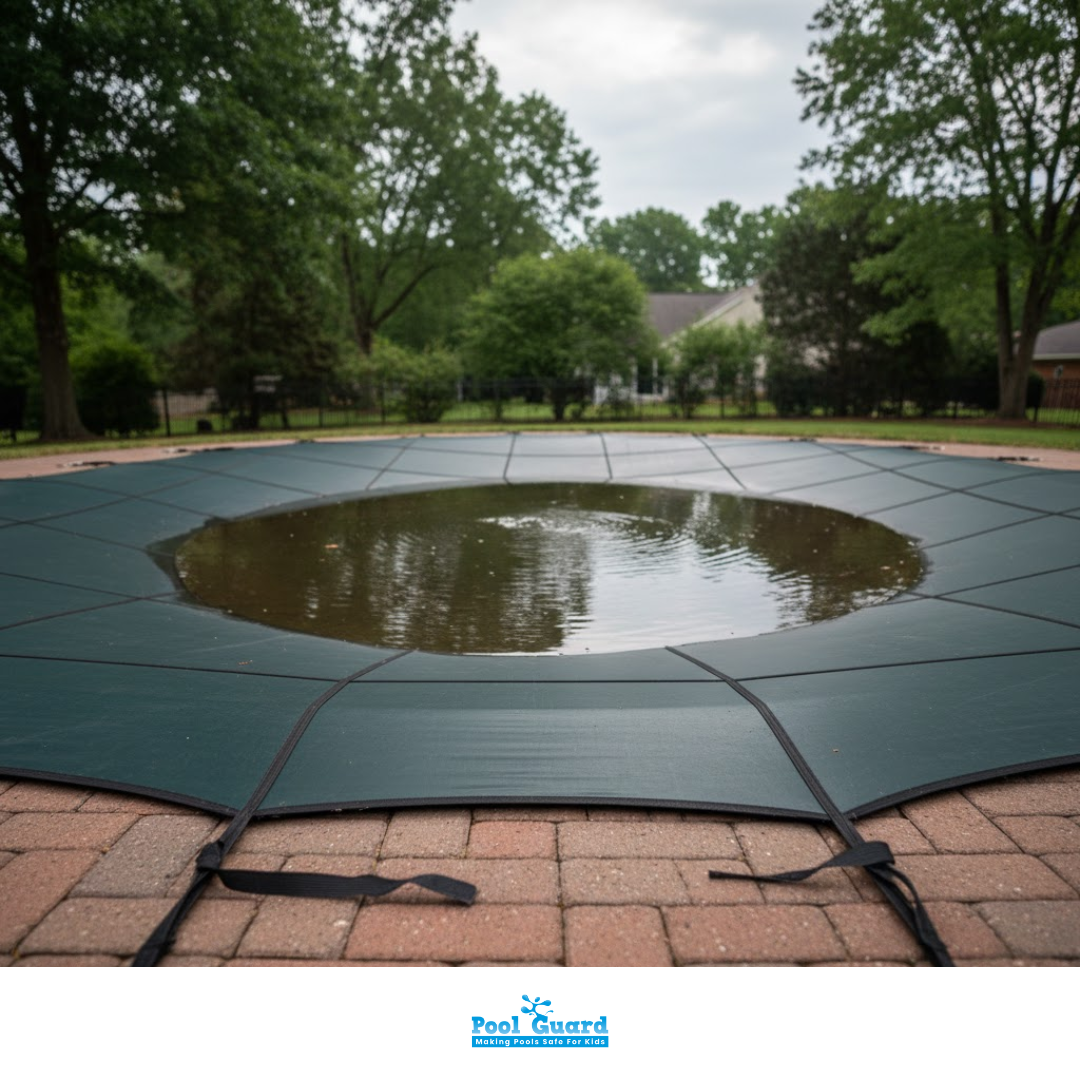
Not all water on a pool cover poses the same level of risk. Light rainwater that’s addressed quickly is usually easy to manage, while standing water that’s been sitting for days becomes heavier, more concentrated, and far more damaging to the cover and pool structure.
Fresh rainwater spreads evenly across the surface and can often be removed before it causes sagging. Standing water, on the other hand, collects in low points, increases downward pull, and accelerates stretching or tearing—especially on above-ground pools.
Water should be removed as soon as pooling begins, not after sagging is visible. The longer water remains on the cover, the more it concentrates weight in one area, making removal slower and increasing the risk of permanent cover damage.
Early removal keeps the cover properly supported and prevents small water accumulation from turning into a structural problem.
Preventing water buildup is far easier—and safer—than removing it after the fact. One of the most effective prevention tools is a pool cover air pillow or center support, which changes how water moves across the cover surface.
Air pillows create a raised center point beneath the pool cover, allowing rain and snowmelt to naturally flow toward the edges instead of pooling in the middle. This reduces downward pressure and helps the cover maintain proper tension throughout the season.
When properly installed, a center support or air pillow dramatically reduces standing water and extends the life of the pool cover.
A loose pool cover is one of the most common reasons water continues to collect, even after it’s been removed once. When tension is lost, the cover develops low points where water naturally settles and stays.
Proper tension keeps water moving toward the edges instead of pooling in the center. It also prevents repeated stretching that can permanently deform the cover.
Maintaining tension isn’t optional. If a cover sags repeatedly, no drainage method will solve the problem long-term.
Not all pool covers manage water the same way. The type of cover you use directly affects how often water collects and how much maintenance is required.
Solid pool covers create a complete barrier over the pool, blocking debris and sunlight. However, because water cannot pass through, they require active removal using a pump. Solid covers are typically the best choice for colder climates, where controlling water levels and freeze risk is critical.
Mesh pool covers allow rain and snowmelt to drain through into the pool, reducing surface water buildup. While this minimizes pumping, it increases spring cleanup and can dilute pool chemistry. In freezing conditions, rising water levels beneath the cover can create additional risks.
Professionally fitted safety covers—especially those designed to meet ASTM safety standards—offer the best long-term solution. When properly installed, they maintain tension, manage water effectively, and significantly reduce recurring pooling issues.
Most pool cover damage doesn’t happen during storms—it happens when homeowners try to fix water buildup the wrong way. These mistakes increase stress on the cover and can turn a manageable issue into an expensive failure.
To put the risk into perspective, a single inch of water weighs over 5 pounds per square foot. Across an average pool cover, that can mean hundreds—or even thousands—of pounds pulling downward. Once that stress is applied repeatedly, damage becomes permanent.
Standing water isn’t always the core issue—it’s often a symptom of something else failing. When water keeps returning despite regular removal, it’s time to stop treating the surface and start evaluating the system.
Pay close attention if you notice:
If water continues to collect no matter what you do, it may be necessary to measure for a pool cover correctly to ensure proper fit and tension. At that point, prevention tools and removal methods can only do so much. Addressing fit, tension, or replacement becomes the safer long-term solution.
Knowing how to get water off a pool cover is essential for protecting both the cover and the pool beneath it. Water should always be removed early and safely, before weight concentrates and causes sagging, stretching, or structural stress.
For most situations, pool cover pumps are the most effective solution for how to get water off a pool cover consistently and without risk. Manual methods can work in limited, low-risk scenarios, but they should never replace proper drainage or long-term prevention.
The most reliable way to reduce ongoing problems is prevention. Maintaining proper cover tension, using center support when needed, and choosing the right type of pool cover dramatically reduce how often water collects in the first place.
In many cases, a properly fitted and well-maintained pool cover eliminates recurring water issues entirely.
If this guide helped clarify how to get water off a pool cover correctly, consider sharing it with another pool owner—or explore Pool Guard USA’s pool safety solutions and professionally designed cover systems for long-term protection

Find your local dealer by entering your zip code above.
Please fill out the form below with your information. Your local dealer will be notified about your inquiry.
Please fill out the form below with your information. Your local dealer will be notified about your inquiry.