
The short answer is: sometimes.
The accurate answer to “do you need a fence around a hot tub?” depends on your local building code, the type of hot tub you install, and what approved safety barriers are already in place on your property. Many of the same pool barrier laws that apply to swimming pools are also used as the baseline for hot tub regulations, which is where much of the confusion begins.
This is where most homeowners get tripped up. Advice varies widely depending on who you ask. Dealers may focus on product features, neighbors may rely on outdated rules, and online articles often blur the difference between pool laws and hot tub regulations. As a result, many people searching do you need a fence for a hot tub assume a cover automatically means compliance—or worse, assume hot tubs aren’t regulated at all. Unfortunately, those misunderstandings often surface during a failed inspection, a home sale, or an insurance review.
This guide explains when a fence is legally required, when a locking safety cover may be sufficient, what actually qualifies as an approved barrier, and how to verify your specific local requirements before installation becomes a costly mistake.
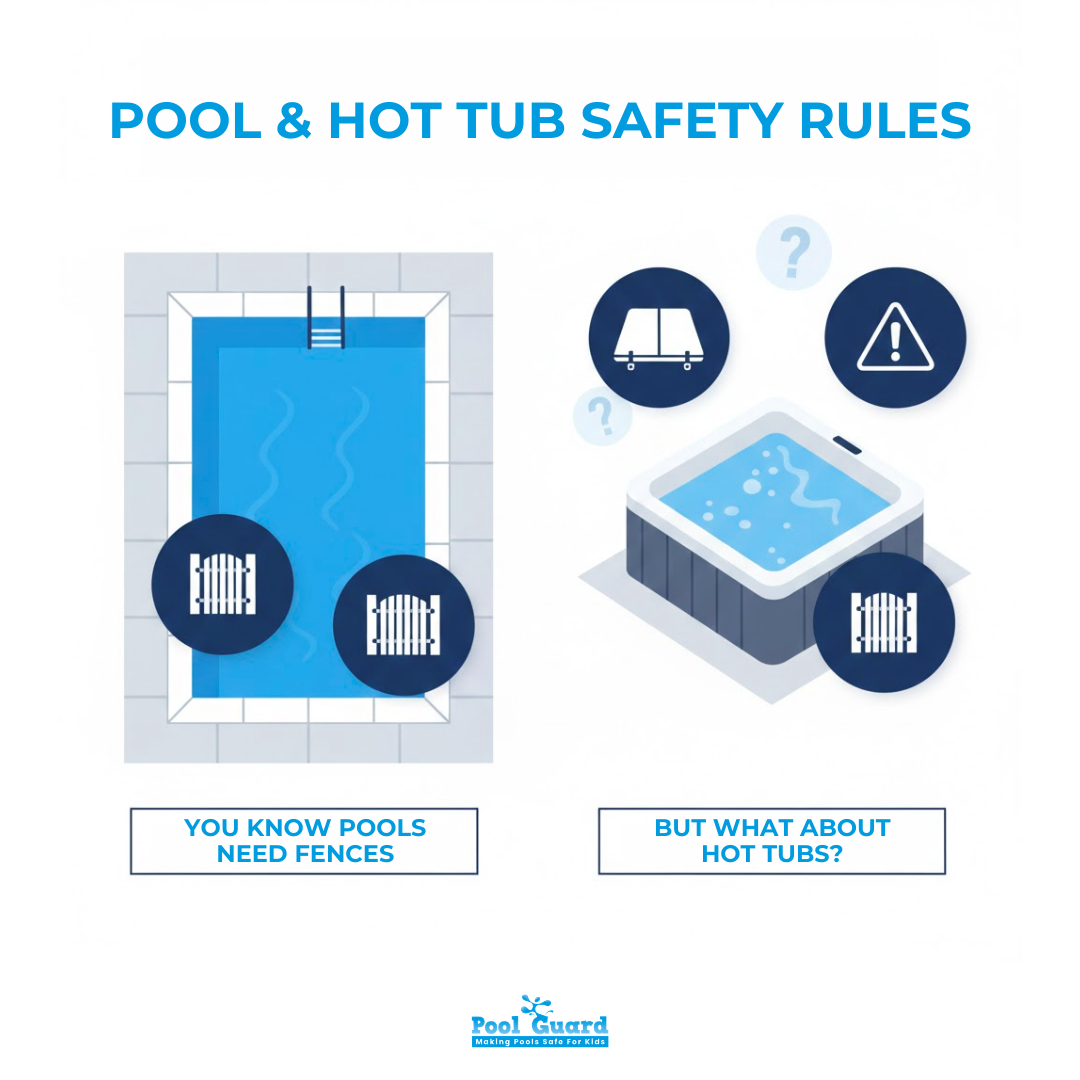
Hot tub fencing requirements are not arbitrary regulations—they are designed to prevent unsupervised access and reduce the risk of drowning incidents. These rules are rooted in real-world risk, supported by drowning statistics that consistently show how quickly unsupervised water access can turn into a life-threatening situation.
Although hot tubs are shallower than swimming pools, they still pose serious safety risks:
Because of these risks, most U.S. municipalities regulate hot tubs under residential barrier or drowning-prevention codes. These rules are often adapted from pool safety standards but applied based on access, not just depth.
The critical point is this: safety codes are preventative. They are designed to address the single moment when supervision fails—not the hundreds of times everything goes as planned.
Key insight: compliance isn’t about what usually happens. It’s about what happens once, when no one is watching. A complete pool safety checklist can help ensure all access points—not just the hot tub—are properly secured.
A fence is typically required when there is no other approved barrier preventing direct access to the spa. While exact requirements vary by municipality, fencing is commonly required under the following conditions:
Ultimately, the local building department determines whether your installation meets code. Neither manufacturers nor installers have the authority to override municipal requirements.
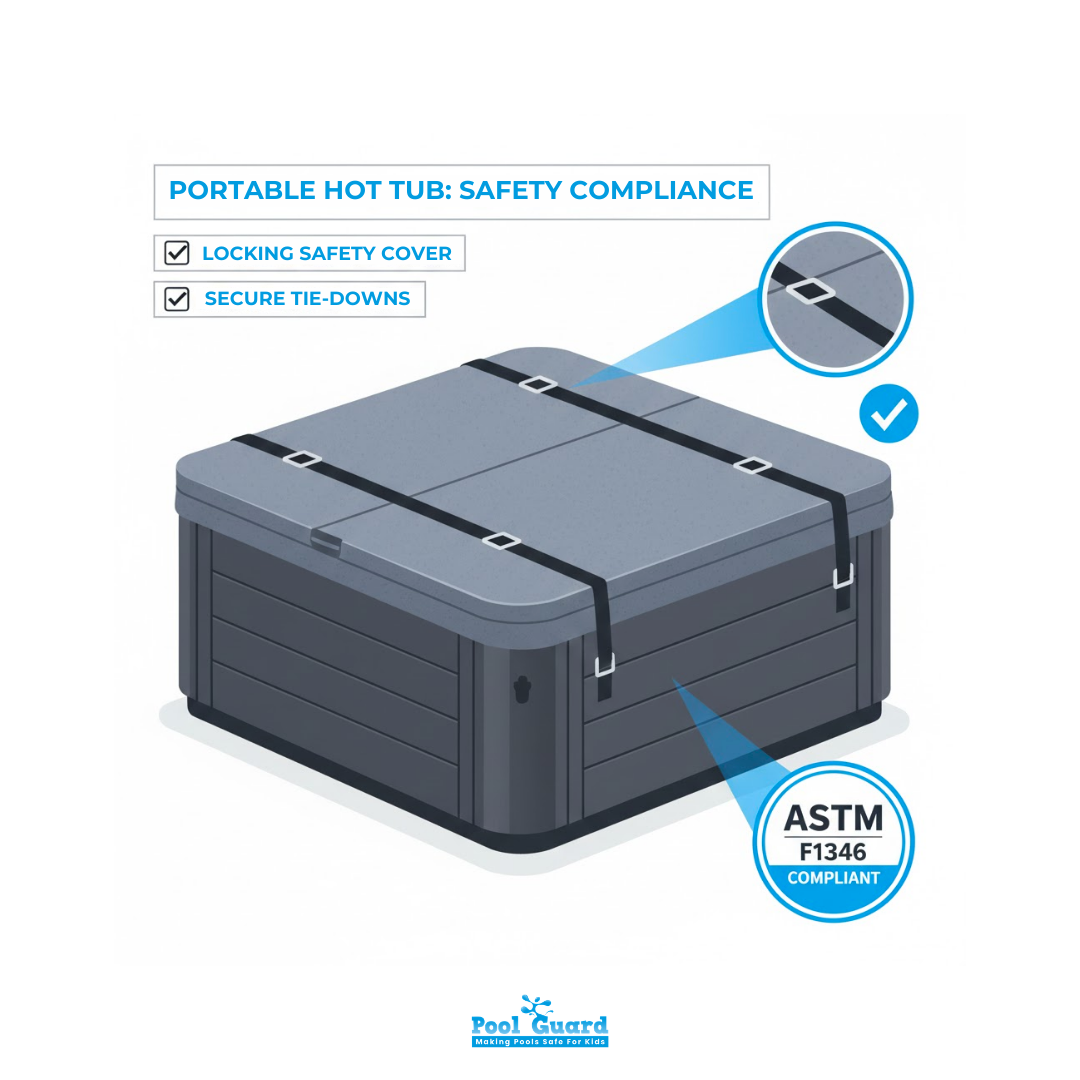
In many areas, homeowners can legally avoid installing a fence if specific criteria are met. A fence is often not required when all of the following conditions apply:
However, this exemption is not universal. Some municipalities require fencing regardless of cover type, particularly in high-density neighborhoods or HOA-regulated communities.
⚠️ Important: owning a compliant cover does not guarantee compliance. Inspectors and code officers evaluate how the barrier functions in real-world use, not just what is included at purchase.

From a regulatory standpoint, an approved barrier is any structure or device that effectively prevents unsupervised access to the water.
The two most commonly recognized barriers are:
Why do rules vary between jurisdictions?
The key concept inspectors evaluate is access control. If the spa can be reached without overcoming a secured barrier, additional safety measures are usually required. Not all barriers offer the same level of protection, which is why many homeowners compare pool fence systems with the difference between a pool fence and a safety cover before deciding what best fits their setup.

Assumptions are expensive. The only reliable way to determine compliance is to confirm directly with your local authority. In many cases, a formal pool safety inspection may be required to confirm that your setup meets local compliance stand
Before installation—or before listing your home for sale—take these steps:
While installers can provide guidance based on experience, only your municipality can confirm what is legally required for your property.
So, do you need a fence around a hot tub? Sometimes yes. Sometimes no. The correct answer always depends on your local building code and the overall safety setup of your installation.
If your hot tub is in-ground, easily accessible, uncovered, or integrated into a deck system, you should assume fencing may be required until verified otherwise. If it is a portable spa secured with a properly locked ASTM-compliant safety cover, you may qualify for an exemption—but that determination must still be confirmed locally.
When homeowners ask, do you need a fence for a hot tub, what they’re really asking is whether their current setup meets code and protects them from liability. The only reliable way to answer that question is to verify your local requirements before installation, resale, or rental.
The safest move is proactive verification. Spending a few minutes confirming compliance today can prevent inspection failures, insurance complications, and expensive retrofits later.
If this guide helped clarify whether you need a fence around a hot tub, consider sharing it with another homeowner— or explore Poolguard USA’s pool safety fences and residential access protection resources to make sure your setup meets both safety standards and local code.

Please fill out the form below with your information. Your local dealer will be notified about your inquiry.
Please fill out the form below with your information. Your local dealer will be notified about your inquiry.