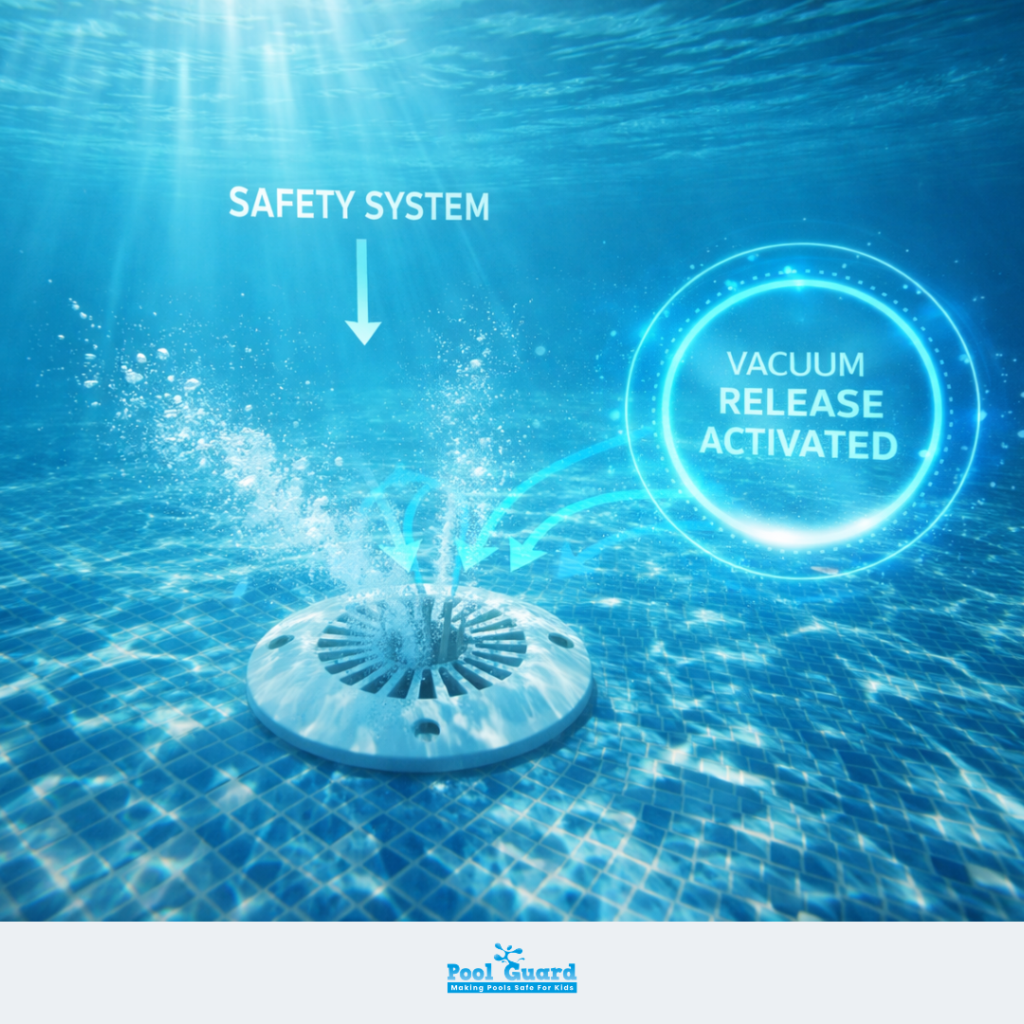
If you’re asking what is a Safety Vacuum Release System, it’s a pool safety device designed to prevent suction entrapment accidents. A Safety Vacuum Release System (SVRS) monitors pressure in a pool or spa’s suction line and instantly reacts when it detects a dangerous vacuum spike caused by a blocked drain.
When that happens, the system quickly releases the suction—either by shutting off the pump or introducing air into the line—freeing the person within seconds and reducing the risk of serious injury.
Pool circulation systems rely on suction to pull water through drains and into filtration equipment. Under normal operation, this suction is controlled and safe. However, when a drain or suction outlet becomes completely blocked—by a body, limb, or object—the vacuum pressure can increase dramatically.
In documented entrapment cases, suction forces have exceeded 500 pounds, making it nearly impossible for a swimmer to pull themselves free. Even multiple adults attempting to lift the person off the drain may fail because the vacuum seal must be broken before release can occur. This type of incident is one of the most serious pool drain safety risks in modern pool systems.
This phenomenon is known as suction entrapment. It can result in severe limb injuries, internal injuries, or drowning if the victim is held underwater. Suction entrapment is just one example of broader common pool hazards that can go unnoticed until an incident occurs.
The push for stronger anti-entrapment protections intensified after the tragic death of Virginia Graeme Baker in 2002. In response, Congress passed the Virginia Graeme Baker Pool and Spa Safety Act (VGB Act) in 2007.
The law requires public pools and spas in the United States to use compliant anti-entrapment drain covers and, in certain configurations, additional protective systems such as an SVRS system.
The VGB Act references performance standards including:
The intent was clear: eliminate single-point suction hazards and reduce entrapment risk in public aquatic facilities.
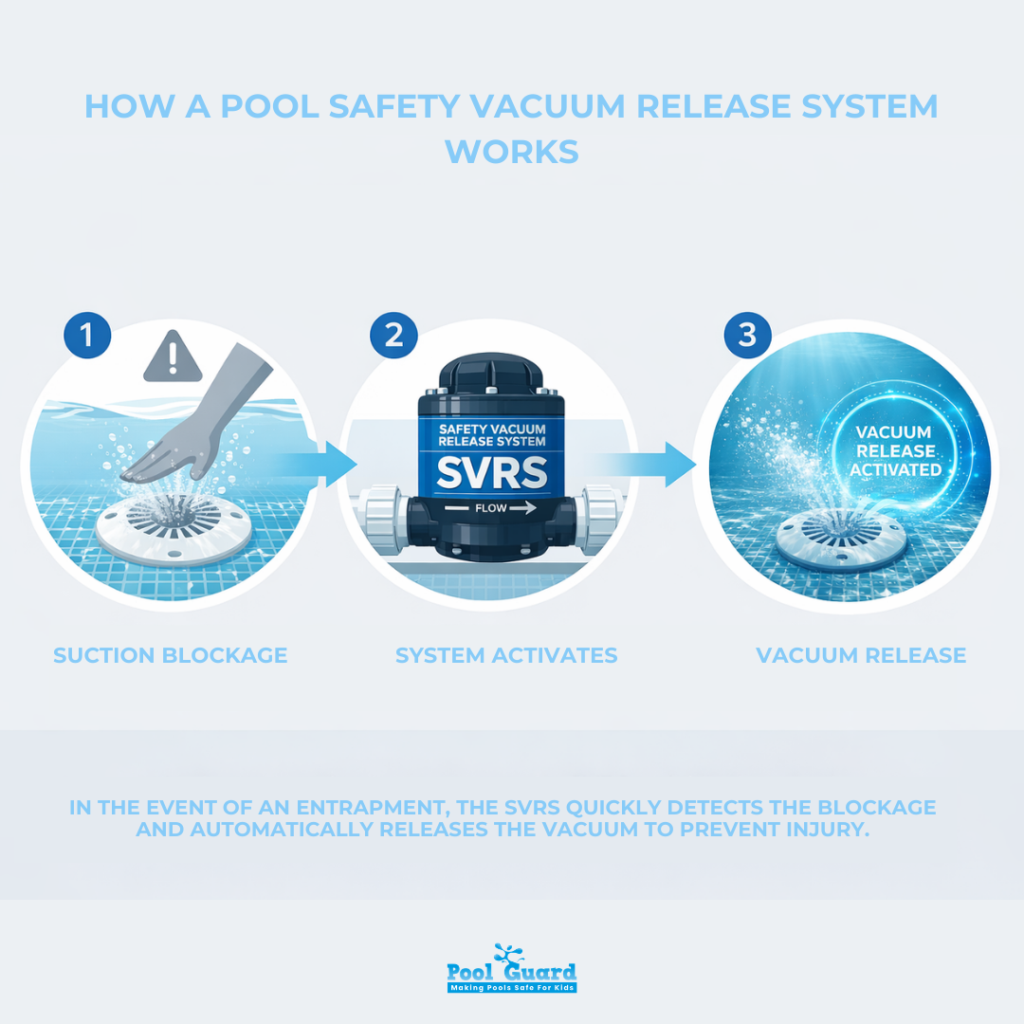
Although designs vary slightly, the fundamental operation of a safety vacuum release system follows a precise sequence.
First, a blockage occurs. When a swimmer or object fully seals a drain, the vacuum pressure in the suction line rises rapidly.
Second, the SVRS detects a pressure differential. Inside the device, a calibrated piston, diaphragm, magnetic assembly, or electronic sensor senses the sudden spike in negative pressure.
Third, the system activates. Depending on the type of SVRS system installed:
Fourth, the pump loses prime. Air entering the plumbing causes cavitation, collapsing the vacuum and releasing suction. The trapped person is freed, typically within three seconds.
This rapid response is what distinguishes an SVRS system from passive safety features.
There are three primary categories of SVRS technology used in modern pool systems.
Mechanical systems use spring-loaded pistons or magnetically controlled seals. Under normal conditions, the system remains airtight. When a vacuum spike occurs, the piston opens and allows atmospheric air into the suction plumbing.
Products such as the Vac-Alert VA-2000, manufactured by Vac-Alert Industries, rely entirely on mechanical components and do not require electrical wiring.
Mechanical systems are valued for their simplicity and reliability. However, they must be properly calibrated and periodically tested.
Electrical SVRS devices monitor vacuum pressure electronically. When abnormal pressure is detected, they shut down the pump motor directly. Some systems also include alarms and time-delay relays to prevent nuisance shutdowns during startup surges.
Manufacturers such as Paramount Pool & Spa Systems produce advanced SVRS devices that integrate both mechanical vacuum release and electrical pump interruption for layered protection.
Electrical systems require proper wiring and installation by qualified professionals.
Some modern variable-speed pumps include built-in SVRS functionality. These integrated systems monitor suction conditions internally and shut down automatically when dangerous vacuum levels are detected.
It is essential to distinguish between federal and local requirements.
For public pools and spas, the VGB Act mandates compliant drain covers. If a public pool has a single main drain that is not otherwise protected by an unblockable cover or gravity drainage system, it must incorporate an additional protective system such as an SVRS.
For residential pools, federal law does not mandate SVRS installation. However, many states and municipalities adopt building codes such as the International Residential Code (IRC) or International Building Code (IBC), which may include suction safety provisions.
In practice:
Always consult a licensed pool professional or local building authority before assuming compliance.
An SVRS system and dual drains address suction hazards in different ways.
| Feature | SVRS | Dual Drains |
| Prevents suction buildup | Reacts after blockage | Reduces suction concentration |
| Mechanical component | Yes | No |
| Requires calibration | Often | No |
| Testing required | Yes | Minimal |
| Recognized VGB compliance option | Yes | Yes |
Dual drains are preventative by design. They reduce the likelihood of dangerous suction concentration because blocking one drain does not fully seal the system.
An SVRS system is reactive. It detects a blockage event and responds to break suction.
Many safety professionals recommend layered protection rather than relying on a single method. Choosing between different protection methods often requires understanding pool cover vs fence safety and how each layer contributes to overall risk reduction.
This section is critical for understanding realistic expectations.
A safety vacuum release system:
Even manufacturers clearly state that an SVRS system is an additional layer of protection, not a standalone safety solution.
Most manufacturers recommend that an SVRS system be tested at installation and retested regularly. In many cases, these checks are reviewed during routine pool safety inspections to verify compliance.
In many cases, testing should occur:
Testing typically involves simulating a full drain blockage and confirming that the pump cavitates or shuts down within seconds. If the device trips prematurely during startup or fails to activate during testing, it may require adjustment or professional servicing.
Ignoring testing requirements can render the system ineffective. As part of regular maintenance, include SVRS checks in your pool safety checklist to ensure all systems function properly.
Whether a residential pool needs an SVRS system depends on several factors.
Homeowners should evaluate:
In some situations, upgrading to dual drains or installing VGB-compliant unblockable covers may provide more straightforward compliance. In others, adding an SVRS system may offer an additional safety layer.
A qualified pool builder or inspector can assess the hydraulic design and recommend the safest path forward.
Suction protection is only one piece of comprehensive pool safety.
A truly safe pool environment includes multiple overlapping protections, such as pool safety fence systems, VGB-compliant drain covers, and proper supervision strategies:
Layered safety dramatically reduces risk because no single device can eliminate every hazard.
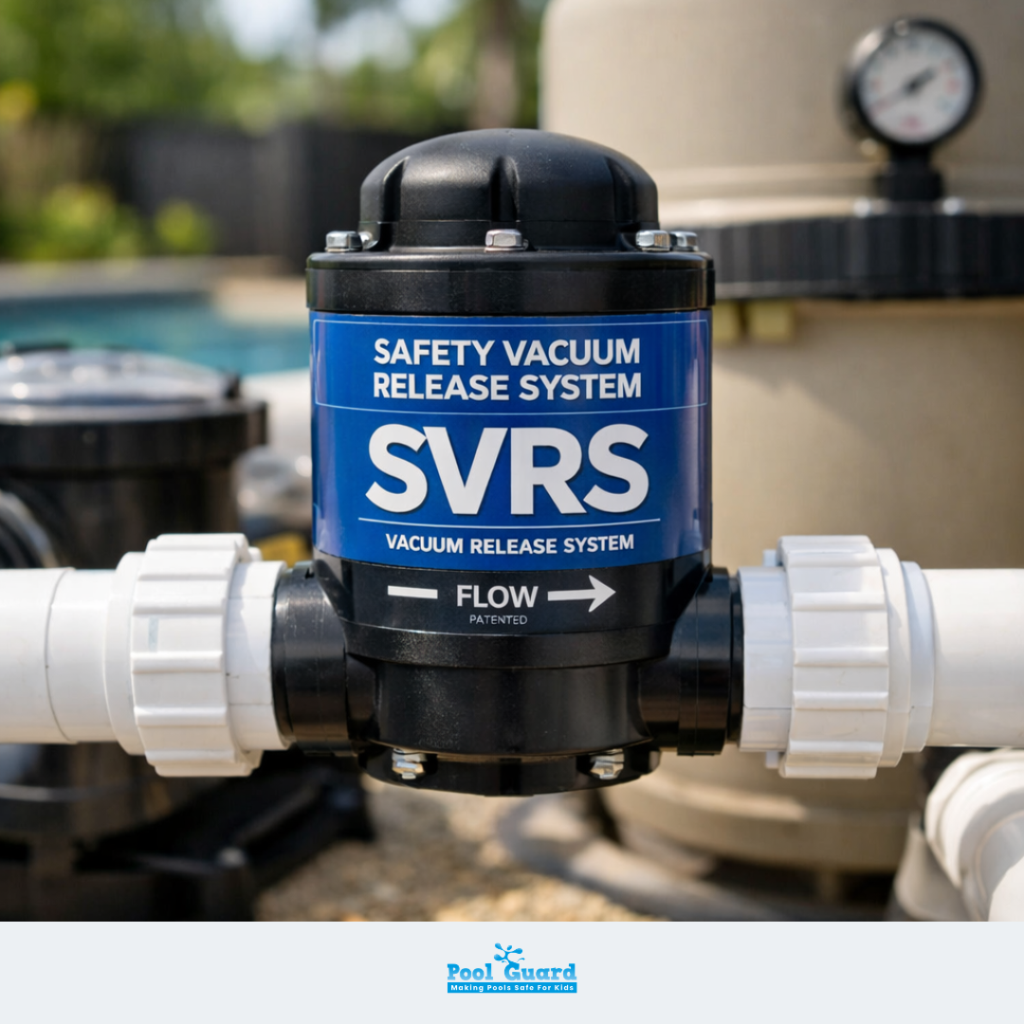
A safety vacuum release system detects a sudden spike in suction pressure and automatically breaks the vacuum by introducing air or shutting off the pump.
Not federally. Requirements vary by state and local code.
No. It specifically addresses suction entrapment and does not prevent other forms of drowning.
Testing involves simulating a complete drain blockage and verifying that suction is released within seconds.
They serve different purposes. Dual drains reduce suction concentration, while an SVRS reacts to a blockage event. Many experts recommend using layered protections.
Understanding What Is a Safety Vacuum Release System means recognizing both its importance and its limitations. An SVRS system can prevent catastrophic suction entrapment injuries when properly installed and maintained. However, it is not a substitute for compliant drain covers, thoughtful hydraulic design, or active supervision.
Pool safety is never about a single device. It is about layered protection, consistent maintenance, and informed decision-making.
If this guide clarified how SVRS systems work and when they are needed, share it with a pool owner, builder, or facility operator who may benefit from understanding this critical safety technology.

Find your local dealer by entering your zip code above.
Please fill out the form below with your information. Your local dealer will be notified about your inquiry.
Please fill out the form below with your information. Your local dealer will be notified about your inquiry.