Most residential pool accidents don’t happen during active supervision. They happen in brief, everyday moments—when attention shifts, routines break, or someone assumes another adult is watching.
According to the Centers for Disease Control and Prevention (CDC), drowning is a leading cause of death for children ages 1–4, and it often occurs silently within minutes of a child gaining access to the water.
This is why understanding what is isolation pool fencing is so important.
Unlike standard backyard fencing, isolation pool fencing creates a complete physical separation between the pool and the home, preventing children or pets from reaching the water without passing through a controlled entry point.
Organizations like the National Drowning Prevention Alliance (NDPA) and the Consumer Product Safety Commission (CPSC) consistently identify barriers as the foundation of pool safety—making isolation fencing one of the most effective ways to reduce risk before an incident can begin.
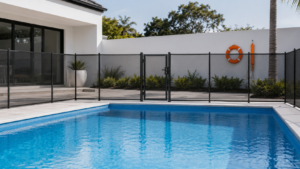
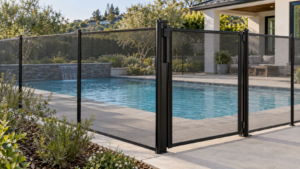
Isolation pool fencing is a four-sided barrier system that completely surrounds a swimming pool and separates it from the house, yard, and all other access points.
This is not just a fence—it’s a controlled environment.
A proper isolation fence includes:
The goal is simple but critical: Prevent a child from reaching the pool without adult involvement.
This is why systems built as ASTM-certified pool safety fences are considered the benchmark for effective pool protection.
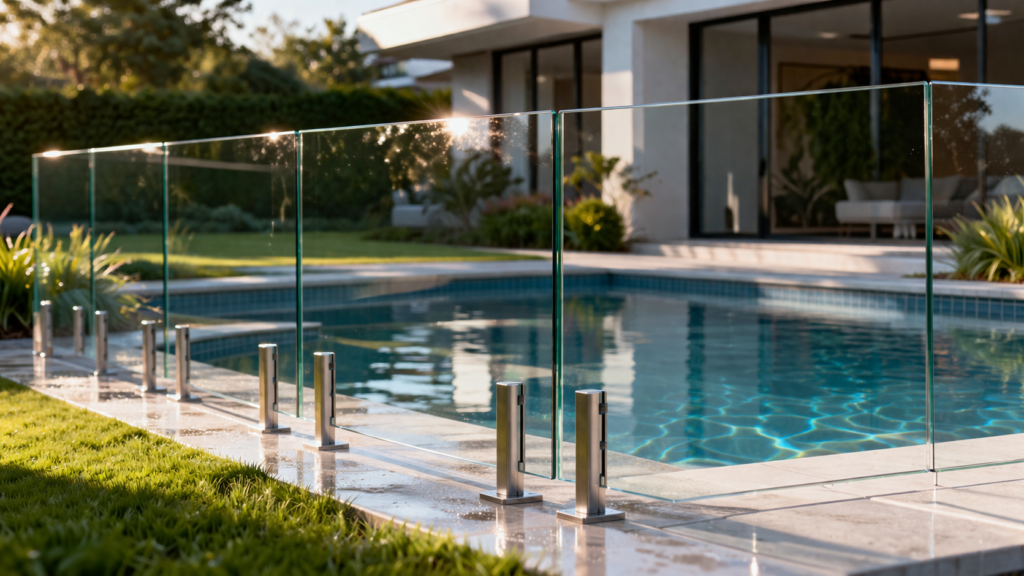
Isolation fencing works because it removes the need to rely on human behavior, which is the most unreliable part of any safety system. Instead of depending on someone to notice, react, or intervene at the right moment, it prevents the situation from happening in the first place. This shift—from reaction to prevention—is what makes isolation fencing so effective. It creates a controlled environment where access to the pool is physically restricted at all times, regardless of distractions, routines, or unexpected interruptions.
A properly installed isolation fence creates a continuous, uninterrupted barrier that blocks direct access to the water from all sides. There are no shortcuts, no open pathways, and no reliance on doors being closed or locked. The fence surrounds the pool completely, ensuring that a child cannot simply wander from the house or yard into the pool area.
This matters because most incidents occur during small lapses in attention—moments that are impossible to eliminate entirely. By removing physical access, the fence acts as a constant safeguard. Even if supervision breaks down for a few seconds or minutes, the child is still prevented from reaching the water.
Every entry point into the pool area is designed to close automatically after being opened. This feature directly addresses one of the most common real-world failure points: gates being left open accidentally. Whether it’s a distracted adult, a guest unfamiliar with the system, or a child following someone through the gate, the self-closing mechanism ensures the barrier restores itself without requiring action.
In practice, this means the system is always working in the background. Even if someone forgets to close the gate, it closes on its own, maintaining the integrity of the barrier and reducing the chance of human error compromising safety.
The latch is positioned high enough that small children cannot reach or operate it, adding another layer of protection at the access point. In many modern systems, the latch is designed to engage automatically the moment the gate closes, ensuring that it is securely fastened every time.
This automatic engagement is critical because it removes the need for someone to double-check whether the gate is properly secured. The system resets itself after each use, maintaining consistent protection without relying on memory, routine, or habit.
This ensures that the barrier resets itself every time it is used, maintaining a reliable and repeatable level of protection throughout the day.
Unlike alarms, pool covers, or supervision, isolation fencing works continuously and passively. It does not depend on batteries, Wi-Fi connections, or whether someone is paying attention at the right moment. It remains active at all times, providing a constant level of protection regardless of changing conditions.
It protects:
Because of this, isolation fencing is considered a foundational safety layer rather than a backup. Many homeowners choose solutions like mesh pool fences because they combine visibility with a non-climbable structure, allowing for both safety and usability without sacrificing effectiveness.
One of the biggest misconceptions among homeowners is believing that a standard backyard fence provides sufficient pool protection. On the surface, it feels logical—if your yard is fenced, the pool must be secure. But in reality, perimeter fencing and isolation fencing serve entirely different purposes, and confusing the two is where most safety gaps begin.
Perimeter fencing is designed for property security and boundary control, not for preventing internal access to hazards like a swimming pool. Isolation fencing, on the other hand, is specifically engineered to control access to the pool itself, which is where the real risk exists.
A perimeter fence surrounds the entire property, creating a boundary between your home and the outside world. While this can help keep strangers or animals out, it does little to prevent a child inside the home from reaching the pool area.
In most residential layouts, the house becomes part of the barrier system. That introduces a critical weakness: doors, sliding glass panels, and open access points effectively become entry paths to the pool.
In most cases:
This means that even if the yard is fully enclosed, the highest-risk access point—the home itself—remains completely unprotected.
An isolation fence surrounds only the pool and separates it from everything else, including the house, patio, and yard. Instead of relying on the property boundary, it creates a dedicated safety zone where access is tightly controlled.
This fundamentally changes how the environment works. The pool is no longer just part of the backyard—it becomes a restricted area that requires intentional entry.
This means:
By forcing all movement through a single controlled access point, isolation fencing removes the possibility of accidental or unnoticed entry.
Many pool incidents occur when a child exits the home unnoticed and reaches the pool within moments. This can happen through a sliding door left slightly open, a back door that wasn’t fully latched, or even during normal household activity when attention is briefly diverted.
These events are dangerous precisely because they are silent and fast. There is often no splash, no cry for help, and no immediate signal that something has gone wrong.
Because of this, relying on the house as part of the barrier system introduces a critical flaw. It assumes that:
In reality, none of those assumptions hold consistently.
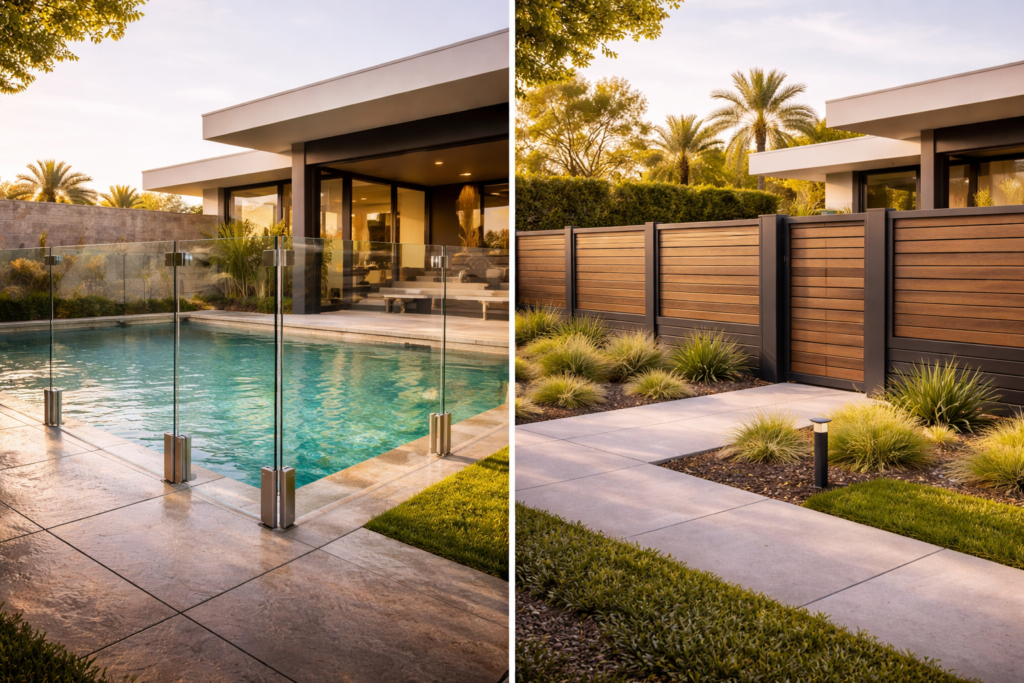
Isolation pool fencing is not just an industry recommendation—it is supported by research and public safety data.
A Cochrane systematic review found that pool fencing reduces the risk of drowning by approximately 70–75%. Even more importantly, four-sided isolation fencing significantly outperforms three-sided or perimeter barriers.
Additional findings and recommendations:
These are not marginal improvements. They represent a fundamental reduction in risk.
Not all pool fences deliver the same level of protection. While many may meet basic code requirements, true safety comes down to how well the fence prevents real-world access scenarios—especially those involving young children who are naturally curious, fast, and unpredictable.
The effectiveness of isolation fencing depends on specific design features working together as a system. If even one of these elements is weak or missing, the overall protection is compromised.
Most regulations require a minimum fence height of 4 feet, but height alone should not be viewed as the primary safety feature. In practice, taller fences—typically around 5 feet or more—offer an added layer of protection, especially against determined or physically capable children.
However, height only works when combined with a non-climbable design. A tall fence with footholds can still be scaled quickly, which means height should be seen as part of a broader system rather than a standalone solution.
A safe isolation fence must be intentionally designed to prevent climbing. This means eliminating any horizontal rails, decorative elements, or structural features that could act as footholds or handholds.
Equally important is the surrounding environment. Even a properly designed fence can be compromised if objects like chairs, planters, or outdoor equipment are placed nearby. Children don’t just climb fences—they use whatever is available to gain leverage.
The gate is the most critical—and most vulnerable—part of any pool barrier system. A self-closing gate ensures that the barrier is automatically restored every time someone enters or exits the pool area.
This feature directly addresses one of the most common real-world failures: gates being left open. Whether due to distraction, habit, or oversight, an open gate immediately eliminates the protection the fence is meant to provide.
A properly functioning self-closing mechanism removes that risk by making closure automatic rather than optional.
The latch adds a second layer of protection by securing the gate once it closes. It should be positioned high enough to remain out of reach of young children and designed to engage reliably without requiring precise alignment or extra force.
In many modern systems, latches are engineered to lock automatically as soon as the gate shuts, ensuring consistent performance regardless of how the gate is used.
This matters because safety systems should not depend on memory or routine. The latch must work every time—without exception.
Material choice plays a significant role in long-term safety, not just aesthetics. A fence that degrades, weakens, or becomes unstable over time introduces new risks, even if it was initially installed correctly.
Common materials used in effective isolation fencing include:
Each material has its place, but the priority should always be durability, structural integrity, and resistance to climbing—not just appearance.
Even a well-designed isolation fence can fail if it is installed incorrectly or not properly maintained over time. Most pool-related incidents don’t happen because there was no safety system—they happen because the system had a hidden weakness that went unnoticed until it mattered.
Understanding these common mistakes helps you identify and eliminate those failure points before they become risks.
Outdoor furniture, planters, storage bins, or even decorative features placed near the fence can unintentionally create climbing access. What looks harmless to an adult can quickly become a step, platform, or leverage point for a child.
Children don’t approach barriers the way adults do—they explore, test, and improvise. A chair pulled close to the fence or a planter positioned nearby can effectively reduce the height of the barrier and make it much easier to scale.
Maintaining a clear, obstacle-free zone around the fence is just as important as the fence itself.
The gate is the most critical component of the entire system, and even small alignment issues can compromise its effectiveness. If a gate does not close fully or latch securely every time, the barrier becomes unreliable.
This problem often develops gradually. Hinges may shift, ground levels can change, or hardware can loosen over time. What starts as a minor issue—like a gate that needs a slight push to close—can quickly turn into a complete failure point.
A properly functioning gate should:
If any of these conditions aren’t met, the system is no longer performing as intended.
Uneven terrain, soil settling, or improper installation can create gaps at the base of the fence. These openings may seem small, but they can be large enough for a child—or even a pet—to pass through.
This is especially common in yards with slopes or soft ground, where the fence may shift slightly over time. Without regular inspection, these gaps can go unnoticed until they become a real access point.
Ensuring consistent ground clearance and adjusting for terrain changes is essential for maintaining protection.
One of the most dangerous mistakes is relying on the house as part of the pool barrier system. While it may seem convenient, it introduces a direct and uncontrolled access path.
Doors, sliding glass panels, and entryways are not reliable safety barriers. They depend entirely on human behavior—being closed, locked, and monitored at all times—which is unrealistic in everyday life.
This creates a situation where a child can move from the home to the pool in seconds, often without being noticed.
True isolation fencing removes this risk by separating the pool entirely from the home.
Even the best-designed fence will degrade over time if it is not properly maintained. Exposure to weather, regular use, and natural wear can all affect performance.
Common maintenance issues include:
These issues don’t always cause immediate failure, which is why they are often overlooked. However, they reduce the reliability of the system and increase the likelihood of failure under the exact conditions when safety matters most.
Regular inspections and timely repairs are essential to ensure the fence remains a dependable barrier, not just a visual one.
Pool fencing requirements vary depending on location, but most follow similar principles based on the International Swimming Pool & Spa Code (ISPSC).
Typical requirements include:
Some areas allow alternatives like perimeter fencing or door alarms. However, safety experts consistently recommend full isolation fencing because it directly addresses the primary risk: unsupervised access.
You can review pool fence laws in your area to understand both compliance and best practices.
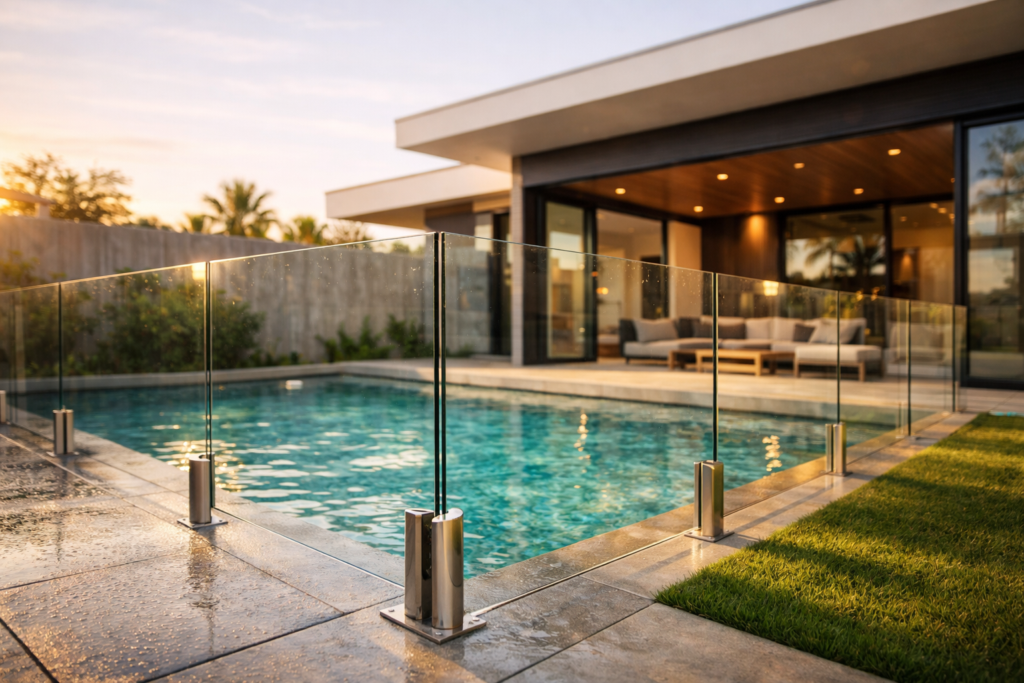
When you strip away all the details, the issue comes down to one simple factor:
If the answer is yes, the risk remains.
Understanding what isolation pool fencing is ultimately comes down to understanding this core principle. It is not just another safety feature—it is a system specifically designed to eliminate unsupervised access altogether.
Isolation pool fencing changes the entire risk equation. It creates a controlled environment that does not depend on perfect supervision, fast reactions, or constant awareness. Instead of relying on human behavior, it removes the possibility of access at the source.
That’s why it continues to be one of the most effective and widely recommended pool safety measures by experts, safety organizations, and building codes alike.
In the end, the goal isn’t to react faster—it’s to make sure the situation never happens in the first place.
Find your local dealer by entering your zip code above.
Please fill out the form below with your information. Your local dealer will be notified about your inquiry.
Please fill out the form below with your information. Your local dealer will be notified about your inquiry.