Every year in the United States, drowning remains one of the leading causes of accidental death in children under five — and the CDC reports that drowning is the #1 cause of unintentional injury death for children ages 1–4. A pool fence isn’t just a backyard upgrade. It’s a life-safety system.
If you’re shopping for a pool fence, you’ve likely landed in the same debate thousands of homeowners face: mesh vs. glass pool fence. Both are popular, both meet modern safety codes, and both look far better than a rusty chain-link. But they serve different priorities – and choosing the wrong one could cost you more than money.
This guide breaks it all down: real costs, honest pros and cons, safety standards, maintenance realities, and a clear recommendation based on your situation.
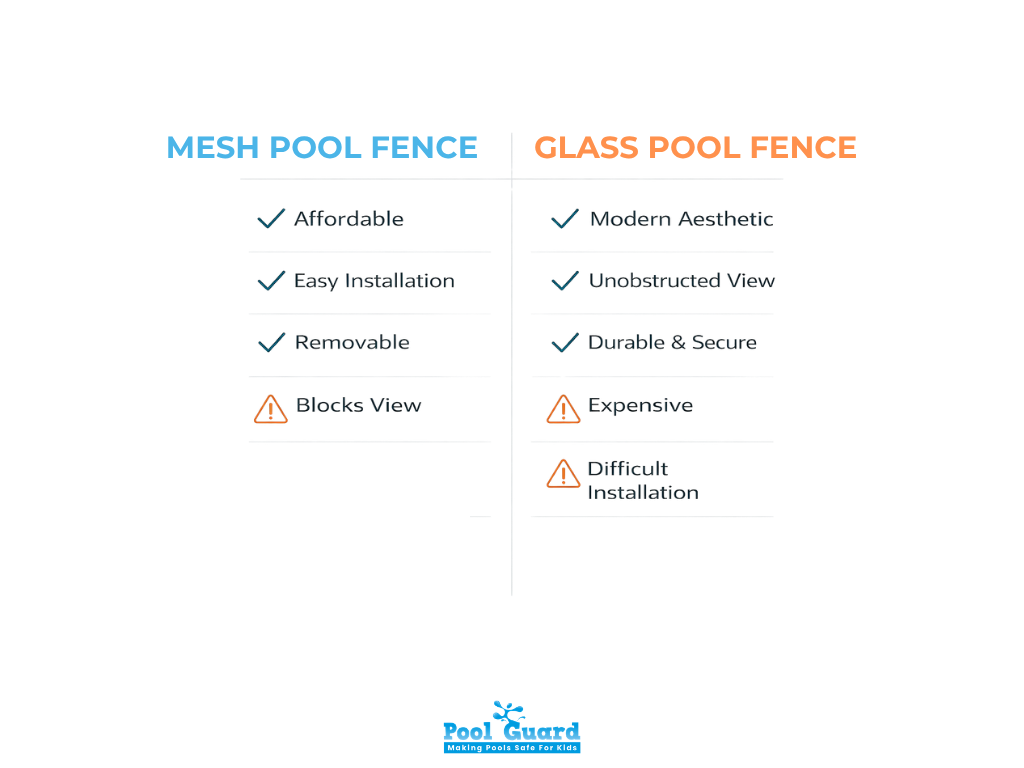
| Factor | Mesh Pool Fence | Glass Pool Fence |
| Primary appeal | Safety-first, budget-friendly | Luxury aesthetic, unobstructed views |
| Upfront cost | $15–$25 per linear foot | $150–$800+ per linear foot |
| Installation | DIY-possible, removable | Professional required, permanent |
| Visibility | Partial — good sightlines | Full — completely transparent |
| Child safety | Purpose-built, ASTM F2286 rated | Strong, but passive barrier |
| Maintenance | Low — tension checks, no cleaners | High — regular cleaning, special products |
| Flexibility | Removable and reconfigurable | Permanent once installed |
| Durability | Long-lasting with upkeep | Very durable; shatters under high impact |
| Code compliance | ASTM F2286, California Title 24 | Engineered tempered glass, Title 24 |
| Best for | Families with kids/pets, renters | Aesthetic-focused homeowners, luxury pools |
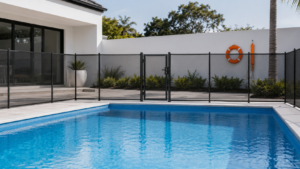
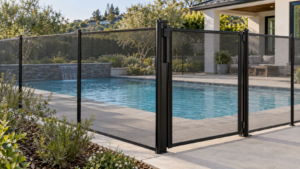
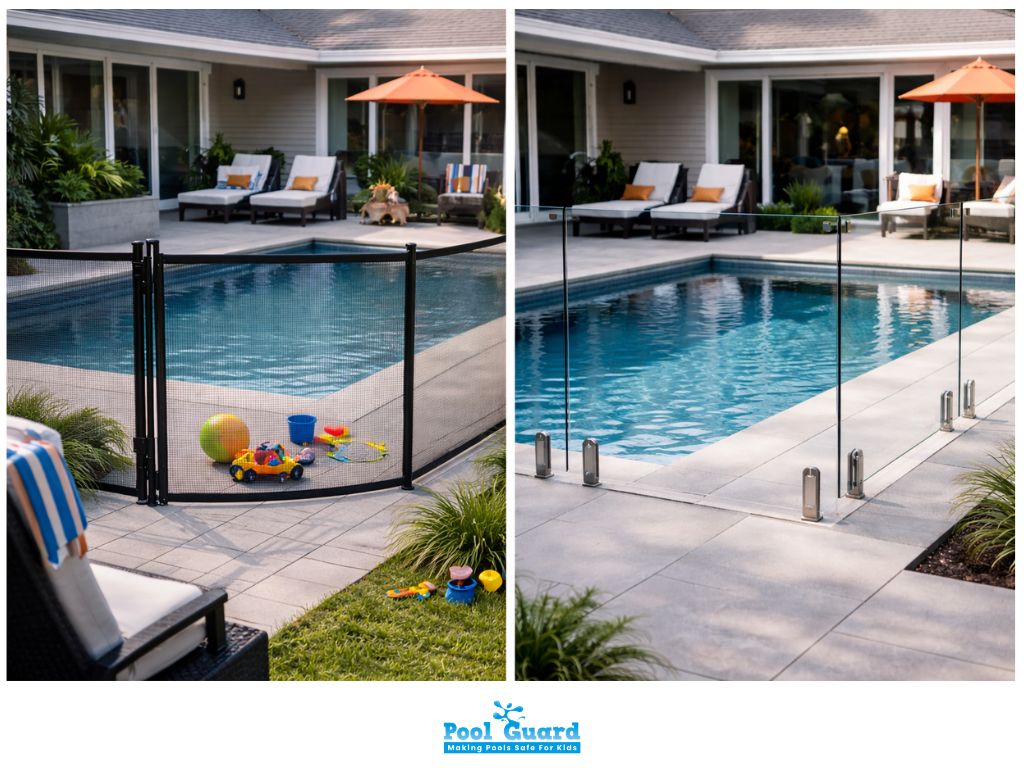
A mesh pool fence is a removable safety barrier made from tightly woven polyester or vinyl-coated mesh panels stretched between slim aluminum or steel posts. The posts are anchored into the pool deck with drilled sleeves, making the system both secure and removable. Most mesh systems are explicitly designed and tested as child-safety barriers — many are ASTM F2286 certified, a standard recognized by California and other states as a qualifying pool isolation barrier.
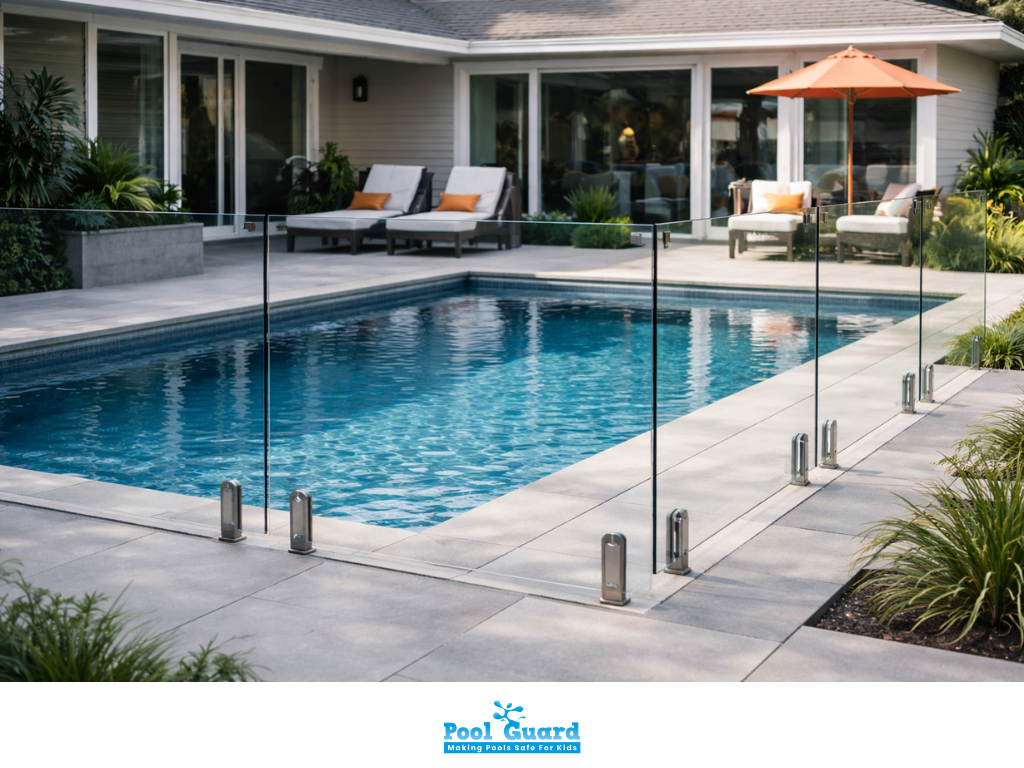
A glass pool fence uses thick panels of tempered safety glass — typically 10mm to 12mm — anchored into low-profile stainless steel spigots or channels set directly into the pool deck or surrounding surface. Frameless glass pool fencing is the most popular style, creating an almost invisible barrier with a resort-like aesthetic. The glass used is architectural-grade, engineered to be 4–8x stronger than standard window glass, and designed to meet barrier height, gap, and structural requirements under building codes.
Climb-resistant by design. Mesh panels have no horizontal rails, no footholds, and no rigid frame for a child to grip. The flexible surface actually makes it harder to scale than many rigid alternatives — and it’s one reason mesh fencing is purpose-built for child safety environments.
Removable and flexible. Unlike glass, mesh fences can be taken down and reinstalled. This matters for renters, homeowners who may remodel, or anyone who needs seasonal access or temporary removal for events. Panels can be reconfigured to fit shifting pool boundaries.
Strong child safety performance. Many mesh systems are tested to ASTM F2286, the standard for permanently installed residential pool fencing. Self-latching, self-closing gates with elevated latch mechanisms make unauthorized child access extremely difficult.
Cost-effective. Mesh fencing is significantly more affordable than glass — both in upfront material costs and installation. For budget-conscious families who need a compliant, effective barrier quickly, mesh is often the only realistic option.
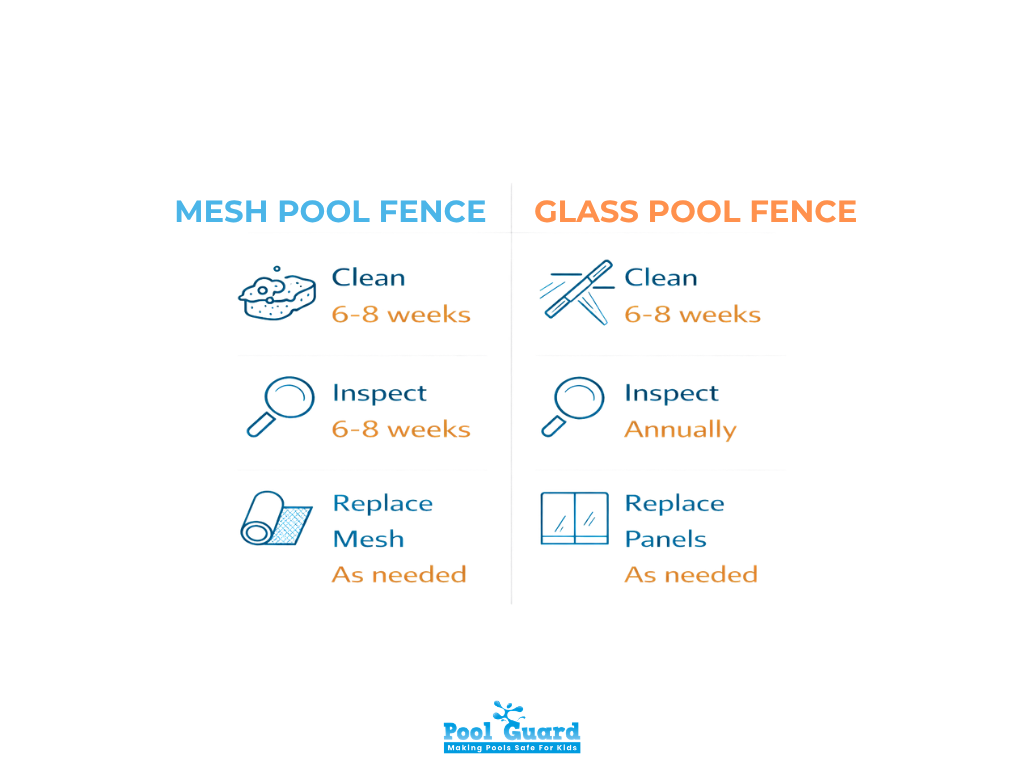
Low maintenance. No special cleaning products, no concern about watermarks or chlorine residue. The main upkeep task is checking mesh tension periodically and replacing worn post sleeves over time.
Less visually premium. Mesh blends into the background — which is by design, but it doesn’t add the architectural “wow factor” that glass does. It won’t boost curb appeal or property value the way glass fencing can.
Requires tension maintenance. Over time, mesh panels can lose tension and sag, creating potential gaps that could fail a 4-inch sphere test. Periodic adjustments are necessary.
Partial visibility. While mesh offers reasonable sightlines into the pool area, it’s not fully transparent. In low light or at a distance, the mesh weave can slightly obscure your view.
Removable = owner responsibility. Because panels can be removed, the safety of the barrier depends on the homeowner ensuring it’s always in place and properly latched when children are present.
Unobstructed visibility. The most significant practical advantage of glass fencing is the ability to see the entire pool area without obstruction. For parents supervising swimmers from inside the home or from a distance, this clear sightline is genuinely valuable.
Modern, luxury aesthetic. Glass fencing transforms a backyard into a resort. It pairs seamlessly with contemporary architecture, large sliding glass doors, and hillside or coastal homes. It’s widely regarded as the most visually sophisticated pool fencing option available.
Durable panels. Tempered safety glass is engineered to be extremely strong. Quality panels resist corrosion, don’t rust, and won’t degrade from chlorine exposure or UV rays the way plexiglass or vinyl might. When properly installed with #316 stainless steel hardware, the system can last decades.
Property value boost. Glass fencing is consistently cited by real estate professionals as a feature that increases perceived and actual home value — important for homeowners who view the pool area as a long-term investment.
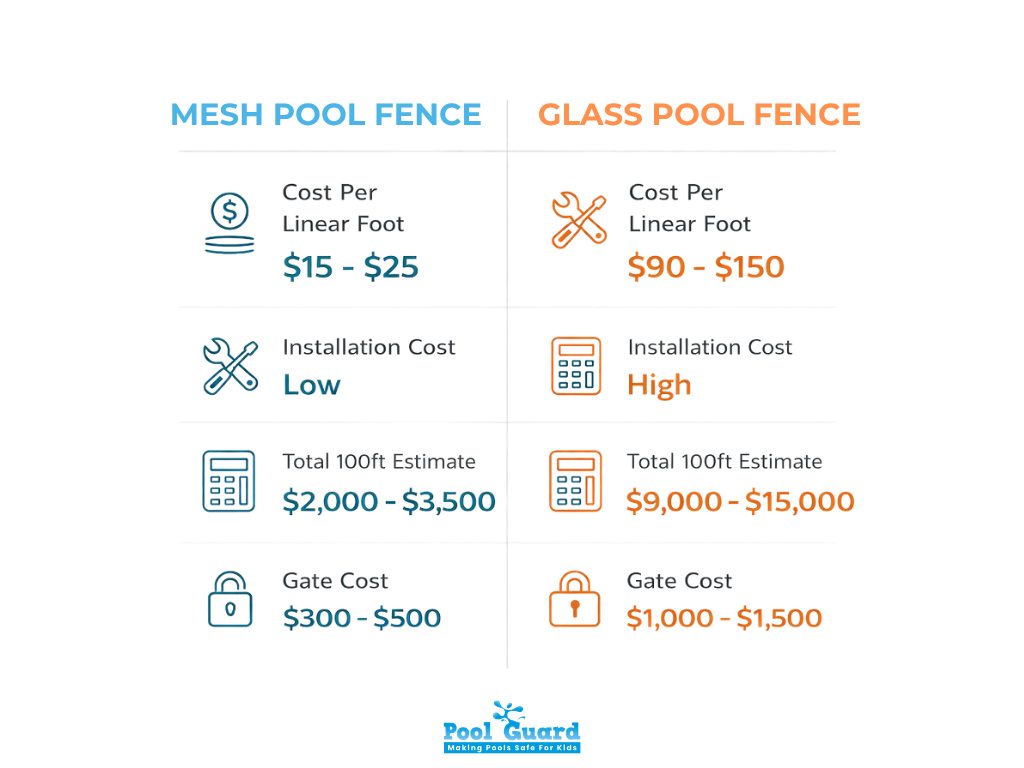
High upfront cost. This is the single biggest barrier. Glass pool fencing can run $150–$800+ per linear foot installed, compared to $15–$25 for mesh. For an average 100-linear-foot pool perimeter, you’re looking at a potential difference of tens of thousands of dollars.
Frequent cleaning required. The pool environment — chlorinated water, splash, salt air, sunscreen — leaves constant marks on glass. Panels should be wiped down every 6–8 weeks minimum, using appropriate cleaners that won’t scratch the surface or damage seals.
Can create a false sense of safety. This is the most overlooked downside. Glass is a passive barrier — it stops access, but it doesn’t inherently “look” like a barrier to a running child, an excited dog, or an elderly guest. Unlike mesh, which is visually obvious, glass can be effectively invisible.
Shattering hazard. While tempered glass is designed to break into small, relatively blunt pieces rather than large shards, a broken panel is still a serious cleanup and safety situation — particularly around a pool where bare feet are common.
Permanent installation. Glass requires drilling into the deck, engineered anchors, and in many jurisdictions, permits. You cannot easily reposition it, and any layout change involves new drilling and building department coordination.
| Cost Factor | Mesh | Glass |
| Material (panels/glass) | $8–$15/linear ft | $100–$500/linear ft |
| Installation labor | $7–$10/linear ft | $50–$300/linear ft |
| Total installed | $15–$25/linear ft | $150–$800+/linear ft |
| Gate (per gate) | $100–$300 | $500–$2,000+ |
For a typical 100-linear-foot pool perimeter:
Mesh fencing is relatively straightforward — posts are drilled into the deck, sleeves are set, and panels are tensioned. Many professional installers can complete a standard residential job in a single day. Some removable systems are even homeowner-installable.
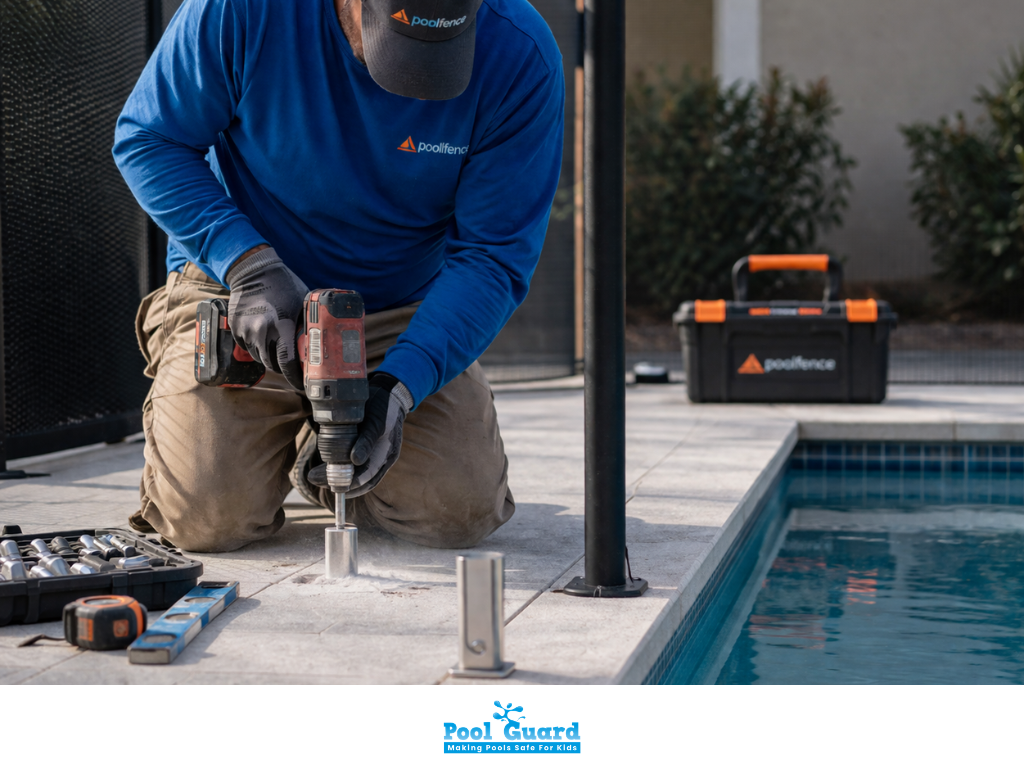
Glass fencing requires precise measurements, engineered anchors, and careful alignment. Frameless glass installation is not DIY-friendly. In California and many other states, permits and inspections may be required for structural deck work.
Over a 10-year period, the total cost of ownership often narrows between the two options — glass requires less structural replacement but has ongoing cleaning costs and periodic hardware inspection. That said, glass’s dramatically higher starting cost means the payback period is very long.
Bottom line on cost: If upfront cost is a significant constraint, mesh wins decisively. If long-term aesthetics and property value are priorities and the budget is flexible, glass may justify the investment.
Both mesh and glass pool fences can meet the same core safety benchmarks when properly installed. For example, In California and most U.S. jurisdictions, a compliant pool barrier must meet specific California pool fence requirements:
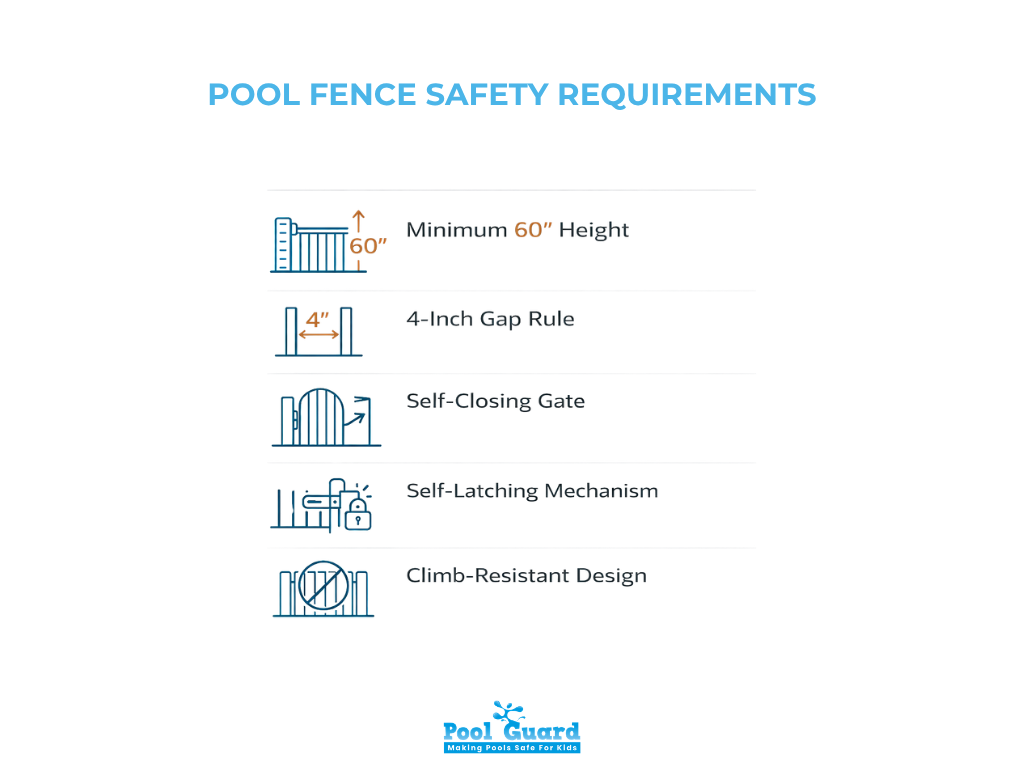
Many mesh pool fence systems are tested and certified to ASTM F2286, the American Society for Testing and Materials standard specifically for permanently installed, removable pool fencing. This certification means the fence has been tested for height, strength, climb resistance, and gate performance — and is explicitly recognized as a qualifying isolation barrier in California (Title 24) and many other states.
Glass pool fencing operates under a different code pathway — engineered tempered glass meeting structural and safety requirements under local building codes — but is equally valid when properly installed.
Seeing the pool does not prevent access to the pool. Glass fencing provides excellent visibility, which is valuable for supervision — but supervision is a complement to a physical barrier, not a replacement.
Mesh fencing, being purpose-built as an active child-safety barrier, is often considered the stronger option in pure child-protection terms. Its climb-resistant design, certified gate hardware, and tested installation specifications were developed explicitly for the scenario of an unsupervised child near water.
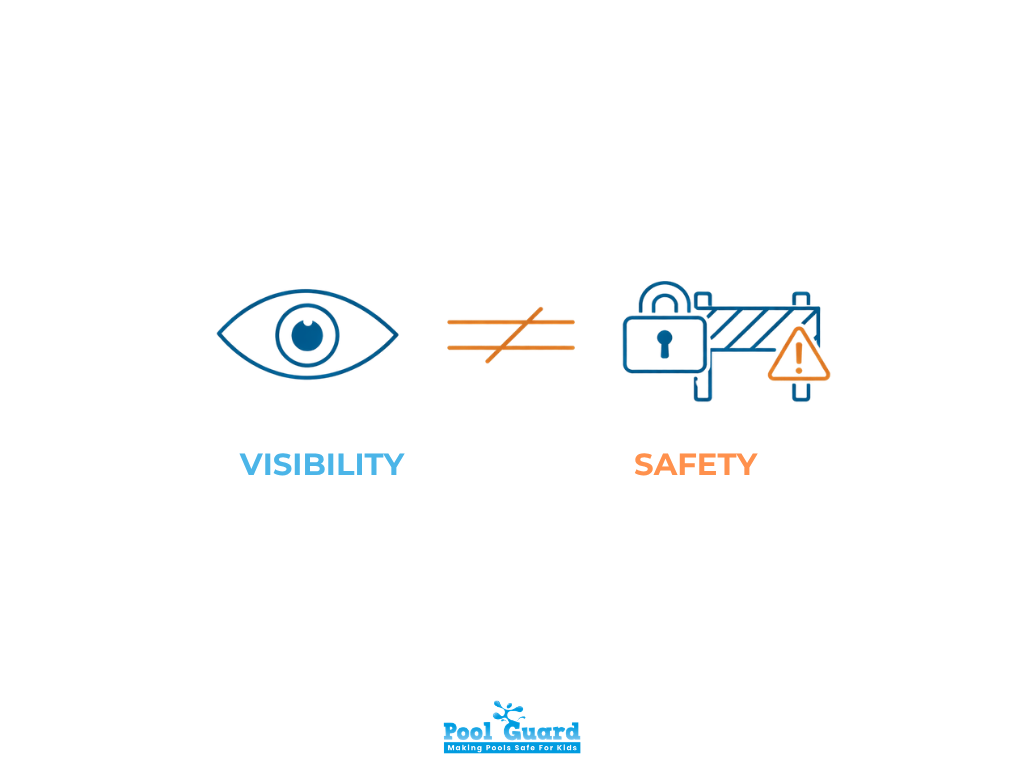
The most common misconception in this debate is treating visibility and safety as the same thing. They’re not.
Glass = passive safety. The fence physically blocks access — but because it’s transparent, neither the child approaching the pool nor the parent supervising from inside necessarily registers it as a barrier. A child running toward the pool may simply run into the glass. A parent watching through the glass may feel more comfortable letting a child play nearby unsupervised — which defeats the purpose of the barrier.
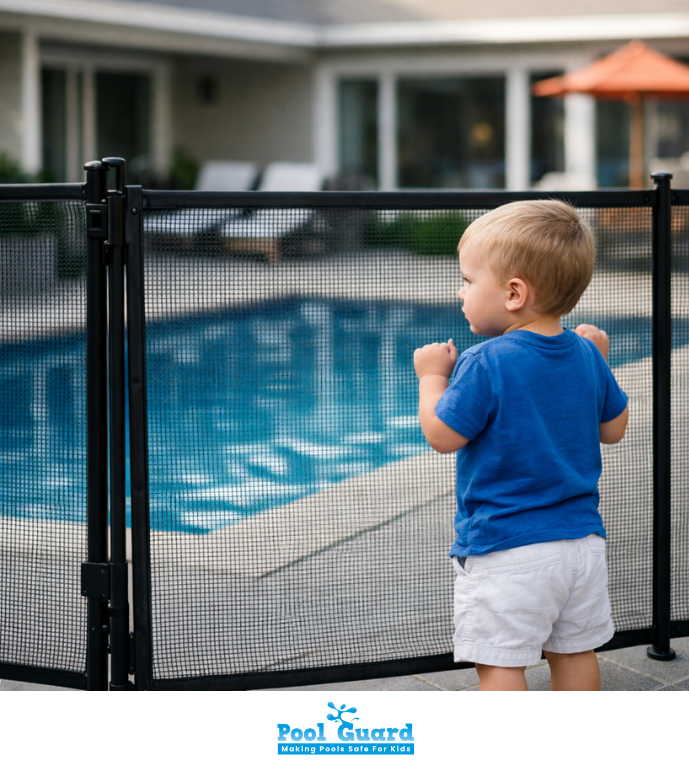
Mesh = active barrier. The mesh is visible, slightly opaque, and clearly “there.” Children perceive it as an obstacle. It’s harder to climb, the gate is purposefully difficult for small hands to open, and the barrier signals “no entry” in a way a transparent pane simply doesn’t.
This doesn’t mean glass is unsafe — properly installed, code-compliant glass fencing absolutely meets legal safety standards. But for families with young children, these behavioral and perceptual differences matter beyond what any spec sheet will tell you.
Yes — and for some homeowners, a hybrid layout is the smartest solution.
Use glass fencing along the sections of your pool that face the main living area or entertainment space, where visibility and aesthetics matter most. Use mesh fencing along the sides or back, or in areas adjacent to the yard, where child safety and flexibility are the higher priorities.
This approach lets you optimize for both goals without compromising either. It also manages cost: by limiting glass to the most visible panels and using mesh elsewhere, you can achieve a premium look at a significantly lower price than an all-glass installation.
Some homeowners also stage their investment — installing mesh first for immediate code compliance and child safety, then upgrading sections to glass over time as budget allows.
Design note: When combining systems, ensure both fence types meet the same height and gate requirements so the full perimeter passes inspection as a single, unified barrier.
Both can meet the same legal safety standards when properly installed. However, mesh fencing is often considered the stronger active barrier for child safety due to its ASTM F2286 certification, climb-resistant design, and purpose-built gate hardware. Glass is a compliant and effective barrier, but its transparency makes it a more passive safety feature.
Mesh typically costs $15–$25 per linear foot installed. Glass runs $150–$800+ per linear foot installed. For a standard 100-linear-foot pool perimeter, that’s roughly $1,500–$2,500 for mesh vs. $15,000–$80,000+ for glass.
Yes. California requires pool barriers to stand at least 60 inches (5 feet) tall, measured from the outside. Both mesh and glass can meet this requirement, but the installation must be fully compliant — meaning no nearby structures that could serve as a climbing aid.
Glass pool fencing is not recommended as a DIY project. It requires precise measurements, professional drilling, engineered anchors, and in most California jurisdictions, permits and inspections. Improper installation can result in a failed inspection — or worse, a panel failure.
Most manufacturers and installers recommend wiping down glass panels every 6–8 weeks to prevent water spot, fingerprint, and chlorine residue buildup. Use appropriate cleaners — avoid abrasive products that can scratch the glass or damage hardware seals.
ASTM F2286 is the American Society for Testing and Materials standard for permanently installed residential pool fencing. It sets requirements for fence height, opening sizes, climb resistance, and gate behavior. California’s Title 24 framework explicitly recognizes ASTM F2286-compliant systems as qualifying pool isolation barriers.
Mesh fencing can be removed and reinstalled relatively easily. Glass fencing is permanently anchored and cannot be temporarily removed without significant structural work — making mesh a better choice for renters, homeowners planning renovations, or anyone who needs seasonal flexibility.
There’s no universally right answer in the mesh vs. glass pool fence debate — but there is a right answer for you, based on your priorities.
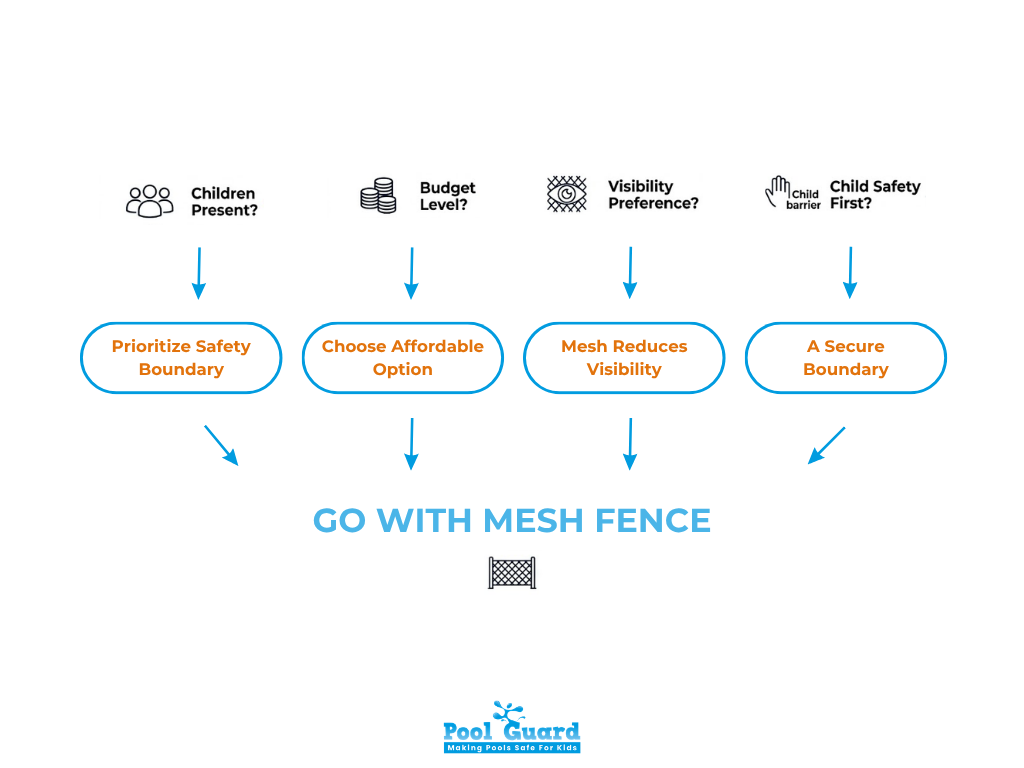
If you have young children, a tight budget, or value flexibility, mesh is the clear winner. It’s purpose-built for the job, ASTM-certified, and will pass every inspection a glass fence would — at a fraction of the cost.
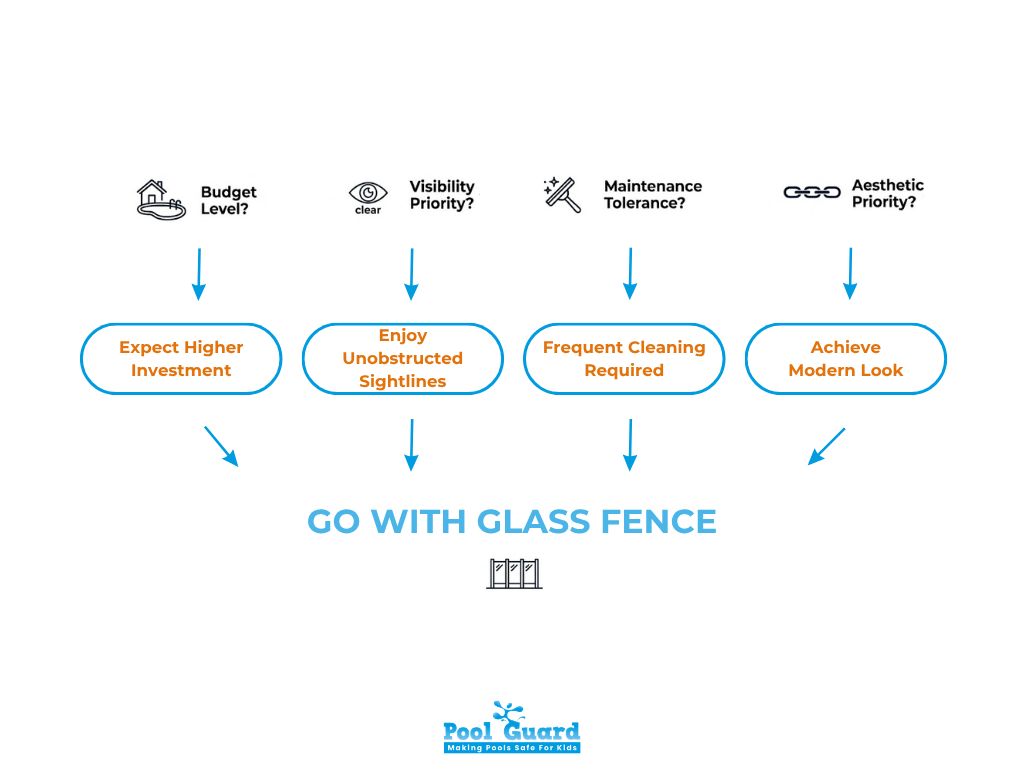
If you’re investing in a luxury outdoor space, have older children or no children, and want to maximize your home’s aesthetic and resale value, glass is worth the investment — as long as it’s installed correctly and maintained consistently.
Either way, the most important step is the same: make sure your barrier is properly installed, fully compliant with your local code, and inspected before children have any access to the pool area.
Need help choosing the right pool fence for your home? Explore Pool Guard USA’s full range of pool safety fencing at poolguardusa.com
Found this guide useful? Share it with a neighbor who just put in a pool — it could make a real difference.
Find your local dealer by entering your zip code above.
Please fill out the form below with your information. Your local dealer will be notified about your inquiry.
Please fill out the form below with your information. Your local dealer will be notified about your inquiry.