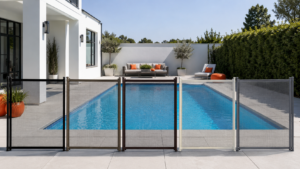
Most homeowners spend weeks picking the perfect pool tile or patio furniture, then choose a fence color in five minutes. It’s an easy decision to rush, but pool fence colors may have a bigger impact on your backyard’s overall look than most people expect. The right shade blends quietly into your landscaping. The wrong one draws the eye in all the wrong ways.
This guide covers popular pool fence colors, how they perform in different backyard conditions, and how to choose the right option for your home style, deck material, and climate.
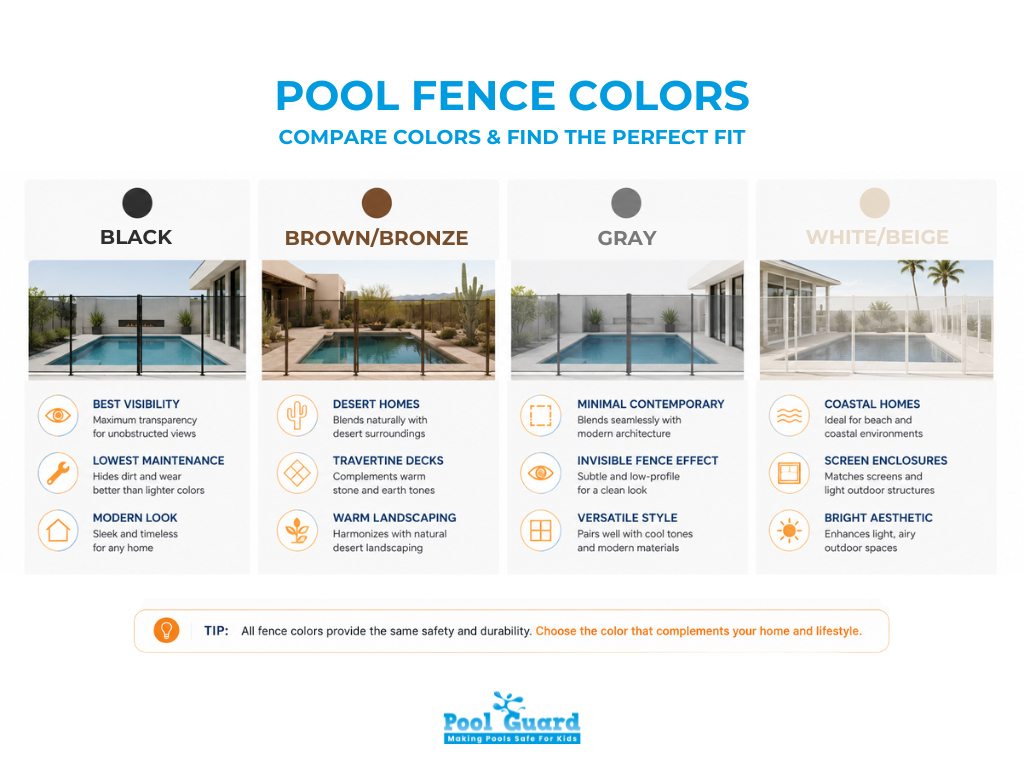
Pool safety fences come in a range of colors today, far beyond the all-black standard of 20 years ago. Here’s how each option performs in the real world.
Best For: Modern, minimalist, and high-transparency setups.
Black pool fences are the top choice for modern, minimalist setups due to their superior transparency. The dark mesh creates high contrast, making the fence appear more see-through. This maximum visibility is critical for supervising young children.
Black mesh is also the lowest-maintenance option because it disguises dirt and weathering. This versatile color pairs with any backyard style. Major manufacturers label black as the most popular and transparent mesh color.
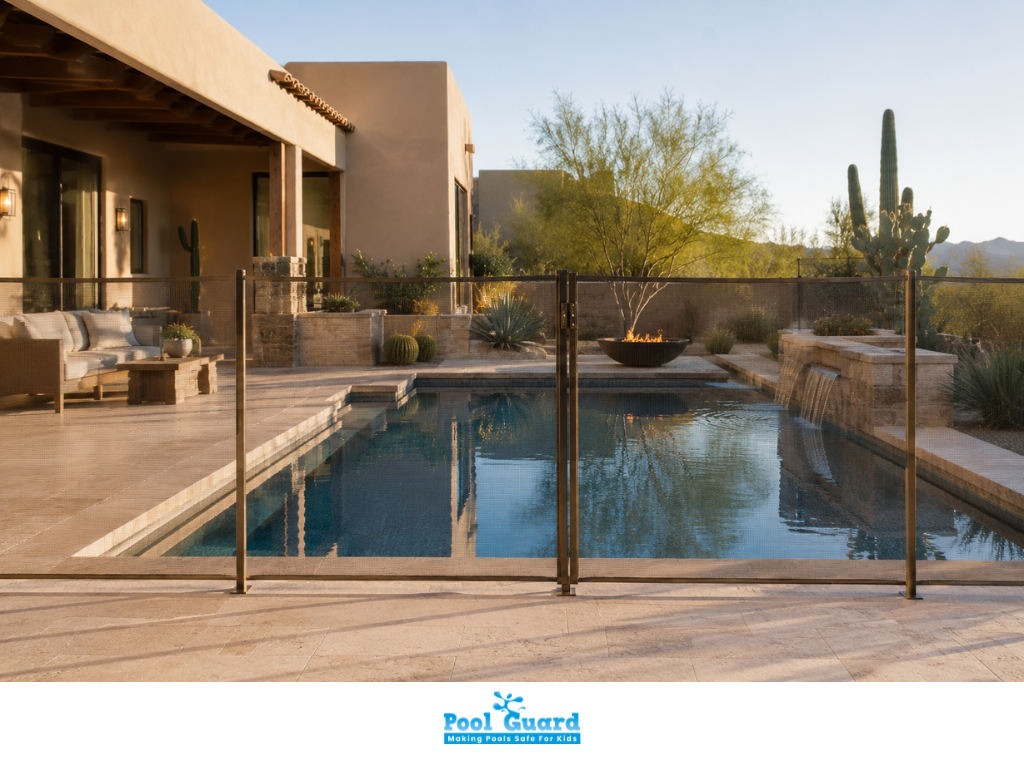
Best For: Desert landscapes, travertine pool decks, and earth-tone homes.
Brown and bronze tones are the top choice in the southwestern United States, particularly in Arizona, Nevada, and Southern California, where warm earth tones dominate both architecture and landscaping. A brown or espresso mesh blends naturally with desert stone, terracotta, brick, and wood fencing, creating a cohesive, low-contrast look.
These shades work particularly well with travertine tiles, sandstone coping, or natural pavers. The warm undertones make the fence feel like an intentional design choice rather than a safety afterthought.
Best For: Coastal homes, screen enclosures, and lighter-colored pool decks.
White and beige pool fences bring warmth and brightness, creating a coastal aesthetic that suits light stucco, white concrete decking, or bright tile. They work exceptionally well in Florida and Gulf Coast markets, blending seamlessly with white or silver aluminum screen enclosures where a light mesh nearly disappears.
However, lighter mesh shows dust, pollen, and mineral deposits more visibly than darker colors. Homeowners should plan for occasional rinsing to maintain the clean look in dusty or high-pollen environments.
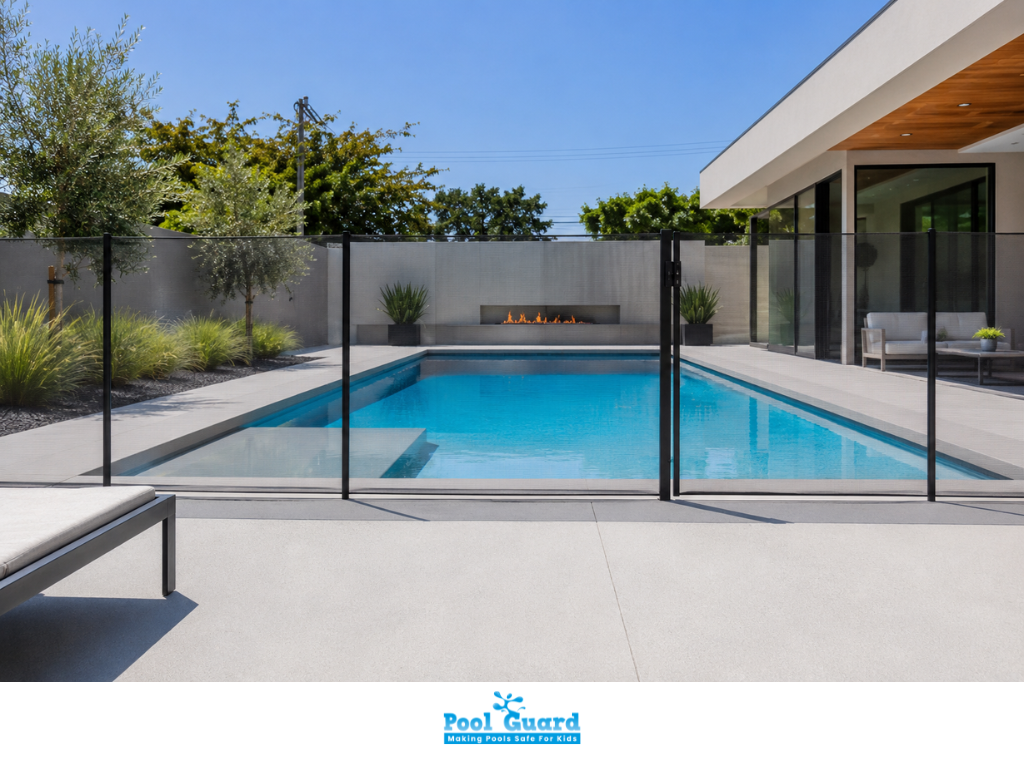
Best For: Contemporary homes, concrete hardscaping, and the ‘invisible fence’ effect.
Gray pool fences act as a designer secret weapon, creating an ‘invisible fence’ effect against concrete or natural stone backgrounds. When paired with gray poles and borders, the fence almost vanishes. This makes it ideal for homeowners who want pool safety without compromising their view or backyard aesthetics.
Gray reads as modern and clean, making it the go-to choice for contemporary outdoor spaces. Ultimately, this option creates the illusion of more space while providing the most visually minimal look for concrete surroundings.
Picking a color goes beyond personal preference. Four practical factors should guide your decision.
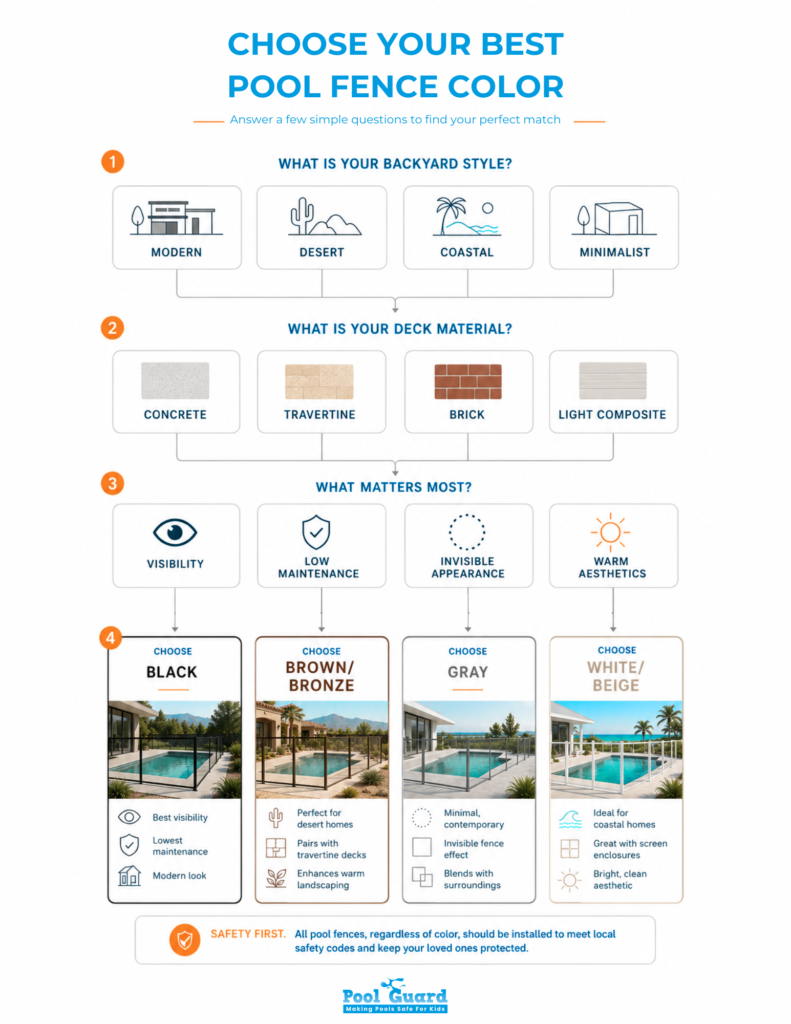
Start with your home’s dominant exterior tones, including siding color, trim, roofing, and any outdoor finishes like stucco, brick, or wood. A pool fence that coordinates with these elements creates visual harmony rather than a patchwork effect. Neutral shades like black, gray, and brown tend to work with the widest range of exteriors.
Pro Tip: Take a photo of your backyard and use a color-matching app like ColorSnap or Adobe Color to identify your dominant outdoor tones before choosing a fence color.
Select fence colors that complement deck materials and surrounding landscaping to create a cohesive outdoor space. This guide provides a quick reference for pairing to ensure visual harmony between structural elements.
| Surface / Surroundings | Recommended Fence Color |
| Travertine or sandstone | Brown, beige, or tan |
| Poured or stamped concrete | Gray or black |
| Brick or terracotta | Espresso brown or black |
| White or light composite decking | Beige or white |
| Lush tropical greenery | Black (maximizes visibility) |
| Minimalist gravel or modern paving | Gray |
Pool safety fences exist to prevent unsupervised access to the water. That means you want to see the pool clearly from inside the home or yard at all times. Black mesh consistently scores highest for transparency. The dark tone makes the mesh recede visually, so the pool area remains visible. Lighter mesh colors, while attractive, can slightly reduce sightline clarity.
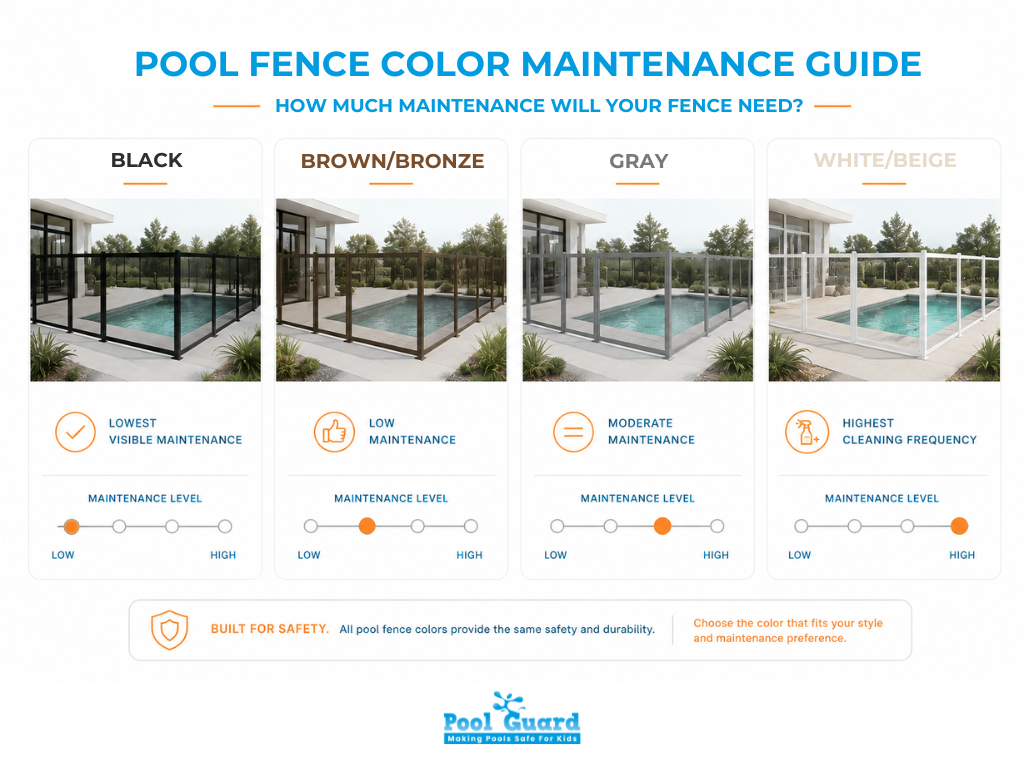
Every pool fence color has a different maintenance profile:
| Fence Color | Maintenance Profile | Climate Impact |
| Black | Hides dirt, pollen, and oxidation | Lowest visible maintenance |
| Brown / Bronze | Hides most soiling | Low maintenance in warm climates |
| Gray | Shows white mineral deposits from splashback | Moderate maintenance frequency |
| Beige / White | Most visible soiling | Highest maintenance; shows sun bleaching in high-UV areas |
All quality pool mesh fences are UV-stabilized to resist fading, but lighter colors can show sun bleaching more noticeably over time in high-UV climates like Florida, Arizona, and Texas.
Matching your safety barrier to your outdoor aesthetic ensures the fence enhances rather than disrupts your landscape design.
Most systems allow you to mix mesh, pole, and border colors. Two-tone setups often look better than a single solid shade.
Bottom Line: If you’re unsure, black is the safest choice – it offers the best transparency, easiest maintenance, and works in any climate. Light colors are a smart upgrade when a specific design context requires them.
Choosing pool fence colors is straightforward once you understand how shades interact with your deck, landscaping, and home exterior. Whether you prefer the clean transparency of black, the warmth of bronze, or the quiet disappearing act of gray, a natural fit exists for your backyard.
Ultimately, the best fence is one you barely notice because it blends in, does its job, and leaves your outdoor space looking intentional. Use the framework in this guide to confidently choose the right color for your home.

Please fill out the form below with your information. Your local dealer will be notified about your inquiry.
Please fill out the form below with your information. Your local dealer will be notified about your inquiry.