
Can you use a tarp as a pool cover? Yes—but “can” does not automatically mean “should.” Whether a tarp is a smart solution or a costly mistake depends on several critical factors, including pool type, season, weather load, safety exposure, and liability risk. Used correctly, a tarp can function as a temporary, low-cost stopgap. Used incorrectly, it can damage your pool, create pool safety hazards, and end up costing more than a proper cover.
This guide cuts through marketing claims and DIY optimism to explain when using a tarp as a pool cover actually works, why it often fails, and what professional pool covers are designed to solve. By understanding the real risks and limitations, you can make an informed decision that protects both your pool and the people around it.
A tarp is not a true pool cover—but in narrow scenarios, it can serve a purpose.
In these cases, a waterproof, UV-resistant tarp can help keep leaves, bugs, and surface debris out of the water while reducing evaporation and heat loss.
A tarp is:
According to the Centers for Disease Control and Prevention, drowning remains a leading cause of accidental death for children—one reason safety-rated pool barriers and covers exist in the first place. Even for short-term use, it’s important to understand how proper types of pool covers are designed differently.

This is where most advice online falls apart. Tarps fail predictably, not randomly.
Rain and snow are heavy—much heavier than people expect.
Tarps stretch under load, sag inward, and pull against pool edges. Without engineered drainage, constant pumping becomes mandatory. Miss it once, and damage follows.
One of the biggest misconceptions about using a tarp as a pool cover is safety. Tarps provide no fall protection whatsoever.
Unlike certified options like engineered pool covers, tarps do not meet any recognized pool safety standards or requirements, and they are not designed to support weight. If someone steps onto a tarp—even briefly—it can give way instantly.
Children, pets, and wildlife are especially vulnerable, as a tarp offers no resistance once pressure is applied. Even more dangerously, water-filled tarps can appear solid, creating a false sense of security while hiding a serious collapse risk underneath. Situations like this can quickly turn into drowning emergencies where response time becomes critical.
Certified pool covers are tested against recognized safety standards to prevent submersion and entrapment. Tarps are not. They are simply sheets of material—not safety systems.
Another common failure point with tarp pool covers is anchoring.
Tarps are typically secured using grommets, water bags, or ground stakes—none of which are designed to withstand long-term tension, wind uplift, or shifting loads. Over time:
Wind adds another layer of risk. It doesn’t just pull sideways—it creates lift. Once a single corner comes loose, wind can work underneath the tarp and peel it back entirely, sometimes in a matter of hours. Most pool owners assume they’re covered—until something goes wrong. A pool safety checklist shows exactly what you’re missing.
This is why tarp covers often fail suddenly rather than gradually, especially during storms or seasonal weather changes
Using a tarp as a pool cover doesn’t just affect the cover itself—it can put real stress on the pool structure underneath.
When a tarp is installed incorrectly or left under heavy water, snow, or ice loads, the force is transferred directly to the pool’s edges. Over time, this can lead to:
The issue isn’t just weight—it’s how that weight is distributed.
Professional pool covers are engineered to spread load evenly across reinforced anchor points designed to handle tension. Tarps, by contrast, concentrate force along their edges and grommets, which are the weakest points of the system. As those points stretch or fail, the strain shifts to the pool itself.
The result is often slow, expensive damage that isn’t obvious until repairs are needed.
| Factor | Tarp | Professional Pool Cover |
| Load Rating | None | Engineered & tested |
| Safety Compliance | No | ASTM-certified options |
| Drainage | Manual pumping | Integrated systems |
| Longevity | 1–3 seasons | 7–15+ years |
| Maintenance | High | Low |
| Total Cost Over Time | Often higher | Predictable |
The difference isn’t branding—it’s engineering.
The effectiveness—and risk—of using a tarp as a pool cover changes dramatically depending on whether the pool is above ground or in ground. This distinction is often overlooked, but it’s one of the most important factors in deciding whether a tarp is even remotely appropriate.
In limited situations, tarps can be temporarily tolerable for above-ground pools. That’s largely because:
Even in these cases, tarps should only be used short-term and with controlled access. They are not a substitute for a proper cover, and they should never be treated as a safe or long-term solution. Requirements and risks can also differ depending on your setup, including whether a pool fence is required.
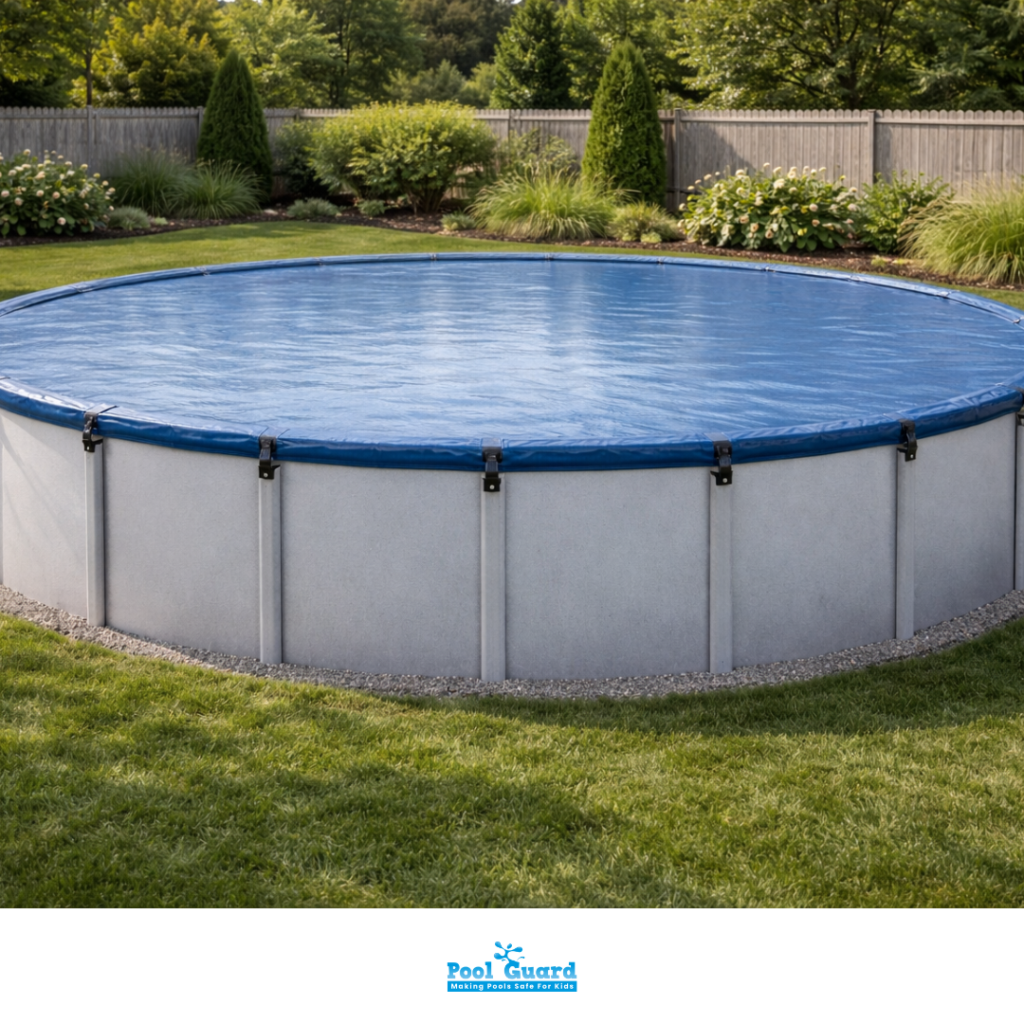
For in-ground pools, the risks increase quickly and significantly.
Hard edges around the pool create abrasion points, and without wall support beneath the tarp, any weight from rain or snow is transferred directly to the pool’s perimeter. Add in the higher liability exposure typical of in-ground pools, and the consequences escalate fast.
Common issues include:
Professional in-ground pool covers are engineered to span the pool opening safely, manage water weight effectively, and anchor into the surrounding deck—not the pool itself. That design difference is critical and cannot be replicated with a tarp.
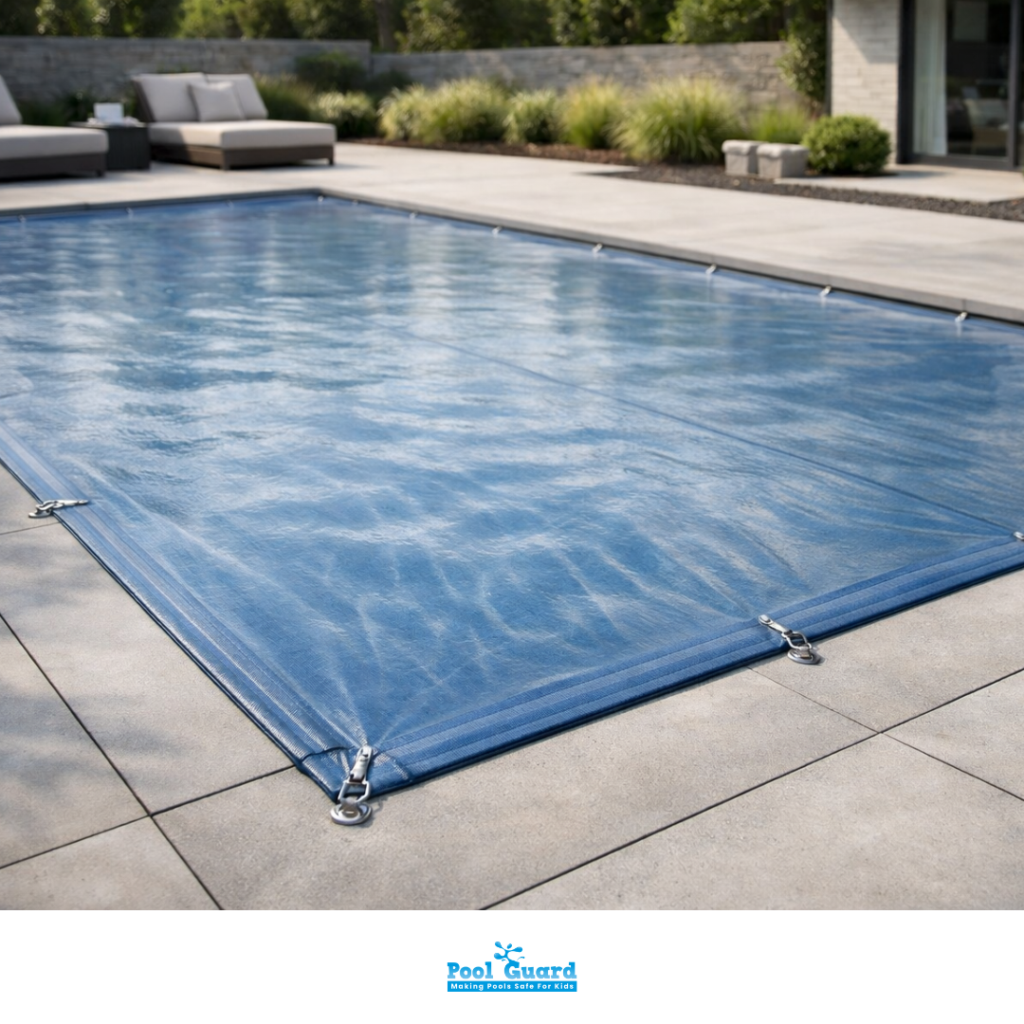
If a tarp is your only option, do damage control, not wishful thinking.
Best Practices:
This doesn’t make it safe—it just reduces the odds of failure.
Professional pool covers aren’t about convenience or aesthetics—they exist for risk management.
Unlike tarps or improvised solutions, professional covers are engineered systems designed to address the real-world forces acting on a pool over time. They are built to:
These design features aren’t optional upgrades—they’re responses to predictable failures that occur when pools are left unprotected.
The U.S. Consumer Product Safety Commission consistently emphasizes layered safety measures around residential pools, with properly designed covers playing a key role alongside fencing, alarms, and supervision.
In short, professional pool covers exist to solve problems that tarps simply aren’t built to handle. If you want a complete overview of pool safety systems, barriers, and protection strategies, explore our pool safety options.
Yes, you can use a tarp as a pool cover in limited, short-term, low-risk situations—most often for above-ground pools in mild climates where access is controlled and weather exposure is minimal. In those scenarios, a tarp can help reduce debris and evaporation temporarily, but it should be viewed strictly as a stopgap, not a true replacement for a pool cover.
However, a tarp is not designed to function as a long-term pool cover. It offers no safety protection, has no load rating, and can introduce real risks related to wind, water accumulation, and structural stress. If safety, durability, and liability matter, choosing the right pool cover is critical. Understanding when a temporary fix becomes a long-term problem is key to protecting both your pool and the people around it.
Please fill out the form below with your information. Your local dealer will be notified about your inquiry.
Please fill out the form below with your information. Your local dealer will be notified about your inquiry.