There’s nothing worse than heading out for a swim and finding your pool cloudy, green, or streaked with dark patches. If you’re seeing algae, the question comes fast:
Is it safe to swim in a pool with algae?
The honest answer is no — you shouldn’t. While pool algae isn’t usually toxic on its own, its presence means your pool is no longer being properly sanitized. That’s where the real risk starts. Algae is often one of the first visible signs of broader pool hazards that shouldn’t be ignored.
Below is what algae in a pool actually means, what it looks like, when swimming becomes unsafe, and how to get rid of pool algae the right way.
Algae doesn’t always look dramatic at first, which is why many pool owners miss it in the early stages. Depending on the type, it can appear in several different ways:
No matter the type, algae causes more than just cosmetic problems. Once it appears, it can:
Seeing any of these signs means your pool needs attention — not just for appearance, but for safety as well. Early-stage issues like this are often missed without routine pool inspections and maintenance checks.
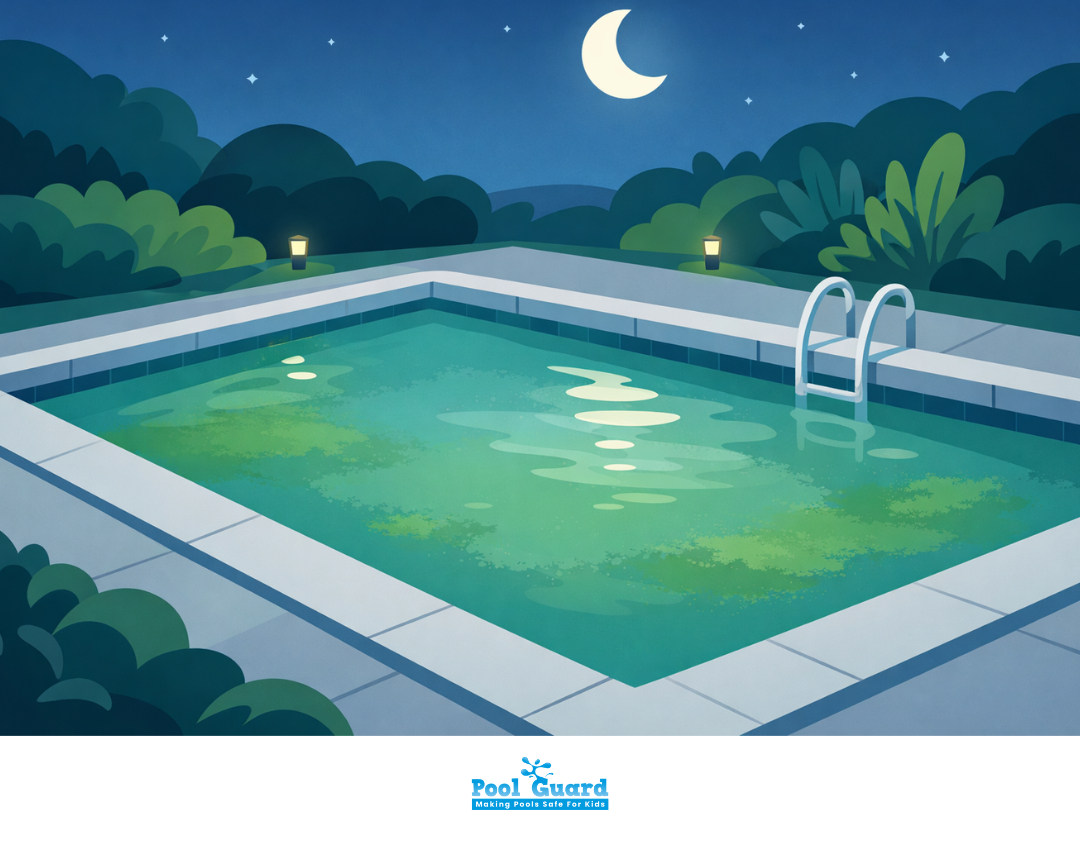
Technically, yes — but you shouldn’t.
Algae itself usually isn’t the biggest threat. The real issue is what algae signals about your pool’s condition. When algae is visible, it means at least one critical system isn’t doing its job properly:
When these systems fail, bacteria and other unwanted contaminants are no longer being properly controlled.
There’s also a safety concern. Algae makes pool surfaces slick and clouds the water, which increases the risk of slips, falls, and delayed response during an emergency — especially when children or inexperienced swimmers are involved. These failures in sanitation and circulation are exactly what a proper pool safety checklist is designed to prevent.
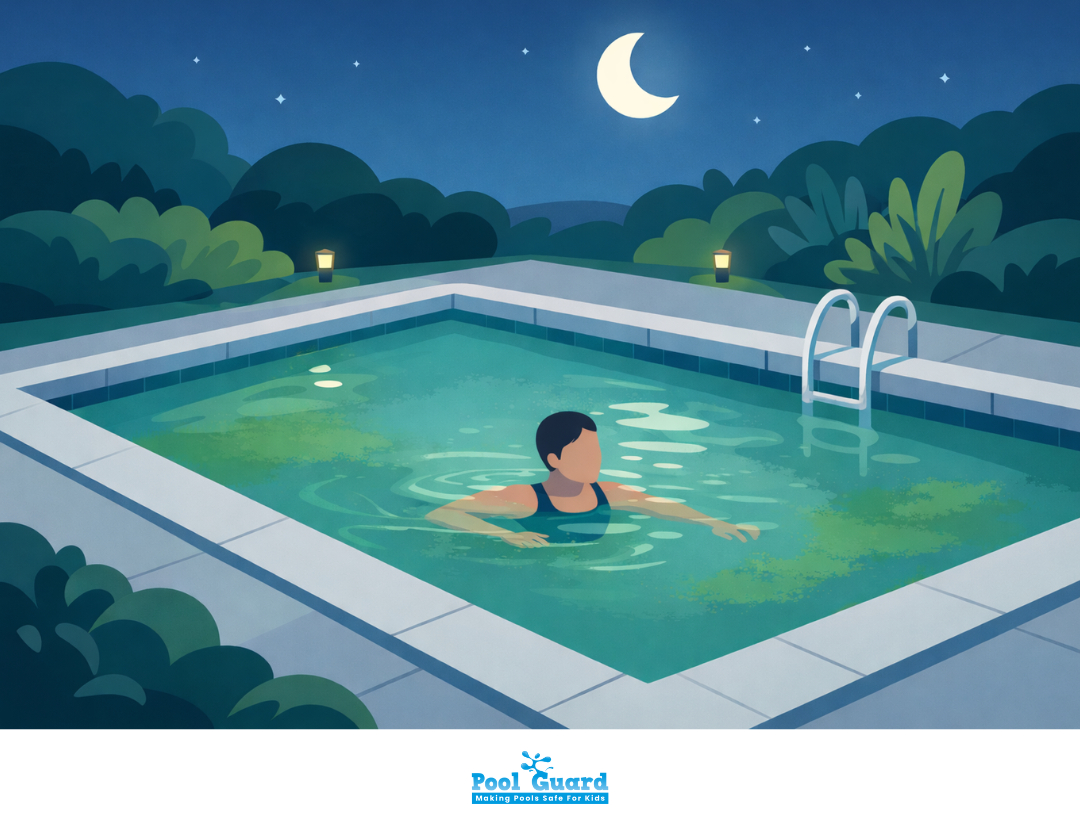
Yes — indirectly.
Algae in a pool is dangerous because it creates conditions where illness and injury are more likely. When algae is present, sanitation has already fallen behind, allowing other contaminants to thrive. Common risks include:
Children, toddlers, and pets are especially vulnerable. They tend to swallow more water and spend more time in warm, shallow areas where algae grows fastest.
Cloudy or green water isn’t just unattractive — it’s a safety hazard, and it shouldn’t be ignored.
Black algae is the most serious type of algae pool owners encounter.
It isn’t more dangerous because it’s toxic — it’s dangerous because it’s harder to kill and easier to ignore. Unlike other algae, black algae embeds itself deep into pool surfaces and resists normal treatment.
Black algae:
Over time, black algae can permanently stain pool surfaces and contribute to long-term structural damage. Because of how persistent it is, swimming should be avoided until black algae is completely removed and the pool water is properly rebalanced.
Swimming should stop immediately if you notice any of the following warning signs:
These aren’t judgment calls or “wait and see” situations — they’re safety cutoffs. If any of these conditions are present, the pool should remain closed until the issue is fully resolved.
If you’re wondering how to get rid of pool algae, the order matters.
Start with brushing. Brushing breaks algae’s protective layers and allows chlorine to work. Skipping this step is one of the most common reasons algae treatments fail.
Next comes shock treatment. This raises chlorine high enough to kill active algae, while running the pump and filter continuously to remove debris.
During cleanup, filtration and circulation are critical:
Partial fixes don’t work. Adding chemicals without correcting circulation and filtration almost guarantees algae will return.
If algae keeps coming back, black algae is present, or surfaces are staining, professional treatment often saves money long-term.
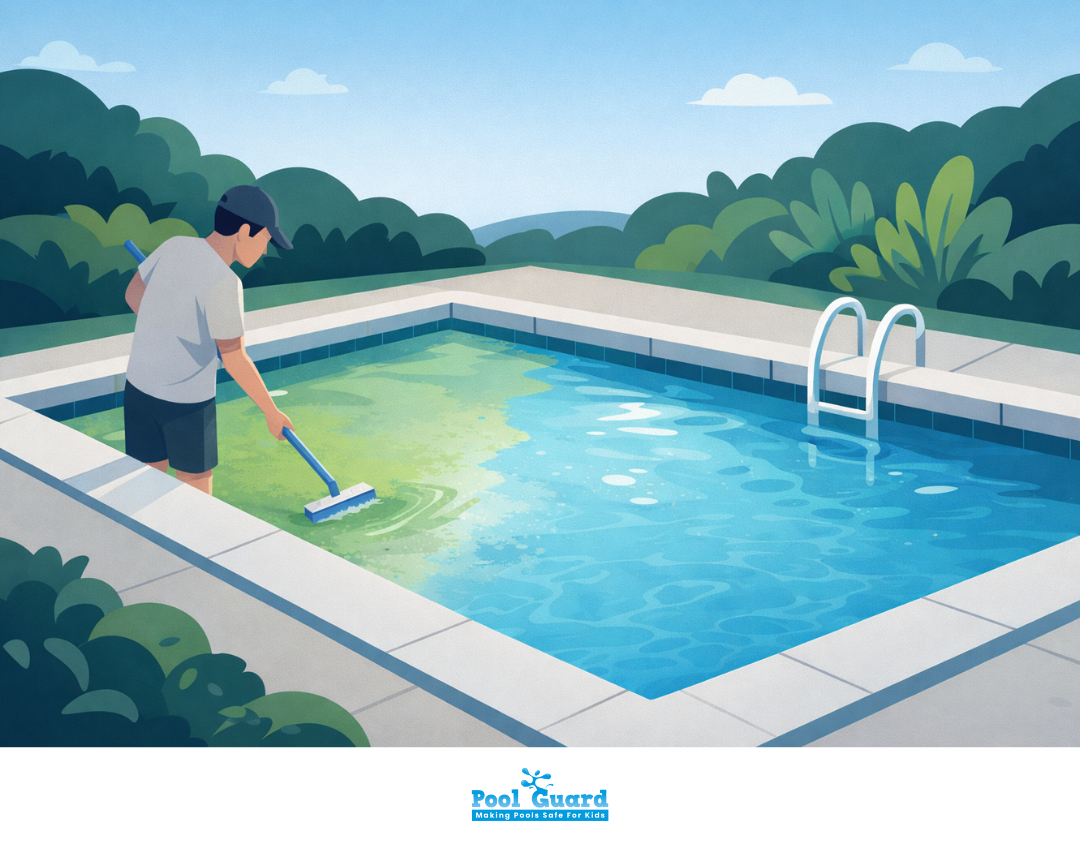
Prevention is far easier — and far less frustrating — than cleanup. The basics matter most, and consistency is what keeps algae from returning:
One important reminder: clear water doesn’t always mean safe water. Algae can exist microscopically long before it becomes visible, which is why routine testing, circulation, and cleaning are just as important as how the pool looks. Using a pool cover can also reduce debris and sunlight exposure that contribute to algae growth. Prevention depends on consistent maintenance and proper pool system management.
No — it is not safe to swim in a pool with algae.
Algae isn’t just a cosmetic issue. It’s a clear warning sign that pool sanitation has failed. Swimming should only resume after algae is completely removed, water clarity is restored, pool surfaces are clean, and the water chemistry is properly balanced.
If this article helped answer the question “Is it safe to swim in a pool with algae?”, consider sharing it with another pool owner — or explore more pool safety resources to keep your swimming season stress-free and safe.
Please fill out the form below with your information. Your local dealer will be notified about your inquiry.
Please fill out the form below with your information. Your local dealer will be notified about your inquiry.