Swimming pools change the dynamics of a rental property. They elevate appeal, influence rent potential, and introduce shared responsibilities that do not apply to most other amenities. Unlike appliances or cosmetic upgrades, a pool affects structure, utilities, access, and written agreements in a layered way.
This guide defines the scope of landlord and tenant responsibilities for swimming pools in rental properties. It focuses on how responsibility is typically classified, how authority is structured, and how lease agreements define boundaries between ownership and use.
Pools are treated differently because they are not passive features. A stove can malfunction without altering the exterior structure of the property. A pool, by contrast, interacts with plumbing systems, electrical systems, exterior decking, drainage, fencing, and sometimes shared common areas.
In addition, pools often influence insurance underwriting and rental disclosures. Because they affect both physical infrastructure and operational oversight, they require more defined responsibility than typical amenities.
Responsibility in rental properties usually divides into two categories: ownership responsibility and use responsibility.
Ownership responsibility generally includes:
Use responsibility typically includes:
The landlord retains control over ownership-level elements. The tenant assumes responsibility for behavior and day-to-day use. Confusion arises when leases fail to clearly define where one ends and the other begins.
A lease agreement determines how pool responsibility is structured. It may specify:
Without written clarification, expectations become assumptions. Assumptions are the primary source of disputes in rental properties with pools.
Landlords typically retain responsibility for core property-level components. This includes maintaining the structural condition of the pool and ensuring that mechanical systems remain functional.
These responsibilities often cover:
Even when tenants use the pool frequently, the underlying structure remains part of the landlord’s asset.
In multi-unit buildings or properties with shared amenities, landlord oversight expands further. The landlord or property manager usually oversees:
Because these areas serve multiple occupants, centralized control is standard practice.
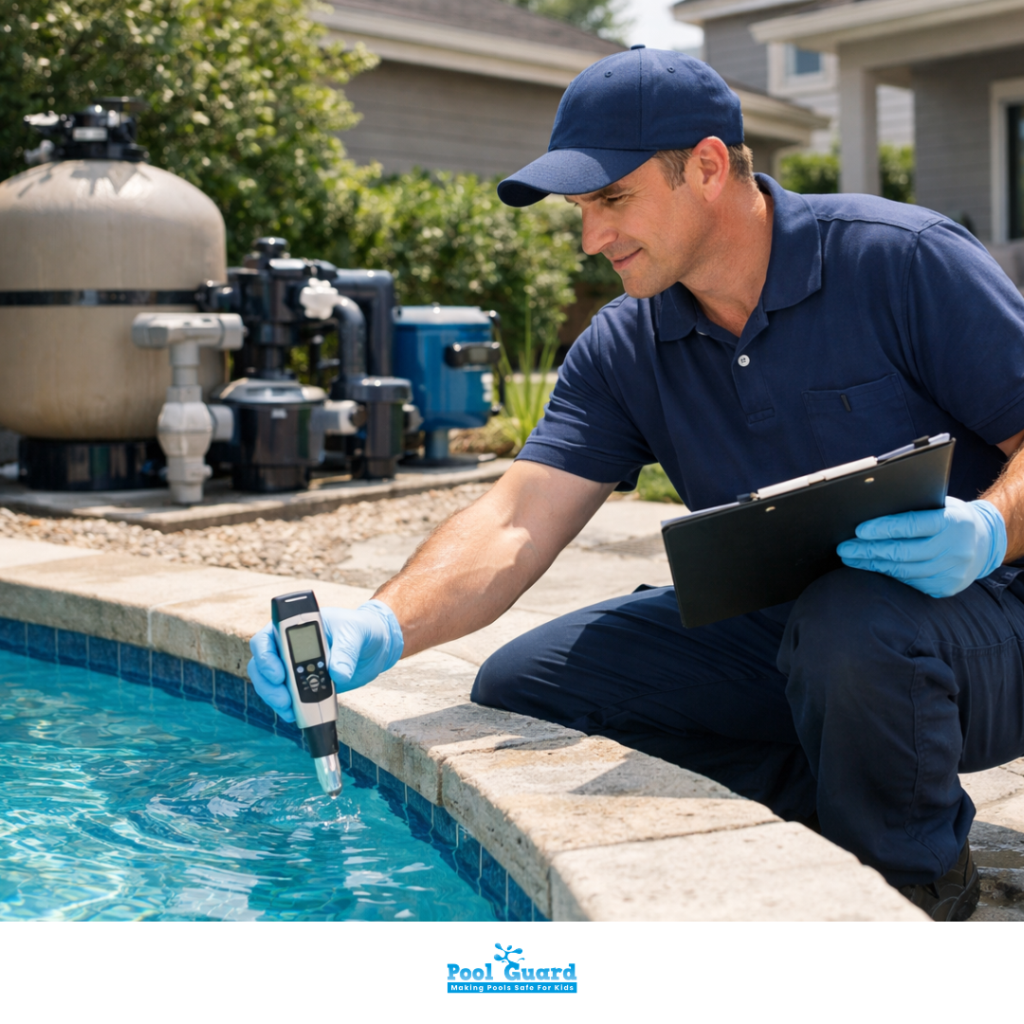
Use does not equal control. A tenant’s regular use of the pool does not transfer structural responsibility. If equipment fails or structural components deteriorate, those elements remain tied to ownership oversight.
The concept of landlord responsibility pool management centers on asset control. If the landlord controls the structural feature, responsibility typically follows that control.
Tenants are generally expected to use the pool responsibly and in accordance with lease terms. This often includes:
Responsible use means respecting the boundaries set in the lease agreement.
In most rental agreements, tenants are accountable for their guests. If visitors misuse the pool area or cause damage, responsibility usually flows back to the tenant who granted access.
This is particularly important in single-family rentals where the tenant has exclusive access to the pool.
Tenants are typically required to report issues promptly. These may include:
Reporting obligations protect both parties. Delayed reporting can complicate how responsibility is assessed later.
Maintenance is where most landlord responsibility pool discussions become practical.
Many landlords retain full control over pool maintenance. They hire professional pool service companies to:
This model centralizes oversight and protects the long-term value of the asset.
When a landlord contracts a third-party service, the lease often clarifies that tenants should not interfere with chemical systems or equipment settings. Maintenance schedules are usually predefined, and access for service technicians is coordinated in advance.
This reduces confusion about who is authorized to handle complex systems.
In some rental agreements, tenants may be assigned limited upkeep tasks such as:
However, major servicing, equipment repairs, or system replacements usually remain under landlord control. Clarity in writing prevents overlap and misunderstandings.
Pools inherently increase exposure because they attract activity and guests, particularly due to serious drowning risks associated with unsupervised access. In many cases, liability also depends on whether a fence is required under local law.
From an underwriting perspective, pools are often treated as separate risk factors. This is why written agreements frequently include additional disclosures or addendums.
Liability in rental pools generally falls into two categories.
Maintenance-related liability involves issues such as equipment malfunction, structural failure, and suction entrapment risks tied to unsafe or outdated drain systems
Use-related liability involves:
The determining factor is often who controlled the condition that led to the issue.
Responsibility can shift if:
Control and documentation are the primary drivers of how responsibility is interpreted.
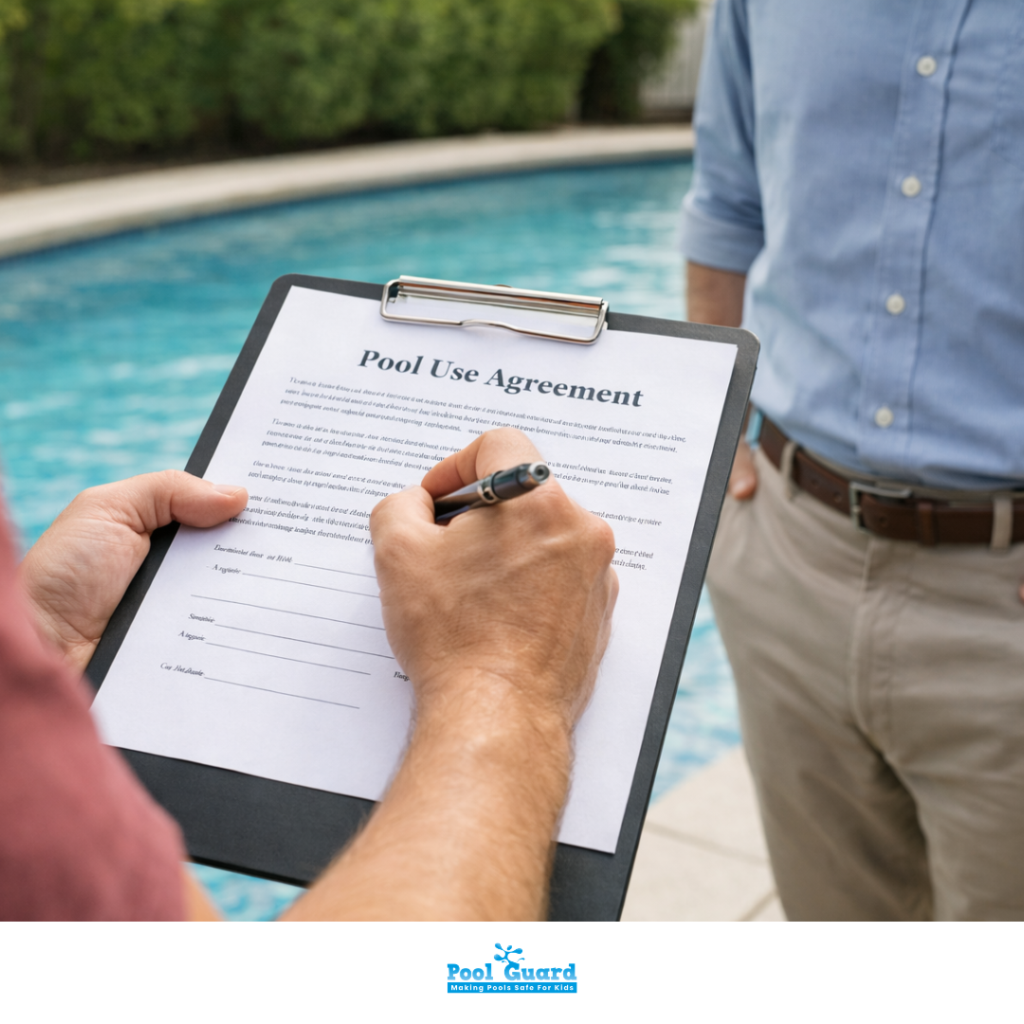
A pool liability waiver landlord document is typically an addendum that acknowledges the presence of a pool and outlines how it may be used. It clarifies that tenants understand certain risks and agree to follow defined conditions.
It supplements, but does not replace, the primary lease.
A swimming pool waiver release form landlord document may include:
These documents define expectations and allocate risk more precisely.
Pool waivers often address:
They provide documentation of awareness and agreement.
Pool waivers typically do not eliminate ownership-level responsibility. They rarely override obligations tied to structural control or maintenance oversight. Waivers clarify use, but they do not generally erase asset-level duties.
The short answer to “can my landlord tell me i can’t have a pool” is yes, in most situations.
Tenants generally cannot install:
These modifications alter the property and require owner authorization.
Even temporary or inflatable pools can create issues and may still fall under above-ground pool fencing requirements depending on local code. Issues can stem from:
Because these factors influence the property’s structure or insurance profile, landlords often restrict them.
Landlords typically retain control over structural changes because they impact:
A pool, even a portable one, can affect all four.
Adding fences or barriers modifies the property’s exterior. This may affect aesthetics, boundary lines, and long-term structural considerations. As a result, tenants rarely have authority to install permanent barriers without approval.
Drilling into decks or anchoring posts creates permanent alterations. These changes may impact resale value or violate homeowners’ association guidelines. For this reason, written consent is typically required before making such modifications.
Leases often clarify whether tenants may install temporary safety devices and whether they must remove them at the end of the tenancy. Clear language prevents disputes during move-out inspections.
In short-term rentals, owners usually retain nearly all maintenance responsibility. Guests assume limited use responsibility during their stay. Because occupancy changes frequently, operational oversight remains centralized.
Short-term rentals often include stricter written pool rules due to higher turnover and varying guest familiarity with the property. These rules are typically disclosed in booking agreements.
Digital acknowledgment of pool terms is common in vacation properties. Written disclosures protect operators and clarify expectations before guests arrive.
When responsibility is written clearly, fewer disputes arise. Defined expectations reduce ambiguity around maintenance, access, and behavioral standards.
Clarity protects asset value and sets boundaries. Tenants understand what they are responsible for. Landlords preserve control over structural and operational elements.
Lease updates are often introduced when:
Documentation evolves with the property.
landlord and tenant responsibilities for swimming pools revolve around one core principle: control defines responsibility. Ownership-level elements remain tied to the landlord. Use-level behavior rests with the tenant. Lease agreements formalize the distinction.
Understanding these classifications reduces confusion and protects both parties from avoidable disputes.
If you found this guide helpful, consider sharing it with other property owners or renters navigating similar questions.
Please fill out the form below with your information. Your local dealer will be notified about your inquiry.
Please fill out the form below with your information. Your local dealer will be notified about your inquiry.