Let’s get something straight upfront: the Virginia Graeme Baker (VGB) Pool & Spa Safety Act worked—but it didn’t eliminate risk. The VGB Act also led to the adoption of devices like a Safety Vacuum Release System (SVRS), which automatically shuts down suction during a blockage event.
Compliant drain covers dramatically reduced fatalities in public pools after 2008. That’s a fact. But entrapment incidents still happen, especially in older residential pools, improperly maintained systems, and pools where homeowners assume “the builder handled it.”
That assumption is usually wrong.
Who’s most at risk?
The uncomfortable truth: most homeowners don’t think about pool drain safety until something breaks-or someone gets hurt.
To answer the question “are pool drains dangerous?”—yes, under specific, well-documented conditions.
Pool pumps generate powerful suction to circulate and filter water. If a drain is fully or partially blocked, suction can exceed hundreds of pounds of force. Once sealed, self-rescue becomes nearly impossible.
This isn’t fearmongering. It’s physics.
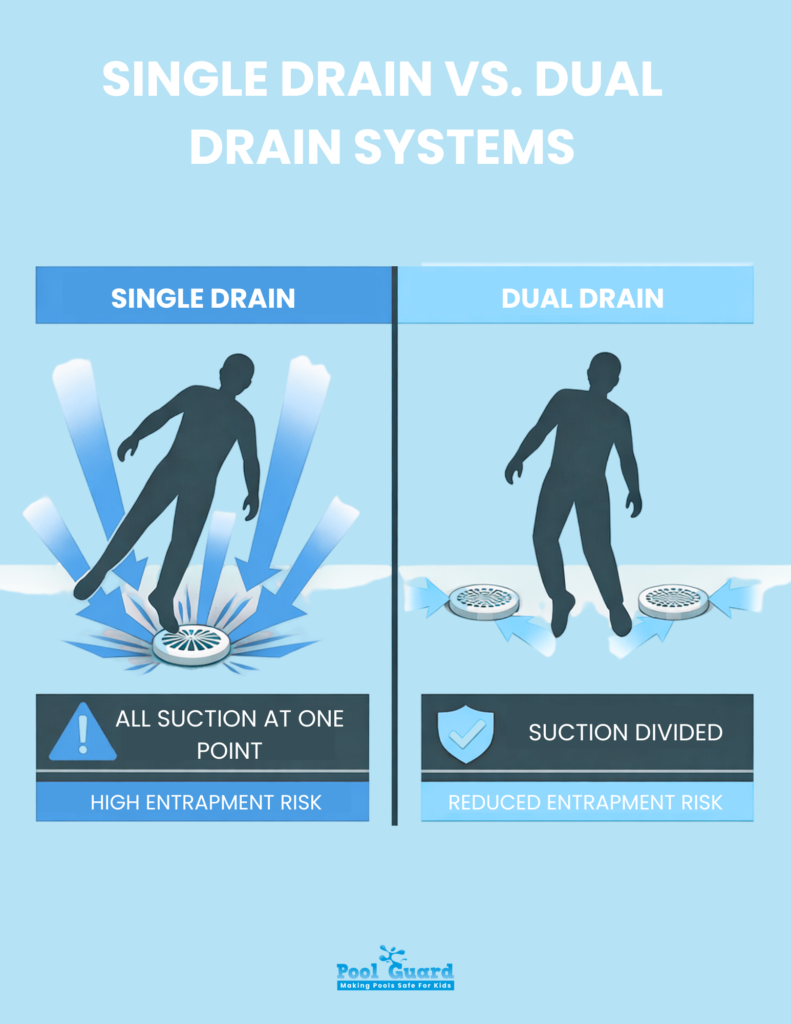
Many older pools still rely on single-drain configurations.
Children are naturally drawn to underwater features. Drains create subtle water movement, bubbles, and visual interest—exactly the kind of thing kids investigate by sitting on, touching, or diving toward.
Design flaws plus human behavior create predictable danger. These risks fall under broader categories of hazards covered in our guide to common pool hazards every owner should understand.
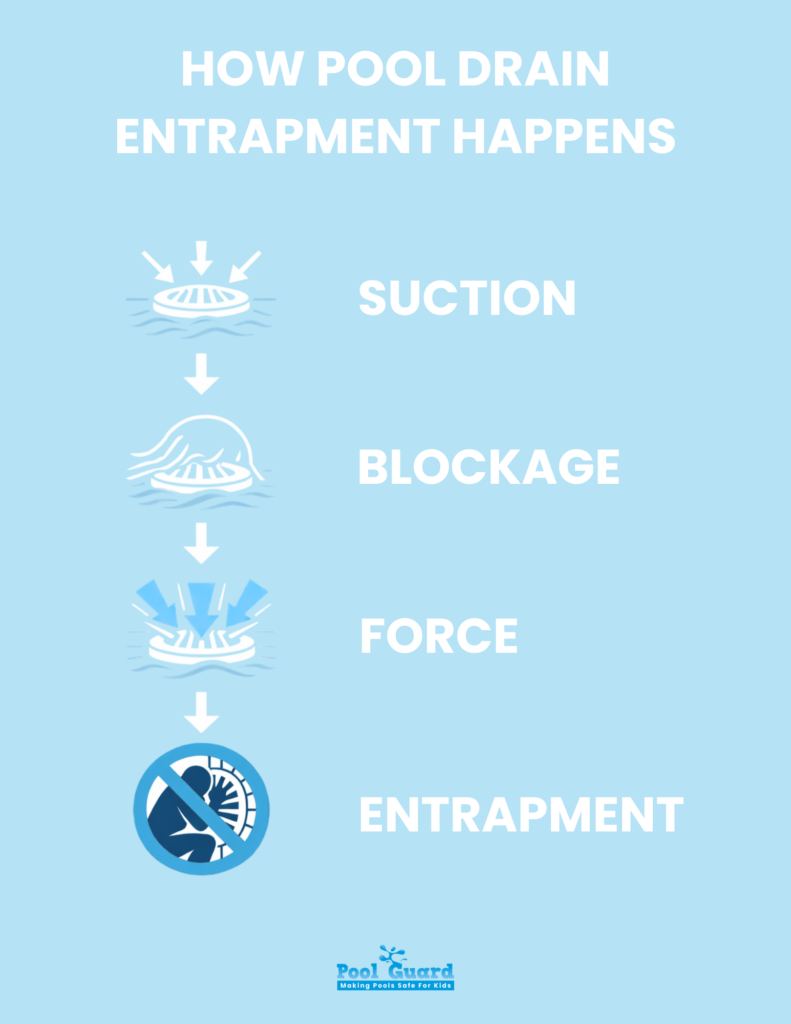
Pool drain entrapment falls into five recognized categories:
No drama. No exaggeration. Just documented outcomes. Incidents like these can escalate quickly, especially within the short timeframe explained in how long it actually takes to drown.
A modern, safe drain system includes multiple layers of protection:
These systems are part of a broader category of essential pool safety equipment every owner should have in place.
Important positioning note: Pool Guard USA does not sell drain equipment. This information is purely educational—because drain safety matters regardless of who installs your fence or cover.
If you own a pool, these are baseline requirements—not suggestions:
If any of these aren’t happening, your risk exposure is higher than you think.
Here’s the reality most drain-safety articles avoid:
Drain safety only matters when someone is already in the water.
The most effective pool drain safety strategy is preventing unintended access before a child reaches the pool.
This is where layers of protection come in—the approach emphasized by pediatricians, insurers, and safety organizations.
Outer safety layers include:
This is the ecosystem Pool Guard USA focuses on: preventing the moment where drain safety even becomes relevant.
Ask yourself—right now:
If you hesitated on any item, that’s your signal. For a broader evaluation, use a complete pool safety checklist before every swim season.
Call a professional immediately if:
Do not DIY drain fixes. Suction systems are not forgiving. If your system hasn’t been inspected, it may also fail requirements outlined in pool safety inspection guidelines.
Pool drain safety reduces risk during swimming.
Barriers reduce risk before a child ever reaches the water.
That distinction matters.
The safest pools aren’t relying on a single solution. They use layers of protection—modern drains, educated swimmers, active supervision, and physical barriers that remove opportunity for error. That layered approach—combining modern drain systems with physical barriers—is exactly what we focus on at Pool Guard USA’s complete pool safety solutions.
That’s the prevention model schools, insurers, and safety organizations agree on.
And it’s the model Pool Guard USA exists to support.
Please fill out the form below with your information. Your local dealer will be notified about your inquiry.
Please fill out the form below with your information. Your local dealer will be notified about your inquiry.