We're the #1 Pool Safety Barrier Provider in the U.S.

Pool Hazards

Swimming pools deliver some of the best moments of summer—exercise, laughter, backyard gatherings, and escape from the heat. But behind the fun lies a complex ecosystem of physical, environmental, mechanical, electrical, and biological hazards that most homeowners never recognize until something goes wrong.

Drowning is the danger people expect. What they overlook is that drowning has more than fifteen underlying pathways, including silent submersion, fatigue, medical events, and entrapment. Beyond that, pools hide contamination threats, structural failures, electrical faults, toxic chemical hazards, and preventable slip-and-fall injuries.

This guide breaks down the full pool hazard index, backed by CDC data, public health findings, engineering standards, and real-world risk analysis. The goal is simple: to give homeowners and facility operators an expert-level understanding of swimming pool hazards and to promote layered prevention strategies—especially barriers, alarms, and safety covers that protect swimmers when adults aren’t present.

Pool Hazard Severity Index

Tier 1 – Life-Threatening Hazards

  • Drowning
  • Drain entrapment (suction, mechanical, hair entanglement)
  • Electrical hazards (faulty bonding/grounding, leaking current)
  • Chemical toxicity (chlorine gas, improper mixing, high concentrations)

Tier 2 – High-Risk Injury Hazards

  • Slippery pool decks
  • Diving board and slide injuries
  • Structural defects (loose ladders, unstable rails, cracked coping)
  • Poor visibility / murky water
  • Waterborne illnesses (Crypto, Legionella, norovirus)

Tier 3 – Common Preventable Hazards

  • Toys that trap or obscure children
  • Lack of isolation fencing or safety barriers
  • Improper chemical storage
  • Inadequate supervision
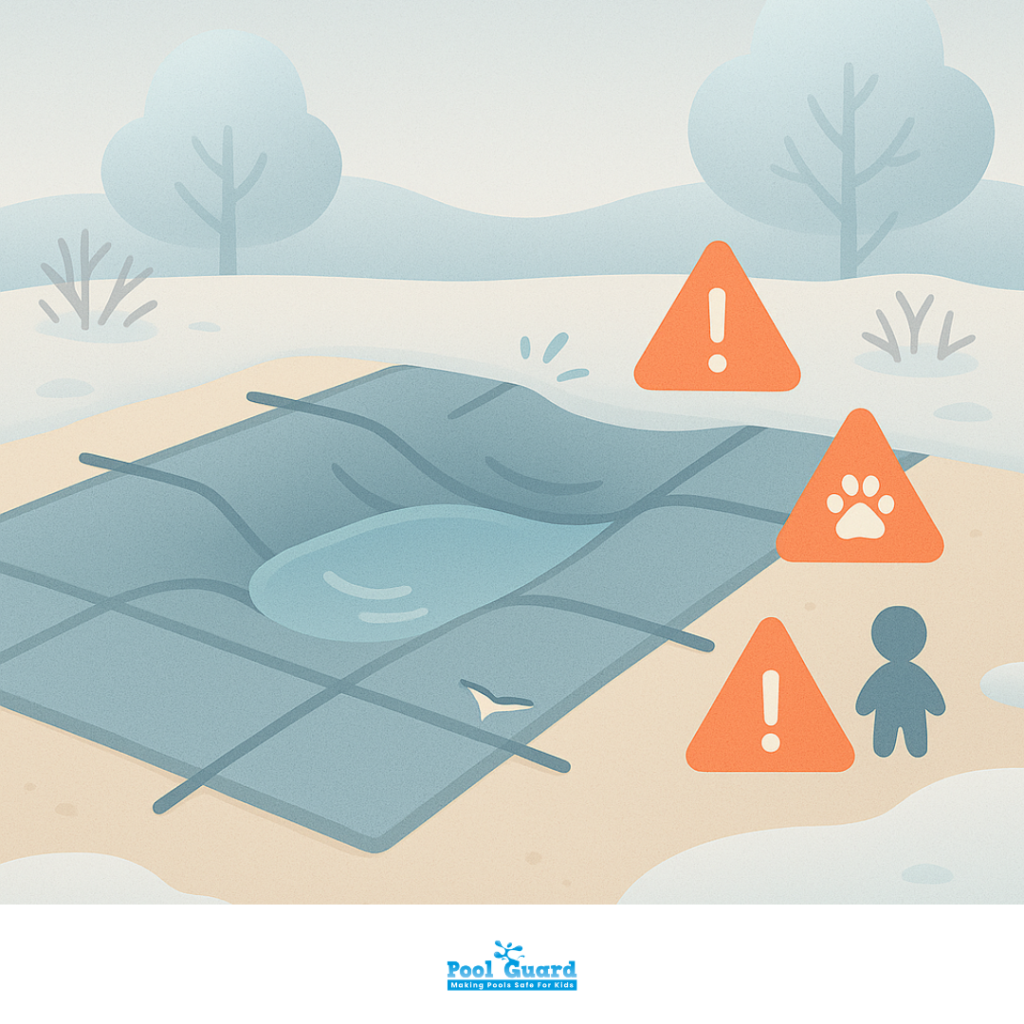
  • Seasonal hazards (unstable winter covers)
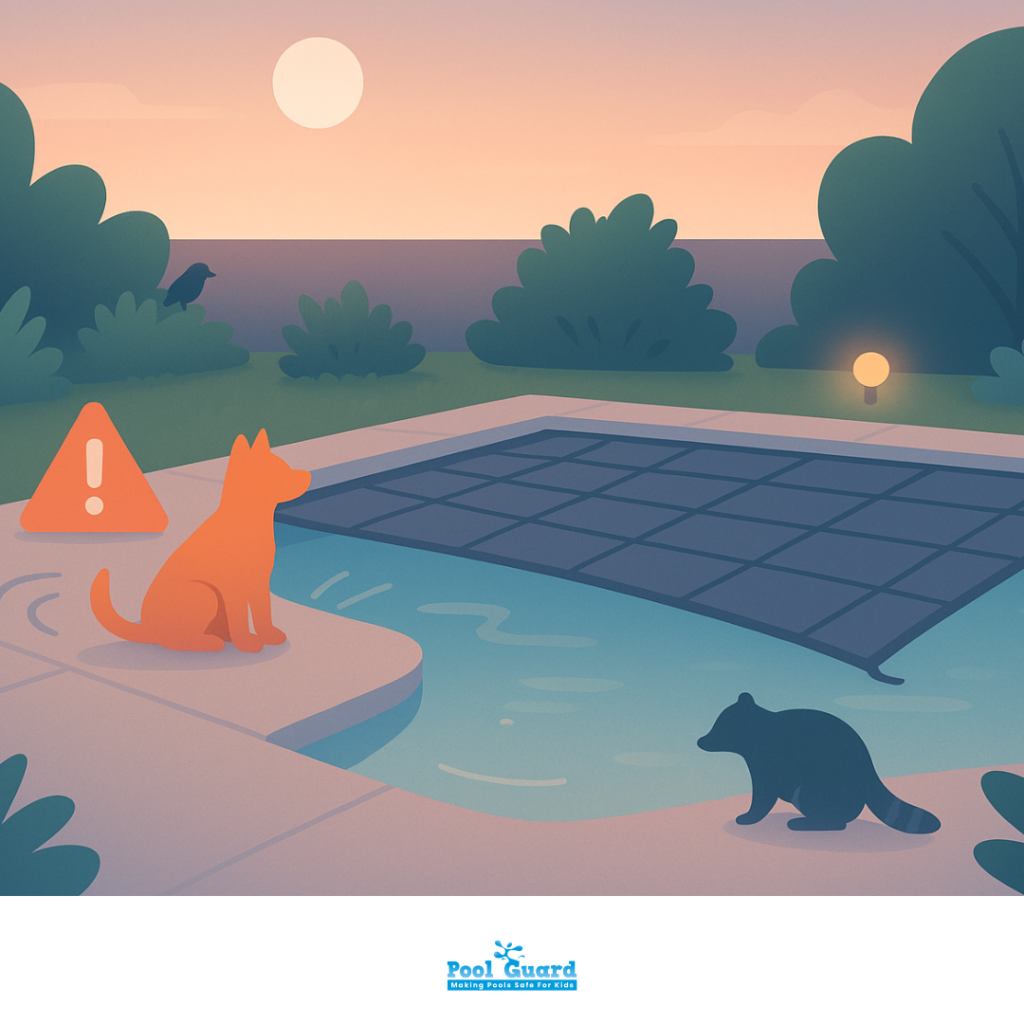
  • Pets falling into the pool

Tier 1 Hazards: Life-Threatening Risks

1. Drowning — The Leading Cause of Death in Pools

According to the CDC, over 4,000 Americans die from drowning each year, and more than 8,000 experience near-fatal submersion events. Drowning is the #1 cause of accidental death for children ages 1–4. It happens silently, often without splashing or shouting, and can occur:

  • When children access the pool during non-swim times
  • When adults assume someone else is watching
  • In shallow water
  • During medical events (seizures, cardiac arrest, fainting)
  • Due to fatigue or cramps
  • When a child slips from a step or floats under a toy

Drowning is fast: loss of consciousness can occur within 30 seconds.

Prevention

The U.S. Consumer Product Safety Commission notes that barriers reduce drowning risk by up to 83% when properly installed.
Pool Guard USA supports this approach through:

  • isolation fencing
  • self-closing / self-latching gates
  • pool alarms
  • ASTM-certified safety covers and nets

These physical layers prevent unsupervised access—the root cause behind most pediatric drownings.

2. Drain Entrapment — One of the Most Violent and Misunderstood Hazards

Entrapment occurs when a swimmer becomes stuck due to suction, mechanical entanglement, or body positioning over a drain.

Entrapment Types

  • Suction entrapment — body seals a drain creating vacuum pressure
  • Hair entanglement — hair pulled into the drain cover
  • Mechanical entrapment — jewelry or clothing caught
  • Limb entrapment — arm or leg inserted into an opening
  • Evisceration incidents — extremely rare but catastrophic

The Virginia Graeme Baker Pool & Spa Safety Act (VGB Act) requires anti-entrapment drain covers and safer circulation systems. But many older residential pools still operate with outdated equipment.

Prevention

Homeowners should have drains inspected and upgraded to VGB-compliant covers.
Pool Guard’s role? Supplemental safety—preventing children from entering the pool unsupervised and encountering defective drains in the first place.
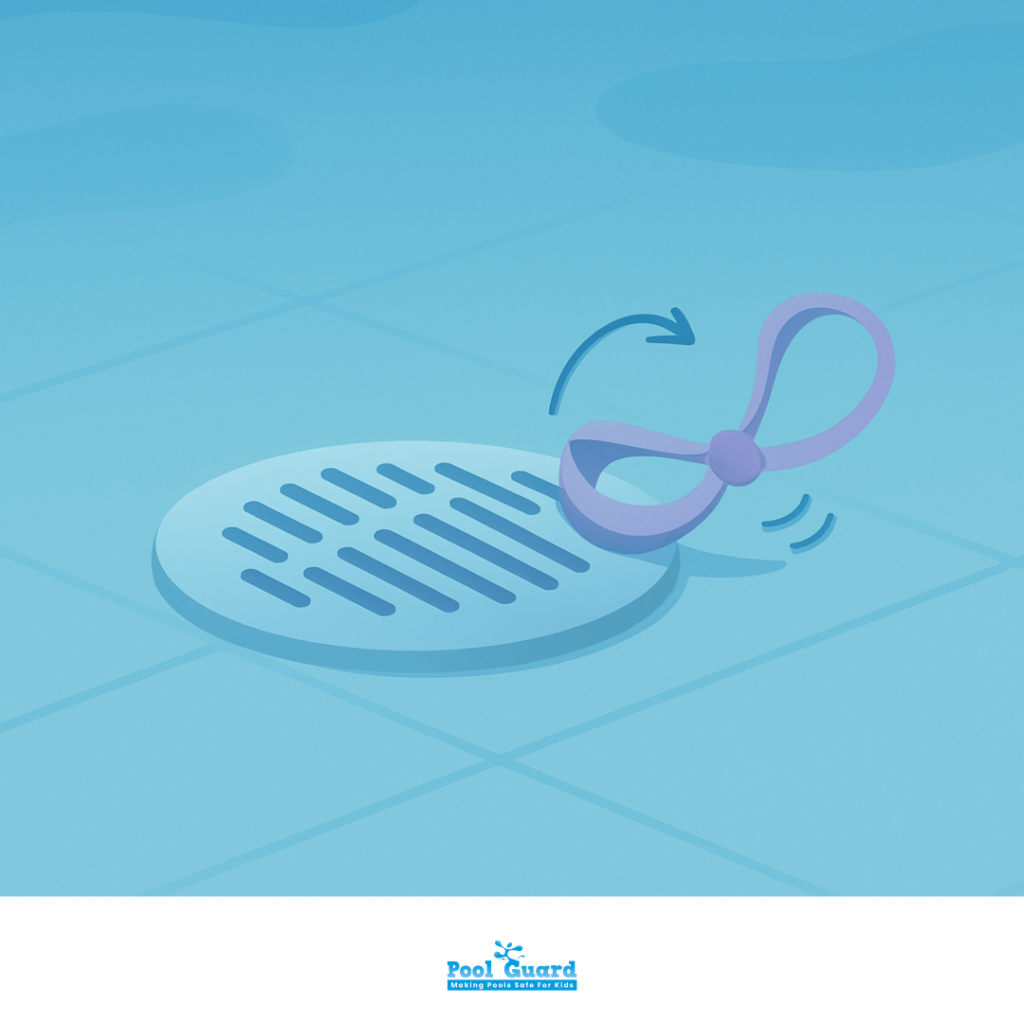
Drain Entrapment

3. Electrical Hazards — Invisible and Deadly

Electrical failures are one of the least recognized—but most lethal—swimming pool hazards.

How electrical accidents occur

  • Faulty underwater lights
  • Broken bonding or grounding systems
  • Damaged extension cords near the water
  • Improperly installed pumps or heaters
  • Electrical panels exposed to moisture

Current leaks can paralyze swimmers, causing drowning.

Prevention

  • Professional electrical inspections
  • Up-to-date grounding and bonding
  • Never allowing unsupervised pool access
  • Immediate action if someone feels “tingling” in the water

Barriers help prevent swimmers from unknowingly entering an electrically compromised pool.
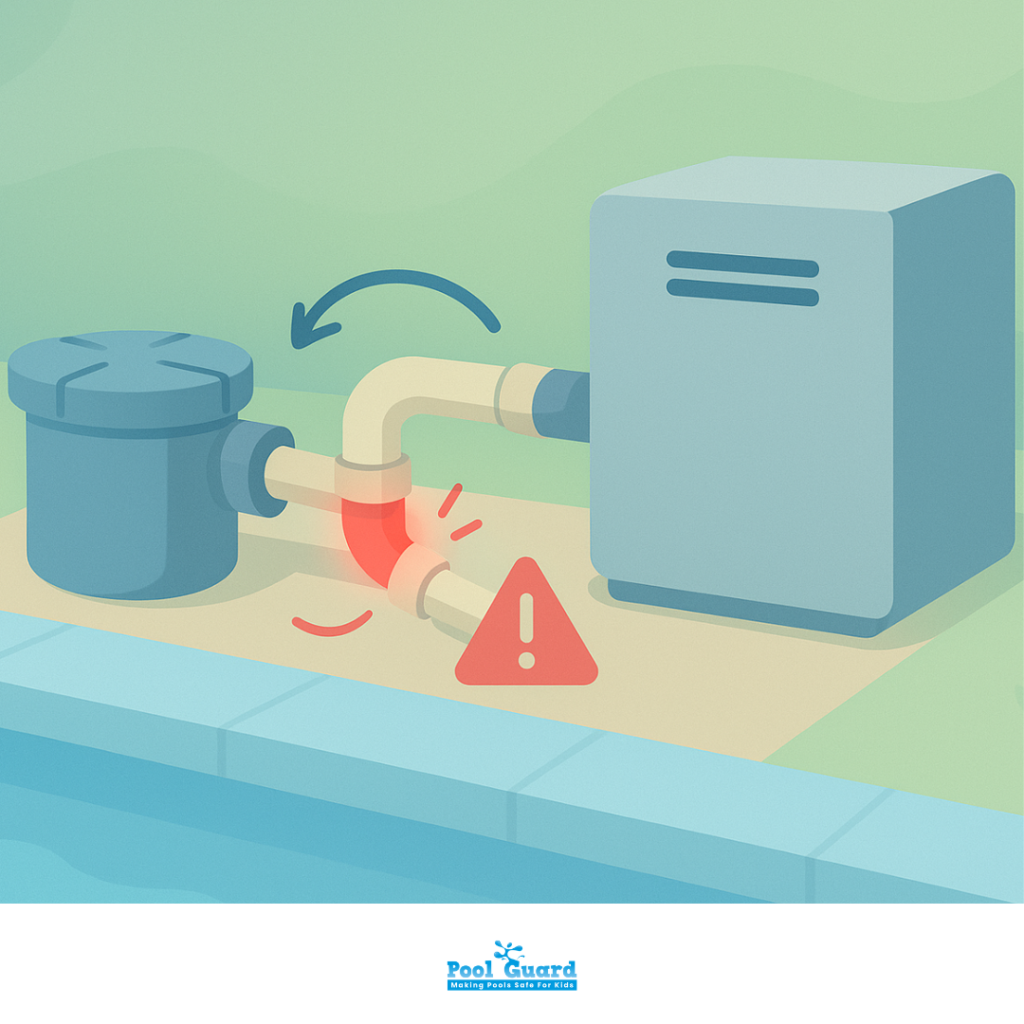
Electrical Hazards

4. Chemical Toxicity — When Treatment Chemicals Become Hazards

Pool chemicals keep water safe—but improper handling creates dangerous situations.

Common hazards

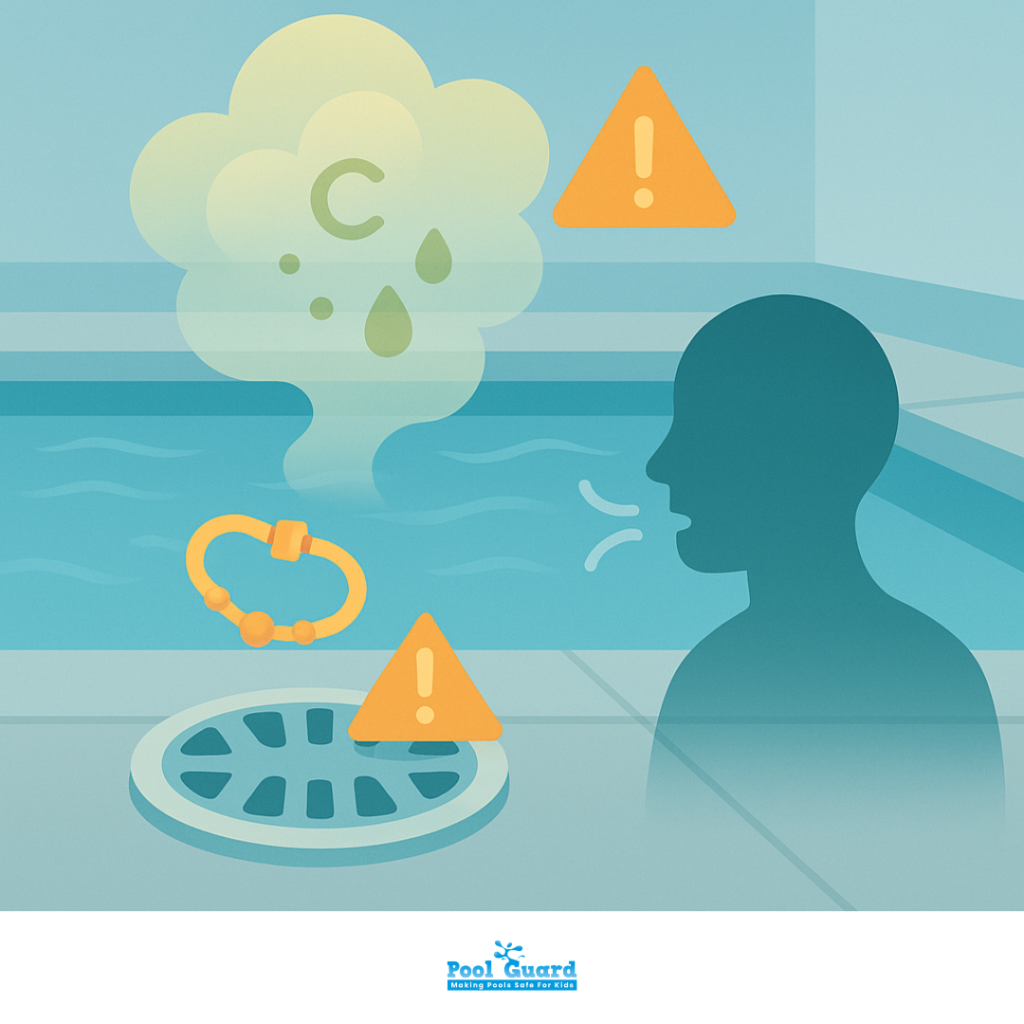
  • Chlorine gas formation from mixing acids and chlorine
  • High chloramine levels causing respiratory irritation
  • Skin and eye burns from concentrated chemicals
  • Toxic exposure from poor ventilation in indoor pools
  • Storage accidents involving incompatible chemicals

The CDC reports over 4,500 emergency room visits annually from pool chemical injuries—many involving children who gained access to chemical rooms or sheds.
Prevention

  • Separate storage of acids and chlorine
  • Secondary containment systems
  • PPE for operators
  • Locking chemical sheds
  • Preventing children from entering maintenance areas through fencing and alarms
Chemical Toxicity

Tier 2 Hazards: High-Risk Injury Scenarios

1. Slippery Deck Surfaces

High-gloss tile, algae growth, soap residue, oils, and water accumulation make pool decks one of the highest injury zones. Falls can cause:
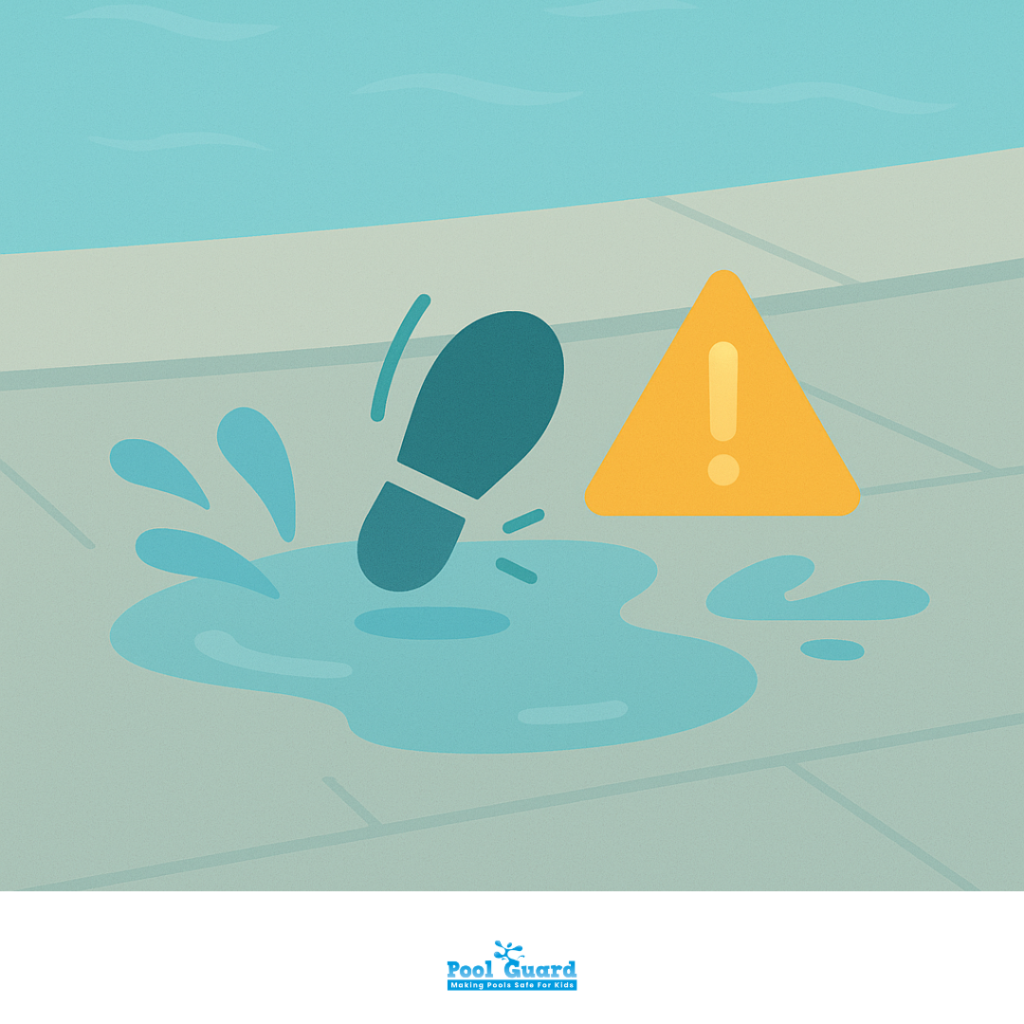
  • fractures
  • sprains
  • concussions
  • spinal injuries

Mitigation

  • Slip-resistant surfaces
  • Regular cleaning
  • Enforcing no-running policies
  • Adequate drainage systems
Slippery Deck Surfaces

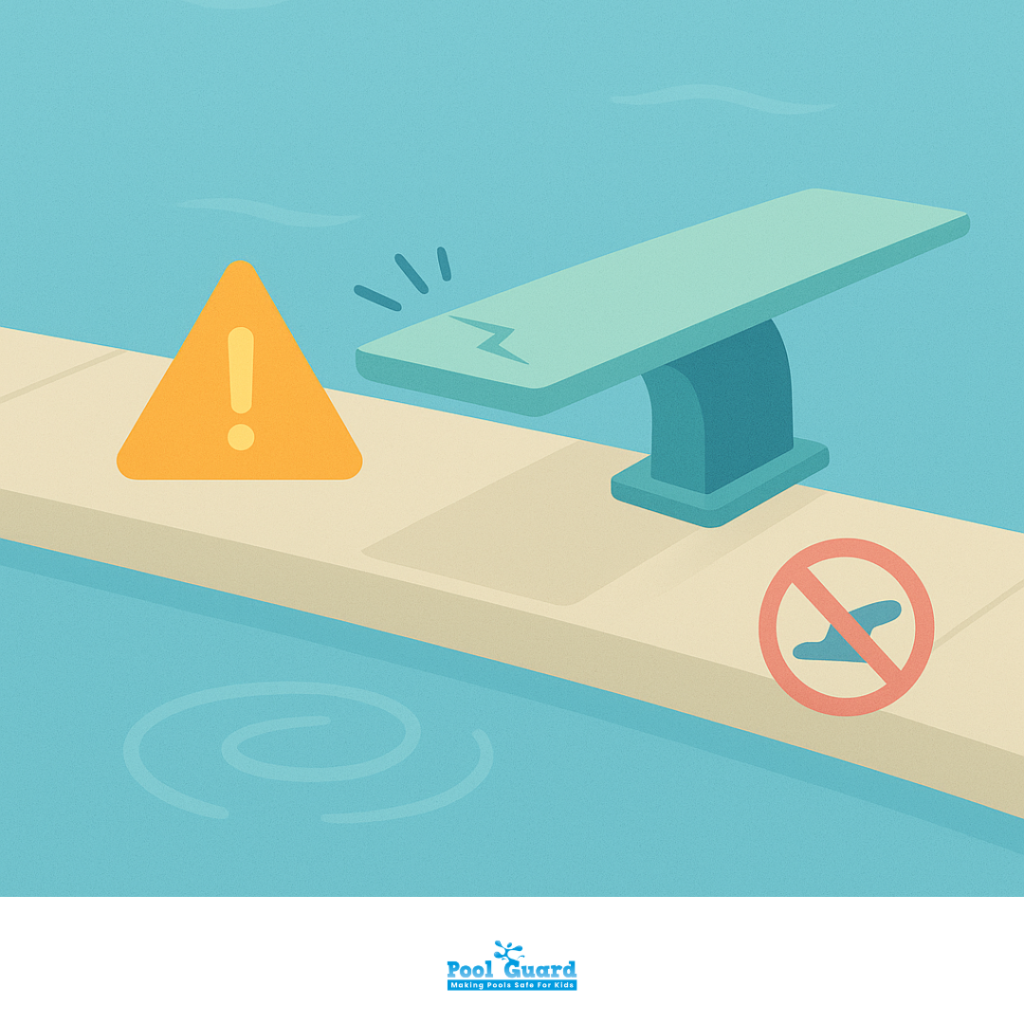
2. Diving Board Injuries

Head, neck, and spinal injuries occur when swimmers:

  • dive into water that is too shallow
  • collide with the board
  • misjudge distance

Mitigation

Follow ANSI/APSP 5 depth standards and maintain all diving structures.
Diving Board Injuries

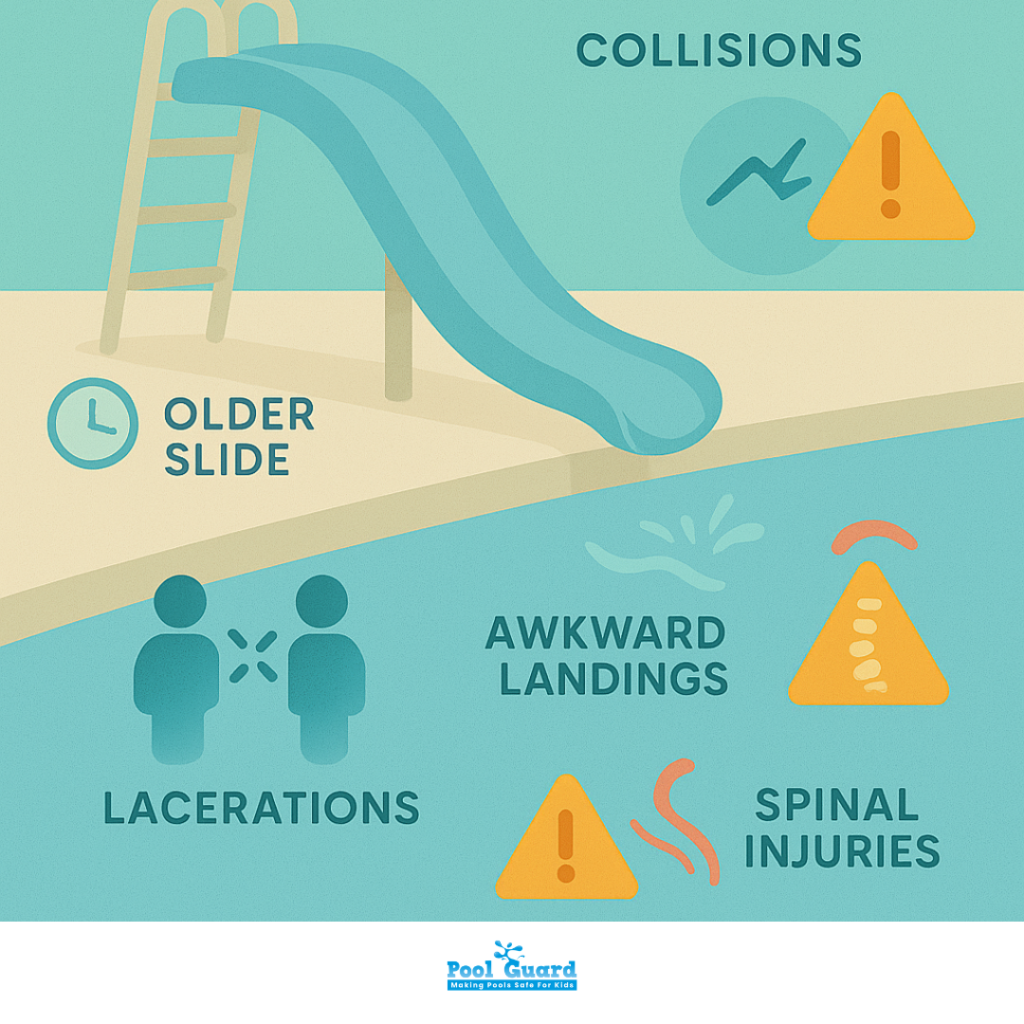
3. Pool Slides

Slides can cause:

  • collisions
  • lacerations
  • awkward landings
  • spinal injuries

Older slides may not meet modern safety standards.
Pool Slides

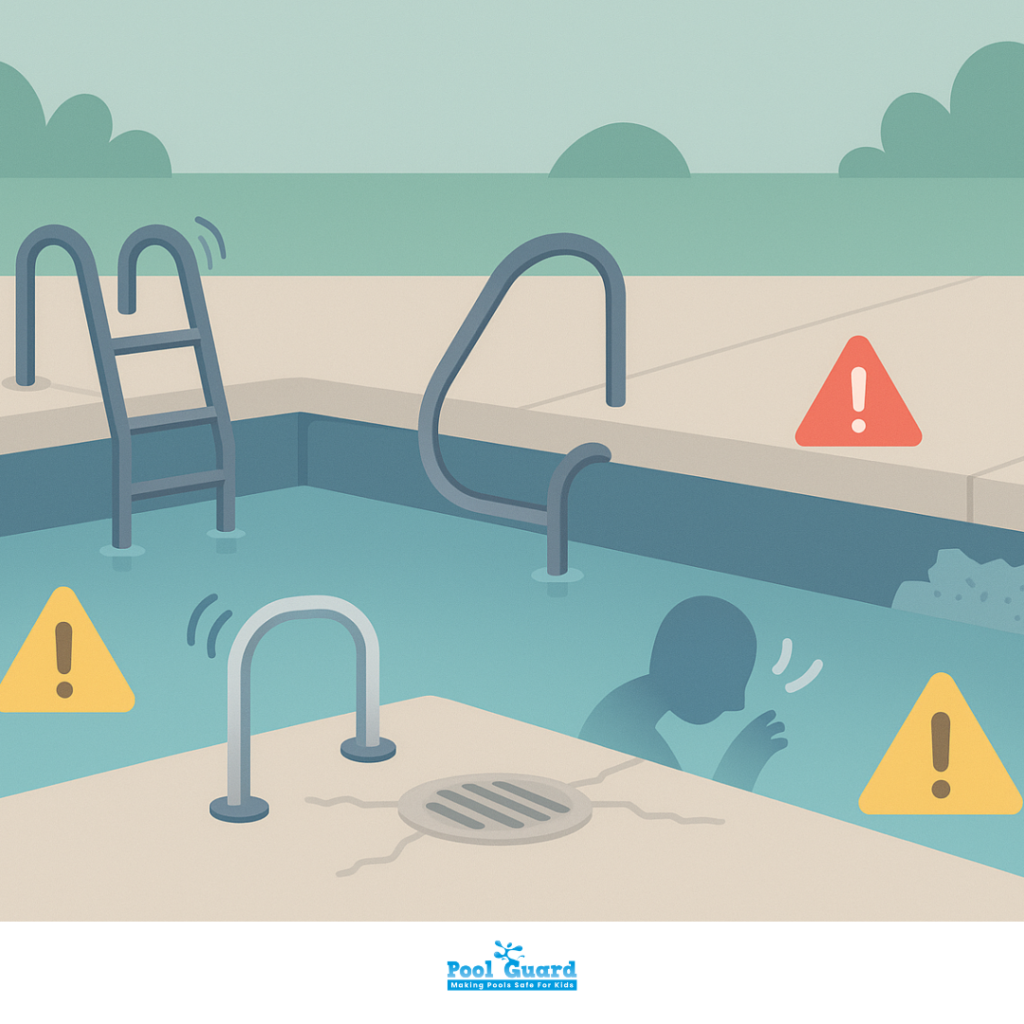
4. Structural Failures

Common failures include:

  • loose ladders
  • unstable handrails
  • cracked coping or decking
  • deteriorating plaster

These may cause falls, cuts, or entrapment.
Structural Failures

5. Poor Visibility / Murky Water

Turbidity hides bodies underwater. Every second matters in drowning response, and cloudy water:

  • slows recognition
    conceals hazards
  • signals chemical imbalance

If you can’t see the drain clearly, no one should swim.
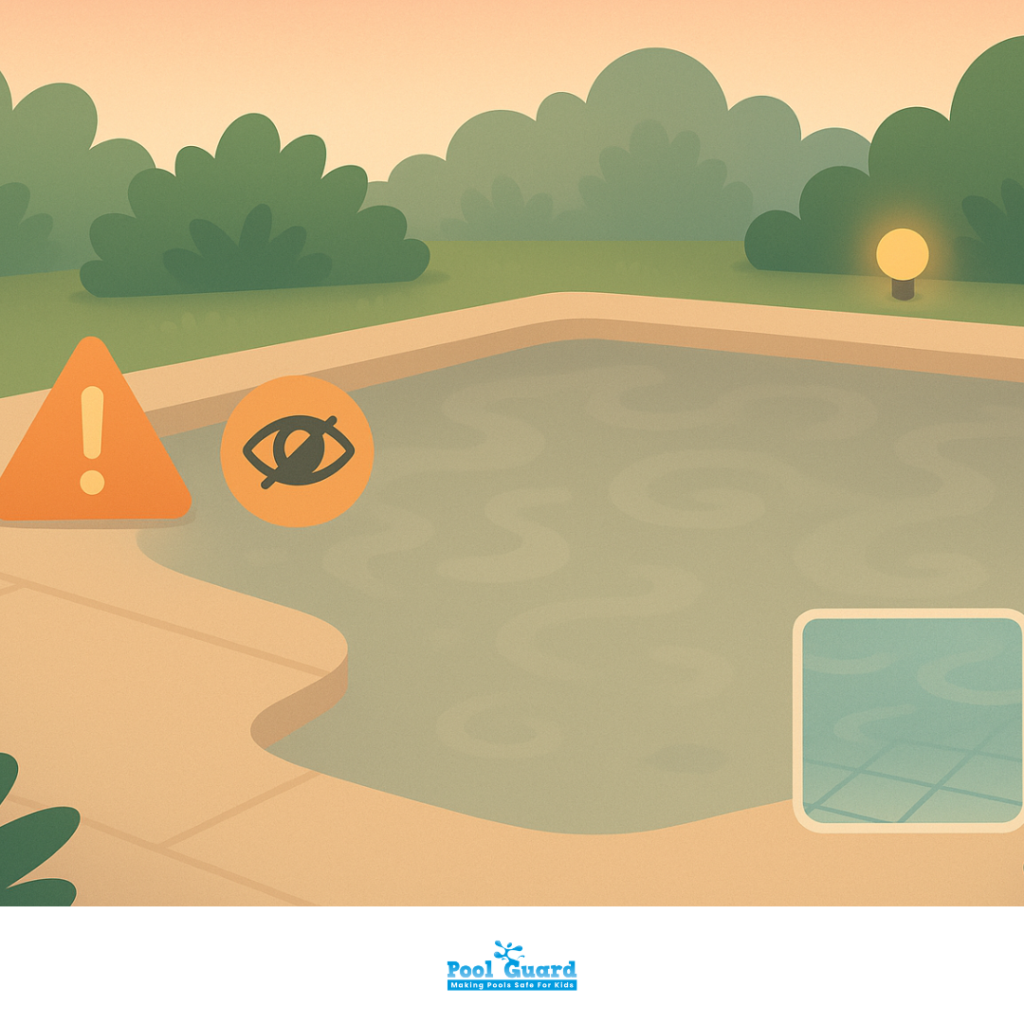
Poor-Visibility-Murky-Water.

6. Waterborne Illnesses

Public health agencies identify pools as potential sources of:
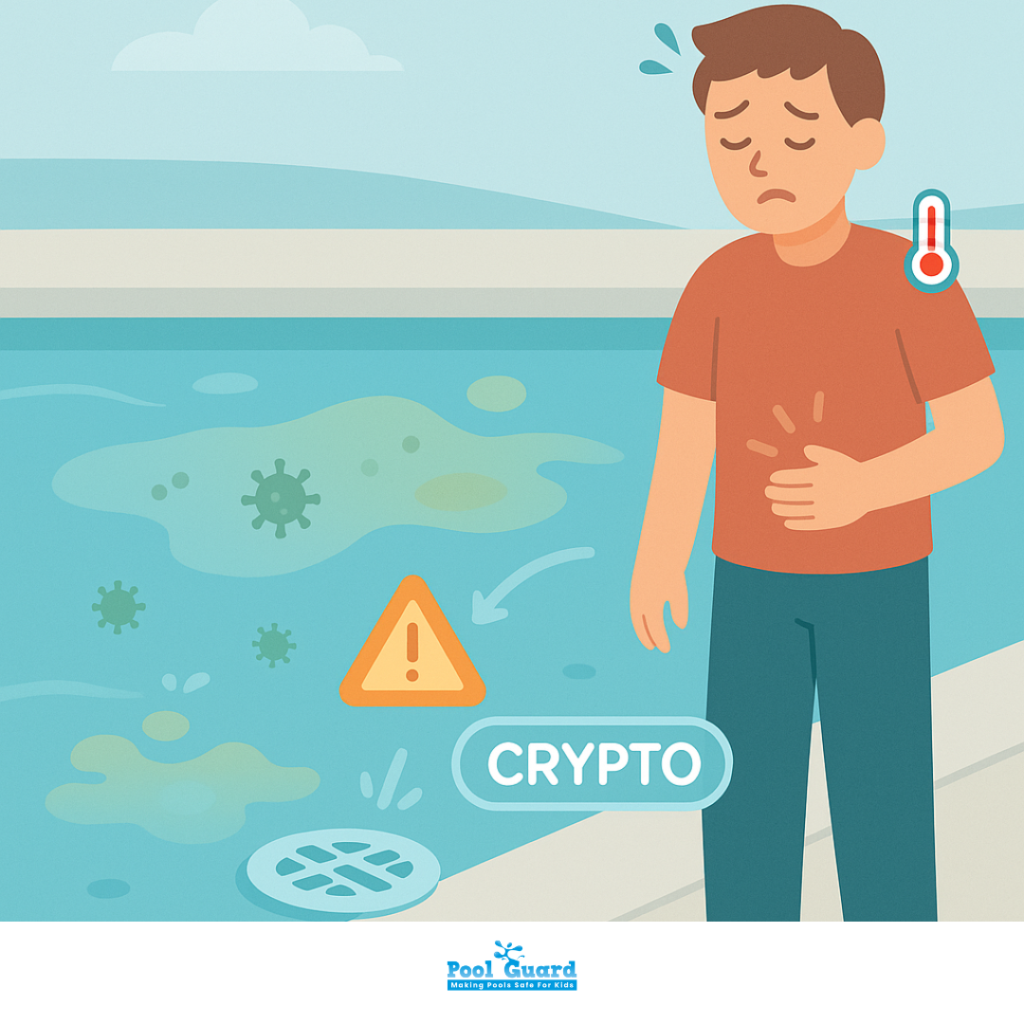
  • Cryptosporidium (most common U.S. recreational water outbreak source)
  • Legionella (hot tubs and indoor pools)
  • Norovirus
  • Pseudomonas (hot tub rash)
  • E. coli and other fecal pathogens

Causes

  • AFRs (accidental fecal releases)
  • low disinfectant levels
  • high bather loads
  • inadequate filtration
  • poor hygiene
Waterborne Illnesses

Tier 3 Hazards: Frequently Overlooked

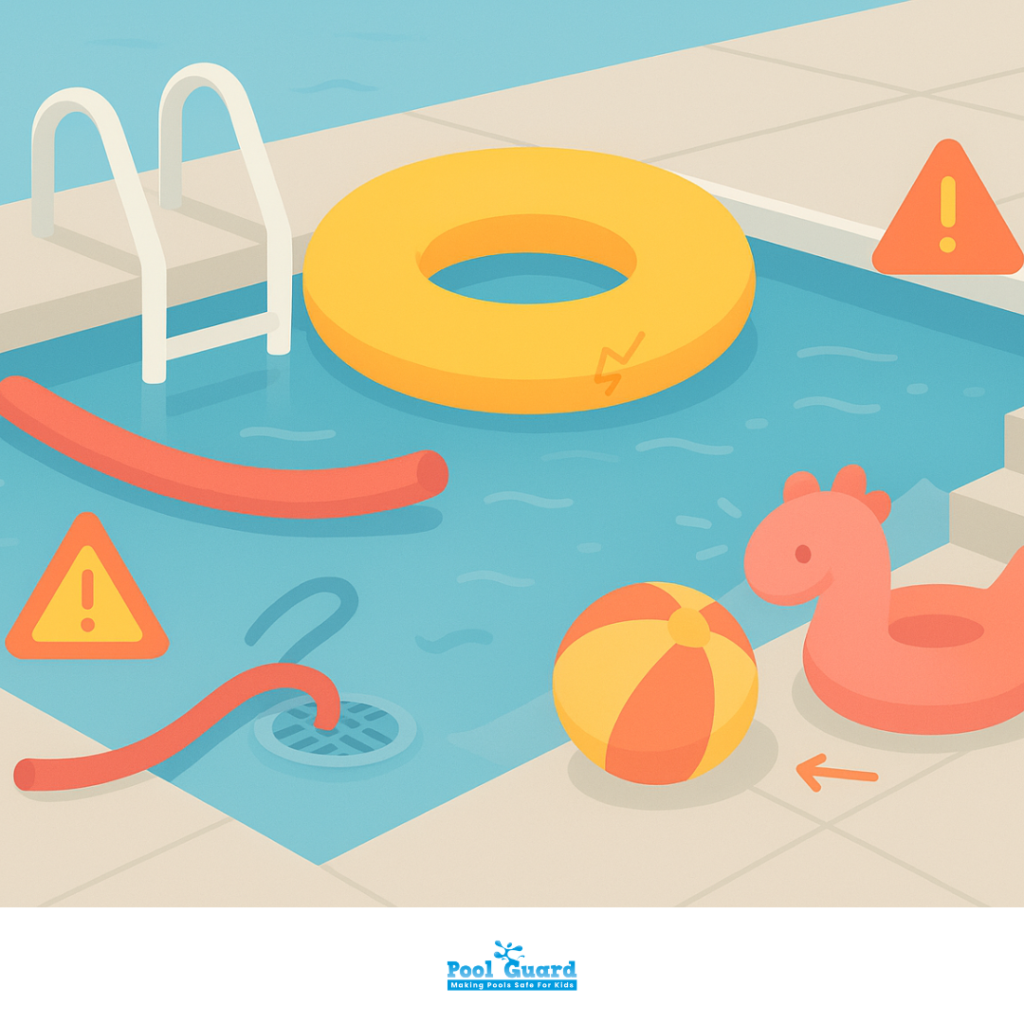
1. Pool Toys That Create Entrapment or Obstruction

Large inflatables can:

  • trap children underneath
  • block line of sight
  • drift into deep water carrying young swimmers
    Remove toys after every swim session.
Pool Toys

2. Improper Chemical Storage

Homeowners often store pool chemicals:

  • near grills
  • in plastic bins without ventilation
  • within children’s reach
  • in humid environments

This increases explosion, burn, and inhalation risks.
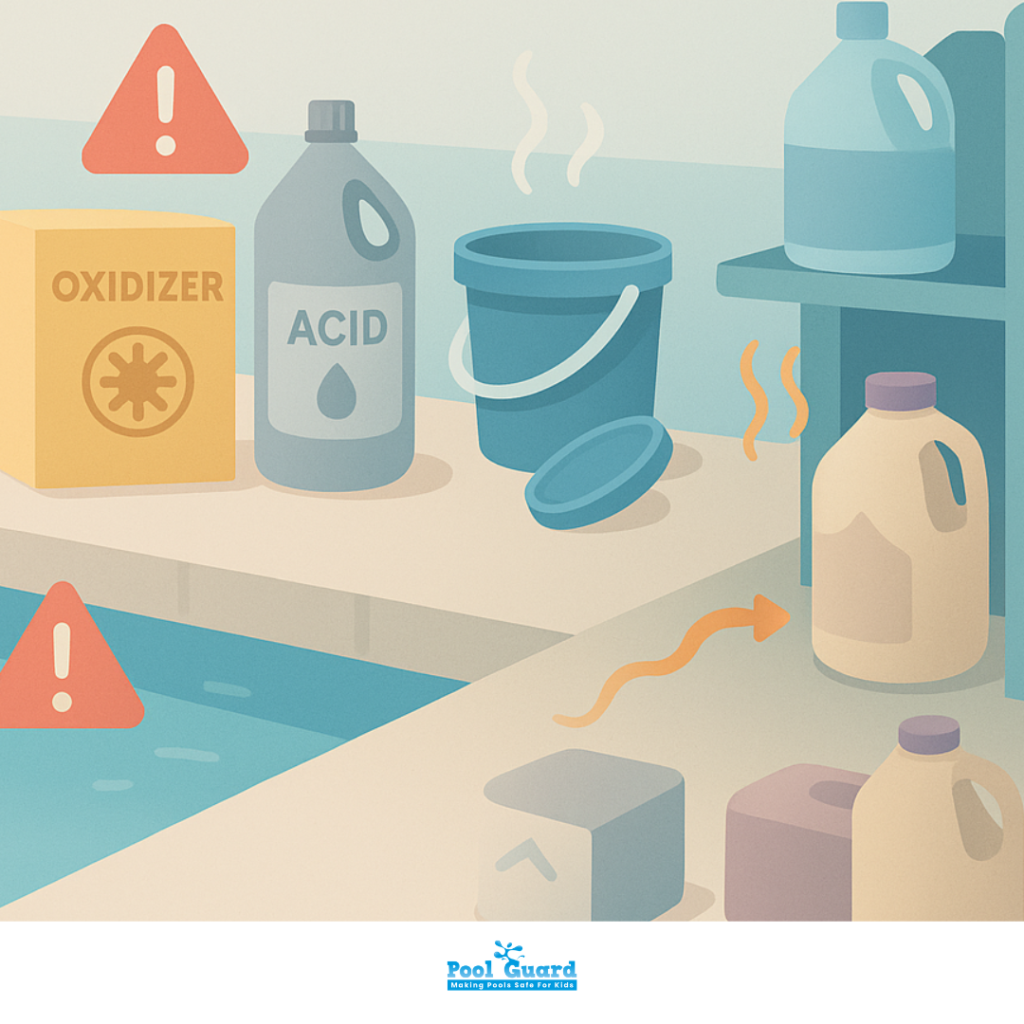
Improper Chemical Storage

3. Lack of Barriers

Over half of pediatric drowning deaths occur when children access pools outside of swim time.
Barriers are the single most effective intervention.
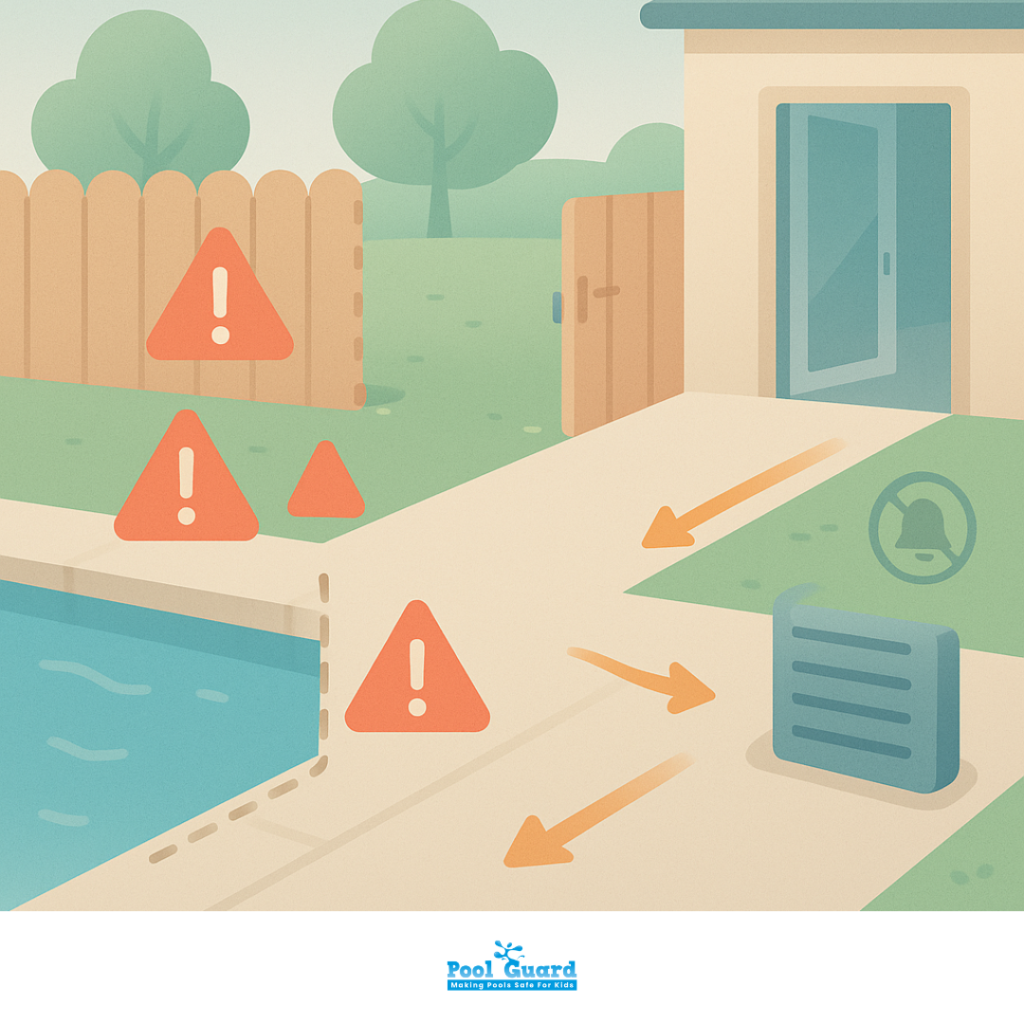
Lack of Barriers

4. Seasonal Hazards

Winter covers can sag, tear, or collect rainwater—creating a drowning hazard for children and pets.
Seasonal Hazards

5. Pets and Wildlife

Pets and wildlife fall into pools more often than owners realize, particularly during nighttime or winter. Safety covers and nets help prevent these events.
Pets and Wildlife

Comprehensive Pool Hazard Prevention Checklist

Access Control

✓ 4-sided isolation fence
✓ Self-closing, self-latching gate
✓ High-mounted latch (e.g., MagnaLatch)
✓ ASTM-certified safety cover or net
✓ Remove climbable furniture

Operational Safety

✓ VGB-compliant drain covers
✓ Dual main drains or SVRS
✓ Annual electrical inspection
✓ Clear, balanced water chemistry

Behavioral Safety

✓ Assign a Water Watcher during swim sessions
✓ Remove toys after use
✓ Learn CPR (AHA guidelines)
✓ Teach children to avoid drains

Environmental Safety

✓ Slip-resistant deck maintenance
✓ Properly stored pool chemicals
✓ Adequate lighting for evening visibility

When Pools Should NOT Be Used

You should immediately suspend swimming when:

  • water is cloudy or discolored
  • chemical levels are outside acceptable ranges
  • electrical issues are suspected (tingling sensations, flickering lights)
  • drain covers are loose or missing
  • storms or lightning are present
  • no responsible adult is available to supervise

The most preventable accidents occur when people swim during unsafe conditions.

Conclusion

No single device, rule, or habit eliminates all swimming pool hazards. Safety is built on multiple protective layers:

  • Barriers and covers preventing access
  • Clear visibility and proper water chemistry
  • Safe equipment and compliance with VGB standards
  • Active supervision and emergency readiness

Pool Guard USA helps homeowners create safer environments through industry-leading fences, covers, and alarms that reduce the most common and severe risks: unsupervised access, accidental falls, and unnoticed submersion.

Safety isn’t one action—it’s a system. Build layers, stay vigilant, and every swimmer benefits.

Recent Articles

Contact Dealer

Please fill out the form below with your information. Your local dealer will be notified about your inquiry.

Contact Dealer

Please fill out the form below with your information. Your local dealer will be notified about your inquiry.