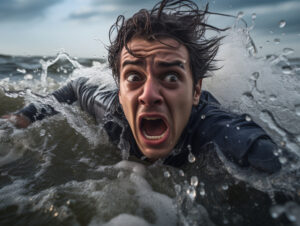
Most drowning incidents don’t happen in rough water or during chaotic pool parties—they happen quietly, in familiar backyard pools, often with adults only steps away. The CDC reports that drowning is the leading cause of accidental death for children ages 1–4 and a top cause for older kids and teens. More than 70% of child drownings occur in residential pools, and in many cases, the child was unseen for less than 20 seconds.
Here’s the truth no manufacturer or local contractor says bluntly:
Pool safety equipment isn’t optional—it’s your only safeguard when human attention slips, and it always does.
The right equipment creates layers of protection that stop accidents before they escalate.
This is the definitive Pool Safety Equipment List, merging consumer, commercial, CPO®, and rescue best practices into one authoritative guide.
These items form your baseline. They aren’t “extras.” They are the difference between prevention and disaster.
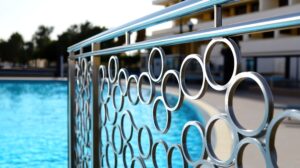
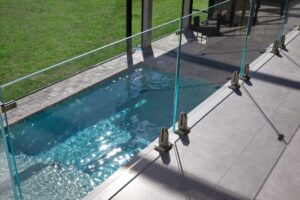
Pool safety fences prevent unsupervised access—still the #1 cause of residential drowning.
Why it matters: Over half of toddler pool drownings occur when a child accesses the pool alone. Barriers stop that scenario cold.
Not the flimsy “solar covers”—actual safety-rated covers that:
Mesh, solid, and automatic versions all qualify when properly installed and tensioned.
Alarms fill the supervision gaps humans inevitably create.
Detecting wave disruption. Basic but better than nothing.
Far superior—detect velocity changes under the water.
Ideal for quiet-water scenarios where surface alarms fail.
Protects sliding doors, side gates, and garage entries leading to the pool.
A must-have safety tool for young children near water.
If the device gets wet, the alarm triggers instantly.
Infrared beams create an invisible fence.
Used by hotels and HOA pools to detect after-hours entry.
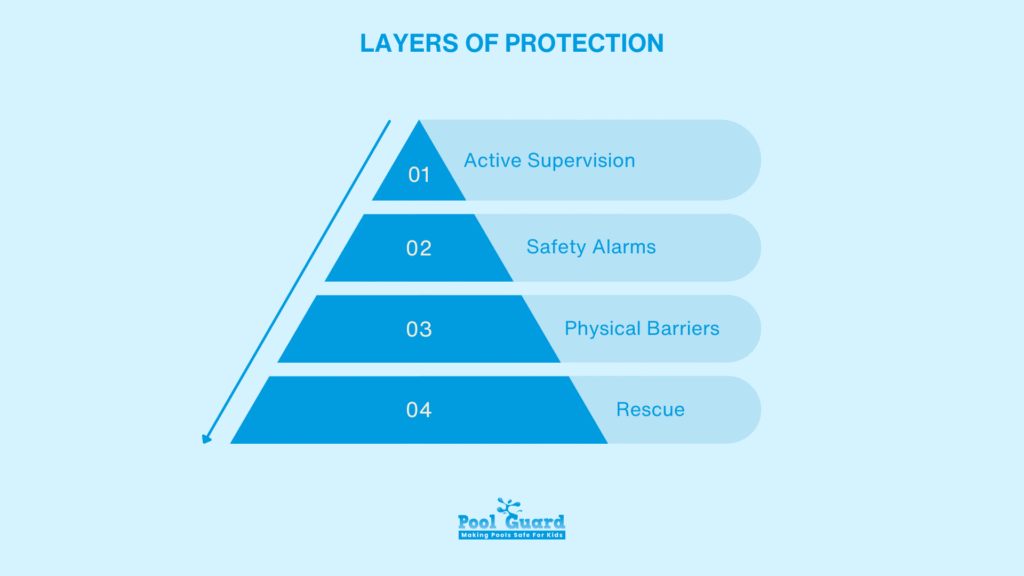
This is where most homeowner lists fall apart. Real rescue gear must be accessible without entering the water.
Standard lifeguard gear for conscious victims.
Required in all staffed pools.
Critical for suspected spine injuries, slips, or diving accidents.
Must include:
Parents get this wrong constantly.
Not arm floaties.
Not inflatable rings.
Not puddle jumpers without USCG approval.
Approved vests maintain flotation even when unconscious.
University of Minnesota testing confirmed neon yellow, orange, and lime have the highest visibility.
Blue swimsuits disappear instantly.
Kickboards and noodles help with confidence—not drowning prevention.
Call them what they are: toys, not safety devices.
Top-tier toddler protection—alerts adults when a child hits water.
Adults drown too—often from panic, medical events, or alcohol impairment.
Useful for weak swimmers supervising children.
Entrapment forces can exceed hundreds of pounds—stronger than an adult can escape.
Covers must be replaced every 5–7 years.
Great for training but also help inexperienced adults stay stable in deep water.
Required by the Virginia Graeme Baker Pool & Spa Safety Act.
This prevents:
Add a vacuum release system if you have a single main drain.
Wet decks cause far more accidents than the pool itself.
Best practices:
Valuable for:
But cameras do not replace alarms or barriers. Ever.
Lighting improves visibility, which reduces rescue time.
Electrical equipment must be:
Faulty wiring = silent, lethal hazard.
Your kit must include:
Store it in a weather-resistant, waterproof container.
The American Heart Association confirms that AED use within 3–5 minutes can triple survival rates.
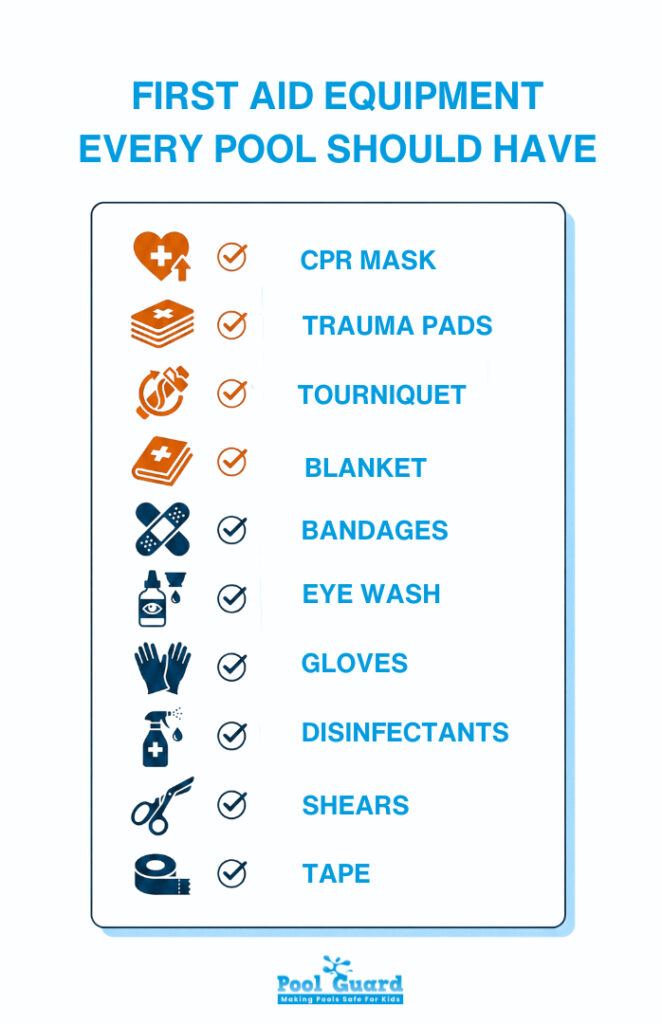
This monthly audit prevents slow equipment decay—the silent killer of safety.
Upgrade immediately when:
Most homeowners wait too long—and only discover failure after an incident.
A safe pool isn’t about being careful—it’s about eliminating the failures that cause accidents in the first place. Drowning happens fast and quietly, and the only real protection is a layered system of barriers, alarms, rescue gear, compliant drains, and first aid equipment that doesn’t leave anything to chance. If your setup has gaps, close them now. The right equipment turns your pool from a risk into a controlled environment where everyone can swim without unnecessary danger.
Please fill out the form below with your information. Your local dealer will be notified about your inquiry.
Please fill out the form below with your information. Your local dealer will be notified about your inquiry.