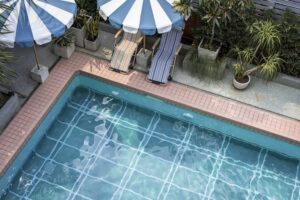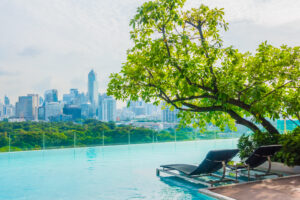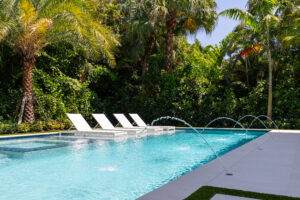
Las Vegas is built in the middle of the Mojave Desert—yet it operates one of the most pool-dense urban environments in the United States. From sprawling resort pool decks to tens of thousands of backyard swimming pools, water is woven into the city’s identity. But behind the spectacle are hard numbers that tell a much more strategic story.
This guide breaks down the most important pool statistics Las Vegas homeowners, builders, investors, and safety professionals need to understand. We’ll look at residential pool counts, water evaporation rates, new size regulations, tourism-driven pool demand, and what all of it means for the future of swimming pools in Southern Nevada.
Clark County has approximately 200,000 residential swimming pools. That alone makes Las Vegas one of the most pool-concentrated regions in the country.
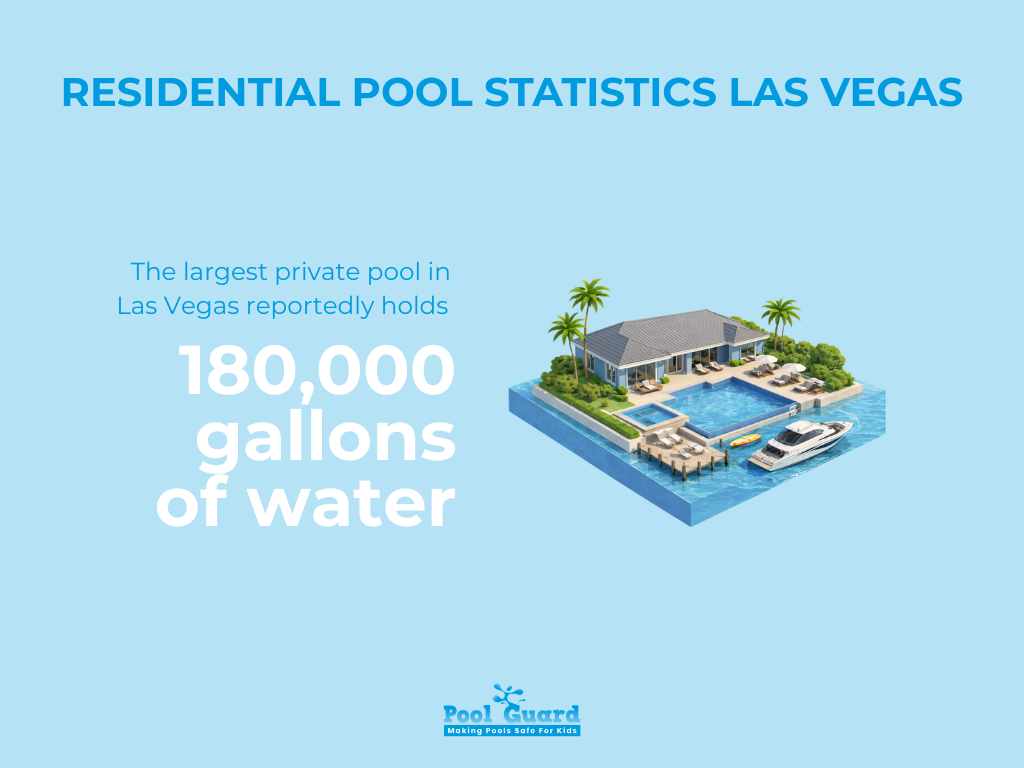
The average residential pool size in Southern Nevada ranges between 470 and 475 square feet. However, not all pools are average. Some luxury homes have pools exceeding 3,000 square feet, and at least one pending permit request reached 5,000 square feet. The largest private pool in Las Vegas reportedly holds 180,000 gallons of water.
When you combine those numbers with the city’s tourism volume—between 32 and 41 million visitors annually since the pandemic—it becomes clear that pools are not niche amenities. They are structural features of the Las Vegas lifestyle and economy.
In response to ongoing drought conditions and water supply pressure, new residential pools in Clark County are now capped at 600 square feet (55.7 square meters).
This regulation, approved in 2022, targets the largest 25% of new pool builds. The Southern Nevada Water Authority estimates the measure will save more than 32 million gallons of water over the next 10 years.
To put that into perspective, the average local pool already measures around 470 square feet. The regulation does not eliminate pools—it prevents oversized, water-intensive designs from becoming the new standard.
The context behind this decision matters:
These are not theoretical concerns. They directly shape pool construction policy.
The most overlooked statistic in Las Vegas pool ownership is evaporation.
The average in-ground pool loses 48.6 gallons of water per square foot per year to evaporation alone. For a typical 470-square-foot pool, that equals approximately 22,842 gallons annually.
Multiply that by 200,000 residential pools and the scale becomes staggering.
Evaporation is driven by three primary factors:
Pool covers can reduce evaporation by up to 90%, making them one of the most effective conservation tools available to homeowners.
A simple chart showing:
This type of graphic becomes highly shareable and backlink-worthy.
Residential pools are only part of the story. Las Vegas resorts have built pool complexes that function as entertainment districts.
Consider these figures:
These pool environments are not seasonal. They are revenue engines.
The Las Vegas Strip generated $21.8 billion in total revenue in 2024, including $8.8 billion in gaming revenue. Hotel occupancy reached 86.4% across more than 85,000 rooms, with an average daily room rate of $208.23 in January 2025, up 2% year over year.
Pools are directly tied to pricing power and resort positioning.
Las Vegas also uses water as a performance platform.
Cirque du Soleil’s O at Bellagio operates inside a 1.5-million-gallon pool. Since opening in 1998, it has:
Meanwhile, the Fountains of Bellagio feature:
These attractions reinforce Las Vegas’s reputation for water spectacle—even in a desert environment.
Las Vegas averages 300+ days of sunshine per year. Even October can see daytime temperatures near 90°F, while summer months regularly exceed 100°F.
With that climate profile, pools serve multiple roles:
They are not simply aesthetic features. They are environmental responses.
If you own or plan to build a pool in Las Vegas, the data leads to several clear conclusions:
Las Vegas has one of the highest concentrations of residential pools in the country. High density increases both environmental responsibility and safety liability.
The era of oversized, purely aesthetic poolscapes is fading. Regulations are tightening. Water allocations are shrinking. Evaporation is measurable and costly.
The future of pools in Las Vegas will be defined by:
The city will continue to be synonymous with pool culture. But the next generation of pool owners will be defined by smarter design choices, not excess. If you found this deep dive into pool statistics Las Vegas valuable, share it with a fellow homeowner, builder, or industry professional—and explore additional water conservation and pool safety resources from PoolGuard USA.
Please fill out the form below with your information. Your local dealer will be notified about your inquiry.
Please fill out the form below with your information. Your local dealer will be notified about your inquiry.