In Tampa, swimming pools are not rare upgrades tucked behind luxury homes. They are a defining feature of the city’s residential landscape. With warm temperatures nearly year-round and a strong outdoor lifestyle culture, pools are woven into how people live, buy, and sell homes here.
If you are researching pool statistics Tampa, you are likely trying to answer one of three questions: Are pools common? Do they increase home value? And are they worth the cost and responsibility? This guide breaks down the real data behind Tampa’s pool market—ownership rates, resale impact, annual expenses, and safety risks—so you can make decisions based on facts, not assumptions.
Let’s start with the number that defines Tampa’s pool culture.
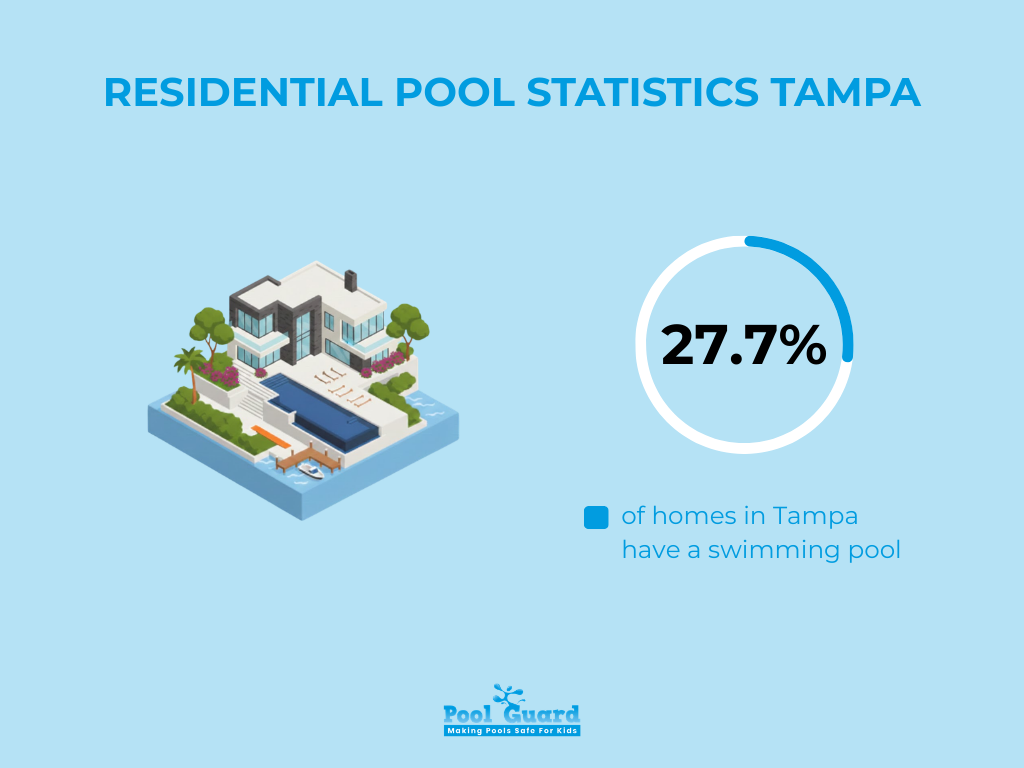
According to national data collected by LendingTree and published by Fixr and AQUA Magazine, 27.7% of homes in Tampa have a swimming pool. That means more than one in four homes in the city includes a pool.
To understand how significant that is, consider the national average: only about 8% of U.S. households own a swimming pool. Tampa’s ownership rate is more than three times higher.
Within Florida, Tampa ranks just behind Miami (30.6%) and ahead of Orlando (25.9%) among major cities. It consistently appears in the top tier of large U.S. cities with the highest percentage of residential pools.
This concentration is not random. Tampa’s climate supports extended use:
In northern markets, pools sit idle for much of the year. In Tampa, they are functional lifestyle features for most months. That difference alone explains why pool ownership is structurally higher.
This is where Pool Statistics Tampa becomes financially relevant.
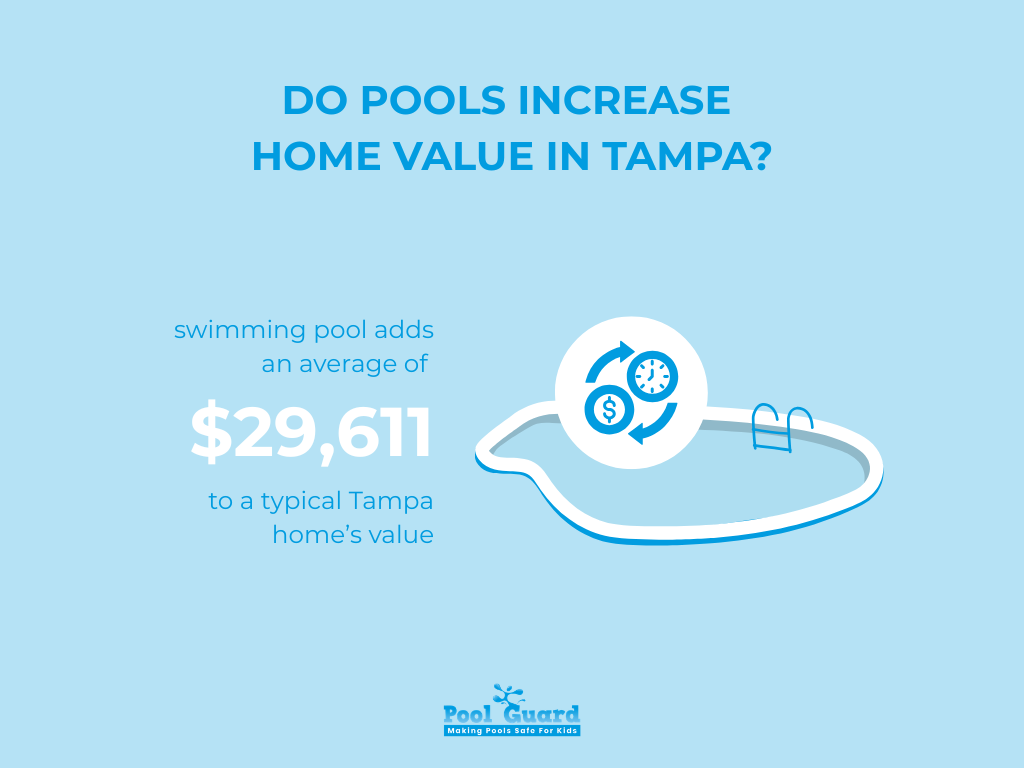
Data from 2026 metro-level home valuation models shows that a swimming pool adds an average of $29,611 to a typical Tampa home’s value. That places Tampa among the stronger Sunbelt markets for pool-related appreciation.
For comparison:
In addition, in-ground pools can increase home value by up to 7% nationally. However, the nuance matters.
The average cost to build an in-ground pool in 2026 is approximately $65,000. While Tampa homeowners may see nearly $30,000 in added value, full cost recovery through resale is uncommon. The return is partial and highly dependent on neighborhood price tier.
In luxury and upper-mid-tier neighborhoods, a pool is often expected. In those cases, the absence of a pool may actually reduce competitiveness. In lower price ranges, some buyers view pools as added maintenance liability rather than value.
In Tampa’s stronger residential zones, pools often function less as a bonus and more as a market standard.
Installation is only part of the equation. Ongoing ownership costs are where many homeowners underestimate the commitment.
National annual pool ownership expenses typically range from $3,030 to $5,995 per year, including:
In Tampa, because pools operate for longer seasons, electricity and maintenance usage often lean toward the higher end of these ranges. Add potential insurance adjustments, fencing requirements, and occasional equipment replacement, and the total long-term financial footprint becomes substantial.
Owning a pool in Tampa is less about novelty and more about consistent operating responsibility.
The United States currently has 10.7 million swimming pools, including 10.4 million residential pools. Roughly 6.1 million are in-ground and 4.3 million are above-ground.
Nationally, there is approximately one pool for every 32 Americans.
Florida leads the country in total residential pool count with 1.59 million pools statewide. Tampa sits directly inside this high-density Sunbelt ecosystem, where warm weather and suburban development patterns drive strong pool integration into housing.
At the same time, the U.S. swimming pool industry is projected to reach $2 billion in 2025, reflecting steady growth after pandemic-related disruptions. Since 2020, the market has rebounded sharply and now sits nearly 31% above pre-pandemic levels.
Tampa’s sustained housing demand, tourism influence, and climate conditions align closely with this broader industry growth pattern.
With high pool ownership comes heightened safety responsibility.
National drowning data shows:
In a city where more than one in four homes has a pool, these statistics matter.
The prevalence of residential pools increases exposure risk. Neighborhood density means children may encounter pools not only at home but at friends’ houses and nearby properties. For Tampa homeowners, fencing, alarms, and protective fences are not cosmetic upgrades—they are core safety infrastructure.
Tampa is Florida’s third-largest city and is built around outdoor living. The city features more than 165 parks and beaches within city limits, proximity to Gulf Coast beaches such as Clearwater and St. Pete Beach, and a 2.4-mile Riverwalk lined with restaurants, parks, and public spaces.
The lifestyle is outdoor-first. Mild winters, strong suburban development, and family-oriented communities all reinforce demand for backyard amenities.
In addition, Tampa has been ranked among the top 10 family-friendly cities based on cost of living, school quality, crime rate, commute times, and parks. In family-centered markets with extended warm seasons, pools often become normalized residential features rather than luxury indulgences.
When you step back and look at the data holistically, several conclusions emerge:
In Tampa, pools are lifestyle assets first and financial assets second. They enhance daily living and buyer appeal but require long-term planning and safety discipline.
Understanding pool statistics Tampa gives homeowners and buyers clarity. Pools in Tampa are common, they influence property value, and they carry real operating costs and safety responsibilities.
If you are buying, selling, or upgrading a home in Tampa, evaluate pools strategically. Consider neighborhood expectations, long-term expenses, and safety measures before making a decision.
If you found this guide helpful, share it with another Tampa homeowner or explore our related pool safety resources to make smarter, safer decisions.
Swimming Pool Statistics (2026)
Please fill out the form below with your information. Your local dealer will be notified about your inquiry.
Please fill out the form below with your information. Your local dealer will be notified about your inquiry.