
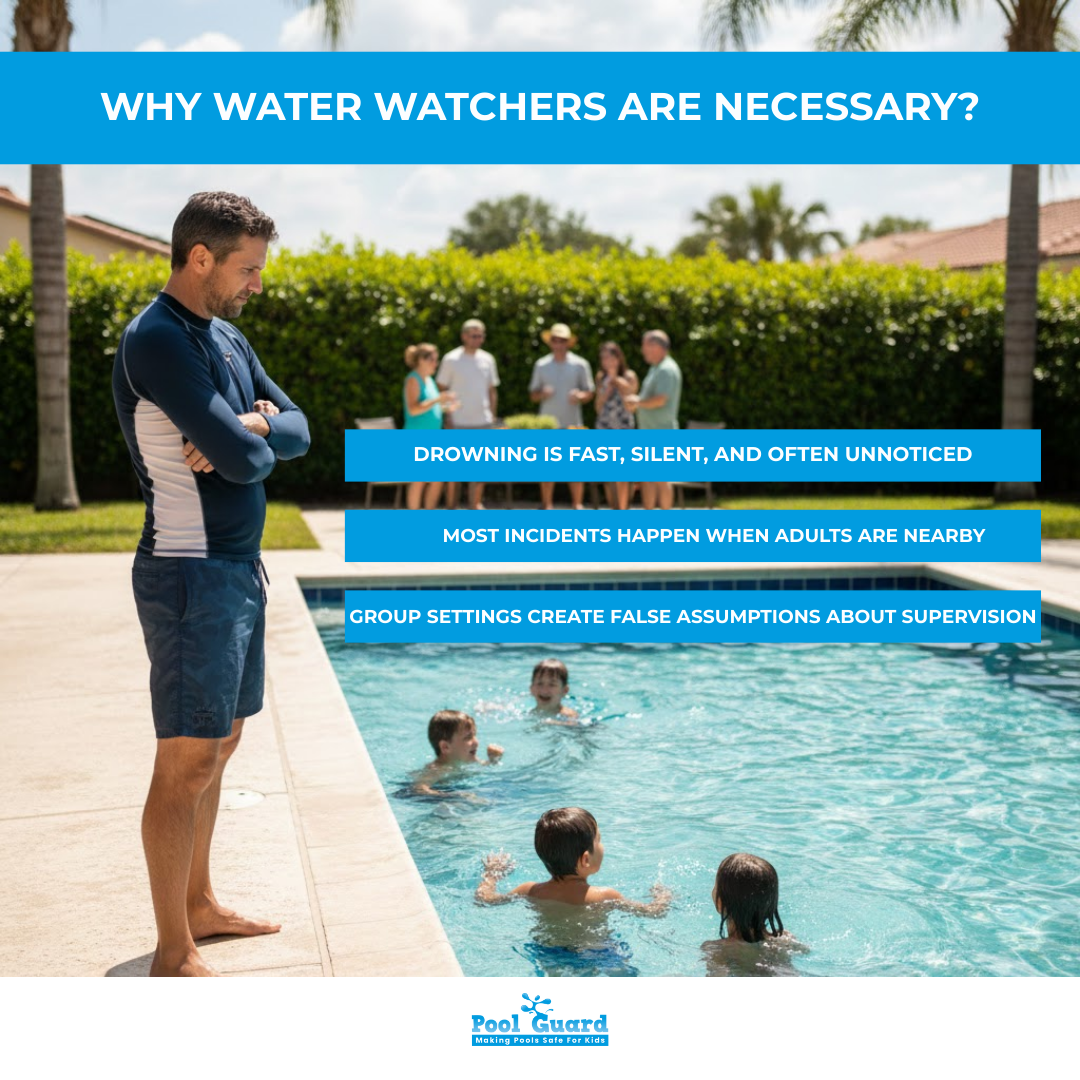
Drowning doesn’t look like the movies. It’s fast. It’s silent. And in most cases, it happens while adults are nearby.
That’s why understanding what is a water watcher—and how to use one correctly—can literally save a life. Understanding drowning risk also includes knowing how quickly drowning can happen in real scenarios.
This guide explains exactly what a water watcher is, why the role exists, how it works in real life, and how it fits into a modern, layered pool safety strategy. Whether you’re a parent, homeowner, or hosting a pool party, you’ll walk away knowing how to reduce risk—not just feel better about it.
According to the Centers for Disease Control and Prevention, drowning is a leading cause of unintentional injury death for young children, and it often happens in under a minute—without splashing or shouting. Children can slip underwater quietly, even in shallow water. Many incidents are classified as near drowning events that still result in serious long-term consequences.
Studies consistently show that a majority of child drownings occur when at least one adult is present. The issue isn’t absence—it’s attention failure. Phones, conversations, food, and social assumptions all compete with vigilance.
At pool parties and family gatherings, responsibility diffuses. Everyone assumes someone else is watching. When everyone is “kind of” watching, no one actually is.
A water watcher exists to eliminate that gap.
A water watcher is a designated adult responsible for active, uninterrupted supervision of swimmers for a defined period of time.
This role follows one rule above all others:
One person. One role. One focus.
While other adults may be nearby, only the water watcher is responsible for watching the water at that moment. To make this responsibility clear, many families and organizations use a visible identifier such as a card, tag, wristband, or lanyard.
A water watcher’s job is simple—but non-negotiable.
The water watcher keeps eyes on all swimmers at all times, scanning continuously. If someone submerges unexpectedly or goes silent, the watcher notices immediately.
No phones. No alcohol. No reading. No extended conversations. If you’re distracted, you are not water watching.
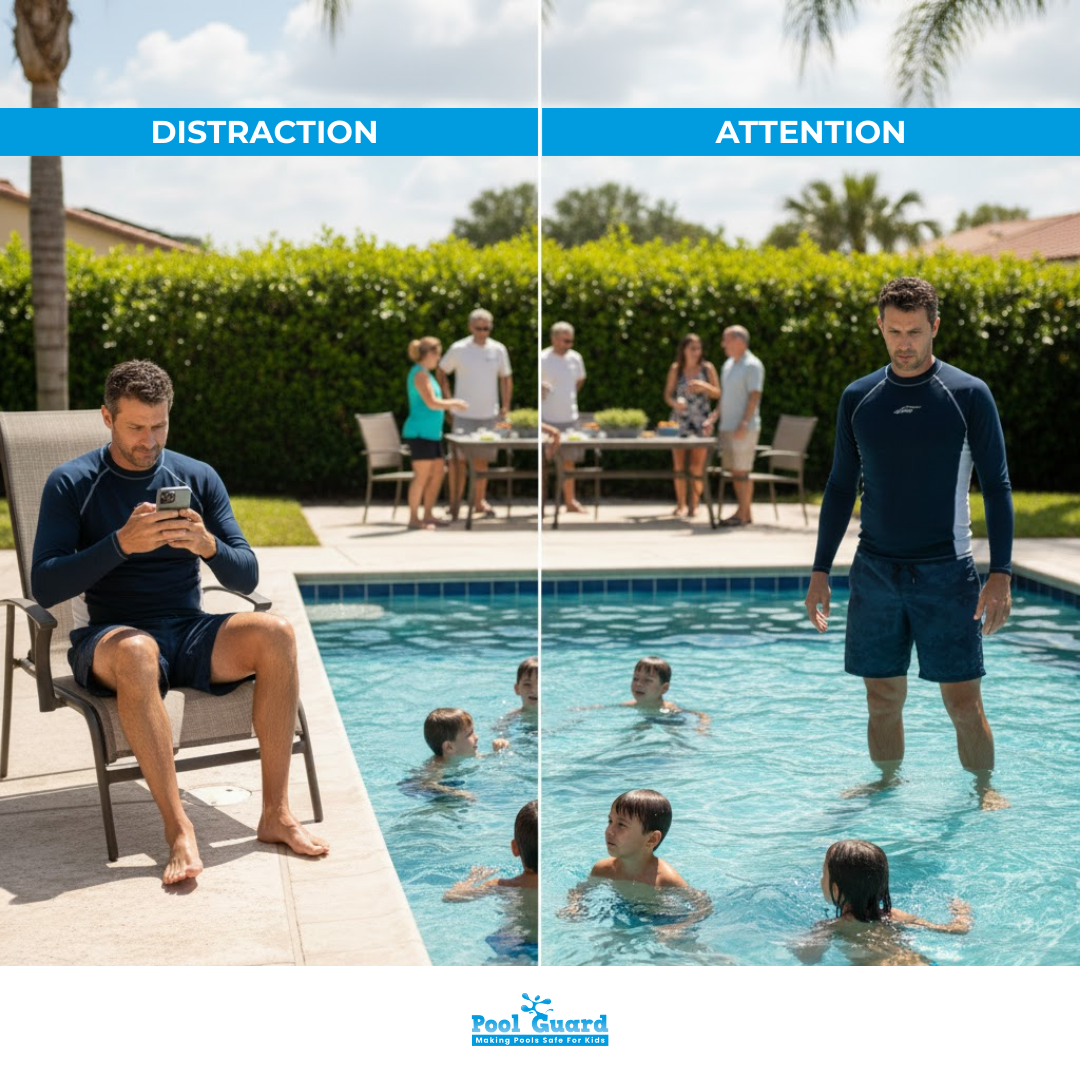
The watcher stays close enough to act quickly and knows how to call for emergency help (911) without leaving the scene. In emergency situations, knowing CPR can make a critical difference after a rescue.
While vigilance is the primary defense, the watcher should know where flotation or reaching devices are located in case they’re needed.
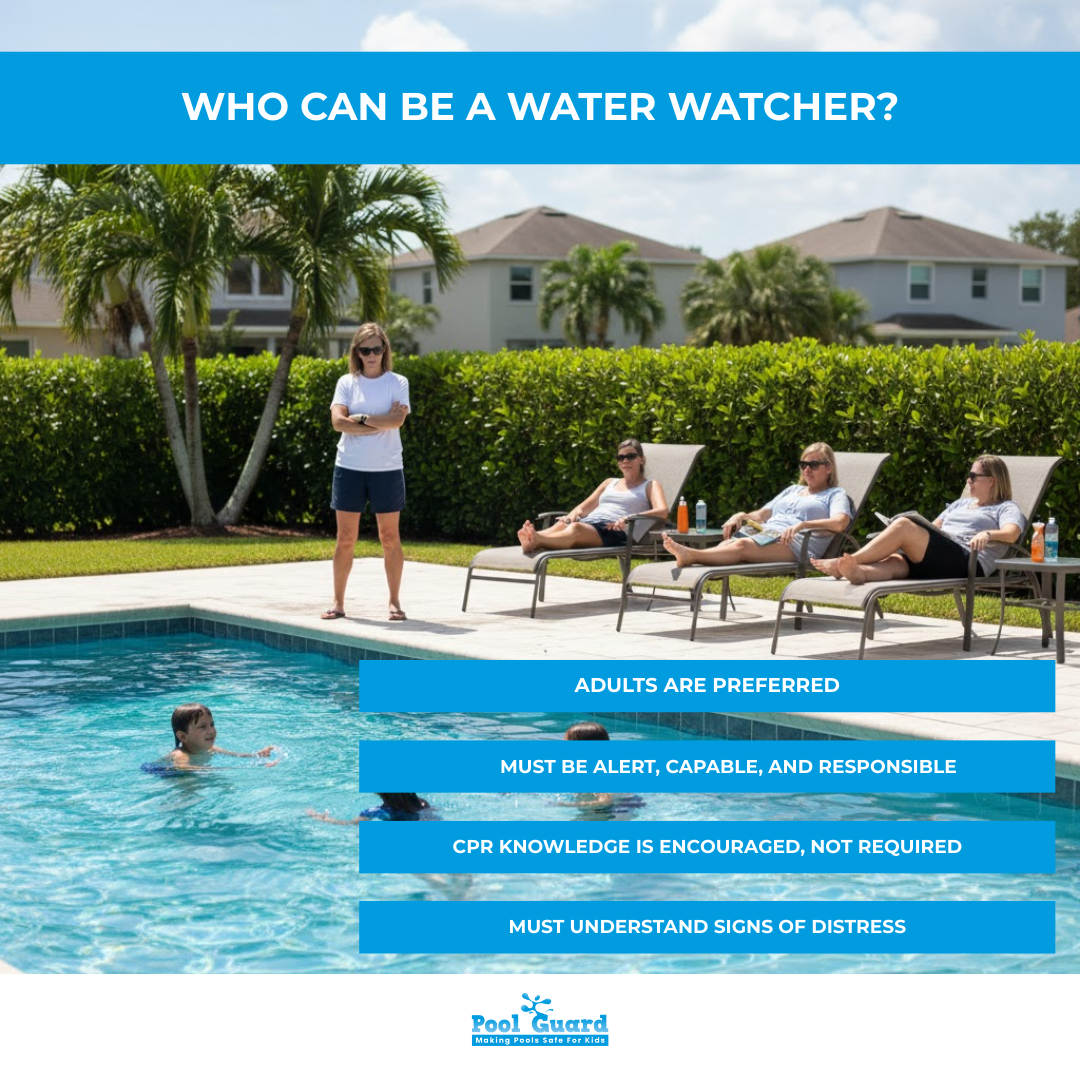
Most safety organizations recommend adults as water watchers. Some guidelines allow individuals 16+ in limited circumstances, but adults are the safest default due to maturity, judgment, and authority.
A water watcher must be sober, attentive, and willing to take full responsibility—without multitasking.
CPR training is valuable, but it is not what prevents most drownings. Early recognition and immediate response do. Many drownings are prevented simply because someone was watching.
Drowning often looks like vertical posture, glassy eyes, or quiet struggle—not waving or yelling.
Human attention fades. Even motivated adults experience vigilance fatigue. Short, defined shifts keep supervision sharp.
The longer someone watches, the more likely distractions creep in. Time limits prevent that.
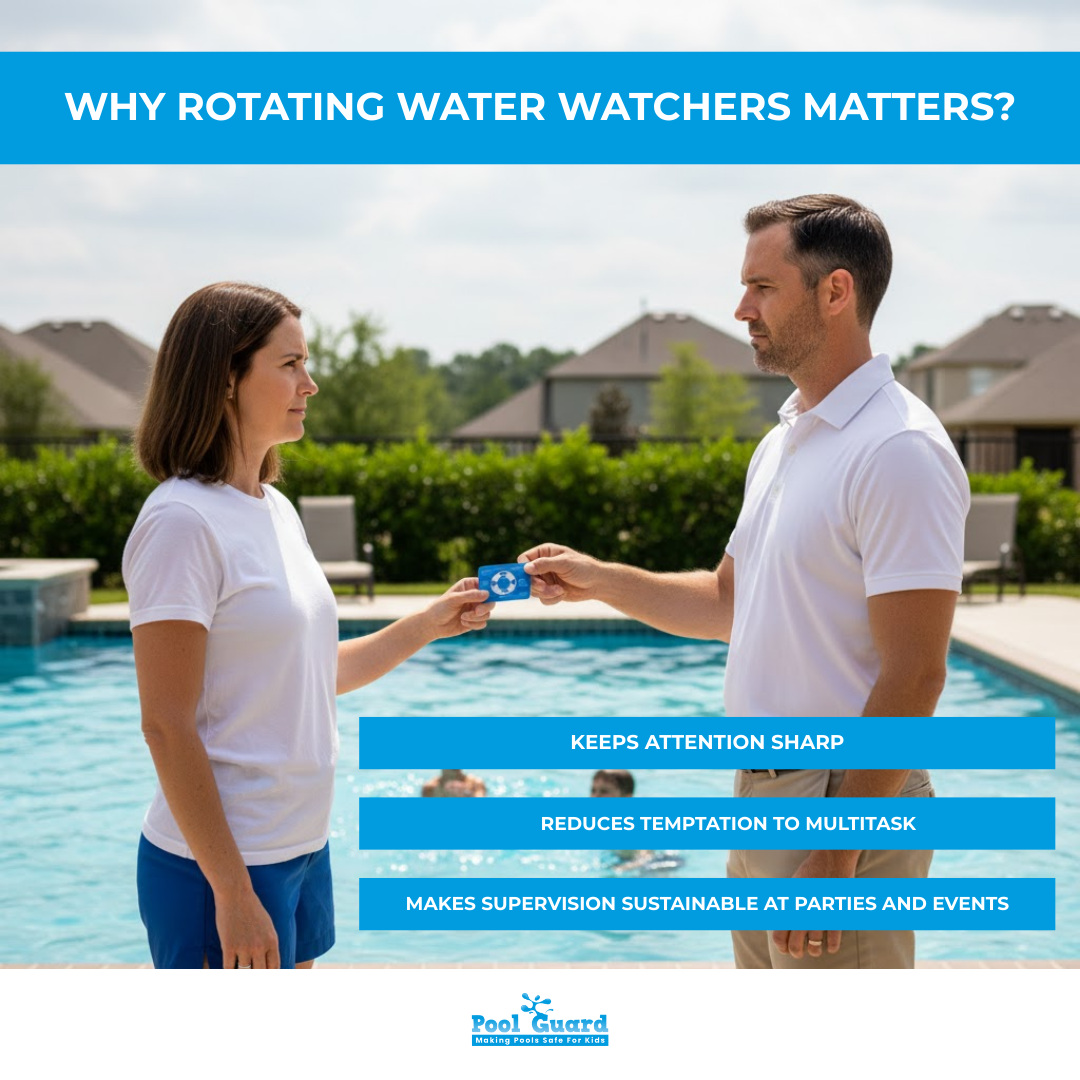
Responsibility must be transferred explicitly. The outgoing watcher hands the identifier (card, tag, lanyard) to the next watcher and confirms acceptance before disengaging.
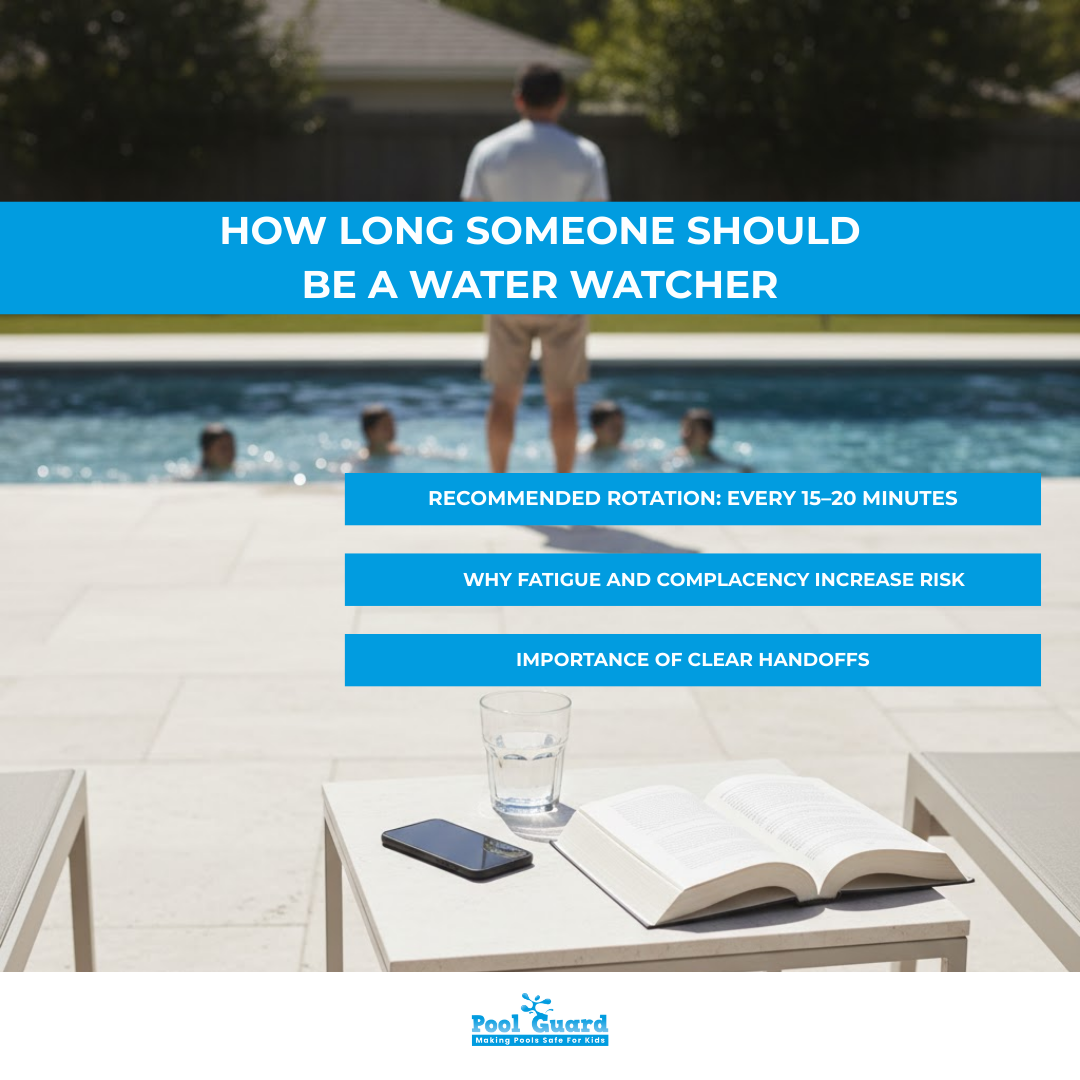
Even the most attentive adult can’t maintain perfect focus indefinitely. Attention fatigue, social pressure, and complacency all increase over time, which is why rotating water watchers is a core part of effective supervision—not an optional extra.
Rotating the role every 15–20 minutes:
Rotation isn’t about convenience—it’s about designing for human limits and preventing predictable lapses in attention.
A water watcher commits to four non-negotiables:
Short pledges work because they’re remembered and followed.
A water watcher does not replace trained lifeguards. Even lifeguard-protected pools benefit from designated supervision within private groups.
Water watchers do not replace physical barriers like pool fences or other safety systems:
People get distracted. Technology doesn’t. This is why supervision alone is never enough.
This is also where Pool Guard USA naturally fits into the conversation: alarms and barriers add protection when attention slips.
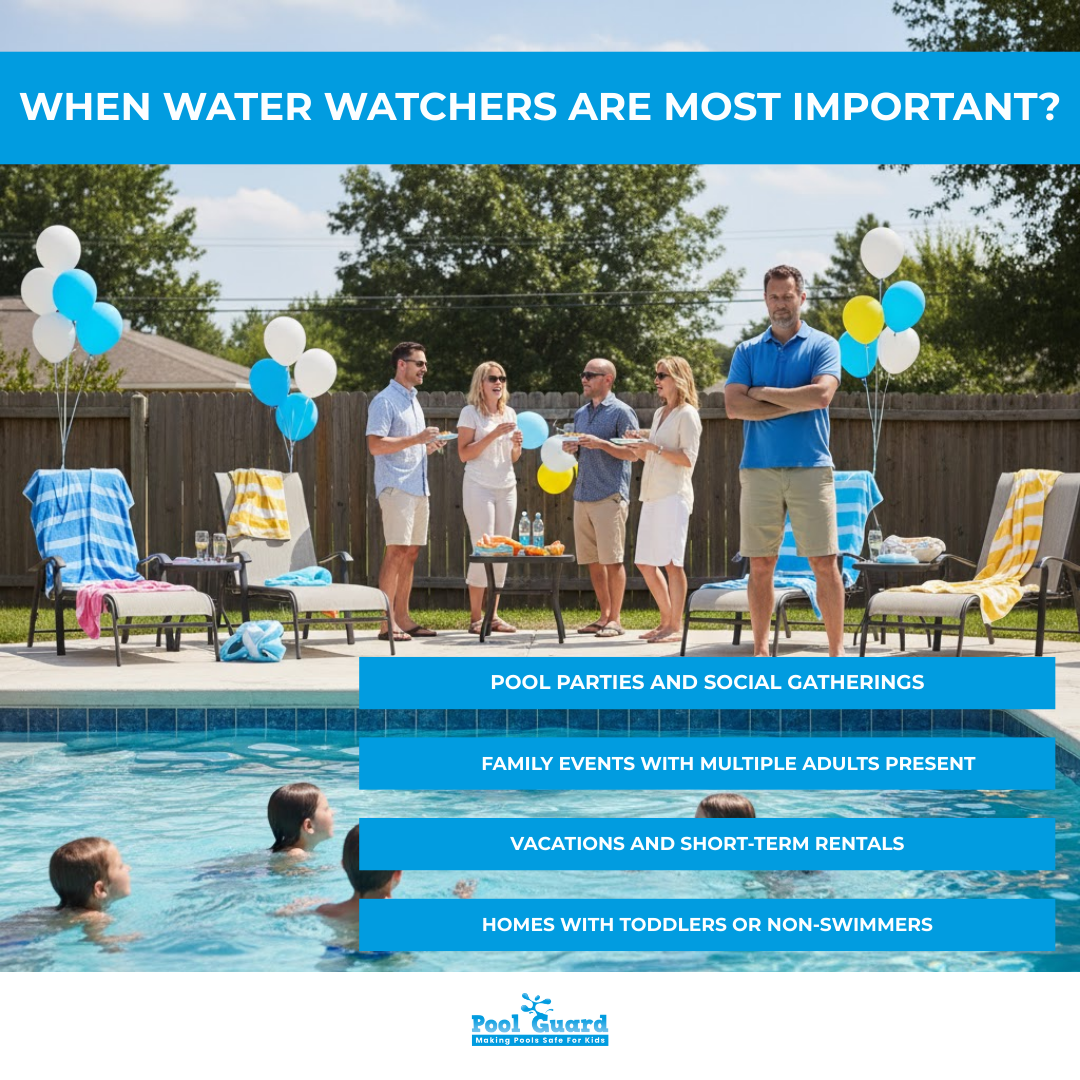
Certain environments dramatically increase the risk of distraction and false assumptions about supervision. Understanding when water watchers matter most helps families and hosts put this safety system in place before problems occur.
Water watchers are especially critical in the following situations:
Any setting with water and distraction is a high-risk environment—and exactly where a clearly designated water watcher makes the biggest difference. Homes with pets should also consider risks highlighted in pet drowning statistics.
The safest pools rely on layers of safety equipment, not single solutions:
No single measure is foolproof. Together, they dramatically reduce risk.
Organizations like the American Red Cross and National Drowning Prevention Alliance consistently emphasize layered protection for this reason.
Water watchers save lives—but they are not magic.
Understanding what is a water watcher matters because this role exists to fix the most common failure point in water safety: unclear responsibility. The safest pools don’t rely on memory, goodwill, or assumptions. They rely on systems.
Designate a water watcher. Rotate the role. Use visible identifiers. And always back human supervision with physical safety measures that don’t get distracted.
If you found this guide helpful, share it with someone who owns a pool or hosts gatherings. One clear understanding of what is a water watcher—and one clearly assigned role—can prevent one irreversible mistake.
Please fill out the form below with your information. Your local dealer will be notified about your inquiry.
Please fill out the form below with your information. Your local dealer will be notified about your inquiry.