“How long does it take to drown?” sounds like a simple question. It isn’t.
There is no single number, no safe buffer, and no dramatic warning signs like movies suggest. Drowning is fast, silent, and unforgiving — often unfolding in seconds, not minutes. Understanding drowning timelines is closely tied to recognizing near drowning incidents and their delayed risks.
This guide merges medical research, real-world data, and child safety expertise to give you the clearest, most accurate answer available.
If you own a pool, care for children or pets, or spend time near water, this isn’t trivia. It’s survival knowledge.
Here’s what almost everyone gets wrong:
There is rarely splashing, yelling, or waving for help. What people call “drowning” is actually the final stage of a process that has already been unfolding quietly. These realities are reflected in broader drowning statistics that show how quickly incidents escalate.
According to the World Health Organization, drowning is defined as respiratory impairment from submersion or immersion in liquid. Once breathing is impaired, the clock starts immediately.
Drowning follows a predictable physiological sequence that unfolds quickly and leaves little time for reaction. Rather than a dramatic struggle, the body moves through a series of involuntary responses designed for survival—but which ultimately accelerate oxygen loss when submerged in water. Many of these situations originate from overlooked risks highlighted in common pool hazards.
Research by Michael Tipton shows that in cold water, breath-holding ability can collapse to under 10 seconds, even in healthy adults, dramatically shortening the window for self-rescue.
Medical timelines for drowning are unforgiving and remarkably consistent across age groups and environments. Once oxygen delivery to the brain is disrupted, damage begins far earlier than most people expect.
This is why “just a minute” of distraction around water is not harmless—it can be enough to change an outcome permanently.
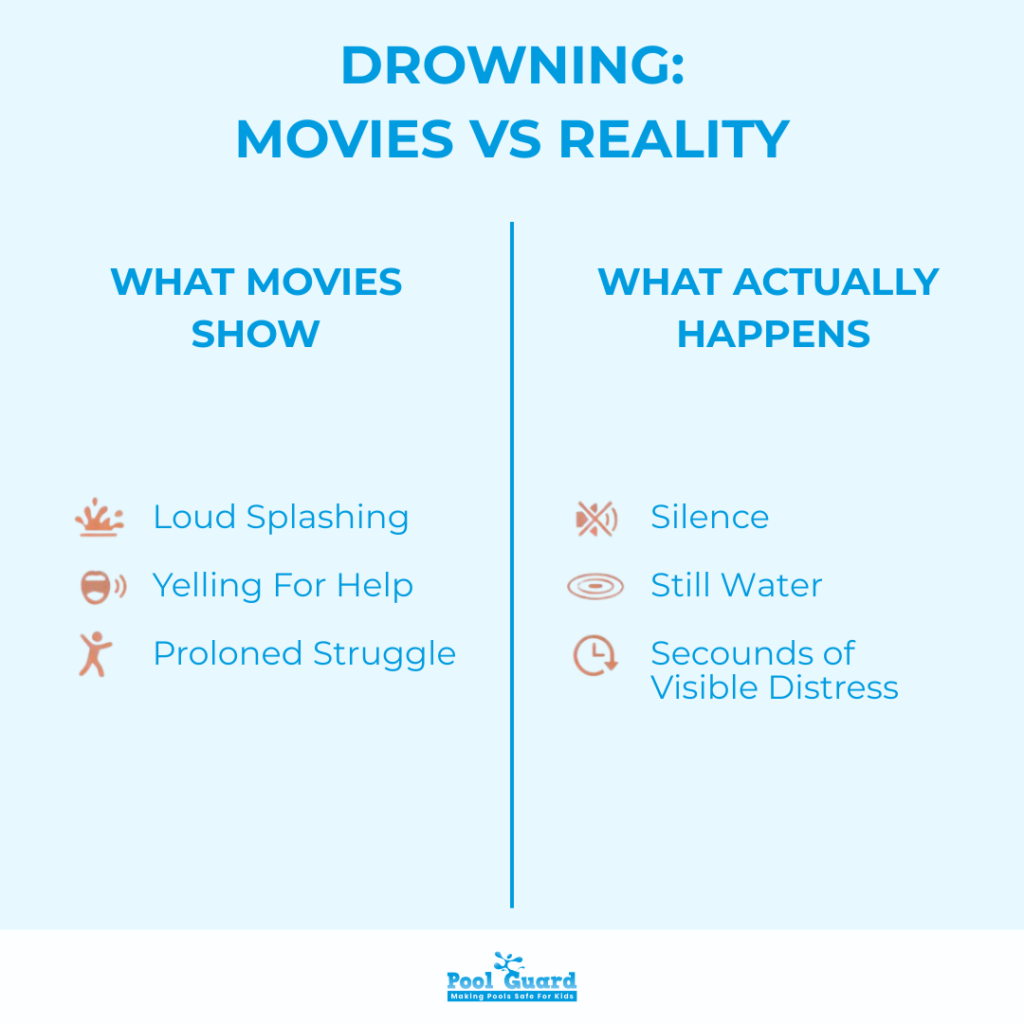
There is no true “average” drowning time. Instead, drowning follows escalating ranges of risk, influenced by factors such as panic, water temperature, physical condition, and speed of rescue.
| Time Submerged | What Happens |
| 10–30 seconds | Panic begins, often accompanied by a silent struggle to breathe. |
| 1–2 minutes | Voluntary breath control is lost as the body overrides conscious effort. |
| 2–3 minutes | Loss of consciousness becomes possible as oxygen levels fall. |
| 4–6 minutes | The risk of severe and permanent brain damage becomes high. |
| 6–10 minutes | Survival is unlikely without immediate rescue and advanced medical care. |
These timelines align with real-world analyses of drowning and near-drowning incidents documented in peer-reviewed medical literature and emergency medicine research.
Children are not small adults when it comes to drowning risk. They drown faster, more quietly, and often without any obvious signs of distress. Their physical limitations and developmental stage dramatically shorten the window for rescue. This is why constant supervision strategies like assigning a water watcher are critical around pools.
Toddlers are especially vulnerable around water because of predictable physical and behavioral factors:
Drowning timelines for toddlers progress extremely quickly:
According to the American Ac nademy of Pediatrics, drowning is a leading cause of death for children ages 1–4, underscoring how little margin for error exists.
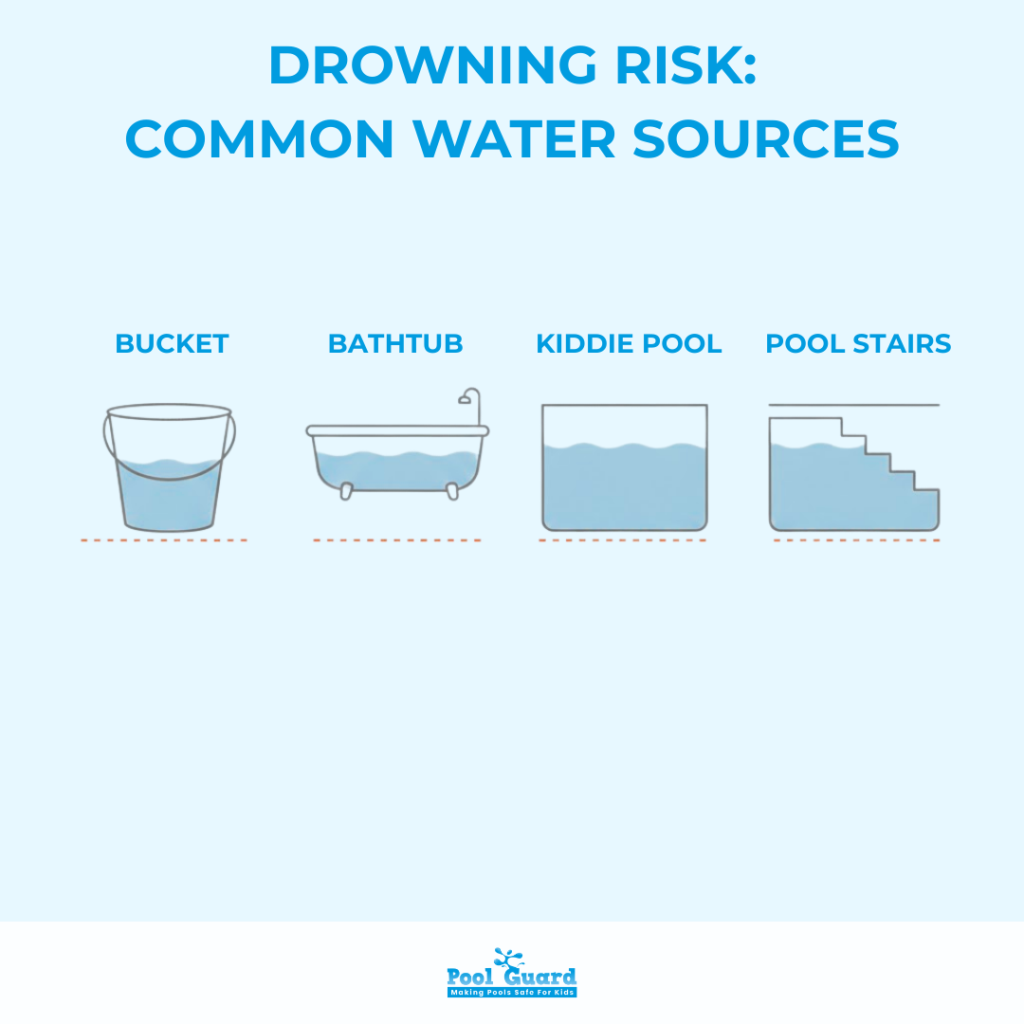
Residential swimming pools present a unique and often underestimated risk for children.
Key realities supported by injury-prevention data include:
Children do not “play until they get tired” in the water. When something goes wrong, they disappear silently and quickly, often before adults realize there is a problem.
Adults often assume that strength, fitness, or swimming ability will protect them from drowning. In reality, adult physiology offers no meaningful advantage once breathing is impaired and oxygen deprivation begins.
Being fit or a strong swimmer does not extend oxygen tolerance or delay the drowning process. In real-world conditions, the body responds the same way regardless of experience or conditioning. Even experienced swimmers are vulnerable, especially in environments with hidden risks like unsafe pool conditions.
Drowning risk rises sharply when additional stressors are present. These factors reduce reaction time, impair judgment, or increase oxygen demand.
Survival after a drowning event depends far more on speed of rescue and resuscitation than on water depth, swimming ability, or physical strength. Once breathing is impaired, every second without oxygen increases the risk of severe injury.
The window for survival is narrow and unforgiving, but early intervention can make a critical difference.
Medical studies consistently show that most drowning survivors with good neurological outcomes were submerged for less than six minutes.
Avoiding death does not always mean a full recovery. Even after successful rescue, survivors may experience lasting consequences.
Drowning is not “over” when someone leaves the water. The effects can last a lifetime.
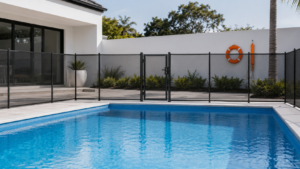
Residential pools remain a primary risk location, reinforcing the importance of proper pool safety equipment.
For households with pets, the drowning risks are outlined in real pet drowning statistics.
Dogs are not immune.
Estimated timeline:
Despite myths:
The term is outdated and misleading.
What is real:
Get medical help immediately for:
Accuracy matters. Fear-based myths don’t save lives—clarity does.
Home swimming pools feel familiar and controlled, which often creates a false sense of security. In reality, most residential pool drownings happen not because safety equipment fails, but because human attention does.
A consistent pattern appears across drowning investigations: incidents often occur during ordinary, everyday moments rather than obvious emergencies.
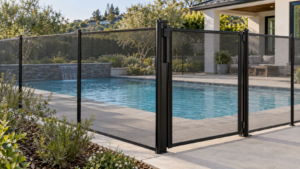
Humans are fallible, especially in familiar environments. Effective safety systems, including pool safety fences, are designed to reduce reliance on constant supervision.
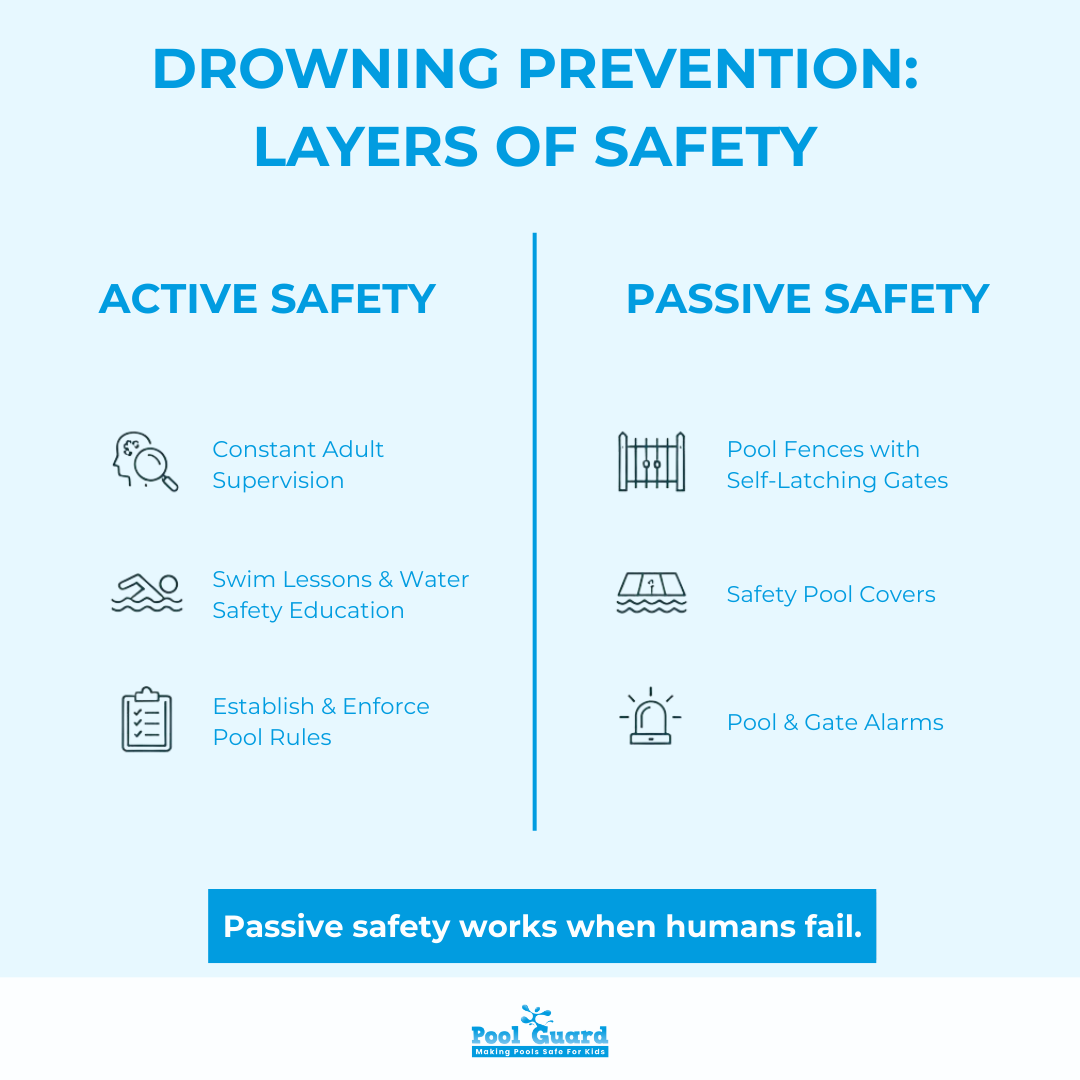
Drowning prevention relies on understanding the difference between actions that require constant vigilance and systems that protect automatically.
Passive protection exists because people are imperfect. When supervision slips—and eventually it will—layers of passive safety can be the difference between a close call and a tragedy.
Drowning offers no reaction window. Prevention must happen before the fall.
Evidence-based layers include:
This layered approach is why safety guidelines are endorsed by pediatric, medical, and injury-prevention organizations.
How long does it take to drown is a question with a hard truth behind it: drowning happens faster than most people realize. It can begin in seconds, lead to unconsciousness in minutes, and cause permanent brain damage before anyone notices something is wrong. There is rarely noise, splashing, or time to react.
This guide shows that drowning is silent, unpredictable, and not prevented by strength or swimming ability. The only reliable way to change the outcome is to prevent access to water and use layered pool safety measures that protect even when attention slips.
Understanding how long does it take to drown isn’t about fear—it’s about awareness. When seconds matter, prevention is what saves lives.

Find your local dealer by entering your zip code above.
Please fill out the form below with your information. Your local dealer will be notified about your inquiry.
Please fill out the form below with your information. Your local dealer will be notified about your inquiry.