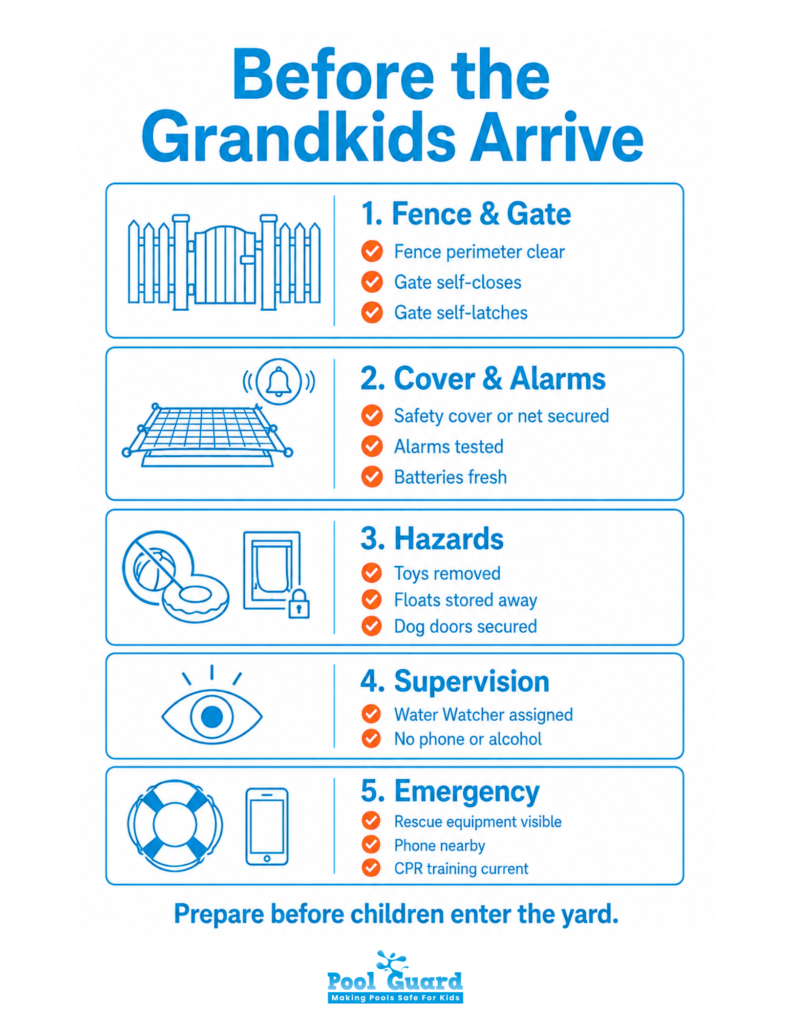
Understanding pool safety for grandparents is vital because a backyard pool that seems safe for adults can instantly become a drowning hazard for visiting grandchildren. In fact, drowning is the leading cause of unintentional death for young children, happening silently in under two minutes, reports the CPSC.
Grandparents who only see their grandchildren occasionally are often caught off guard by how quickly toddlers move during a busy family visit. To prevent sudden tragedies, this guide covers essential protective measures, including fences, gates, covers, alarms, supervision, and emergency preparedness, so every visit ends safely.
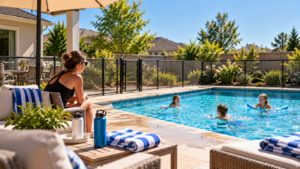
Family visits create conditions where drowning risk quietly rises. Adults are distracted by cooking, hosting, and conversation. Multiple people at a gathering assume someone else is watching, and in that gap, no one is watching. Research shows 23% of child drownings happen during family gatherings near pools. This environment directly impacts the most vulnerable age group; according to the U.S. Consumer Product Safety Commission (CPSC), drowning remains the leading cause of unintentional death for children ages one to four.
Older pools compound this risk when gate latches loosen, alarm batteries die, or covers wear out. Because of this hidden wear and tear, simple pool safety for grandparents means recognizing that a toddler moves much faster than they did during their last visit. Physical barriers built into the yard are far more reliable than watching alone.
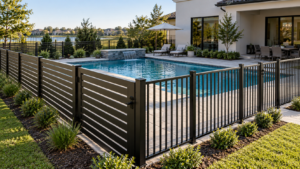
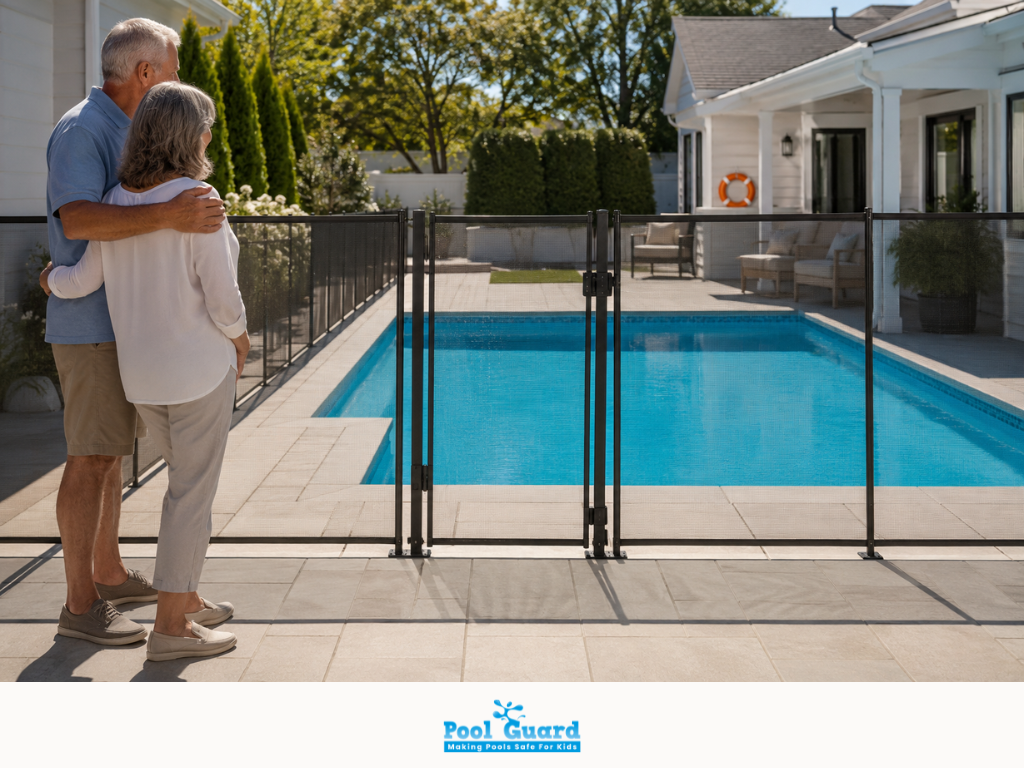
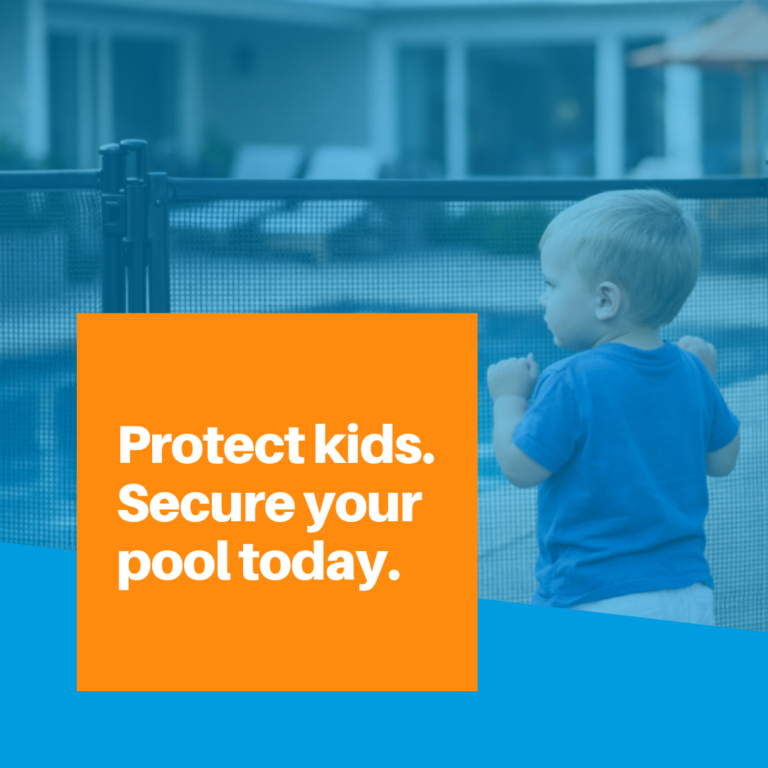
A four-sided isolation pool fence, one that surrounds the pool on all sides, separating it from the house, patio, and play areas, is the strongest physical barrier available. When the pool is enclosed, a child cannot reach the water by simply stepping outside.
Before every visit, walk the full perimeter and check:
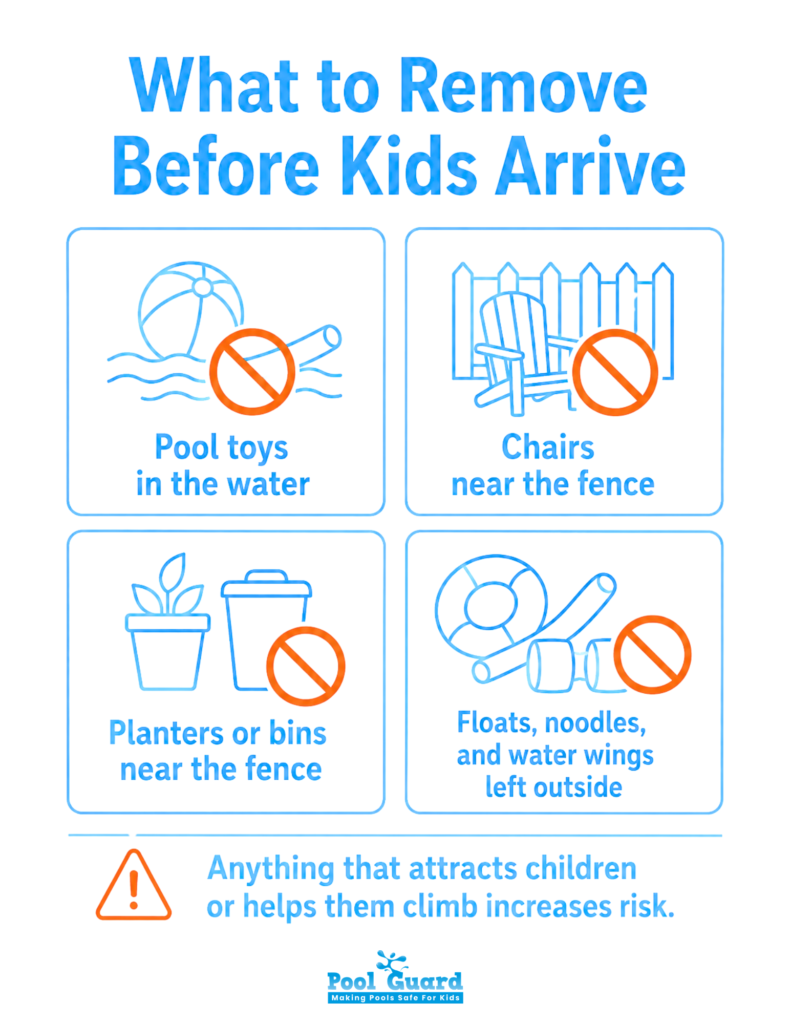
Move everything away from the fence line before grandchildren arrive.
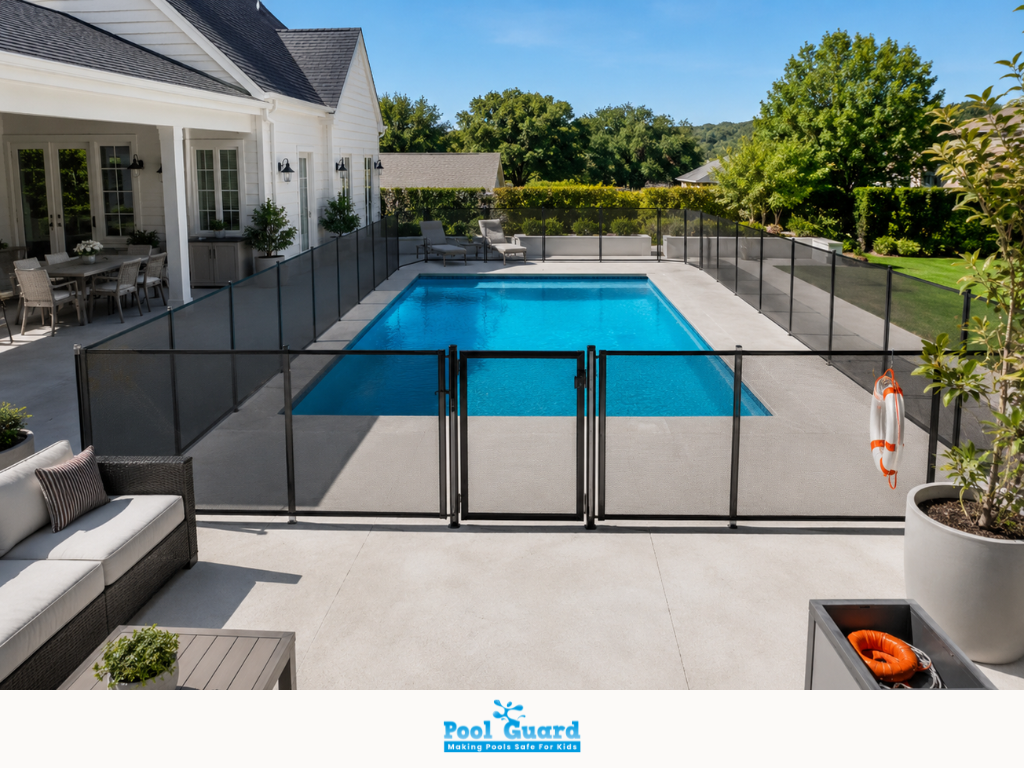
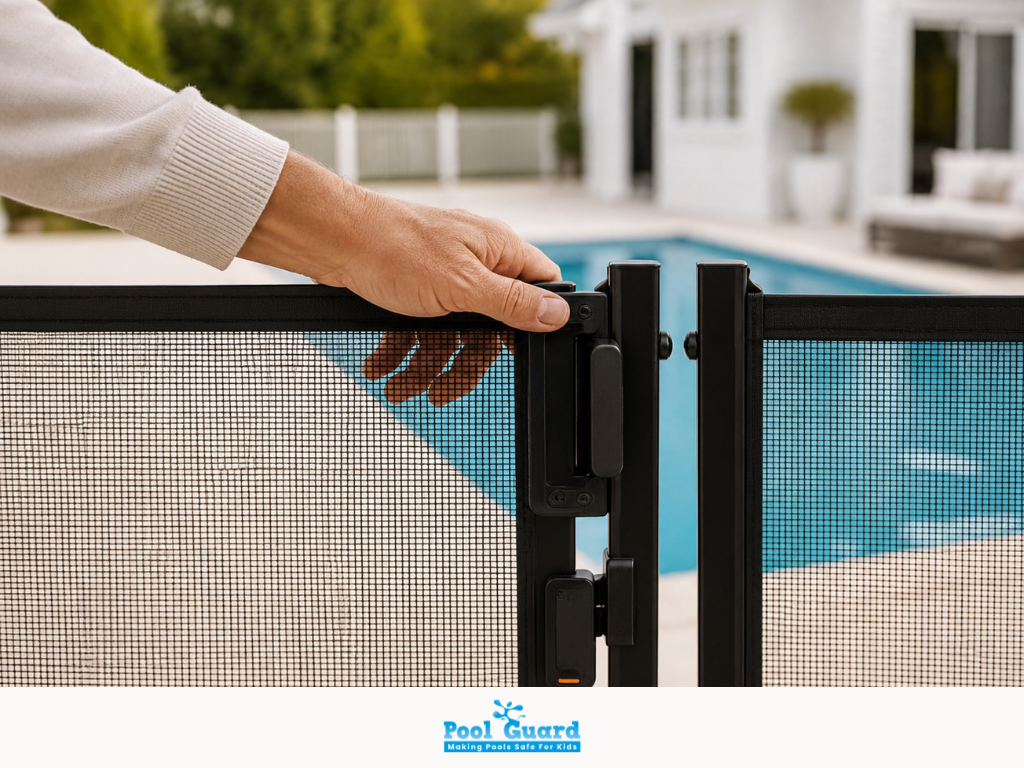
The pool safety gate is the most frequently failed point in any pool barrier system. Repeated use loosens hinges, drifts latches out of alignment, and weakens self-closing springs. That’s why checking for rust, sagging, and misalignment before every visit is important.
Never prop the gate open during cookouts or family gatherings. Doing so removes your pool’s primary defense during moments of high distraction, alcohol use, or heavy foot traffic, precisely when a barrier matters most.
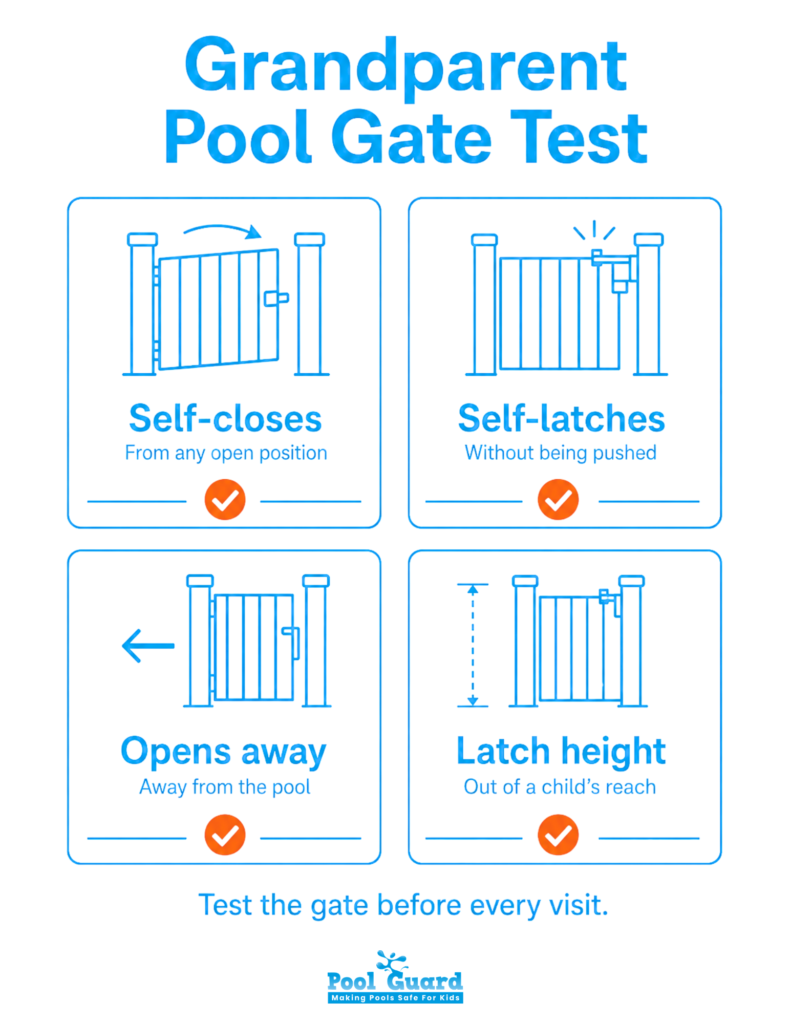
Every pool gate should:
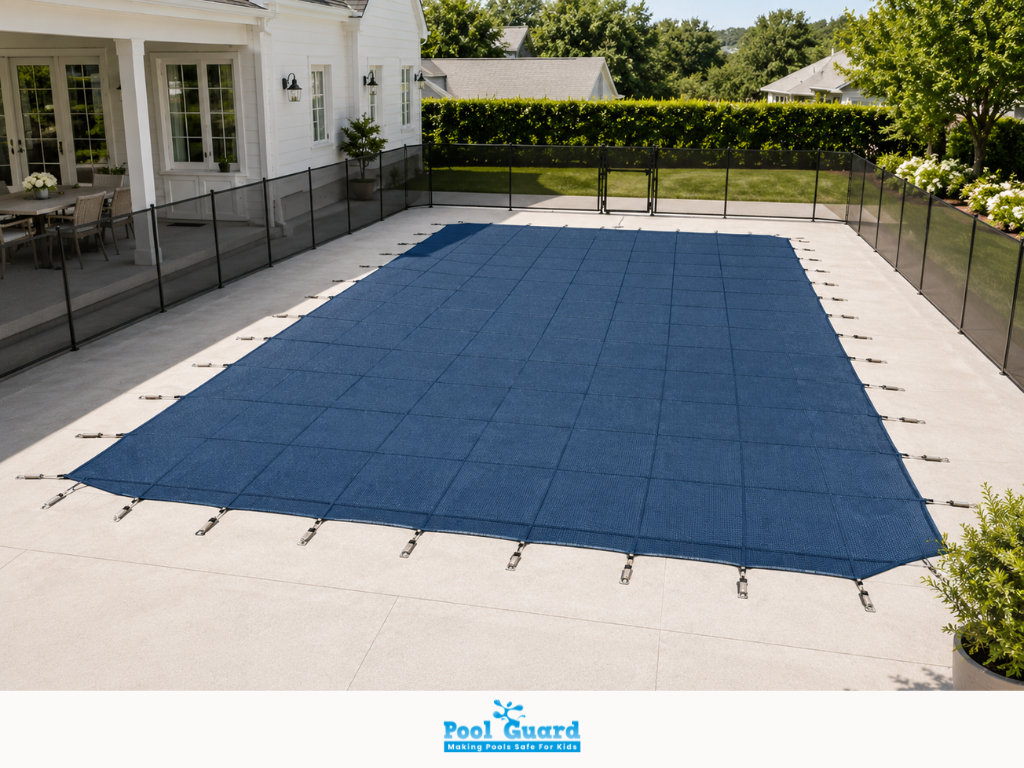
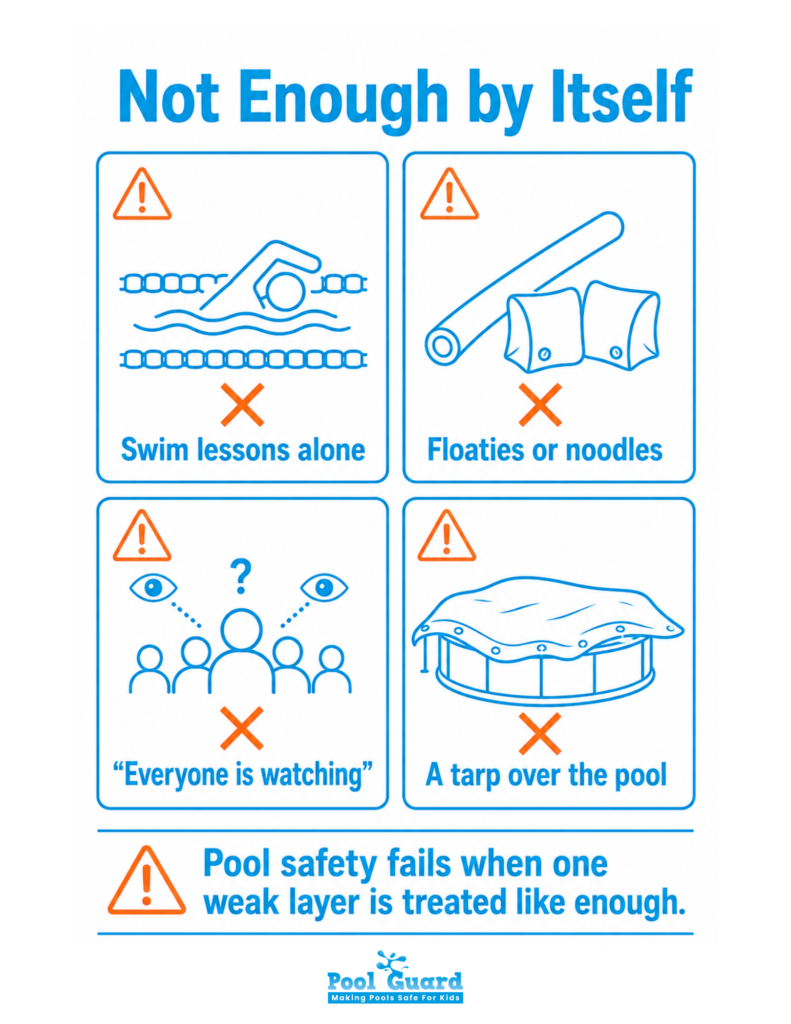
When swimming ends, a properly secured pool safety cover or pool net adds a direct barrier over the water surface. A standard tarp is not a safety cover. Look for covers that meet ASTM F1346 standards, which are rated to support the weight, and are anchored at the edges so a child cannot move them.
A cover doesn’t replace a fence or supervision. It works alongside them as an additional layer.
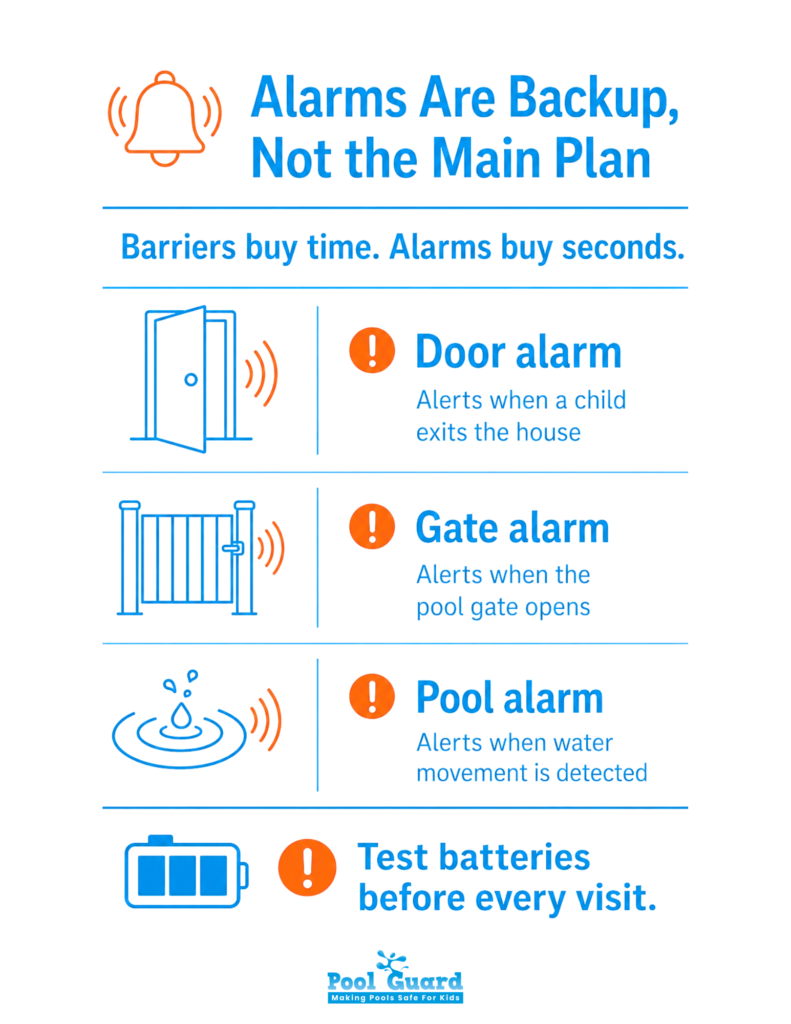
Alarms buy seconds. Barriers buy time. Both matter.
Test all alarms and replace batteries before every visit. An alarm with a dead battery provides no protection.
A pool toy left floating in the water is an invitation so children will attempt to reach it. Remove all toys immediately after swimming and store them outside the fenced pool area, out of sight.
Also check for:
Floaties, water wings, and noodles are toys, not safety devices. They don’t prevent drowning and give children and adults a false sense of security.
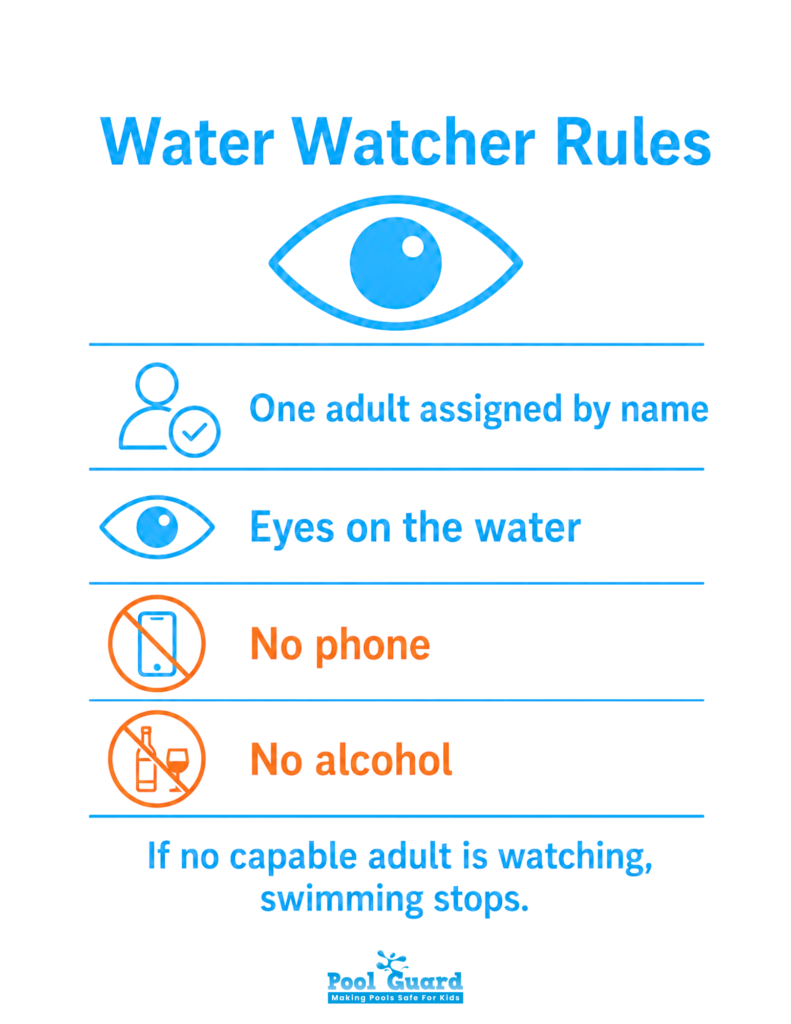
One adult. One job. Eyes on the water.
The National Drowning Prevention Alliance’s Water Watcher program exists because “everyone is watching” reliably becomes “no one is watching” during gatherings. Designate one adult by name before swimming begins, and rotate the role explicitly, never assume coverage has been handed off.
If no capable, sober adult is available to watch, swimming stops.
Swim lessons build genuine water competency and are worth pursuing; the American Academy of Pediatrics supports lessons for children as young as one. Grandparents taking adult refresher lessons alongside grandchildren is a meaningful bonding activity that also builds rescue confidence.
However, swimming lessons don’t make any child drown-proof. No instructor or skill level eliminates the need for barriers and supervision. Near lakes or open water, every child should always wear a properly fitted, U.S. Coast Guard-approved life jacket. Not floaties. Not noodles.
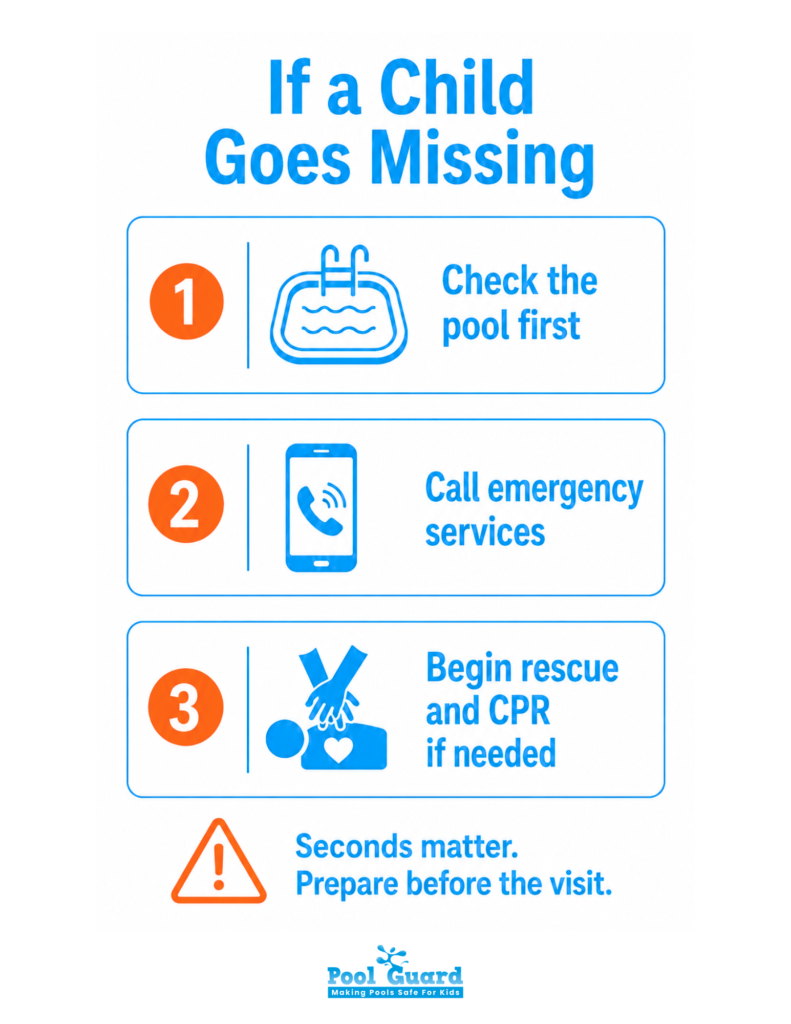
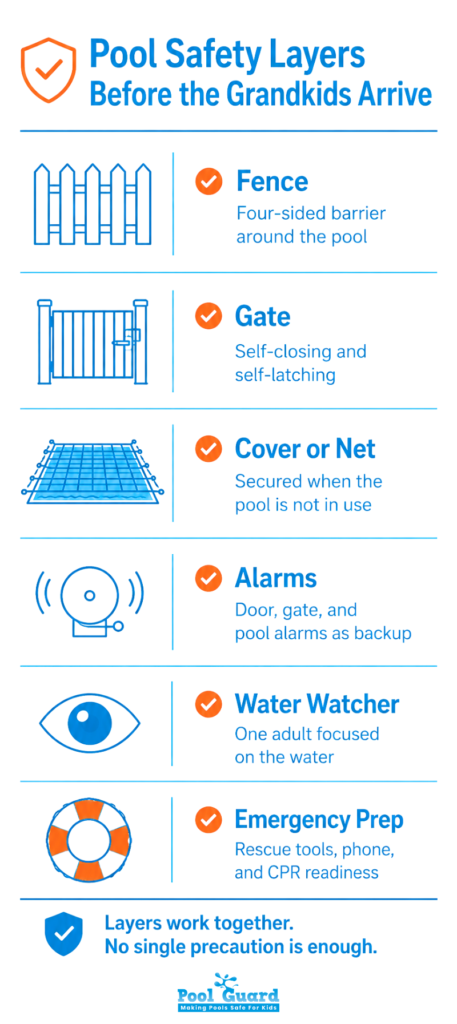
Pool safety for grandparents starts before the grandchildren arrive, not after they are already in the yard. Fences, gates, covers, alarms, and supervision are not competing options; they are layers, and each one catches what the others miss.
The goal is not simply to watch children near the water. The goal is to make it structurally harder for them to reach the water unsupervised in the first place.
Explore Pool Guard USA’s pool fence and alarm systems, and add the right barriers before your next family visit.
Please fill out the form below with your information. Your local dealer will be notified about your inquiry.
Please fill out the form below with your information. Your local dealer will be notified about your inquiry.