A pool day starts with sunscreen, snacks, and a life vest grabbed off the store rack. Picking the best kids life vest takes more than color or size on the tag. Weight range, fit, and approval decide whether a vest is appropriate for a child and the planned activity. Many parents do not realize this until they are standing at the shelf, comparing straps and buckles with no clear answer in sight.
This guide compares seven current options for infants, children, and youth. It also explains what approval labels mean, how to size a vest correctly, and how to test the fit before your child enters the water.
| Product | Best For | Labeled Weight Range | Approval | Head Support | Leg or Crotch Strap | Grab Handle |
| Mustang Survival Child Lil Legends | Best overall child vest | 33–55 lbs | Harmonized Level 70; verify exact label | Yes | No | Yes |
| Stohlquist Infant | Babies and infants | Under 30 lbs | U.S. Coast Guard Type II | Yes | Yes | Yes |
| O’Brien Child Nylon Life Jacket With Collar | Children needing added head support | 30–50 lbs | U.S. Coast Guard Type II | Yes | Yes | Yes |
| Onyx Child All Adventure | Tubing and active water sports | 33–55 lbs | U.S. Coast Guard and Transport Canada approved | No | Yes | Yes |
| Airhead General Boating Child Life Jacket | Budget option | 30–50 lbs | U.S. Coast Guard approved; verify exact label | No | No | No |
| Astral Otter 2.0 | Premium youth paddling vest | 50–90 lbs | U.S. Coast Guard Type III | No | Yes | Yes |
| Connelly Child Classic Neo | Flexible child vest | 33–55 lbs | U.S. Coast Guard Type III | No | Yes | Yes |
Labeled weight range: 33–55 pounds
Approval: Harmonized Level 70; verify the exact U.S. approval label
Head support: Yes
Leg or crotch strap: No
Grab handle: Yes
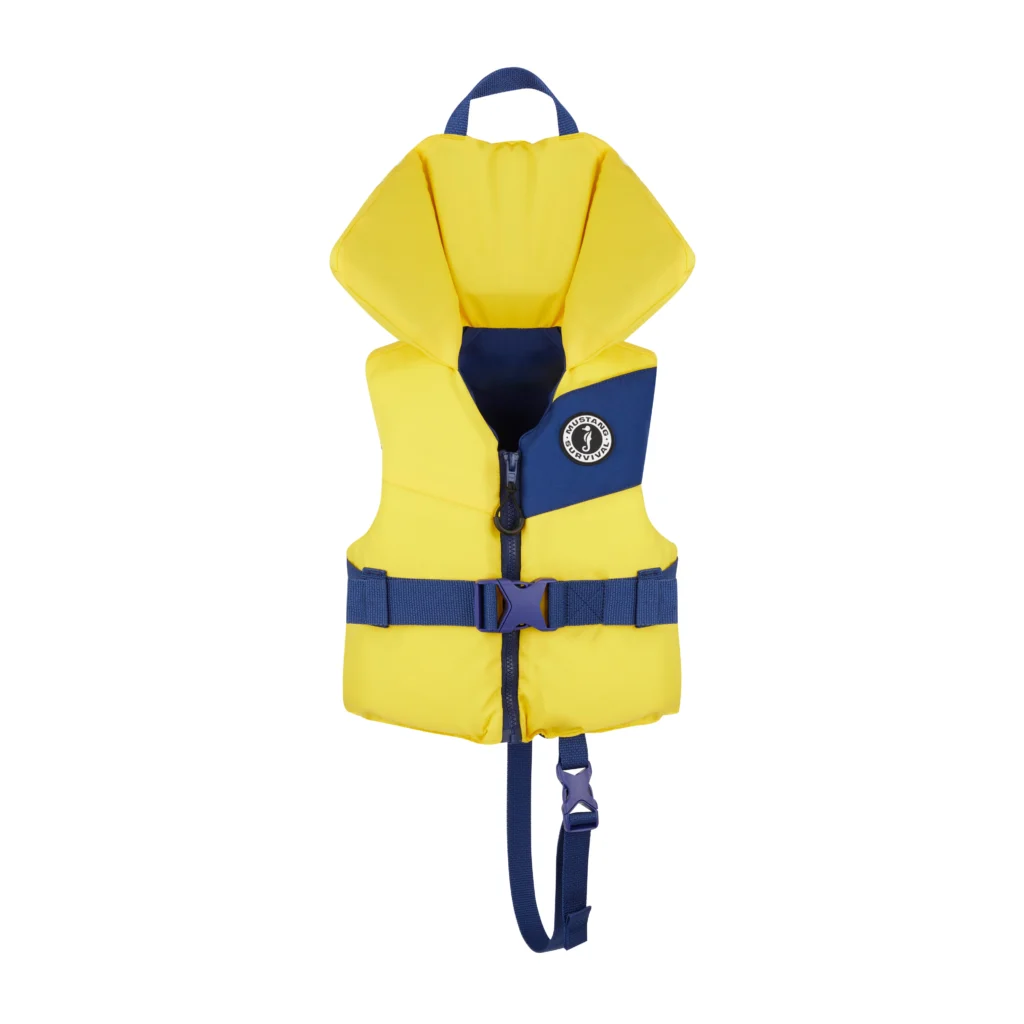
The Mustang Survival Child Lil Legends combines a front-entry design with a supportive flotation collar and an accessible grab loop. Its current child model is labeled for children weighing 33–55 pounds.
The flotation collar separates it from low-profile child vests built primarily for mobility. That additional structure can feel bulkier, but it may suit children who still benefit from added support around the head and neck. Parents should inspect the product label before every activity because general approval does not automatically cover tubing, water skiing or personal watercraft.
Pros
Cons
Best for: General boating and water recreation where added head support is preferred.
Skip it if: Your child needs a low-profile paddling vest or a model specifically approved for towed water sports.
Labeled weight range: Under 30 pounds
Approval: U.S. Coast Guard Type II
Head support: Dual support collars
Leg or crotch strap: Yes
Grab handle: Yes
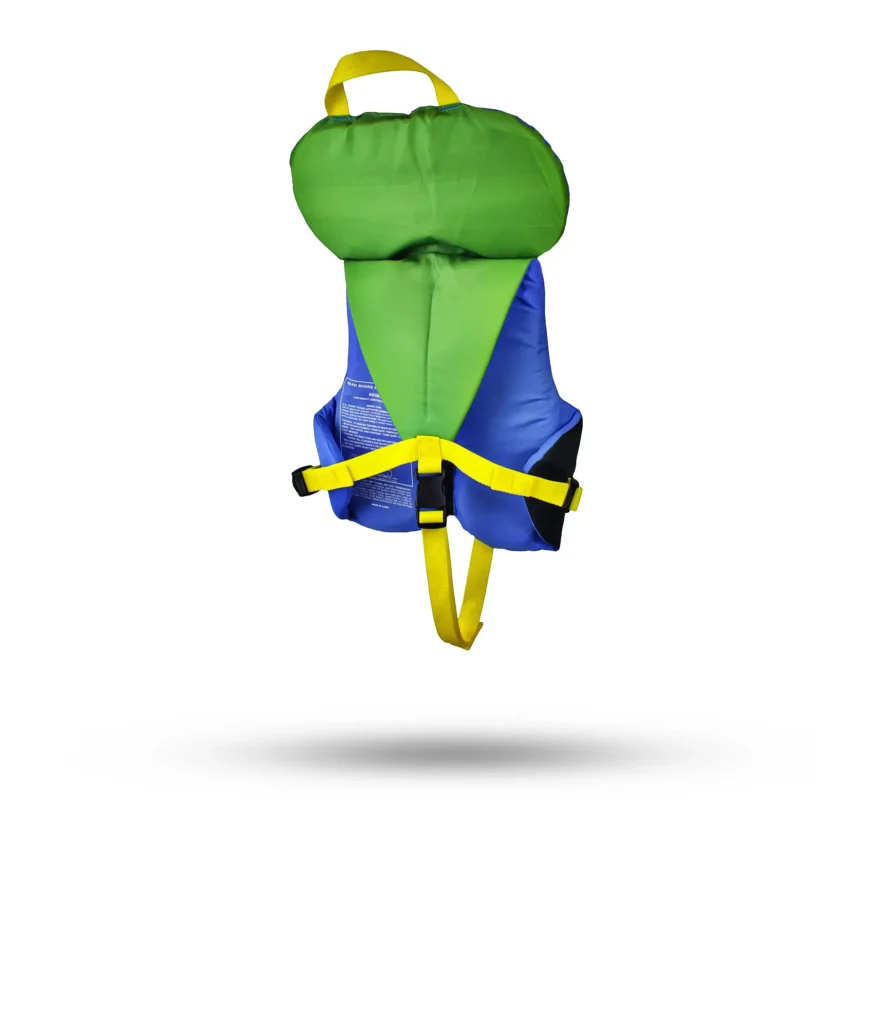
The Stohlquist Infant Life Jacket uses wraparound flotation and dual support collars intended to help position an infant face-up. A front zipper, adjustable crotch strap and grab handle help keep the jacket secured around the child.
This is the only infant-specific model in the roundup, but no infant life jacket should be assumed to fit every baby. The U.S. Coast Guard warns that available PFDs may not fit very small newborns, particularly those under approximately 18 pounds, well enough to perform as expected. Parents should test the exact jacket in controlled, shallow water before taking an infant on a boat.
Pros
Cons
Best for: Infants within the labeled range who pass a controlled in-water fit test.
Skip it if: The jacket rides up, leaves the airway too close to the water or cannot be secured snugly.
Labeled weight range: 30–50 pounds
Approval: U.S. Coast Guard Type II
Head support: Yes
Leg or crotch strap: Yes
Grab handle: Yes
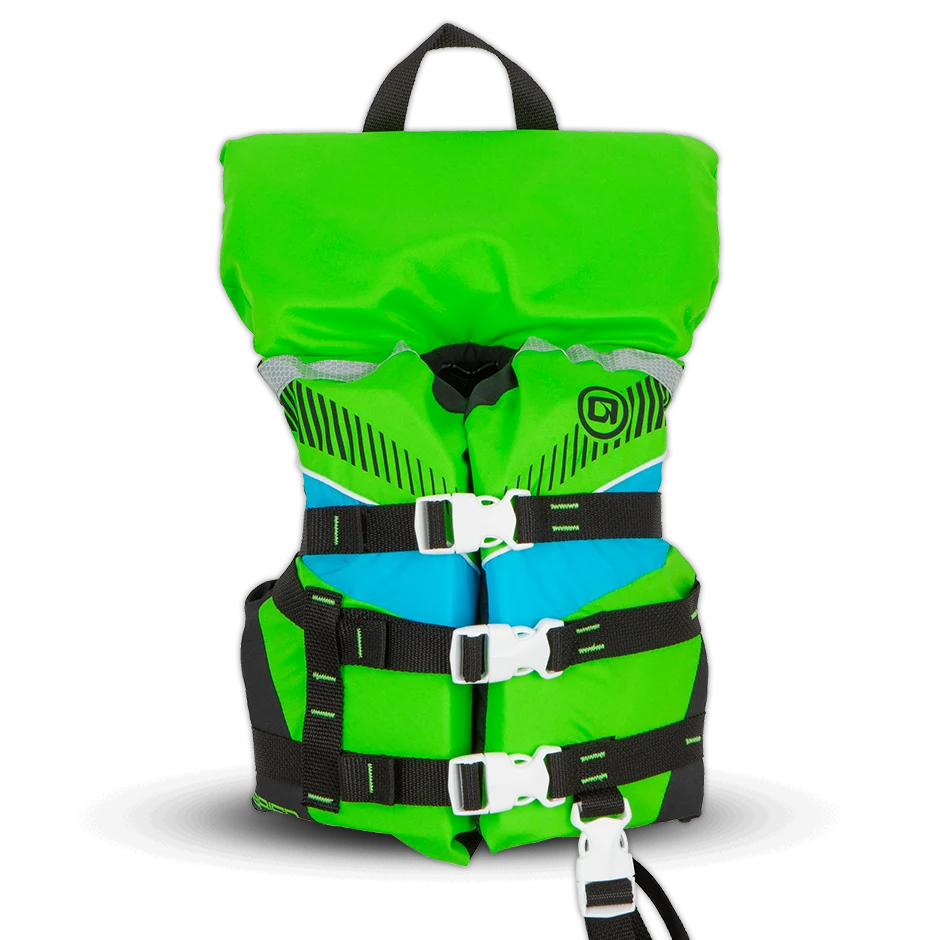
The O’Brien Child Nylon Life Jacket With Collar combines a head-flotation pad with a grab strap, three adjustable belts and a leg loop. Its sturdy nylon shell and flexible foam core create a straightforward child life jacket for general water use.
The collar and leg loop give it more security-focused features than low-profile child vests. However, that structure also makes it bulkier and less flexible for paddling or extended swimming. Type II approval can provide more flotation support than many Type III designs, but parents must still test how the individual child floats while wearing it.
Pros
Cons
Best for: General boating and calm-water recreation when added head support is a priority.
Skip it if: Your child needs maximum arm mobility for paddling or active water sports.
Labeled weight range: 33–55 pounds
Approval: U.S. Coast Guard and Transport Canada approved
Head support: No
Leg or crotch strap: Yes
Grab handle: Yes
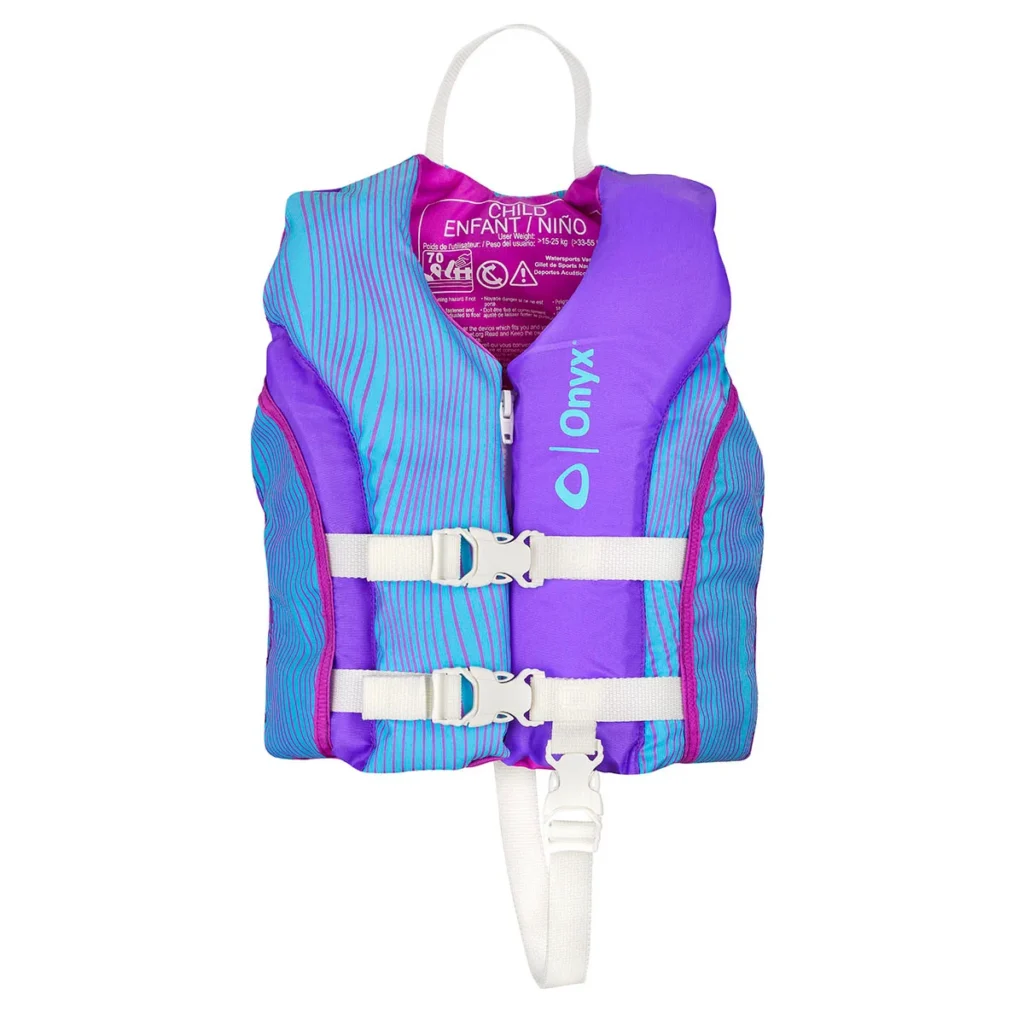
The Onyx Child All Adventure Life Jacket is one of the more activity-focused options in the roundup. The manufacturer lists it for canoeing, kayaking, boating, stand-up paddleboarding, fishing, tubing, skiing and personal watercraft.
Seven segmented hinge points support movement, while the front zipper, waist belts and leg strap help keep the jacket positioned correctly. It also includes a grab strap. The tradeoff is the lack of a flotation collar, making it more appropriate for active children than those needing substantial face-up support.
Pros
Cons
Best for: Active children participating in different boating and water-sport activities.
Skip it if: The child needs infant-style head support or cannot actively manage their position in the water.
Labeled weight range: 30–50 pounds
Approval: U.S. Coast Guard approved; verify the exact model label
Head support: No
Leg or crotch strap: No
Grab handle: No
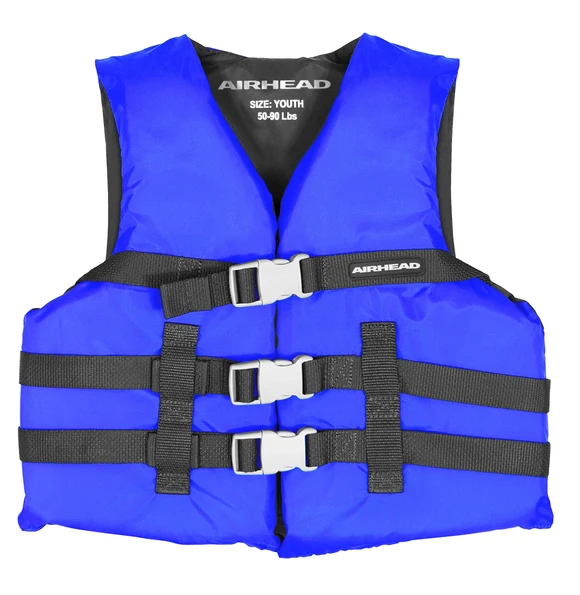
The Airhead General Boating Life Jacket uses a 200-denier polyester shell, lightweight Poly-E flotation and an open-sided design. Three adjustable straps allow parents to tighten the child-sized model around the torso.
It is a simple, lower-priced option without the collars, leg straps or retrieval handles found on more feature-heavy child jackets. That simplicity may work for occasional general boating when the fit is secure, but it is a weak choice for children who need additional positioning support.
Pros
Cons
Best for: Occasional general boating when the child can actively position themselves and the jacket passes the fit test.
Skip it if: The child is a weak swimmer, experiences excessive ride-up or needs added head support.
Labeled weight range: 50–90 pounds
Approval: U.S. Coast Guard Type III
Head support: No
Leg or crotch strap: Removable leg straps
Grab handle: Yes
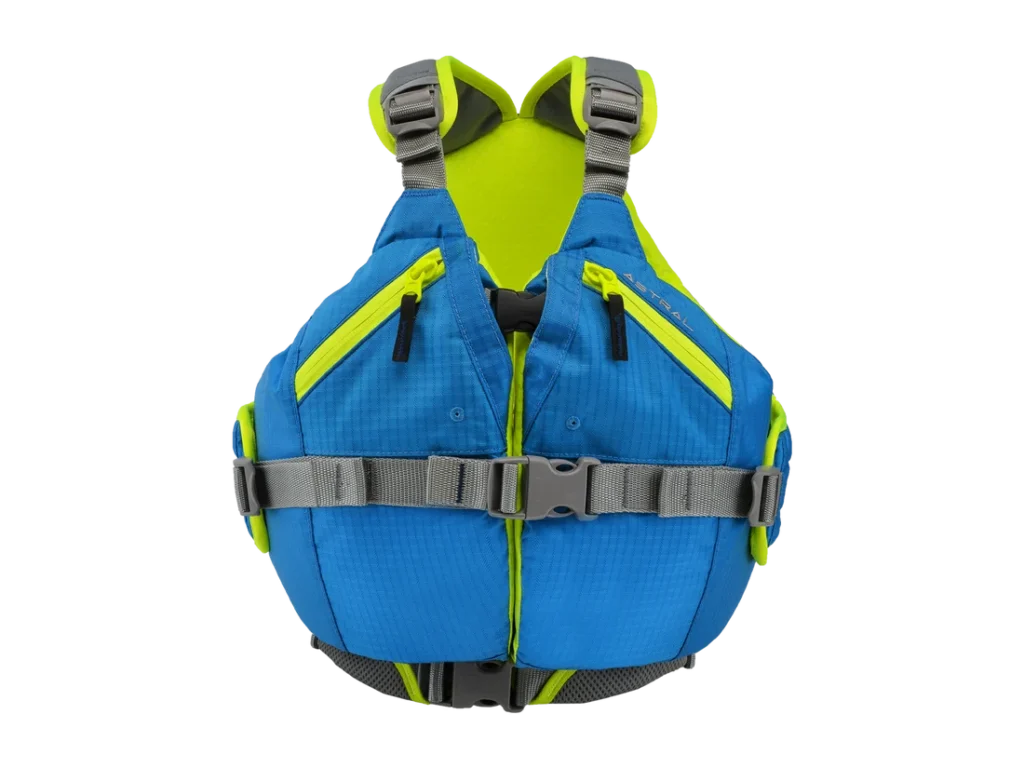
The Astral Otter 2.0 is a premium youth PFD built around comfort, mobility and adjustment. It combines organic kapok and polyethylene foam with a ripstop nylon shell, accessible side adjustments and removable leg straps.
The jacket also includes a large padded grab handle and two zippered pockets. Its contoured design leaves room around the arms for paddling and swimming, while the removable leg straps help prevent ride-up on smaller users within the labeled range.
This is a Type III vest without a flotation collar, so it is intended for active youth who can participate in maintaining a safe position. Its features also come at a much higher price than basic nylon jackets.
Pros
Cons
Best for: Youth who regularly paddle, sail, raft or participate in other active water recreation.
Skip it if: The child weighs under 50 pounds, needs face-up head support or only requires a basic jacket for occasional use.
Labeled weight range: 33–55 pounds
Approval: U.S. Coast Guard Type III
Head support: No
Leg or crotch strap: Yes
Grab handle: Yes
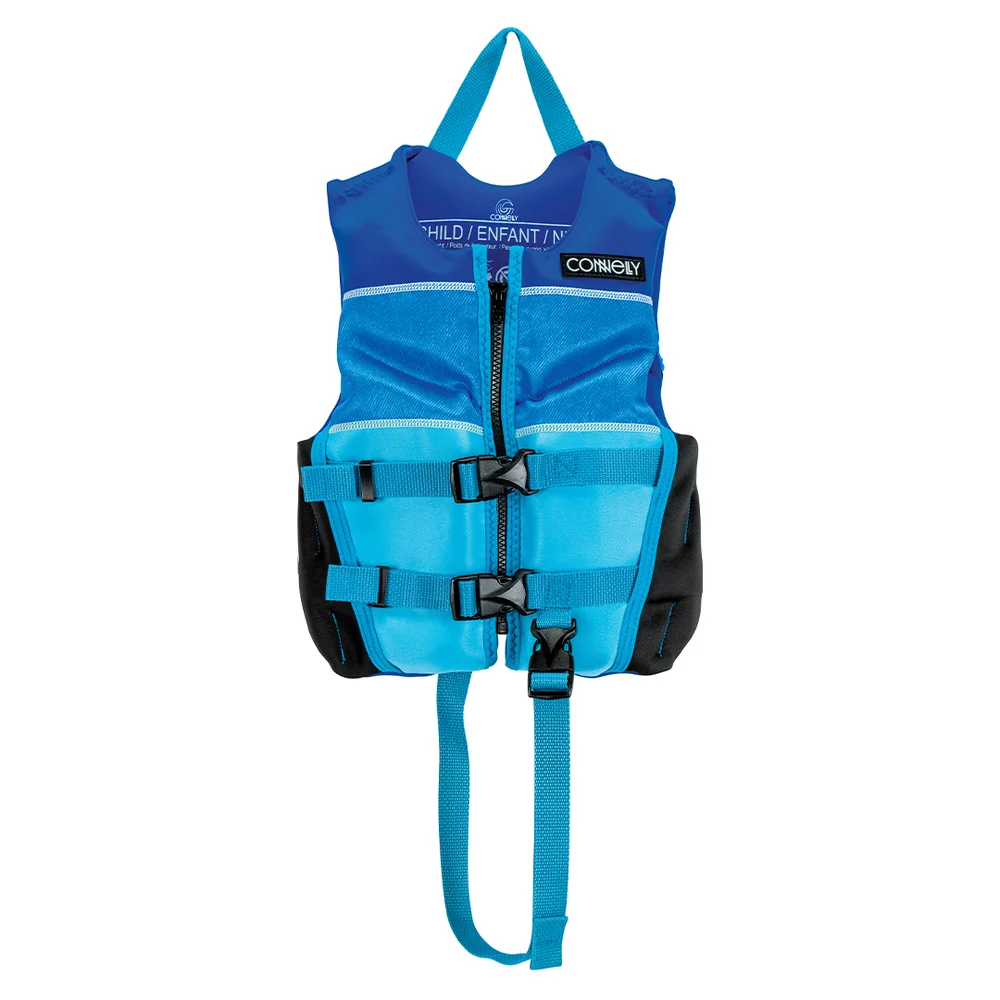
The Connelly Child Classic Neo uses segmented front and back panels with a V-back flex design. This construction allows the jacket to adjust across different body shapes while providing more flexibility than a basic open-sided nylon vest.
A center zipper, adjustable straps, crotch strap and grab strap help secure the child-sized version. Despite the “Neo” name, the current model uses Connelly’s BioLite exterior, which the manufacturer describes as an alternative to conventional neoprene.
The jacket does not include a head-support pillow, so it is better suited to active children than those needing a collar to help position the head.
Pros
Cons
Best for: Active children who need a secure vest without the stiffness of a traditional nylon design.
Skip it if: The child requires a Type II jacket or additional support around the head and neck.
Parents use “life vest” and “life jacket” interchangeably, and in everyday conversation, they often mean the same thing. Approved products may be labeled as a life jacket, buoyancy aid, or personal flotation device.
What matters is not the marketing name. It is the approval label, weight range, intended activity, and in-water performance. Arm floaties for toddlers, pool noodles, and novelty floats are not equivalent to approved wearable flotation devices. For boating or open water, choose a properly approved life jacket or buoyancy aid rather than a pool toy.
Life jackets can now be labeled under the older Type system or the newer performance-level system. Parents may therefore see Type II, Type III, Level 70, or another designation on current products.
| Label | General Purpose | Face-Up Support |
| Type I | Offshore, rough, or remote water | Intended to turn most unconscious wearers face-up |
| Type II | Calm inland water with relatively fast rescue | May turn some unconscious wearers face-up |
| Type III | General boating or a listed activity | Usually requires the wearer to position themselves |
| Level 70 | Calm or protected water where rescue is expected quickly | Wearer may need to actively maintain a face-up position |
| Level 100 or higher | Rougher or more remote conditions, depending on the label | Greater buoyancy and face-up support than lower levels |
Every approved vest lists a weight range that helps determine whether it is suitable for the wearer. Children of the same age may require different sizes.
Do not automatically size up. An oversized vest can rise over the child’s chin, ears, or face. The child must fall within the printed weight range, and the vest must pass both a dry-land and controlled in-water fit test.
Pools, boating, paddleboarding, lake swimming, tubing, and personal watercraft place different demands on a life jacket. Some models are intended for calm water, while others are approved for specific sports.
The best kids life vest for your family depends on where your child will wear it. Check the label for restrictions instead of assuming that every approved vest can be used for every activity.
Some life jackets provide additional face-up support. Other flotation aids require the wearer to remain conscious and make movements to position their face above the water.
Be realistic about the child’s swimming ability. A comfortable low-profile vest intended for capable swimmers may be the wrong choice for a baby, weak swimmer, or child who panics in the water.
| Check | What to Look For |
| Weight | Child falls within the printed range |
| Fit | Snug without rising over the chin or ears |
| Straps | Adjustable and undamaged |
| Buckles | Close completely and remain secure |
| Activity | Product label permits the intended use |
| Color | Bright and visible against the water |
| Movement | Child can move without severe chafing |
| Condition | No damaged foam, straps, seams, or hardware |
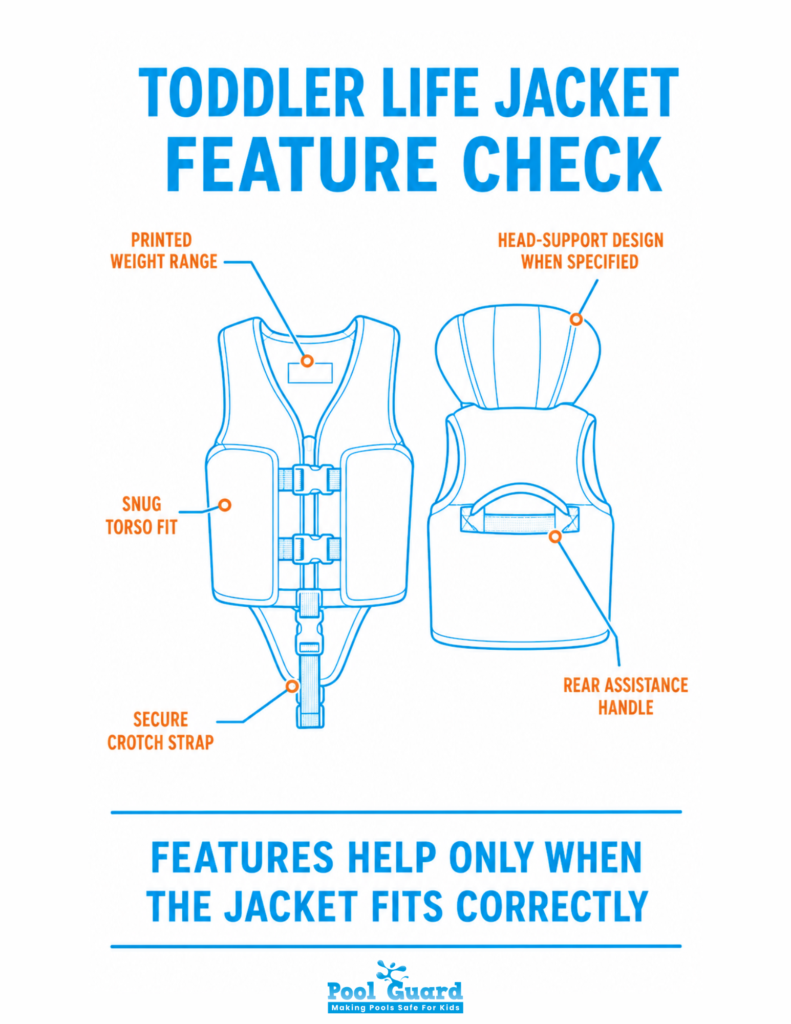
Toddlers move quickly and unpredictably, so security for them matters more than appearance. A vest with a favorite character is useless if it slides around the child’s ears when they lean forward.
Check the toddler’s weight against the exact product label, then evaluate the chest and shoulder fit. Many infant and child models include a crotch or leg strap that helps reduce ride-up. However, this feature is not universal, and its absence does not automatically make an approved vest unsuitable. The complete design, approval, fit, and intended user must be considered together.
A grab handle can help an adult pull a smaller child from the water. Bright colors improve visibility, while soft edges and suitable arm openings reduce chafing.
Head-support collars may benefit infants and weaker swimmers, but they do not guarantee that every child will turn face-up. Test the vest in controlled shallow water while remaining within immediate reach.
Babies need jackets made for their labeled size rather than scaled-down youth vests. Check the infant weight range carefully because babies grow quickly and a previously secure fit can change.
Infant designs commonly include a flotation collar, secure crotch strap, and grab handle. The collar can help support the head and encourage a face-up position, but the product must still be tested on the individual child.
Test the fit before entering open water. Fasten every strap and buckle, check for gaps or slipping, and follow the manufacturer’s instructions.
Even with a properly fitted vest, babies need constant, close adult supervision near water. A baby life jacket does not make water safe without an attentive adult.
The American Red Cross recommends close and constant attention around water, even when a lifeguard is present. The supervising adult should not be reading, using a phone, drinking alcohol, or handling unrelated tasks.
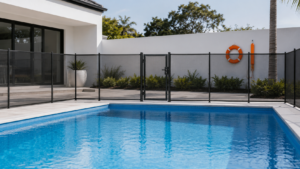
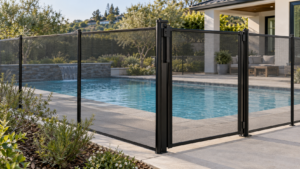
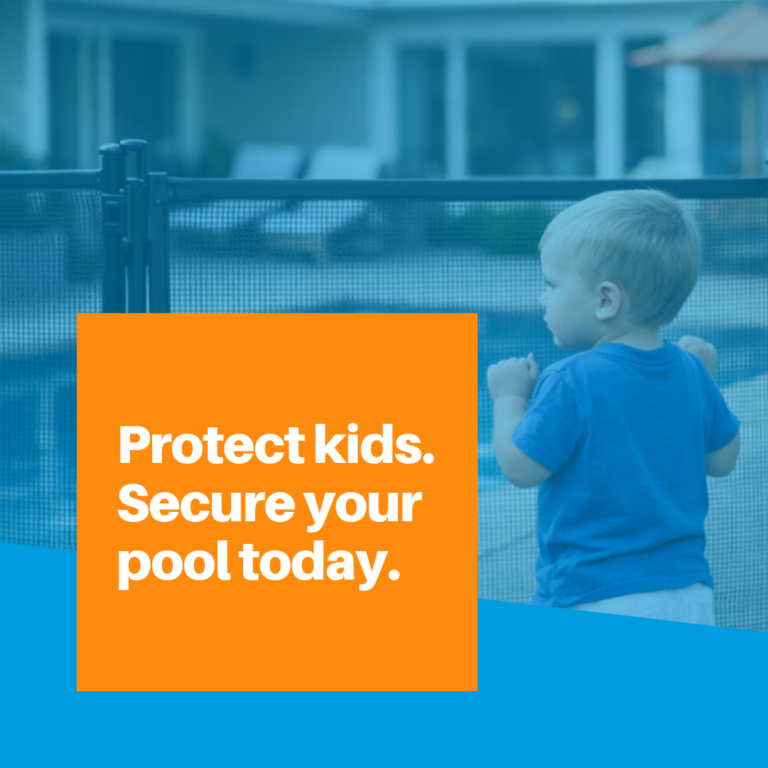
Remove toys and distractions after swimming, then secure the pool fence and self-closing pool gate. A life jacket only helps while it is correctly worn. A barrier helps control access when no one expects a child to enter the pool.
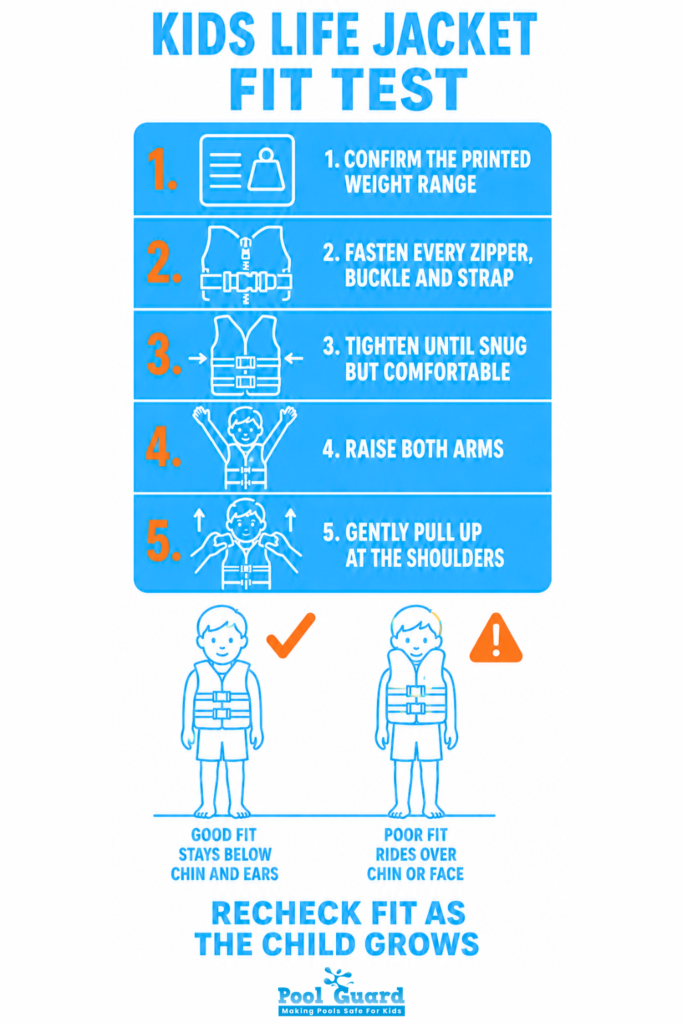
Even the correct labeled size can fit a particular child poorly. Test the vest before relying on it.
| Step | Action |
| 1 | Confirm that the child falls within the labeled weight range |
| 2 | Fasten every buckle, zipper, tie, and strap |
| 3 | Tighten the vest until secure but not restrictive |
| 4 | Have the child raise both arms |
| 5 | Gently pull upward at the shoulders |
| 6 | Reject the fit if the vest rises over the chin, ears, or face |
| 7 | Test it in controlled shallow water with an adult within immediate reach |
| 8 | Confirm that the child’s airway remains clear and breathing is easy |
The Coast Guard’s fitting guidance says a foam life jacket should fit snugly without rising above the wearer’s chin or ears.
Repeat the fit test at the beginning of every swimming season and after a noticeable growth spurt. A vest that fit in spring may no longer fit by late summer.
Also retest whenever the child moves into a different weight category or changes to another product design. Two vests with the same labeled weight range can fit the same child differently.
Foam life jackets do not have one universal expiration date. The Coast Guard recommends checking them for wear and buoyancy at least annually and discarding waterlogged, faded, or otherwise damaged devices.
Yes. A life vest provides flotation, but it does not prevent every water emergency. Flotation and supervision perform different jobs.
Always assign a water watcher whose attention remains on the children. The designated adult should not use a phone, read, grill, or leave the pool area without assigning another responsible watcher.
Swim lessons and pool rules help children develop safer habits, but neither replaces direct supervision.
A properly configured pool barrier helps restrict unsupervised access during non-swim times. The CPSC recommends barriers that fully surround the pool where possible, along with self-closing, self-latching gates that open away from the water.
Life jackets, supervision, swimming skills, fences, gates, covers, alarms, and emergency readiness work as layers. No individual layer eliminates drowning risk.
Choosing the best kids life vest comes down to the child’s current weight, individual fit, swimming ability, intended activity, and the information printed on the product label. No amount of styling or character branding compensates for a vest that rides up or is unsuitable for the water activity.
A properly fitted life jacket provides meaningful flotation support, but it remains one part of a broader safety plan. Active supervision, controlled pool access, swimming instruction, and regular equipment checks remain necessary whether a child is swimming in a pool, riding in a boat, or playing near open water.
Find your local dealer by entering your zip code above.
Please fill out the form below with your information. Your local dealer will be notified about your inquiry.
Please fill out the form below with your information. Your local dealer will be notified about your inquiry.