Every year, drowning takes the lives of more children ages 1-4 than any other cause of death in the United States. Most of those children weren’t unsupervised for long; they were gone for the length of a phone call, a doorbell, or a load of laundry. That’s the entire argument for a pool barrier in one sentence: it has to work every time, even when nobody is watching.
Choosing a permanent vs removable pool fence is a critical decision that determines how your safety system performs on a busy afternoon. This comprehensive guide breaks down the safety, costs, flexibility, and maintenance of both styles to help you find the best option. You will also learn about an innovative middle ground known as the non-removable mesh pool fence.
A removable pool fence uses a mesh barrier that you can take down or set up for parties, cleanings, or changing seasons.
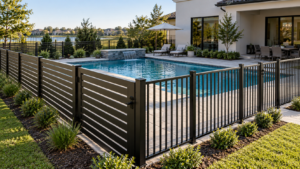
In contrast, a permanent pool fence features a fixed structure, such as aluminum, wrought iron, glass, or wood, that stays in place for the lifetime of your home.
Bridging the gap between these two options, a non-removable mesh pool fence borrows the best traits from each side. As the option Pool Guard USA installs most often, this system uses taut, transparent mesh permanently anchored to the ground. This hybrid design gives families clear sightlines without the risk of a removal step being skipped, forgotten, or done incorrectly during a busy week.
| Factor | Removable Pool Fence | Permanent Pool Fence |
| Safety | Strong when installed and latched correctly; risk rises if left off or reinstalled poorly | Consistently strong since it can’t be left down |
| Cost | Lower upfront cost | Higher upfront cost, fewer ongoing decisions |
| Flexibility | High; remove for events, service, or open-yard days | Low; fixed in place year-round |
| Visibility | Excellent with mesh panels | Depends on material (iron/glass = open, wood = blocked) |
| Gate Reliability | Depends on self-closing/self-latching hardware and consistent use | Same hardware needs, but no removal step to forget |
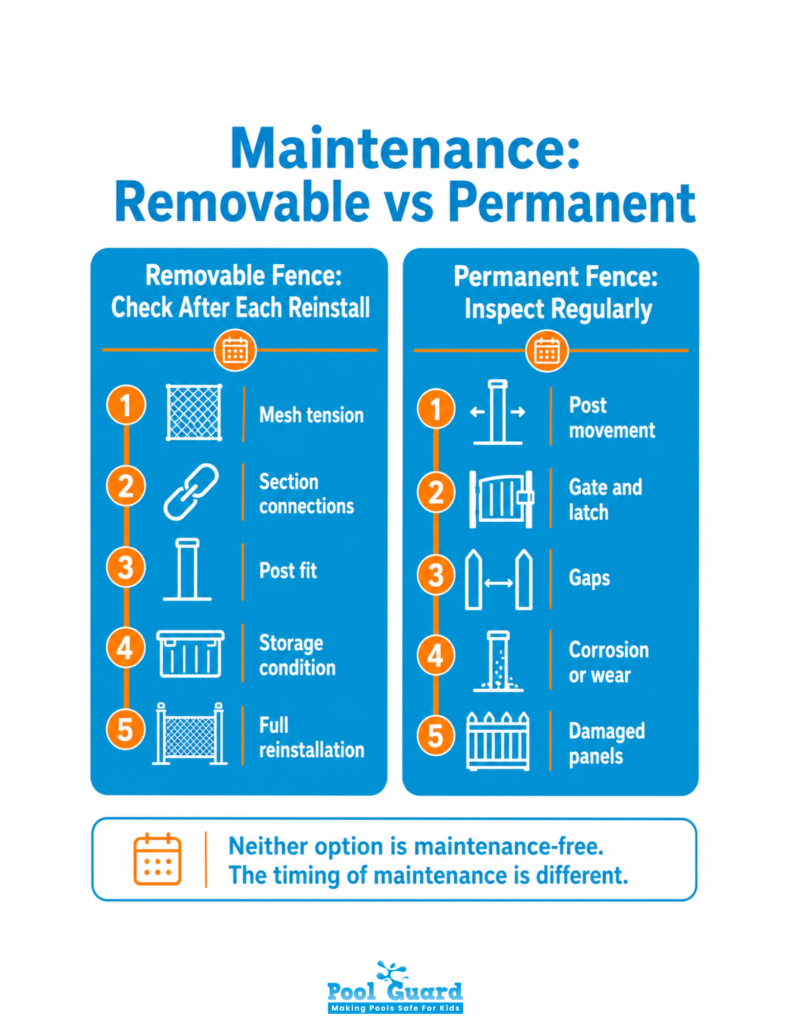
| Maintenance | Tension, connections, storage, reinstallation checks | Post integrity, hardware, gaps, surface wear |
| Best Use | Renters, seasonal pools, occasional visiting kids | Toddlers living on-site, daily use, frequent guests |
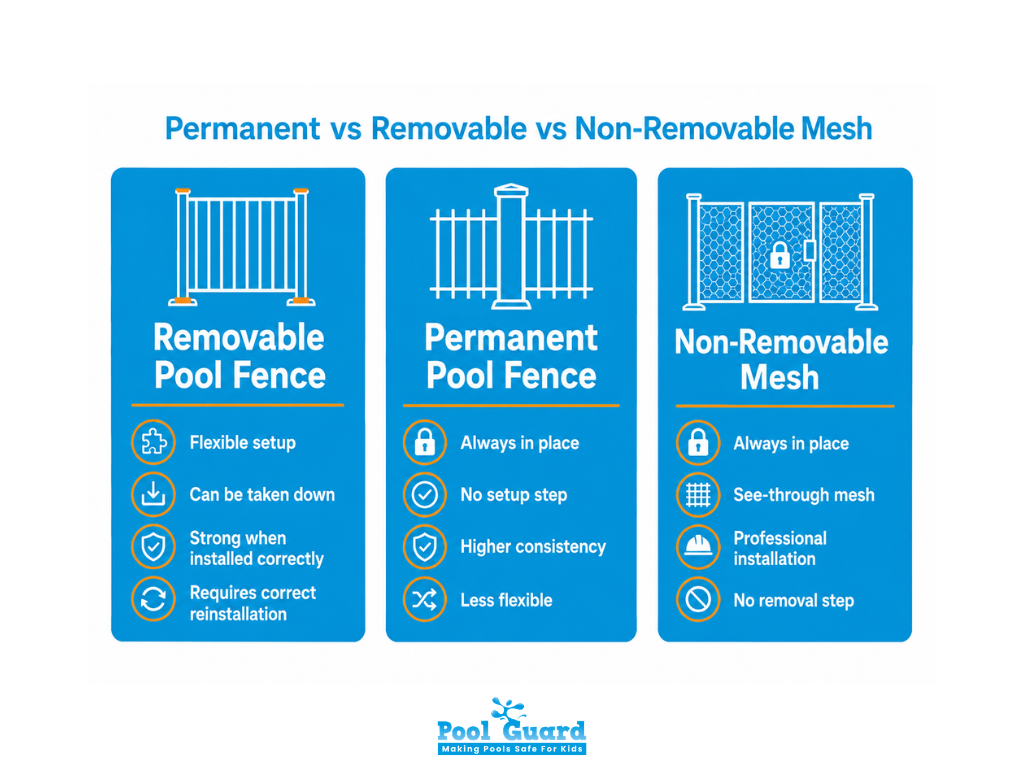
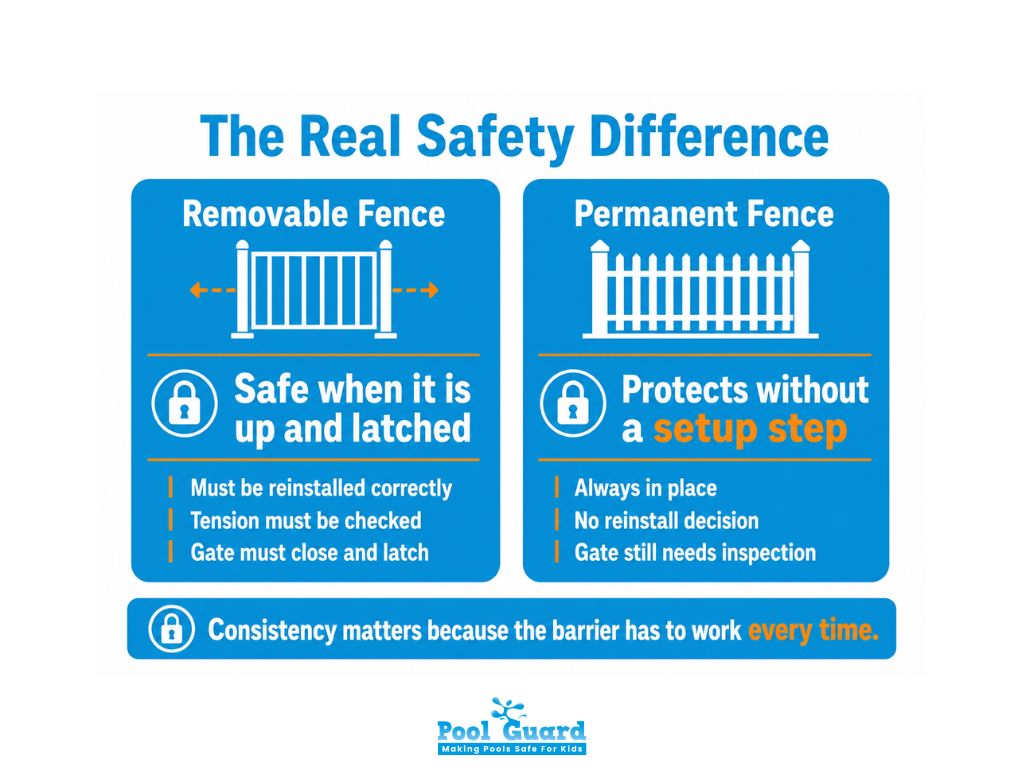
A removable fence is just as safe as a permanent structure, but only when it is fully tensioned and latched. The safety gap lies in human behavior rather than the mesh material. A removable system requires you to reinstall it correctly every single time, while a permanent barrier eliminates that daily decision entirely. Because it is always there, safety-focused buyers with toddlers or multiple caregivers usually lean toward fixed fencing.
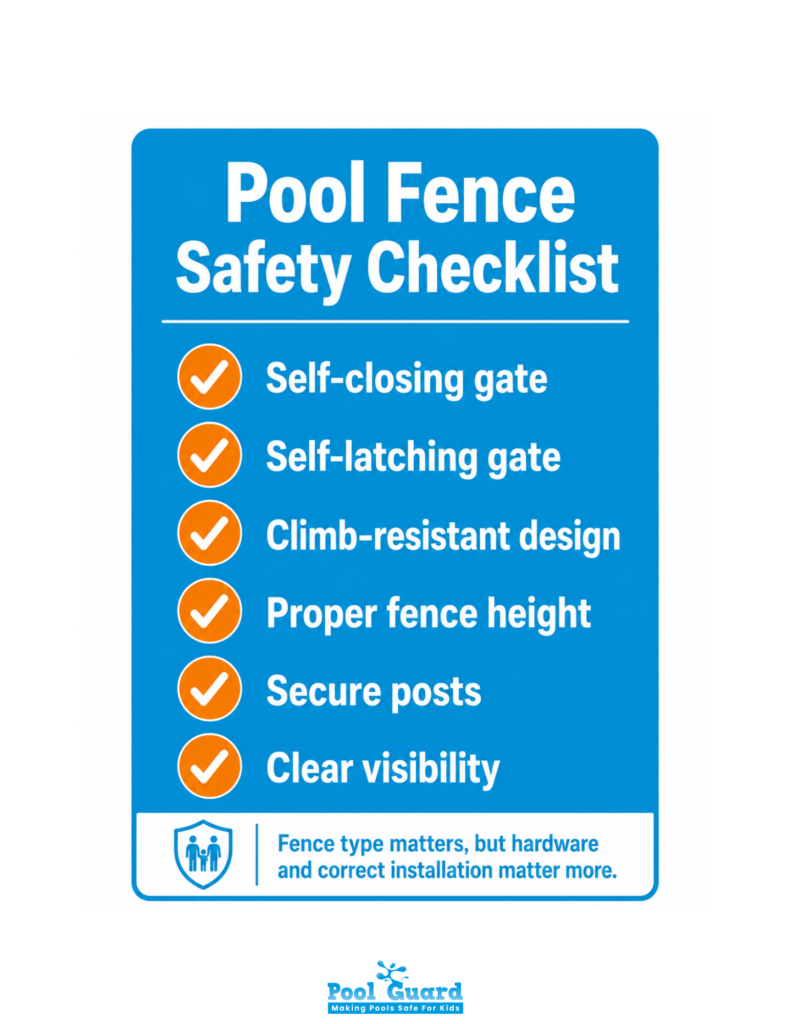
Regardless of the style you choose, your pool fence must meet these essential safety fundamentals:
The CDC emphasizes that pool fencing works independently of adult supervision, but this protection only exists if the barrier is locked in place the exact moment a child wanders outside.
Price depends on several variables regardless of pool fence type:
Removable mesh fences cost less upfront than glass or wrought iron. However, a cheaper fence provides no protection at all if you forget to put it back up. If daily child safety is your priority, a non-removable mesh or permanent fence delivers better long-term value because it completely eliminates the risk of human error.
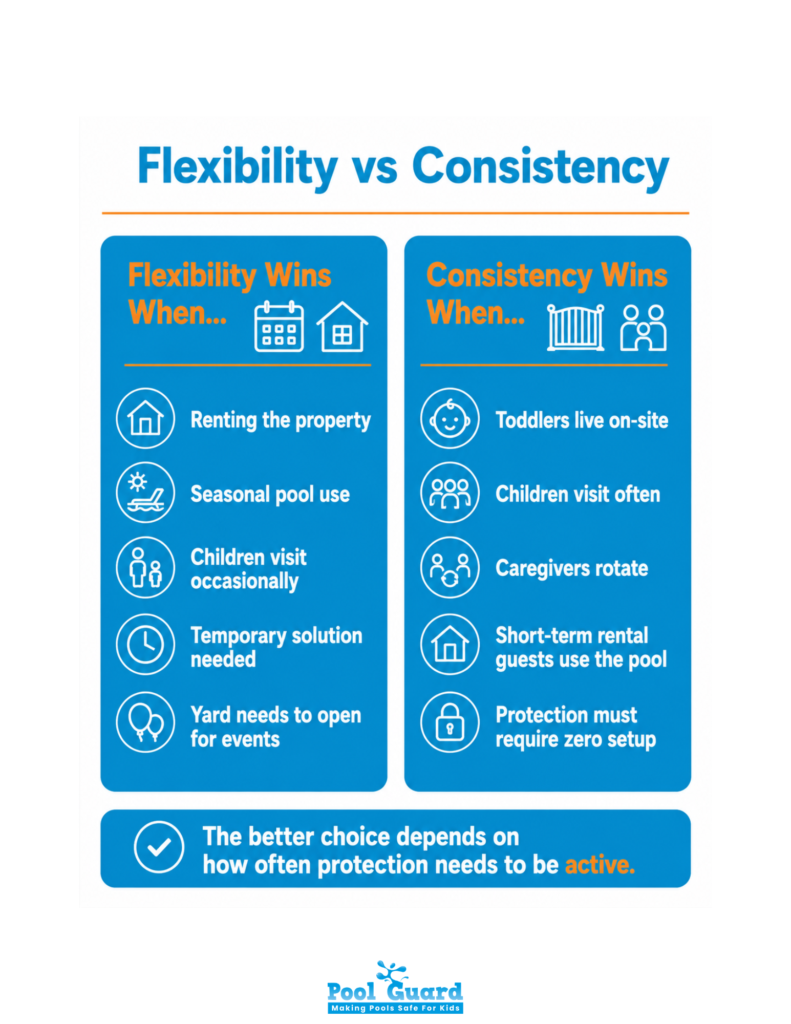
Your choice depends entirely on how your household uses the pool area.
If your safety needs change seasonally, flexibility wins. If your safety needs are constant, consistency wins, and that’s exactly the gap a non-removable mesh fence is built to close.
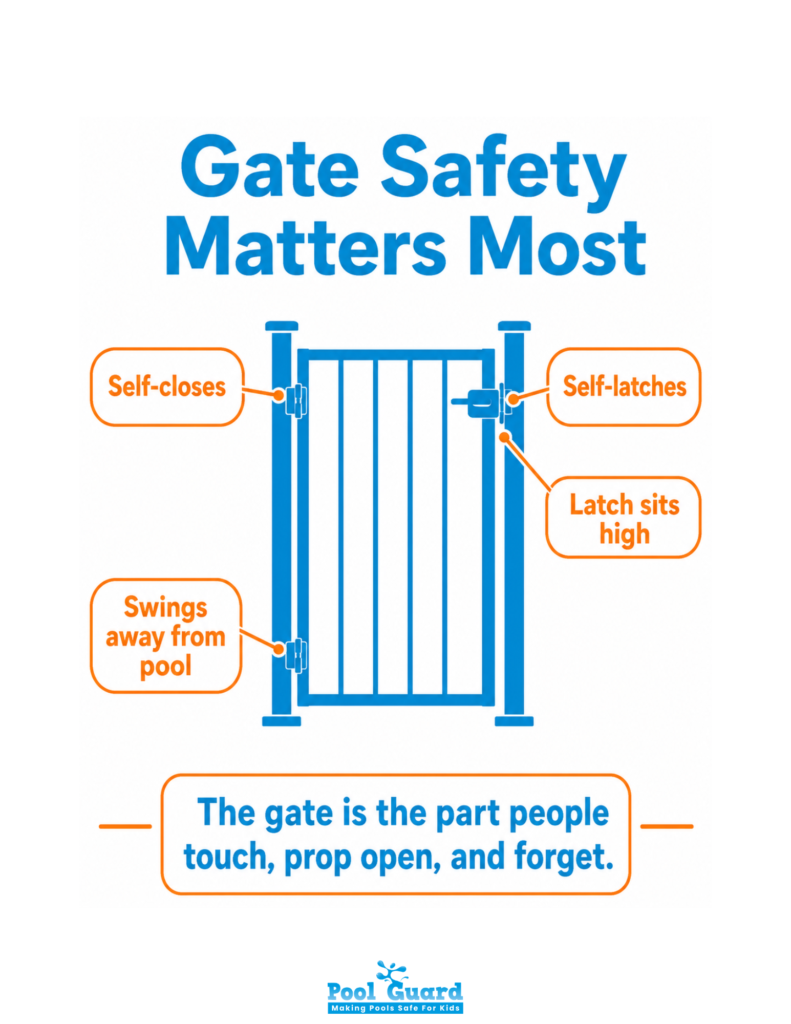
Most real-world barrier failures happen at the gate rather than the fence panels. Because people constantly touch, prop open, or forget to latch gates, you must choose a system with an outward-swinging, automatic self-closing gate and a high self-latching mechanism. Homeowners must also regularly check hardware alignment, as shifting decks can cause these critical latch systems to fail.
Beyond mechanical gate safety, the physical visibility of your barrier dictates how effectively you can supervise the water. Mesh panels keep sightlines entirely open for quick glances from the house, whereas solid permanent materials like wood block your view completely and hinder supervision even if they meet local building codes.
Neither option is maintenance-free. The difference is when the maintenance matters. A removable fence needs a checklist every time it goes back up, while a permanent fence needs periodic inspection on a calendar.
Once you’ve decided which type of pool fence best fits your home, the next step is making sure it’s installed correctly. Pool Guard USA provides professional pool fence installation in multiple locations, including non-removable mesh fencing designed for reliable, always-in-place protection. Explore the service areas below to find a Pool Guard USA location near you and get help choosing and installing the right safety barrier for your pool.
When comparing a permanent vs removable pool fence, removable options offer seasonal flexibility for renters, while fixed structures provide constant consistency. Non-removable mesh fences bridge this gap, combining clear sightlines with a fixed barrier that eliminates the risk of human error.
Your choice depends entirely on your lifestyle and how often children access your yard. While flexibility offers short-term convenience, matching your fence design to your daily routine ensures maximum security. Explore Pool Guard USA’s professional fencing options today to find the perfect full-time protection for your family.

Please fill out the form below with your information. Your local dealer will be notified about your inquiry.
Please fill out the form below with your information. Your local dealer will be notified about your inquiry.