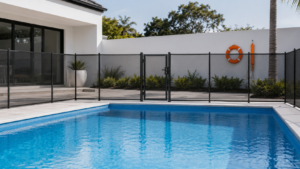
A backyard pool is a massive safety investment that requires layers of protection to ensure your family’s peace of mind. When evaluating a mesh pool fence vs vinyl, your decision is truly about choosing between dedicated, transparent pool safety and long-term property privacy. The right pool fence must fit your daily lifestyle while reliably preventing unsupervised access to water by curious children or pets.
While both options are popular and code-compliant, they solve entirely different backyard problems. This guide breaks down the cost, safety, and maintenance of each barrier so you can choose with confidence.
Choosing a pool barrier plays a decisive role in home safety. According to the U.S. Consumer Product Safety Commission, an average of 376 children under 15 drown in pools or spas each year, with toddlers aged one to four making up nearly 80% of these fatalities. Balancing aesthetics, budget, and functionality is important, but preventing unsupervised access to water is the ultimate priority.
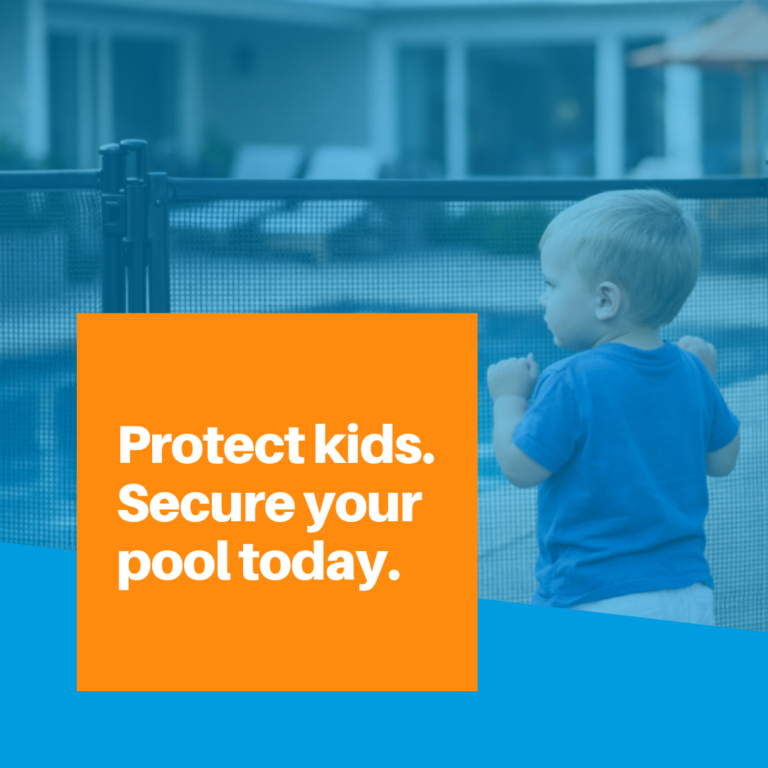
To maximize safety, mesh fences feature a transparent weave that ensures a clear, continuous line of sight to the water. In contrast, vinyl fences create an opaque privacy barrier that completely blocks your view, meaning a child could be in distress on the other side, unnoticed.
Beyond visibility, mesh fencing prevents climbing by eliminating footholds entirely, and it can be removed in minutes when unsupervised pool access is not a concern. Permanent vinyl fences offer excellent wind resistance and yard boundaries, but their horizontal structural rails can, unfortunately, provide leverage for older children to scale the barrier.
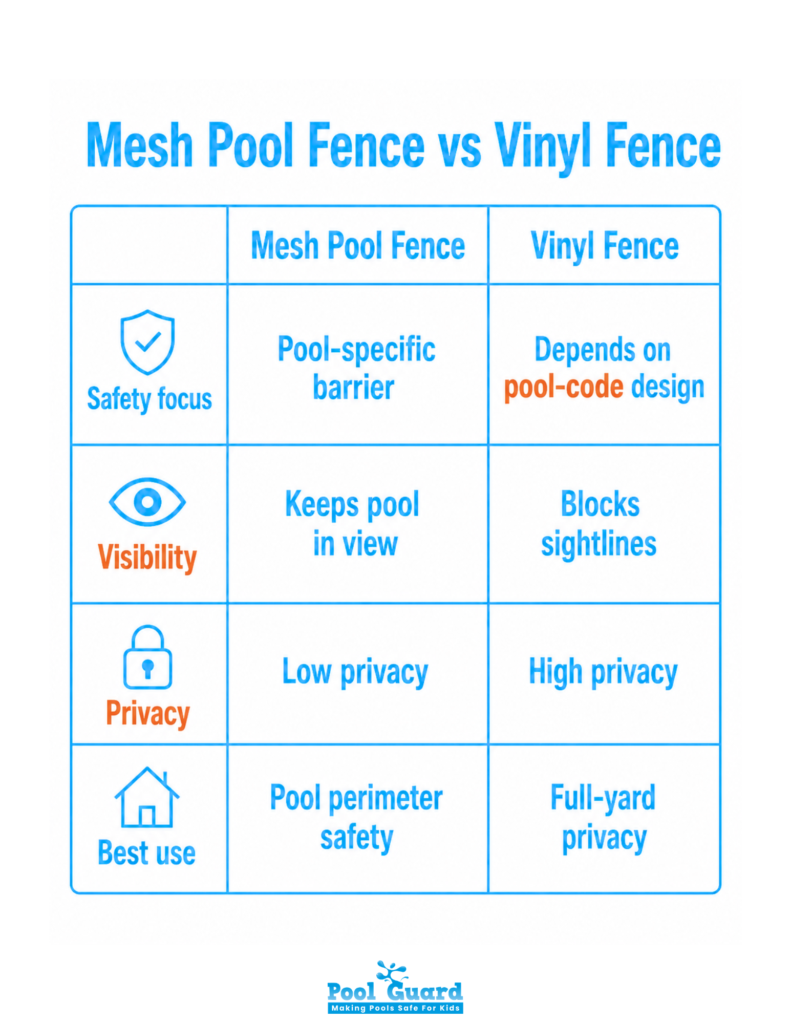
| Factor | Mesh Pool Fence | Vinyl Fence |
| Safety (as Pool Barrier) | Purpose-built for pool code compliance | Compliant only if height, gaps, and gates meet pool code |
| Visibility | Near-transparent; pool stays in view | Solid panels block the view |
| Privacy | Minimal | High |
| Cost | Lower for pool-perimeter-only installs | Higher for full enclosures with privacy panels |
| Maintenance | Check tension, poles, and latch | Clean panels, check hinges and sag |
| Gate Performance | Engineered self-closing, self-latching pool gates | Standard gates; may need retrofitting for pool code |
| Best Use | Dedicated pool safety barrier | Yard privacy and property-line enclosure |
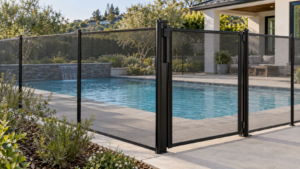
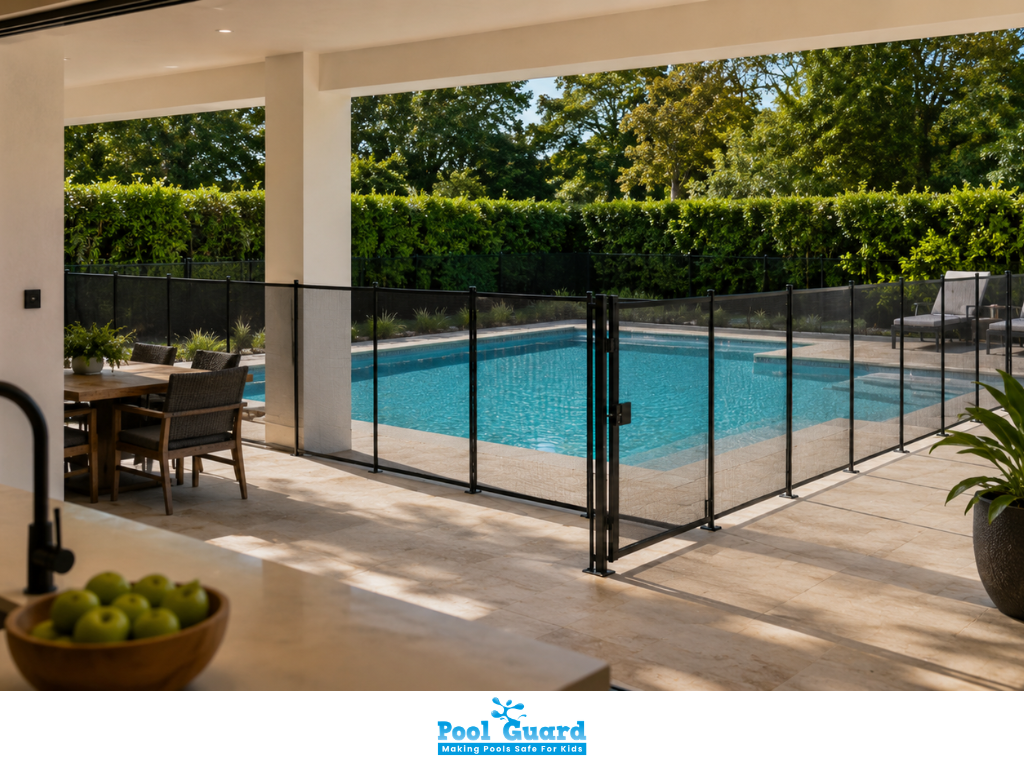
A mesh pool fence is a purpose-built safety barrier made from tightly woven, vinyl-coated mesh fabric tensioned between removable aluminum poles. Engineered to prevent unsupervised water access while maintaining sightlines, most professionally installed systems feature self-closing, self-latching gates that meet ASTM F2286 safety standards.
The fine weave eliminates footholds so small children cannot climb it, yet the transparent material lets you see through it. This combination makes it the preferred choice for families who require constant visual awareness of the pool area from inside the house or across the yard.
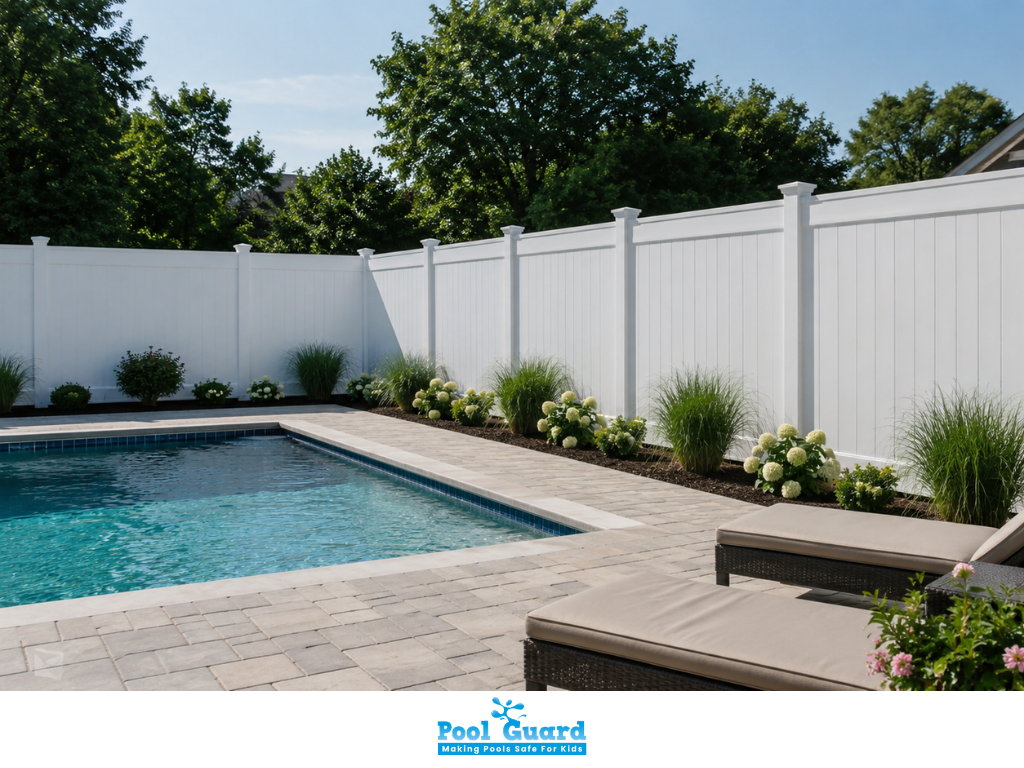
A vinyl pool fence is a PVC-based system typically installed around a property line to create a private outdoor living space. Standing four to six feet tall, it comes in solid privacy panels or picket designs and is prized for a clean look that resists rot, rust, and fading without painting or staining.
While vinyl can serve as a compliant pool barrier, it functions as a permanent property fence rather than a dedicated safety device. Meeting local pool codes depends heavily on its height, smooth finish, gap spacing, and the addition of specialized self-closing gate hardware.
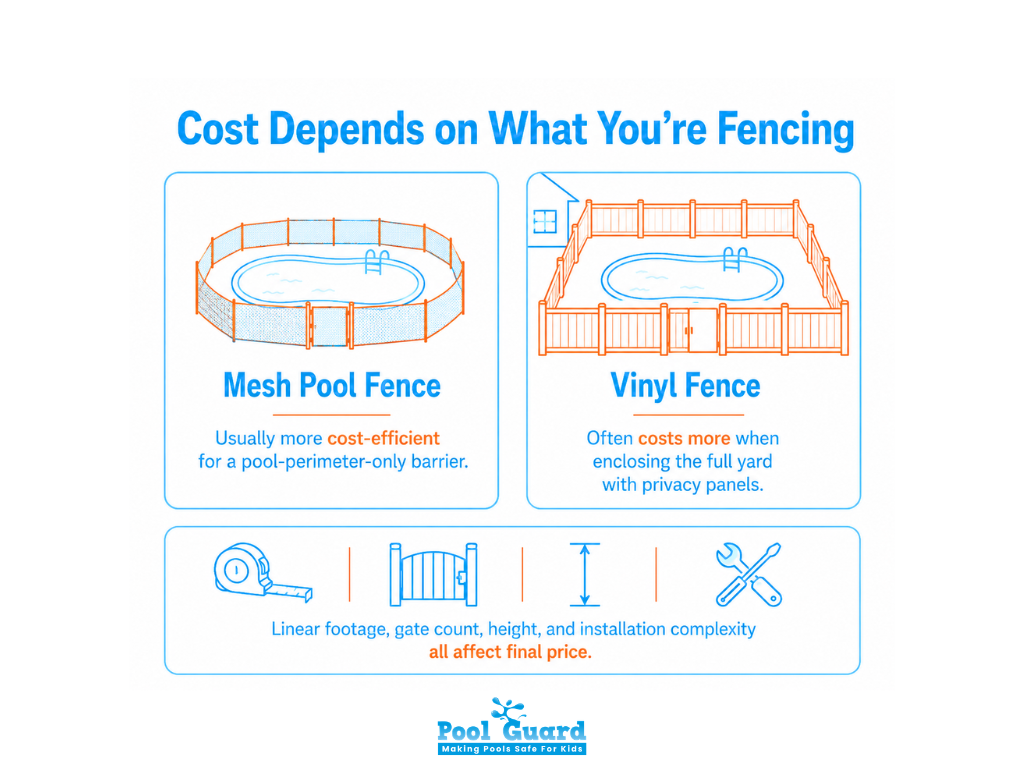
Comparing the cost of a mesh pool fence vs. vinyl depends heavily on your project’s scope and layout. Several key variables drive the final price:
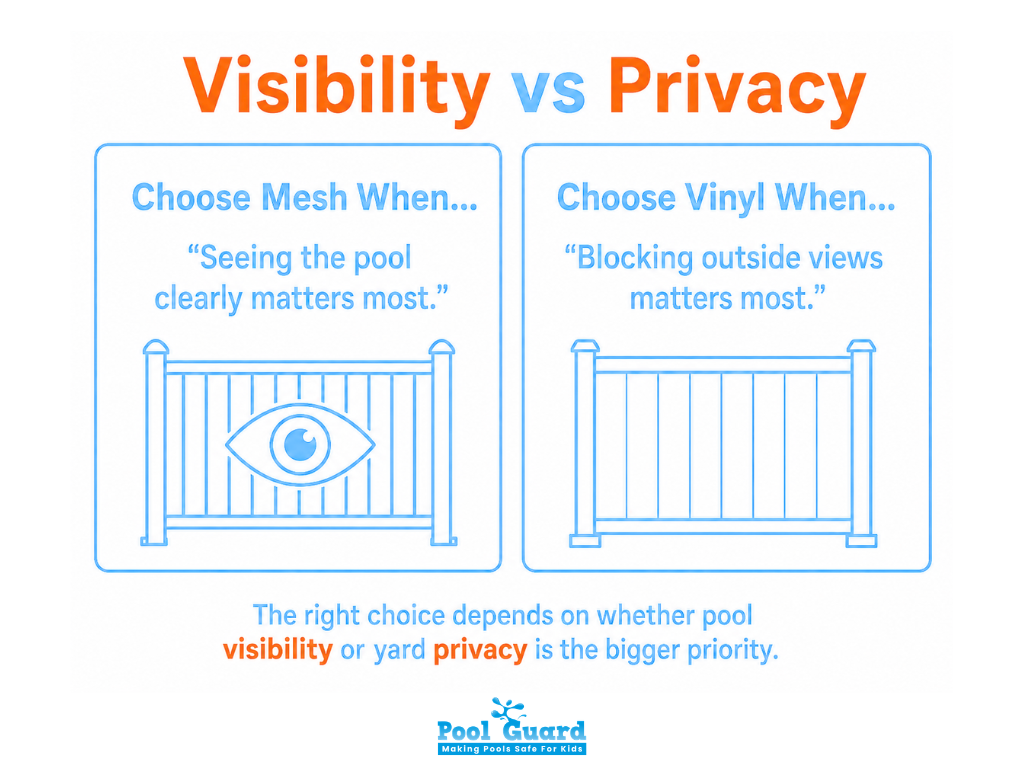
In practice, mesh is the more budget-friendly choice because it acts as a tight, minimal barrier around the water. Vinyl requires a much higher upfront investment due to the volume of materials and labor needed for a permanent structure.
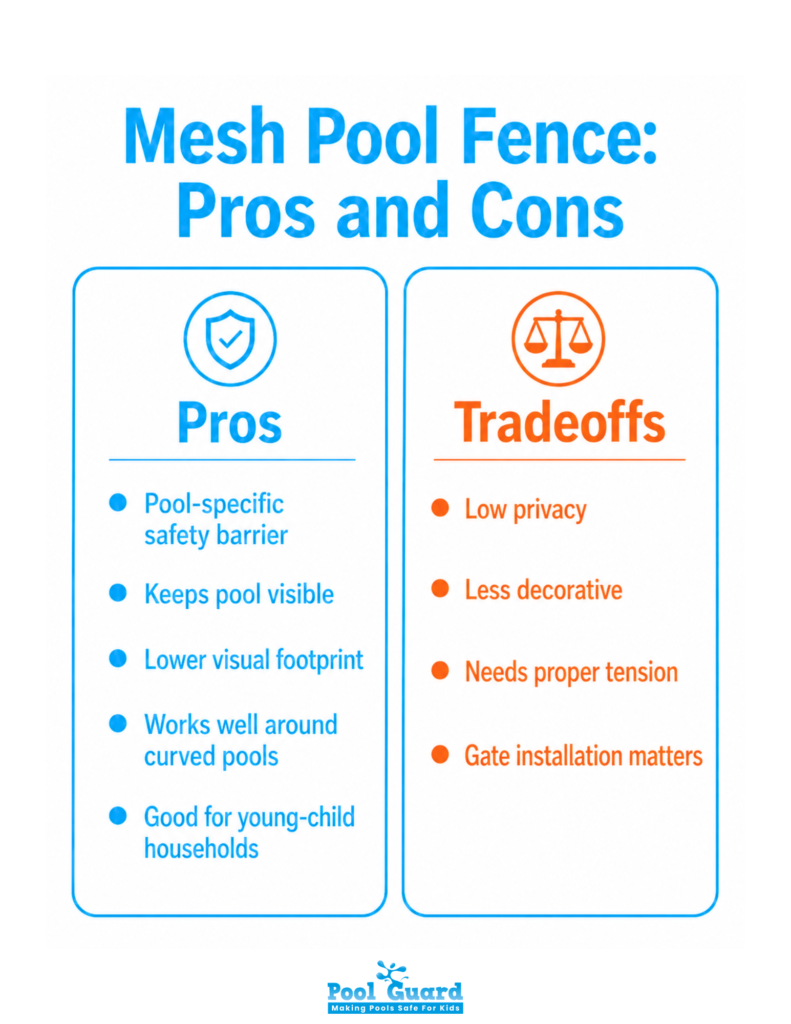
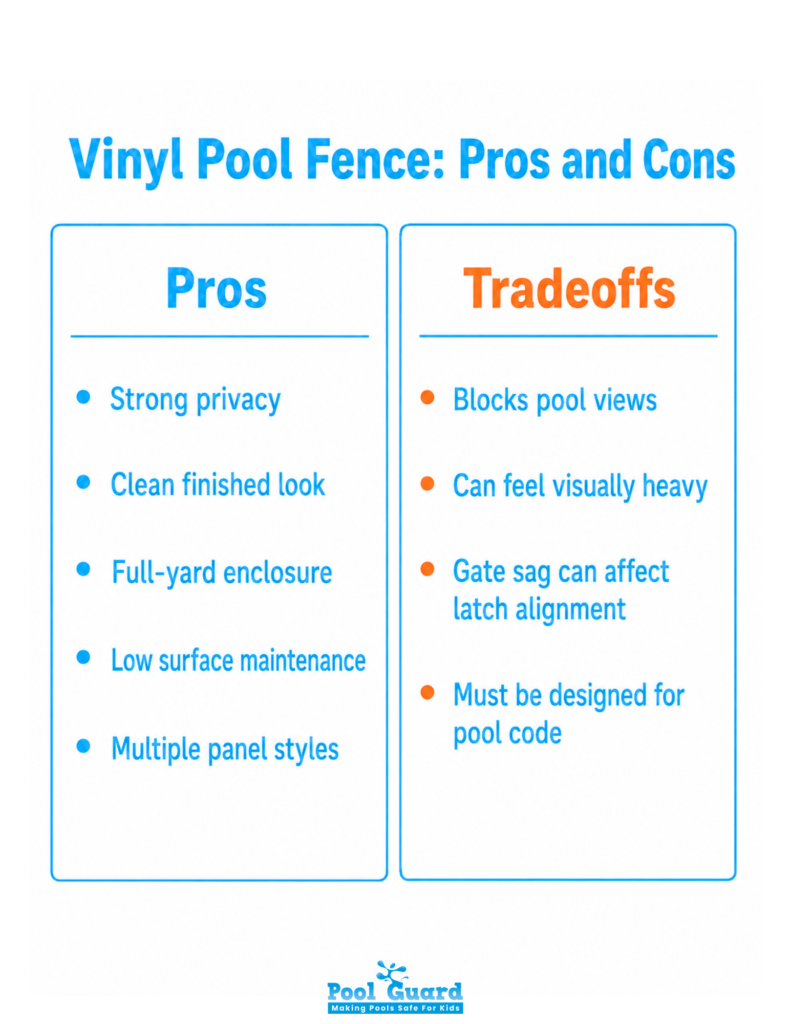
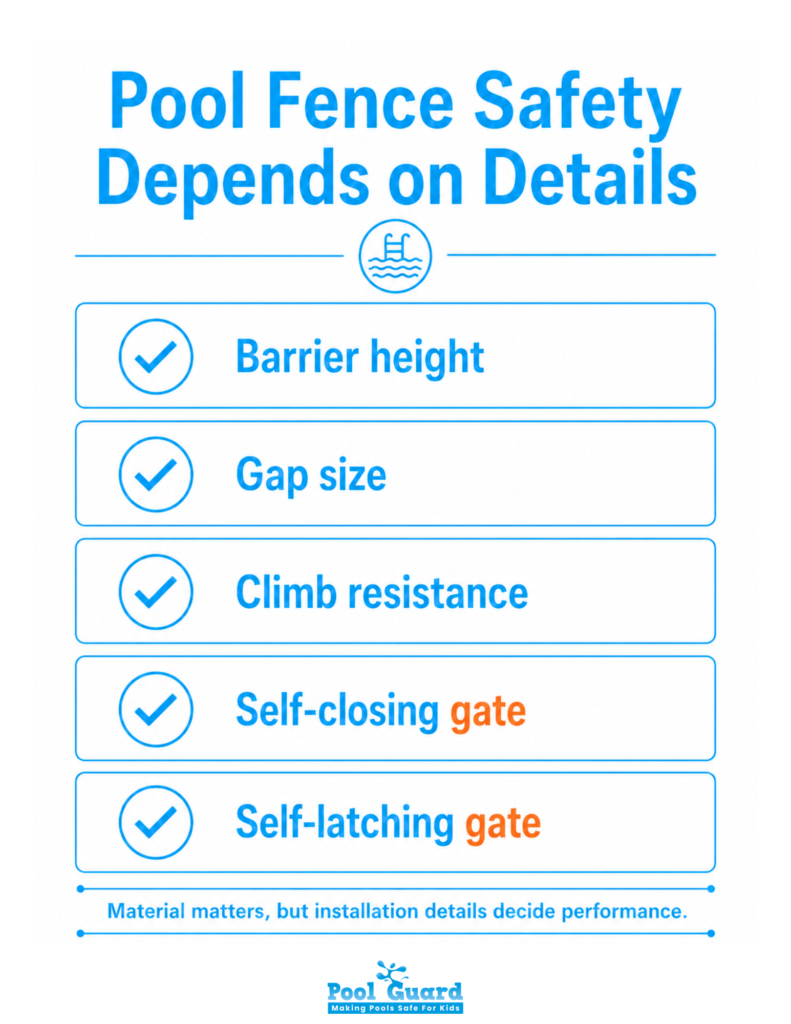
Real pool safety comes down to specific factors like barrier height, climbability, and reliable self-latching gates. Neither material is automatically safe on its own; a poorly installed mesh fence with a loose bottom rail is just as risky as a vinyl fence with a gate that fails to latch autonomously.
That said, mesh pool fencing holds a distinct advantage because it is engineered from the ground up as a dedicated safety barrier, featuring a non-climbable weave and proper post spacing by design. While vinyl can absolutely work, a standard yard privacy fence isn’t automatically a certified pool barrier. Furthermore, mesh provides a critical layer of passive supervision by keeping sightlines completely open, whereas solid vinyl panels block your view of the water entirely.
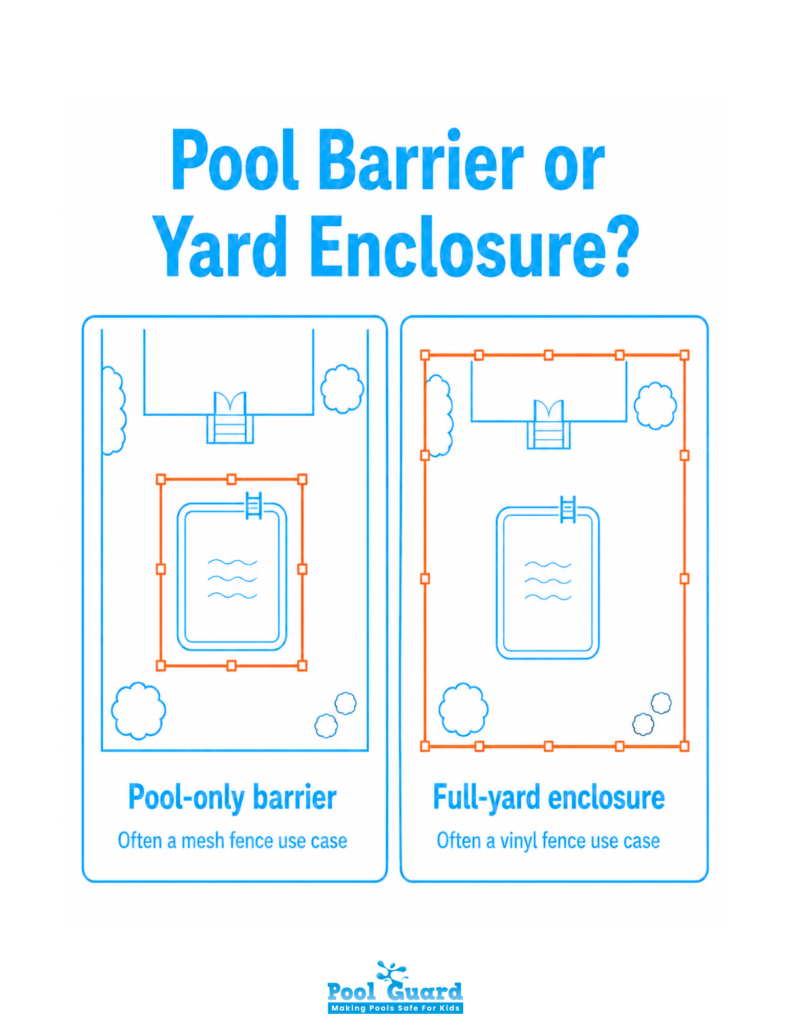
Choosing between mesh and vinyl pool fencing depends entirely on whether you prioritize sightlines or seclusion. Mesh is ideal for parents because it provides an unobstructed view of the water from the house or patio. Vinyl is better if your primary goal is blocking views from neighbors or the street.
For families with toddlers, visibility must outweigh privacy because drowning happens rapidly and silently. A drowning child cannot splash or scream to alert nearby adults. Transparent mesh ensures a clear line of sight, offering a critical safety advantage that solid vinyl cannot match.
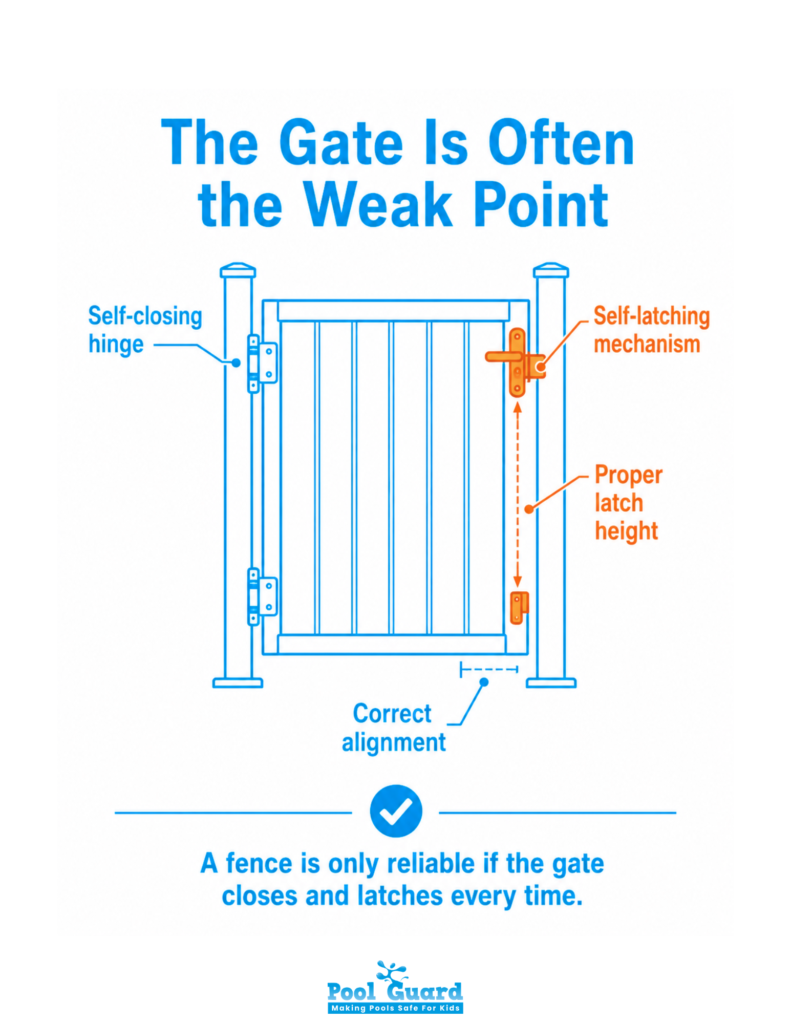
Gates are the most common failure point in pool barrier systems, making the mechanical differences between mesh and vinyl critical to long-term safety. While both options require automatic self-closing and self-latching hardware, they handle this equipment very differently.
Mesh gates utilize specialized, top-pull safety latches mounted on tall posts well out of a child’s reach. In contrast, vinyl gates rely on standard heavy-duty hardware that can be easier for older children to manipulate and lack the transparent visibility needed to see who is on the other side before opening.
Material weight directly impacts whether the gate will actually lock securely over time. Vinyl gates are heavy and highly prone to sagging from gravity and repeated use, where even a quarter-inch of sag can misalign the latch and defeat the barrier. Mesh gates avoid this issue by using lightweight, rigid aluminum frames engineered specifically for pool safety, preventing sag-related failures and ensuring perfect latch alignment for years.
When it comes to pool fence maintenance, mesh pool fencing requires periodic checks of fabric tension, pole stability, ground anchors, and gate closure. The mesh itself is UV-treated and weather-resistant, but tension and anchor points should be inspected a few times a year, especially after storms.
While mesh relies on tension checks to stay secure, vinyl fencing shifts the upkeep focus to environmental and weight-related challenges. Vinyl fencing holds up well against rot, rust, and insects, but isn’t entirely maintenance-free. Owners should watch for mildew buildup on shaded panels, hairline cracking in extreme cold, and hinge or gate hardware that loosens with age and heavy use.
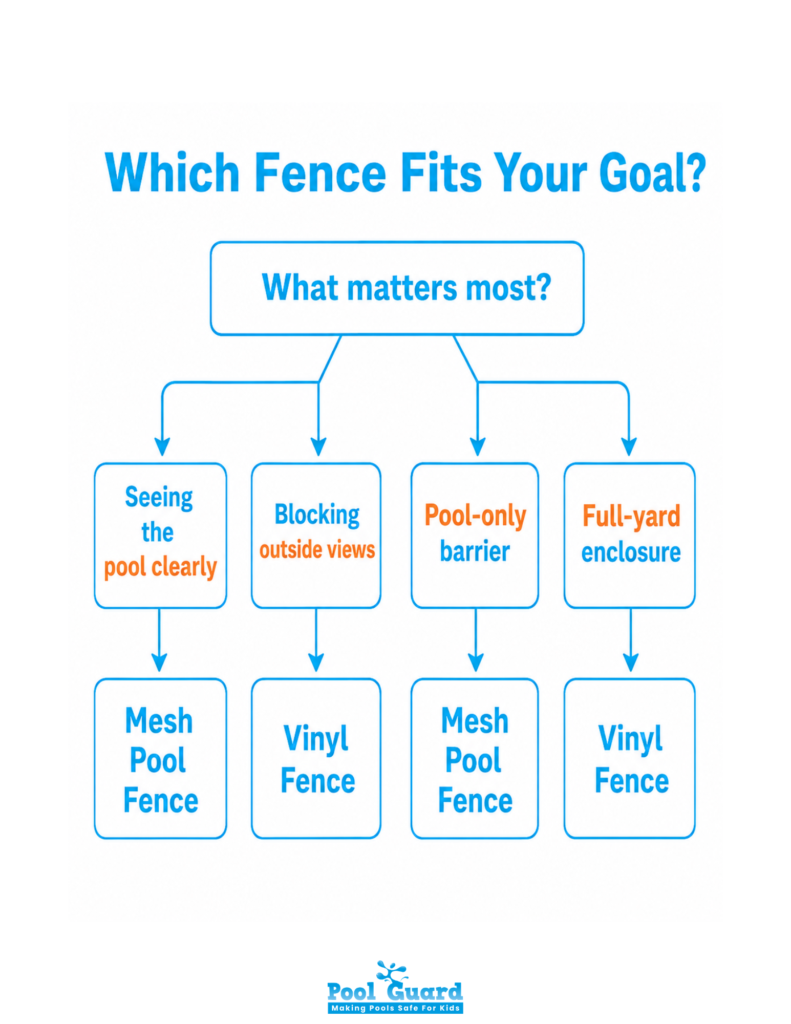
Vinyl is the stronger choice when:
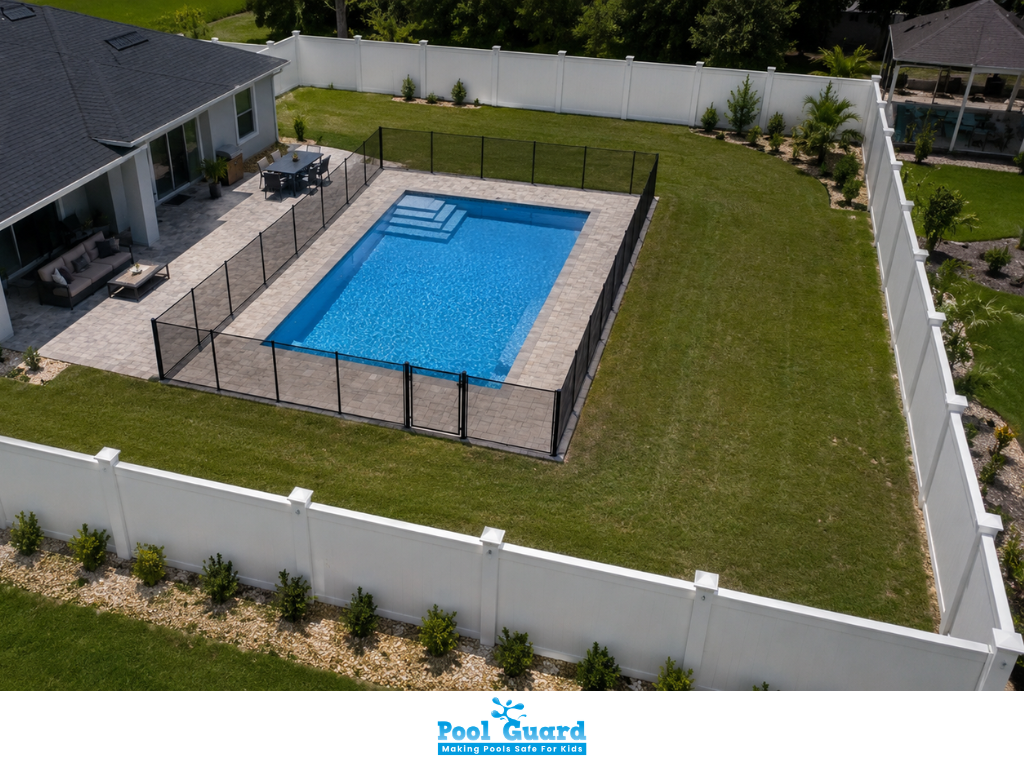
Mesh is the stronger choice when:
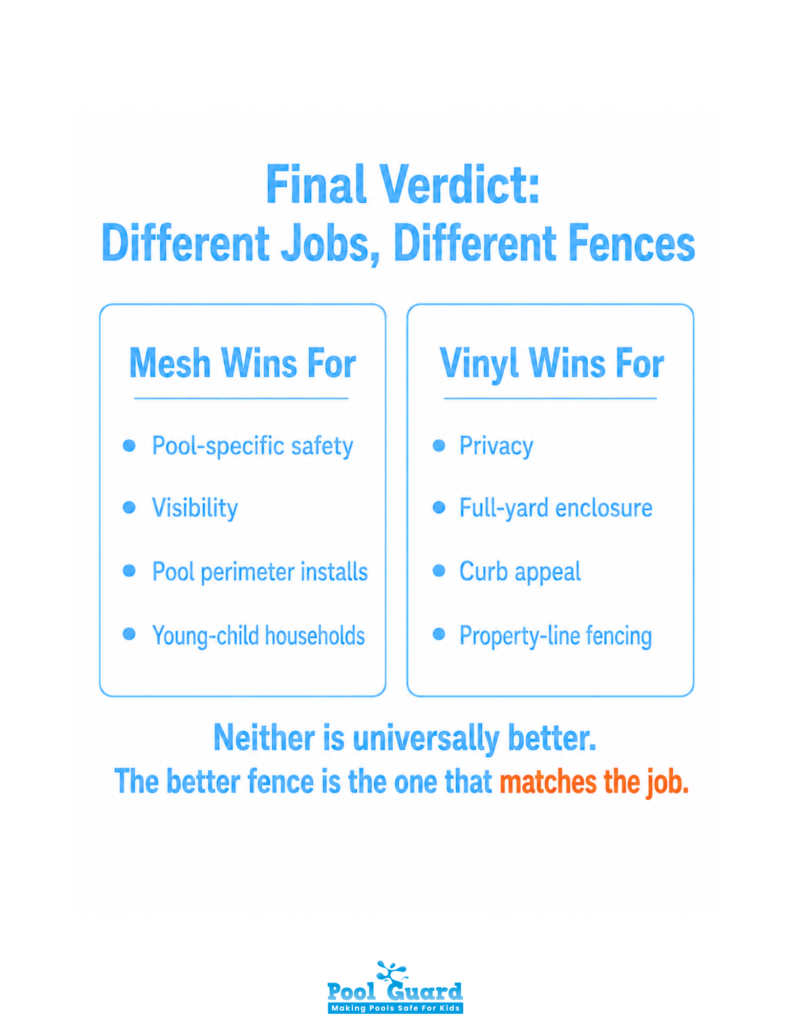
Ultimately, the choice between a mesh pool fence vs vinyl depends on your primary goal, as neither is universally “better”. Vinyl wins on privacy, aesthetics, and full-yard enclosure, while mesh wins on pool-specific safety, visibility, and cost-efficiency.
For homes with toddlers, a professionally installed mesh fence is usually the superior safety solution because it was designed around one specific goal: keeping the water visible and inaccessible to unsupervised children.
To secure your family with this precise level of protection, explore Pool Guard USA’s professionally installed mesh pool fencing options. This specialized system provides a barrier built entirely for pool safety, rather than a standard fence that happens to be nearby.
Find your local dealer by entering your zip code above.
Please fill out the form below with your information. Your local dealer will be notified about your inquiry.
Please fill out the form below with your information. Your local dealer will be notified about your inquiry.