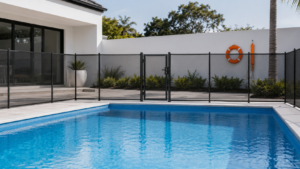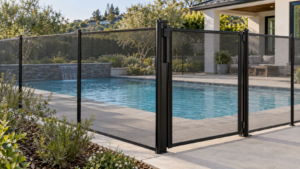
Pool fence laws vary dramatically depending on where you live, and that variation can catch homeowners off guard. Some states mandate a four-foot, four-sided isolation barrier around every residential pool. Others leave enforcement to local municipalities, resulting in a patchwork of building codes, permit requirements, and safety standards. Knowing your state’s specific pool barrier requirements isn’t just about avoiding fines – it’s about protecting the people you love most.
Drowning remains the leading cause of death for children ages one through four in the United States, according to the U.S. Consumer Product Safety Commission. The agency’s most recent data show an average of 376 children under 15 died in pool- or spa-related drownings each year between 2021 and 2023, with nearly 80 percent of those victims under age five. Over 70 percent of these fatal incidents happened in residential settings – not water parks, not public pools, but backyards.
That’s exactly why so many states have adopted pool safety statutes modeled on the Virginia Graeme Baker Pool and Spa Safety Act and the International Swimming Pool and Spa Code (ISPSC). Most codes require self-closing, self-latching gates, non-climbable fence designs, and a minimum barrier height, commonly 48 inches. The research backing this approach is substantial: a landmark New England Journal of Medicine study by Thompson and Rivara found four-sided isolation fencing cut child drowning risk by 83 percent compared to homes with no fence or a three-sided barrier.
States like California, Arizona, and Florida enforce some of the nation’s strictest pool enclosure laws, often layering fencing requirements with alarms, self-closing doors, or pool covers. Other states, including many in the Northeast and Midwest, defer to county or city building codes, meaning your requirements might differ from your neighbor’s just a few miles away.
Click a state below to view its specific pool fence laws by state.
A code-compliant fence isn’t a bureaucratic checkbox. It’s a proven layer of protection that works alongside adult supervision, swim lessons, and CPR training. Before installing or upgrading your pool barrier, check your specific state’s pool fence height, gate, and latch requirements using our interactive Pool Fence Height Map above, and consult local permitting offices to confirm municipal add-ons.
This is a sensitive topic involving child safety statistics – if you have concerns about a specific pool or child safety situation, local building and code enforcement offices can provide guidance tailored to your property.
Find your local dealer by entering your zip code above.
Please fill out the form below with your information. Your local dealer will be notified about your inquiry.
Please fill out the form below with your information. Your local dealer will be notified about your inquiry.