You’re about to jump in, and the pump is humming away by the equipment pad. Do you run pool pump while swimming, or should it stay off? Most pool owners ask this at some point, usually after hearing a rumor from a neighbor or a pool cleaner. The truth is simpler than the myths suggest, but it comes with real conditions worth knowing.
This guide explains when running the pump is safe and when it isn’t. You’ll learn what protects swimmers, from drain covers to electrical checks as well as the warning signs that mean it’s time to get out of the water.
Yes. In most cases, you should run your pool pump while swimming.
Running the pump during use helps:
Yes. A properly installed and maintained pool pump is safe to run while swimming, provided the pool has GFCI protection, proper electrical bonding and grounding, and compliant anti-entrapment drain covers.
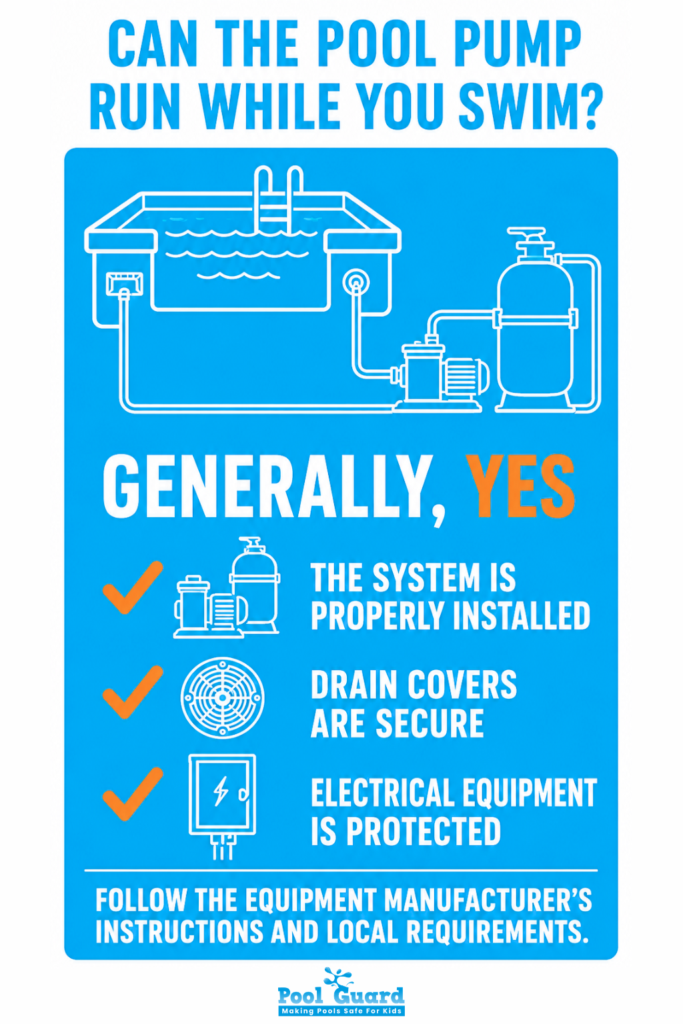
Clear water is the most important part of pool safety. It lets adults see all the way to the bottom. This makes it easy to watch children and quickly spot anyone who needs help underwater.
Running a pool pump while swimming is safe only if the equipment behind it, like the drains, wiring, and lights, is in good shape.
A pump can run perfectly next to a hazard if something else in the system is damaged or worn. For example, the pump motor might sound completely normal while a nearby cracked drain cover creates a dangerous suction trap, or a frayed wire inside an underwater light leaks electricity directly into the water.
A monthly visual check and an annual electrical inspection catch most of that before it becomes dangerous.
Knowing when to run a pool pump also means knowing when to stop. Certain warning signs mean everyone must get out right away, without waiting to see if the issue passes. Electrical signs mean get out of the water immediately, while suction and visibility signs mean nobody should get back in until a professional checks the equipment.
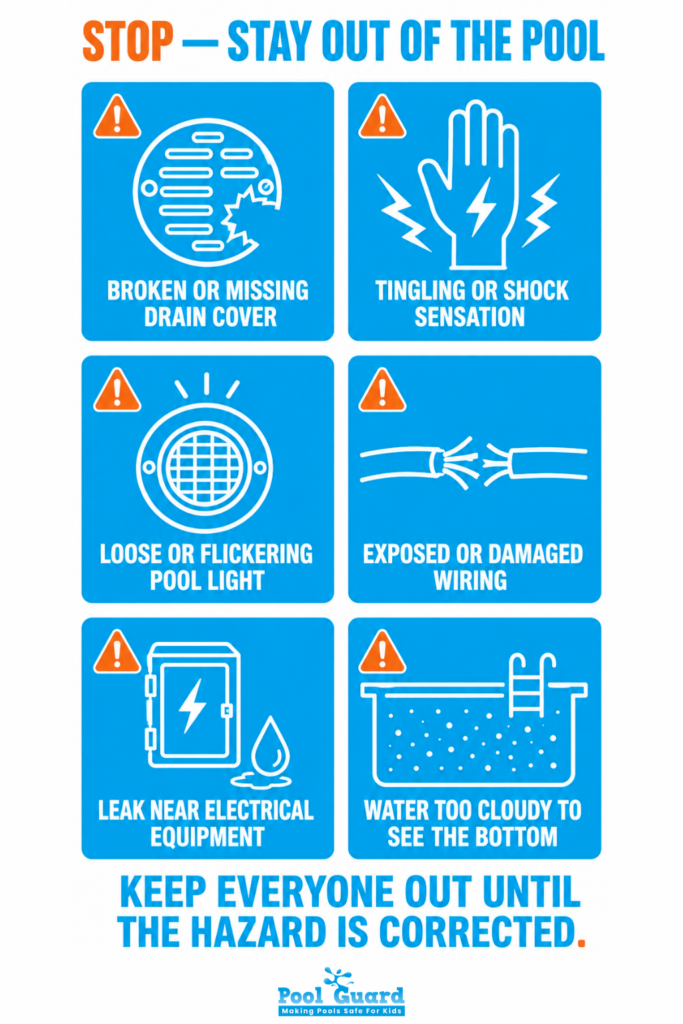
Stop swimming if you notice:
A missing or broken drain cover is one of the more serious issues. The U.S. Consumer Product Safety Commission has warned that damaged or absent drain covers can create dangerous suction near a pool’s main drain. If you spot any of these signs, get everyone out and have the system inspected before swimming resumes.
A pool’s circulation system is a simple loop. The pump pulls water in through the drains and skimmers, pushes it through the filter, and returns it to the pool clean. The filter catches debris, hair, and small particles that would otherwise cloud the water.
Drain covers carry a bigger safety role than most people realize. A compliant cover spreads suction across a wide grate instead of one opening, the difference between a mild pull and enough force to trap a hand or hair. The Consumer Product Safety Commission ties entrapment hazards directly to drain and cover design, which is why the Virginia Graeme Baker Pool and Spa Safety Act requires compliant covers on public pools.
Suction at a drain should never feel strong enough to pull at hair, clothing, or a swimmer’s body. A cracked, loose, or missing drain cover isn’t cosmetic. Fix it before anyone gets back in the water.
Tingling, buzzing, or a mild shock in pool water signals stray electrical current, sometimes called electric shock drowning. It’s rare but serious. The Electrical Safety Foundation International has warned that even low-level current in water can cause muscle paralysis and drowning.
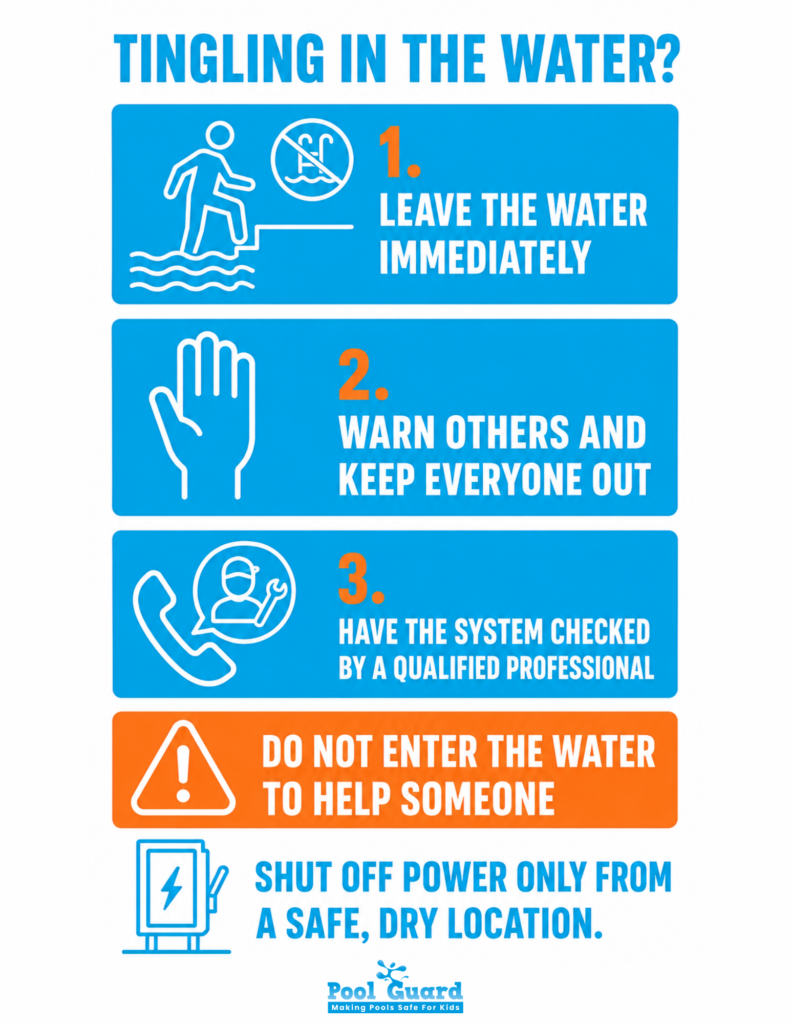
If you or anyone else feels tingling in the pool, act fast but stay calm. Leave the water right away, but do not swim toward or touch metal ladders or rails on the way out, since metal can carry the electrical current. Get everyone else out immediately and keep them out until the equipment is checked and fixed.
If you can shut off power to the pool without entering the water or touching anything wet, do it. If not, leave it alone and call a qualified electrician or pool professional. Don’t try to diagnose the source yourself; electrical issues near water need a professional. Most codes since 2008 require GFCI protection on pump motors and pool lighting; equipment older than that should get a GFCI retrofit, the fix ESFI points to for prevention.
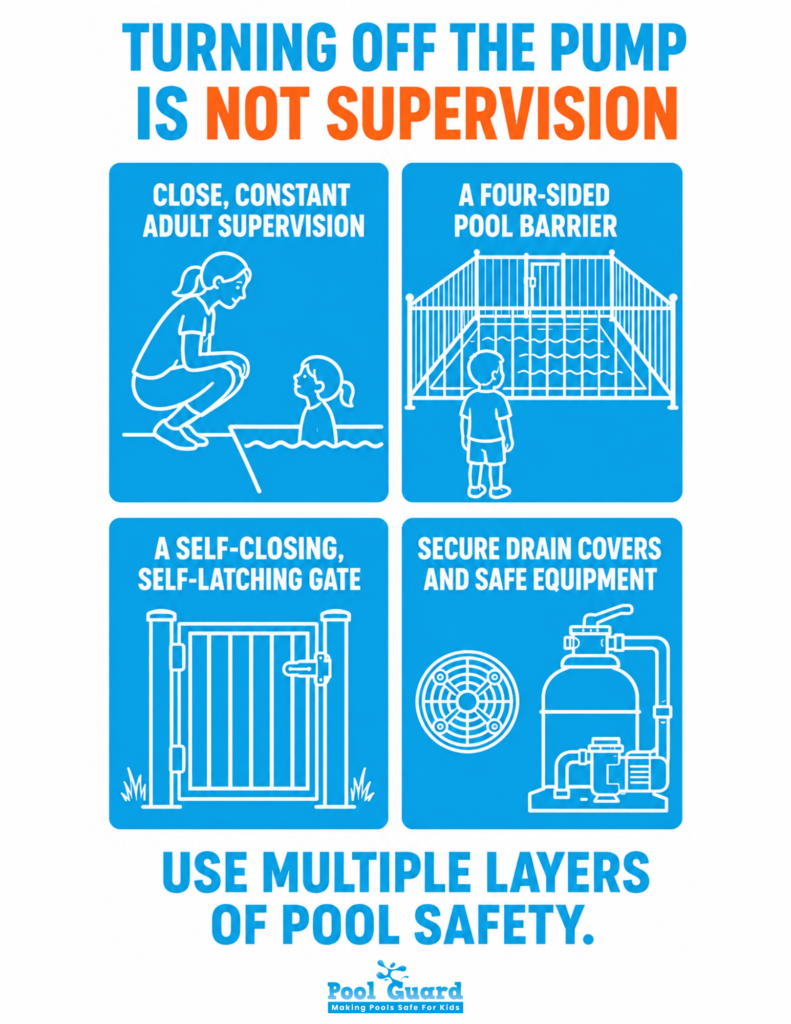
Turning the pump off isn’t a safety strategy for kids swimming. The myth mixes up two risks – entrapment, tied to the drain and cover condition, and drowning, tied to supervision. Switching the pump off fixes neither.
Active supervision is what protects children. The Centers for Disease Control and Prevention lists close, constant adult supervision as one of the most effective ways to prevent drowning in children.
Beyond that, focus on clear water so kids stay visible, secure drain covers, equipment in good condition, and no loose lights or exposed wiring near the pool. A working barrier and gate around the pool cuts off unsupervised access, which the CDC identifies as another key layer of protection.
If you’re not sure the equipment is safe, don’t guess. Keep kids out until someone inspects it.
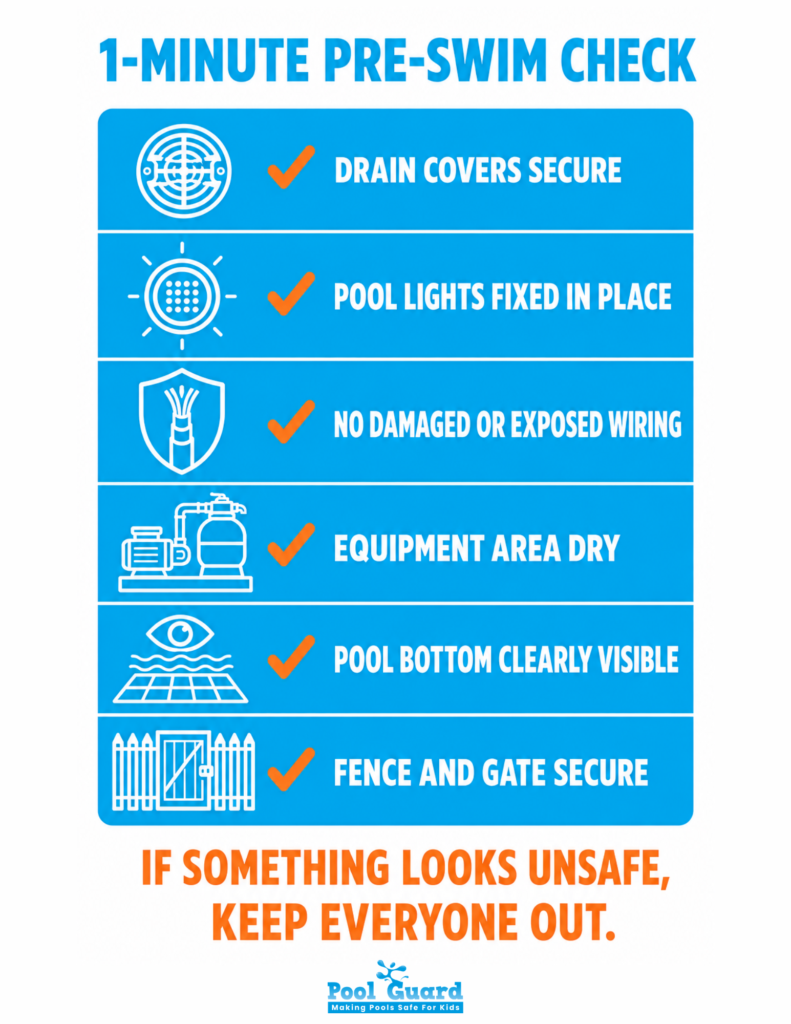
Run this before anyone gets in, separate from the mid-swim warning signs above. It takes a minute and catches problems while the pool is still empty.
If any of these fail, hold off on swimming until it’s fixed. A small delay beats the alternative.
Do you run pool pump while swimming, and is it safe to swim with pool pump on? In most cases, you can run the pool pump while swimming, and it’s safe. The pump keeps water moving, keeps it clear, and keeps the bottom of the pool visible. That visibility is what lets you actually watch swimmers, not just assume they’re fine.
Running the pump isn’t the risk. Damaged drain covers, exposed wiring, or a shock in the water are the real dangers. Check the equipment, watch for warning signs, and keep kids supervised near the pool. With those basics covered, there’s no reason to shut the pump off before a swim.

Find your local dealer by entering your zip code above.
Please fill out the form below with your information. Your local dealer will be notified about your inquiry.
Please fill out the form below with your information. Your local dealer will be notified about your inquiry.