Many homeowners choose salt systems over traditional chlorine for a gentler backyard swim. These modern pools use a generator to turn standard salt into clean water. This smart process creates a stable environment without harsh chemical smells or heavy handling. The milder salinity is also much easier on swimwear and prevents pool gear from wearing out too quickly.
Because this technology changes the water chemistry, you might want to know whether are salt water pools safe for your household. This guide explores how these generators work, how they impact kids and dogs, and the potential risks that make a pool unsafe. It will also share simple steps to keep your water clean, secure, and perfectly balanced for a worry-free swim.
Yes, a salt water pool is just as safe as a traditional chlorine pool. You simply need to test the water regularly, keep chemicals balanced, and install a sturdy physical barrier around the perimeter.
The choice of sanitizer does not determine a pool’s true safety. Instead, security relies on preventing physical dangers in the environment. Data from the Centers for Disease Control and Prevention (CDC) shows that drowning is the leading cause of death for children ages 1-4. Their reports highlight that more than 4,500 people drowned each year in the United States from 2020 to 2022, which is an increase of about 500 deaths per year compared to 2019.
Crucially, none of these tragic incidents were caused by the pool chemicals. They were caused by unsupervised access to open water. True safety comes from continuous visual supervision, proper fencing, and secure gates rather than the specific sanitation system you install.
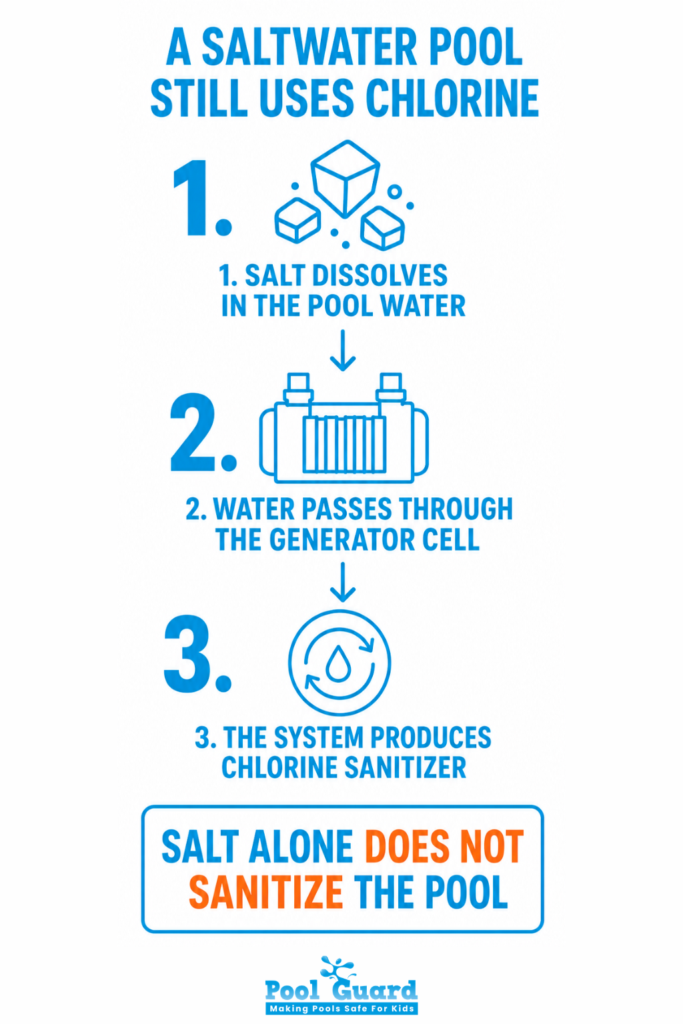
A salt water pool is not chlorine-free. It uses a salt chlorine generator to make its own chlorine on site instead of receiving it from a bag or jug.
The pool owner adds pool-grade sodium chloride to the water, typically to a target between roughly 2,700 and 3,900 parts per million (ppm), depending on the generator brand and model. As water passes through the generator’s cell, an electrical current splits the salt molecule through electrolysis, producing hypochlorous acid and hypochlorite ion, the same active sanitizers found in a traditionally chlorinated pool. That sanitizer is what kills bacteria and algae. Salt, by itself, doesn’t disinfect anything.
For scale, seawater runs about 35,000 ppm. A salt pool at 2,700 to 3,900 ppm holds roughly a tenth of that concentration, which is why it feels softer against skin and eyes without tasting overtly salty.
The salt water vs chlorine debate is about how the chemical is delivered, not about using two different sanitizers.
| Salt Water Pool | Traditional Chlorine Pool | |
| Sanitizer | Chlorine, generated on site from dissolved salt | Chlorine, added as tablets, granules, or liquid |
| Typical Chlorine Handling | Owner handles salt; generator produces chlorine | Owner handles concentrated chlorine products directly |
| Required Testing | pH, alkalinity, calcium hardness, cyanuric acid, salt level | pH, alkalinity, calcium hardness, cyanuric acid, free chlorine |
| Equipment Risk | Salt accelerates corrosion of unbonded or poorly bonded metal parts | Liquid chlorine can also corrode unbonded metal parts |
| Cell/Feed Lifespan | Salt cell – roughly 3 to 7 years, about 10,000 hours of operation | Feeder and check valves wear over years of chemical contact |
The gap in corrosion between salt and chlorine systems is smaller than most sources claim. According to the South Carolina Pool Authority, salt doesn’t attack metal on its own. Instead, the higher electrical conductivity of salt water accelerates galvanic corrosion only if metal parts are poorly bonded.
To prevent this hazard, the National Electrical Code handles the risk directly through safety rules. Specifically, NEC Section 680.26 requires an 8 AWG solid copper conductor to connect the pool water to all metal parts within five feet of the structure, including ladders, motors, and light fittings. By installing a code-compliant bonding grid, you protect your property and ensure your salt water pool avoids the corrosion damage that competitor blogs describe as inevitable.
Clean water is not the same as safe water. A salt system keeps pool chemistry balanced, but it cannot stop a toddler from entering the pool unsupervised.
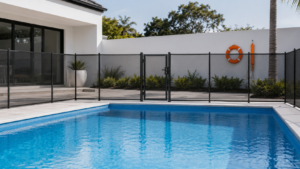
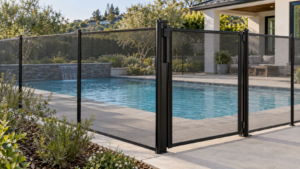
To protect children, the Consumer Product Safety Commission (CPSC) provides strict safety barrier guidelines for residential pools. These guidelines require a pool fence at least 48 inches high with no handholds or footholds. Additionally, gates must open outward, close on their own, and latch automatically with a release mechanism placed at least 54 inches high.
CPSC data shows that almost half of child drowning victims were last seen safely inside the house. This makes a four-sided, self-latching fence between the home and the pool absolutely vital. Ultimately, a salt system is simply a choice for water sanitation. Real drowning prevention requires physical pool safety gates, sturdy fences, and constant adult supervision.
Yes, salt water pools are safe for supervised swimming, but they require the same basic cautions as any other pool.
According to Dr. Jerry Klein, Chief Veterinary Officer for the American Kennel Club (AKC), the main hazard in traditional pools is direct contact with concentrated chemical tablets, not the diluted pool water itself.
However, swallowing the water carries a different set of risks. Veterinary experts at Zoetis Petcare warn that drinking too much salt water can lead to dangerous electrolyte imbalances or true salt poisoning. Experts from Texas A&M’s College of Veterinary Medicine note that while a salt pool is much less concentrated than the ocean, excessive drinking will irritate a dog’s stomach regardless of the sanitation system.
To keep your pet safe, follow these practical steps:
These safety rules apply equally to both salt and traditional chlorine systems, proving that a salt pool isn’t automatically a safer environment for your pet.
Four failure points come up across manufacturer documentation and pool-service data, and none of them are unique to salt systems in the way most competing articles suggest.
pH, alkalinity, calcium hardness, cyanuric acid, and salt level all drift over a season. Left unchecked, low sanitizer levels open the door to algae and bacteria, the same outcome as a neglected chlorine pool.
A salt water pool can become unsafe if the generator system fails and stops sanitizing the water. The system’s main part, the salt cell, wears out over time. High-quality parts like a Pentair IntelliChlor or Hayward AquaRite cell last about 10,000 hours, or roughly 3-7 years.
According to River Pools & Spas, replacing a worn cell costs $700 to $1,100, while a failed control board costs $500 to $900. When these components break down, the pool stops producing chlorine entirely, allowing bacteria and algae to grow rapidly and create a health hazard for your family.
Missing electrical bonding creates dangerous shock hazards and accelerates pool damage. National Electrical Code rules require this safety grid to neutralize stray currents in the water. A properly bonded salt pool will not corrode faster than a standard chlorine pool. However, without proper bonding, the high conductivity of salt water quickly destroys metal parts and endangers swimmers.
Missing physical barriers is the top cause of pool tragedies. CDC and CPSC data prove that physical security saves lives, not water chemistry. A salt system keeps water clean, but it cannot prevent a child or pet from falling in. True safety requires a four-sided fence, self-closing gates, and active adult supervision.
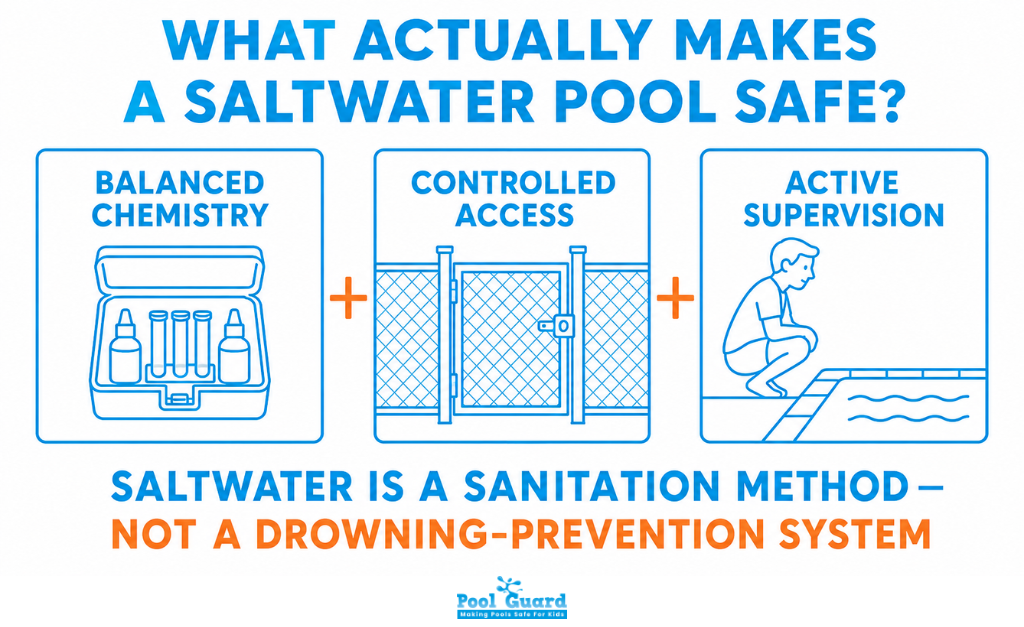
A self-closing, self-latching mesh pool fence is the single barrier upgrade that addresses the gap identified in the CPSC data – the moment a child moves from house to pool unnoticed. Combining that with an ASTM-rated safety cover during the off-season closes the two windows where supervision typically fails.
Are salt water pools safe? Yes, but they require the exact same conditions as any pool: balanced chemistry, bonded equipment, and a secure physical barrier.
Choosing a salt system is simply a maintenance decision, not an automatic safety upgrade. These pools are not chlorine-free, they are not inherently gentler on pets, and they will not cause faster corrosion if equipment is properly bonded. While a generator handles water sanitation, your fences, self-latching gates, and active adult supervision are what truly keep your family safe.
Find your local dealer by entering your zip code above.
Please fill out the form below with your information. Your local dealer will be notified about your inquiry.
Please fill out the form below with your information. Your local dealer will be notified about your inquiry.