There’s something genuinely restorative about a quiet afternoon swim. For older adults, a backyard pool offers low-impact exercise, fresh air, and real time with family. But pool safety for seniors is a different conversation from standard water safety. The risks often have nothing to do with swimming ability. Wet decks, difficult entry points, and poor visibility cause far more accidents than the water itself. The good news is that most of these hazards are entirely preventable.
This guide covers the physical setup, everyday habits, and key equipment that keep senior swimmers protected. You’ll learn about pool fencing, safe entry and exit, alarm systems, and more. It all adds up to a clear perspective of what a safer pool environment looks like.
Standard pool safety advice is written for families with young children. Pool safety for elderly adults requires a different lens. Adults aged 65 and older have the second-highest drowning rate, and drowning deaths among adults ages 65-74 increased by 19% in 2022 compared with 2019.
As people age, balance and coordination naturally shift. Medications, including common blood pressure drugs, diuretics, and sedatives, can affect alertness, stability, and heat tolerance, often more intensely than in younger adults because older bodies process medications more slowly. Fatigue sets in faster in the water. Also, the body’s ability to regulate core temperature declines, making extreme water temperatures, below 70°F or above 104°F, a genuine health risk. The ideal pool temperature for senior swimmers sits between 82°F and 86°F.
Perhaps the riskiest moment of any swim isn’t in the water at all; it’s getting in and out.
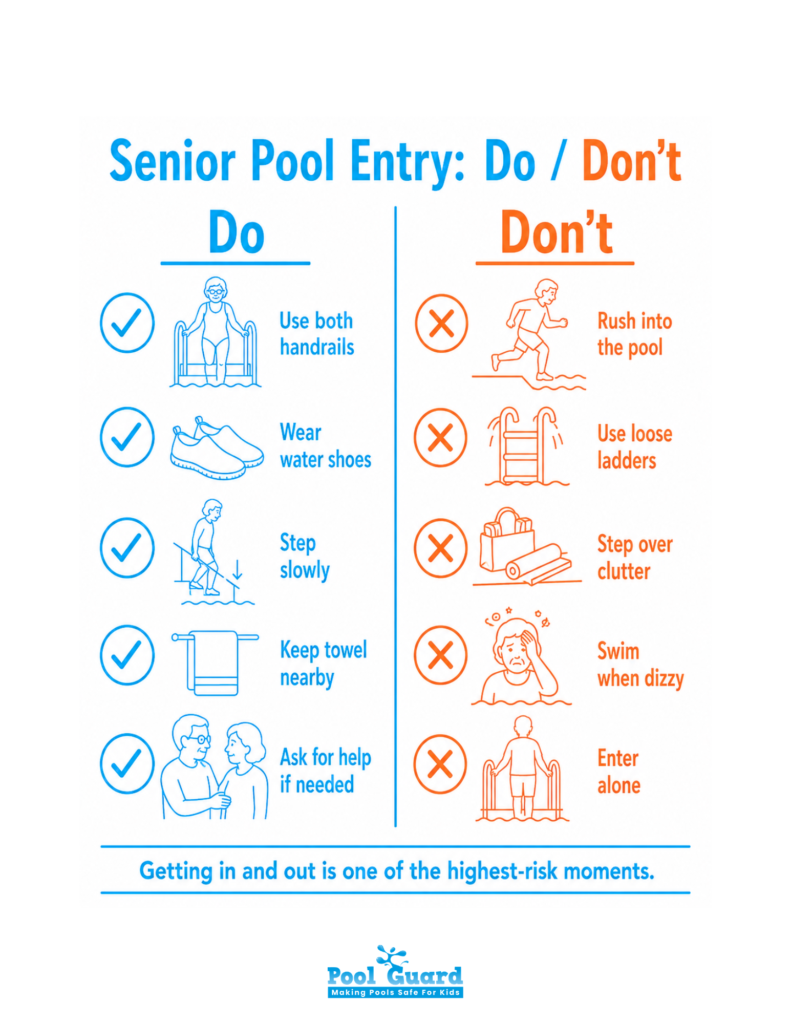
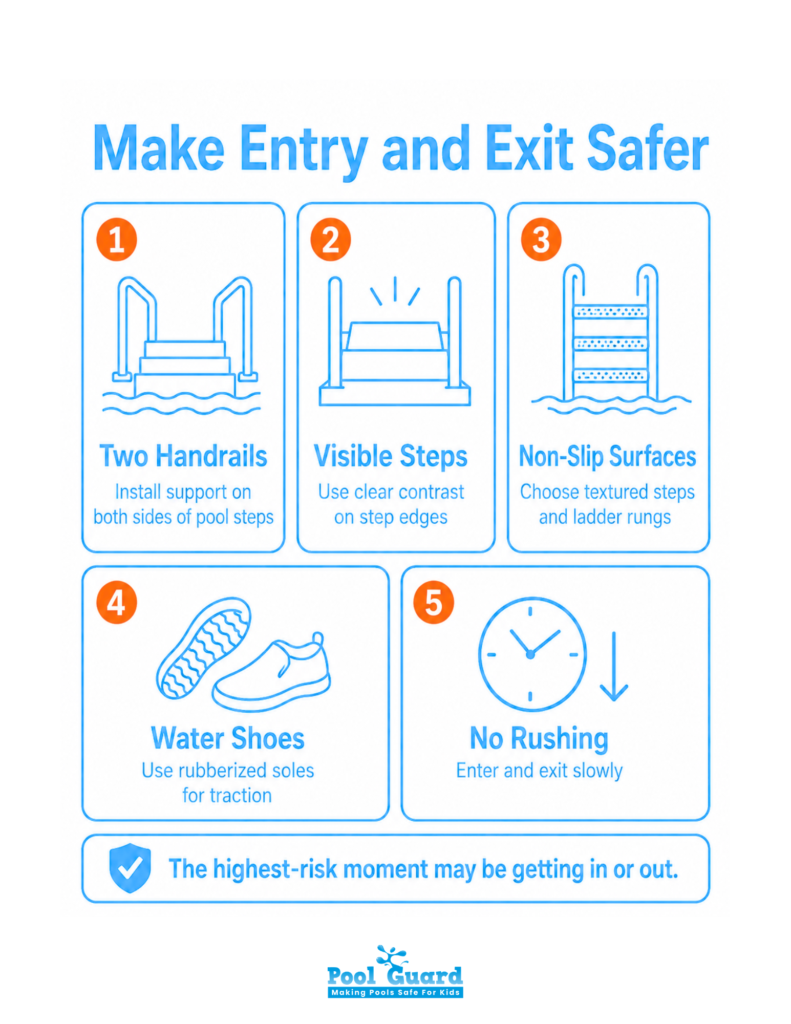
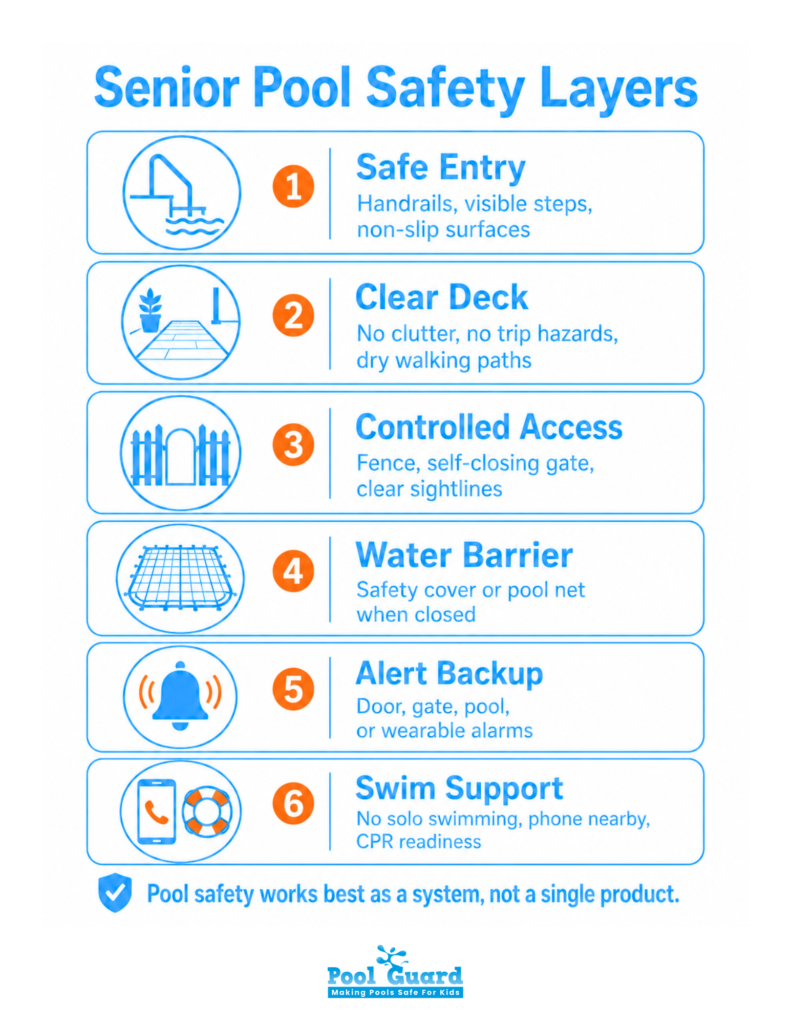
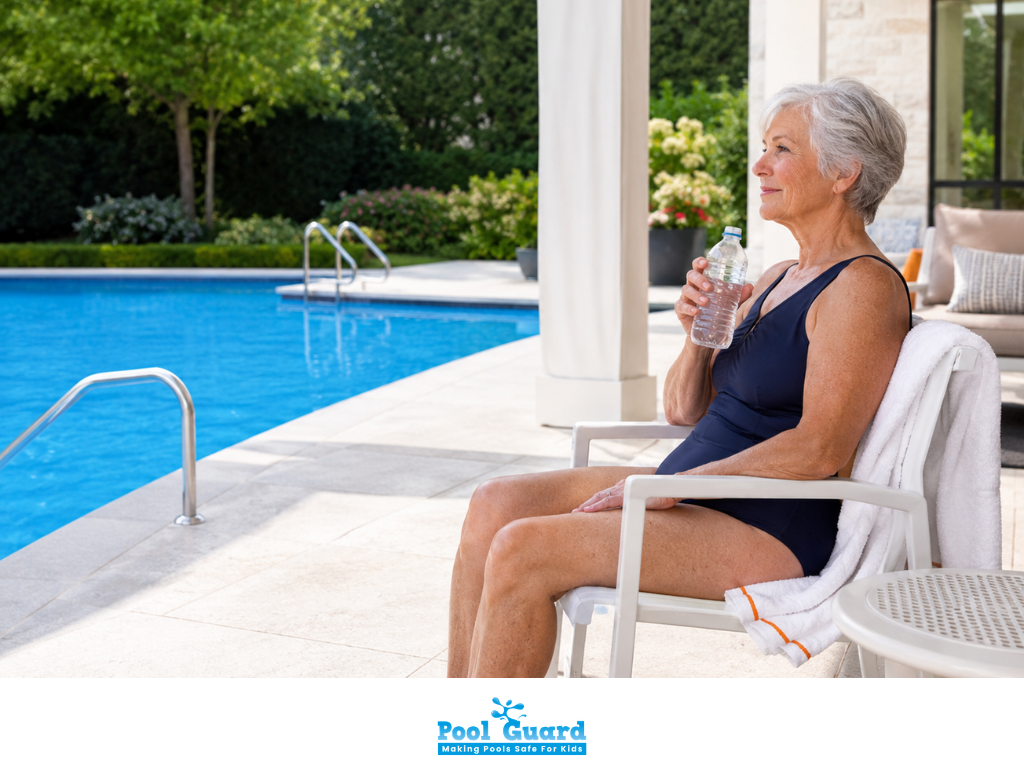
Handrails are non-negotiable. Install them on both sides of the pool stairs, not just one, and check them regularly for wobble or corrosion. Steps should be clearly visible underwater; consider contrasting color strips on each tread edge. Ladder rungs need textured, non-slip surfaces.
For seniors with limited mobility, a pool lift is one of the most effective accessibility upgrades available. Electric and hydraulic lifts allow smooth, controlled entry and exit without caregiver strain, and enable independent access for those who might otherwise avoid the pool entirely.
Practical habits matter too – keep a non-slip mat, dry towel, and water shoes within arm’s reach of the exit point. Never rush in or out of the water.
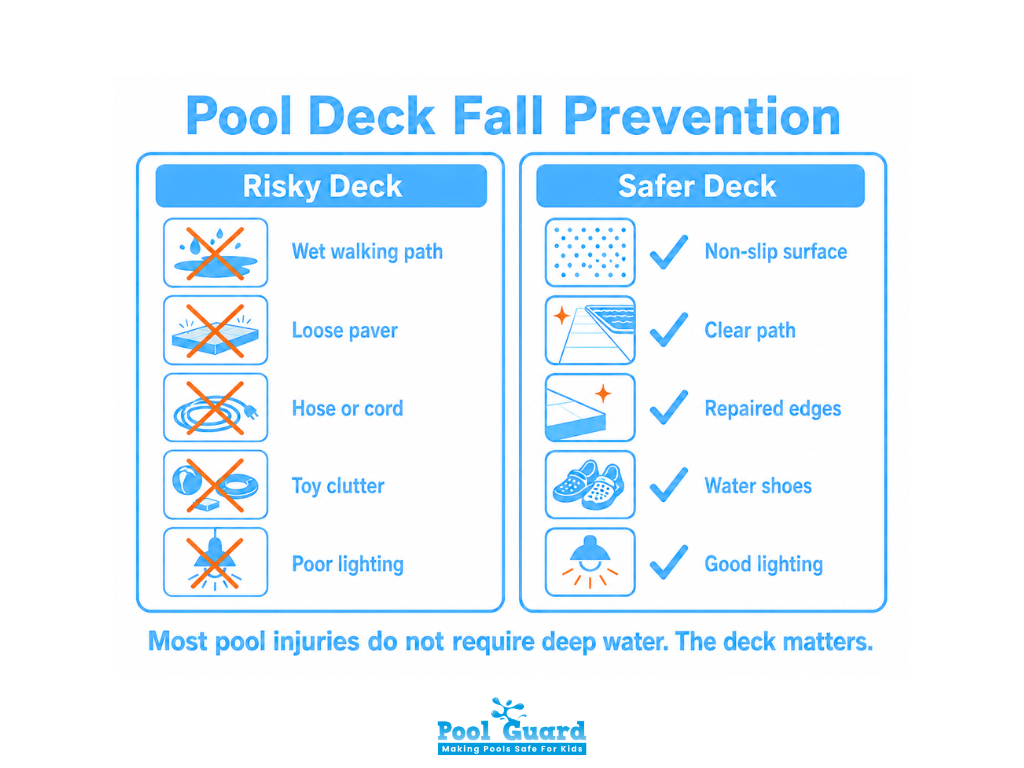
The area around the pool is where most accidents occur, not in the water itself.
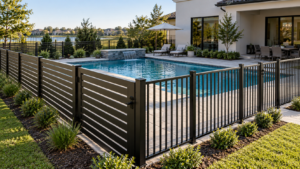
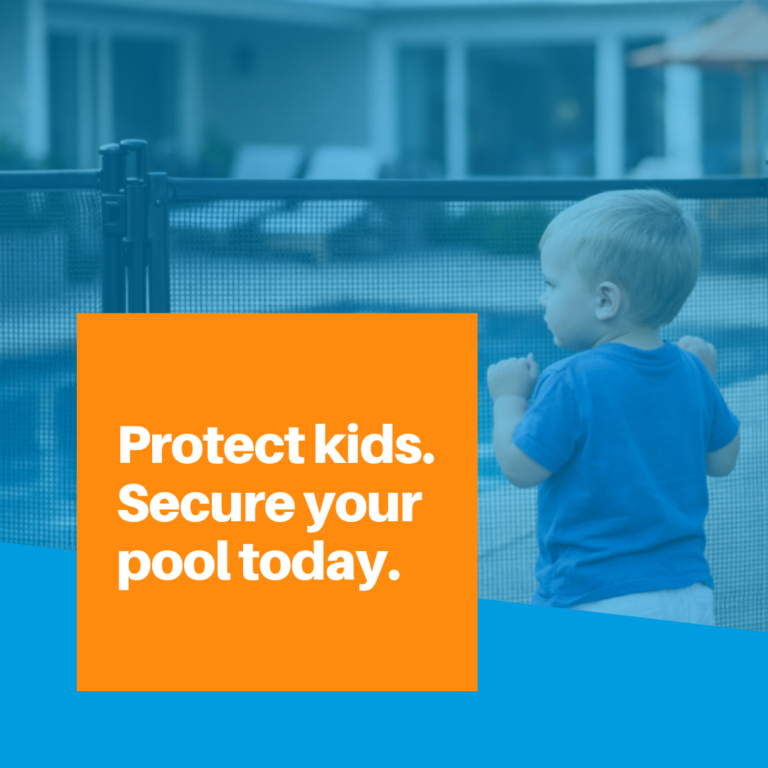
A pool fence doesn’t just protect children; it controls who enters the pool area and when. For seniors living with grandchildren, hosting frequent visitors, or managing any degree of cognitive change, an unsecured pool is an ongoing risk.
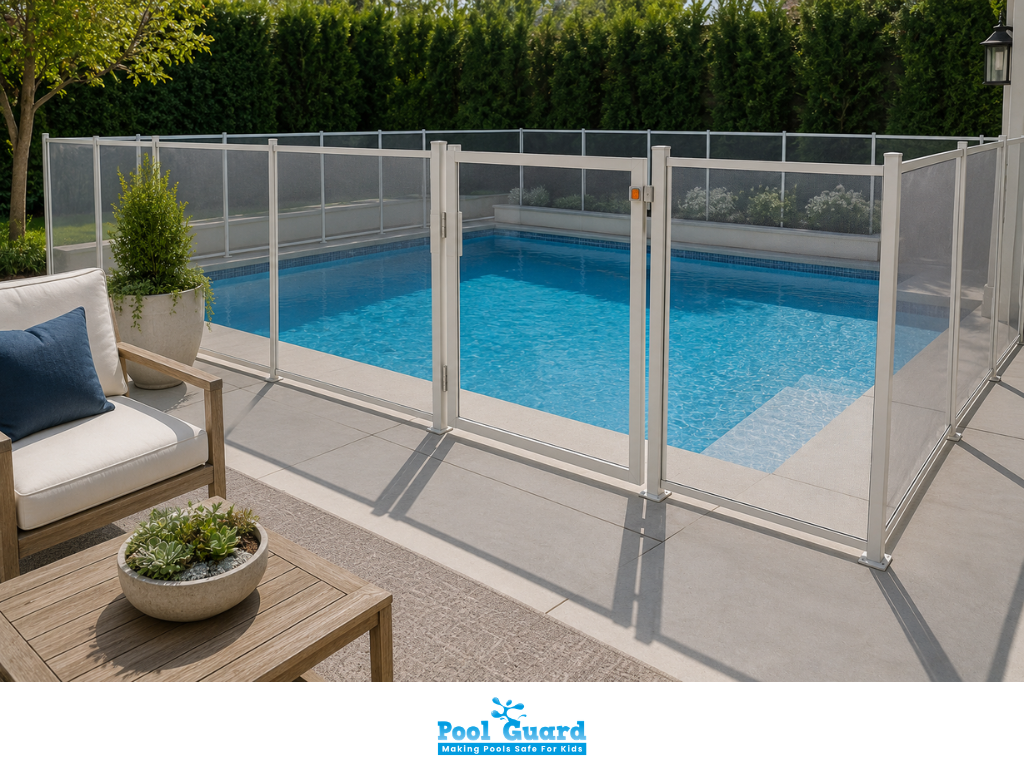
Key requirements for senior-friendly pool fencing:
Add a Pool Net or Safety Cover When the Pool Is Closed
A pool fence controls access to the pool area. A safety cover or pool net creates a direct physical barrier over the water itself. It’s a critical second layer of protection during off-hours, overnight, or when no capable swimmer is present.
This matters especially if a senior experiences a dizzy spell, a moment of confusion, or a medical event, such as a transient ischemic attack, near the pool’s edge.
Important distinctions:
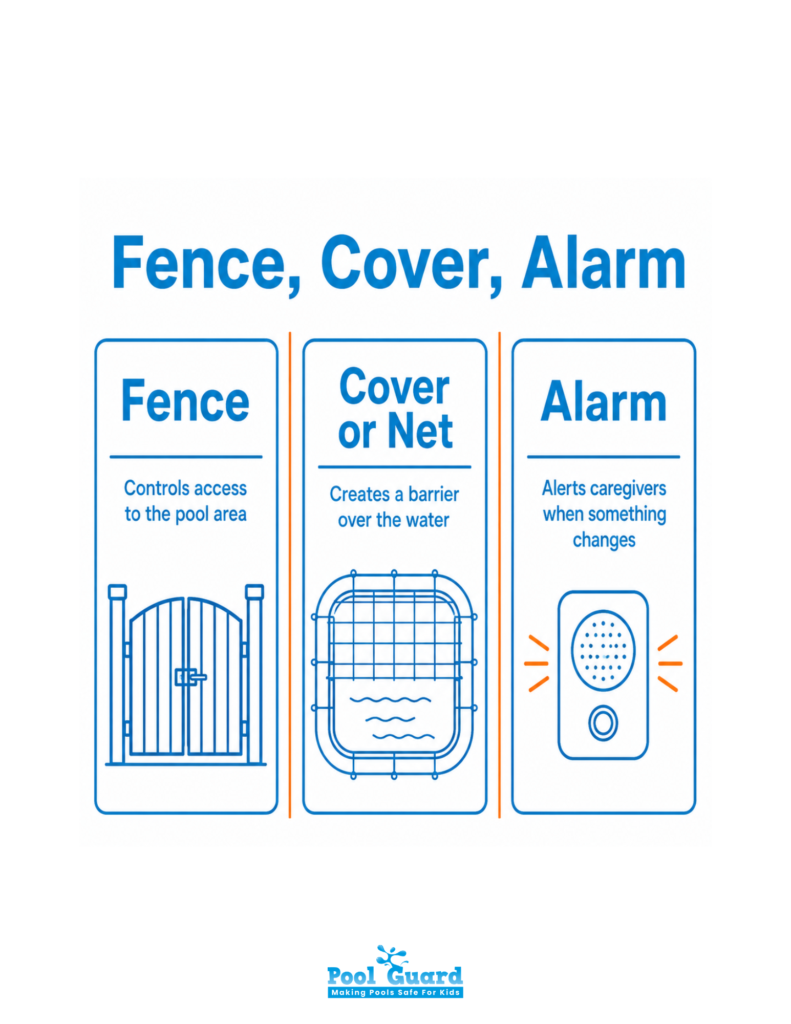
Pool alarms add an alert layer that catches situations that physical barriers might miss.
Test alarm batteries monthly. Alarms are backup protection, and they should never be treated as a substitute for fencing, covers, or supervision.
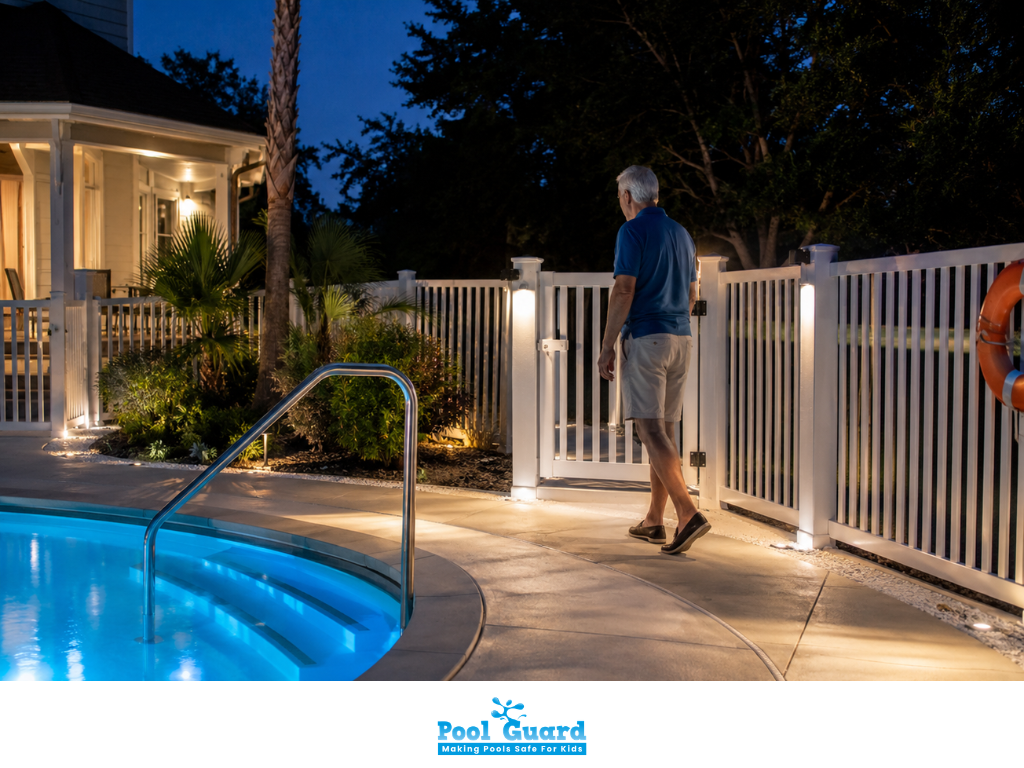
Poor lighting around a pool creates hazards after dusk that don’t exist in daylight, and many serious accidents happen in transitional light conditions, at dawn or dusk.
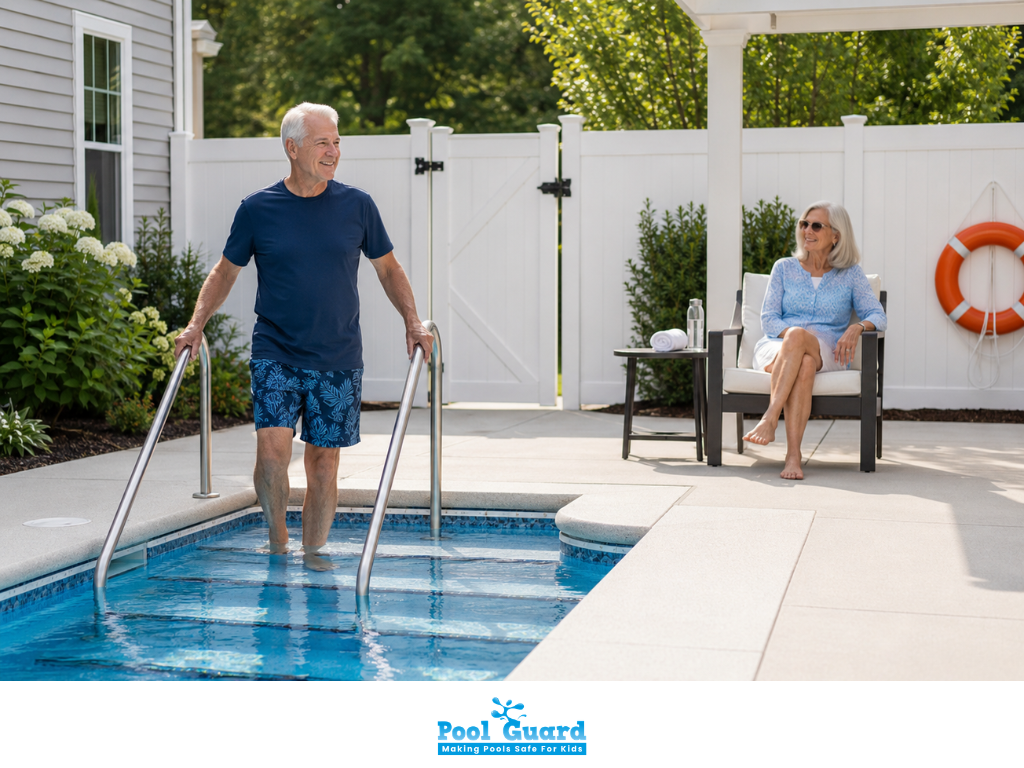
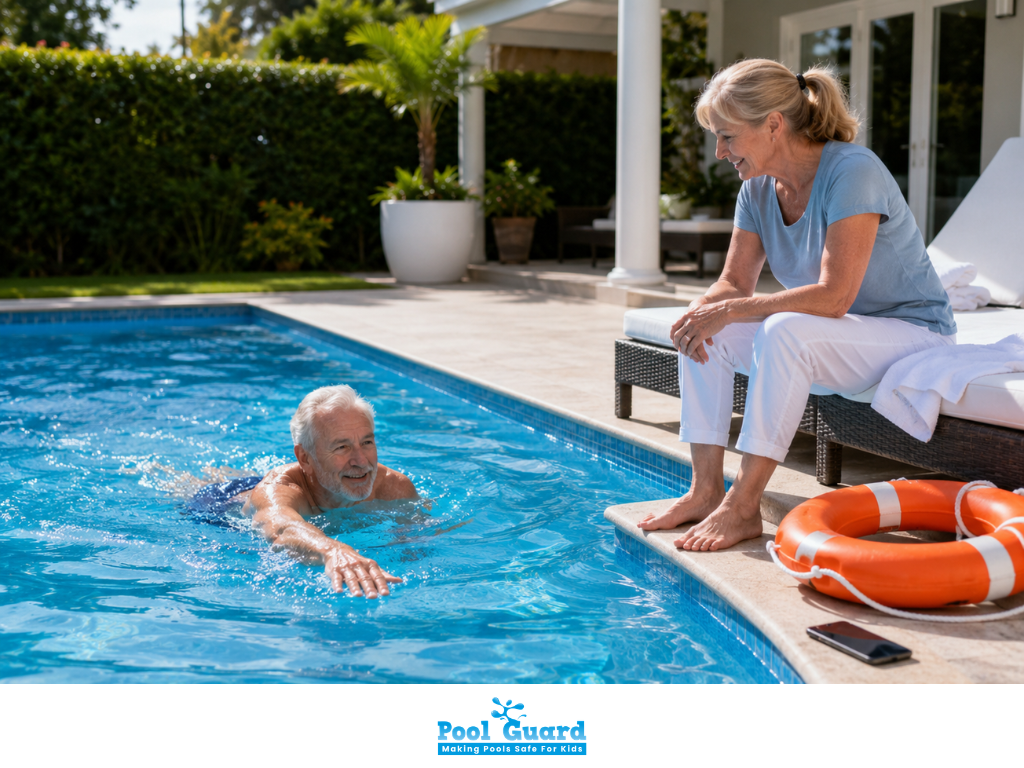
No safety feature replaces a second person. Seniors should always swim with a companion present, not just someone in the house, but someone who knows they’re in the water and can respond immediately.
Additional habits that reduce risk:
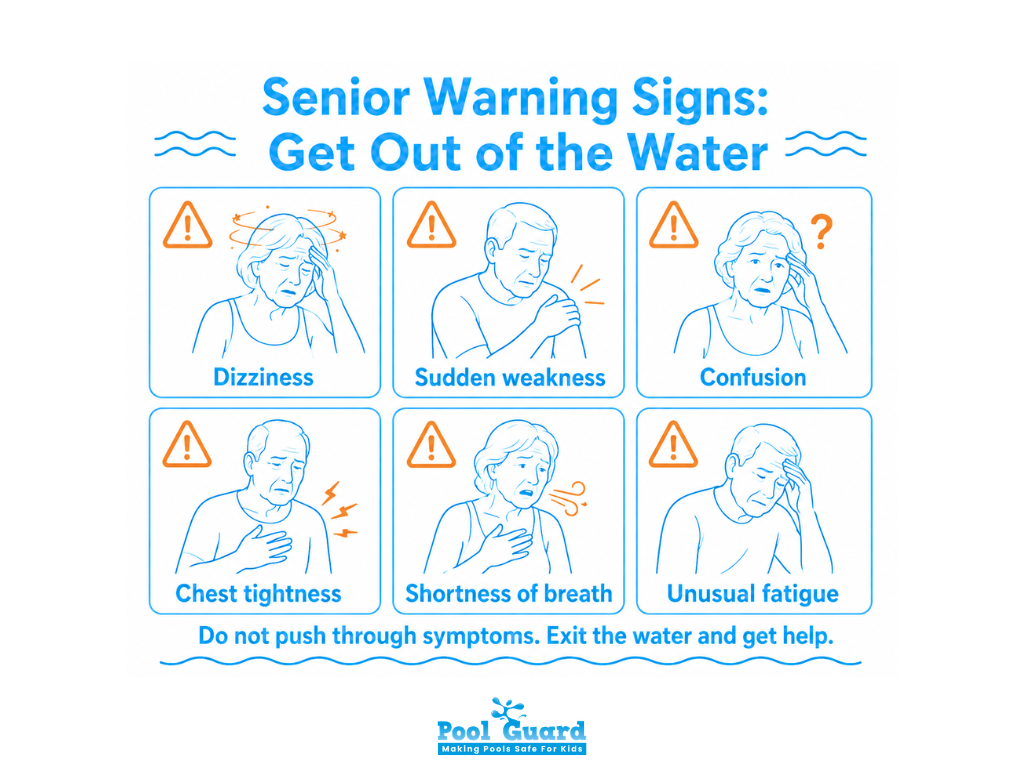
Even a well-equipped pool can present emergencies. Preparation is what determines the outcome.
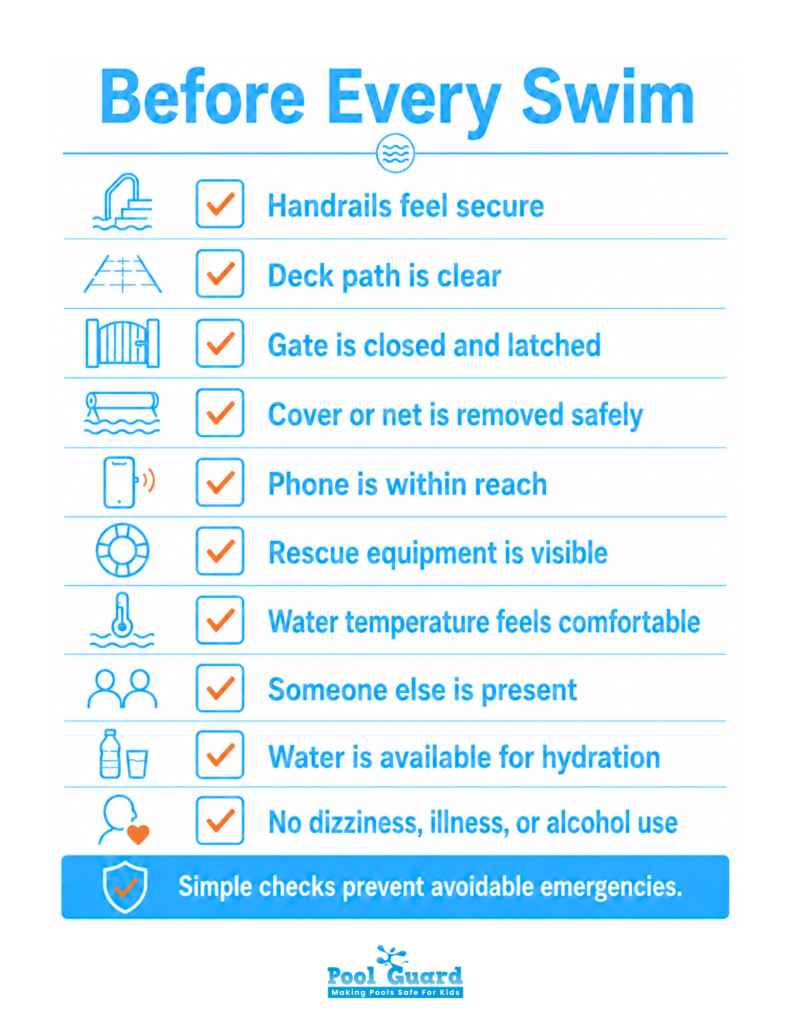
Use this before every swim season and after any major weather event:
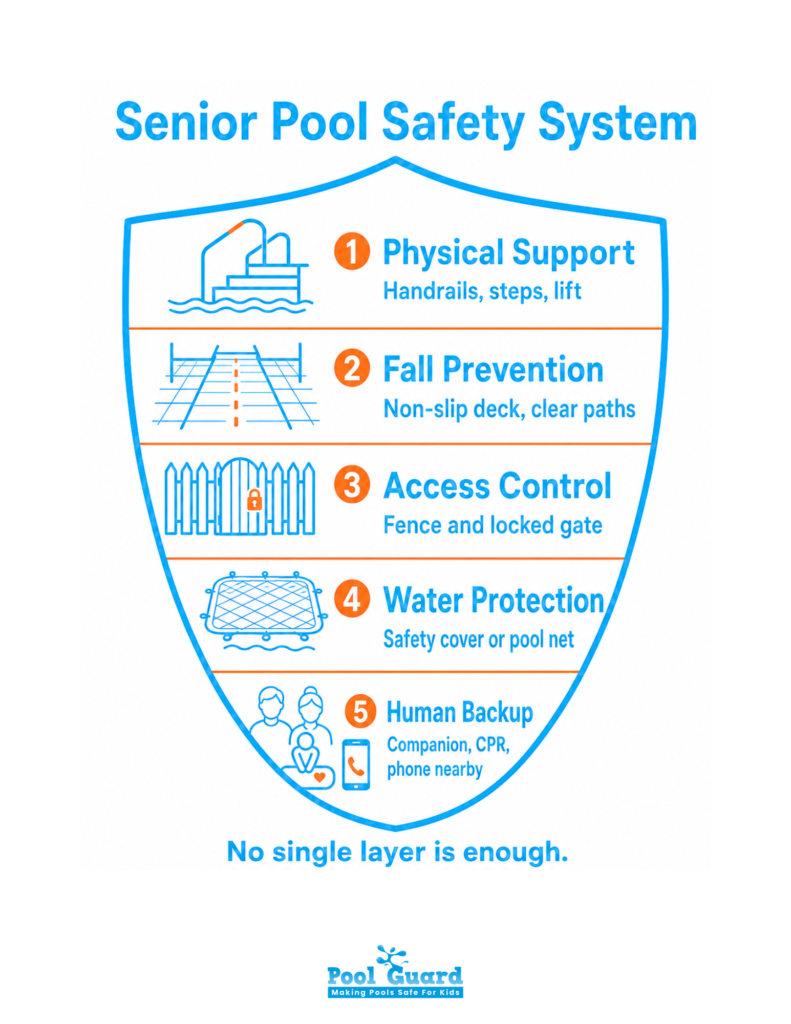
With the right approach, a backyard pool stays exactly what it should be, a place for enjoyment, movement, and connection. Pool safety for seniors isn’t about adding restrictions or stepping back from the water. It’s about building an environment where swimming feels accessible, supported, and genuinely low-risk. Handrails, proper fencing, safety covers, lighting, and smart habits all contribute to that environment together.
Ultimately, no single precaution does the whole job on its own. But when these layers work together, they create something meaningful – a pool that is easier to enjoy and far safer to be around. That’s a goal worth every bit of effort it takes to achieve.
Please fill out the form below with your information. Your local dealer will be notified about your inquiry.
Please fill out the form below with your information. Your local dealer will be notified about your inquiry.