Your skin turns red and itchy the moment you towel off. Your kid won’t stop sneezing at the pool’s edge. You assume they’re pool chlorine allergy symptoms, but here’s the twist – true chlorine allergies barely exist. What you’re experiencing is almost always something more common, more treatable, and more manageable than you think.
Whether you’re a parent watching for warning signs or a pool owner trying to keep your water safe and comfortable, understanding what’s actually happening in the water and in the body makes all the difference. This guide breaks down every symptom, explains the real science behind pool water irritation, and gives you clear, practical steps to take next.
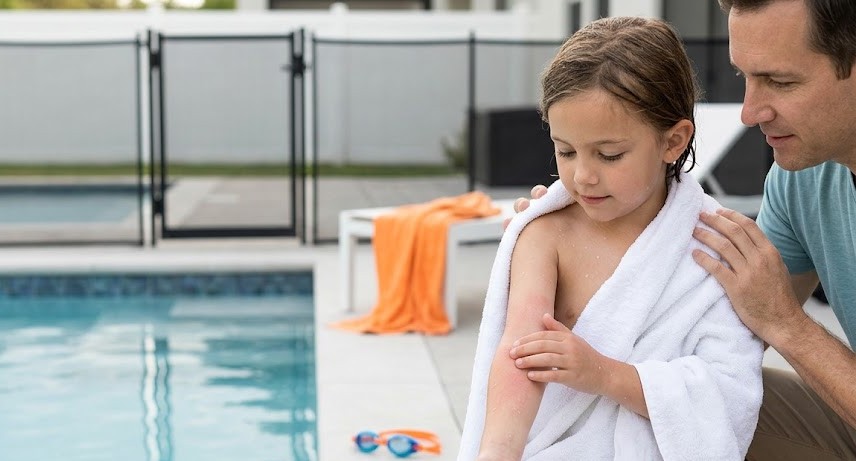
“Chlorine allergy” has become shorthand for almost any reaction that shows up after a swim, but the term is misleading. According to the American College of Allergy, Asthma & Immunology (ACAAI), most chlorine-related reactions are forms of irritation or sensitivity rather than true immune-mediated allergies.
A few things worth understanding:
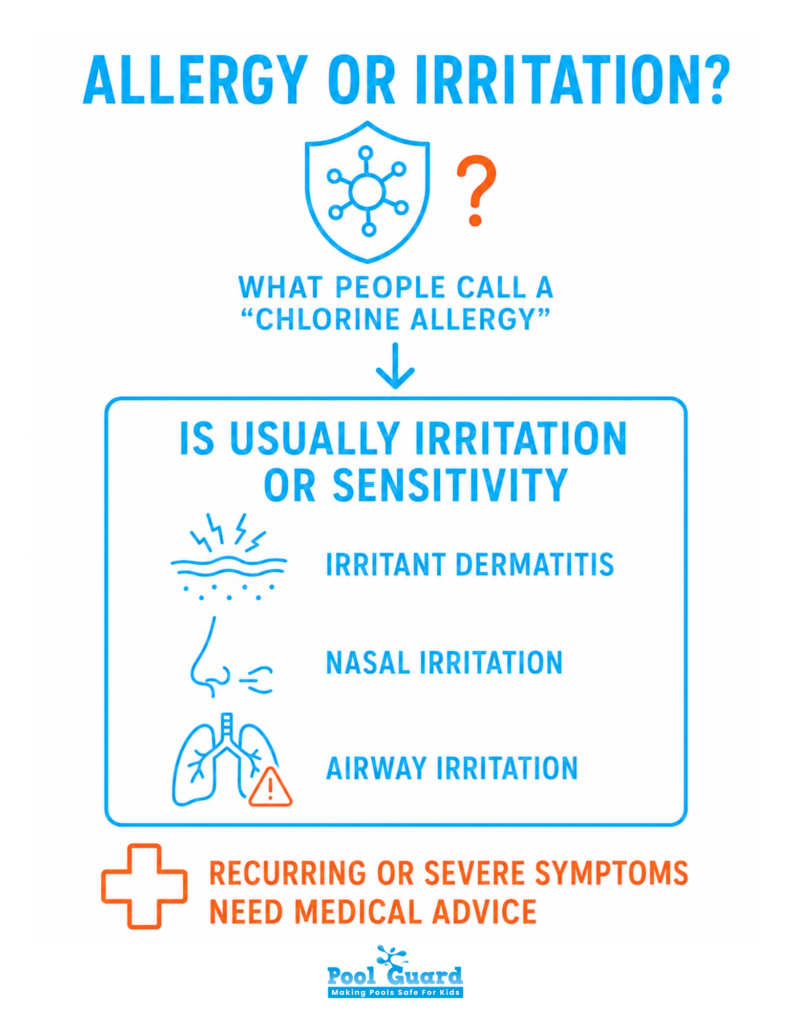
Pool chlorine allergy symptoms generally fall into three categories: skin, nasal/sinus, and eye/respiratory. Recognizing which category you’re dealing with helps you figure out the right next step.
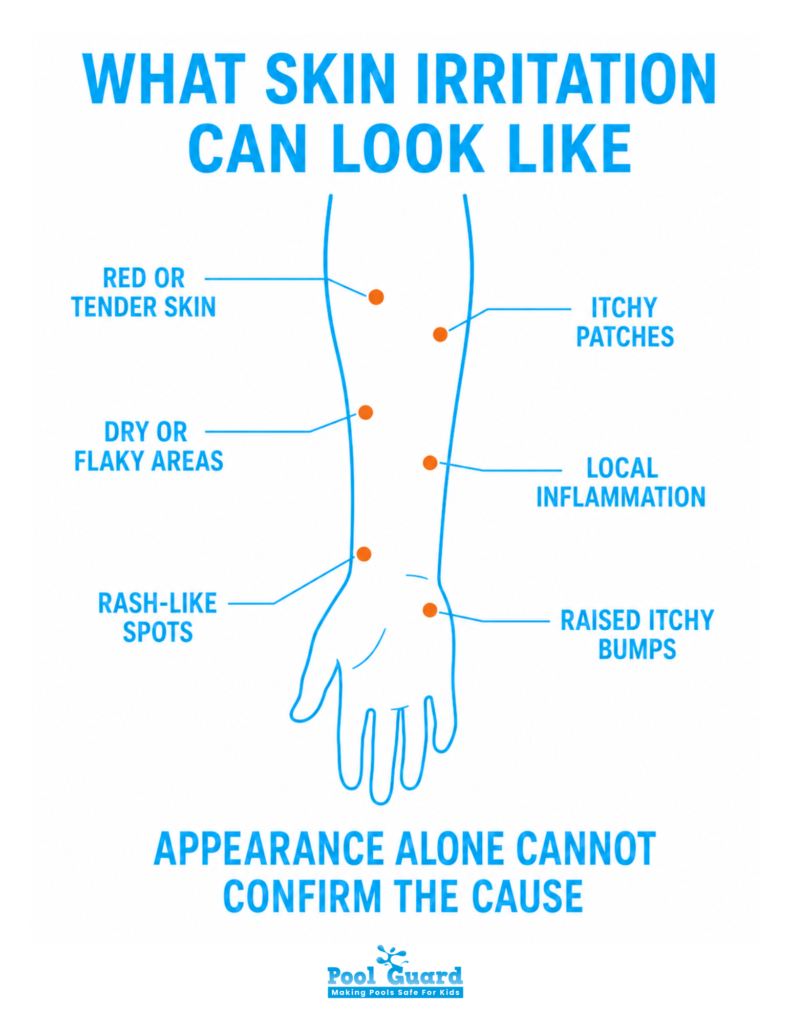
Chlorine allergy skin reactions are the most commonly reported and usually the most visible. Watch for:
The ACAAI describes this symptom set of redness, tenderness, inflammation, itchiness, rash, scaling, and hives-like bumps as the hallmark presentation of chlorine skin sensitivity, distinct from a classic allergic response.
Nasal symptoms are easy to dismiss as a cold, but they’re one of the most common ways chlorine sensitivity shows up:
If these symptoms only ever appear after pool time, chlorine exposure, not a virus, is the more likely explanation.
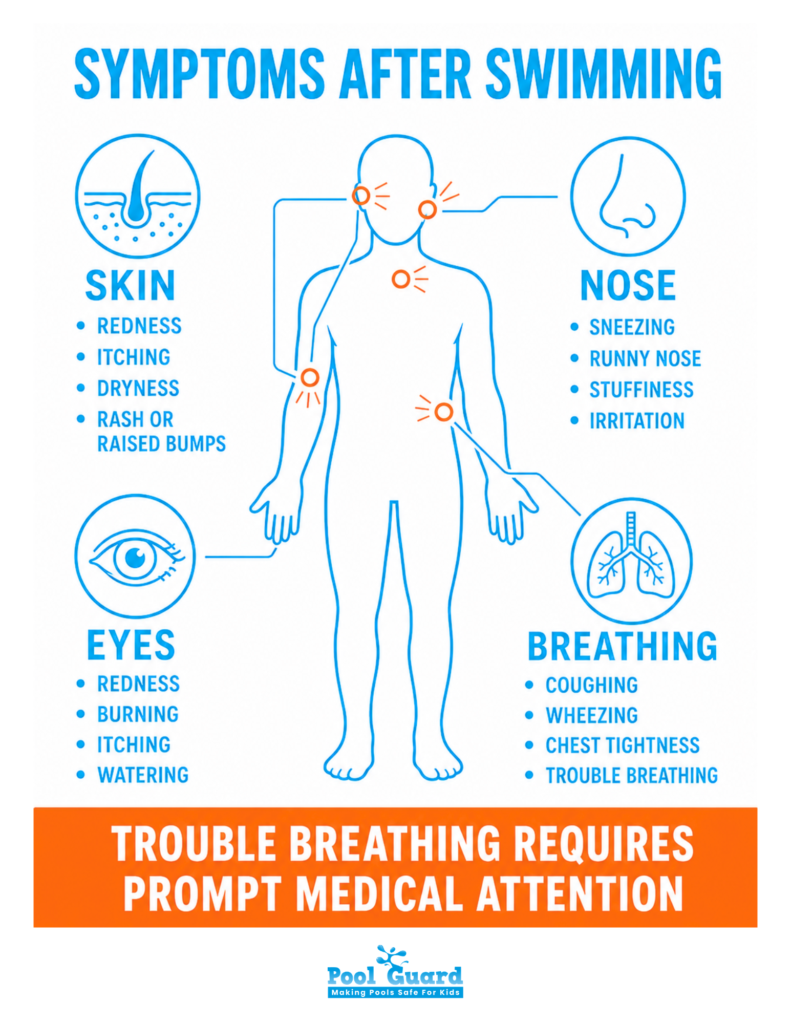
The eyes and lungs are just as exposed to pool air and water as the skin, especially around indoor pools. Common signs include:
The CDC has noted that chloramines in and around pool water are associated with respiratory, eye, and skin irritation among both swimmers and pool staff. A reminder that this isn’t just a “sensitive skin” issue, it’s an air-quality issue too.
Chlorine allergy symptoms usually look like red, irritated skin, itchy patches, dry or flaky areas, or raised, hive-like bumps that appear during or shortly after swimming.
However, it doesn’t always show up on the skin. For some swimmers, the entire reaction plays out as sneezing, coughing, red eyes, or breathing discomfort, with no visible rash at all. That’s part of why chlorine sensitivity gets mistaken for a cold, seasonal allergies, or even asthma flare-ups.
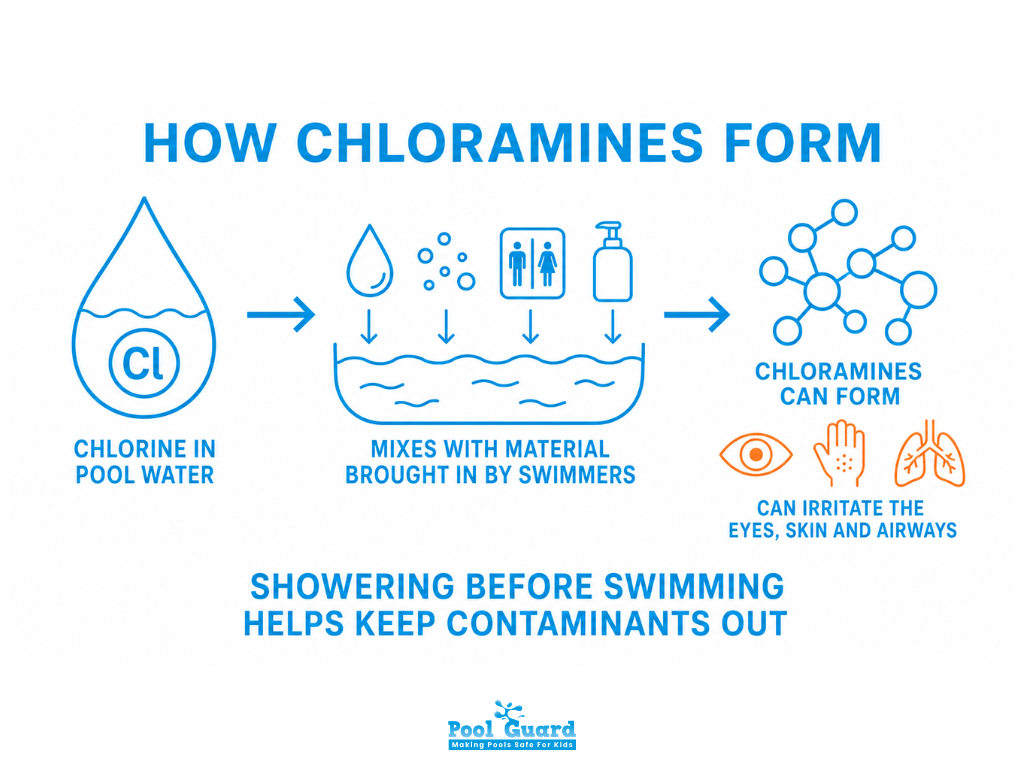
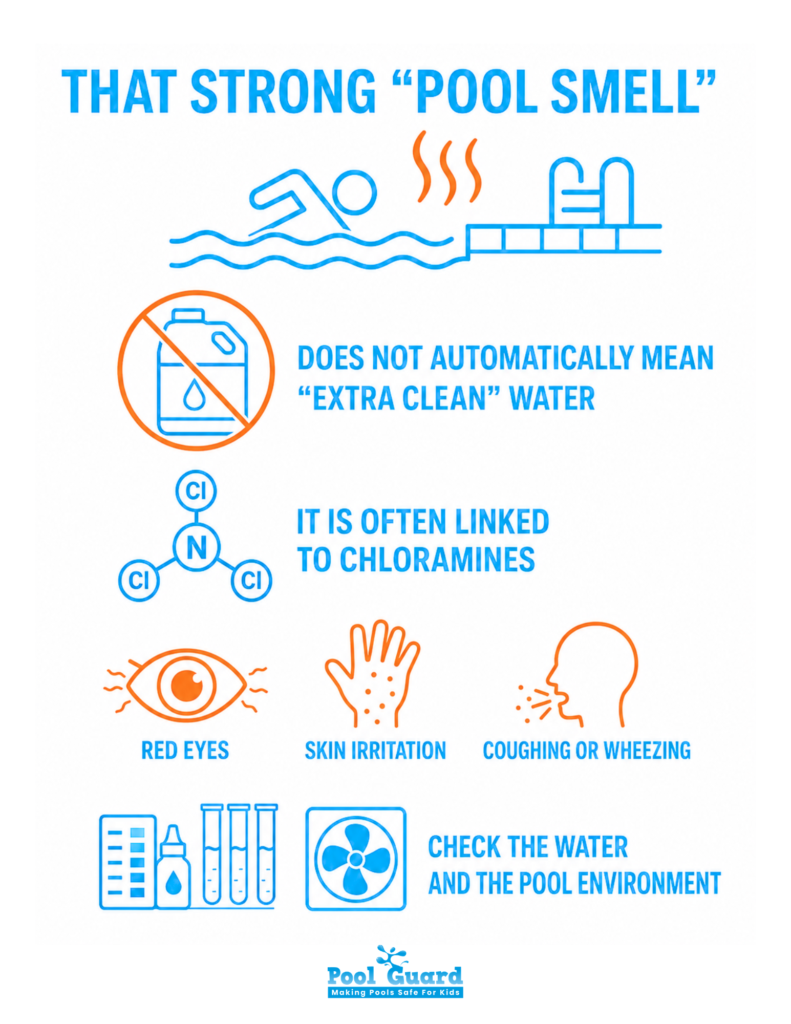
Pool water can cause irritation because chlorine strips the skin’s natural oils, leaving it dry and highly reactive. However, the most severe irritation stems from chloramines, which are chemical compounds formed when chlorine reacts with sweat, body oils, sunscreen, and urine. This chemical buildup creates the sharp “pool smell” commonly mistaken for a clean pool, but it actually signals a lack of free chlorine and a higher risk of skin irritation.
An imbalanced water pH further reduces chlorine’s effectiveness, while actively burning the skin and eyes. In indoor facilities with poor air circulation, these heavy chloramine gases can become trapped directly above the water’s surface, intensifying respiratory issues for swimmers. Ultimately, a strong chemical odor is a red flag rather than a reassurance, as a truly clean, well-balanced pool remains virtually odorless and non-irritating.
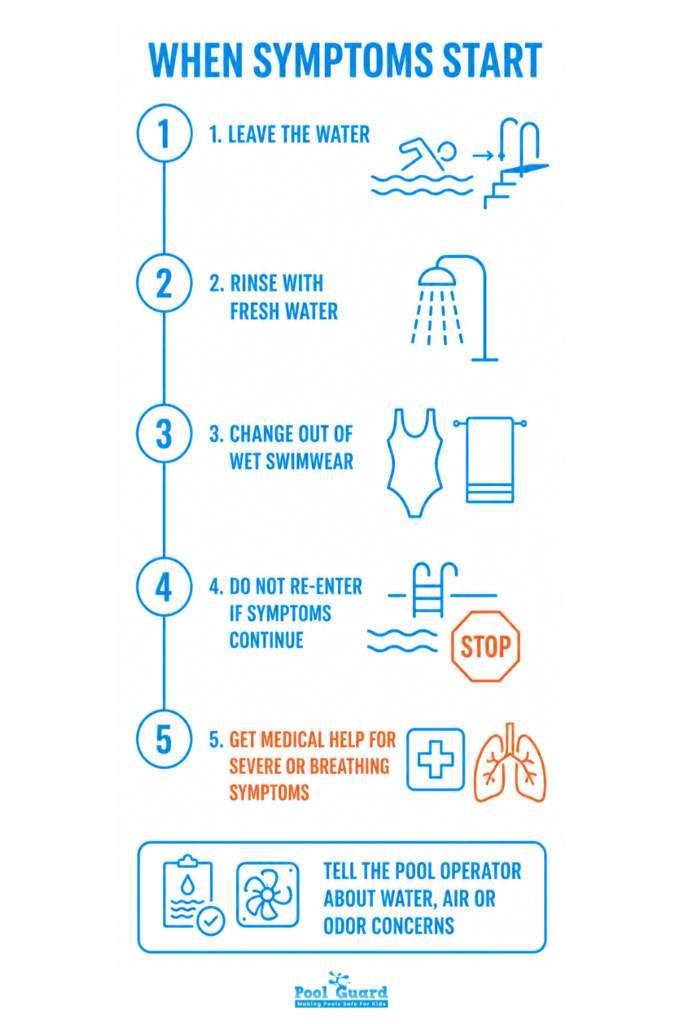
If symptoms show up, act quickly and simply:
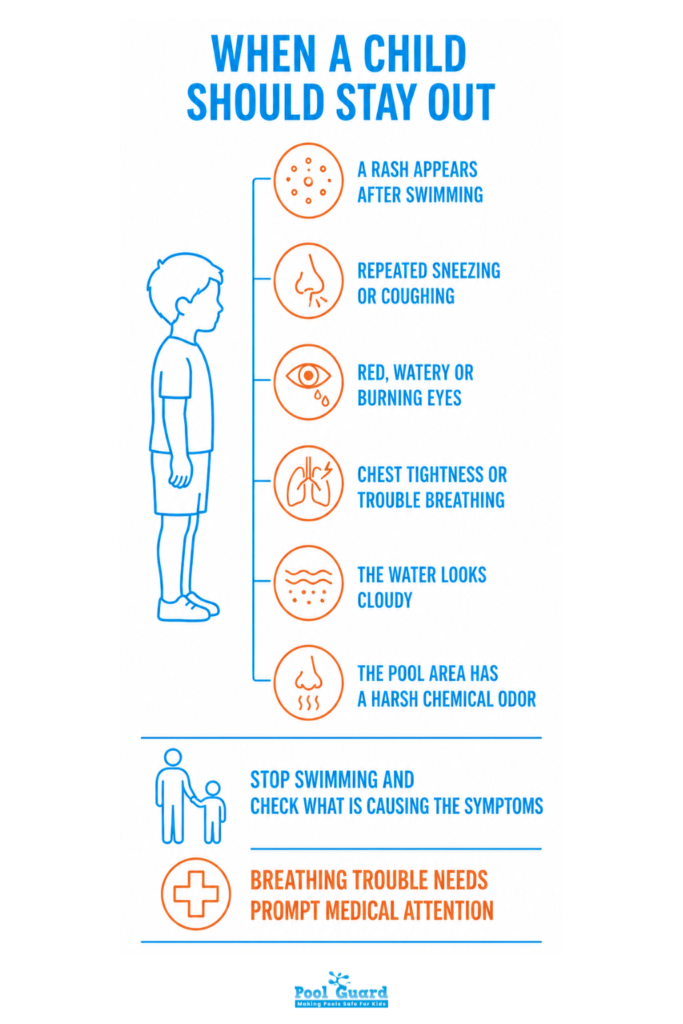
Children’s skin and airways are more sensitive than adults’, so it pays to be proactive. Keep kids out of the water if:
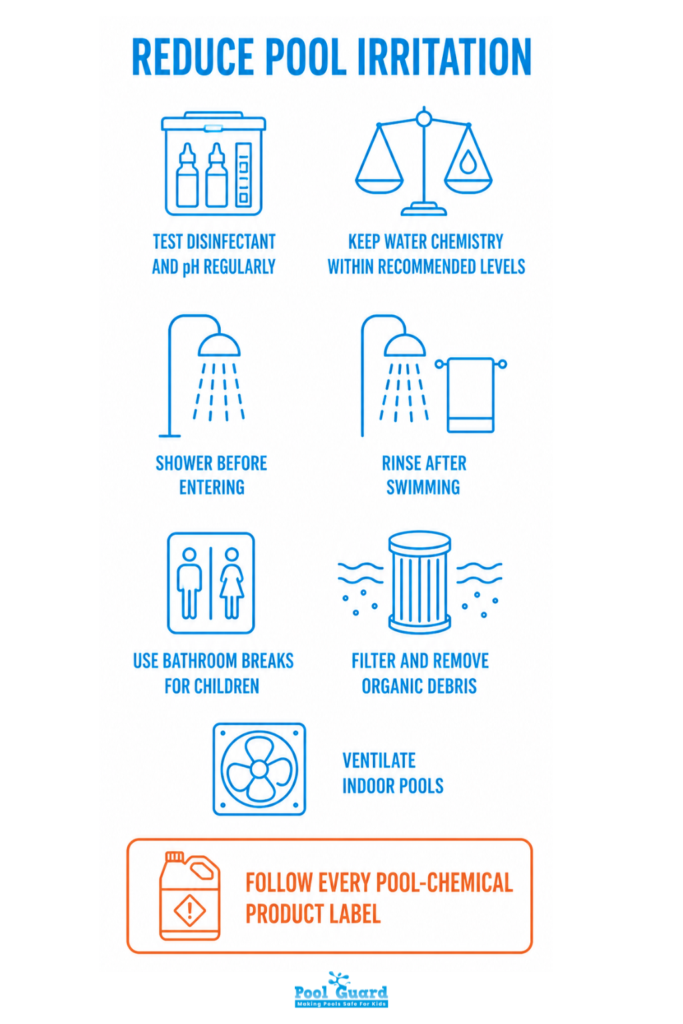
For pool owners, most chlorine allergy symptoms are preventable with consistent water care:
A well-maintained pool doesn’t just look better; it’s measurably less likely to trigger skin, eye, or respiratory symptoms in swimmers.
Pool chlorine allergy symptoms, such as rashes, red skin, sneezing, coughing, red eyes, or breathing irritation, are real and worth taking seriously. But in most cases, what’s happening is chlorine sensitivity or pool-water irritation, not a true allergy. Knowing the difference helps you respond calmly, treat symptoms effectively, and keep swimming safely.
If you’re a pool owner, the best defense is consistent water testing and balanced chemistry. If you’re a swimmer or parent, the best defense is recognizing symptoms early and rinsing off before irritation sets in.

Please fill out the form below with your information. Your local dealer will be notified about your inquiry.
Please fill out the form below with your information. Your local dealer will be notified about your inquiry.