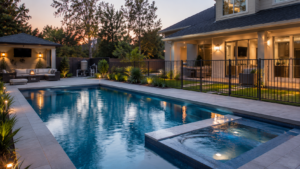
Pool safety for pets becomes personal the moment your dog slips near the pool edge or disappears underwater silently. Most owners assume they would notice immediately, but pool accidents happen fast and often without warning. Even strong swimmers can panic, tire suddenly, or struggle to find an exit. Cats face similar risks, especially around steep pool walls and at unsupervised backyard access points.
In this guide, you’ll learn how to make your pool area safer for both dogs and cats. It’ll break down the biggest drowning risks, the breeds most vulnerable around water, and the safety systems that matter most. From life jackets and ramps to fencing and chemical safety, this article covers practical steps to prevent accidents before they happen.
More than 5,000 dogs drown in backyard pools annually in the U.S., almost all preventable.
Most owners know pools are risky, but underestimate how quickly accidents happen. A dog chasing a ball can slip into deep water, fail to find an exit, and exhaust itself within minutes. The biggest danger is the “supervision gap”: stepping away briefly to answer a phone, grab a drink, or check on children.
Dog drownings are usually silent. No barking or splashing. By the time someone notices, it may already be too late. Pool safety isn’t overprotective; it’s recognizing that occasional supervision is unreliable. Physical safety systems are the only dependable protection.
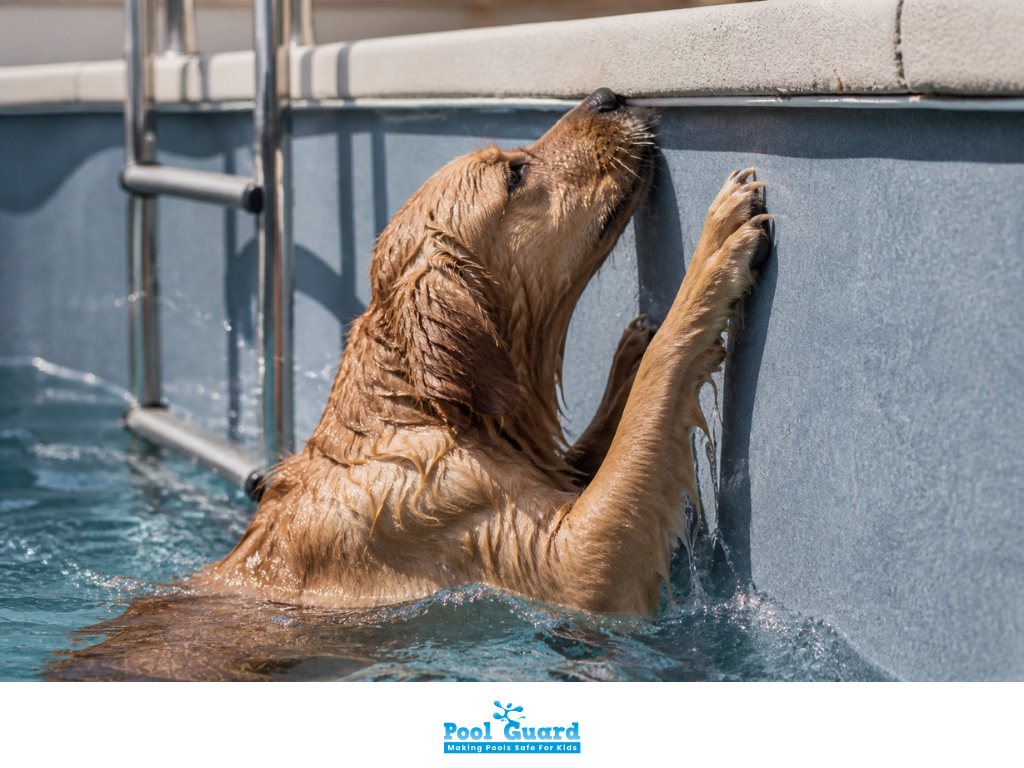
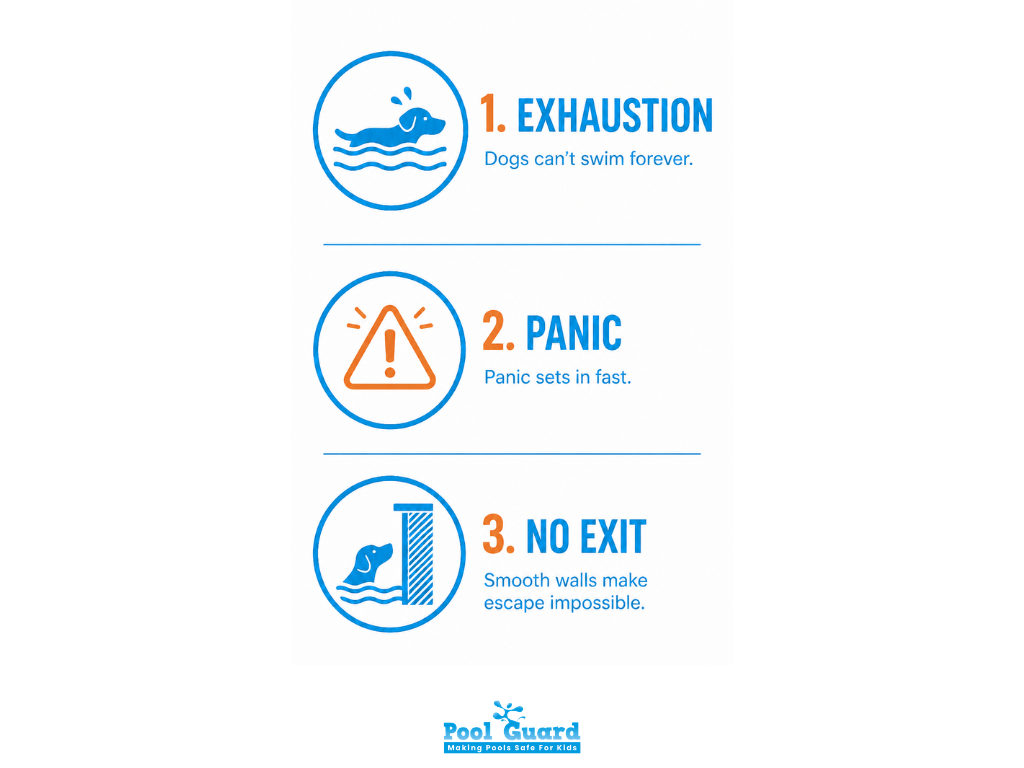
Yes, even strong swimmers can drown. Exhaustion is the primary silent killer. Dogs keep paddling long past fatigue because they’re excited, panicked, or unable to stop, and once the rear end begins sinking, drowning can happen within minutes. Panic worsens this risk, as dogs that fall in unexpectedly often thrash, swallow water, and burn energy rapidly.
Inability to exit is another major hazard. Pools with vertical walls and ladder exits offer no usable escape route, forcing dogs to swim in circles until exhausted.
Even after a rescue, secondary drowning, or dry drowning, remains a risk. Inhaled water can inflame the lungs, causing respiratory distress hours or days later. Because of this, watch for lethargy, coughing, breathing difficulty, or behavioral changes for 48 hours after a water incident, and contact a veterinarian if symptoms appear.
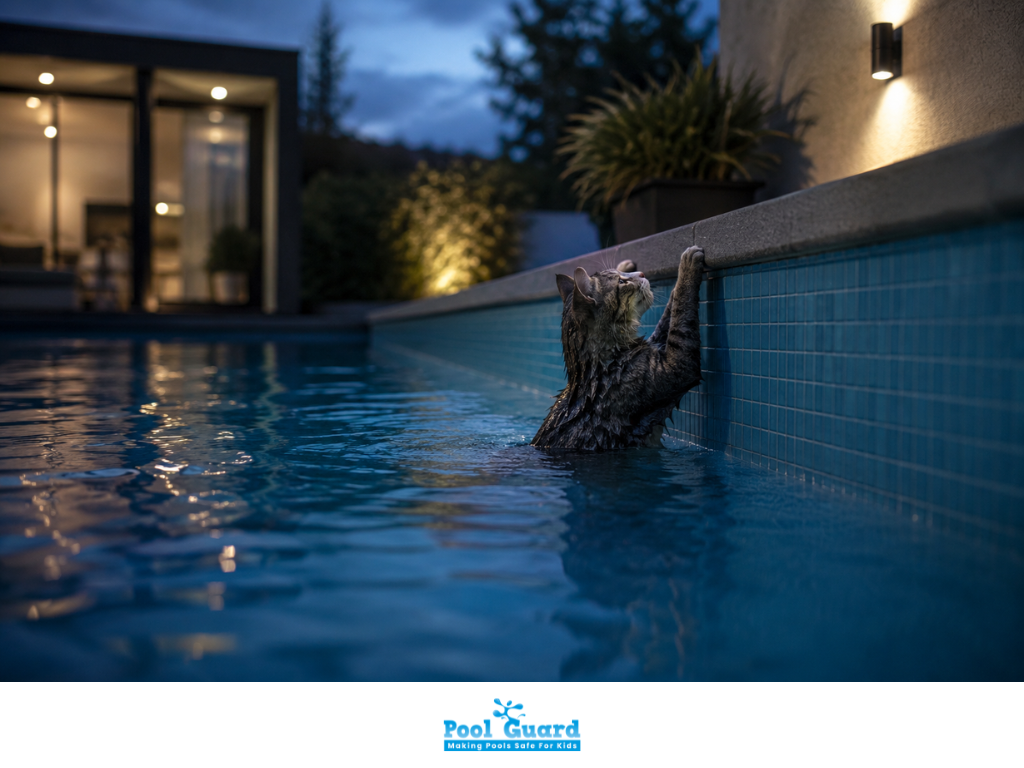
Yes, although many owners wrongly assume cats avoid water entirely. Cats usually fall into pools unintentionally while investigating reflections, insects, or the water. This triggers immediate panic, causing them to inhale water and tire within 10 to 15 minutes. Because cat drownings are completely silent, they easily go unnoticed.
The primary hazard is their inability to escape steep pool walls, which lack the sloped exits of natural water. Even strong swimmers will drown because they cannot climb out. Outdoor cats face this risk constantly, especially at dawn and dusk. Visiting or stray cats are in even greater danger because they are unfamiliar with the layout.
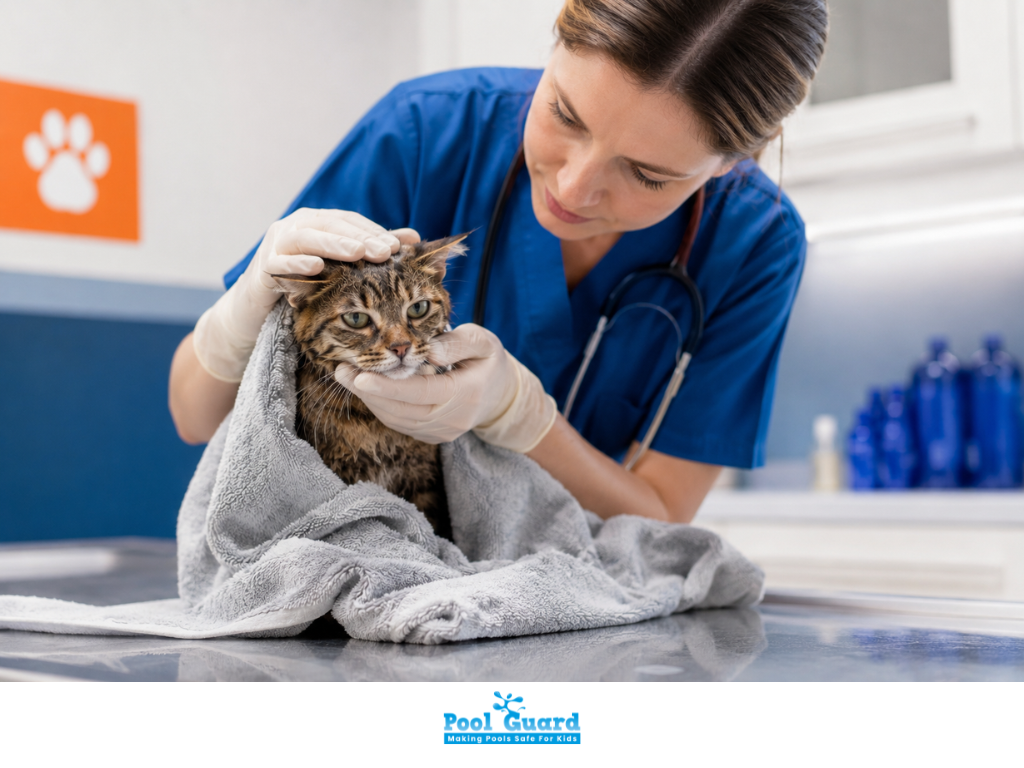
Furthermore, pool chemicals pose a hidden threat. Chlorine irritates a cat’s skin, eyes, and digestive tract. Because cats ingest these residues while grooming themselves afterward, even non-drowning incidents often require veterinary care.
The term “doggy paddle” creates a dangerous misconception, as not all pets can swim safely. While water-retrieval breeds like Labradors, Goldens, Portuguese Water Dogs, Irish Water Spaniels, and Poodles swim naturally, many others struggle to swim.
Flat-faced brachycephalic breeds, such as Bulldogs, Pugs, Boxers, Shih-Tzus, and Boston Terriers, have compressed airways and heavy bodies, making unassisted swimming highly dangerous. Similarly, Dachshunds and Basset Hounds lack an efficient body structure for swimming, while Corgis tire rapidly due to short legs relative to their body mass.
Puppies are curious, reckless, and fatigue quickly due to poor coordination, requiring brief sessions and constant supervision. Senior dogs struggle with arthritis, weakness, poor vision, or cognitive decline that impair swimming and exit navigation. Reassess their swimming ability yearly, prioritizing easy exits.
Consequently, both groups require constant supervision, short sessions, and properly fitted life jackets. Ensure the combined water and air temperature totals at least 100°F before swimming to prevent rapid hypothermia. Because underlying medical conditions can make water activities unsafe, always consult a veterinarian first.
Most cats can physically swim, but that does not make pools safe. While breeds like Maine Coons, Norwegian Forest Cats, and Turkish Vans tolerate water better than average, instinctive paddling is not the same as safety. Most cats panic in pools due to the unfamiliar environment and hidden exits. This intense panic, rather than an inability to swim, is what usually leads to drowning.
Even for capable swimmers, exhaustion develops quickly, vertical pool walls prevent escape, and accidents happen silently. As mentioned above, pool chemicals also pose a serious threat, as chlorine irritates a cat’s skin and mucous membranes. Because cats ingest these toxins while grooming, it is critical to immediately thoroughly rinse any cat that has been exposed to the pool.
Most drownings occur when nobody is watching. Pets frequently slip on wet concrete, chase toys, or investigate water at night, with visiting and newly adopted pets being especially vulnerable because they don’t know where exits are. Another hidden hazard is hot pool decks; concrete and stone can burn paw pads within seconds, meaning if the surface is too hot for bare feet, it’s too hot for pets.
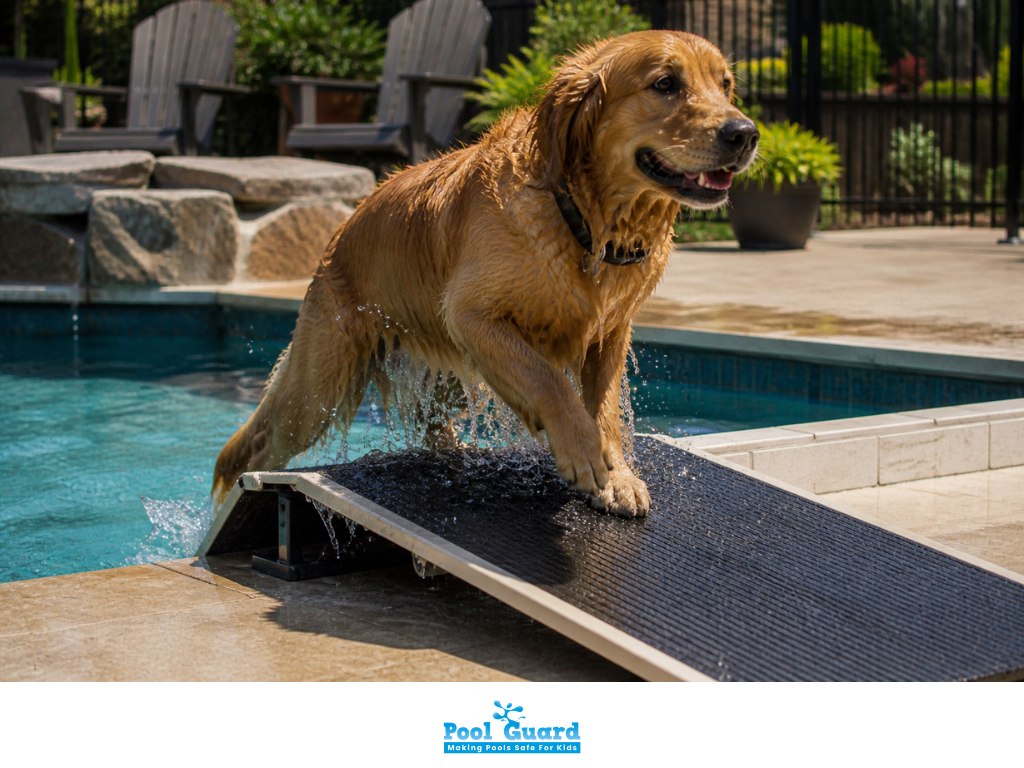
This is the most underestimated hazard in residential pool safety. Most pools feature vertical walls and human-oriented ladders that animals cannot use. While wide, non-slip “wedding cake” steps are ideal, you should otherwise install a dedicated dog ramp, and more importantly, repeatedly train your dog to use it until the behavior is automatic.
Protecting your pets around the pool requires more than good intentions. The tips below apply to both dogs and cats, though cats present unique challenges since they’re less likely to be trained and more likely to access the pool area unsupervised.
Never leave pets unattended near a pool, even for a moment. Assign a dedicated “water watcher” whose sole task is to monitor animals.
Start in shallow water. Support the rear end so the dog learns a horizontal swimming position, using plenty of treats and praise. Keep these early sessions under five minutes and increase the time gradually. Most importantly, never throw a reluctant pet into the water.
Every pool accessible to pets needs an easy exit. Use textured ramps designed for dogs and train pets to use them regularly.
A fitted life jacket reduces fatigue, improves buoyancy, and provides emergency handling points. To achieve this, measure your pet’s neck, ribcage, and back length carefully, ensuring the fit allows exactly two fingers between the jacket and the body.
Getting the right fit is essential because these life jackets are crucial for brachycephalic breeds, puppies, senior dogs, short-legged breeds, and inexperienced swimmers.
Dogs rarely stop swimming voluntarily. Because of this, look closely for a sinking rear end, which is the clearest sign of fatigue. To prevent exhaustion, limit swimming sessions to about 10 minutes and always provide mandatory breaks with shade and fresh water.
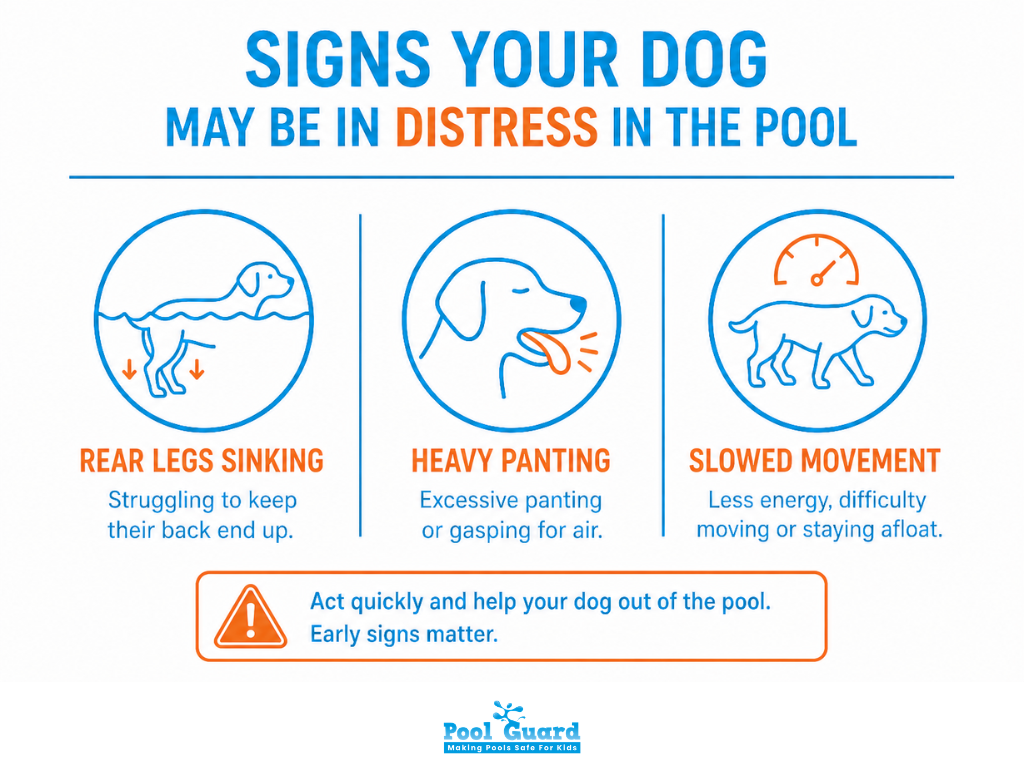
While balanced pool water is usually harmless in small amounts, excessive consumption can cause serious health issues. It can lead to chlorine irritation, gastrointestinal upset, or life-threatening bloat. To prevent this, always provide fresh drinking water near the pool. Afterward, watch closely for vomiting, lethargy, bloating, or dry heaving, and seek emergency care immediately if the abdomen appears swollen.
Chlorine strips natural oils from skin and fur, causing dryness and irritation. Therefore, rinse your pet thoroughly after every swim and use a gentle moisturizing shampoo weekly during swim season. For thin-coated breeds, apply pet-safe sunscreen or coat conditioner before they enter the water.
Post-swim care also requires carefully drying the ears, as trapped water can commonly cause infections, especially in floppy-eared breeds. Finally, check paw pads for irritation and apply paw balm if needed.
Chlorine, algaecides, and pH adjusters are highly toxic to pets. Always store these chemicals in locked areas, and after shocking a pool, keep pets away until chlorine levels return to 1-3 ppm. If you want a milder option, bromine pools are often gentler on skin and eyes than traditional chlorine.
Every safety measure above assumes pets can access the water. The most effective strategy is preventing unsupervised access entirely.
Supervision fails. Training fails. Physical barriers do not.
A proper safety system blocks access when you cannot actively supervise. Ramps, life jackets, alarms, and training are secondary layers – not substitutes.
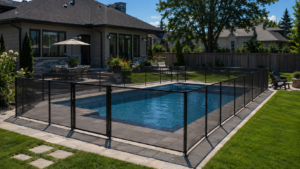
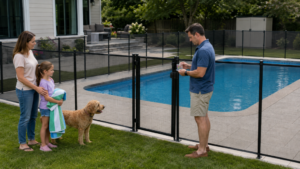
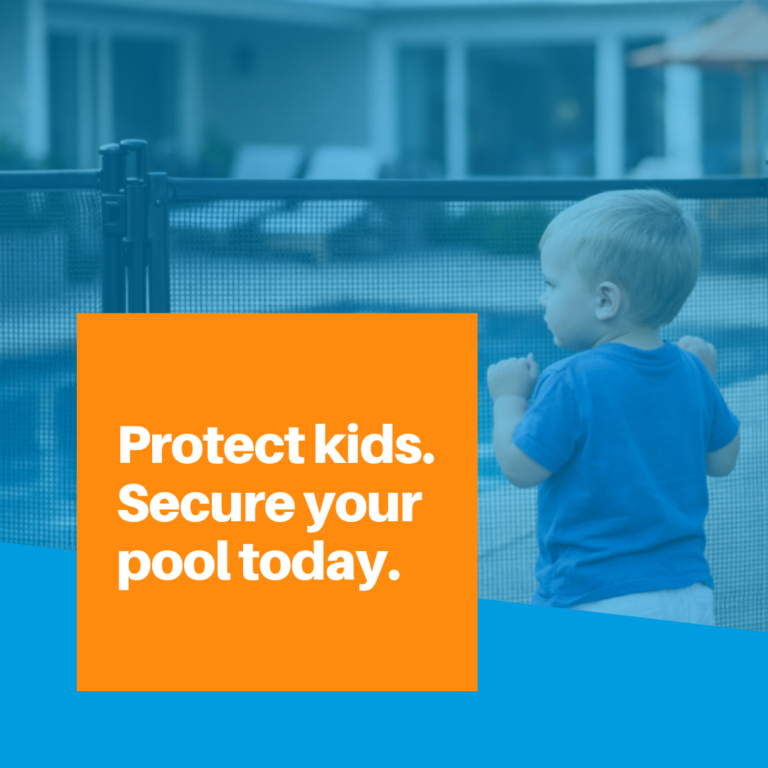
A dedicated pet pool fence is the most reliable safety tool because it works continuously without human involvement. It automatically prevents nighttime accidents, unsupervised backyard access, visiting dog incidents, and impulsive, high-energy behavior. Because some states legally require pool barriers for new or remodeled pools, installing one ensures both safety and legal compliance.
When selecting a fence, prioritize these essential features:
Pool Guard USA’s removable mesh pool safety fences offer professional-grade pool safety that installs and removes easily. Notably, a fence may already be required by law in your area, as some states legally require a pool safety barrier for new or remodeled pools.
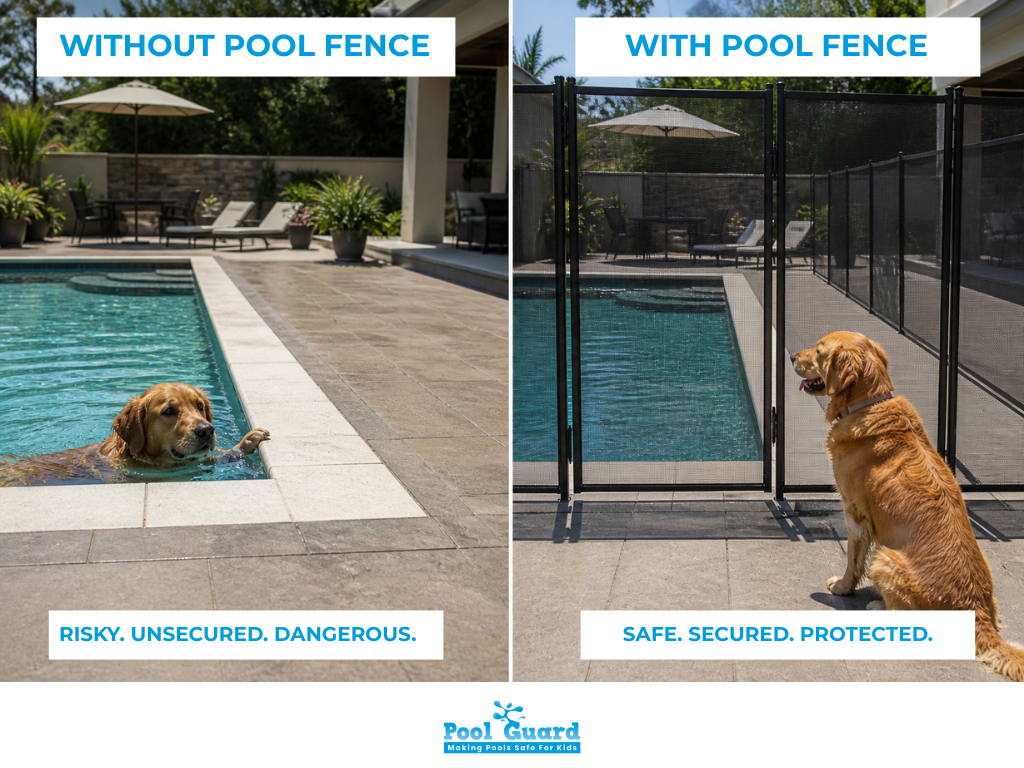
While fences are the foundation, other safety tools serve as valuable supplements, provided you understand their limitations.
A solid, tension-mounted pool safety cover that supports your pet’s full weight makes an excellent secondary barrier. However, you must avoid floating or soft solar covers at all costs. These look like solid surfaces to an animal, but can trap them underneath, causing instant panic and disorientation. If your pet falls onto a floating cover, they may be unable to find their way out, meaning only hard safety covers belong in a pet owner’s pool.
There are two main types of pool alarms worth knowing about – water disturbance sensors and wearable collar systems like Safety Turtle, both of which can connect to smartphone notifications.
The critical limitation is that alarms only alert you after something has already gone wrong. Because rescue response time matters enormously, these devices function as valuable early-warning systems rather than actual prevention tools.
Consistently practicing pool exit and emergency recall training is vital and can save lives. Their primary limitation, however, is that training cannot prevent unsupervised backyard access or completely override an animal’s instinctual panic response during an accidental fall.
Understanding the when and how of pool accidents helps you plug the gaps in your safety plan.
A complete dog pool safety plan isn’t a single product or a single rule. It’s a system of layered protection. Here’s how to build one:
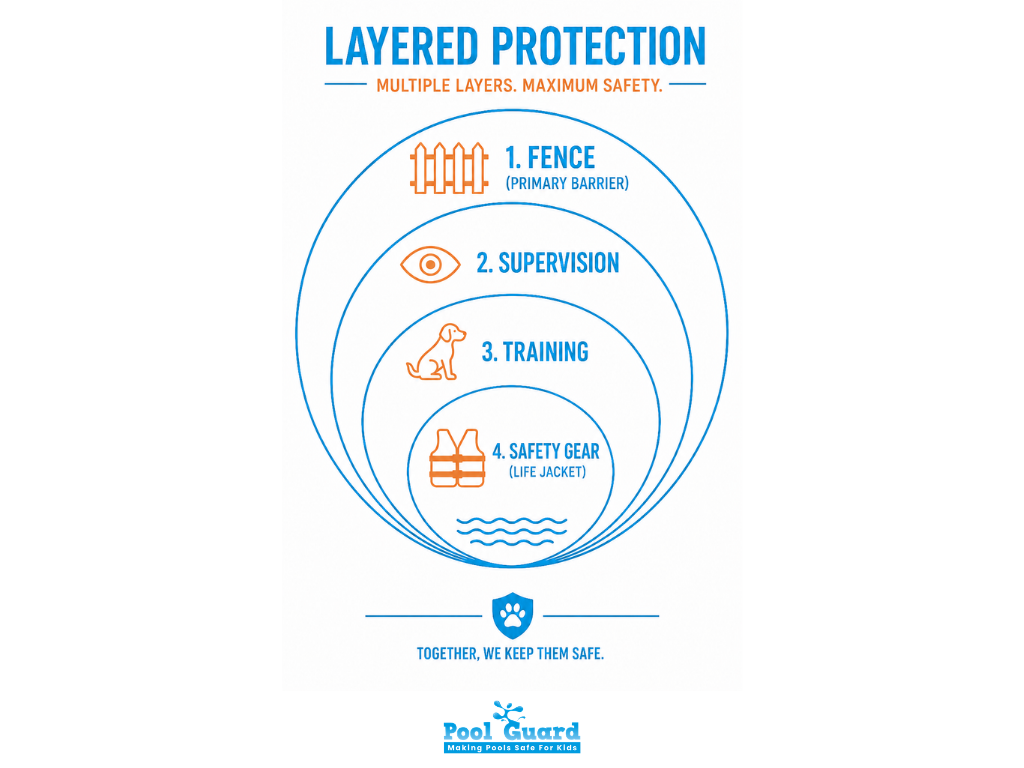
A complete dog pool safety plan isn’t a single product or a single rule. It’s a system of layered protection. Here’s how to build one:
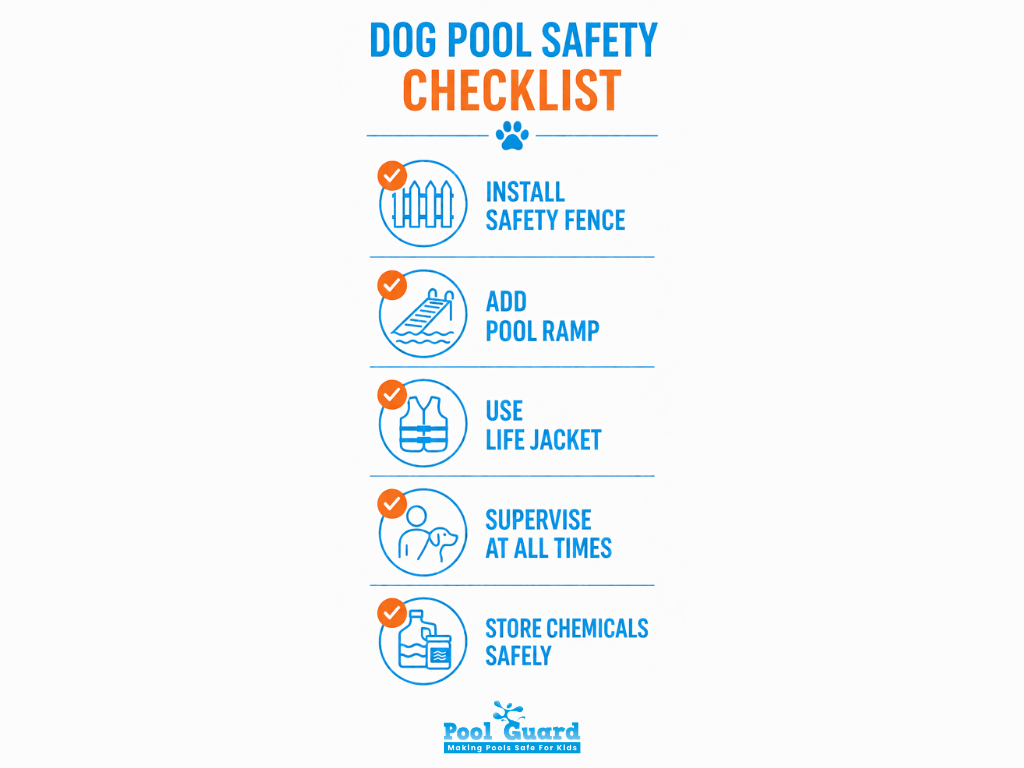
Pool safety for pets ultimately comes down to preparation, consistency, and understanding how quickly accidents can happen. Even confident swimmers can panic, tire unexpectedly, or struggle to escape without help. By understanding the real risks around pools, you can create a safer environment without taking the fun away from summer activities.
With the right approach, your pool can remain enjoyable for both you and your pets. A secure fence, reliable exit points, proper supervision, and smart safety habits make a meaningful difference. Whether you’re introducing a puppy to water or protecting an aging dog, small precautions today can prevent serious accidents later and give you greater peace of mind around the pool.
Please fill out the form below with your information. Your local dealer will be notified about your inquiry.
Please fill out the form below with your information. Your local dealer will be notified about your inquiry.