For decades, drowning prevention has been framed almost entirely as a children’s issue. But recent public health research reveals a critical blind spot: older adults are facing a rapidly rising risk of water-related accidents. If you have a backyard pool and seniors in your family, this shifting reality should change how you think about home water safety, starting today.
Drowning in older adults is not a fringe concern. It is an emerging public health crisis that has quietly accelerated for two decades while attention and funding remained focused elsewhere. This guide pulls together the most current research, the most relevant adult drowning statistics, and the most practical steps you can take to protect older adults in and around your pool.
| Statistic | Finding |
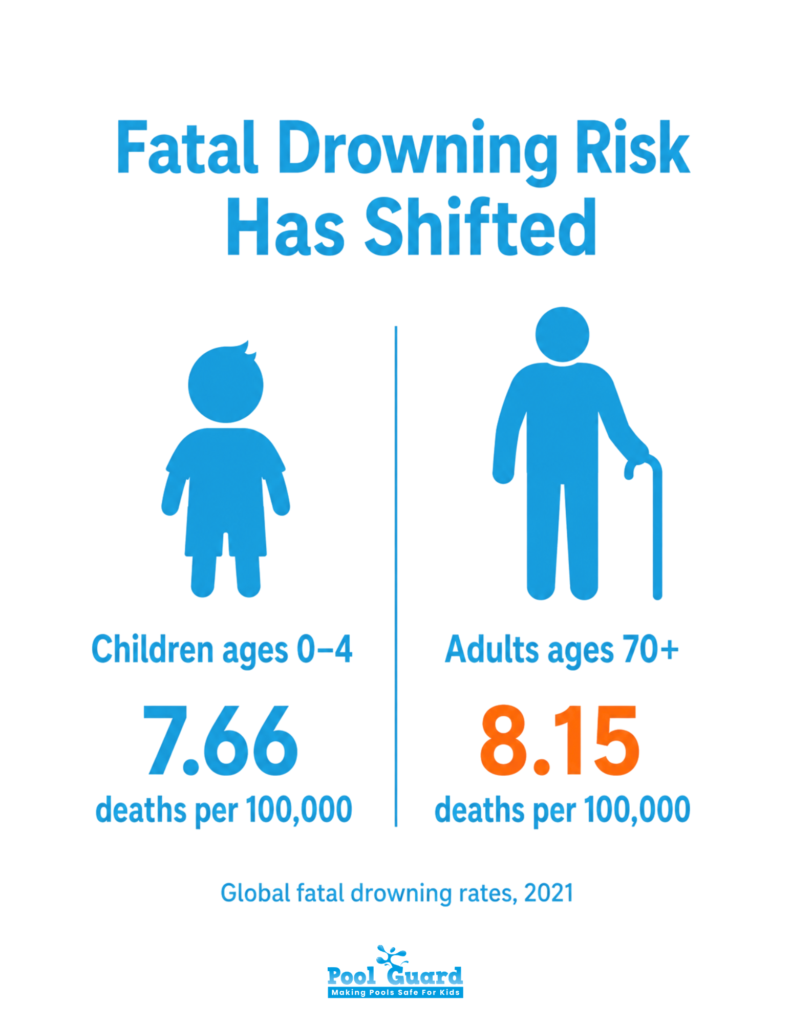
| Global fatal drowning rate, adults 70+, 2021 | 8.15 per 100,000 |
| Global fatal drowning rate, children 0-4, 2021 | 7.66 per 100,000 |
| U.S. drowning deaths among adults 55+, 1999-2020 | 20,466 |
| U.S. age-adjusted mortality rate, adults 55+ | 12.23 per 100,000 |
| Average annual increase in U.S. geriatric drowning mortality | 1.51% |
| Increase in U.S. drowning rate, adults 65-74, 2019-2022 | 19% |
| Proportion of older adult drowning deaths occurring at home (U.S.) | 28% |
| Projected annual drowning deaths in Canada among 65+, by 2050 | 209-430 |
Note: Different studies define “older adult” using different age thresholds – 55+, 65+, and 70+ are all used across this research. The underlying trend is consistent regardless of the cutoff used.
The U.S. data alone is striking. A 2025 retrospective analysis using CDC death certificate data found that elderly drowning mortality has risen at a statistically significant rate every single year from 1999 to 2020, with no sign of reversal. Males face more than triple the drowning mortality rate of females. Non-Hispanic American Indian and Alaska Native adults have the highest rates of any racial group. And in Canada, researchers project that if current trends hold, the country could see up to 430 older adult drowning deaths per year by 2050, up from roughly 81 annually during the study period.
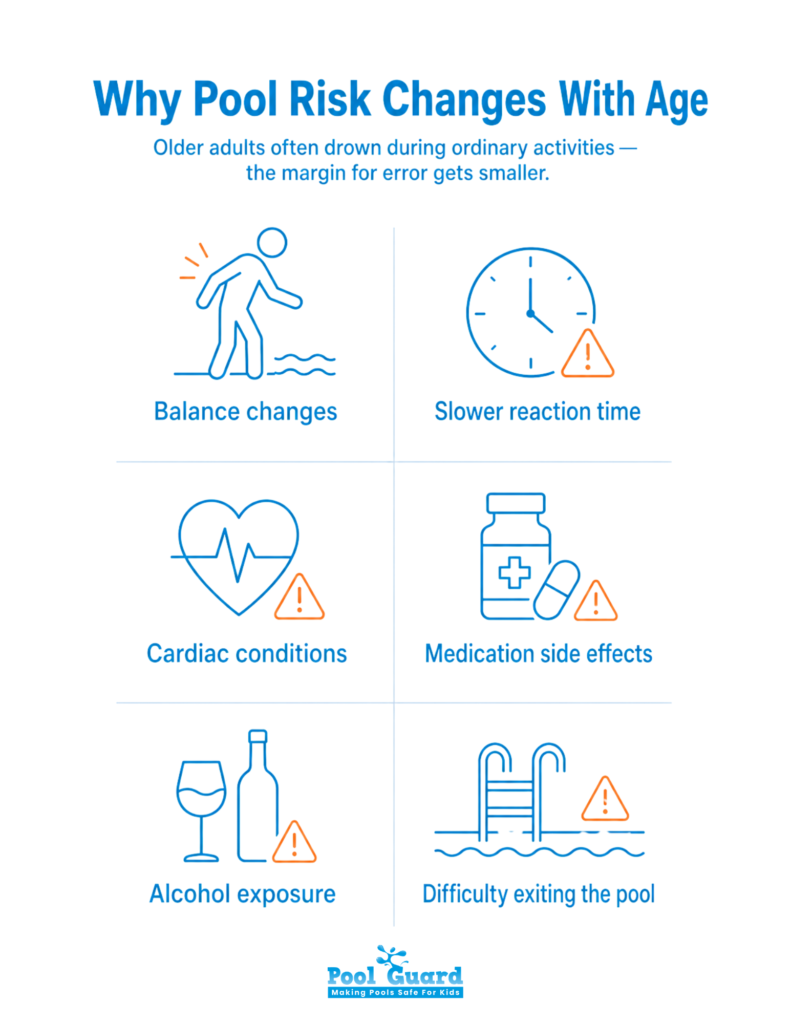
Older adults are not reckless. Most drowning deaths in this age group involve people engaging in ordinary activities, such as swimming for exercise, relaxing in a backyard pool, or simply walking near water. What changes with age is the margin for error.
Several interconnected factors raise the risk:
Reduced muscle strength, impaired balance, slower reaction time, and decreased bone density all affect how safely a person can move in and around water. Falls are one of the leading contributors to older adult drowning, accounting for 20% of unintentional fall-into-water drowning deaths in Australia, second only to young children.
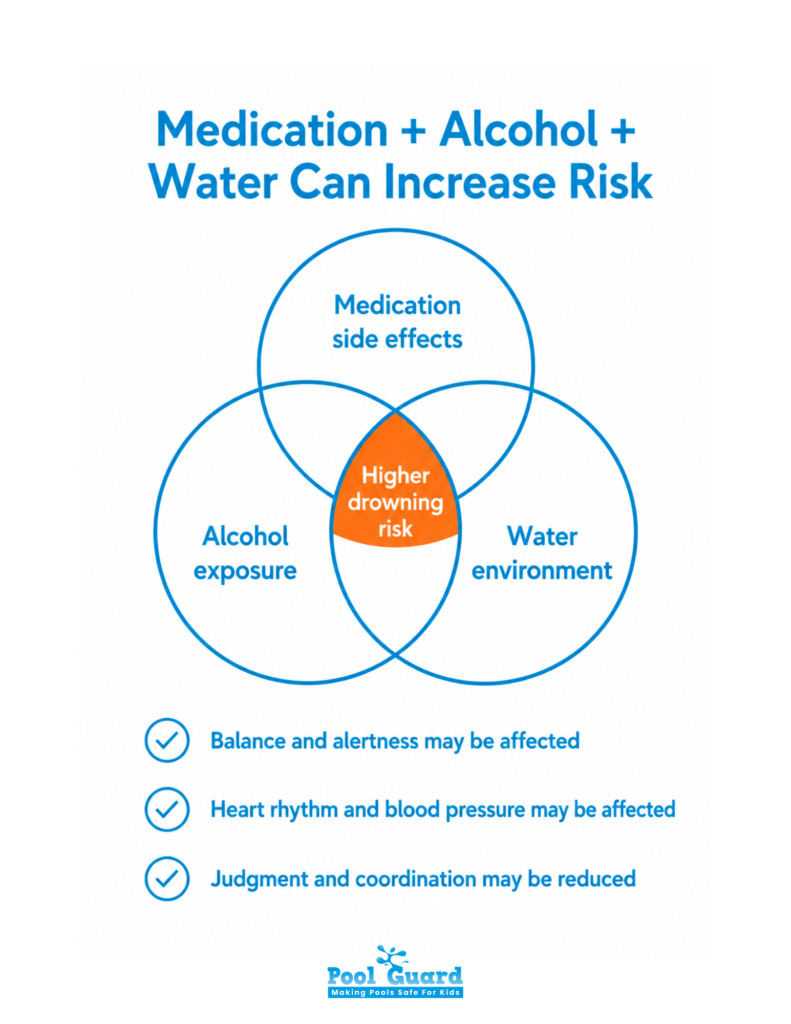
Heart disease has emerged as a key physical trigger for aquatic emergencies in older adults. Research from Royal Life Saving Australia found that among older Australians who drowned while on medication, 72% were taking drugs known to increase the risk of cardiac arrhythmia, specifically drug-induced long QT syndrome and Torsades de Pointes. These are not obscure risks; they are documented side effects of commonly prescribed medications, including certain antibiotics, antihistamines, and antidepressants.
As people age, the number of medications they take increases. An estimated 36% of unintentional fatal drownings among older Australians involved some form of medication or drug, and 65% of those cases involved multiple drugs. Complex drug interactions can affect alertness, balance, blood pressure, and cardiac rhythm in unpredictable ways.
A 2025 Florida study using medical examiner autopsy data found that older adults with alcohol exposure had 3.26 times higher odds of drowning-related mortality compared to those without. Canada records the highest alcohol involvement in older adult drowning deaths among comparable countries, at 20.7%. Alcohol impairs judgment and physical coordination; at the same time, it increases confidence, a particularly dangerous combination near water.
Adults living with dementia may not recognize pools, bathtubs, or other water features as hazards. They may not respond to environmental cues the way cognitively intact adults do. They may wander. This shifts the responsibility for prevention from the individual to the environment and those around them.
Many older adults were confident swimmers in their younger years, but do not always account for how their bodies have changed. Someone who swam competitively at 40 may have meaningfully different cardiovascular endurance and upper body strength at 72.
This one is underappreciated. A person who enters the water safely may not be able to climb out, especially if they are fatigued, cold, or experience a medical event while swimming. Without accessible exit points, even a non-fatal emergency can become fatal.
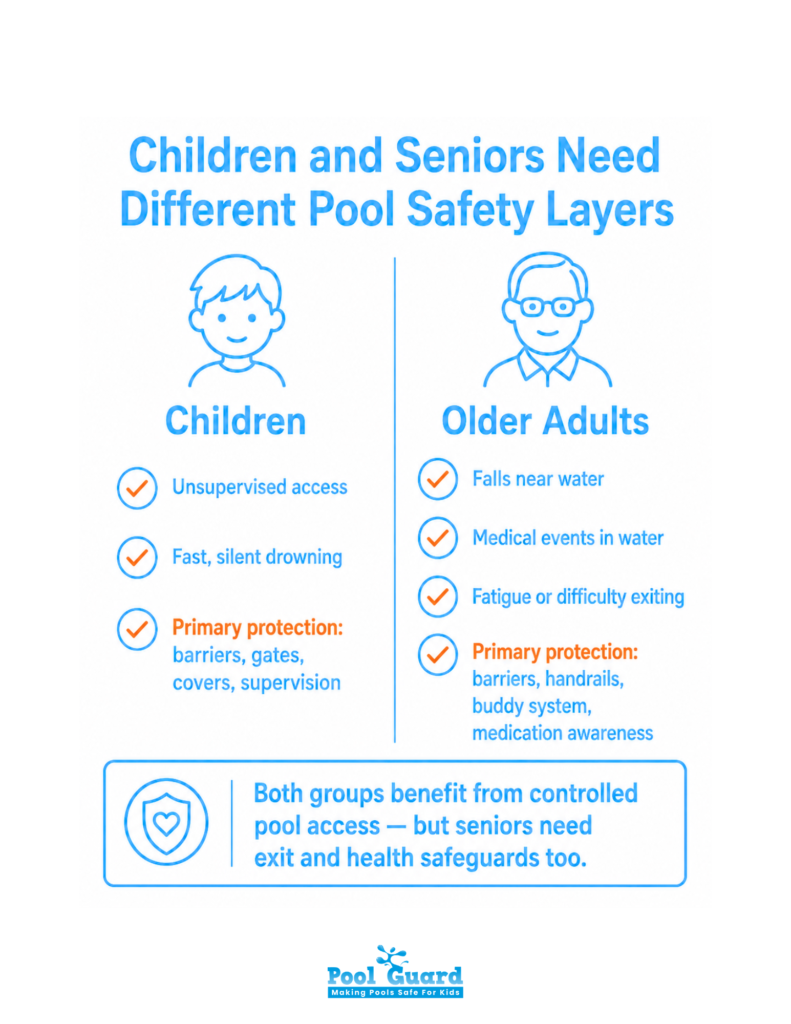
Child drowning prevention and senior drowning prevention share the same fundamental goal – reducing unsupervised access to water and improving the ability to rescue. However, the factors that place each group at risk are very different.
Children typically drown because they gain unsupervised access to water. The classic scenario is a toddler who slips out of sight for moments and reaches the pool. The solution is primarily architectural, including fencing, gates, covers, alarms, and close supervision.
Older adults face a different profile of risk:
Both groups benefit from pool fencing and controlled access. But seniors also need exit aids, buddy systems, medication awareness, and family conversations about changing health conditions.
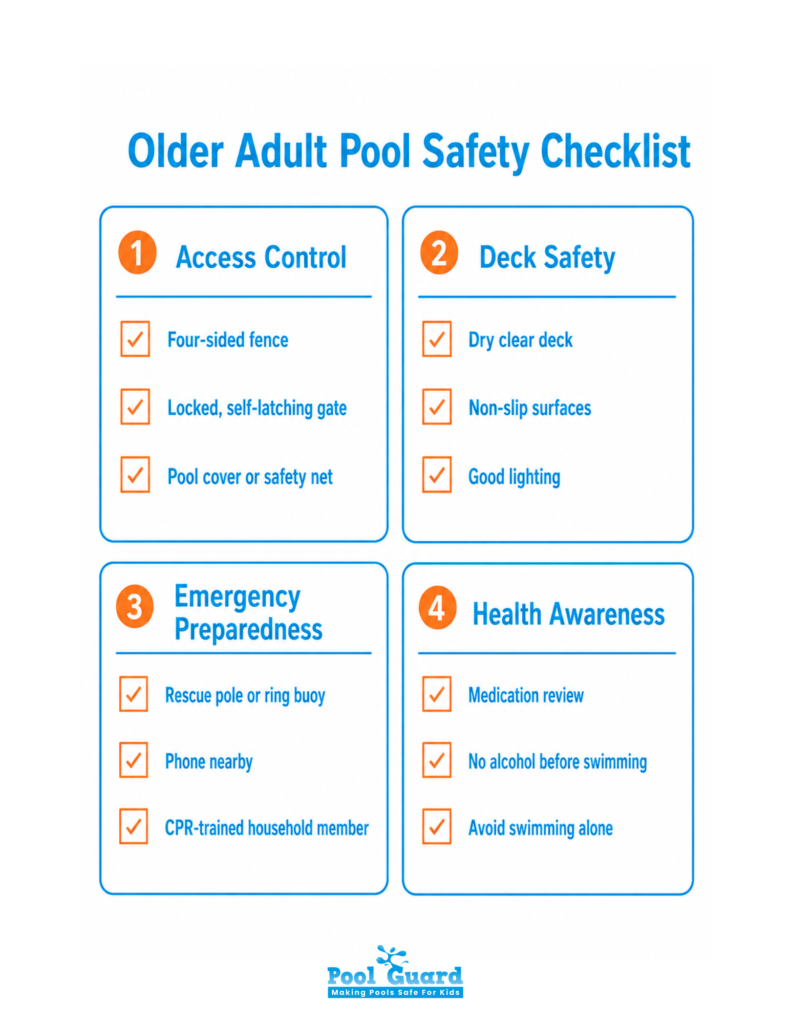
This checklist is designed for families with seniors in or regularly visiting the home. Every item here corresponds to a documented risk factor in the research literature.
Pool barriers are not just for young children. They provide crucial protection in multigenerational homes, especially when hosting visiting grandparents, moving aging parents in, or caring for adults with cognitive decline.
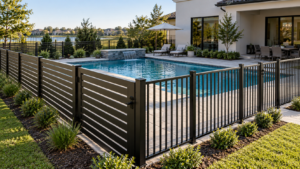
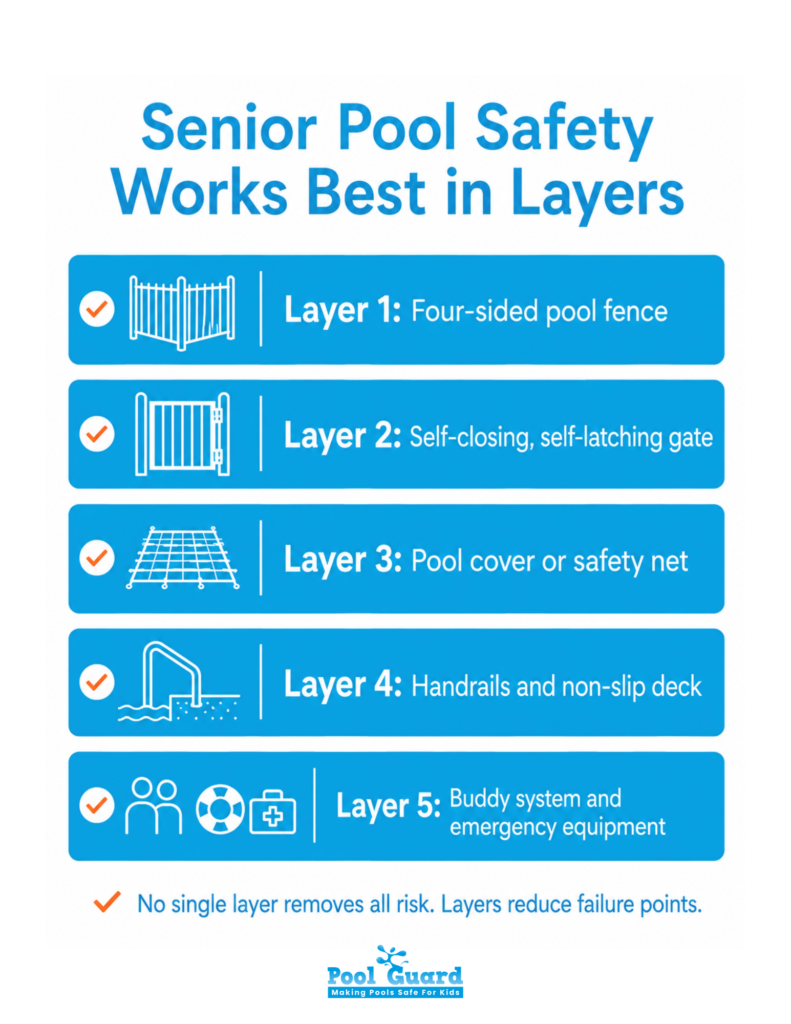
While standard perimeter fences secure your yard, four-sided isolation pool fence completely separates the house from the pool. Recommended as the gold standard by both the WHO and CDC, it creates a reliable physical barrier that stops an adult with dementia from accidentally wandering into the water.
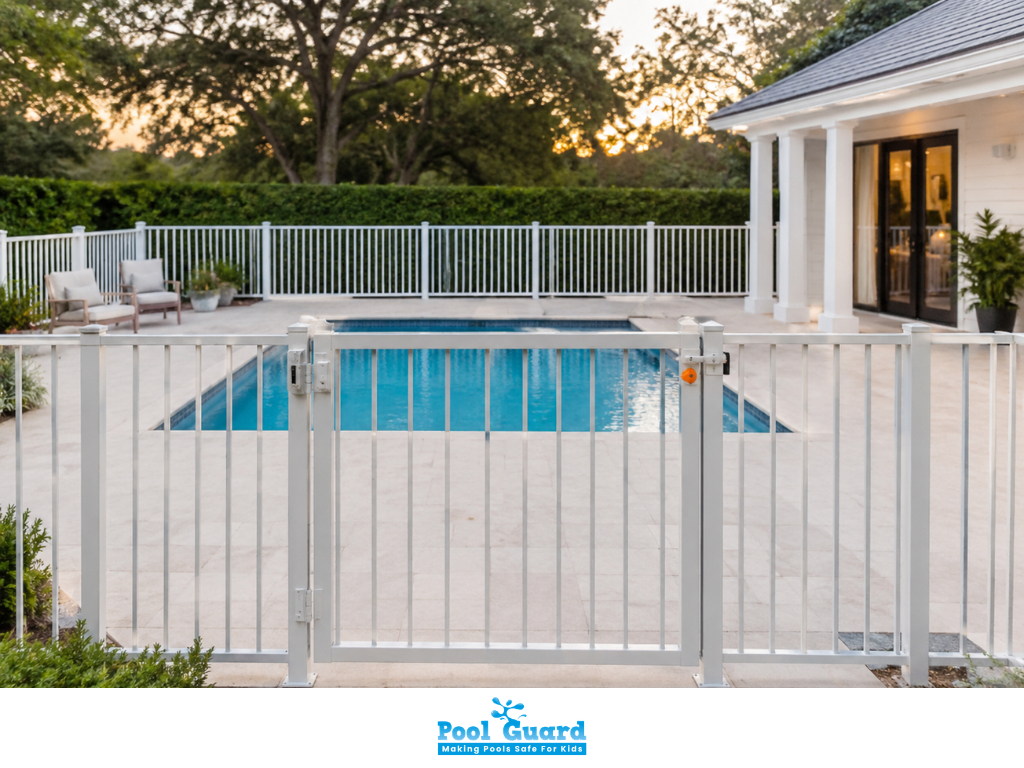
Human error is a major risk factor in home drownings. Installing self-closing, self-latching gates ensures the pool area locks automatically, eliminating the danger of a gate accidentally left propped or clicked open during a brief distraction.
As a final line of defense when the pool is closed, heavy-duty safety covers and tension pool nets offer vital surface protection. If an older adult loses their footing near the edge at night or during bad weather, these secure covers prevent a dangerous fall directly into the water.
No single barrier eliminates risk entirely. The research consistently supports combining multiple safety layers – fencing, pool alarms, covers, and supervision protocols – because the failure of one layer does not mean catastrophic exposure. This principle applies whether the vulnerable person in the household is two years old or 72.
For families with seniors, children, pets, or frequent visitors, a properly secured pool area is not optional. It is part of responsible home pool ownership.
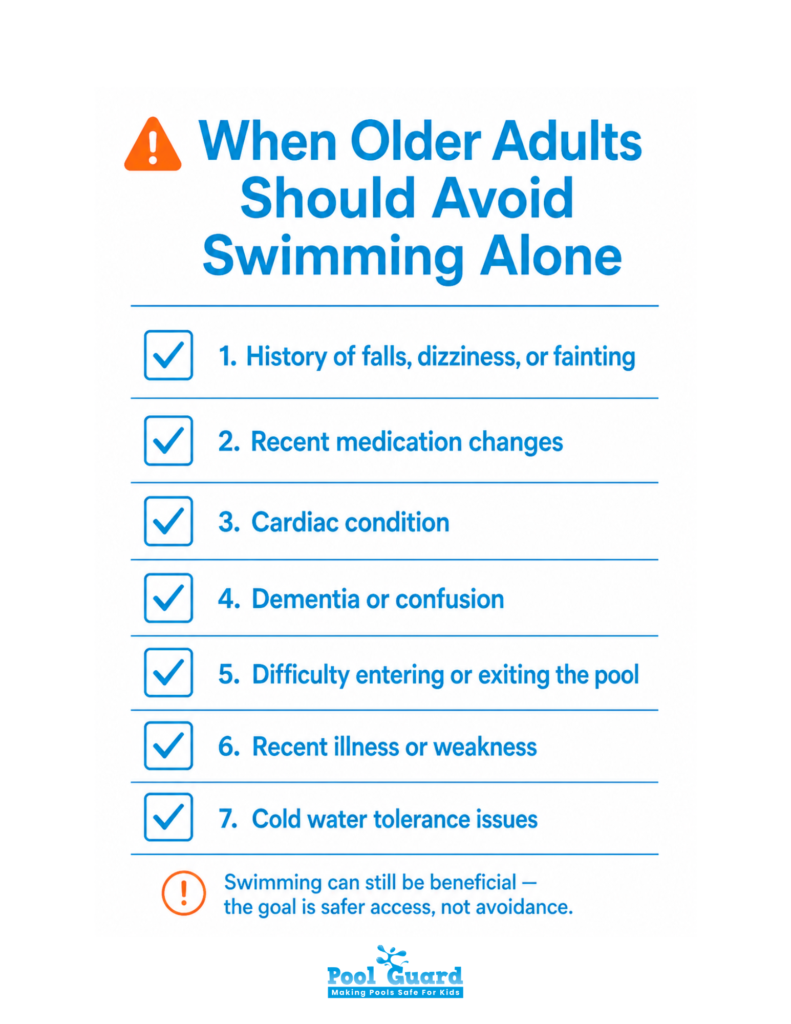
The research is unambiguous on this point, as swimming alone is one of the single most consistent risk factors in older adult drowning deaths across every country and dataset studied.
An older adult should not swim alone if they have any of the following:
Swimming with a buddy, like a family member, neighbor, or caregiver who remains attentive, not just nearby, provides both immediate response capability and a deterrent against overexertion. When in-person supervision isn’t possible, the minimum standard should be: someone who knows you are in the pool, knows when to expect you out, and has a plan if they don’t hear from you.
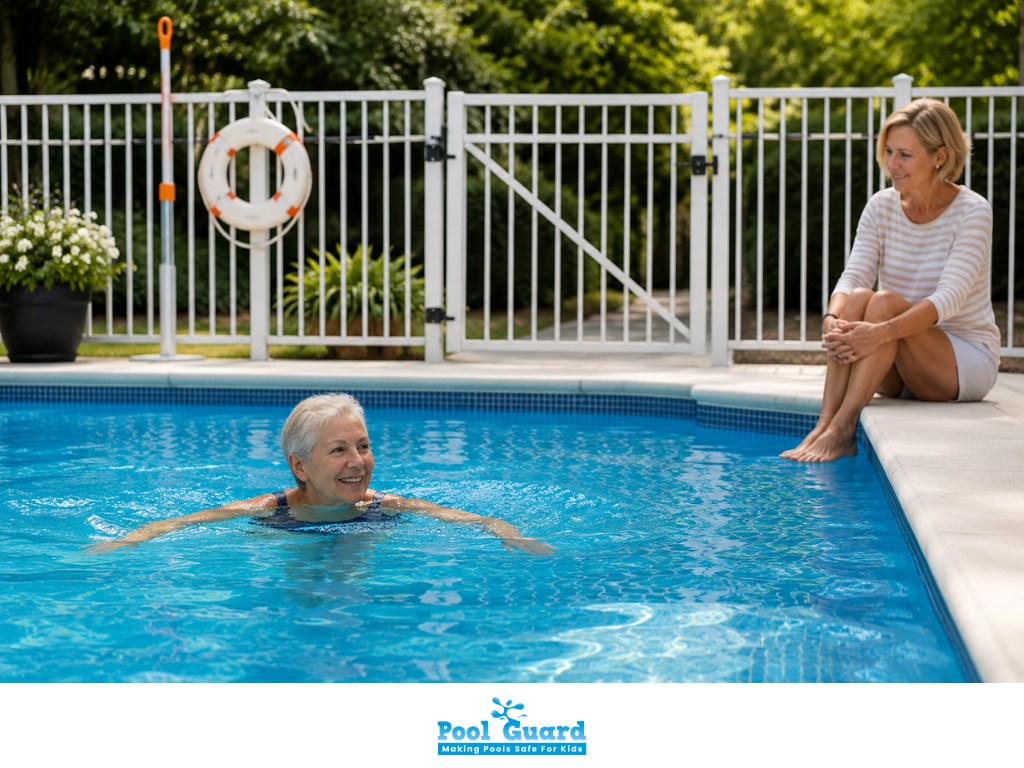
This doesn’t mean older adults should stop swimming. Aquatic activity is genuinely beneficial for cardiovascular health, joint mobility, muscle maintenance, and mental well-being. The goal is safer access to a beneficial activity, not avoidance of water entirely.
While the rising trend is clear, any responsible guide must acknowledge that research about drowning in older adults faces four major limitations:
Studies use varying thresholds (50+, 65+, or 70+), making direct comparisons difficult. A 2026 Injury Prevention rapid review found only eight eligible studies on this demographic published over a 17-year period, highlighting how under-resourced this field is.
Fatal drownings are well-tracked via death certificates. However, emergency room visits and near-drowning events are rarely captured systematically.
Death certificates have limits. Without an autopsy or toxicology report, a drowning triggered by a heart attack might be listed purely as a cardiac event, or vice versa.
Most datasets capture location in broad terms, like “at home”, “natural water”, or “unknown”, rather than distinguishing backyard pools from lakes, rivers, or bathtubs. This makes it harder to quantify pool-specific risk with precision, though the Canadian data on bathtub and backyard pool deaths among 65+ gives a useful signal.
Despite these limitations, every major dataset, including U.S., Australian, and Canadian, points in the same direction. The gaps simply underscore why we need more rigorous, pool-specific research moving forward.
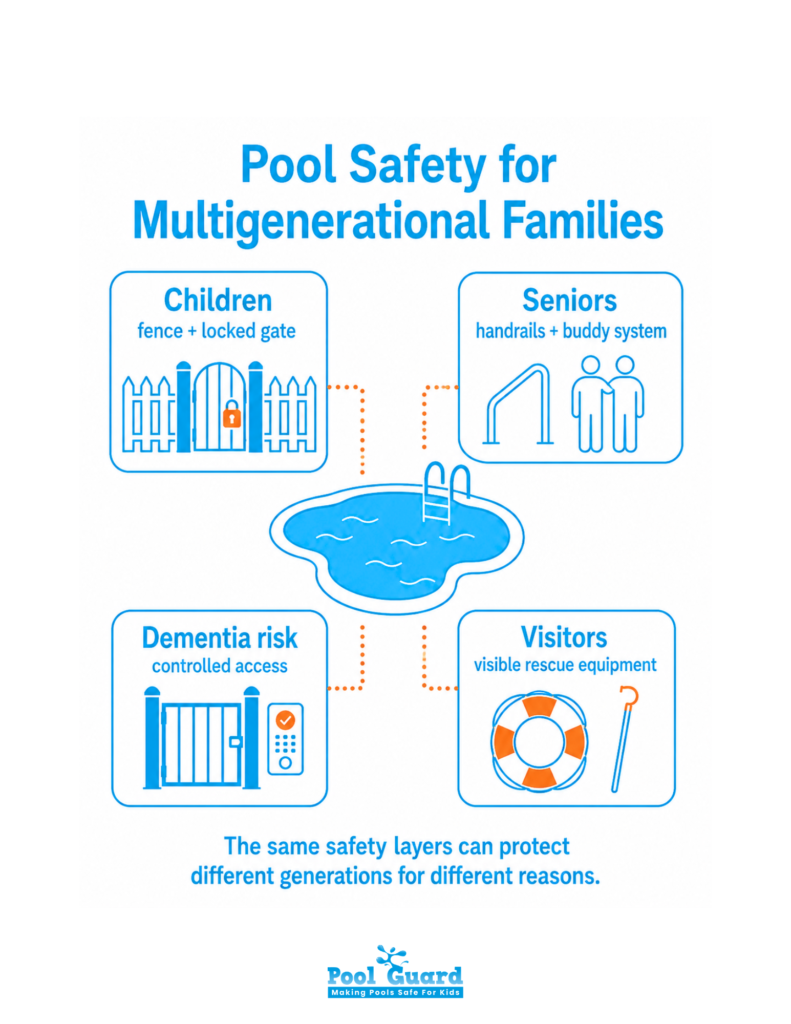
Drowning in older adults is a rapidly growing water safety crisis; globally, adults aged 70 and older now drown at higher rates than children under five. In the U.S., senior drowning mortality rates have risen steadily for two decades, driven by preventable risks like swimming alone, sudden medical events, medication interactions, and poor pool accessibility.
To protect multigenerational households, families must upgrade their physical pool environments. While isolation fencing prevents unsupervised access for young children, older adults also require non-slip decks, bright lighting, stable handrails, and a strict buddy system. The layers of protection that secure your children also safeguard your parents.
Explore Pool Guard USA’s pool fence, gate, and safety solutions designed to protect multigenerational families at every stage of life.
Please fill out the form below with your information. Your local dealer will be notified about your inquiry.
Please fill out the form below with your information. Your local dealer will be notified about your inquiry.