Most pool owners think about chemicals, filters, and skimmers. Few think about the wiring running silently beneath the water’s surface. Yet swimming pool electrical safety is one of the most critical, and most overlooked, aspects of owning a pool. The hazards don’t announce themselves. There’s no smoke, no spark, no obvious warning sign. Just water that looks perfectly safe until it isn’t.
This guide explains how electrical hazards develop around pools, the warning signs to recognize, and the steps to take if a problem occurs. It covers the critical safety information every pool owner should know.
Dry skin resists electrical current. Wet skin doesn’t. Water dramatically lowers that resistance, allowing even low voltages to send dangerous current through the body.
One of the biggest risks is Electric Shock Drowning (ESD), which occurs when faulty pool equipment causes electricity to leak into the water. According to the Electric Shock Drowning Prevention Association, the current can paralyze swimmers, preventing them from swimming or from calling for help, even when the water appears completely normal.
Never jump in to rescue someone without cutting power first, as rescuers can become victims too.
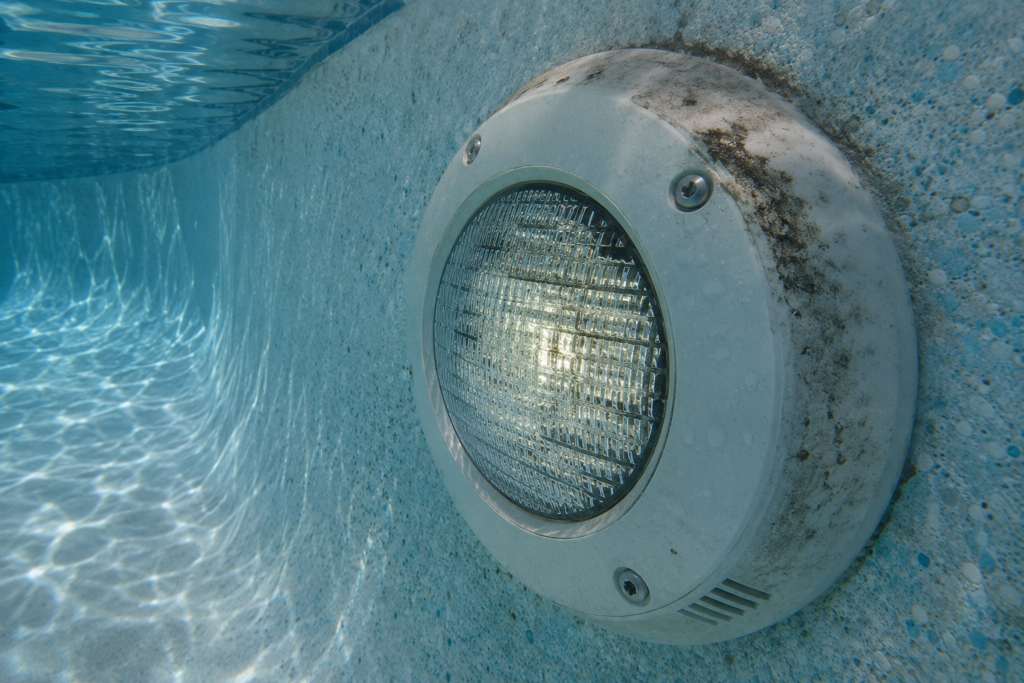
Pool lights operate in a wet, chemically corrosive environment. When seals fail, and water intrudes, electricity enters the pool directly. Watch for flickering lights, moisture or mold inside the lens, or a breaker that keeps tripping. A breaker that keeps tripping is a warning. Stop resetting it and call an electrician.
A ground fault circuit interrupter (GFCI) monitors the circuit for leaking current and cuts power in 1/40th of a second. The NEC requires GFCIs on all underwater lighting circuits at 15 volts or more, on 120- and 240-volt heaters near the pool, and on all outdoor outlets within 20 feet of the water. Test installed GFCIs monthly. Test portable ones before every use. A GFCI that fails its test must be replaced, not reset and ignored.
NEC Section 680.26 requires connecting all metal components (ladders, rails, lights, motors) and pool water with an 8 AWG solid copper conductor. This equalizes the electrical potential across all surfaces, protecting swimmers. Because this network is buried or encased in concrete, corrosion and loose connections can silently compromise safety. Only a licensed electrician can verify that the system remains intact.
Keep all electrical cords and devices at least five feet from the water. Use battery-powered electronics whenever possible. Never install a pool within 25 feet of overhead power lines; pool skimmers alone can reach 10-16 feet. Always check your overhead clearance before using any long-handled tool.
Pump motors wear out. Subpanels corrode. Connections loosen over time. If your pool equipment is 15 years old or older and has no documented electrical inspection, schedule one now. Visible rust, burn marks, or a motor that runs inconsistently are all signs that warrant immediate professional evaluation.
Test GFCIs monthly.
Inspect underwater lights for flickering or moisture.
Check the breaker panel for corrosion or burn marks.
Keep cords and powered devices at least five feet from the water.
Confirm all metal parts are secure and not loose.
Clearly label all pool equipment switches for emergency power shutoff.
Certain warning signs require immediate professional inspection to prevent serious electrical hazards around the pool. These include:
All pool electrical work, including wiring, breakers, and equipment installation, should be handled by a licensed electrician familiar with pool safety codes.
A swimmer who suddenly freezes, struggles unusually, or reports tingling should be treated as a possible shock victim. Flickering lights or electrical issues may indicate an active electrical hazard.
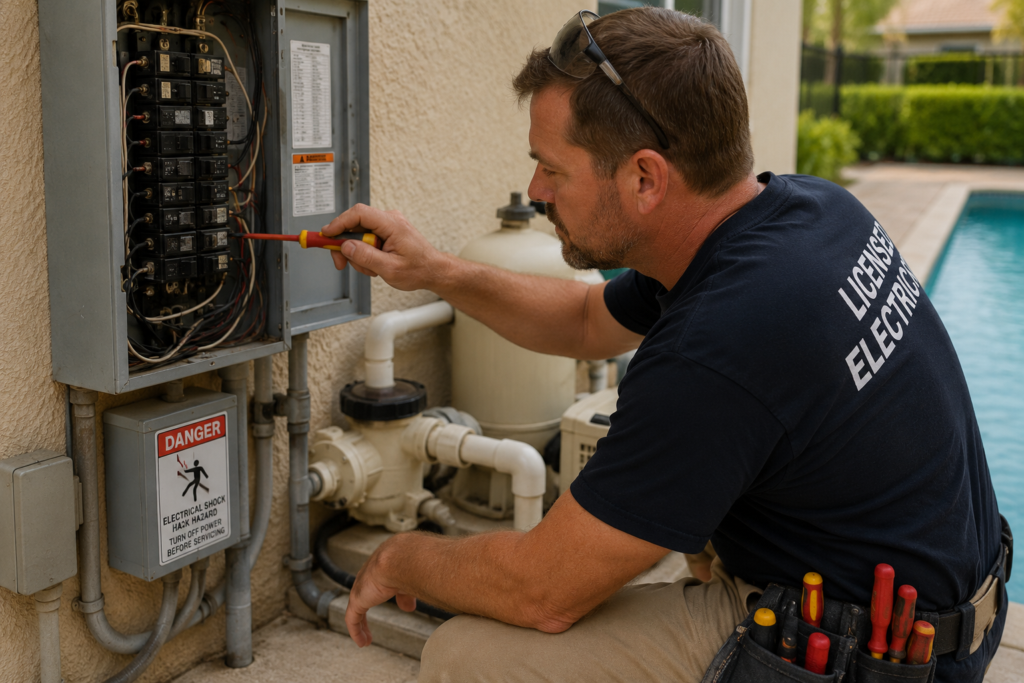
A pool that passed inspection years ago may not be safe today. While the 2023 NEC (Section 680.4) allows periodic re-inspections in some areas, most municipalities don’t require them, leaving ongoing safety to homeowners. NFPA 70B recommends annual pool electrical inspections, monthly GFCI testing, and immediate attention to corrosion.
Swimming pool electrical hazards are invisible, fast-moving, and potentially fatal, but most are preventable with proper precautions. Effective swimming pool electrical safety depends on proper installation, functioning GFCIs, intact bonding systems, and regular professional inspections. Make sure everyone in your household recognizes the warning signs and knows how to shut off power in an emergency.

Find your local dealer by entering your zip code above.
Please fill out the form below with your information. Your local dealer will be notified about your inquiry.
Please fill out the form below with your information. Your local dealer will be notified about your inquiry.