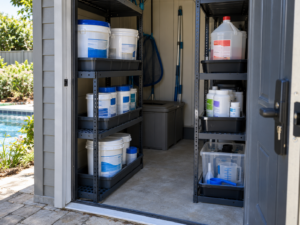
Maintaining a clean backyard swimming pool requires regular chemical treatments, especially shock therapy. This process adds high doses of chlorine to destroy bacteria, organic waste, and stubborn algae. Consequently, this intense chemical spike temporarily makes the water unsafe for human skin and eyes.
Because of this, determining exactly how long after shocking pool can you swim safely depends on the specific chemicals used and your subsequent water testing results. This article explores these vital safety guidelines and the chemical indicators pool owners must check before diving back in. You will also learn how to accurately measure your pool’s readiness to ensure a safe, worry-free swim.
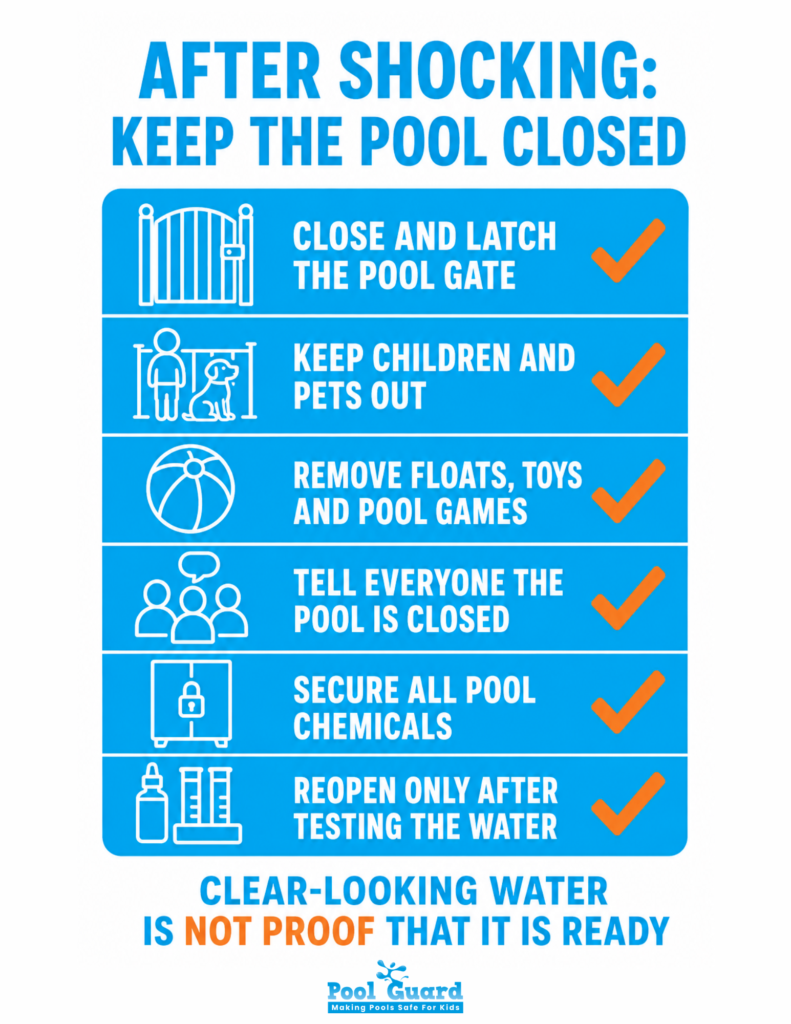
After shocking a pool, you should generally wait at least 8-24 hours before swimming. The exact wait depends on the type and amount of shock used, as well as your pool’s chlorine level.
Before swimming, test the water and make sure free chlorine has returned to a safe range of about 1-4 ppm. Swimming while chlorine levels are too high can cause eye, skin, and respiratory irritation.
For heavy shocking, such as treating algae or very cloudy water, you may need to wait 24-48 hours or longer. Keep the pump running and retest the water before getting in to confirm the chlorine level is safe.
Twelve hours can be enough time, but only if all of the following are true:
If any of those boxes are unchecked, chlorine still reads high, the water looks cloudy, or the pump was off, wait longer, even if 12 hours have technically passed. Cloudy water in particular is a sign your filter is still processing what the shock stirred up, and it’s a reason to hold off regardless of the clock.
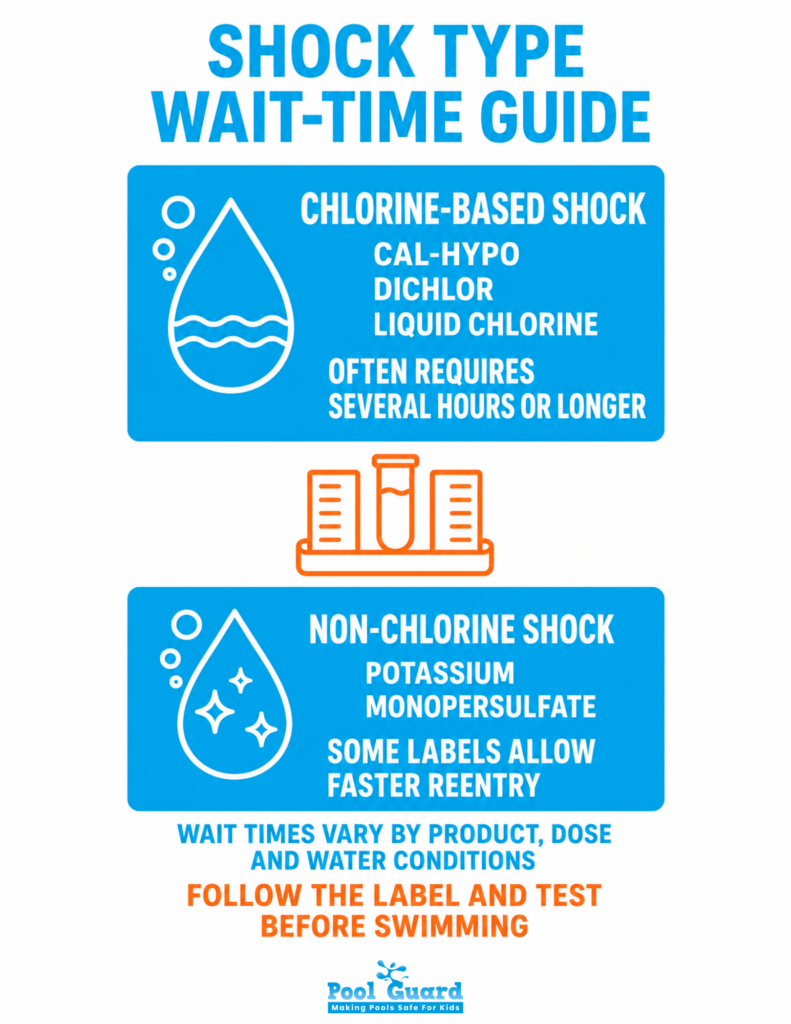
Different products raise chlorine to different levels and clear at different speeds. Here’s how long after adding shock to pool can you swim, broken down by type:
| Shock Type | Typical Wait Time | Notes |
| Calcium hypochlorite (cal-hypo) | 8-24+ hours | Heavier doses (like algae treatment) can push this toward 24-48 hours |
| Sodium dichlor | 8-24 hours | Test before swimming; dissolves faster than cal-hypo |
| Liquid chlorine | Several hours to 24 hours | Depends on concentration and how much was added |
| Non-chlorine shock (potassium monopersulfate) | 15-30 minutes | Oxidizes rather than sanitizes; follow the label and test first |
Determining how long after adding liquid chlorine can you swim depends on dosage, with small maintenance doses safe within 2-4 hours and full shock doses requiring up to 24 hours to disperse. While these are common guidelines, always consult the specific product label for manufacturer instructions, which override general rules.
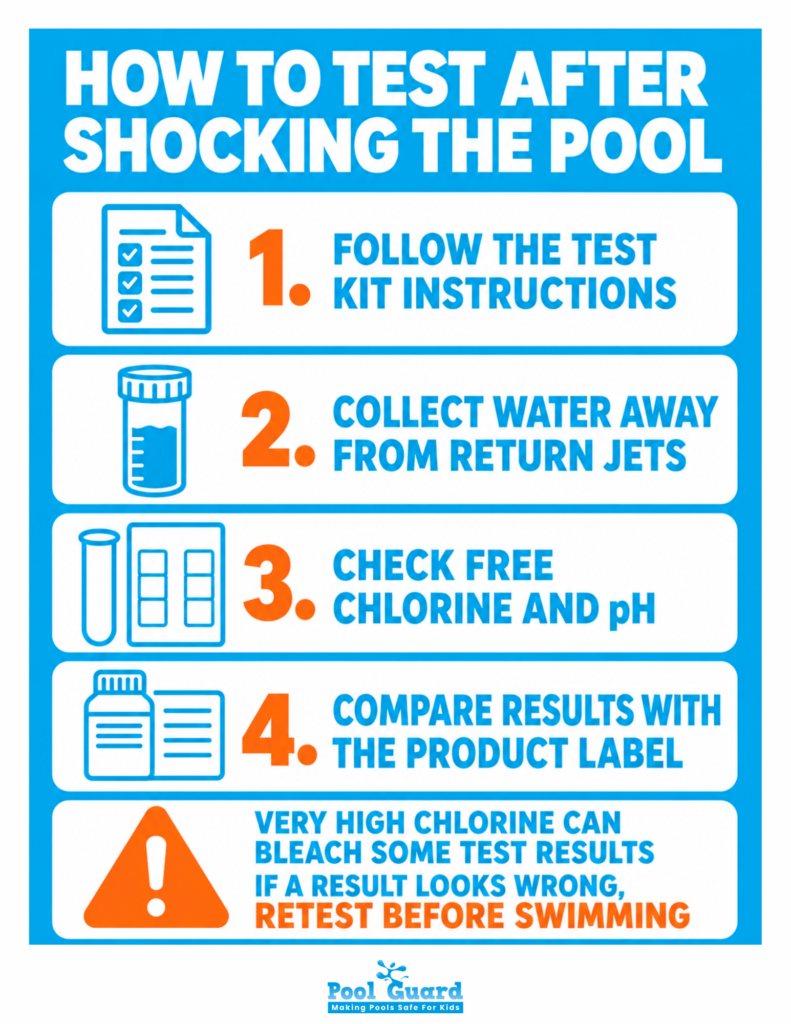
Time tells you when to check. Testing tells you when it’s safe. Here’s what to confirm before anyone gets in:
Many product labels and pool professionals point to a free chlorine range of roughly 1-3 ppm as the general target for comfortable swimming, though the exact number varies by manufacturer. So, treat your test kit and product label as the final word.
Use a liquid test kit or fresh test strips (old strips give unreliable readings), and test water from a few different spots in the pool, not just near the return jets, since chemical distribution isn’t always even right after shocking.
Jumping in before the water’s ready isn’t just uncomfortable. It can genuinely ruin your day. Getting in too early can cause several allergy symptoms, like:
None of these are usually life-threatening in a residential setting, but they’re entirely avoidable with one test kit and a few extra minutes of patience. The risk of pool chemical injuries is a well-documented reality. According to the CDC Pool Chemical Injuries Report, safe chemical habits are critical because improper handling sends thousands of people to the emergency room every year. More than half of these preventable injuries occur at home pools, with over a third affecting children under the age of 18.
Non-chlorine shock oxidizes contaminants quickly, so it often works faster. Chlorine-based shock typically needs several hours to circulate fully and allow chlorine levels to return to a swim-safe range.
Heavy shock treatments take longer, especially when the pool is cloudy, green, or battling algae. High bather loads, recent rain, wind-blown debris, and runoff can also increase the time needed.
Run the pump immediately after shocking and keep it running to help the chemicals circulate evenly. Standing water can cause chemicals to pool in “hot spots” instead of dispersing throughout the pool.
The time it takes for shock to wear off and return to normal maintenance levels typically ranges from 24 to 48 hours. This duration depends directly on pump runtime, water temperature, and sunlight.
Because direct UV exposure and warmer weather accelerate chlorine breakdown, shocking the pool in the evening maximizes chemical efficiency. This timing gives the product a full night to sanitize the water before daytime sunlight degrades the active chlorine.
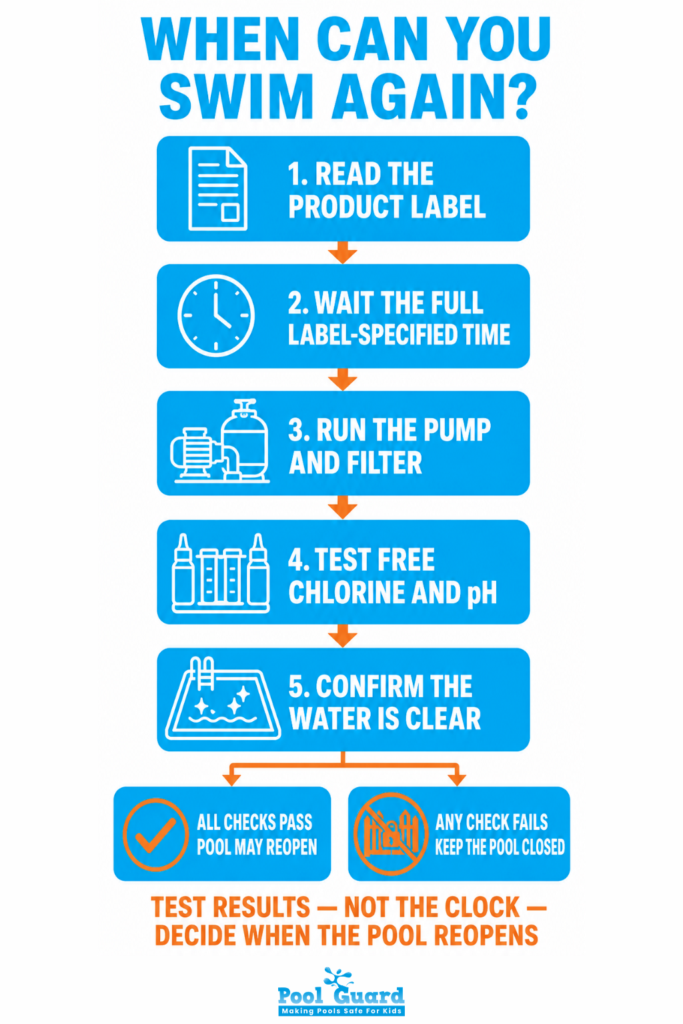
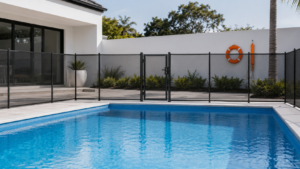
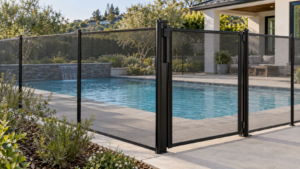
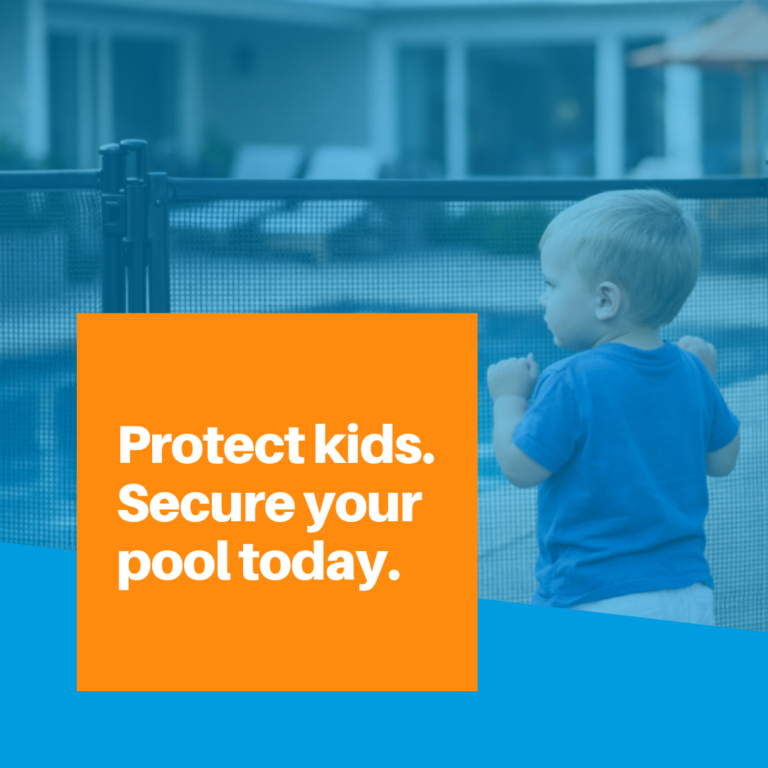
Testing chemistry is half the job. The other half is making sure nobody swims before you’ve confirmed it’s safe, which is exactly the gap a pool safety barrier is built to close.
A self-latching gate or pool safety fence automatically blocks access when a pool looks inviting but remains chemically unsafe. This constant protection is crucial during the precise waiting window after shocking when someone might forget the water is off-limits.
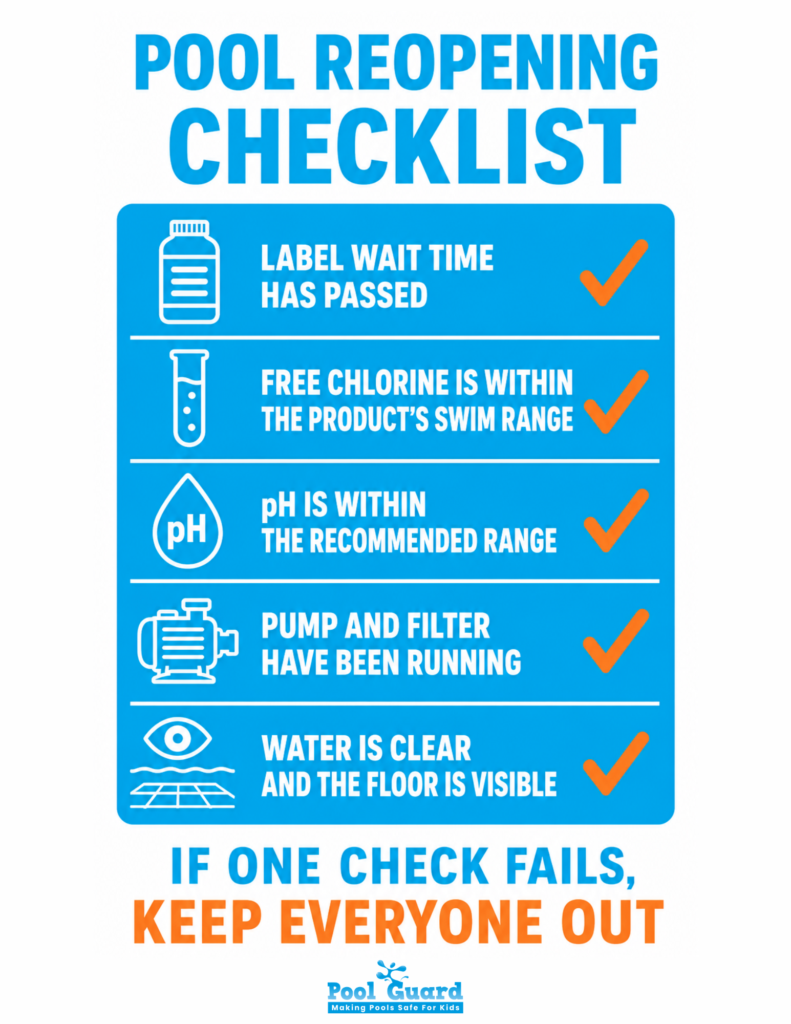
The timeline for how long after shocking pool can you swim depends strictly on a passed water test rather than a clock. While non-chlorine shock allows swimming within 15 to 30 minutes, chlorine treatments require an 8 to 24-hour wait, extending up to 48 hours for heavy algae cleanup.
You can safely dive back in once your home test kit confirms free chlorine has dropped to 1–4 ppm, pH is balanced, and the water is completely clear. Until these test results prove the water is safe, keep the pool closed, gated, and completely inaccessible to everyone.
Pool Guard USA specializes in pool safety fences and mesh safety covers that automatically keep kids and pets out of the water, including during that critical window after shocking, when a pool looks ready but isn’t quite there yet.
Find your local dealer by entering your zip code above.
Please fill out the form below with your information. Your local dealer will be notified about your inquiry.
Please fill out the form below with your information. Your local dealer will be notified about your inquiry.