Many people immediately close their swimming pools at the first sign of rainfall. However, standard safety advice rarely distinguishes between a gentle drizzle and a severe weather system. This leaves pool owners confused, as falling rainwater itself poses no inherent danger to a swimmer.
Deciding when to clear the water requires looking beyond the rain itself. Is it safe to swim in the rain in a pool? The true answer depends on a shifting mix of environmental conditions, visibility factors, and site management choices. This guide breaks down how to evaluate your storm conditions, when to evacuate, and how to prevent dangerous supervision gaps during sudden downpours.
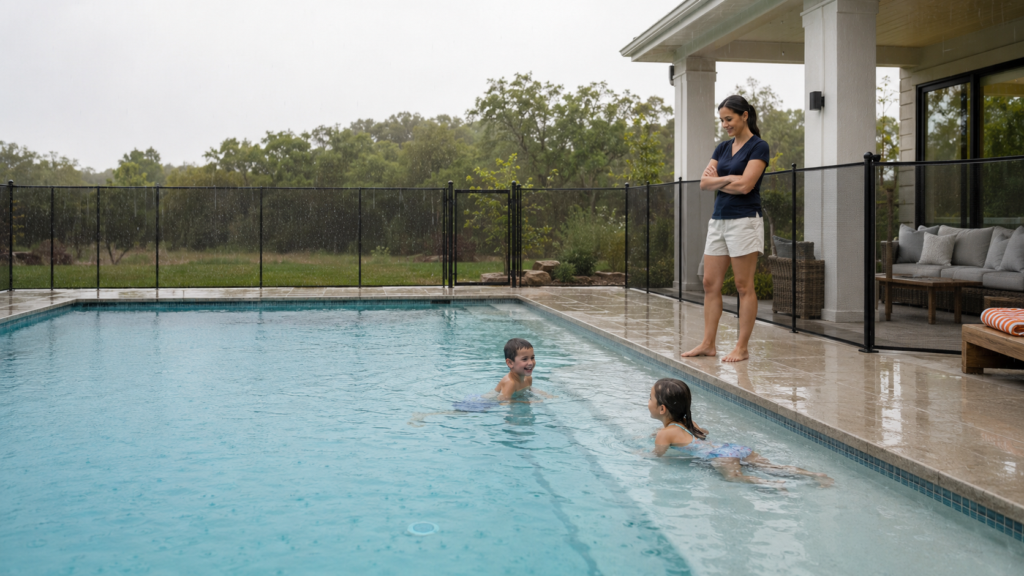
Sometimes. It depends on the type of weather you are facing. A calm, light drizzle with clear water and a supervised deck carries a very low risk. On the other hand, a heavy storm with strong winds, poor visibility, or any lightning is highly dangerous.
When deciding whether to stay in the water, you have to look closely at the current storm conditions. To help you figure out whether is it safe to swim in the rain in a pool, the table below breaks down the most common types of weather and what you should do:
| Condition | Safe to Swim? | Why |
| Light drizzle, clear water, calm deck | Maybe, with supervision | Visibility and footing are still fine |
| Heavy rain | No | Visibility drops and deck surfaces get slick |
| Rain with strong wind | No | Wind carries debris and furniture into the pool area |
| Cloudy or discolored water | No | A swimmer at the bottom of the pool can go unseen |
| Rain with thunder or lightning | No, leave immediately | Lightning risk overrides every other factor |
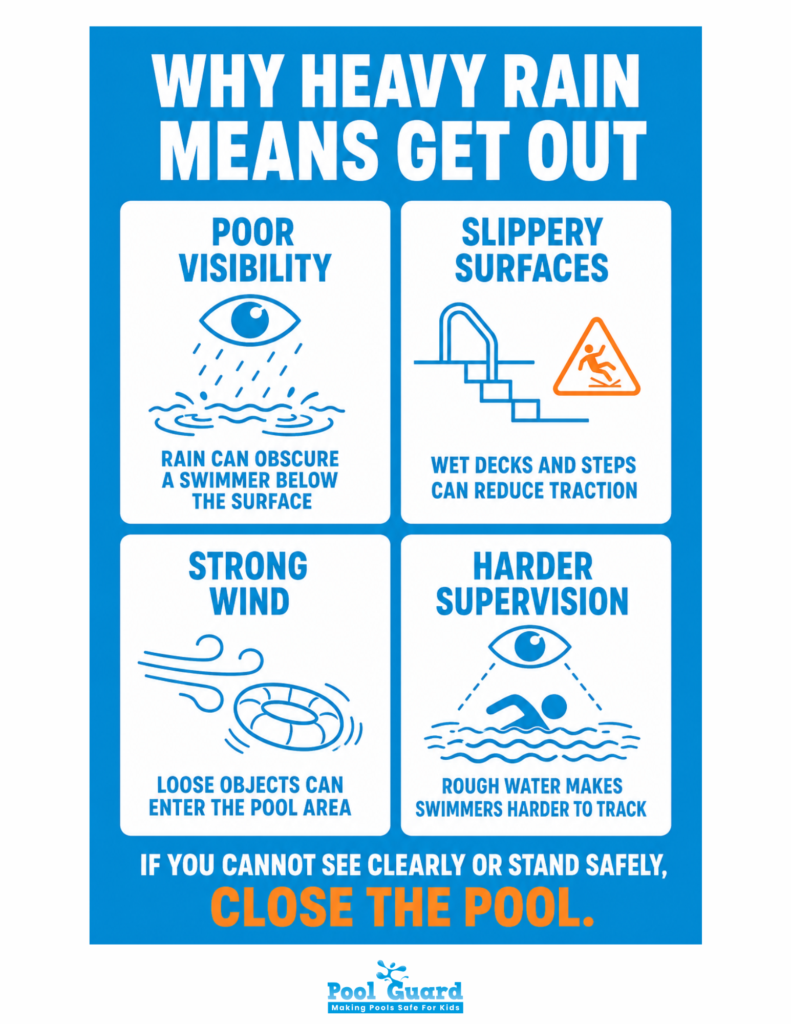
Heavy rain doesn’t create just one isolated problem. It stacks multiple dangers at the exact same time, making it unsafe for anyone to stay in the water.
Heavy downpours create constant ripples and bubbles on the surface. This physical disruption breaks up your sightlines, making it nearly impossible to see clearly all the way to the bottom of the pool. If a swimmer sinks or loses consciousness, they can easily become invisible to people on the deck.
Watching the pool becomes much harder during a storm. A parent or lifeguard scanning a rippling, rain-streaked water surface cannot track movement easily. This visual distraction slows down reaction times, making it tough when watching children and trying to spot someone who needs help.
Concrete, stone tiles, wood decks, and pool ladders lose their grip instantly when wet. Running or walking quickly during a sudden downpour creates a major slip-and-fall risk. A hard fall near the edge can cause a bad head injury, knocking a person out cold directly into the water.
Storms usually bring sudden, strong gusts of wind along with the rain. These winds can easily turn unanchored yard items into dangerous hazards. Loose pool toys, heavy plastic chairs, and large patio umbrellas can blow into the pool area, causing injuries or blocking swimmers trying to surface.
The combination of wind, wet skin, and cold rainwater robs body heat much faster than normal swimming. If you swim in a heated pool during a cold storm, the warm water can hide the early symptoms of hypothermia, like mild shivering or clumsy movements. This rapid chilling can cause sudden muscle cramps, leaving a swimmer unable to swim to the steps.
Storm winds and heavy rain wash large amounts of yard waste directly into the pool. Leaves, dirt, branches, and lawn fertilizer enter the water quickly, bringing in bugs and feeding algae growth. This sudden mess destroys water clarity and ruins your pool cleanings before the storm even passes.
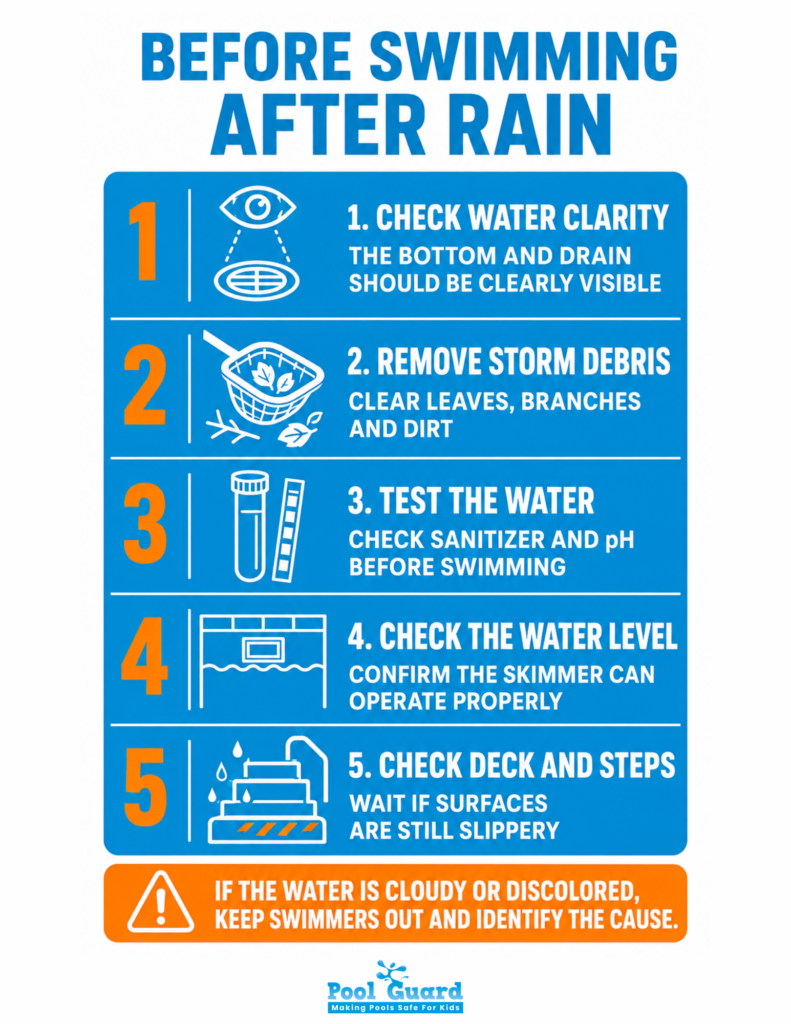
After light rain, usually yes, as long as the water is still clear and the deck isn’t a hazard. After heavy rain, check five things before letting anyone back in:
If the water is cloudy or discolored, treat it before anyone gets in. Discoloration after rain is almost always the start of an algae bloom, and it gets harder to clear the longer it sits untreated.
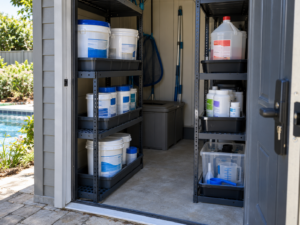
Rain dilutes pool chemicals and lowers pH, and it also carries in phosphates, nitrates, and organic debris that give algae something to feed on. Sanitizer gets used up faster because it’s now working on incoming contaminants on top of its normal job. None of that is dangerous by itself, but a pool that sits unbalanced after a storm becomes an algae risk within a day or two, especially in warm weather.
Get everyone out of the pool immediately, as there are no exceptions to this rule. The National Lightning Safety Institute issues direct guidance: “If you can see it, flee it; if you can hear it, clear it.” Lightning does not have to strike directly overhead to cause severe injuries, because the electrical current can travel through a pool’s metal plumbing, water pumps, and surrounding fences.
To protect swimmers, always use the National Weather Service 30/30 rule. If less than 30 seconds pass between a lightning flash and a thunder clap, you must seek shelter inside a building or hard-topped vehicle right away. Once inside, you must wait at least 30 minutes after the very last rumble of thunder before it is safe to reopen the pool.
A few habits make the difference between a rain delay and an actual incident:
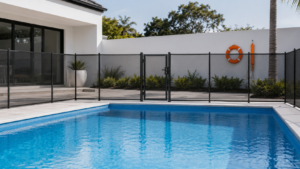
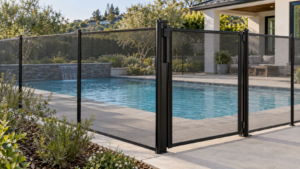
A code-compliant pool fence with a self-latching gate or an automatic safety cover eliminates the risk of an unsupervised pool. These barriers keep the water completely off-limits during sudden downpours or other unexpected gaps in active supervision.
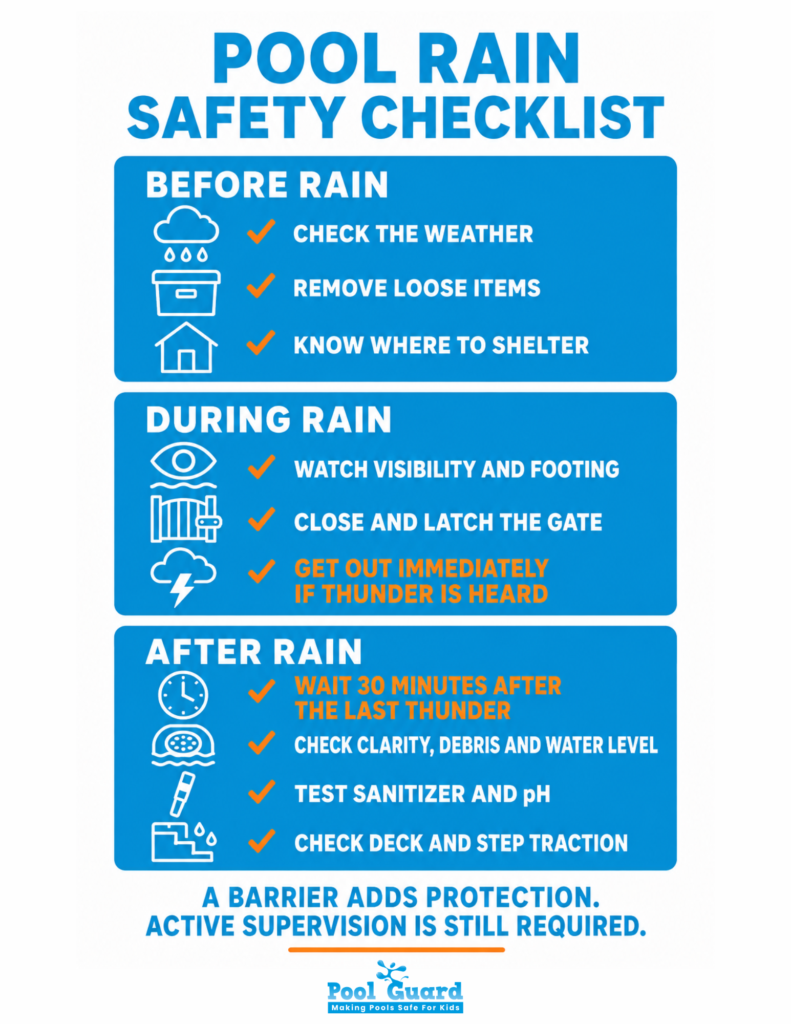
Is it safe to swim in the rain in a pool? Light rain in calm, supervised conditions isn’t automatically dangerous. Heavy rain, poor visibility, strong wind, cloudy water, or any lightning means the pool closes until conditions clear. After the storm passes, check water clarity, chemistry, debris, and deck traction before anyone gets back in, and treat a latched gate or safety cover as the backstop that keeps the pool secure while you sort it all out.

Find your local dealer by entering your zip code above.
Please fill out the form below with your information. Your local dealer will be notified about your inquiry.
Please fill out the form below with your information. Your local dealer will be notified about your inquiry.