Swimming should feel refreshing – not risky.
Yet every year across the U.S., thousands of people get sick from pools, hot tubs, splash pads, and even “perfectly clear” water. And the truth is, many people never stop to wonder can pool water make you sick until someone in the family actually does.
Most swimmers (and pool owners) don’t realize how easily germs survive chlorine, how often contamination happens, or what symptoms to look for when something goes wrong. Many of these risks are part of broader pool hazards homeowners often overlook, especially when water quality appears normal.
This guide merges all major public-health sources (CDC, Mayo Clinic, health departments, waterborne disease experts, and medical research) into one authoritative resource that answers every question you’ve ever had – including the uncomfortable ones others gloss over.
If you want the most complete, medically accurate, and parent-relevant guide online, you just found it.
Yes. Pool water can make you sick – sometimes mildly, sometimes severely. This is why visibility issues—like those explained in can you swim in a cloudy pool—often signal deeper safety problems.
Even “properly chlorinated” pools can spread germs because:
In fact, the CDC reports that outbreaks of recreational water illness (RWI) have risen sharply over the last decade, especially from Crypto, Legionella, and Giardia.
These illnesses typically occur when swimmers accidentally swallow contaminated pool water. They are the most common and the most frequently underestimated, recreational water illnesses. These same contamination pathways are also responsible for many cases described as near drowning, where delayed symptoms can appear after exposure.
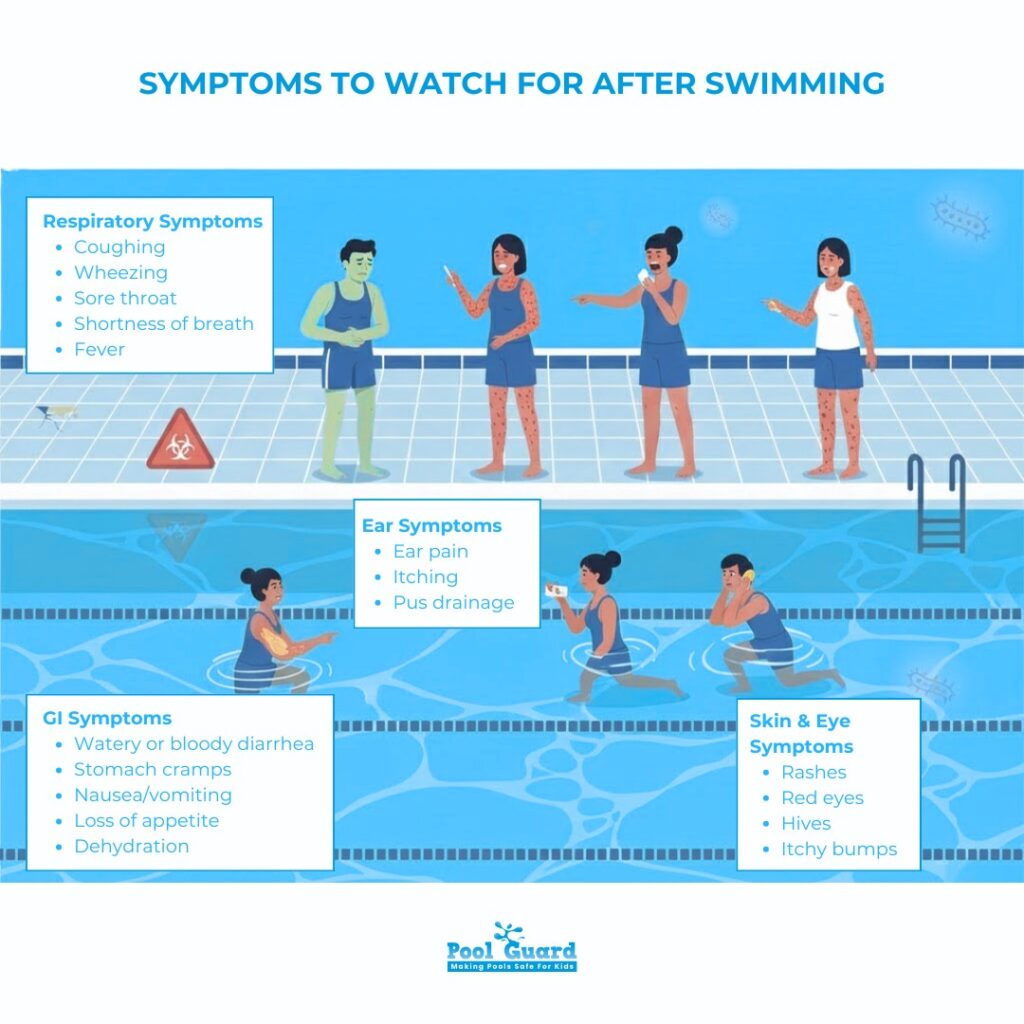
Cryptosporidium is the most common cause of pool-related diarrhea outbreaks, and it’s uniquely difficult to eliminate because it survives more than seven days in chlorinated water. Infection usually occurs when someone with diarrhea enters the pool and sheds the parasite, which can then infect others who accidentally swallow even a small amount of water. Crypto typically causes watery diarrhea, stomach cramps, dehydration, and fever, and it poses the greatest dangers of pool water to young children and people with weakened immune systems.
Giardia is another parasite transmitted through contaminated pool water. Although chlorine can kill Giardia, it takes roughly 45 minutes to do so, meaning swimmers can still be exposed shortly after contamination occurs. Once infected, people commonly experience diarrhea, abdominal cramps, bloating, and gas.
Shigella is a bacteria that causes severe and often bloody diarrhea. It spreads easily when infected individuals, especially children, swim in beaches, splash pads, or pools that are not adequately disinfected. Even small amounts of contaminated water can transmit the infection.
E. coli O157:H7 is a dangerous strain of bacteria linked to fecal contamination in lakes or improperly treated swimming pools. It can cause intense stomach cramps and bloody diarrhea and, in severe cases, lead to hemolytic uremic syndrome (HUS), a type of kidney damage that can be life-threatening.
Norovirus is highly contagious and can be introduced into pool water through vomit or fecal matter from infected swimmers. It spreads rapidly in crowded pools or splash parks and is known for causing sudden, explosive vomiting, diarrhea, and stomach cramps.
Hot tub rash, caused by the bacteria Pseudomonas aeruginosa, often appears as itchy, acne-like bumps on the skin. It develops when swimmers spend time in poorly maintained hot tubs or warm pools, where high temperatures allow bacteria to multiply rapidly if disinfectant levels drop. Although the rash usually resolves on its own, it can be uncomfortable and may worsen with prolonged exposure.
Swimmer’s itch is an allergic reaction triggered when certain parasites—typically released by snails and carried by waterfowl – come into contact with human skin. These microscopic organisms mistakenly burrow into the skin but die shortly afterward, causing red, itchy welts. The condition is commonly associated with lakes, ponds, and shoreline areas where these snails live.
Swimmer’s ear is an infection of the outer ear canal that occurs when water becomes trapped, creating a moist environment where bacteria can thrive. The condition often begins with itchiness and mild discomfort but can progress to significant pain, redness, and pus-like drainage. Children are particularly susceptible, and untreated cases may require medical treatment with antibiotic ear drops.
Legionnaires’ disease is a serious form of pneumonia caused by inhaling water vapor or mist contaminated with Legionella bacteria. This organism is frequently associated with poorly maintained hot tubs, indoor pool features, and warm water systems. Symptoms can escalate quickly and may include fever, cough, shortness of breath, and muscle aches. Older adults, smokers, and individuals with weakened immune systems face a significantly higher risk of complications.
“Chlorine cough” refers to airway irritation that develops when swimmers inhale chloramines—chemical byproducts formed when chlorine mixes with sweat, urine, or other organic contaminants in pool water. Indoor pools with inadequate ventilation allow these fumes to accumulate at breathing level, leading to coughing, wheezing, throat burning, and chest tightness. Children, people with asthma, and competitive swimmers who spend long hours in indoor pools tend to experience these symptoms most frequently.
No. Absolutely not.
Even perfectly treated pool water is not safe to drink because:
No. If you’re wondering can you drink chlorine pool water, the answer is still no – it can irritate your stomach and expose you to pathogens your immune system isn’t prepared for. It can irritate your stomach and deliver pathogens your immune system isn’t prepared for.
Ideally zero, but swallowing a tiny accidental sip is common – what matters is what’s in that water at the time. Even small exposures highlight why layered protection—like those outlined in a complete pool safety checklist—is essential for families.
If you accidentally swallow a small amount of pool water, try not to panic. It happens to nearly everyone who swims. The first step is simply to drink clean water to dilute anything you may have ingested, then pay attention to how you feel over the next 48 to 72 hours. Most exposures do not lead to illness, but monitoring for symptoms is important.
If symptoms such as diarrhea, fever, or blood in the stool begin to develop, it’s crucial to seek medical attention promptly. These may indicate an infection like Crypto, Giardia, Shigella, or E. coli. You should also contact a healthcare provider if you experience persistent vomiting, signs of dehydration, or stomach pain that continues for longer than 24 hours. These symptoms suggest your body is struggling to recover and may require medical evaluation or treatment.

Important: Symptoms from Crypto can begin 1–12 days after exposure – not immediately.
Yes. children can absolutely get sick from drinking pool water, and they are the most vulnerable group. Children tend to swallow more water while swimming, especially during play, and many wear swim diapers that can leak, allowing germs to enter the water. Kids also shed and transmit Cryptosporidium more easily than adults, and their immune systems are still developing, which makes them more susceptible to infections.
If a child begins to experience symptoms after swimming—such as diarrhea, stomach cramps, vomiting, or fever – it’s important to monitor them closely. Contact a pediatrician if these symptoms persist for more than 24 hours or if signs of dehydration appear. Early medical evaluation can prevent complications and ensure appropriate care.
Most contamination isn’t from “dirty pools.” It’s from swimmers themselves.
This is why even clear, sparkling water can still be contaminated.
Safe water is only one part of the equation. A comprehensive pool safety equipment checklist helps prevent both contamination and accidental entry, especially for young children.
Hot tubs are one of the highest-risk recreational water environments because they provide ideal conditions for bacteria such as Pseudomonas and Legionella to thrive. Their warm temperature—combined with inadequate disinfectant levels—creates what experts often refer to as “bacteria heaven,” allowing dangerous germs to multiply rapidly. As a result, poorly maintained hot tubs can easily spread infections that affect the skin, ears, or even the lungs.
Splash pads and spray grounds are particularly risky for children because kids tend to swallow the water sprayed from jets and fountains. These facilities often use recirculating systems, meaning any contamination – especially from leaking swim diapers—continues cycling through the water features. This is why Crypto outbreaks are especially common at splash pads, even when the water looks clean to the eye.
Indoor pools pose their own risks due to the buildup of chloramines, the irritating chemical byproducts created when chlorine mixes with sweat, urine, and other organic material. Without strong ventilation, these fumes can accumulate just above the water’s surface, causing eye irritation, coughing, wheezing, and burning sensations in the throat. Poor air circulation also means swimmers – particularly children and competitive athletes – are exposed to higher concentrations of these chemicals over time.
Follow these, and you’ll cut your risk of recreational water illness dramatically.
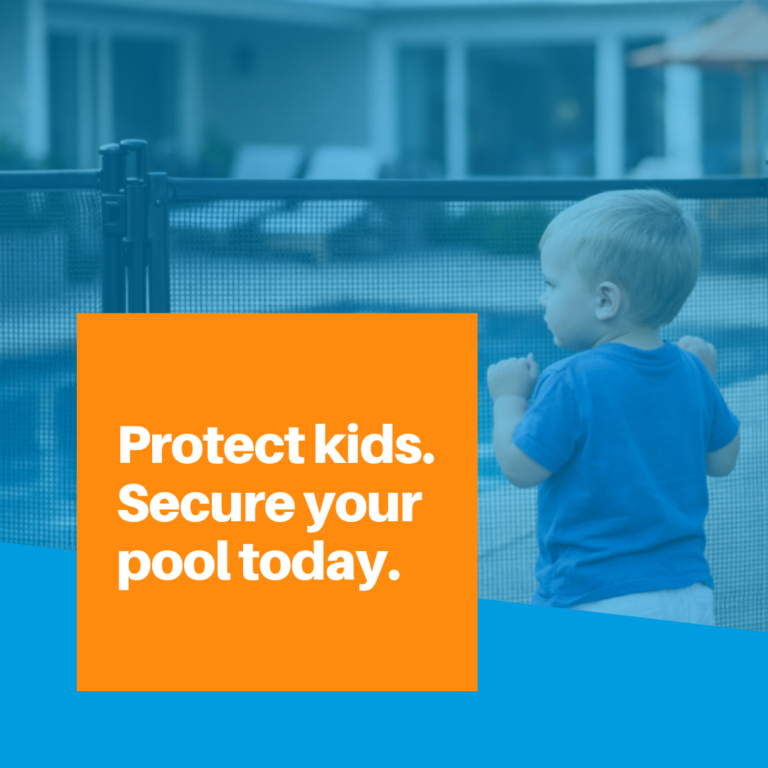
In addition to water-quality precautions, physical safety barriers like a reliable pool safety fence, secure pool covers, and even the pool alarms also play a crucial role in keeping children from unsupervised access to the water.
Seek medical care if:
Crypto, Shigella, E. coli, and Legionella require medical evaluation.
For pool owners, reducing illness risk starts long before symptoms appear. Routine pool safety inspections and maintaining essential barriers ensure the environment remains both sanitary and secure.
So, can pool water make you sick?
Yes. But the real story is more nuanced: with smart habits, good pool hygiene, and a clear understanding of high-risk environments, you can significantly reduce your chances of getting sick. Most pool-related illnesses are preventable when swimmers follow simple precautions and choose properly maintained facilities.
It’s also important to stay aware of symptoms after swimming, especially in children or anyone with a weakened immune system. Quick action – whether that’s hydrating, contacting a healthcare provider, or avoiding the pool temporarily – can prevent mild issues from becoming serious. And for pool owners, consistent maintenance isn’t optional; it’s the backbone of safe swimming.
If you found this guide useful, share it with another parent, swimmer, or pool owner.
Knowledge is the single most effective way to prevent waterborne illness and smarter swimmers make safer pools for everyone.
Find your local dealer by entering your zip code above.
Please fill out the form below with your information. Your local dealer will be notified about your inquiry.
Please fill out the form below with your information. Your local dealer will be notified about your inquiry.