Most homeowners think of pool cover maintenance as housekeeping—brushing leaves, hosing dirt, maybe checking straps once a year. That assumption is wrong, and it’s where risk starts.
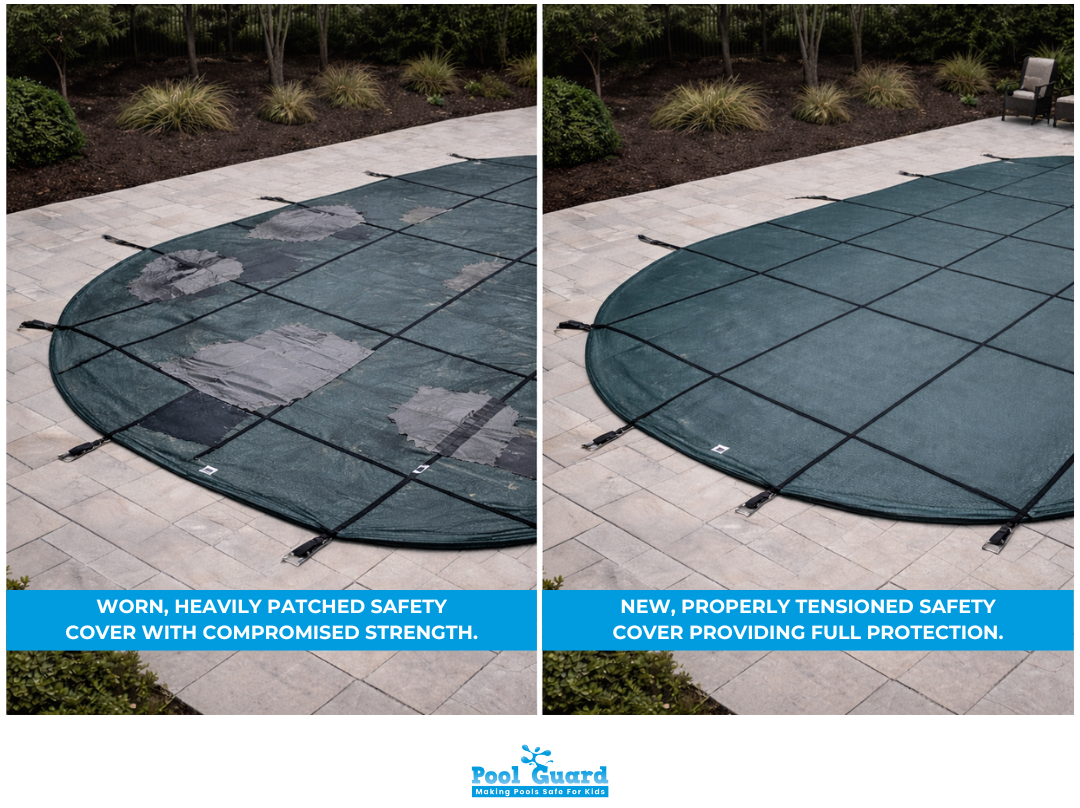
A pool cover is a safety barrier, not a tarp. When it’s properly installed and properly maintained, it prevents unintended access, supports weight as designed, and works as part of a broader pool safety system. When it’s neglected, failure doesn’t announce itself. It happens quietly: fabric stretches, anchors loosen, water adds weight, chemicals weaken materials.
The most dangerous pool cover failures aren’t dramatic collapses. They’re subtle degradations that create a false sense of protection—exactly when families assume safety is “handled.”
Maintenance, in other words, isn’t optional upkeep.
It’s functional safety management.
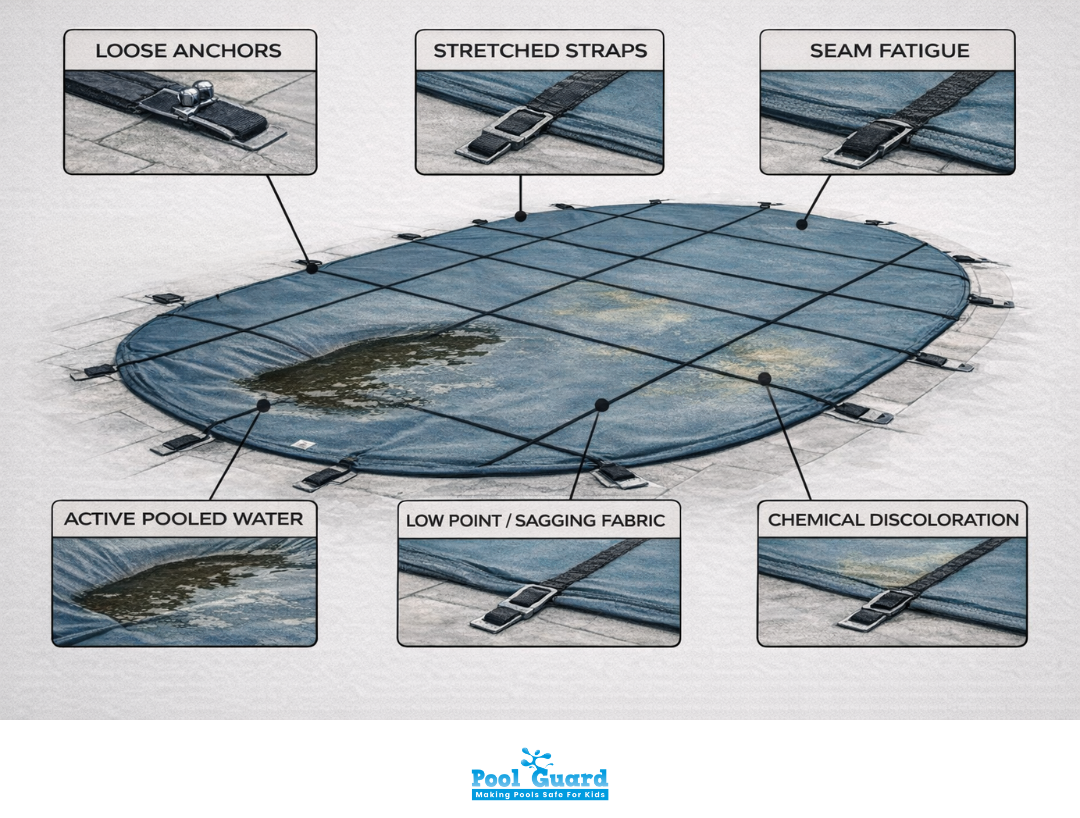
Neglected swimming pool cover maintenance leads to predictable failure modes:
This is why inspection and maintenance are inseparable. A cover that isn’t routinely checked is a cover whose real condition is unknown—and unknown is unacceptable when safety is involved.
Important scope note: This guide focuses on non-automatic safety-oriented pool covers. Automatic covers involve motors, tracks, and electrical systems that require manufacturer-specific servicing and are outside the scope of homeowner maintenance. It also excludes systems like liquid pool covers, which do not provide physical barrier protection.
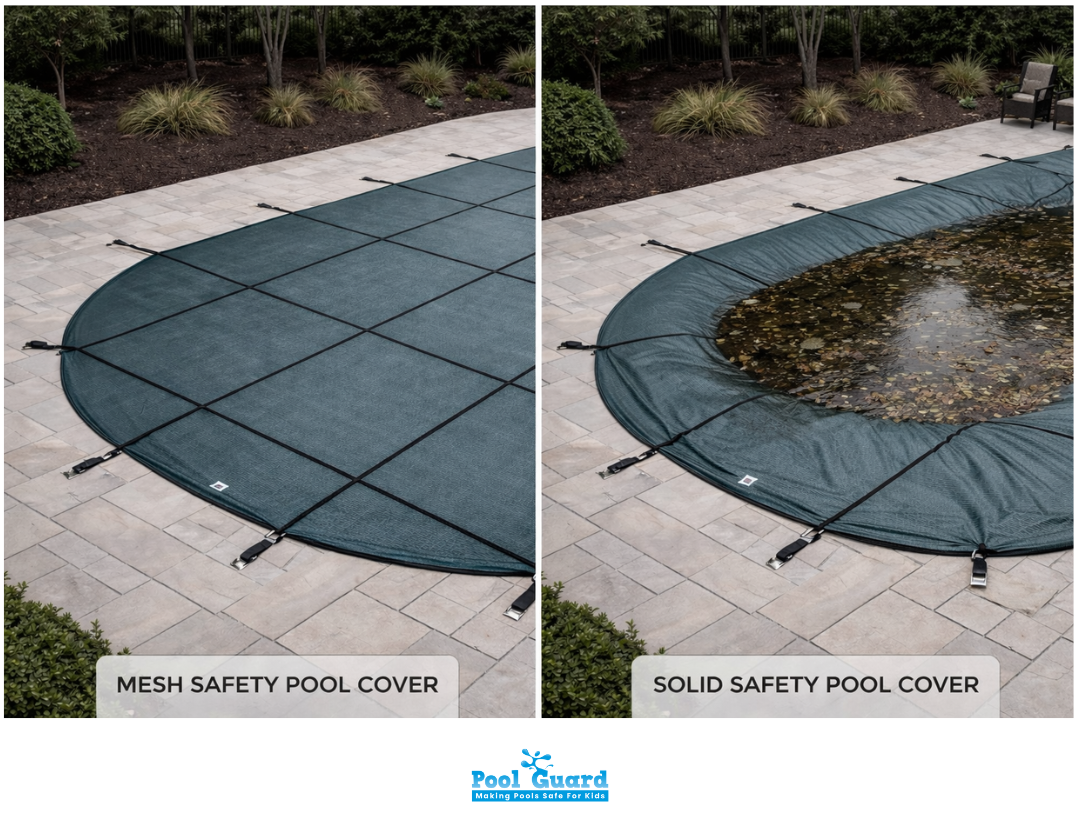
Each cover type protects differently—and fails differently. Effective pool cover maintenance respects those differences.
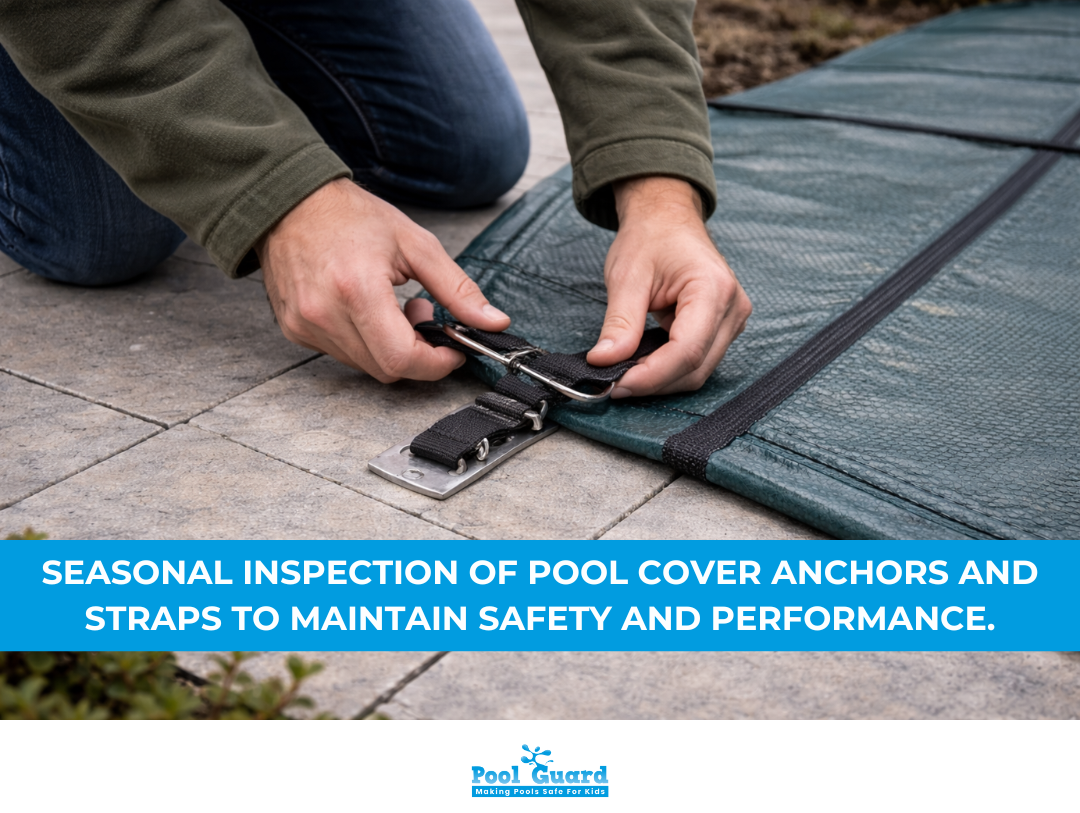
Pool covers don’t exist in isolation. They live in a chemically active, weather-exposed environment.
This is why visual appearance alone is not a valid safety assessment. Function degrades before failure becomes obvious.
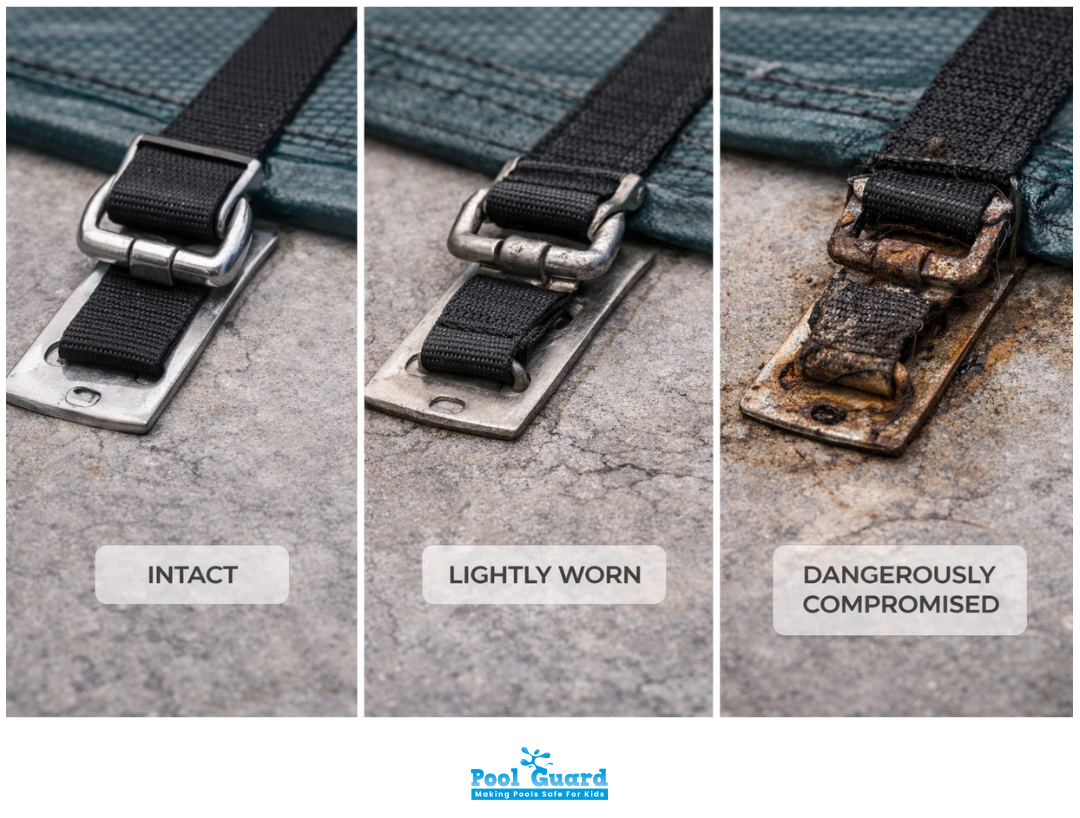
These aren’t negligence—they’re normal assumptions that turn into risk:
Good intentions don’t prevent accidents. Systems do.
This is where responsible safety planning becomes clear.
A pool cover is critical, but it is not standalone protection. The most effective environments layer safeguards as part of a broader complete pool safety equipment strategy:
Organizations like Pool Guard USA emphasize layered safety because redundancy saves lives. When one layer weakens, another remains in place. Reviewing a full pool safety checklist ensures no critical safety layer is overlooked.
That approach builds trust—because it’s honest.
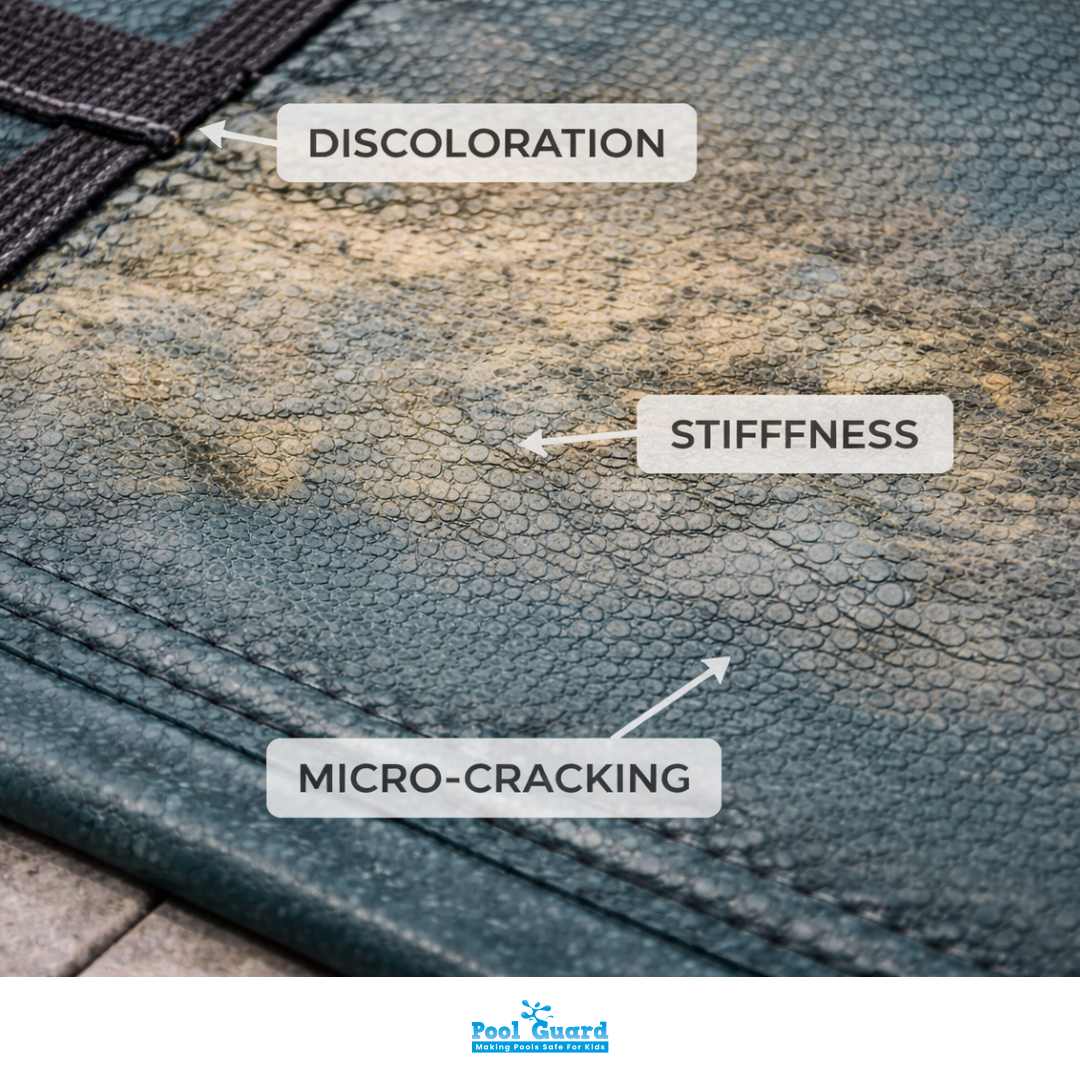
There are clear points where maintenance can’t restore safety:
At that stage, continuing to use the cover doesn’t “save money”—it extends risk. In many cases, regular pool safety inspections can identify these issues before failure occurs.
Replacing a compromised cover restores known performance, which is the foundation of any safety system.
Proper pool cover maintenance isn’t about making equipment last longer—it’s about taking ownership of risk. A pool cover is a safety system first and a physical product second, and it only performs at that level when it’s maintained with intention. When care is proactive, the cover does more than protect the pool itself: it safeguards people, preserves property value, and eliminates the quiet uncertainty that comes from not knowing whether a critical system will work when it’s needed.
Treating maintenance as optional or cosmetic undermines that protection. Wear goes unnoticed, small failures compound, and what should function as a reliable barrier becomes a false sense of security. But when maintenance is approached as operational safety—inspections, adjustments, and accountability—the cover fulfills its real purpose. Peace of mind isn’t accidental—it’s maintained, or you can explore professional pool safety solutions to ensure your system is built correctly from the start.
Please fill out the form below with your information. Your local dealer will be notified about your inquiry.
Please fill out the form below with your information. Your local dealer will be notified about your inquiry.