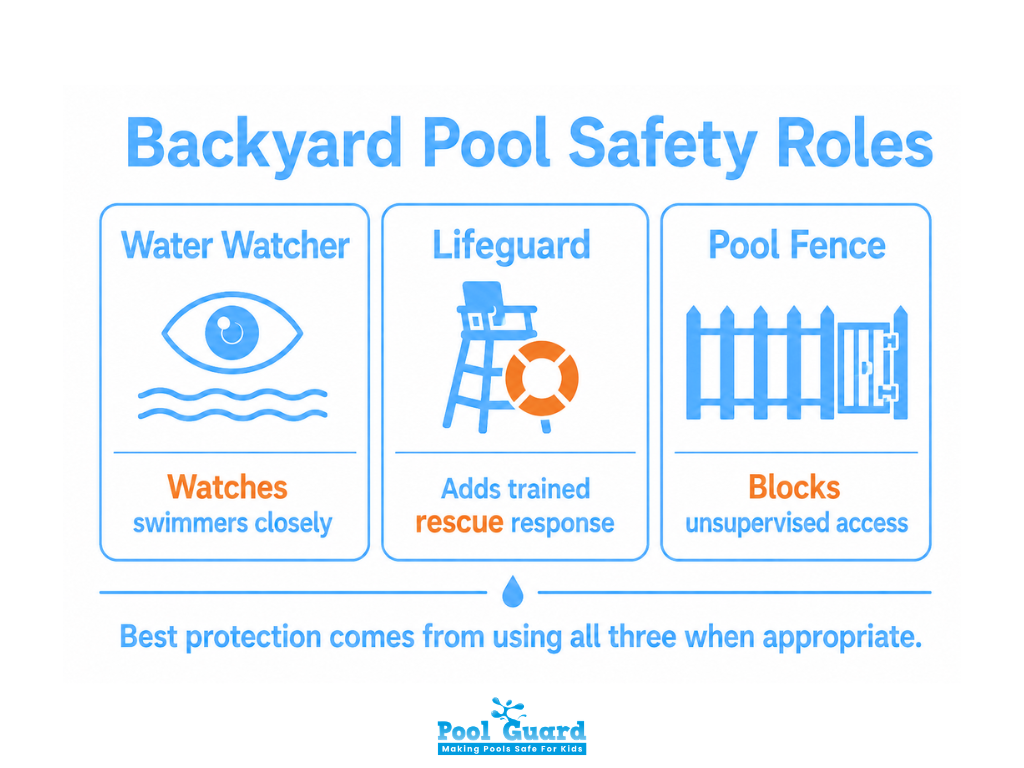
Drowning happens silently and in as little as 20 seconds, making proactive supervision your most critical defense. When planning a pool gathering, understanding the roles of a water watcher vs lifeguard can mean the difference between a fun afternoon and a tragic emergency. While both roles focus on safety, they require vastly different levels of training and rescue capabilities.
This guide breaks down those key differences, explains when to hire professionals, and outlines a multi-layered safety plan. By choosing the right layer of protection for your specific event size and guest count, you can eliminate distractions and ensure that every swimmer stays safe in the water.
Because drowning is silent and can happen in seconds, incorporating a dedicated water watcher, a certified lifeguard, or both, is critical for protecting young children ages one to four, who are at the highest risk.
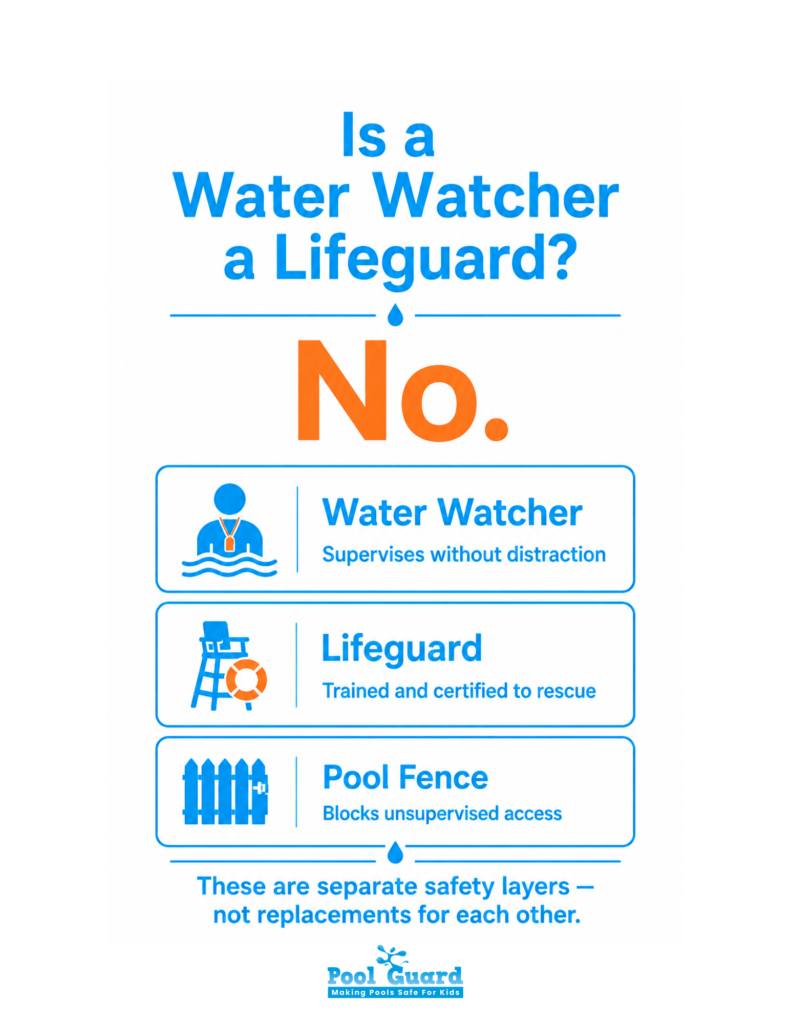
A water watcher is an undistracted, designated adult responsible for constantly scanning the pool during casual backyard swims, who holds no professional rescue certifications but ensures uninterrupted eyes on the water. On the other hand, a lifeguard is a professionally trained and certified expert who monitors large groups, enforces safety rules, and performs advanced water rescues and CPR.
| Water Watcher | Lifeguard | |
| Training | Short orientation (typically 30 min) | 25-30+ hour certification course |
| Main job | Designated, distraction-free adult supervision | Scan, prevent, rescue, and respond |
| Rescue certified? | No | Yes |
| CPR certified? | Not required | Required |
| Legal duty to act? | Generally, no (varies by jurisdiction) | Yes, duty to respond |
| Common setting | Backyard pools, parties, family swim time | Public pools, beaches, water parks |
| Replaces a pool fence? | No | No |
| Replaces parent supervision? | No | No |
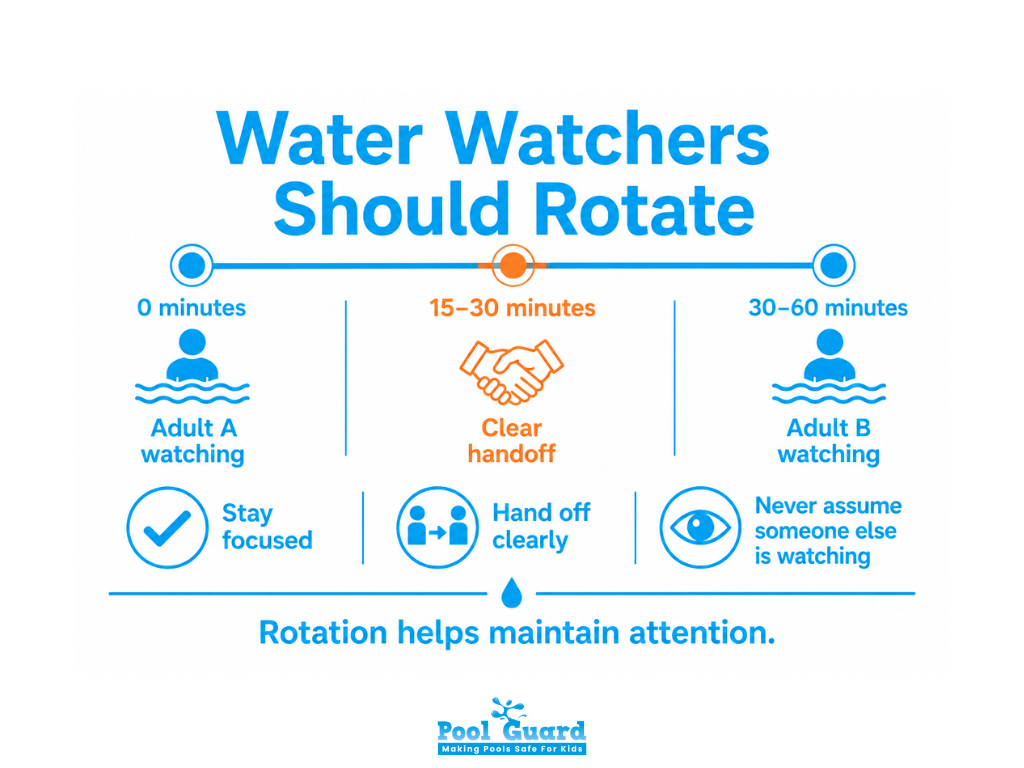
The National Drowning Prevention Alliance (NDPA) defines a Water Watcher as a responsible adult who provides close, constant, and capable supervision of children in or near water, without engaging in any other activity. No phone. No alcohol. No conversation that pulls eyes away from the water.
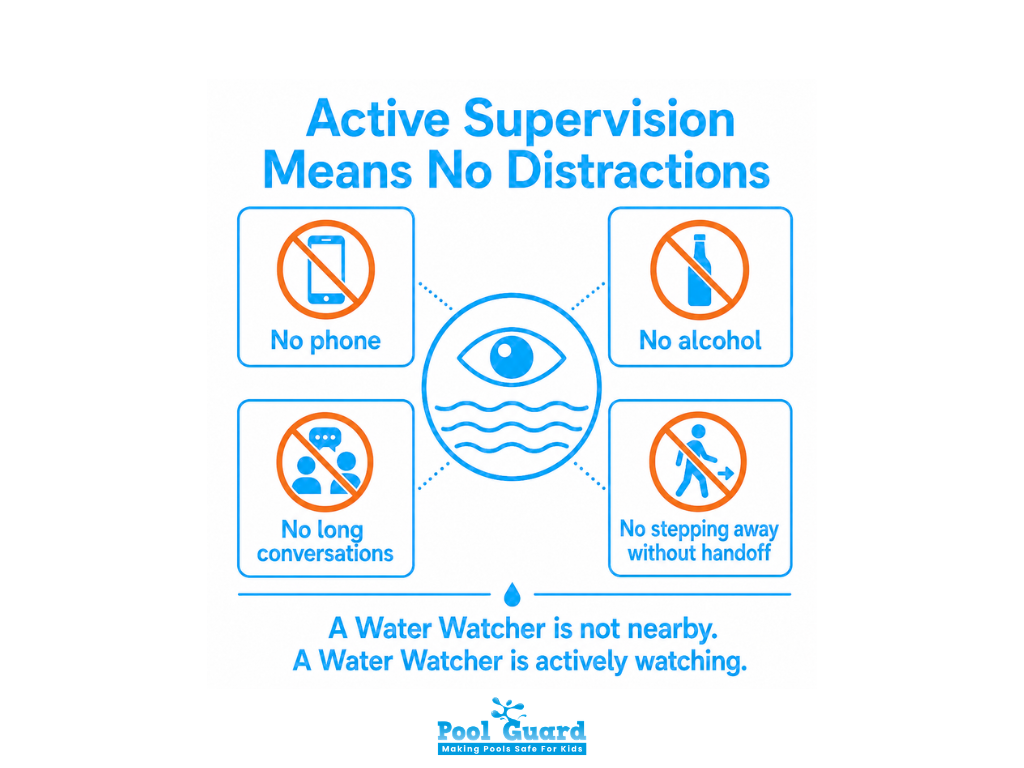
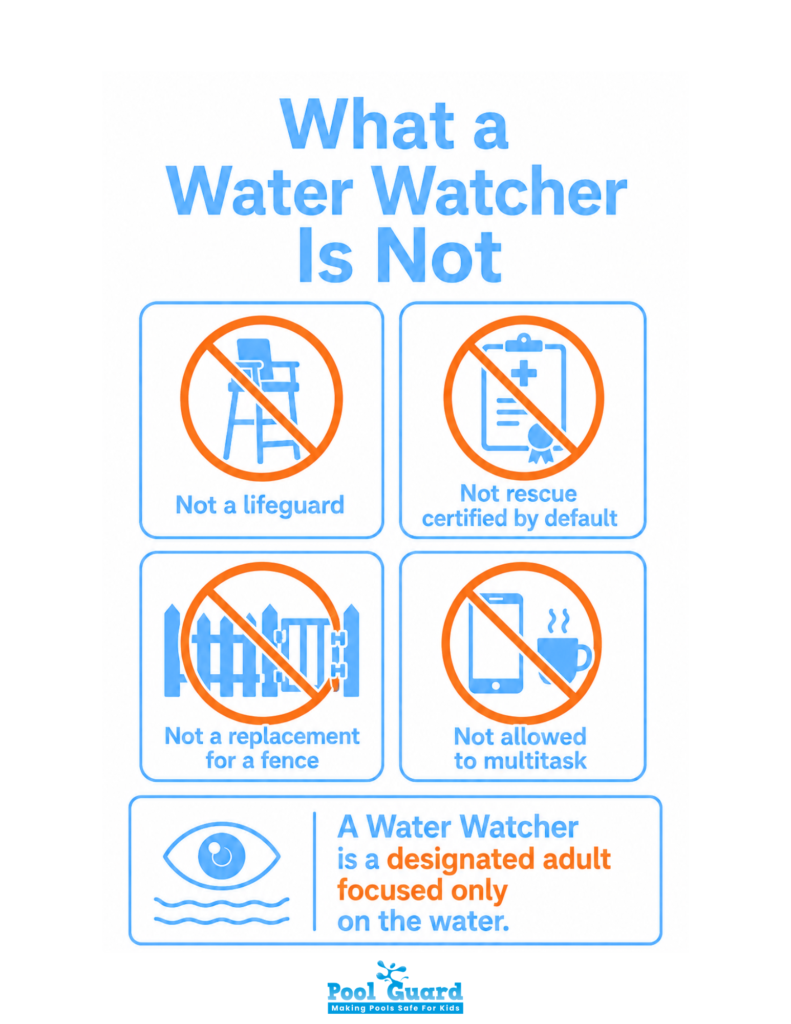
A Water Watcher is not simply an adult who happens to be nearby. It is one adult with one job.
Key responsibilities include:
The NDPA includes supervision as one of its 5 Layers of Protection against drowning. Active, designated supervision is what a Water Watcher delivers.
A Water Watcher course typically covers basic water safety awareness, recognizing distress signs, and when and how to call for help. It doesn’t include rescue techniques or CPR certification.
A lifeguard is a trained, certified professional responsible for water surveillance, accident prevention, rule enforcement, rescue operations, CPR, and full emergency response.
Lifeguard certification programs, such as those offered by the American Red Cross or Ellis & Associates, require 25 to 30 hours of combined classroom instruction and hands-on skills practice. Candidates must demonstrate proficiency in water rescue techniques, CPR with rescue breaths, and first aid Layers of Protection before receiving certification.
Lifeguards carry a legal duty to act. They are employed or volunteering under an organization, covered by that organization’s insurance, and held to a professional standard of care.
Important: Even with a lifeguard on duty, parents and caregivers should continue to actively supervise their own children. Lifeguards monitor many swimmers simultaneously. Glare, blind spots in large pools, and crowd density can challenge even the most vigilant professional. A designated Water Watcher in the family serves as a second layer, not redundancy, but reinforcement.
No. A water watcher is not considered a lifeguard, legally, professionally, or functionally.
Lifeguard requirements are regulated by state, county, and local governments, typically through health departments. If your facility is legally required to have a lifeguard on duty, a Water Watcher program doesn’t satisfy that requirement. Contact your local health department to determine what applies to your specific venue.
From a liability standpoint, lifeguards are employees or recognized volunteers covered under their organization’s insurance. Water Watchers are typically private volunteers, not covered by facility insurance unless formally deputized by a board of directors. Rules vary significantly; consult your insurance agent and a local attorney for clarity.
Depending on your jurisdiction, Water Watchers may fall under Good Samaritan laws, meaning they are not legally obligated to perform a rescue, only to call for help and summon a trained responder. Lifeguards, by contrast, are obligated to respond to the full extent of their training.
Designate a Water Watcher any time children are swimming, regardless of the setting:
The most preventable drownings happen when everyone assumes someone else is watching. A designated Water Watcher eliminates that ambiguity.
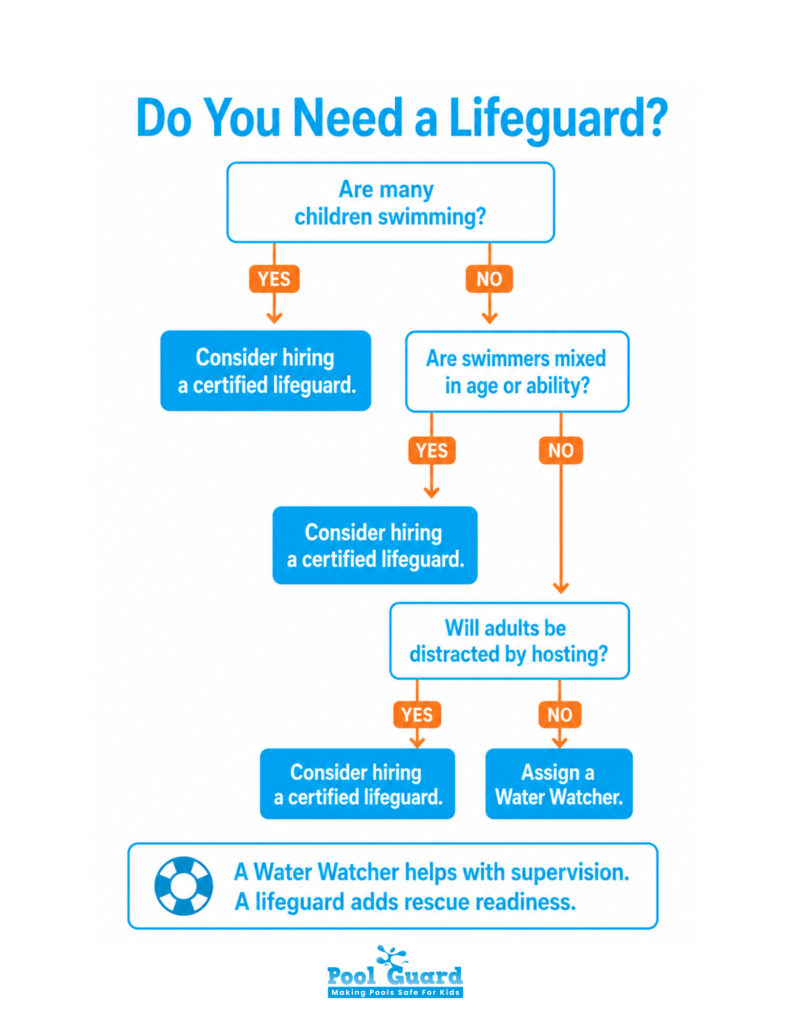
Consider hiring a certified lifeguard when:
At events like these, a lifeguard provides a professional layer of protection that no amount of well-intentioned parent supervision can replicate.
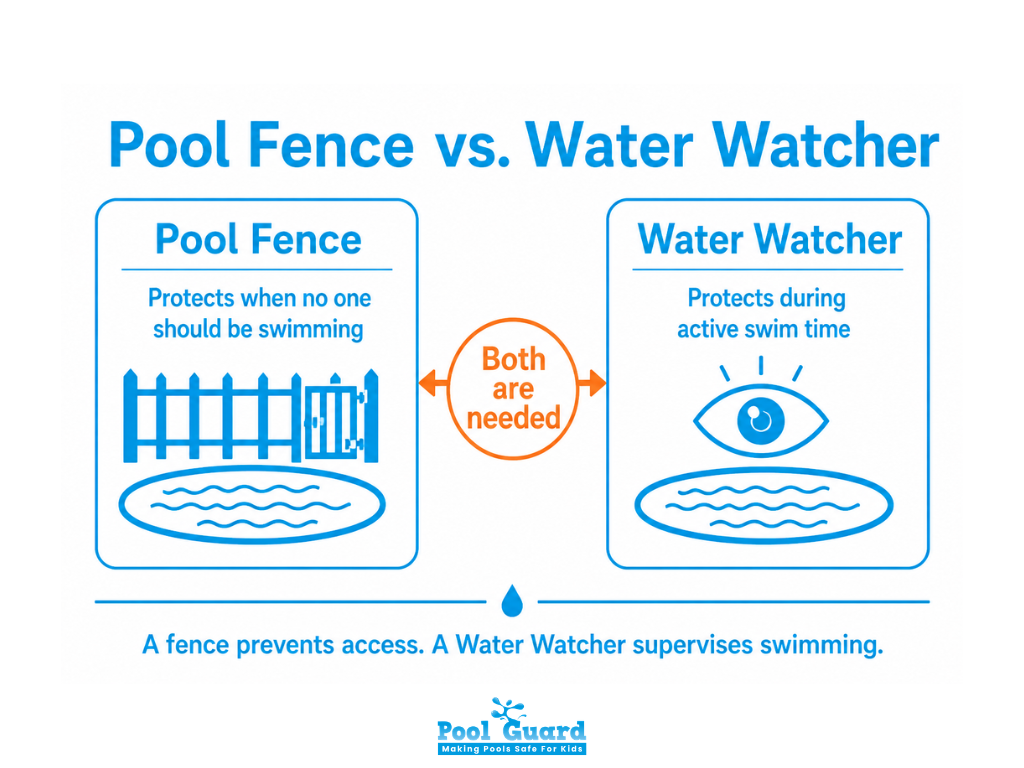
A Water Watcher protects children during active swim time. A pool fence protects children when no one is supposed to be swimming, and that window is often the most dangerous one.
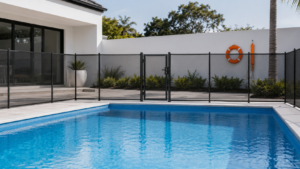
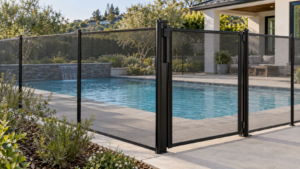
Young children can reach water silently in seconds while adults are distracted. A properly installed pool fence with a self-closing, self-latching gate creates a physical barrier that doesn’t rely on memory, attention, or perfect parental vigilance.
Key fence safety standards:
Neither Water Watcher nor lifeguard can prevent an unsupervised child from entering an unfenced pool. These are complementary layers, not competing ones.
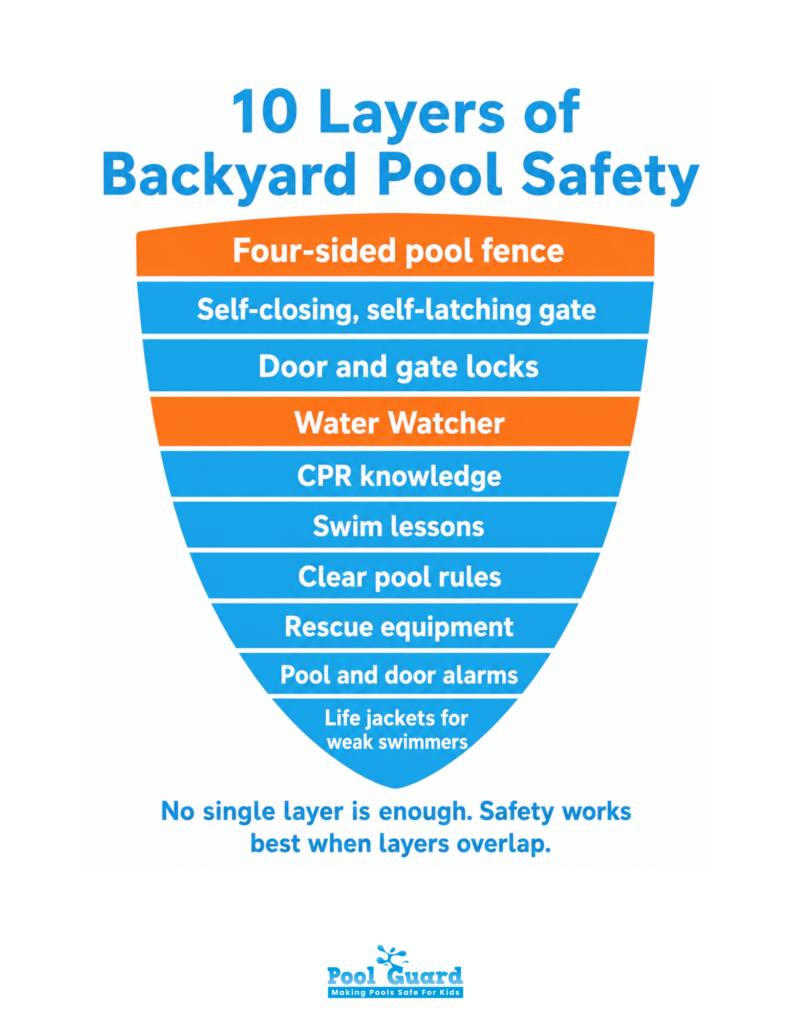
No single safety measure is enough on its own. The most effective drowning prevention stacks multiple independent layers:
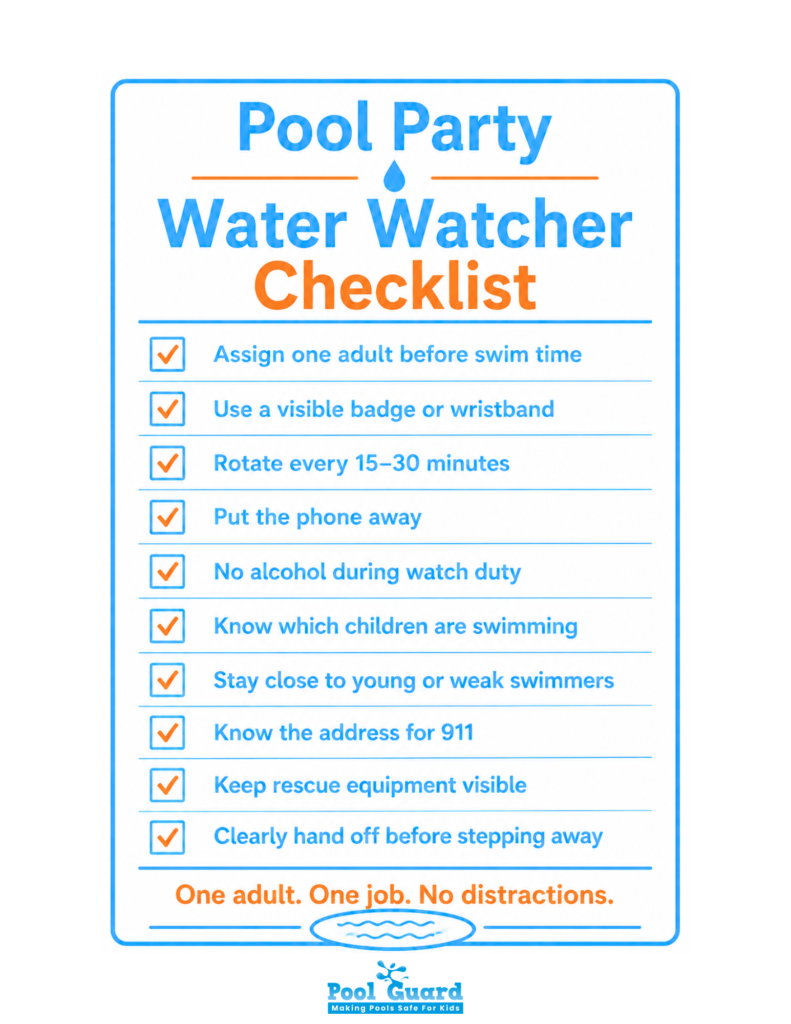
Before anyone gets in the water, run through this checklist:
When deciding on pool defense, the water watcher vs lifeguard debate matters less than using both effectively to ensure everyone gets out of the water safely. For backyard pool owners, the most reliable strategy is a multi-layered approach to protection. A secure pool fence prevents unauthorized access, a designated water watcher provides focused supervision, and CPR readiness ensures emergency preparedness.
Knowing when to hire a certified lifeguard ensures larger social gatherings don’t outpace your daily safety plan. No single layer replaces another, but together, they dramatically reduce the risk of a preventable tragedy. This is why Pool Guard USA’s complete line of pool fencing and safety solutions is built to work directly alongside your active supervision plan.

Find your local dealer by entering your zip code above.
Please fill out the form below with your information. Your local dealer will be notified about your inquiry.
Please fill out the form below with your information. Your local dealer will be notified about your inquiry.