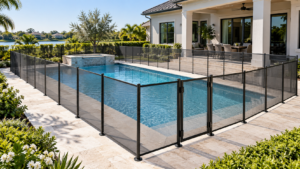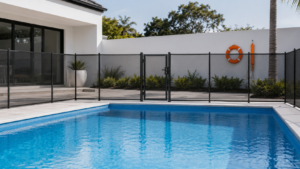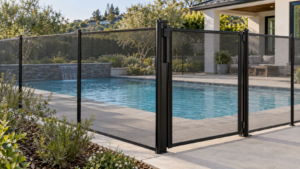
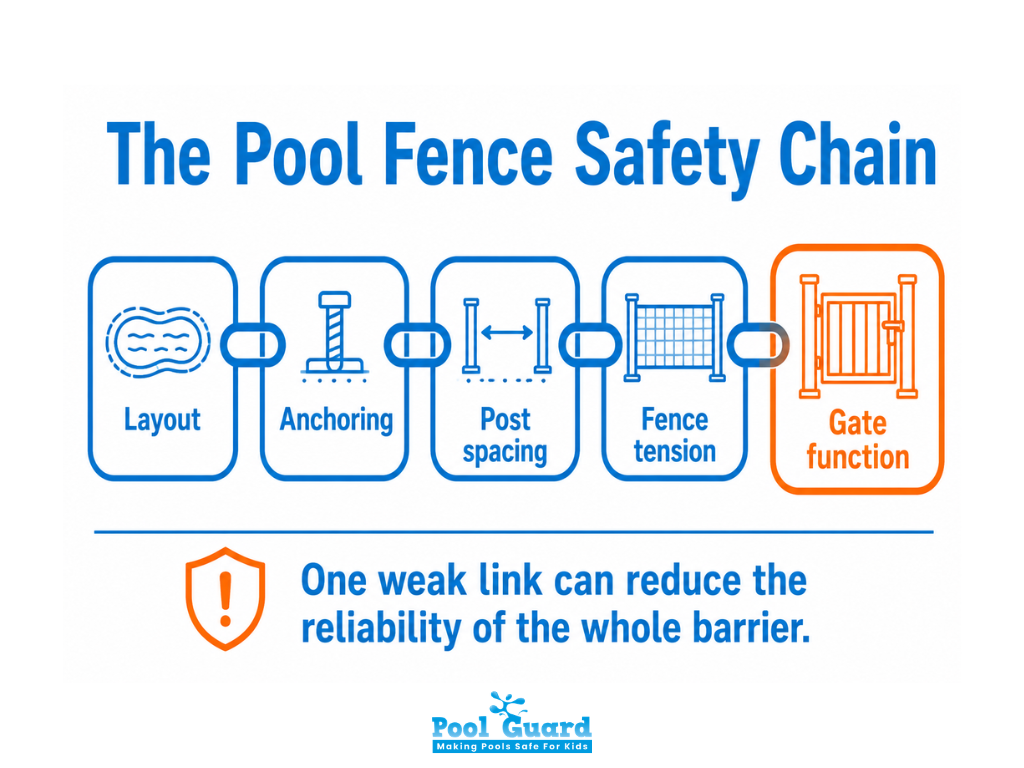
Installing a pool fence isn’t just a backyard improvement project. It is a safety decision. A pool fence only works when it is installed correctly. The layout, gate, latch, post spacing, anchors, mesh tension, and ground clearance all affect whether the fence can help prevent unsupervised access to the pool.
This guide breaks down DIY vs professional pool fence installation so you can decide when a do-it-yourself project makes sense, when professional installation is the safer choice, and where homeowners often underestimate the job.
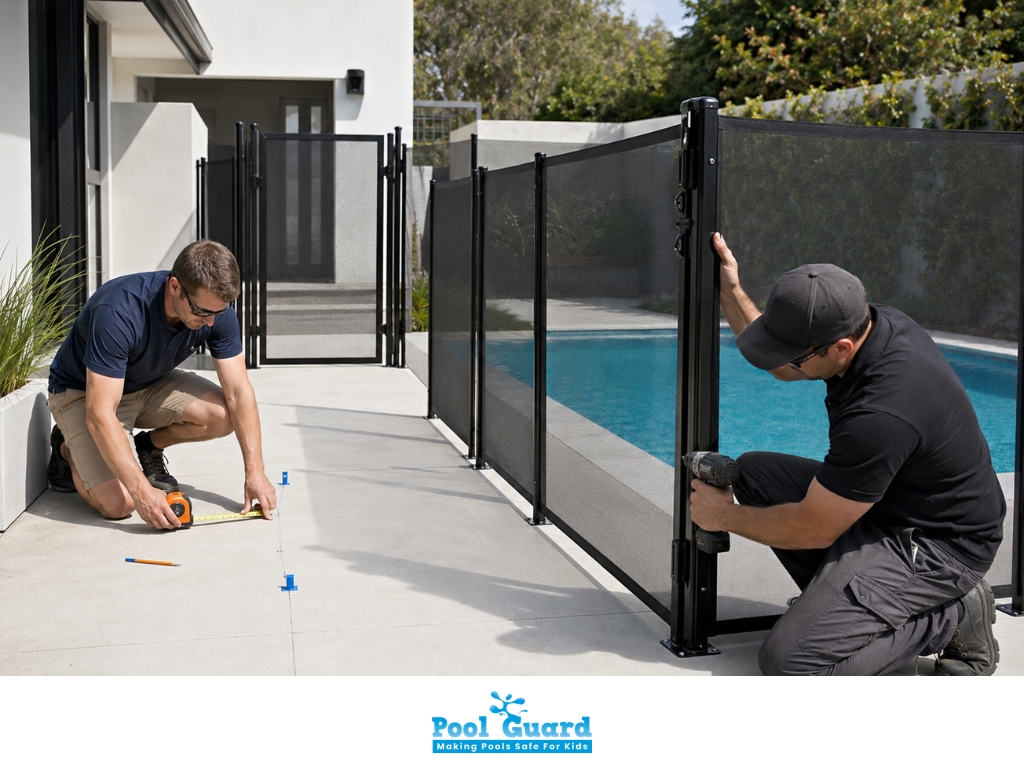
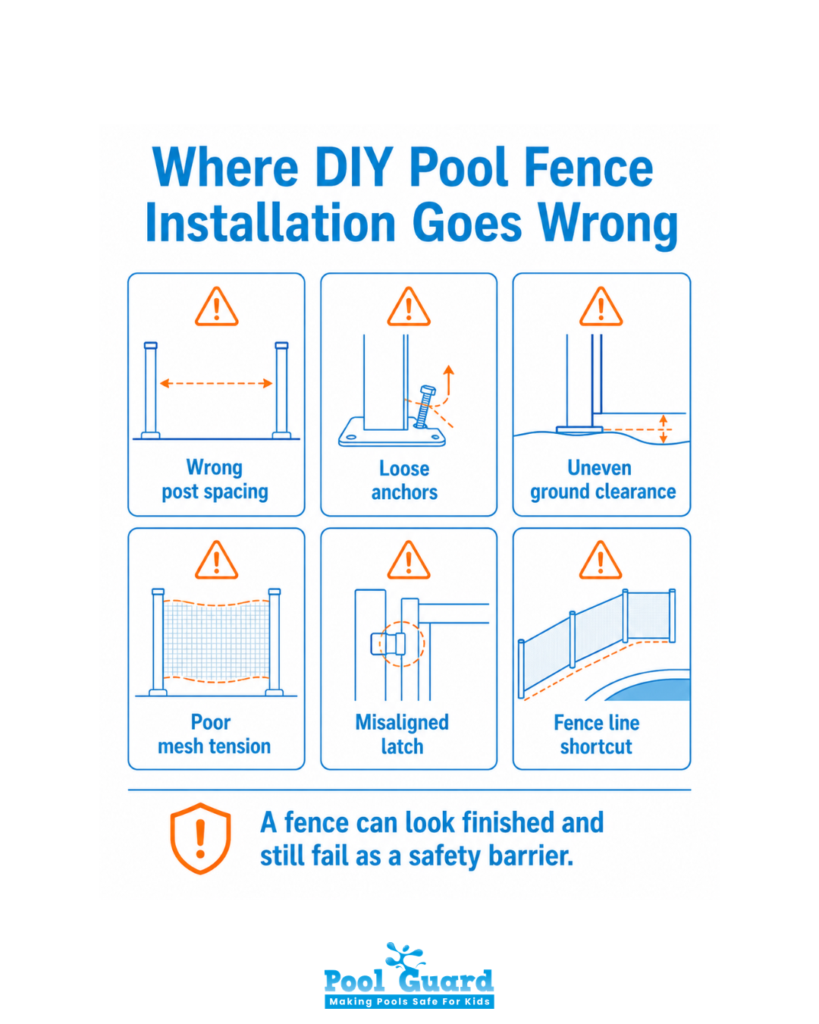
DIY pool fence installation may be possible for experienced homeowners with simple layouts, flat surfaces, and straightforward removable mesh fence systems. Professional installation is usually the safer choice when the fence is used as a child-safety barrier, the yard layout is complex, or the gate needs to meet strict safety standards.
| Option | Best For | Main Risk |
| DIY installation | Handy homeowners, simple layouts, smaller removable fence projects | Mistakes with spacing, anchoring, tension, or gate function |
| Professional installation | Families with young children, complex yards, code concerns, long-term safety | Higher upfront cost |
| Hybrid approach | Homeowners who buy a fence kit but want expert help with layout or gates | Still requires careful planning |
The real issue isn’t just about managing a solo project, but rather ensuring the finished barrier is reliable enough to protect a child’s life every single day.
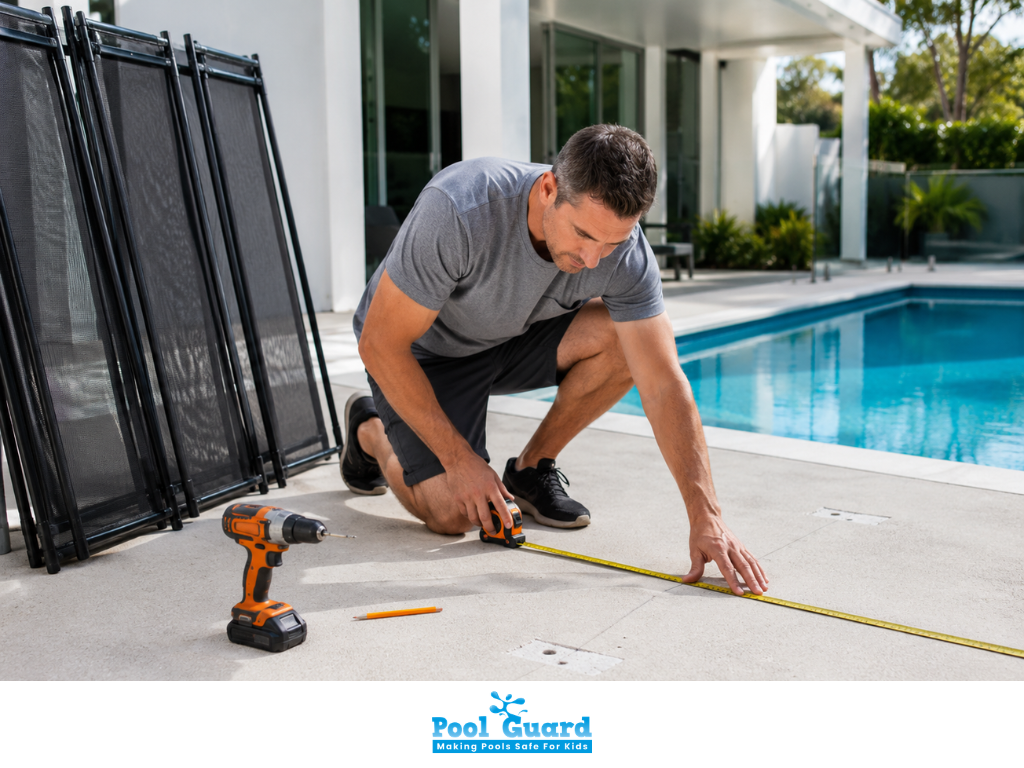
DIY pool fence installation is more than setting up panels around the pool. It requires accurate planning, careful measuring, drilling, anchoring, alignment, and safety checks.
A typical DIY installation may involve:
The hardest installation details are post spacing, gate alignment, ground clearance, and avoiding weak access points. DIY difficulty escalates further when managing curves, tight corners, steps, slopes, or delicate surfaces like travertine and pavers.
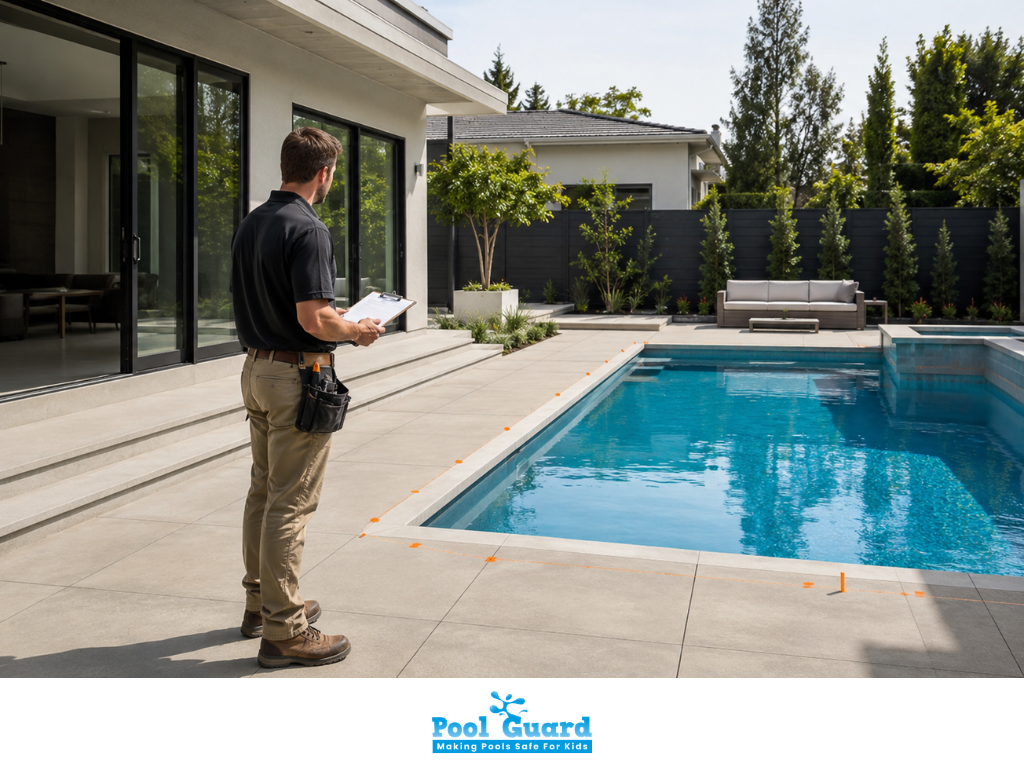
Professional pool fence installation usually starts with a site evaluation. A good installer reviews the pool layout, deck surface, access points, gate placement, and potential weak spots before drilling begins.
Professional installation may include:
Professional installers provide critical experience, not just labor. They easily spot hidden layout hazards that homeowners often miss, like steps, patio edges, climbable landscaping, and pet doors. A pool fence is only as reliable as the layout and installation decisions behind it.
| Factor | DIY Installation | Professional Installation |
| Upfront cost | Usually lower | Usually higher |
| Time required | Can take longer | Usually faster |
| Tools needed | Homeowner provides tools | Installer brings tools |
| Code knowledge | Homeowner must research | Installer is usually familiar with the requirements |
| Gate setup | Higher risk of mistakes | Properly aligned and tested |
| Layout planning | Depends on homeowner skill | Based on site evaluation |
| Safety confidence | Depends on installation quality | Higher when done correctly |
| Warranty/support | May be limited | Often includes installation support |
The ultimate difference is risk. With DIY, you bear the entire burden of installation errors. With professional installation, you secure expert layout planning, specialized tools, precise gate calibration, and long-term support for adjustments.
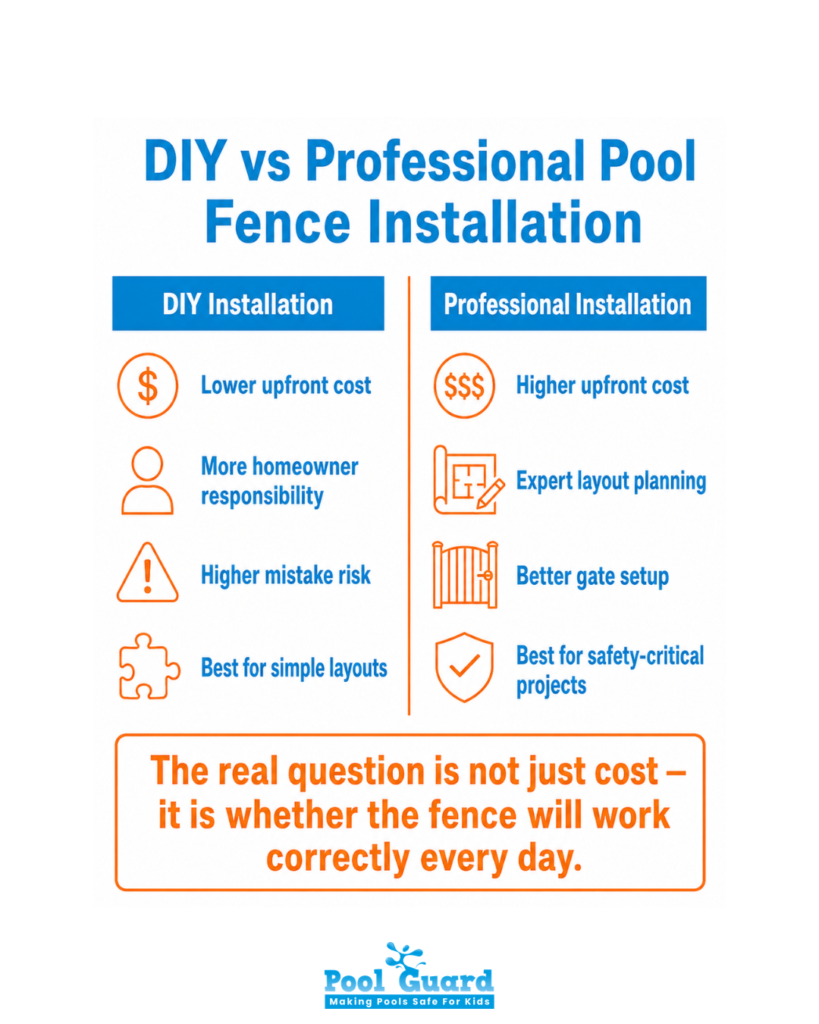
Small mistakes can weaken the entire barrier. A pool fence doesn’t have to fall over to fail. It can fail because one gap, one loose anchor, or one unreliable gate allows water access.
Common DIY pool fence mistakes include:
A DIY fence may look finished, but still fail as a safety barrier. That is the part many homeowners don’t see until the fence is tested by real life.
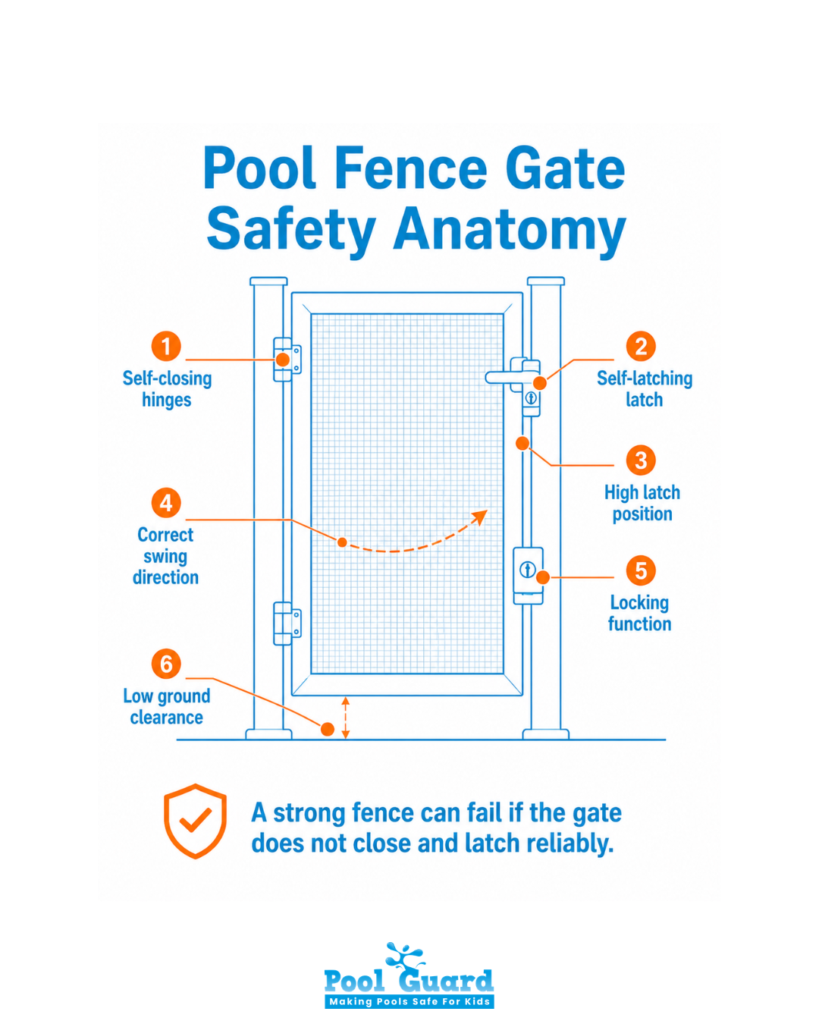
The pool gate is the most important moving part of a pool fence. Even a strong fence becomes unreliable if the gate doesn’t close and latch properly.
A pool fence gate should be treated as a safety device, not just an entry point.
Important gate details include:
The gate should close and latch from any open position, not just when someone pushes it firmly. If the gate needs perfect handling to close, it isn’t reliable enough.
If a homeowner is unsure about any part of the installation, the gate is the first place to get professional help.
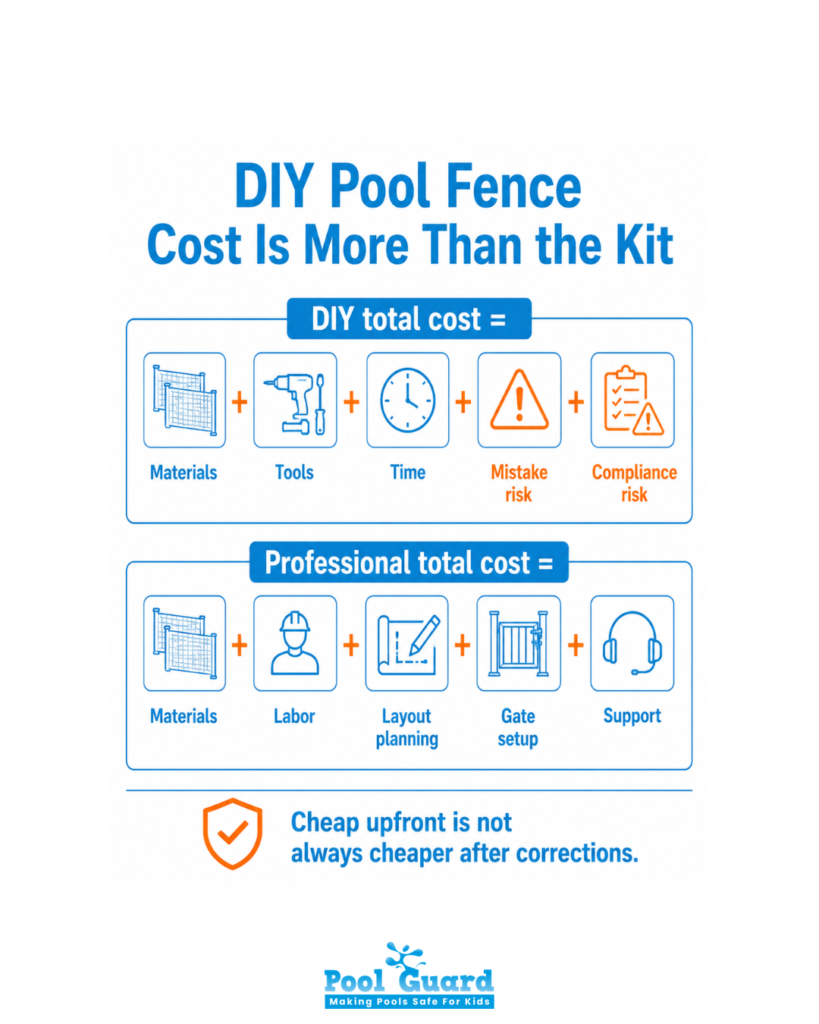
DIY installation costs less upfront by avoiding labor fees. However, true pool fence installation costs depend on your fence type, gates, linear footage, surface conditions, tools, and potential mistakes.
The common error is comparing a basic retail fence kit price directly to a professional quote. A complete financial comparison requires looking at the full picture:
| Cost Factor | DIY Installation | Professional Installation |
| Core Expenses | Materials & retail kits | Premium materials & expert labor |
| Equipment | Specialty tool purchases or rentals | Included in service |
| Investment | Significant personal time | Minimal personal time |
| Financial Risk | High potential for repair/rework costs | Near-zero rework risk |
| Long-Term Value | Compliance and safety risks | Warranty & ongoing service support |
DIY can save money initially. However, those savings disappear quickly if you experience cracked pool decks, incorrect gate alignment, or failed safety inspections that force costly professional repairs.
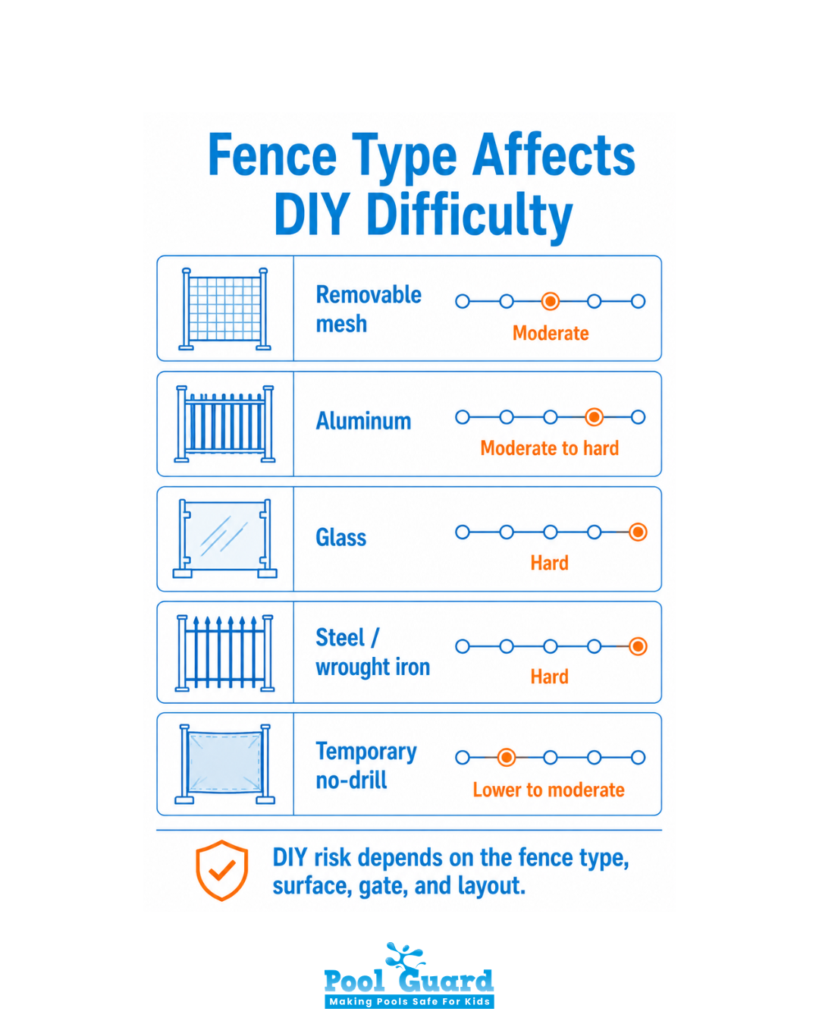
Pool fence installation difficulty varies significantly. Homeowners often mistakenly assume all fences are equally easy to install, but the actual DIY risk depends heavily on the fence material, deck surface, gate setup, and yard layout.
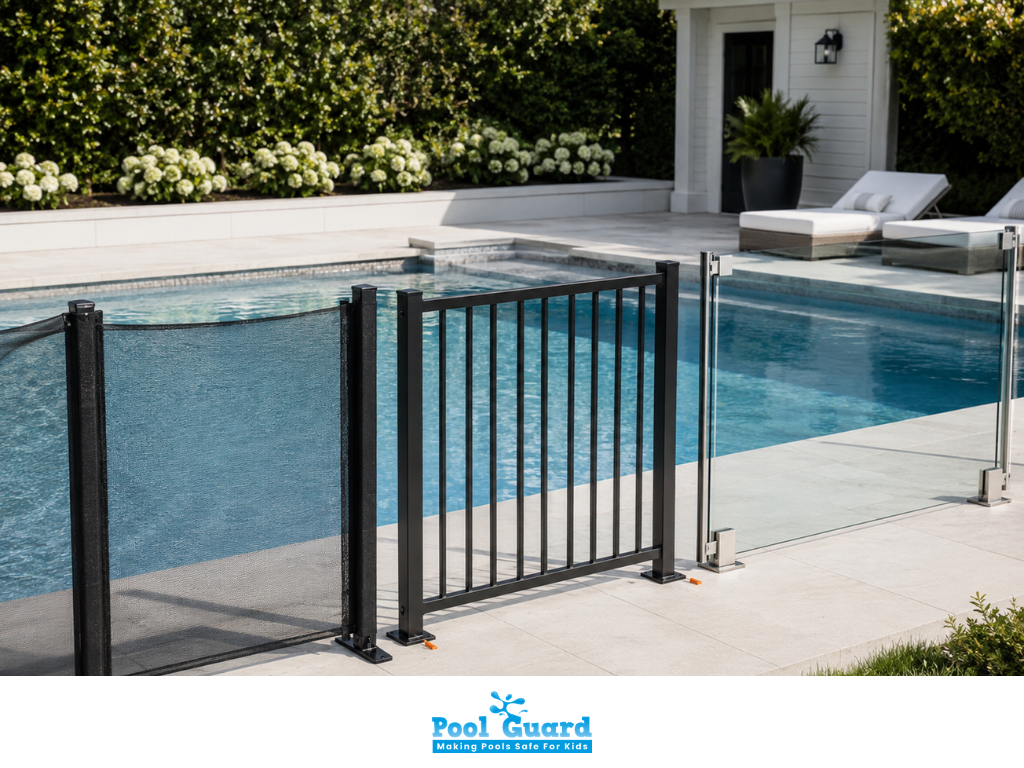
| Fence Type | DIY Difficulty | Why It Matters |
| Removable mesh pool fence | Moderate | Often DIY-friendly, but spacing, tension, and gate setup still matter |
| Aluminum pool fence | Moderate to hard | Requires accurate posts, level lines, and stable anchoring |
| Glass pool fence | Hard | Heavy panels, precise alignment, and breakage risk |
| Steel or wrought iron fence | Hard | Heavy materials, corrosion protection, and layout complexity |
| Wood pool fence | Moderate to hard | Can create climbable surfaces if designed poorly |
| Temporary/no-drill systems | Lower to moderate | Easier in some cases, but still must function as a barrier |
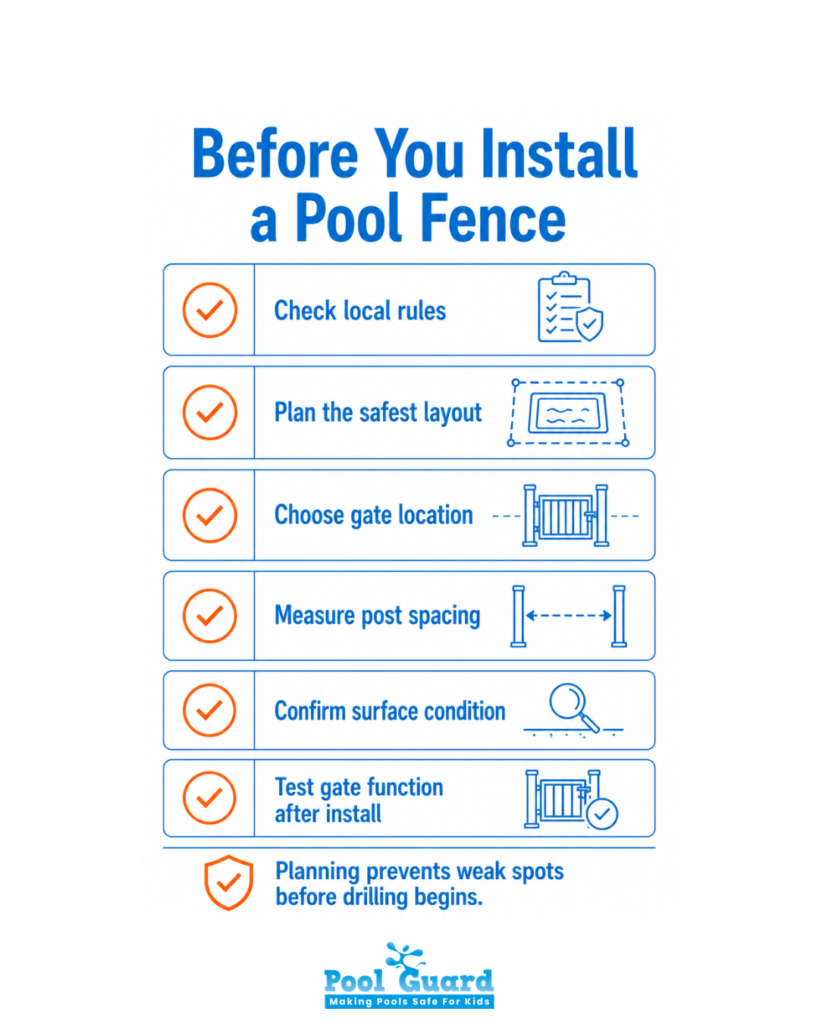
Pool barrier requirements vary significantly by city, county, and homeowner association (HOA). Buying a high-quality fence kit doesn’t guarantee your final installation will pass local safety inspections.
Before starting any work, verify your local building codes regarding:
Professional installers are highly familiar with these safety codes, but homeowners are ultimately responsible for confirming local compliance.
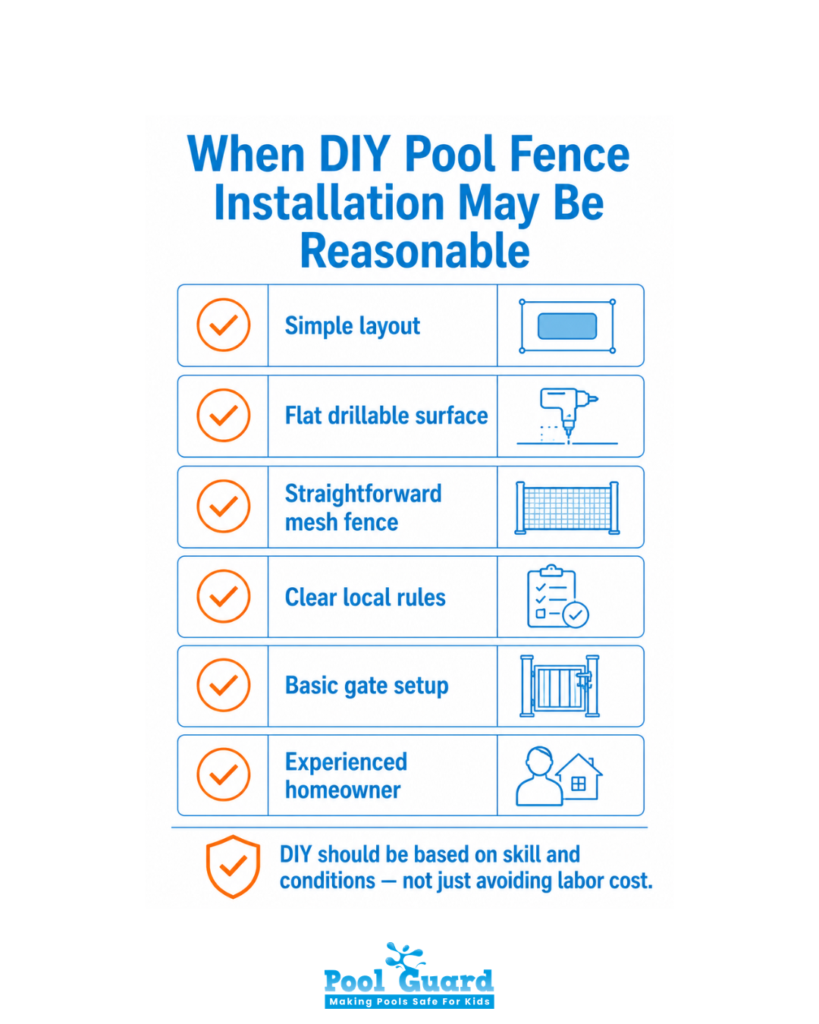
DIY pool fence installation may be reasonable for:
DIY shouldn’t be about ego or just avoiding labor fees. Saving money isn’t a win if the result is a less reliable safety barrier.
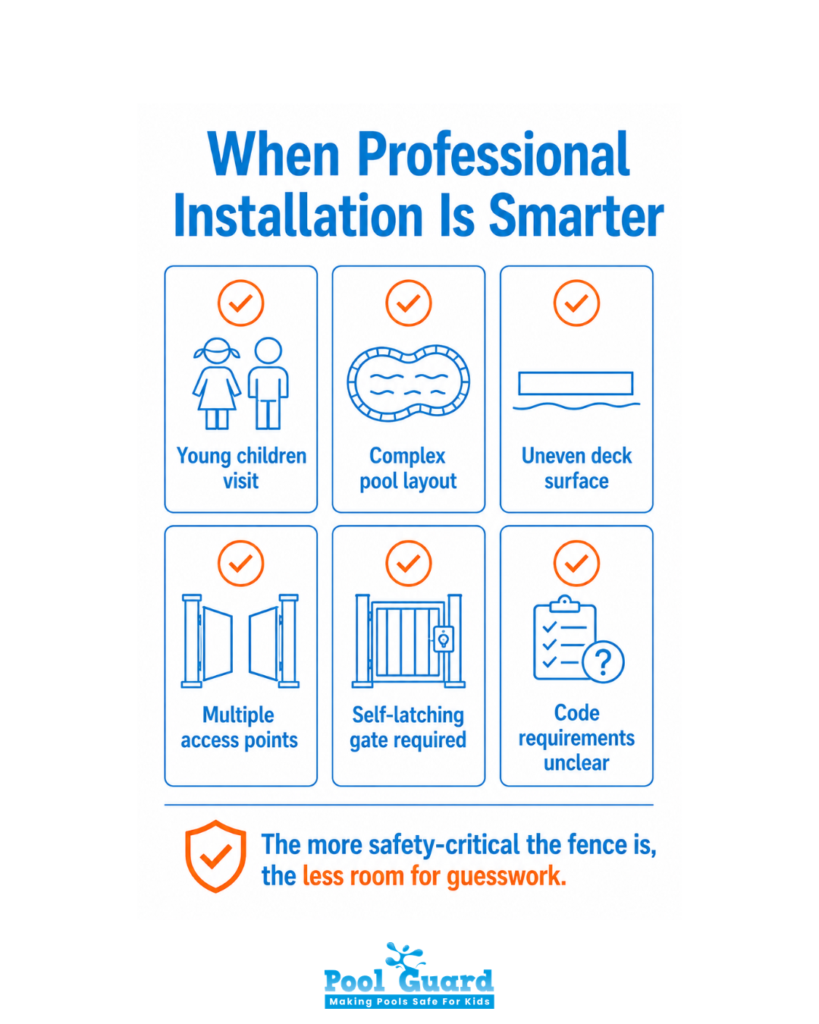
Professional installation is recommended for:
The more safety-critical the fence is, the less room there is for guesswork.
While DIY pool fence installation can work for handy homeowners, the risk of code, layout, or gate errors often makes professional installation the safer choice for families with children and pets.
When weighing DIY vs professional pool fence installation, the deciding factor is reliability. If you cannot confidently guarantee the fence will be installed perfectly and latch reliably every single time, choosing a professional installer is the smarter move for your family’s safety.
Find your local dealer by entering your zip code above.
Please fill out the form below with your information. Your local dealer will be notified about your inquiry.
Please fill out the form below with your information. Your local dealer will be notified about your inquiry.