No single toddler floatie fits every situation. The right choice depends entirely on your child’s age, weight, and environment. For boating or open water, a U.S. Coast Guard-approved life jacket is non-negotiable. For supervised pool play, swim vests or puddle jumpers build confidence.
Crucially, however, these recreational swim aids must never be confused with life-saving equipment. Parents should know that air-filled aids, such as armbands or neck rings, are not safety devices and cannot prevent drowning. In fact, the American Academy of Pediatrics states they should never replace approved life jackets.
To help you navigate these critical safety distinctions, this guide breaks down the best floaties for toddlers by stage, what to avoid, and why pool barriers matter just as much as what your child wears.
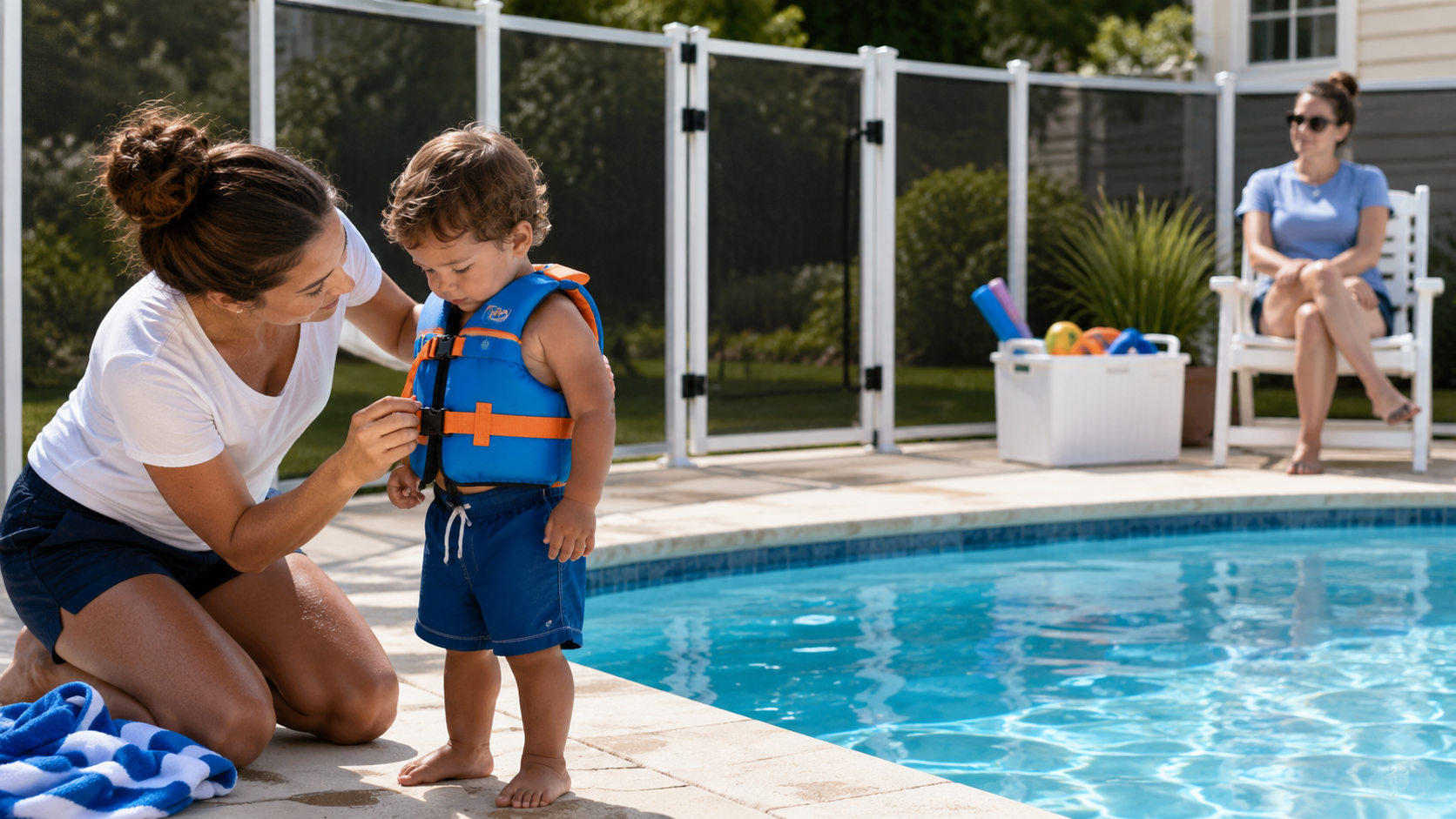
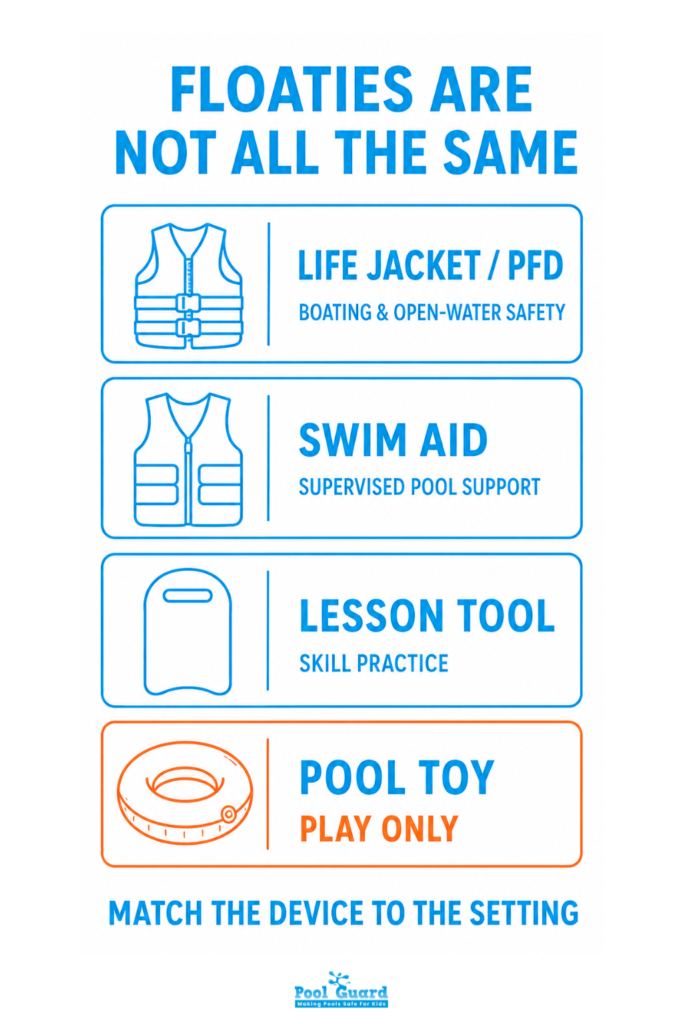
Before comparing products, it helps to know what category you’re actually shopping in. These terms get used interchangeably online, but they serve very different purposes.
| Type | Examples | Main Purpose |
| Life jacket / PFD | USCG-approved child life jacket | Safety flotation for boating and open water |
| Swim aid | Swim vest, puddle jumper, back float | Supervised pool support and confidence-building |
| Swim lesson tool | Kickboard, pool noodle, swim belt | Skill practice, not flotation |
| Pool toy | Inflatable rings, novelty floats | Play only; never a safety device |
Only the first category is designed and tested to keep a child’s head above water in an emergency. Everything else in this list, no matter how sturdy it feels, is a comfort or skill-building tool, not a substitute for a life jacket or for you.
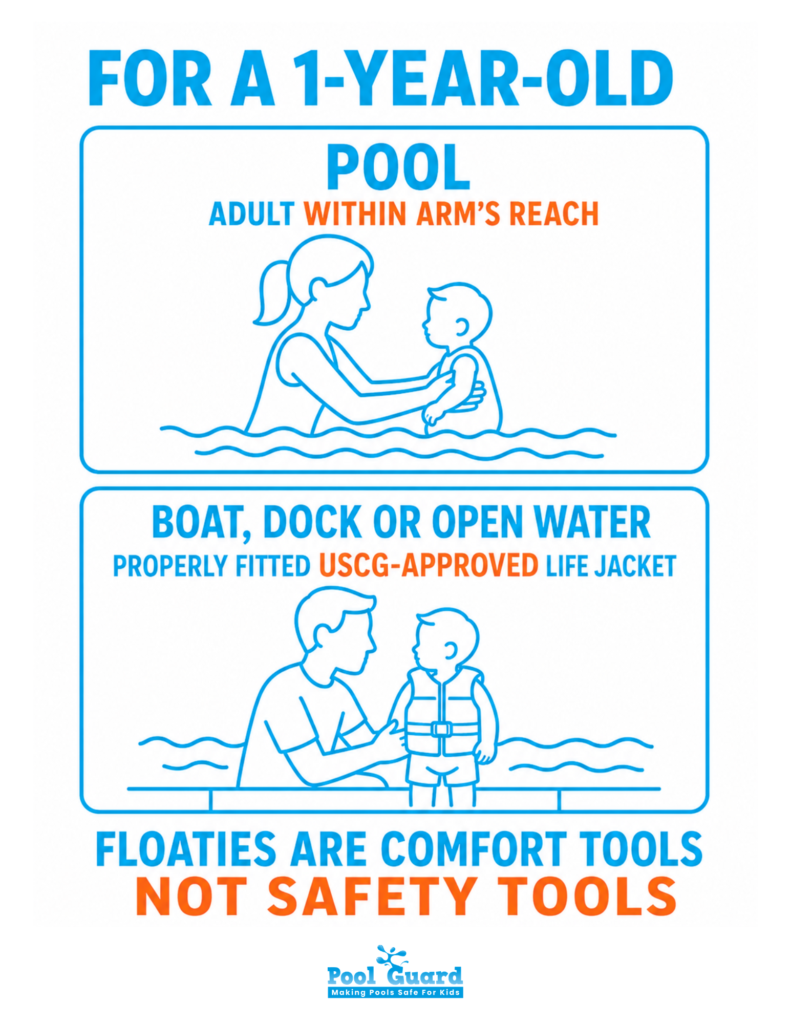
For a 1-year-old, the best “device” is an adult within arm’s reach. At this age, a child has neither the strength nor the water awareness to self-rescue, and no floatie changes that.
A soft-sided baby float with a low center of gravity can be appropriate for short, calm sessions in a supervised pool, giving a baby a chance to kick and splash while an adult stays close and hands-on. It should never be used in open water, and it should never be treated as something that lets a caregiver step away, even briefly.
If your 1-year-old will be on a boat, dock, or near open water, that changes the equation entirely – a properly fitted infant or toddler life jacket, sized to the child’s actual weight rather than age, is the only appropriate choice.
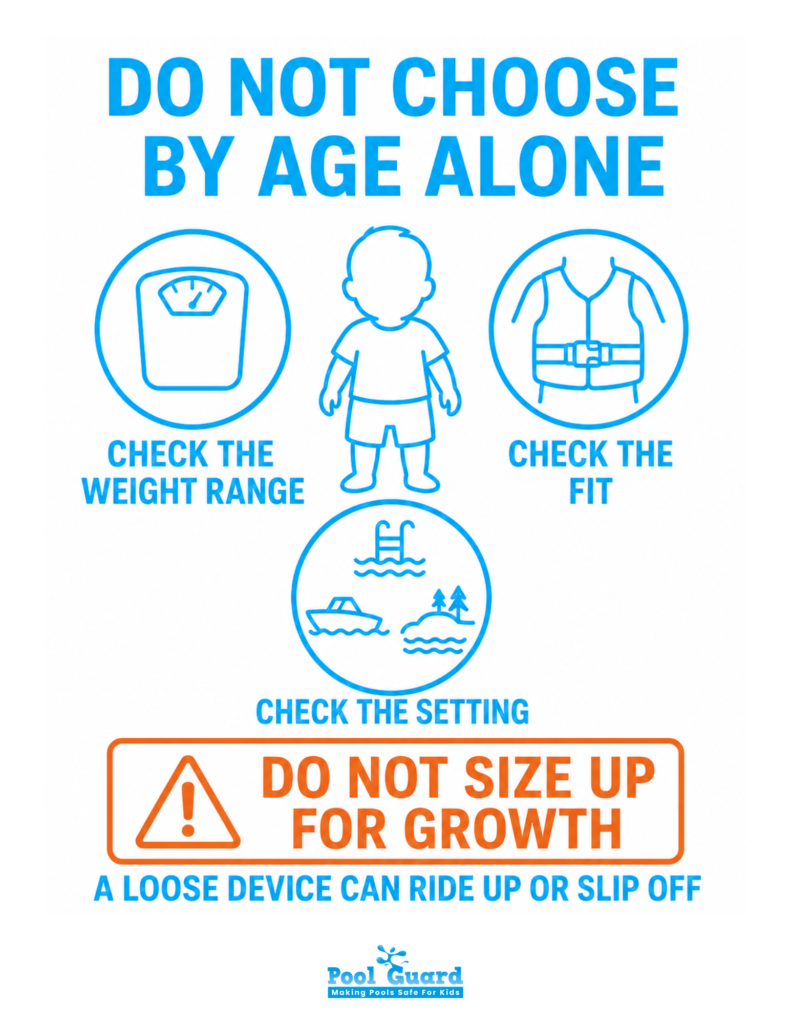
By age three, most toddlers have more strength, coordination, and water awareness, but swim ability varies enormously from child to child, which is why fit and behavior should drive the decision, not age alone.
A few good options at this stage:
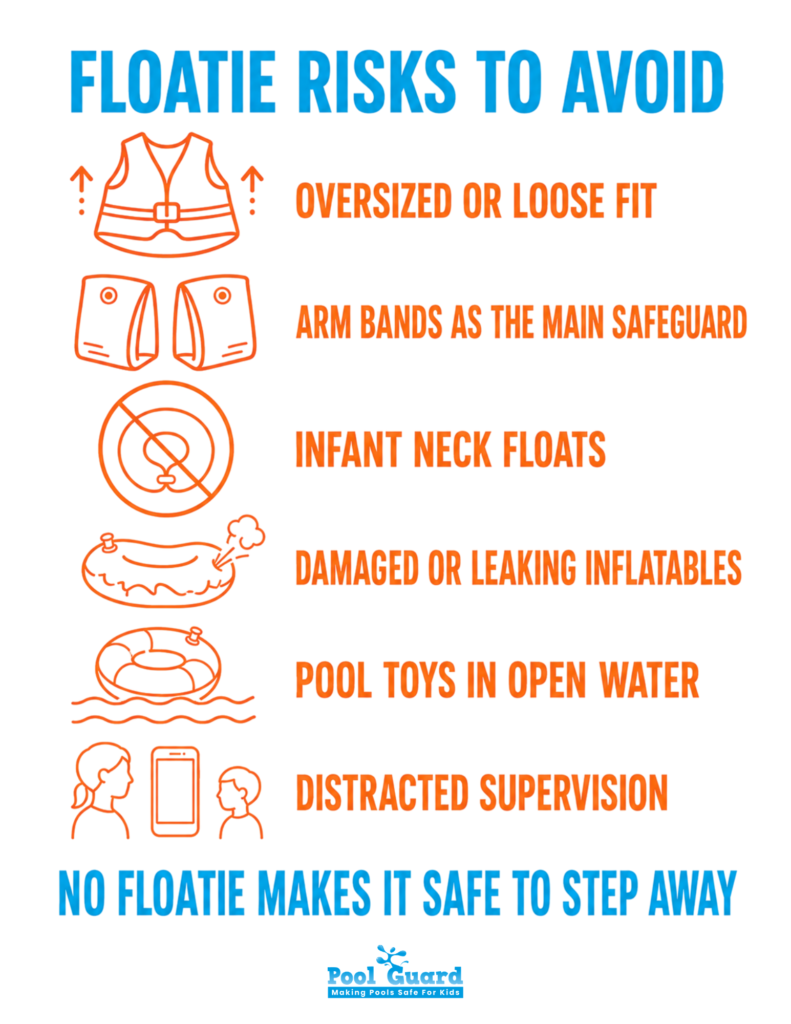
Whatever you choose, avoid sizing up “for growth”. An oversized swim vest or puddle jumper can ride up, shift, or let a child slip out entirely, the opposite of what you want in the water.
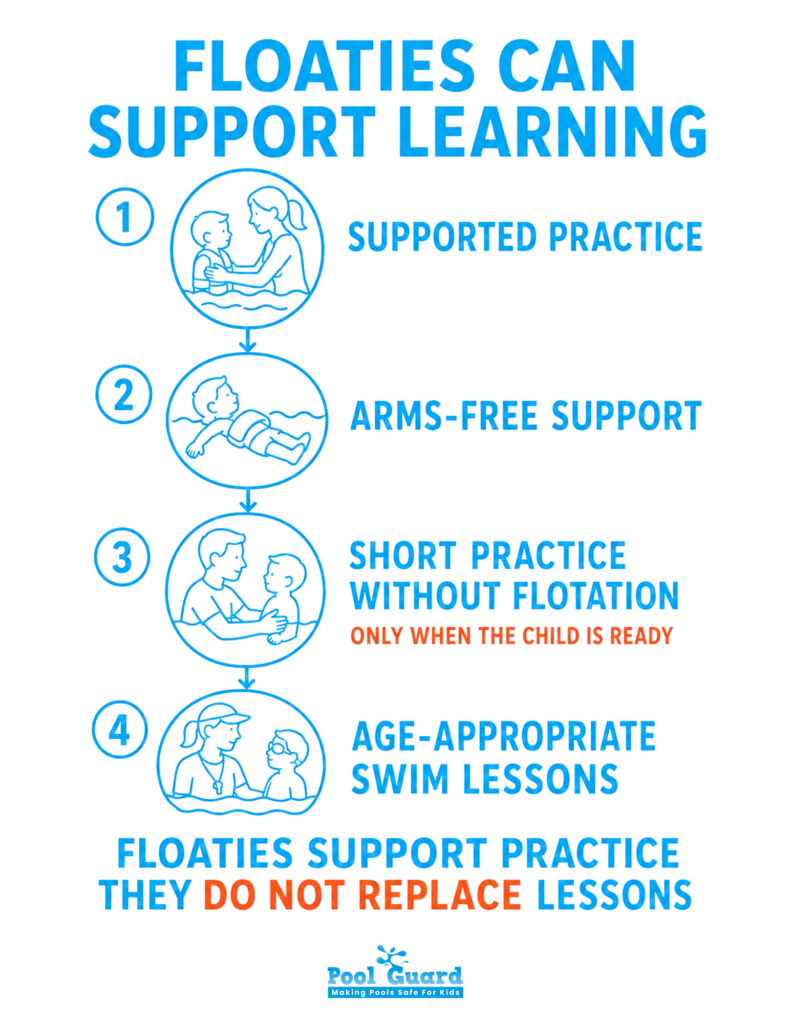
If the goal is actual swim progress, not just staying afloat, the best learning aid is the one that supports movement instead of doing all the floating for the child.
This is a common misstep – too much buoyancy creates dependence, since a child never has to engage their core or kick to stay up. On the other end, arm-based floaties that force an upright position can work against the horizontal, face-in-the-water posture that real swimming requires.
A more effective progression usually looks like this:
Floaties can support this process. They can’t replace it.
For a toddler who can’t yet swim, the instinct is often to look for a “safer” floatie. But the real safety plan for a non-swimmer isn’t a better product; it’s a combination of three things: a close, attentive adult, a secured pool area, and a device that’s actually appropriate for the setting (pool versus boat versus open water).
A floatie can make a non-swimmer more comfortable in the water. It cannot make them safe in it on its own.
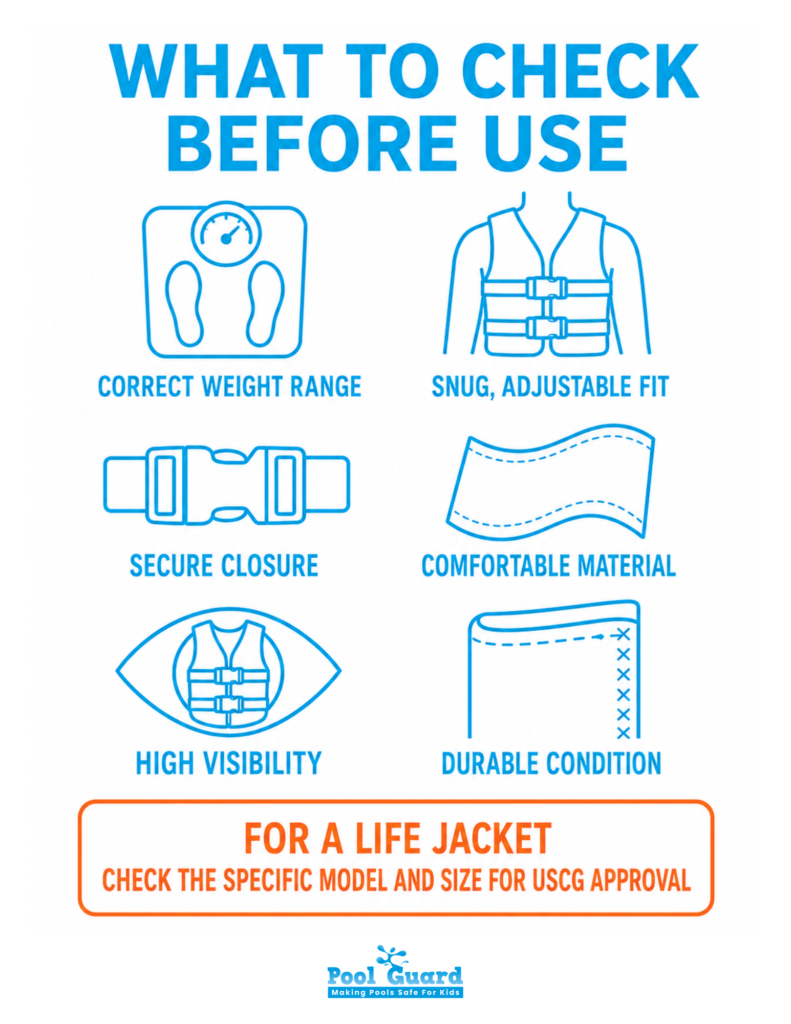
Once you’ve matched the device type to your child’s age and ability, use this checklist to evaluate specific products:
Just as important as what to buy is what to skip:
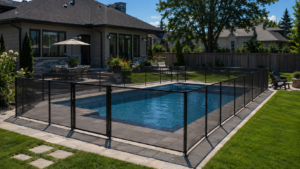
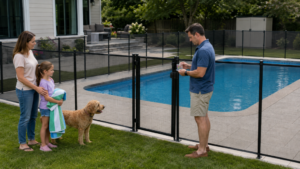
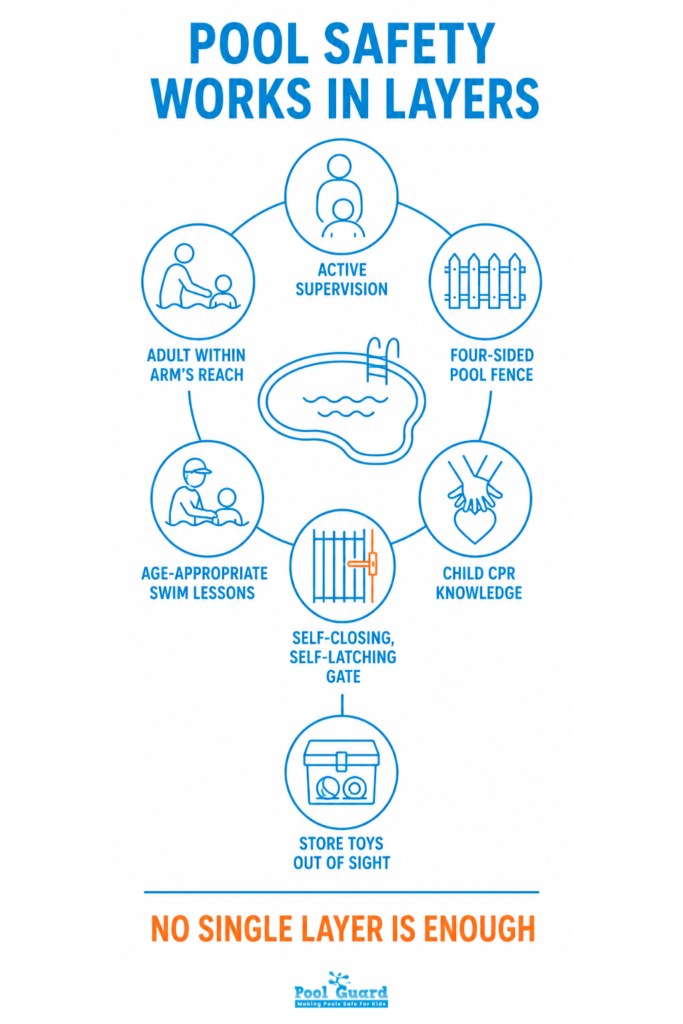
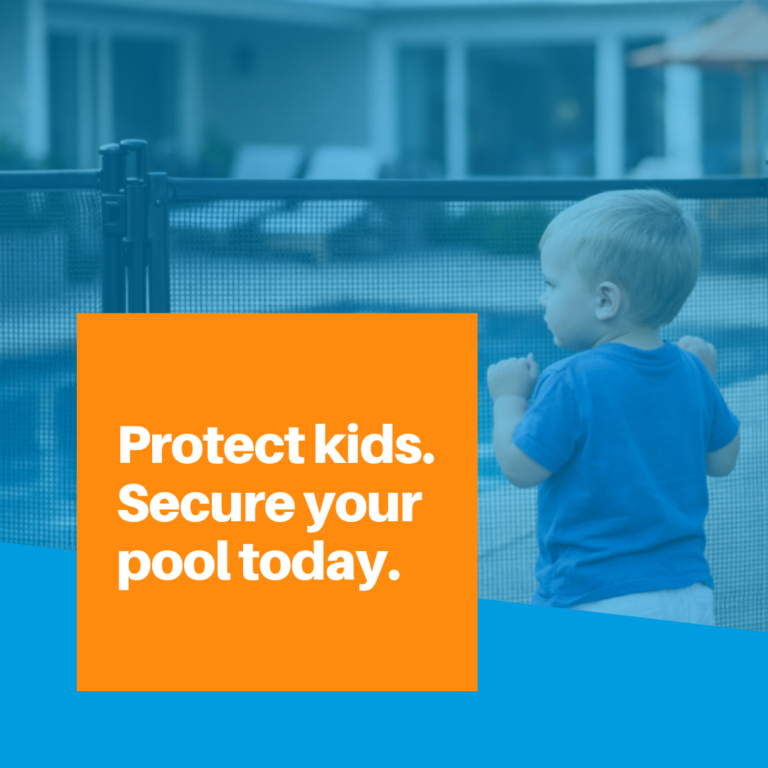
A flotation device matters only when your child is actively in the water and being watched. A secure pool fence protects your child every other hour of the day, keeping them safe even during the unexpected moments when you look away.
A few fundamentals worth building into your routine:
Floaties change every season as your child grows. A well-installed pool fence and self-latching gate protect your family for years without needing to be resized.
A quick gut-check against the mistakes we see most often:
That last pair is worth sitting with. Supervision and physical barriers aren’t competing strategies; they’re layers. Drowning prevention works best when both are in place at the same time, not one instead of the other.
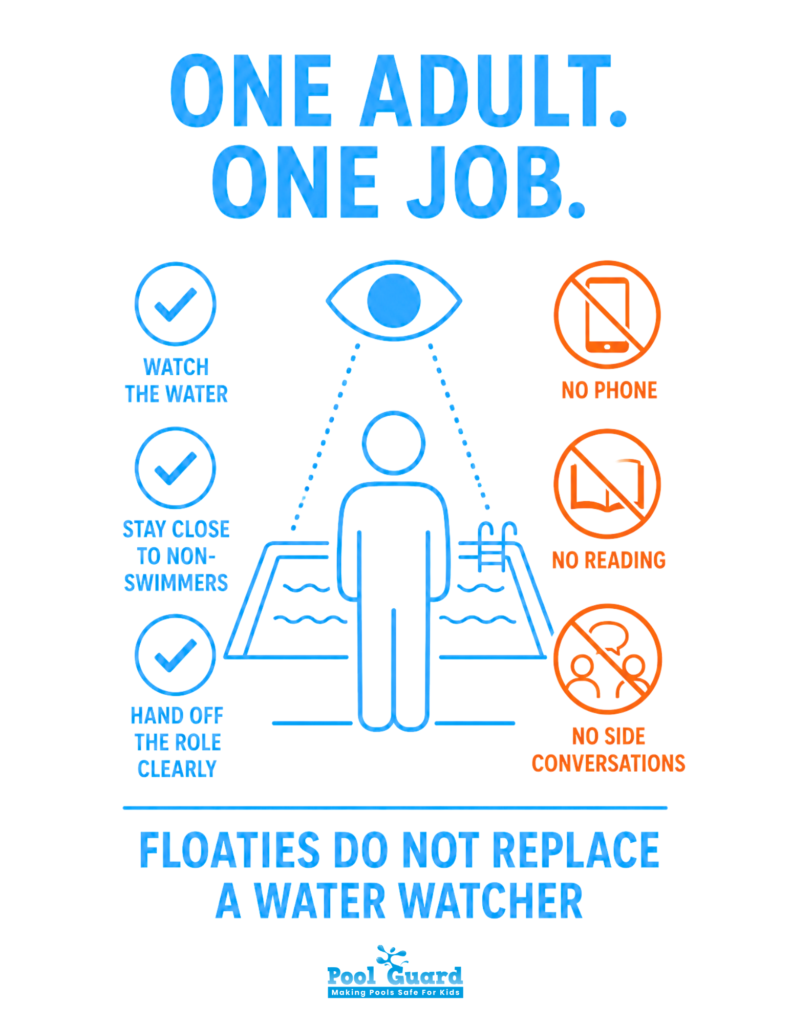
The best floaties for toddlers are those that fit the child, match the setting, and support supervised water play without fostering false confidence in the child or the adult watching them.
For pool play, the right floatie can help a toddler feel more comfortable and make real progress toward swimming. But it’s never the whole safety plan. Real protection comes from active, distraction-free supervision, age-appropriate swim lessons, a secure four-sided pool fence, a self-closing and self-latching gate, and consistent control over who can access the water and when.
Please fill out the form below with your information. Your local dealer will be notified about your inquiry.
Please fill out the form below with your information. Your local dealer will be notified about your inquiry.