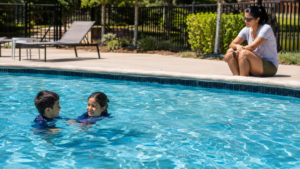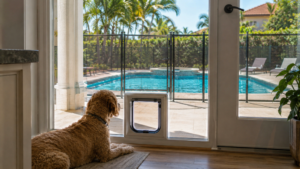
A dog door gives pets easy access to the yard, making daily routines more convenient for both dogs and their owners. When a swimming pool is part of that outdoor space, however, the setup deserves some extra consideration. So, is a dog door a pool safety risk?
This guide looks at how dog doors can affect pool safety, along with the barriers, alarms, and other precautions that can help create a safer environment for pets. It covers the main risks and practical pool safety measures for homes with dog doors.
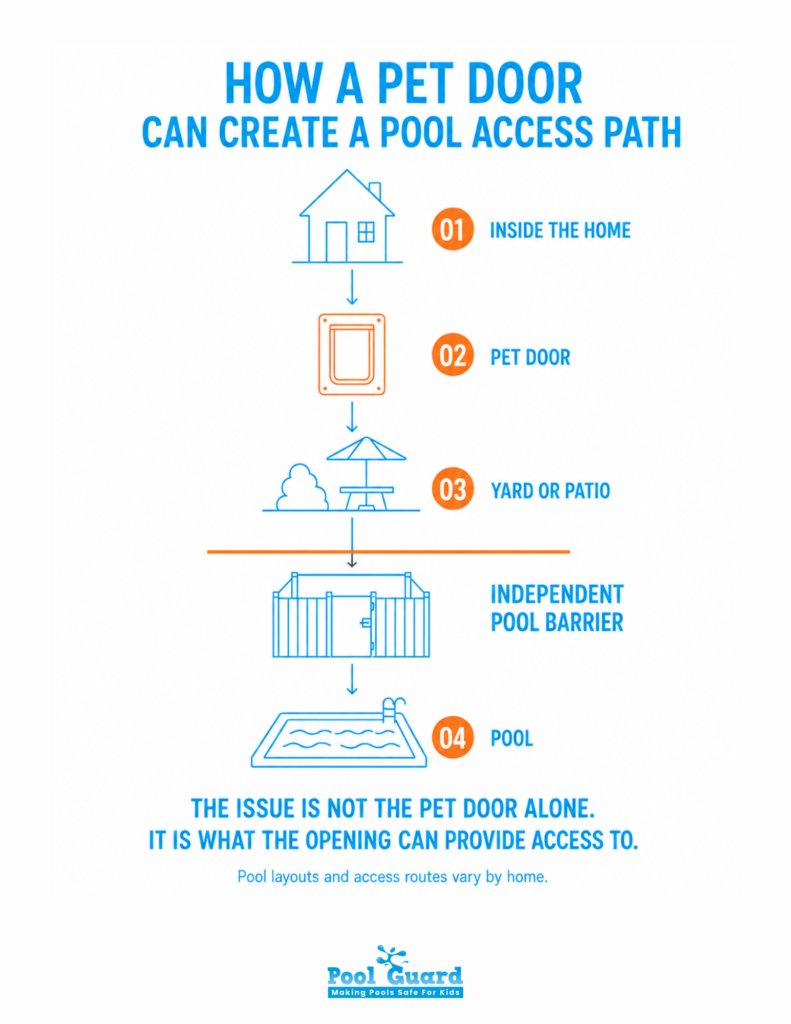
Yes, a dog door can create a pool safety risk if it gives a child a way around the home’s normal barriers to the water. In a documented case, two-year-old Matthew Ranfone exited his Orlando home through a pet door, crossed an enclosed patio, passed a pool fence, and reached the backyard pool. He died 13 days later from injuries sustained in the drowning incident.¹
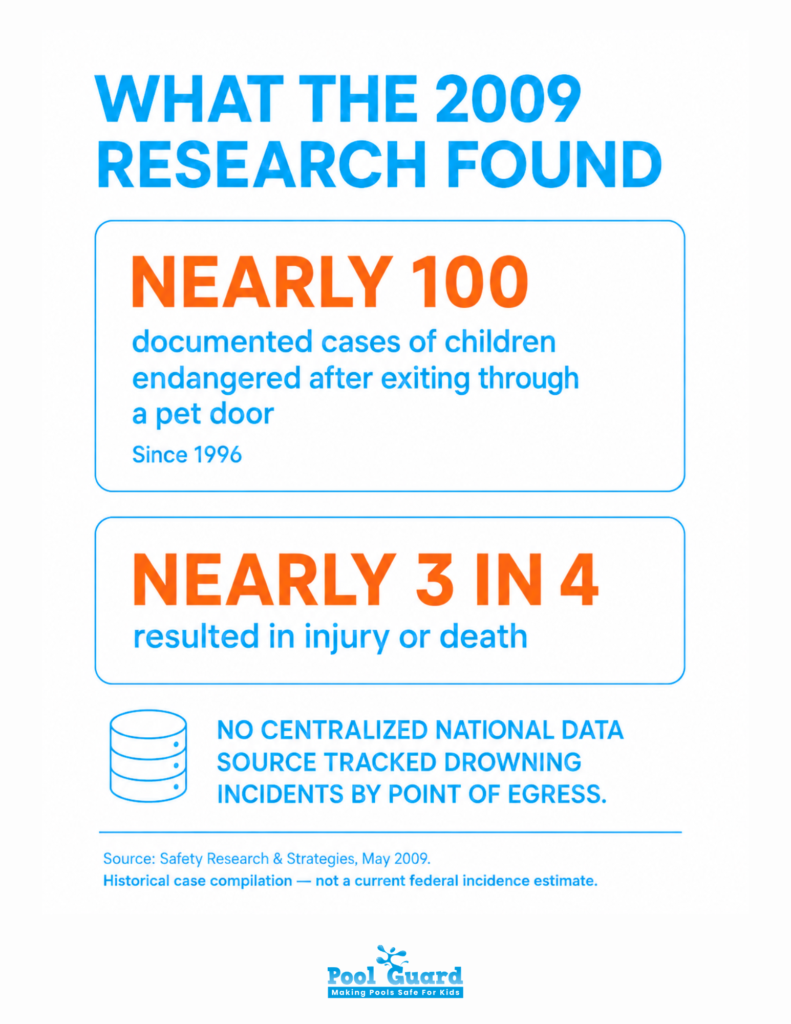
The risk extends beyond one case. Safety Research & Strategies reported nearly 100 documented incidents since 1996 involving children exiting homes through pet doors, many of which resulted in injury or death.² The U.S. Consumer Product Safety Commission also warns that children can reach backyard pools through pet doors and recommends not using one that leads directly to a pool or other water, along with proper isolation barriers.³
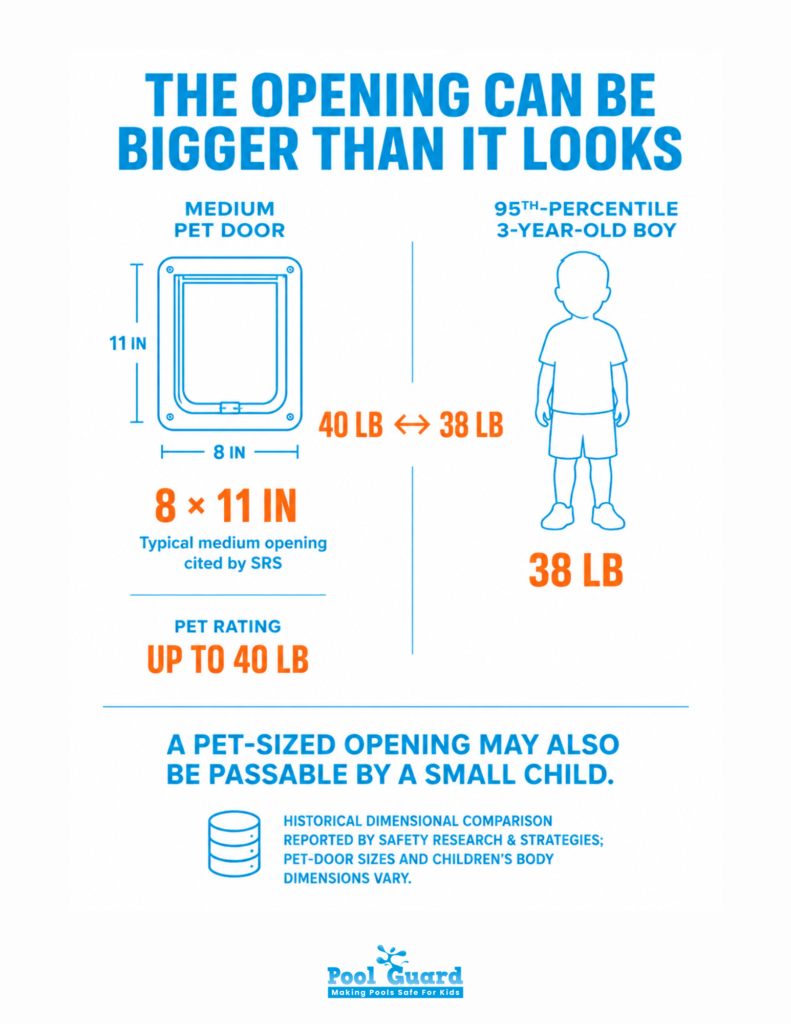
A dog door is a hole in an otherwise secure barrier, sized for an animal, that a small child can also fit through. According to SRS research, a standard medium pet door opening measures 8 by 11 inches and is rated by manufacturers for pets up to 40 pounds. A 95th-percentile three-year-old boy weighs 38 pounds. The opening built for the family dog is, dimensionally, also an opening for a toddler.⁴
That fact was demonstrated on camera. In the ABC News report, attorney Hank Didier had his three-year-old son, Dylan, attempt a pet door sized for cats and small dogs. Dylan fit through it easily. “Parents don’t appreciate that their children, even if they’re bigger, can get through”, Didier told ABC News.⁵
SRS compiled its findings from CPSC records, media reports, medical examiner files, child death reviews, and court cases. It documented approximately 100 incidents over nearly three decades involving children who exited homes through pet doors, with about three-quarters resulting in injury or death.⁶
ABC News reported in May 2009 that more than 100 children had been killed or seriously injured over the previous decade after passing through pet doors into pools or other hazards. SRS president Sean Kane said the true number was likely higher because available reporting systems do not consistently record how a child exited the home.⁷
That data gap matters. Medical examiners, coroners, and CPSC surveillance systems generally record the cause of an injury or death rather than the point of exit. Some jurisdictions use more detailed reporting forms. In Arizona, Dr. Timothy Flood’s staff had recorded 26 pet-door-related drowning incidents since 1993.⁸
In May 2008, the Ranfone family filed a wrongful death lawsuit against Radio Systems Corporation, the Knoxville, Tennessee, manufacturer of the PetSafe pet door involved in Matthew’s death. Depositions in the case established several important facts:⁹
When ABC News contacted Radio Systems in 2009, the company declined to make an executive available. It issued a statement expressing that its “thoughts and prayers go out to the Ranfone family” while citing the pending litigation.¹⁰
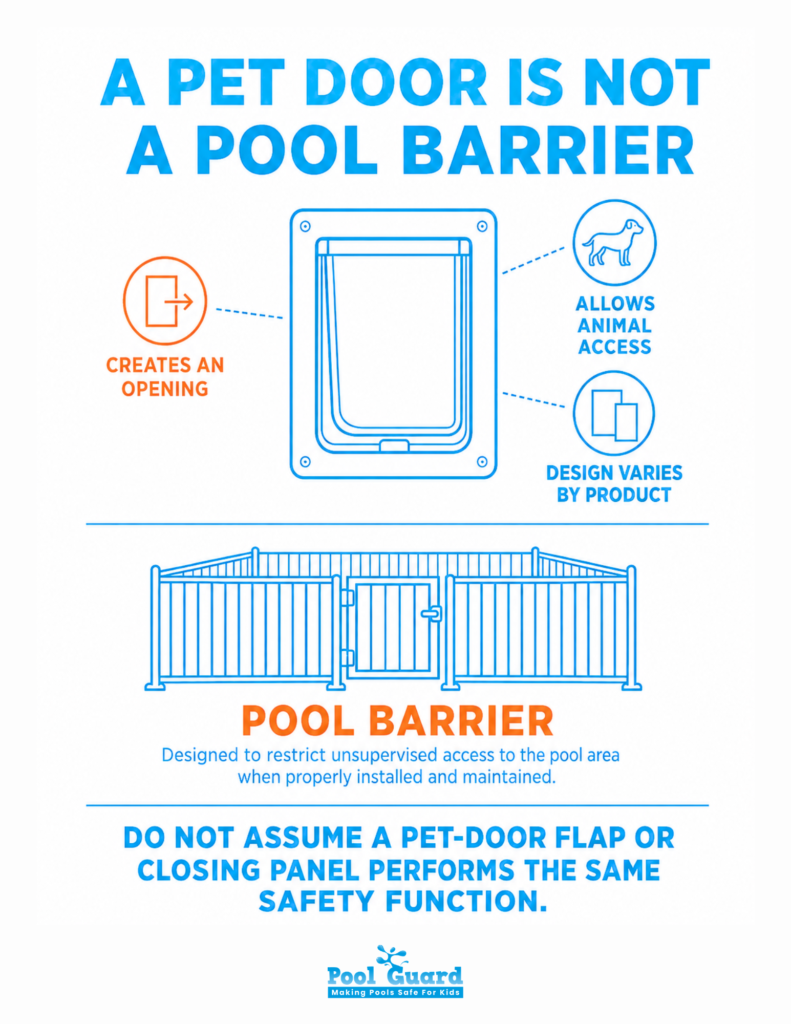
Yes. The Ranfone family’s wrongful death lawsuit against Radio Systems Corporation, the manufacturer of the PetSafe door involved in Matthew Ranfone’s death, also raised concerns about pet-door security. Manufacturer safety documentation stated that some closing panels were designed for appearance and energy efficiency, not as security devices, leaving responsibility for securing the opening to the buyer.¹¹
This means a dog door should not automatically be treated as a secure barrier. If its flap or closing panel is not designed to prevent entry or exit, it can remain an access point for a determined pet, young child, or even another person. For pool safety and perimeter security, use a separate, purpose-built locking system if the opening needs to be secured.
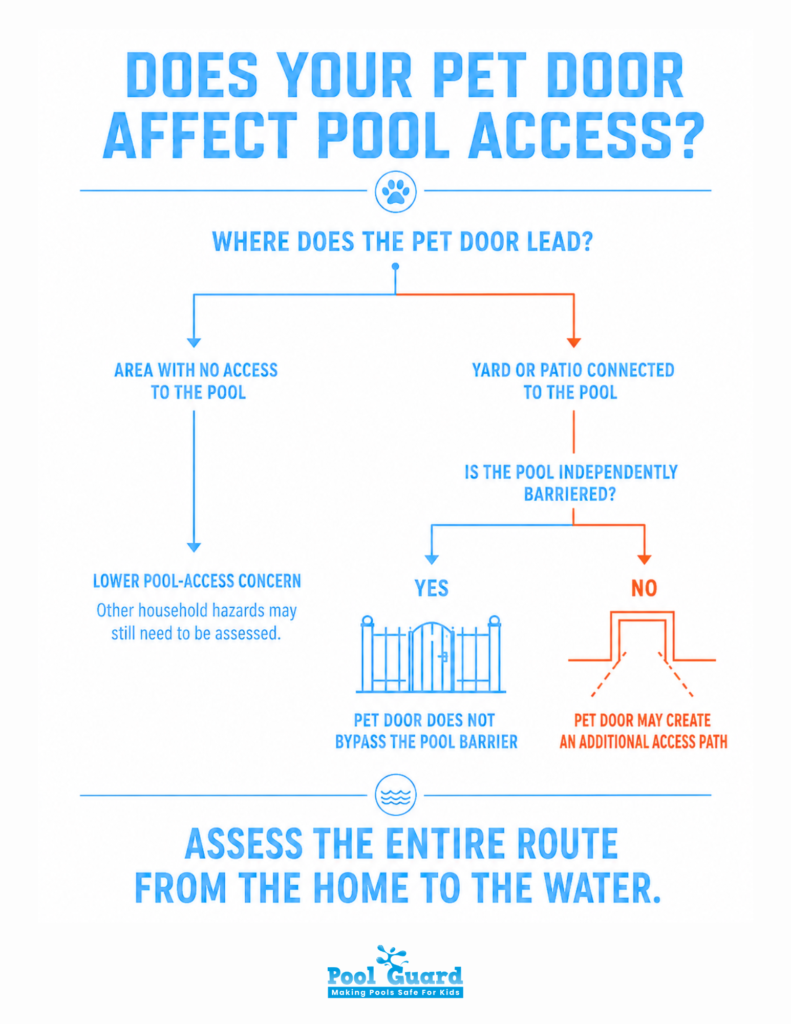
A dog door isn’t inherently dangerous. The risk depends on what it connects to and whether either side contains a hazard. A pet door leading into a fully fenced side yard with no pool access presents a different risk than one opening onto a patio beside a swimming pool, where homeowners may need additional barriers to keep dogs and toddlers from reaching the pool directly.
Manufacturer safety guidance is direct: if a pet door creates or borders a hazard on either side, the homeowner should guard access to that hazard or remove the door. Pet doors are also not rated as fire doors, which is important when considering one for a room addition or garage conversion.
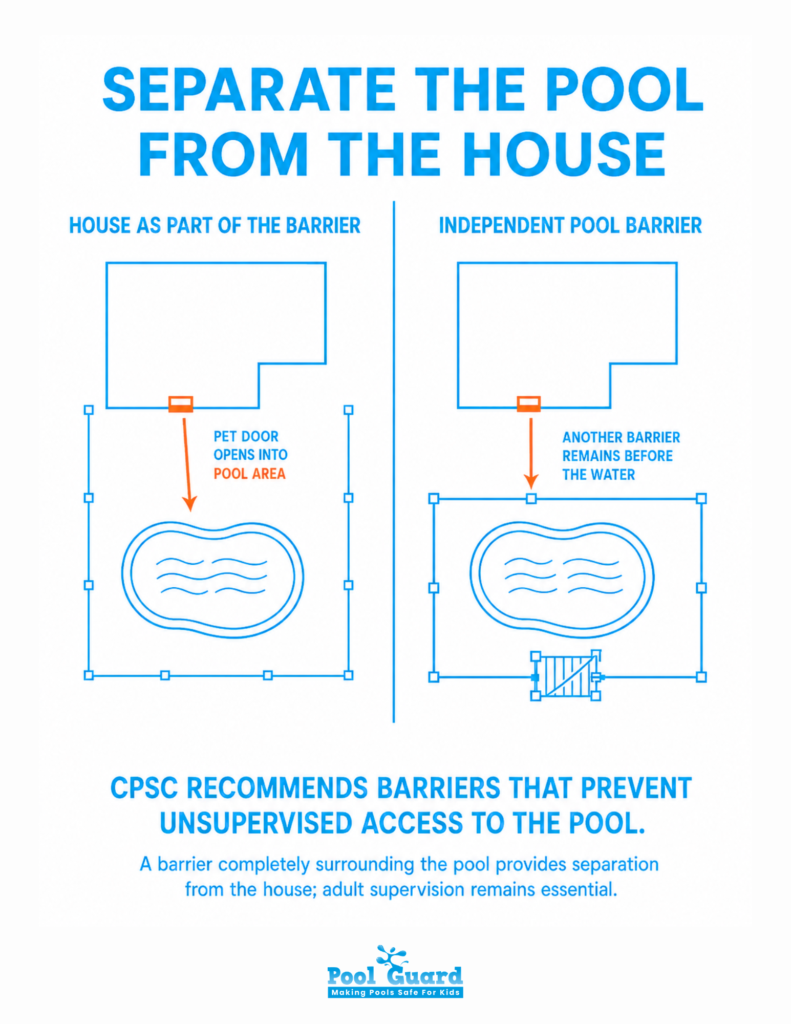
Kristin Goffman, executive director of the National Drowning Prevention Alliance (NDPA), described the core problem in one line: “The pet door access is part of the puzzle. It’s a weakness in the layers of protection that has to be addressed”.¹² The NDPA’s position is that an isolation fence around the pool itself, separate from the house, removes the pet door from the equation entirely, since a child can’t reach the water no matter which door they exit.¹³
Layers that hold up against a pet door specifically include:
Maureen Williams of D&D Technologies, maker of the MagnaLatch pool gate latch, put the limits of paperwork solutions bluntly: warnings “do more to protect the manufacturer from liability rather than to prevent the incident”.¹⁵
Is a dog door a pool safety risk? It can be when that opening gives a child access to the pool. The concern is not the pet door itself, but whether another reliable barrier separates the home from the water.
With the right approach, homeowners can reduce that risk without giving up the convenience of a pet door. An isolation pool fence, secure pet-door controls, and active supervision create stronger layers of protection. By treating every access point seriously, you can make the pool area safer while still allowing pets to move around comfortably.
If you’re unsure how your current layout affects pool safety, PoolGuard USA can help. Our team can assess your space, recommend compliant barrier options, and support you with professional pool-barrier layout and installation to close gaps created by pet doors and other access points.
¹ ² ⁴ ⁶ ⁸ ⁹ ¹² ¹³ ¹⁴ ¹⁵ Safety Research – Pet doors: A Little Known Gateway to Childhood Injury and Deaths
³ CPSC – Safety Barrier Guidelines for Residential Pools
⁵ ⁷ ¹⁰ ABC News – Consumer Alert: Children’s Deaths Tied to Pet Doors

Please fill out the form below with your information. Your local dealer will be notified about your inquiry.
Please fill out the form below with your information. Your local dealer will be notified about your inquiry.