
Every summer, families head to the pool believing that “watching the kids” is enough, until it isn’t. Drowning is silent, fast, and often invisible until it’s too late, which is exactly why so many camps, swim schools, and pool safety programs rely on one simple habit – the buddy system. It costs nothing to set up, takes only seconds to check, and can make the difference between catching a problem immediately and not noticing until it’s too late.
If you’ve ever wondered what is the buddy system in swimming, how it works, and, just as importantly, what it can’t do, this guide covers all of it. By the end, you’ll know exactly how to set up a swimming buddy system for your own family, how buddy checks work in practice, and why a buddy is a layer of protection rather than a replacement for real supervision.
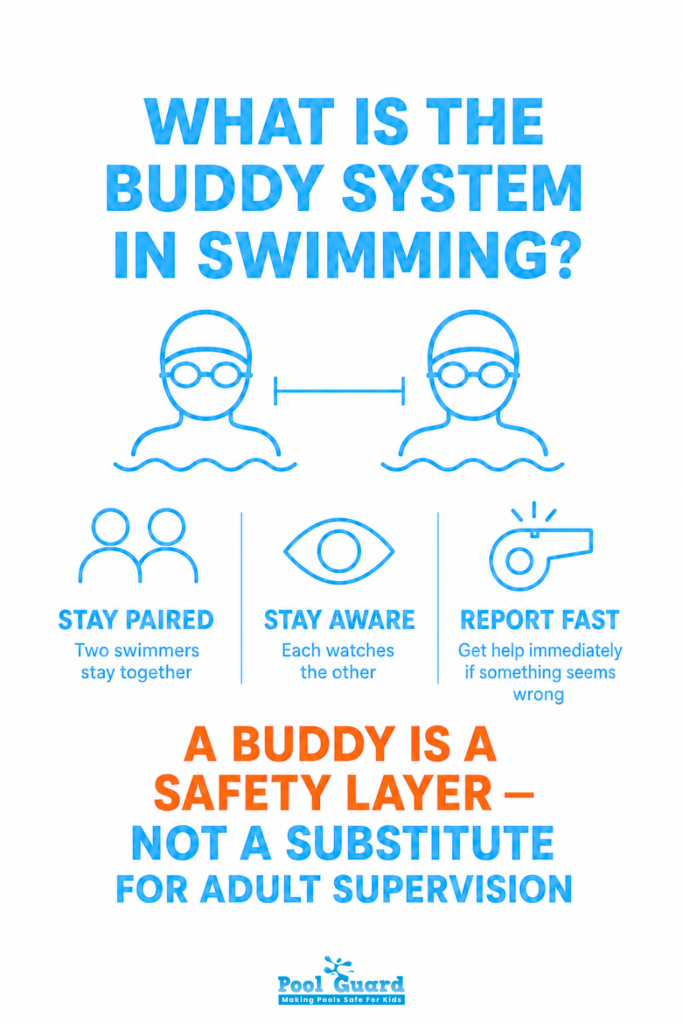
At its core, the buddy system in swimming means pairing two swimmers together so each one is responsible for keeping an eye on the other. Buddies stay near each other, check in periodically, and speak up the moment something seems wrong, like a partner tiring out, drifting too far, or simply going quiet.
It’s a simple idea, but it works because it adds a layer of accountability that isn’t there when someone swims alone. That said, it’s worth being upfront about what a buddy system is not: it is not a guarantee of safety, and it is not a substitute for adult supervision. Two children watching each other are still children. The buddy system works best as one part of a larger safety plan, alongside lifeguards, barriers like a pool safety fence or a pool cover, and an attentive adult.
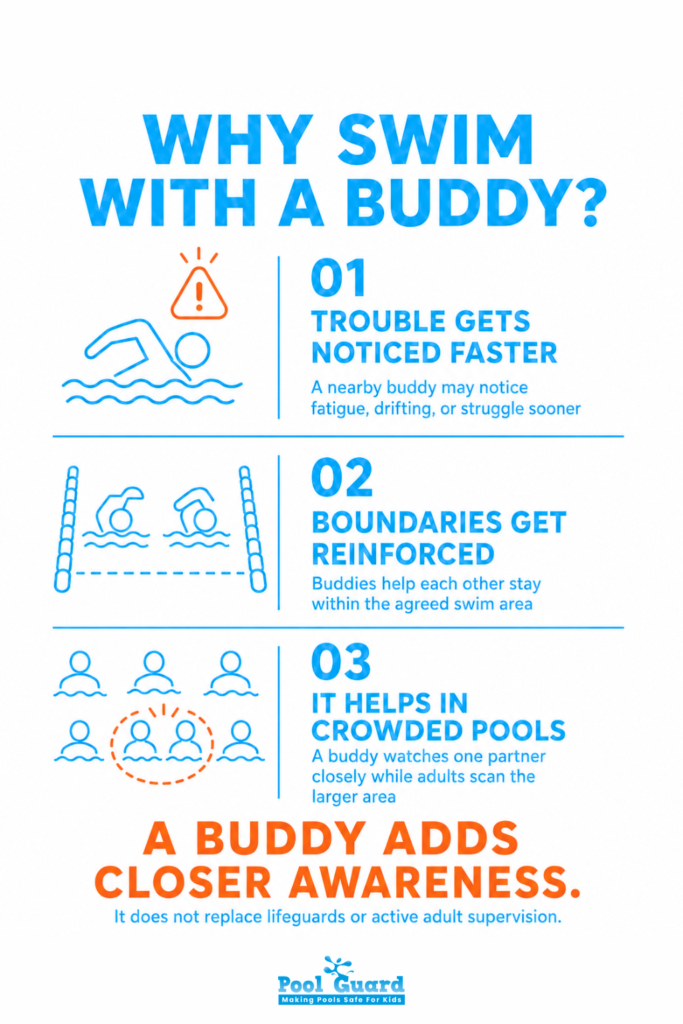
A few things happen when swimmers pair up that don’t happen when they’re on their own. Here’s what the purpose of swimming with a buddy is:
None of this replaces supervision. It just means there’s a second, closer set of eyes in the water alongside the adult ones on deck.
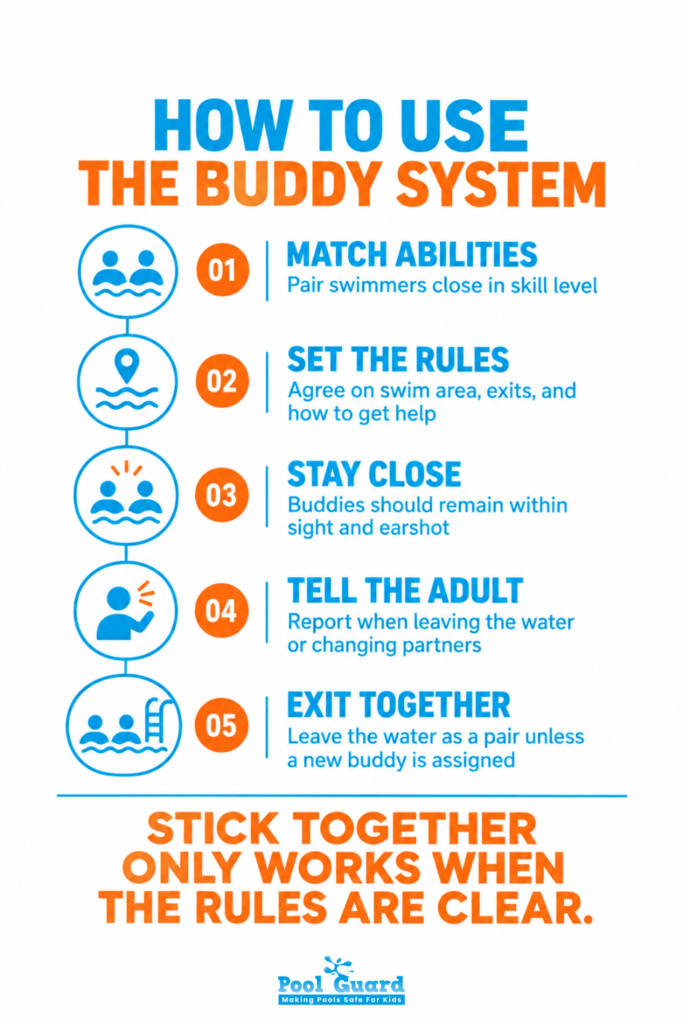
Setting up a buddy system properly takes more than just telling two kids to “stick together”. A few ground rules make the difference between a system that works and one that’s just for show:
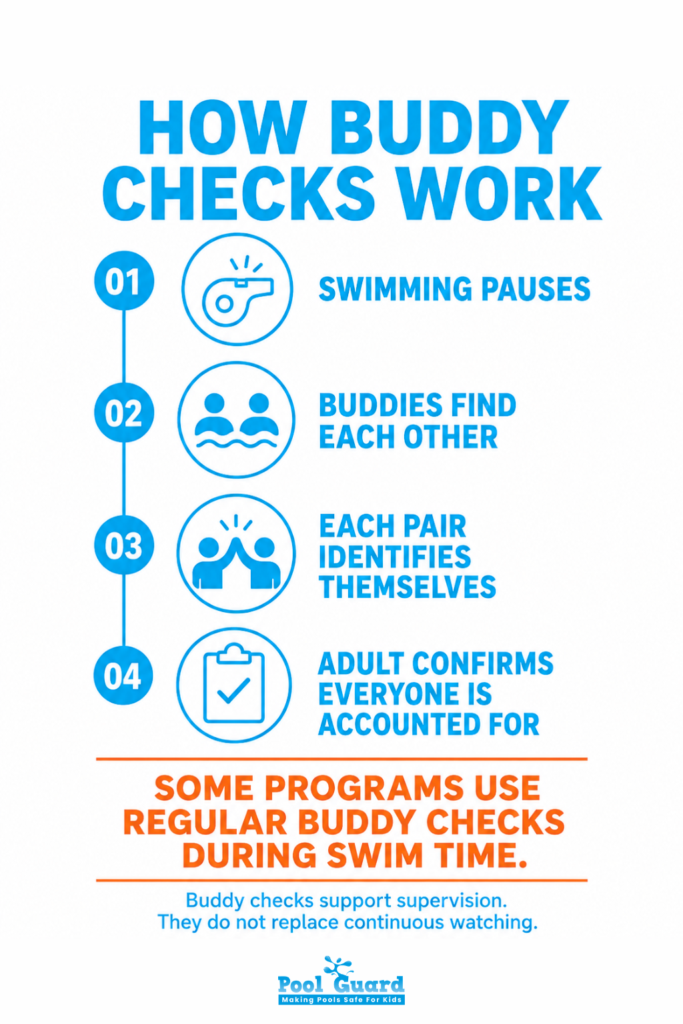
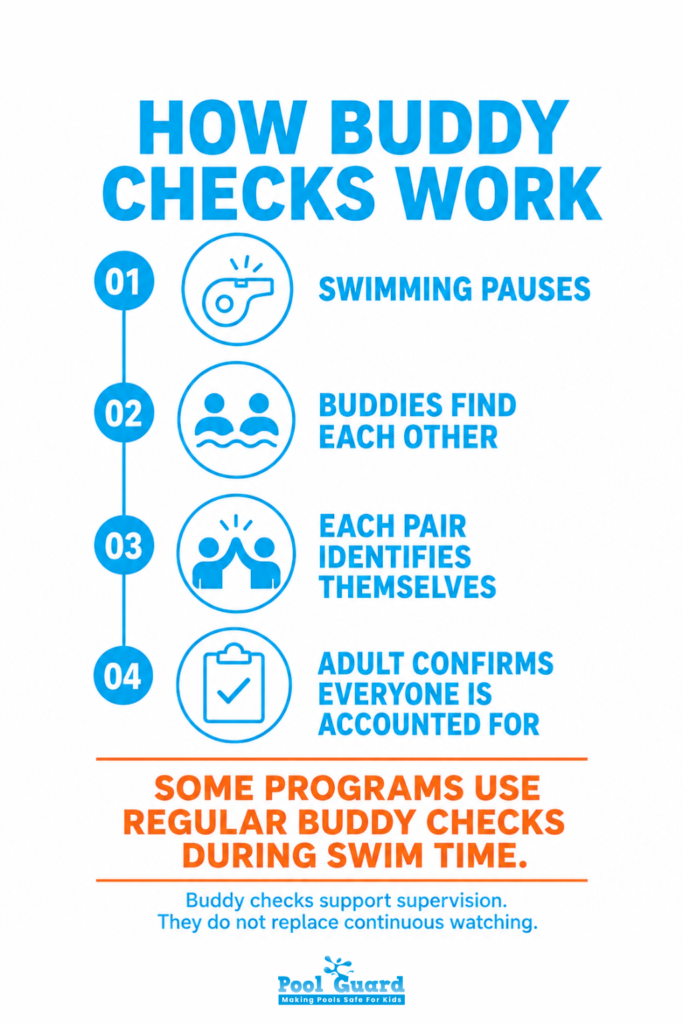
Buddy checks are the scheduled “roll calls” that many programs use to make sure every pair is accounted for. Typically, a supervising adult signals a brief pause in swimming, each buddy pair identifies themselves (often by raising joined hands), and the adult confirms everyone is present before play resumes.
The Boy Scouts of America popularized a version of this with buddy checks roughly every 10 minutes, but that interval is a program guideline, not a universal rule for all swimming. Camps, swim schools, and pools can adjust the timing to fit their group size and setting.
One important caveat is that buddy checks supplement continuous supervision rather than replace it. If a buddy notices their partner is missing, they should report it immediately rather than waiting for the next scheduled check.
No, and this is worth stating plainly. A buddy is a peer, not a lifeguard. Even strong swimmers can’t perform a rescue safely, recognize the early, quiet signs of drowning the way a trained adult can, or take responsibility for another child’s safety.
Children still need close, continuous supervision even when a lifeguard is on duty and even when they’re paired with a buddy. Pairing kids up should never be treated as a green light for an adult to stop watching, step away, or get distracted. Think of the buddy system as a second layer, not the main one.
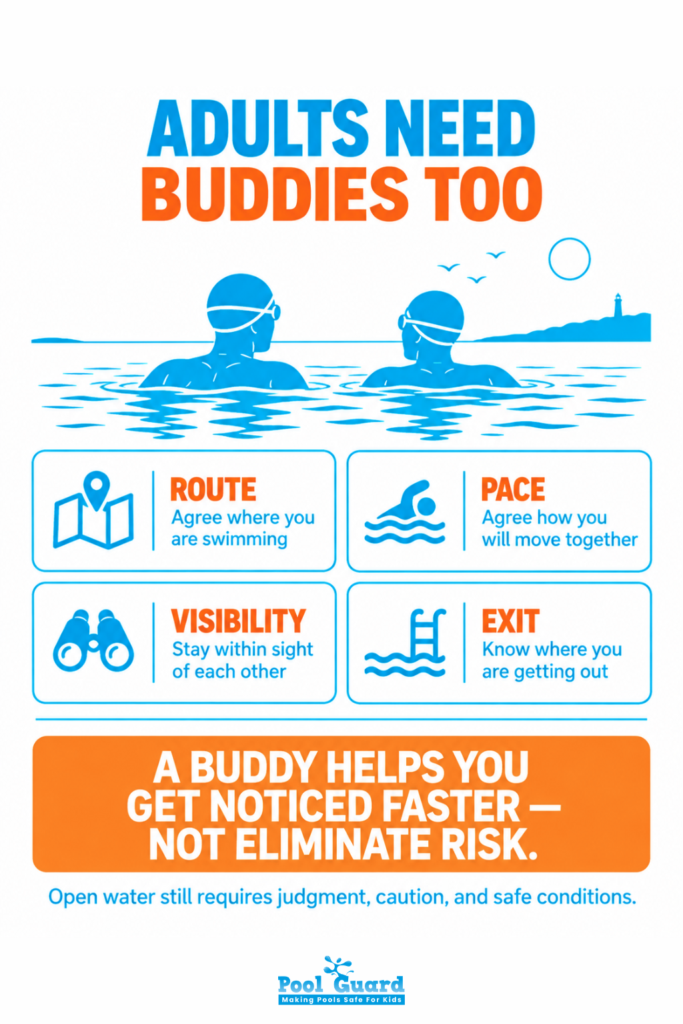
The buddy system isn’t just for kids at the community pool. Strong, experienced adult swimmers can still be caught off guard by exhaustion, sudden cramps, a medical event, or the shock of cold water, all of which can happen without warning, even to triathletes and lifelong swimmers.
This matters even more in open water, where conditions are less predictable than in a pool. Before entering a lake, river, or ocean, adult buddies should agree on the route and pace, where they will exit, and how they will stay within sight of each other throughout the swim.
A buddy can help you get noticed and get help faster, but a buddy doesn’t neutralize a rip current, a sudden drop in water temperature, or genuinely unsafe conditions. Open water still calls for caution the buddy system alone can’t provide.
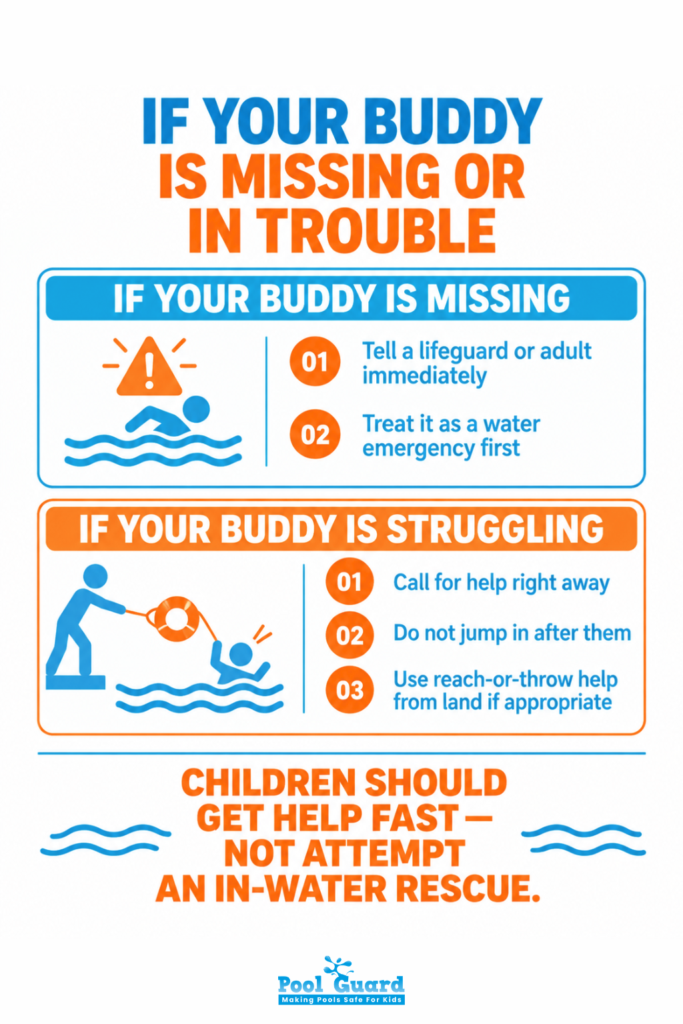
Even a good system needs a clear plan for when something goes wrong.
Rescue techniques and CPR are entire topics on their own, worth bookmarking a dedicated guide on those rather than trying to cram them in here.
The buddy system in swimming is a straightforward safety practice with real value. Pair up, stay aware of each other, and report problems immediately rather than waiting. Understanding what is the buddy system in swimming is important, but it should supplement, not replace, continuous adult supervision, trained lifeguards, and secured pool barriers when swimming is over.
If you take one thing away from this guide, let it be this: buddies watch each other, but adults still watch everyone.
Secured pool barriers matter most once that supervision ends. That’s where Pool Guard USA comes in. Our removable safety fencing keeps the pool off-limits the moment no one’s watching, whether or not a buddy system was in place.
Yes. While pairs are the most common setup, small groups of three or more can work, especially for younger children who may find it easier to keep track of one designated buddy within a slightly larger group. The key is making sure everyone still knows exactly who they’re responsible for.
Yes. A lifeguard is watching an entire pool or area, not any one swimmer specifically. A buddy provides focused, up-close attention that complements, rather than duplicates, what a lifeguard can offer.
There’s no universal rule, but many camps and swim programs use a signal, like a whistle or a call, every 10 to 15 minutes, prompting buddies to find each other, raise joined hands, and confirm both are accounted for. The exact interval matters less than making it a consistent habit everyone knows to expect.

Please fill out the form below with your information. Your local dealer will be notified about your inquiry.
Please fill out the form below with your information. Your local dealer will be notified about your inquiry.