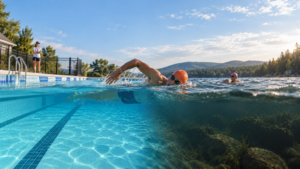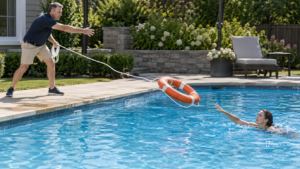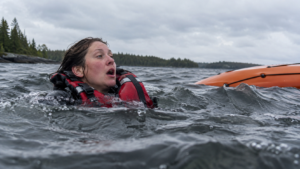
Most drowning advice treats “the pool” and “open water” as one category: water, kids, supervision, done. But a swimmer who’s completely at ease doing laps can genuinely struggle the first time they’re in a lake with no black line on the bottom and no wall to grab. The risks aren’t the same, and pretending they are is how confident swimmers get caught off guard.
This guide breaks down exactly how pool vs open water safety differs, and why strong pool swimmers can still struggle in open water. It also covers the hazards of lakes, rivers, and oceans, and what to check before anyone gets in a pool, pond, or ocean.
A pool is engineered to remove variables. Open water isn’t engineered at all; it’s a natural system that happens to be swimmable, and every one of those removed variables comes back.
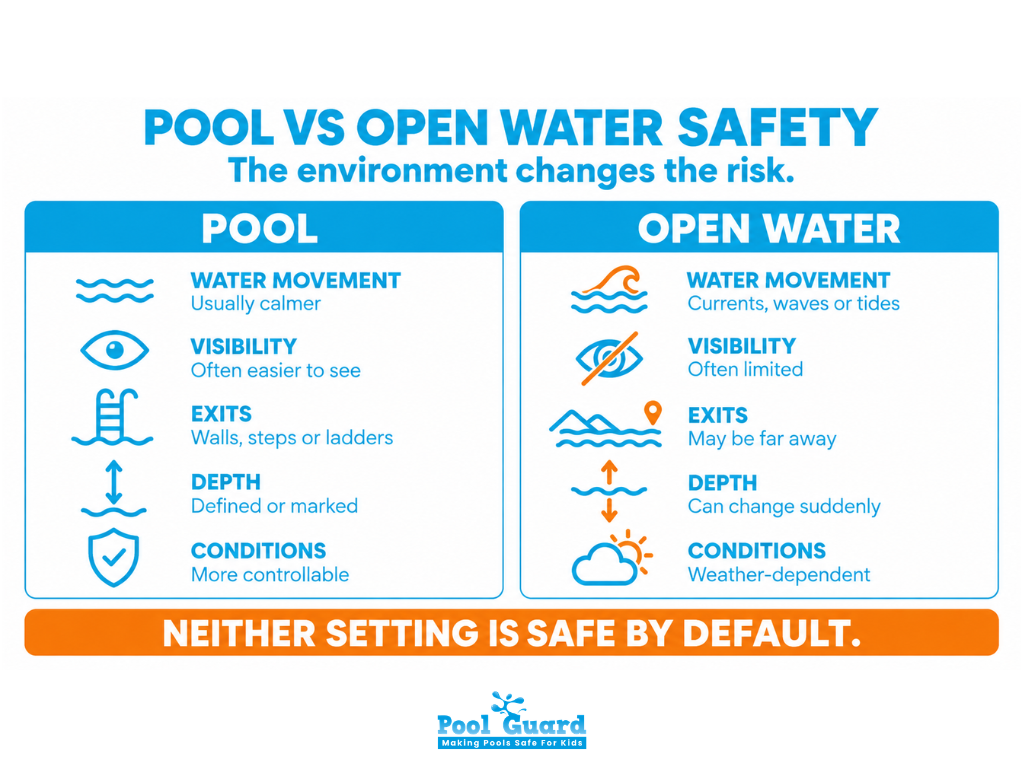
| Factor | Pool | Open Water |
| Water Movement | Usually calm | Currents, waves, tides, boat wakes |
| Temperature | Regulated, often heated | Uncontrolled; warm air can be misleading |
| Visibility & Depth | Clear, defined shape and depth markers | Hidden obstacles, sudden drop-offs |
| Exits | Walls, steps, ladders within reach | Shore may be distant or hard to reach |
| Water Quality | Treated and monitored | Subject to runoff, pollution, algal blooms |
| Supervision | Depends on venue or household | Lifeguard coverage varies by location and hours |
Neither column is “safe” by default. A pool with an unlatched gate and no supervision is more dangerous than a calm, lifeguarded lake. The setting matters less than how it’s actually managed in the moment.
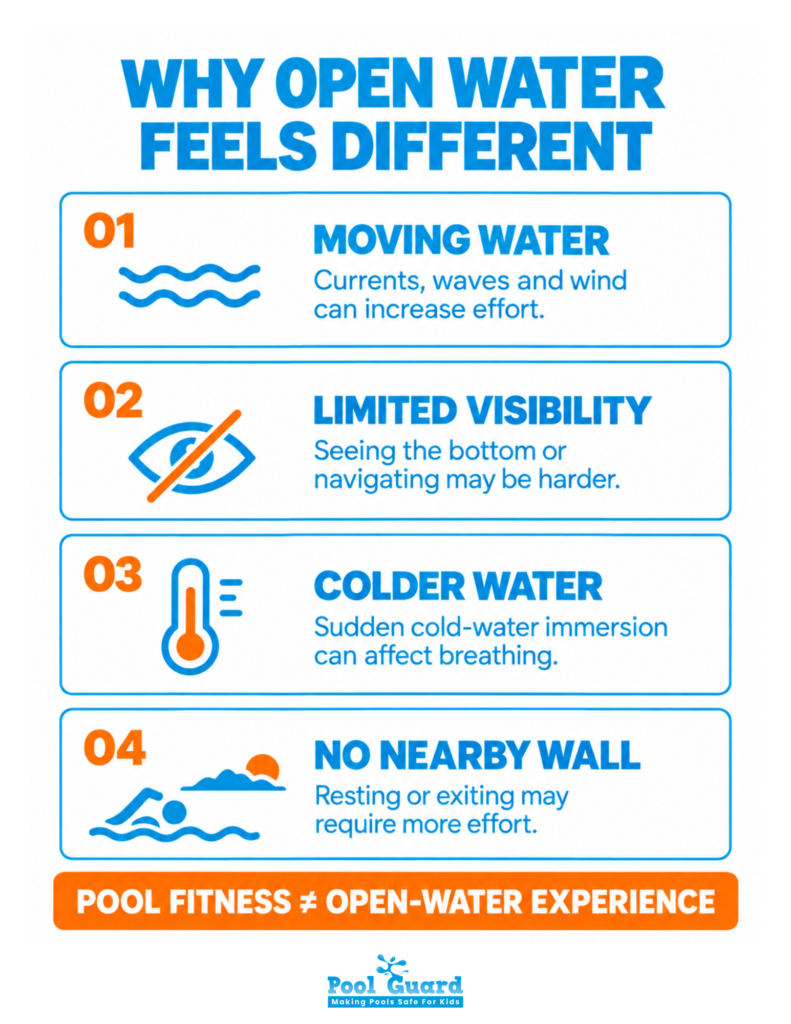
Lap times don’t transfer directly to open water, and three things explain most of the gap:
Even on a warm day, natural water is often far colder than a heated pool. Sudden immersion in cold water can trigger involuntary gasping, rapid breathing, and muscle cramping within seconds, before hypothermia is ever a factor. This reflex can overwhelm even a strong swimmer if they enter quickly instead of wading in gradually.
In a pool, the black line does the navigating for you. In open water, murky or choppy conditions can make it hard to see the bottom, spot other swimmers, or even confirm which way is “forward”. This disorientation can spike anxiety fast.
A pool wall is never more than a lane-width away. In open water, the nearest exit might be a hundred yards off, and fatigue compounds the longer that distance stays out of reach.
None of this means open water is off-limits. It means the skills are different enough to deserve separate practice, not just assumed from pool experience.
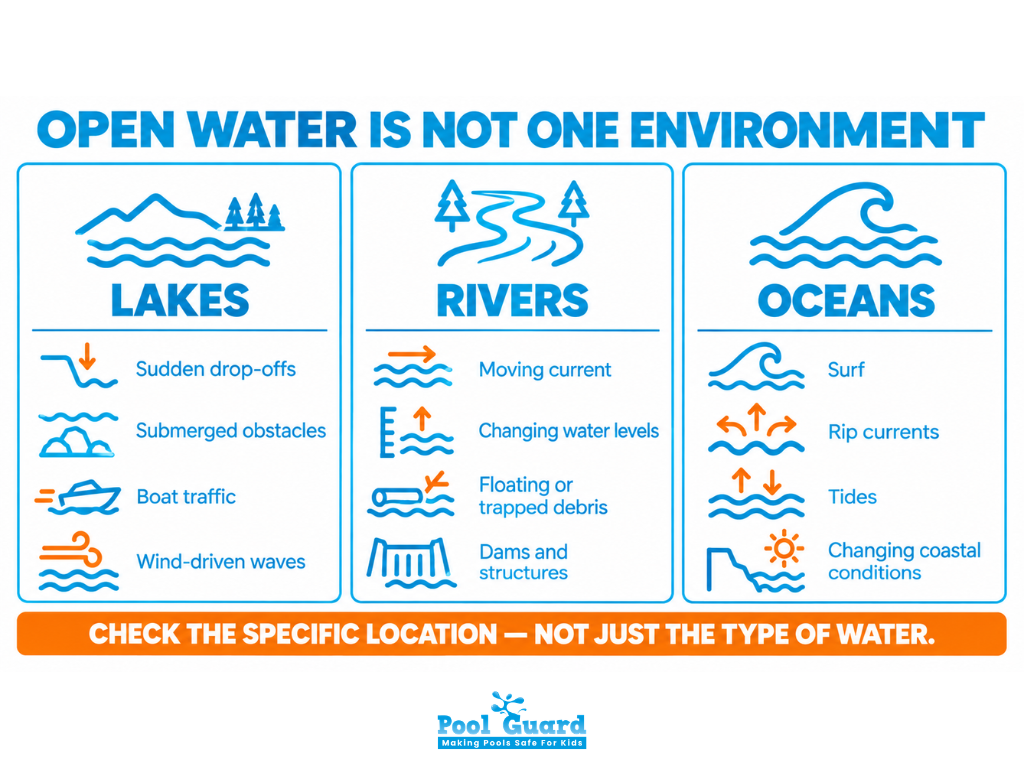
“Open water” isn’t one hazard profile; each type of body of water has its own failure modes:
Calm or shallow-looking water is not automatically safe. Rip currents can pull from water that looks flat. River currents can be strong even when the surface looks still. Judge the specific site and conditions, not the general impression.
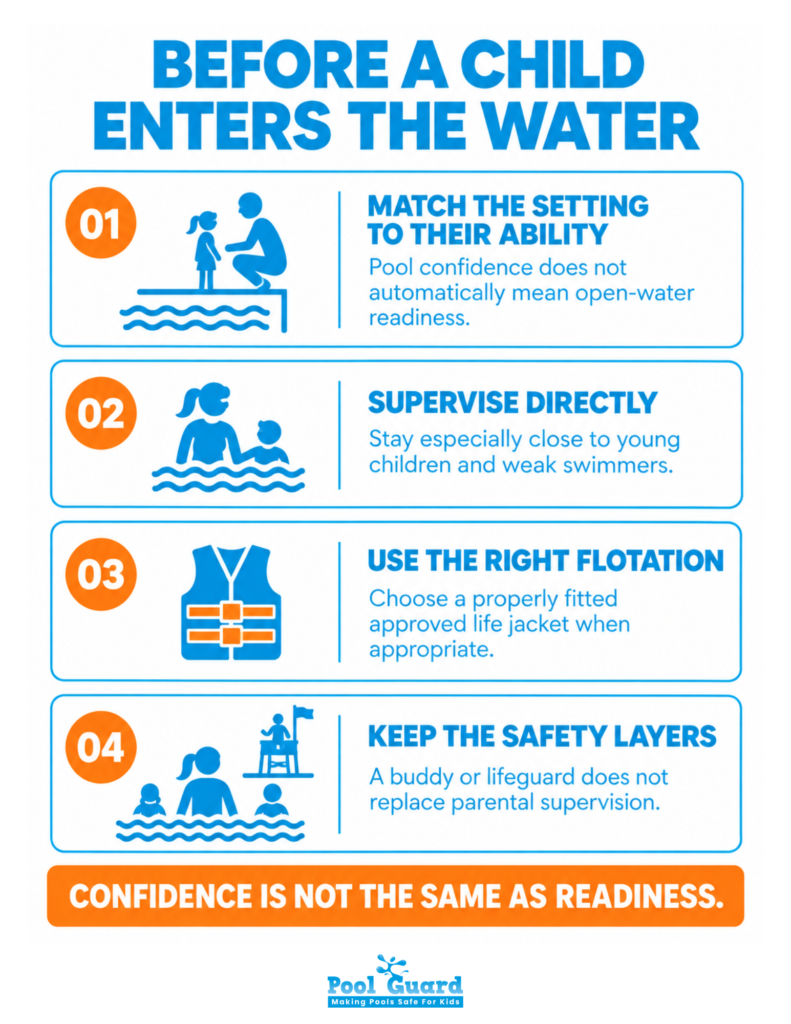
The core rule doesn’t change by location, but the margin for error does. Match the setting to your child’s actual ability, not their confidence, and remember that pool skill doesn’t automatically transfer to open water; that transition deserves its own practice, ideally with an experienced swimmer or instructor.
Supervise directly even when a lifeguard is present. For young children and weak swimmers, staying within arm’s reach still matters, since a lifeguard watching a wide area isn’t the same as an adult watching your child specifically. A swim buddy is a good habit, but it doesn’t replace that adult.
Drowning is a leading cause of death in young children in the U.S., and it usually happens quickly and quietly, not with obvious splashing, which is exactly why close supervision matters more than general awareness.
Gear helps, but only the right gear, used correctly. U.S. Coast Guard-approved life jackets are the standard for open water, and they’re worth using around pools too for young children or weak swimmers.
It’s important to distinguish these from learn-to-swim vests, arm floaties, and other inflatables, which are training aids rather than flotation devices rated for an emergency and shouldn’t be treated as one.
Wearing bright-colored swimsuits and swim caps, like orange, yellow, or pink, improves visibility to boaters and other swimmers, unlike dark colors that blend into the water. Wetsuits add thermal protection and buoyancy for cold water, though they manage comfort, not safety, the way a life jacket does.
Safety in pools or open water starts before anyone gets in, so a quick check of conditions and equipment can prevent most accidents.
When weighing pool vs open water safety, the real question isn’t which setting is inherently safer; it’s whether that setting, on that day, is actually being managed well. A pool can turn dangerous the moment supervision lapses. Open water can be manageable when the site is familiar, conditions are checked, and the right gear is used correctly.
Since supervision can fail in either setting, the strongest safety measures are the ones that hold up when it does. For home pools, that means four-sided isolation fencing with a self-closing, self-latching gate separating the pool from the house and yard – the layer of protection that still works when supervision fails.
That’s where Pool Guard USA comes in. We specialize in safety fencing and removable mesh pool fences that keep kids and pets safe without blocking the view of your yard.
Not meaningfully. “Wild swimming” is largely a UK-originated term for the same activity: swimming in natural bodies of water like lakes, rivers, and the sea, as opposed to a pool. When it comes to pool vs wild swimming, the safety considerations are the same ones covered above, since both terms describe the same open water conditions.
Not in any way that matters for risk. Salt water adds buoyancy, making floating slightly easier, but it doesn’t reduce currents, cold shock, tides, or visibility problems. In the open water vs pool swimming comparison, that’s the key difference: pools don’t have rip currents or tides, while ocean swimming carries those hazards regardless of buoyancy.
It can be significant. Pools are typically heated or maintained at a consistent, comfortable temperature, while open water, like lakes, rivers, and oceans, fluctuates with season, depth, and weather. Cold open water can trigger cold shock or hypothermia even when the air feels warm, which is a risk pools generally don’t carry.
Please fill out the form below with your information. Your local dealer will be notified about your inquiry.
Please fill out the form below with your information. Your local dealer will be notified about your inquiry.