Thunder rumbles in the distance, the kids beg for “just five more minutes”, and you’re left making a split-second call that could actually matter. Lightning is one of the few weather hazards that kills swimmers every year, and most of those deaths occur when someone waits too long to get out of the water.
This guide reveals the single, absolute rule for how long after thunder can you swim, the critical science behind why it exists, and how to build a quick storm routine for your household so you never have to guess again.
Here’s the rule, stripped of all the noise:
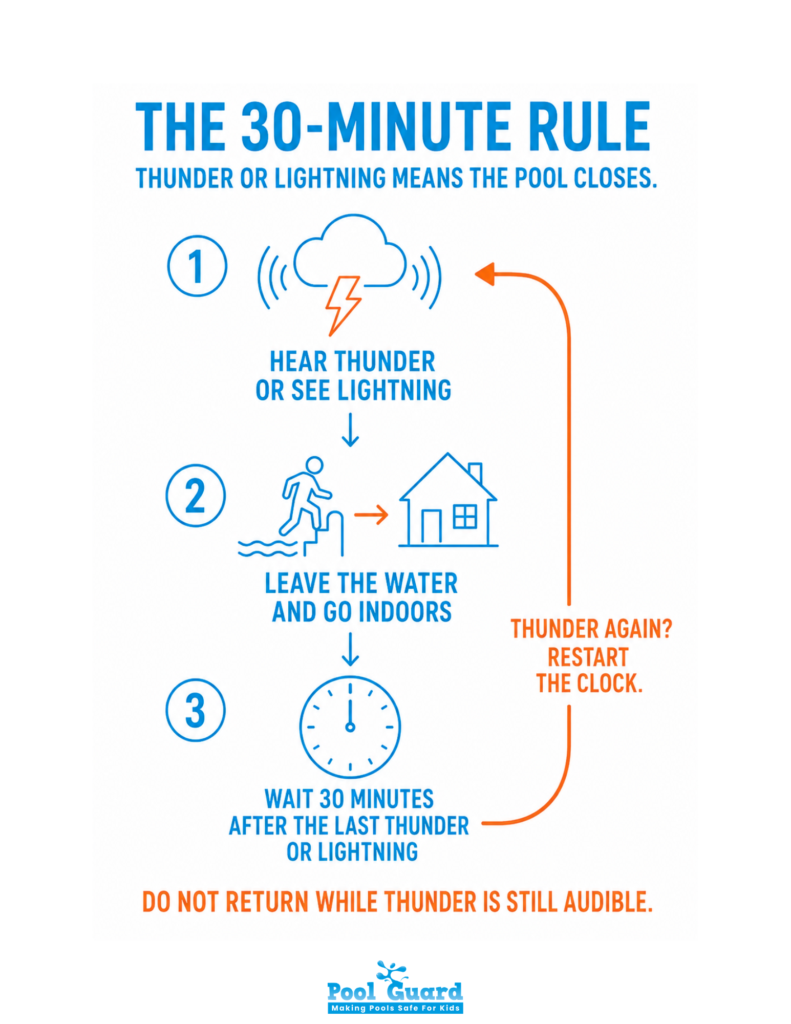
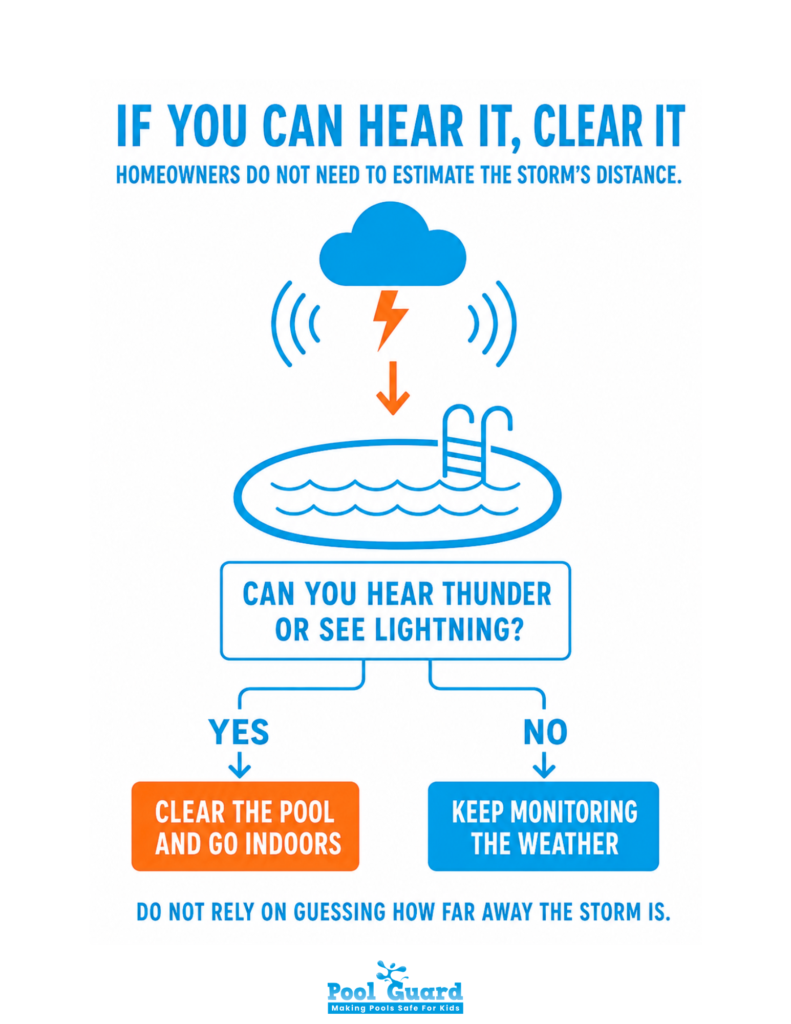
That’s it. No distance math, no watching the horizon to decide if the storm is “close enough”. If you can hear it, you’re in range. This is the same standard used by the National Weather Service, the CDC, and lightning-safety organizations across the country, and it applies whether you’re at a backyard pool, a public pool, or the open water.
No, and this isn’t a “better safe than sorry” suggestion; it’s a hard rule backed by real numbers. Swimming pools and open water are excellent conductors of electricity, and a swimmer is often the tallest, most exposed point in the immediate area.
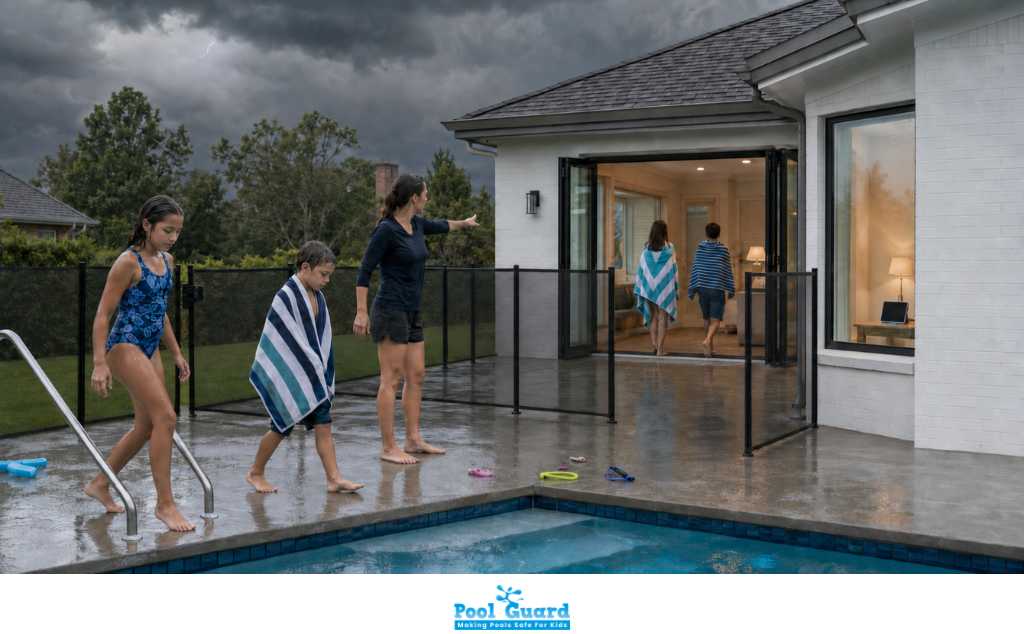
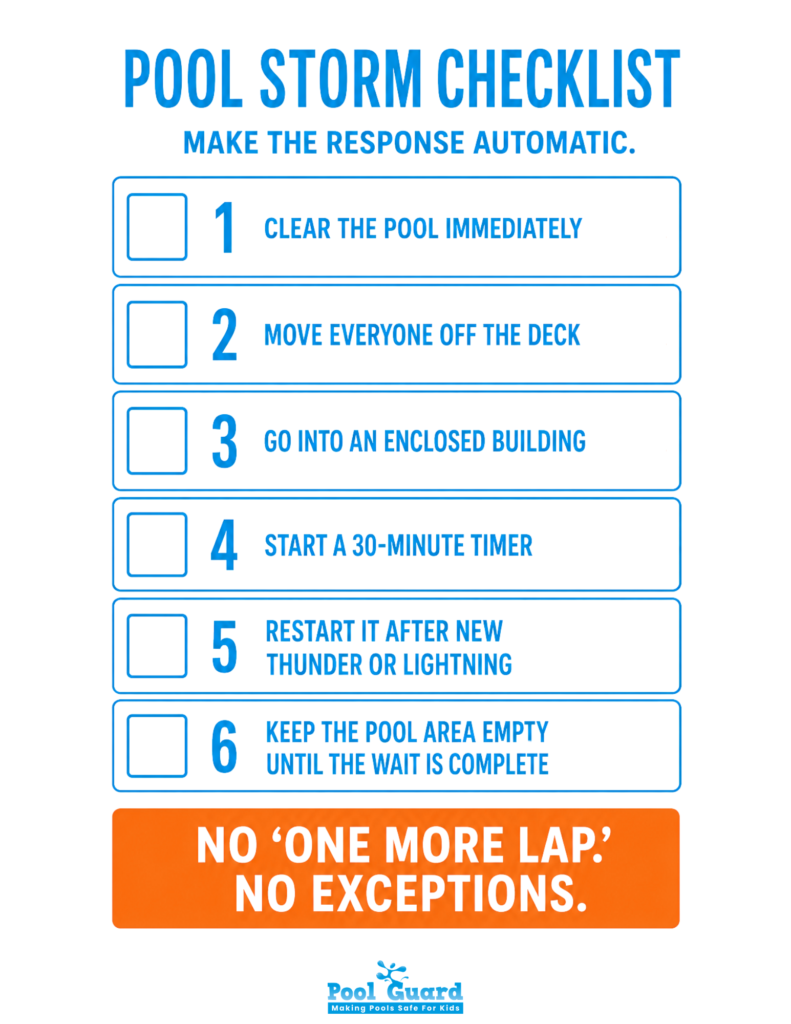
The moment lightning is visible, everyone should:
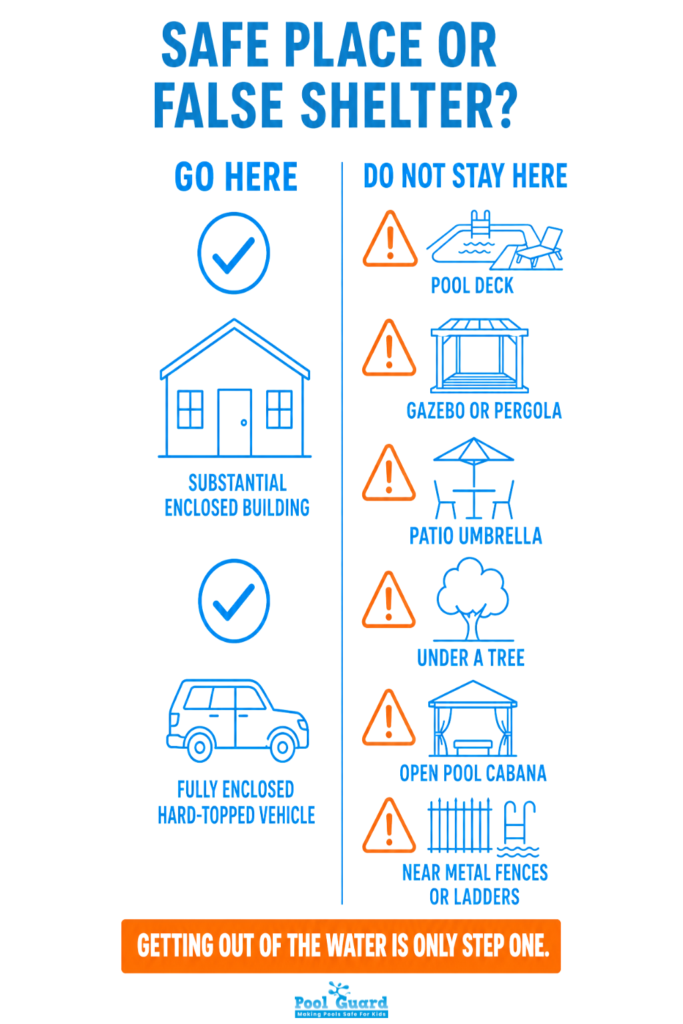
The National Weather Service is direct about this – there is no safe place outdoors once a thunderstorm is in the area, and people should specifically move away from bodies of water rather than just away from open ground. A pool deck, a lake shore, or a boat all carry the same core problem; you’re near a conductive surface with no real shelter.
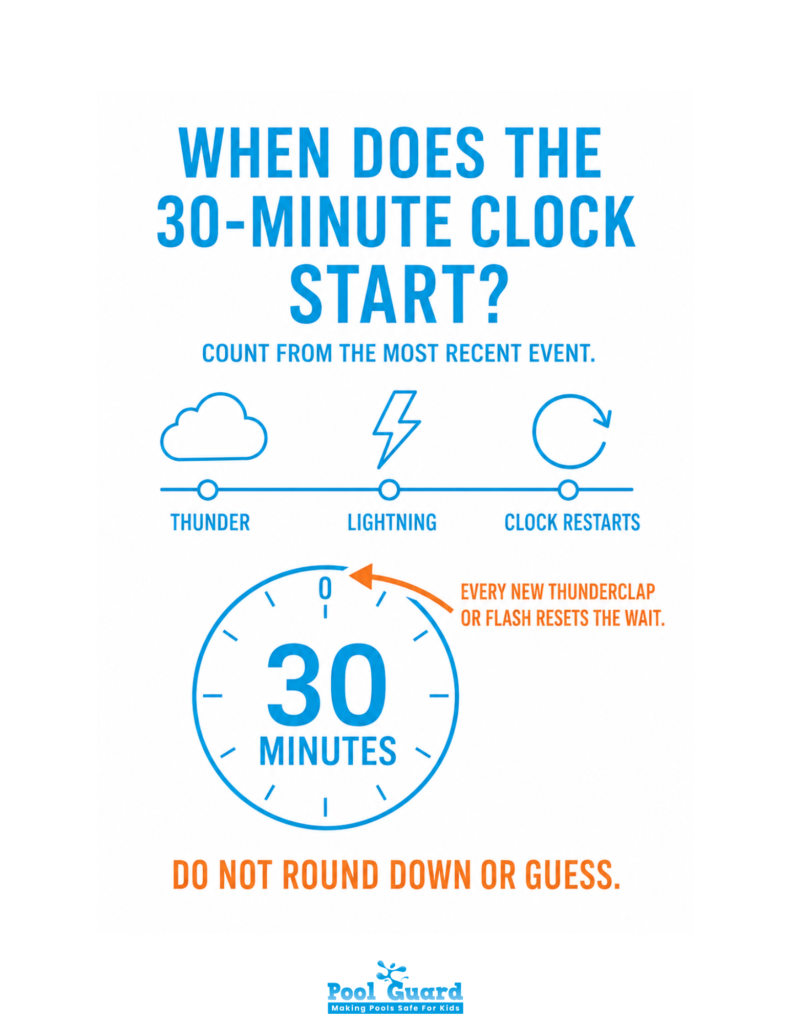
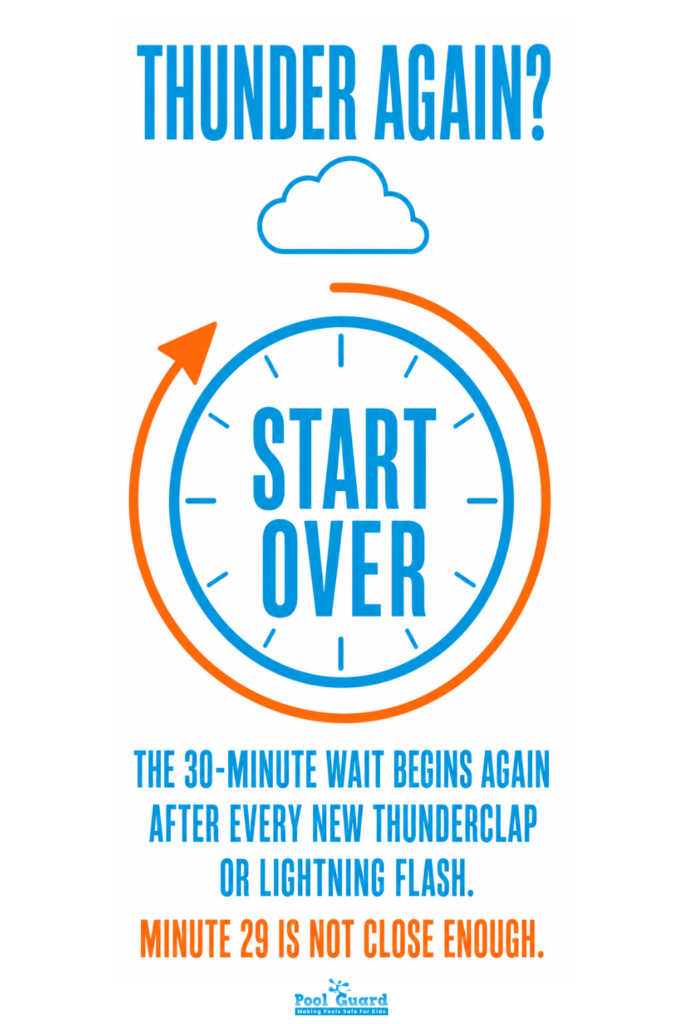
Wait at least 30 minutes after the last lightning strike or clap of thunder, whichever happened most recently.
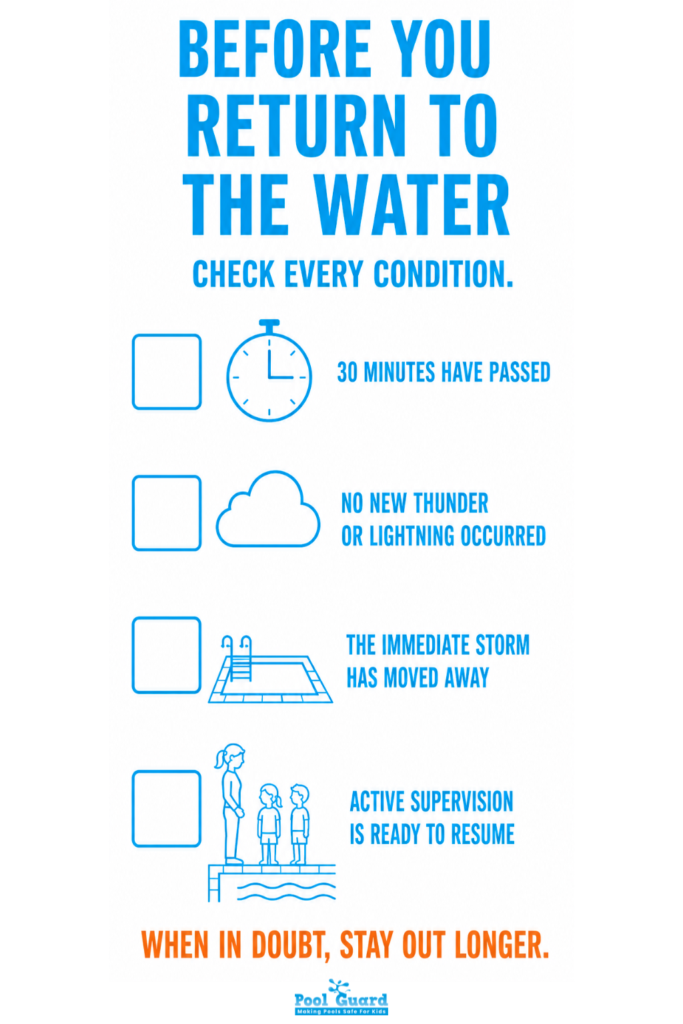
This isn’t an arbitrary number. Lightning can strike well outside the visible rain of a storm, and electrical charge can linger in storm clouds even after the sky looks clear. That’s why the countdown restarts every time thunder or lightning happens again during the wait. So, if you’re at minute 25 and thunder rolls through again, the clock goes back to zero. Set a timer instead of trying to keep count in your head; it removes the guesswork and the temptation to round down.
For a home pool, distance isn’t something you should try to calculate. Some aquatic facilities do use formal lightning-radius policies. A common approach among organized pools and community centers is to clear the water when lightning is detected within roughly a 10-mile radius, and resume activity only after 30 minutes without another strike or thunderclap. These facilities often rely on commercial lightning-detection systems or trained staff monitoring radar in real time.
The average homeowner doesn’t have that infrastructure. Trying to eyeball how far away a storm is, counting seconds between flash and thunder, watching the sky, and guessing based on how loud the rumble sounded, introduces room for error at exactly the wrong moment. The simpler and safer approach – if you can hear it, clear it. Skip the math entirely.
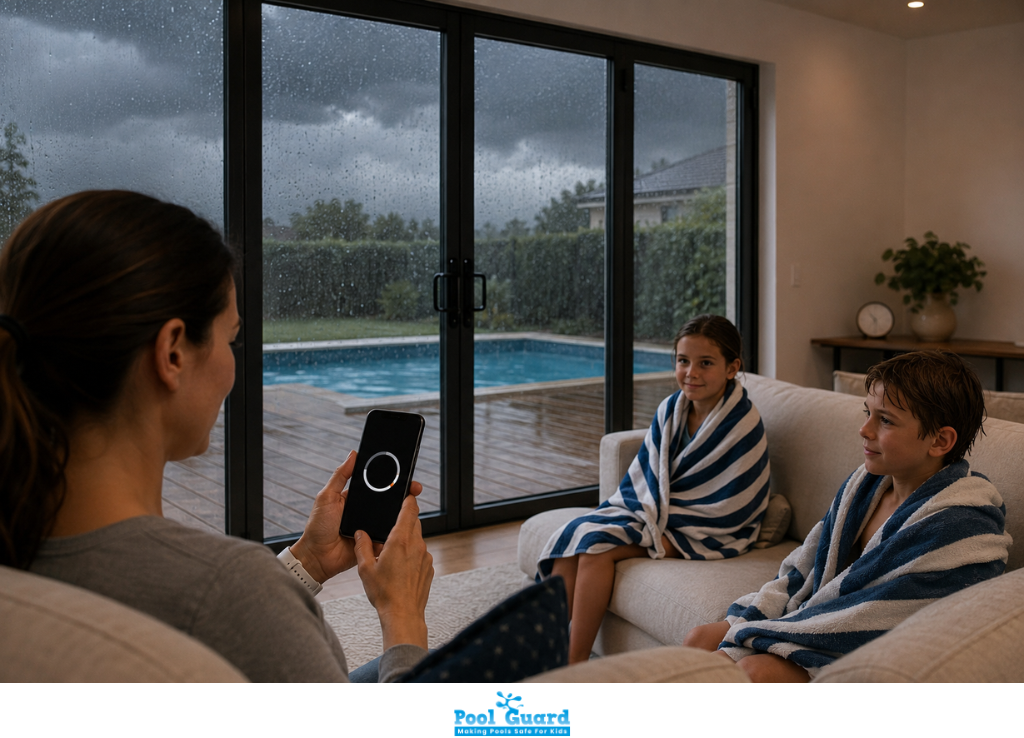
Getting out of the water is step one. Where you go next matters just as much, because plenty of “shelter” options aren’t actually safe.
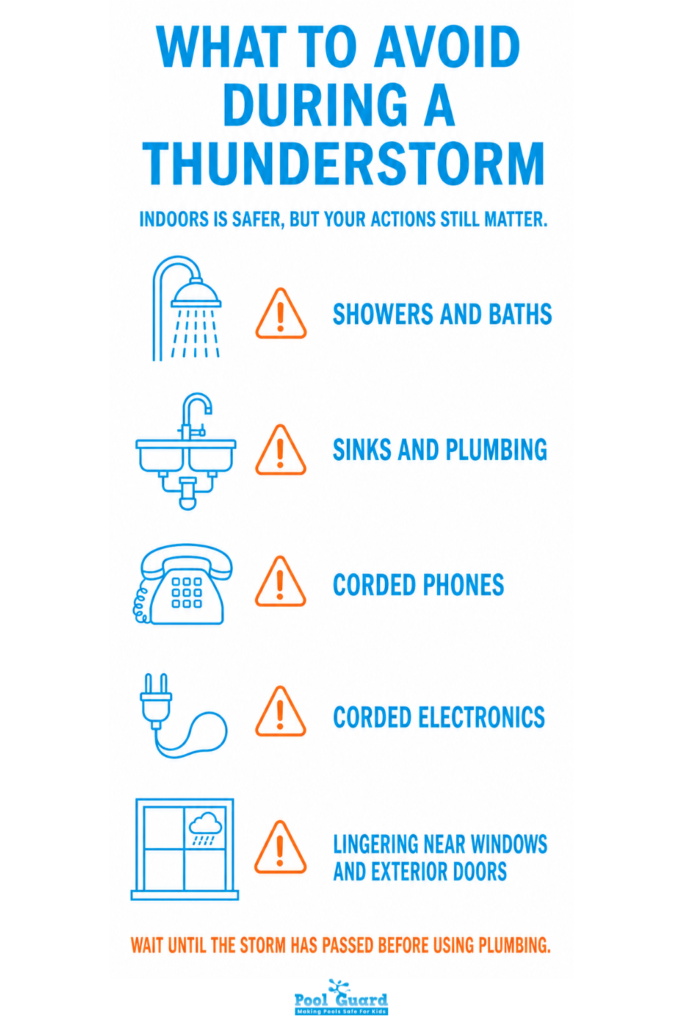
Avoid these, even though they feel like shelter
Those last two groups surprise a lot of people. The CDC specifically warns against showering, bathing, washing dishes, or otherwise touching plumbing during a thunderstorm, since lightning can travel through pipes and reach you indoors. Getting inside is necessary, but it’s not the finish line; what you do once you’re in there still counts.
Turn this into a routine, not a debate, so nobody has to negotiate with a thunderstorm in real time:
If it’s safe to do so before the storm arrives, secure loose pool toys, umbrellas, chairs, and other lightweight furniture. High winds can turn them into projectiles, separate from the lightning risk entirely.
Indoor doesn’t automatically mean safe, and this trips up a lot of families. Indoor pools are often connected to plumbing, electrical systems, pumps, and filtration equipment, and metal fixtures throughout the facility can still conduct a charge from a nearby strike. Many community pools and Y-affiliated aquatic centers clear their indoor pools during active thunderstorms for exactly this reason. Being under a roof doesn’t disconnect the water from the building’s systems.
So, you should follow the posted rules at whatever facility you’re in. If a lifeguard or staff member calls a lightning clearance, that applies indoors just as much as it would at an outdoor pool.
If you hear thunder or see lightning, treat it as a full stop. Clear the pool, move off the deck, and get everyone indoors. Memorize the absolute rule for how long after thunder can you swim. You must wait 30 minutes after the last thunder or lightning. Restart the clock every single time it happens again. This simple rule is the storm advice that consistently saves lives.

Please fill out the form below with your information. Your local dealer will be notified about your inquiry.
Please fill out the form below with your information. Your local dealer will be notified about your inquiry.