Summer afternoons at the pool are supposed to be carefree. But for parents of children with autism, epilepsy, or cerebral palsy, that picture carries real worry. Water safety for children with special needs goes far beyond swim lessons and floaties. It calls for a layered, deliberate approach, one that accounts for wandering, seizures, impulsive behavior, and more.
The good news is that with the right safeguards, your child can enjoy the water safely. This guide breaks down everything from pool fencing and gate latches to alarms and water watcher rules. You’ll learn how to build a layered protection plan that truly fits your child and your home.
Drowning happens quickly and silently, often in the time it takes to answer a phone. For children with special needs, unique developmental and physical factors significantly elevate this danger.
Different conditions present distinct risks that caregivers must anticipate. Children with autism are frequently drawn to water and prone to wandering. For those with epilepsy, a sudden seizure poses a critical threat in or near a pool. Children with intellectual disabilities may overestimate their swimming skills or struggle to follow rules. Meanwhile, children with physical challenges like cerebral palsy or Down syndrome often require constant, hands-on physical support.
Because no single precaution eliminates every hazard, protection requires a multi-layered defense. Combining constant supervision, physical barriers, and adaptive swim lessons is the most effective way to close these safety gaps.
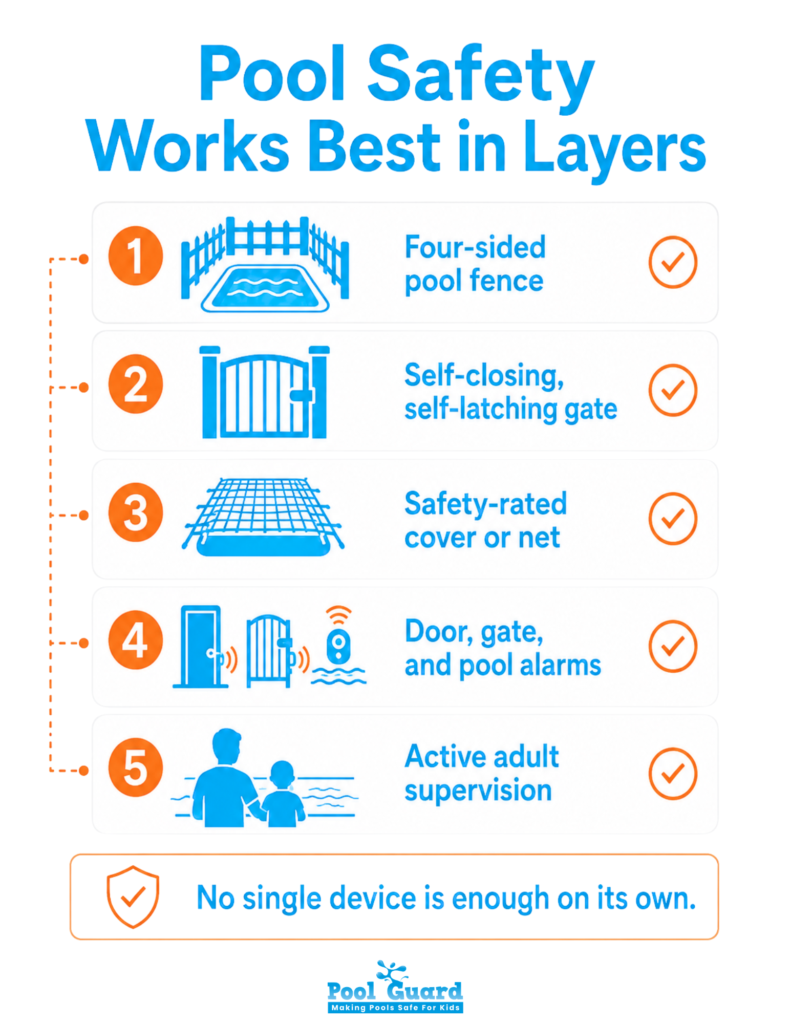
For children who wander, a behavior closely associated with autism spectrum disorder, a pool fence is the single most important barrier between your child and unsupervised water access.
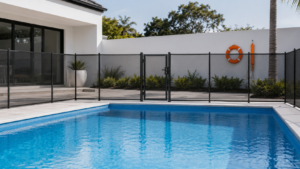
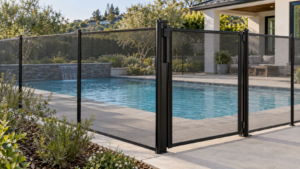
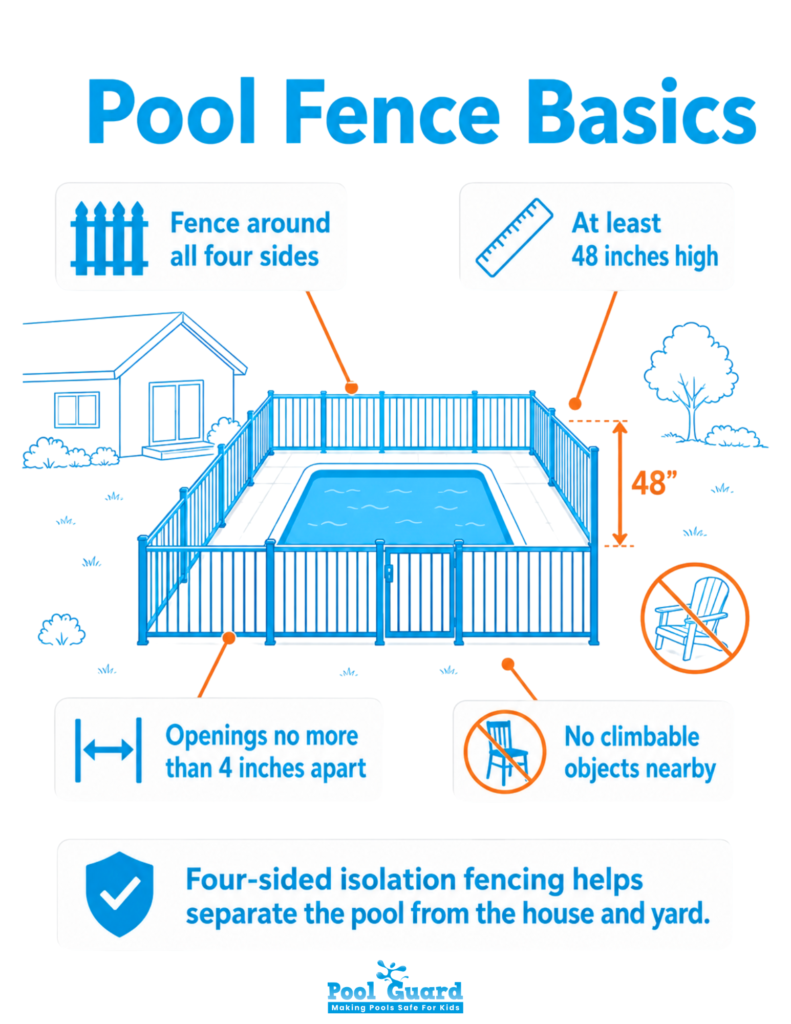
Four-sided isolation fencing is the gold standard, with fencing around all four sides of the pool, completely separating it from the house and yard play areas. A fence connected to the house leaves a door as the only barrier, and the door is often left open.
When installing or inspecting your fence:
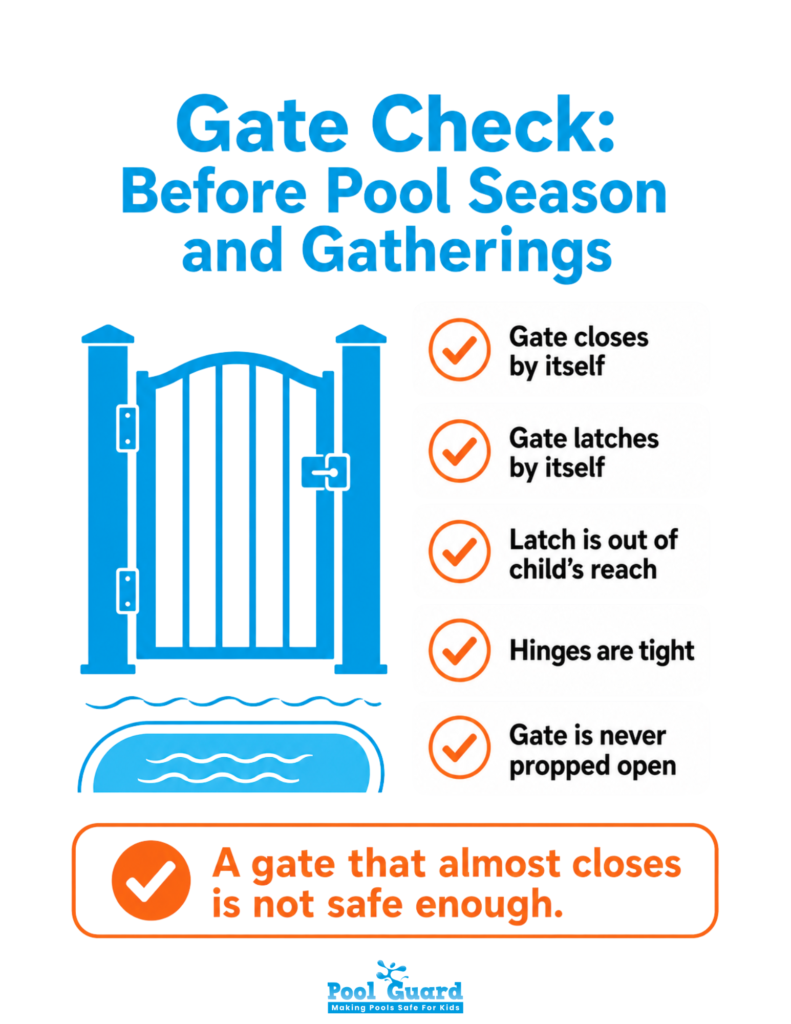
A child with autism, ADHD, or impulsive behaviors can move through an unlatched gate in seconds. Your pool safety gate must close and latch on its own, every time, without anyone pushing it shut.
After swimming, a safety-rated pool net or pool cover adds another barrier, especially for children who may return to the pool area without warning.
For children with epilepsy in particular, even brief unsupervised access to water carries serious risk. Every closed layer matters.
Pool alarms provide critical backup protection for children with autism who elope, or any child who impulsively moves toward water without warning. These layered systems serve as a vital safety net when direct supervision fails, alerting caregivers before a child can access the pool.
Protection begins with door alarms that sound instantly if a child exits toward the yard, followed by gate alarms that trigger the moment the pool perimeter is opened. Finally, in-water pool alarms detect unexpected movement and immediately notify adults via an indoor or wearable receiver.
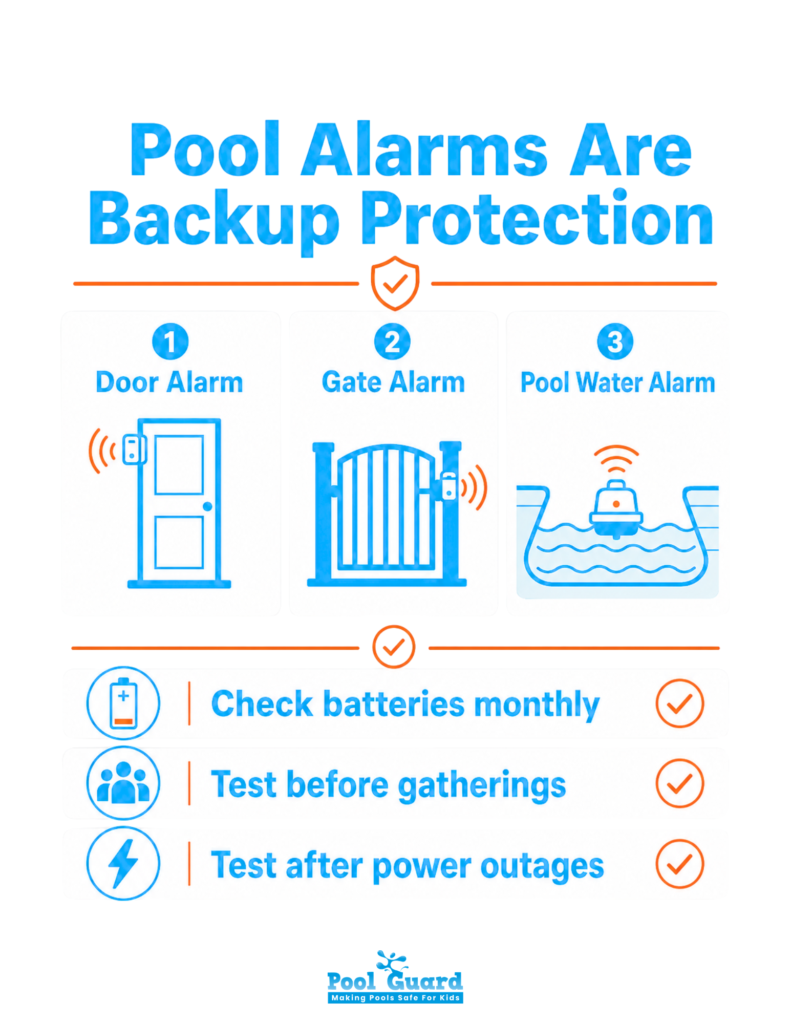
Maintenance reminders:
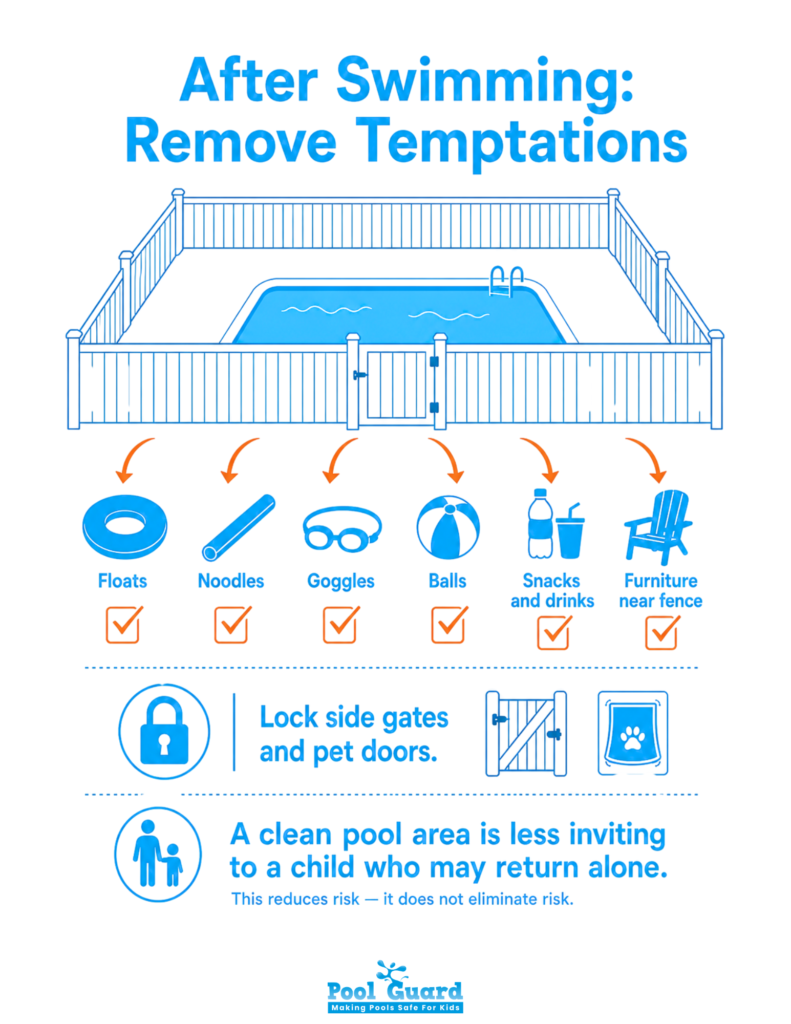
Children with autism or sensory-seeking behaviors are often drawn to water for its light, sound, and feel. A float left in the pool or a ball near the fence can be enough to bring them back on their own.
After every swim session:
When multiple adults are present, everyone assumes someone else is watching. That assumption is especially dangerous when a child with autism, epilepsy, or cerebral palsy requires more attentive supervision than a typical child.
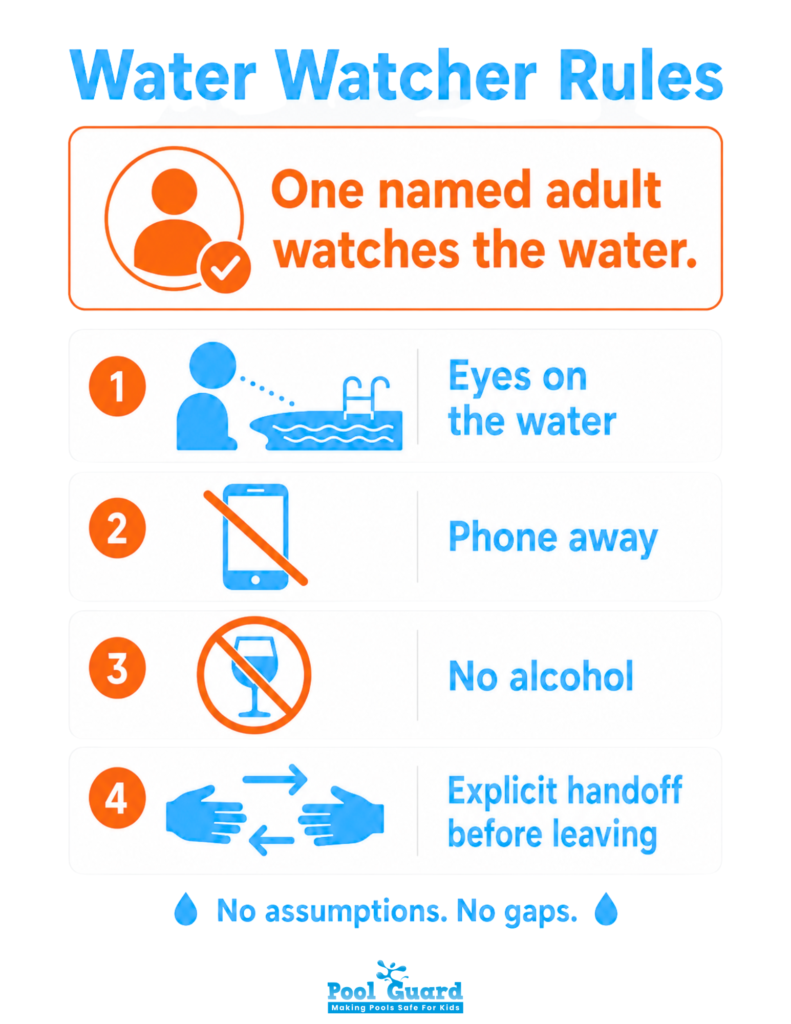
One named adult is the water watcher. That person:
When they need a break, water watchers must hand off duty explicitly by saying, “You’ve got it”, before stepping away to ensure there are no gaps in supervision.
Grandparents’ backyards, neighbors’ homes, vacation rentals, hotel pools, and party venues all carry the same risks as your own pool, and often with less familiar safety setups.
If your child has autism and a tendency to elope, epilepsy requiring constant supervision, or a feeding tube (g-tube) that needs to stay away from open water, those needs travel with them to every pool they visit.
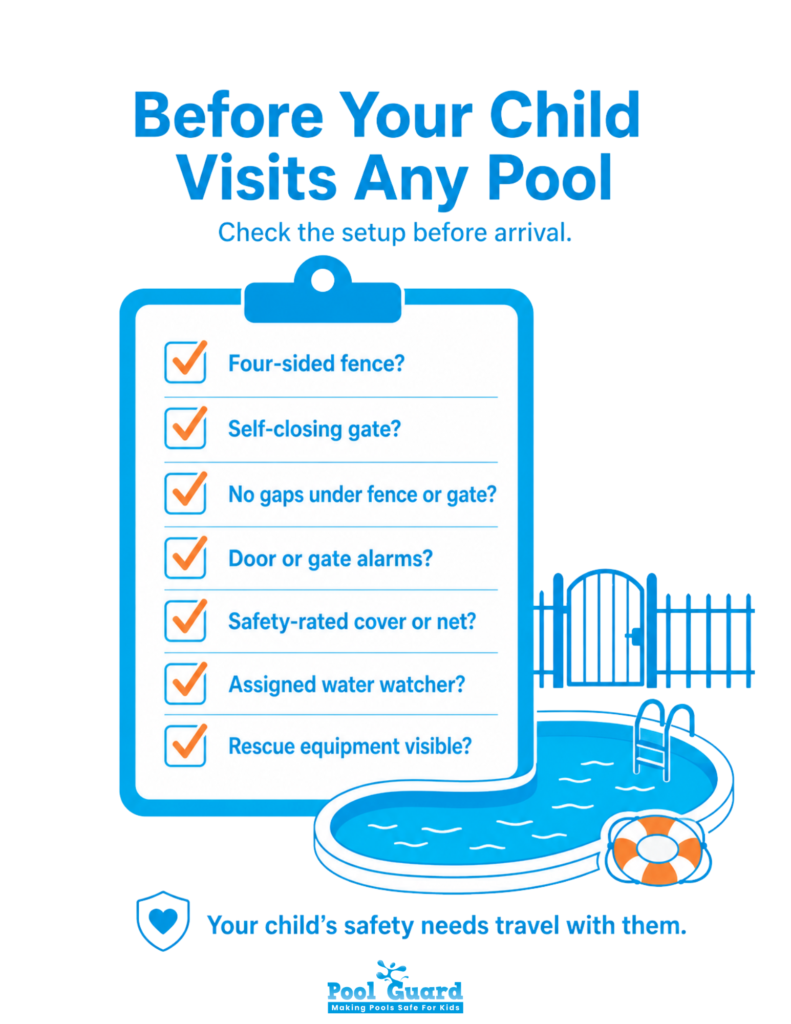
Before arriving, verify:
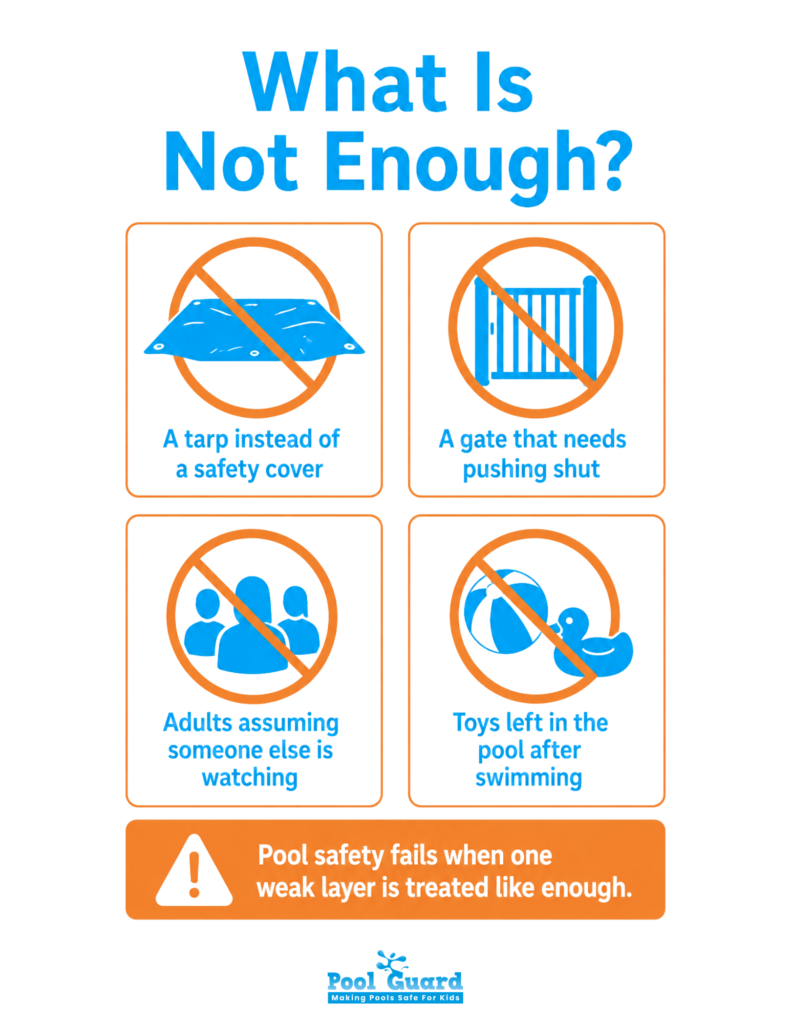
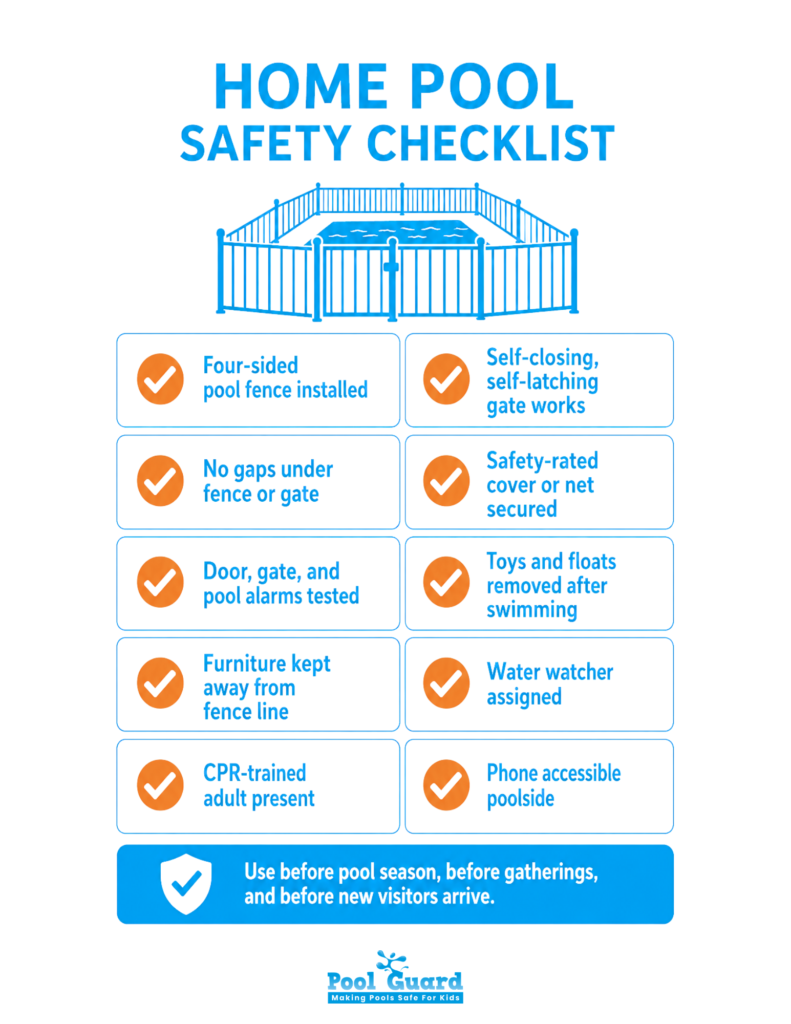
Use this before pool season, before gatherings, and anytime new visitors are expected:
No single lock, alarm, or fence makes a pool completely risk-free. But together, these layers create something powerful – real, reliable protection built around your child’s specific needs.
Water safety for children with special needs isn’t a checklist you complete once and forget. It’s an ongoing commitment. Every swim session, every backyard visit, every summer gathering is an opportunity to put these habits into practice. With the right safeguards in place and a plan that fits your child, the pool can be exactly what it should be, a place of joy, confidence, and connection.
Find your local dealer by entering your zip code above.
Please fill out the form below with your information. Your local dealer will be notified about your inquiry.
Please fill out the form below with your information. Your local dealer will be notified about your inquiry.