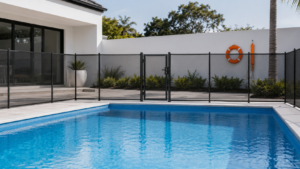
Semi-inground pools are a smart, versatile, and affordable alternative to traditional inground builds, adapting beautifully to sloped yards. However, bringing this backyard investment to life requires navigating complex safety regulations and building codes. To ensure compliance, homeowners must first address whether do semi-inground pools need a fence or if the exposed walls can serve as a barrier.
To help you navigate these complex regulations, this guide breaks down local pool laws, deck fence requirements, top design ideas, and the essential safety features you need to stay fully compliant.
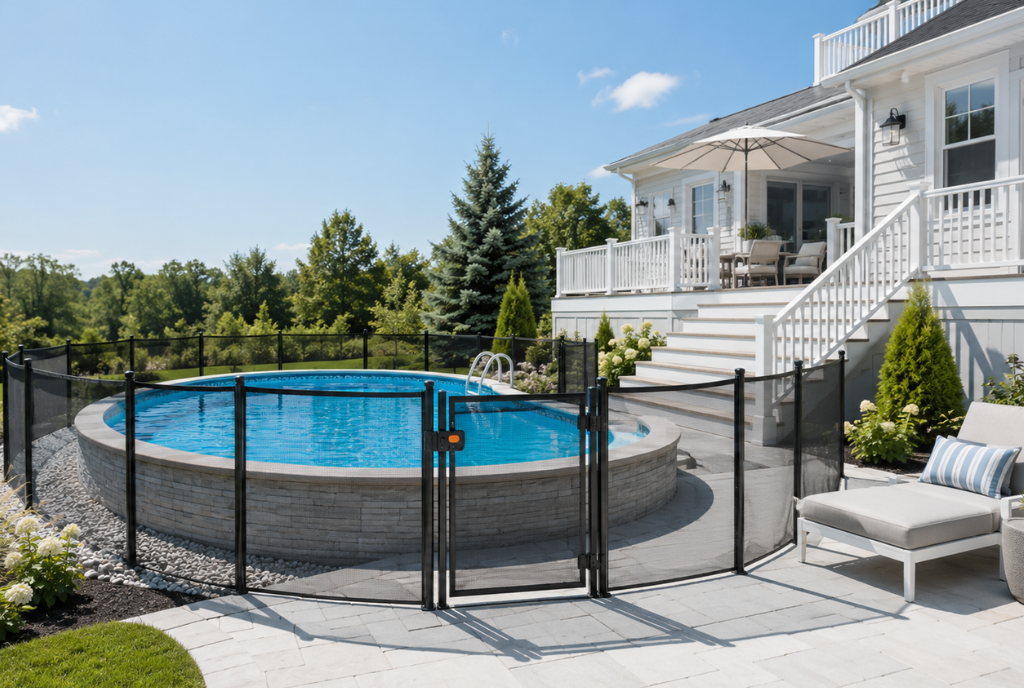
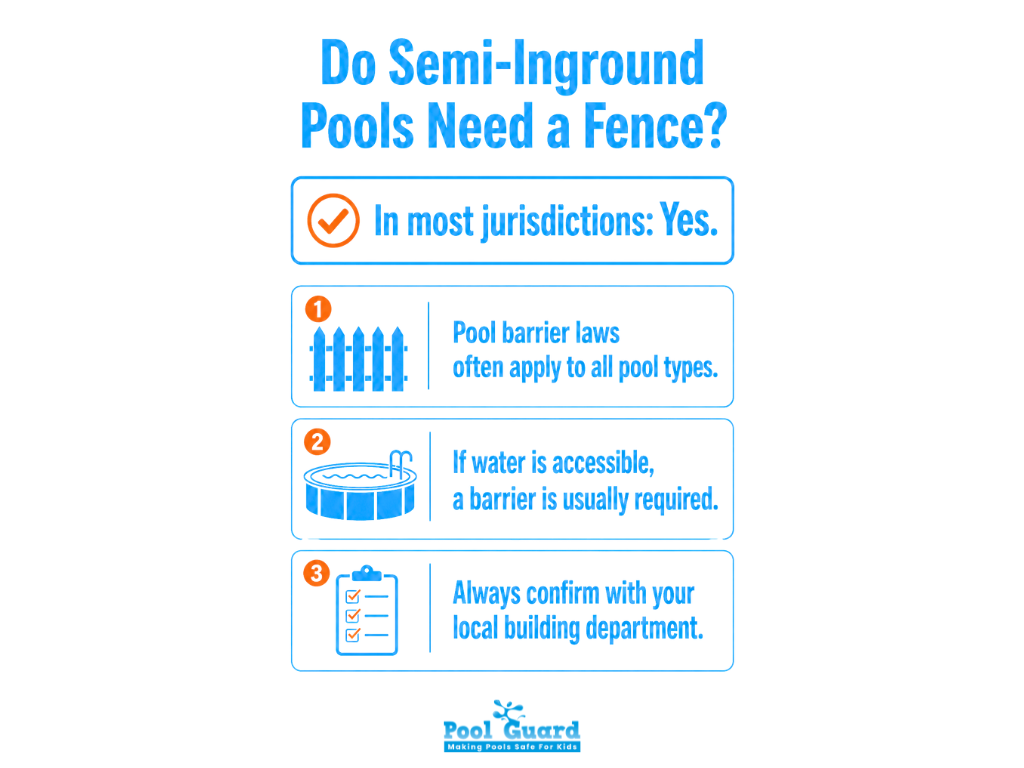
Yes. In the vast majority of U.S. jurisdictions, residential pool barrier laws apply to inground, above-ground, and semi-inground pools without exception.
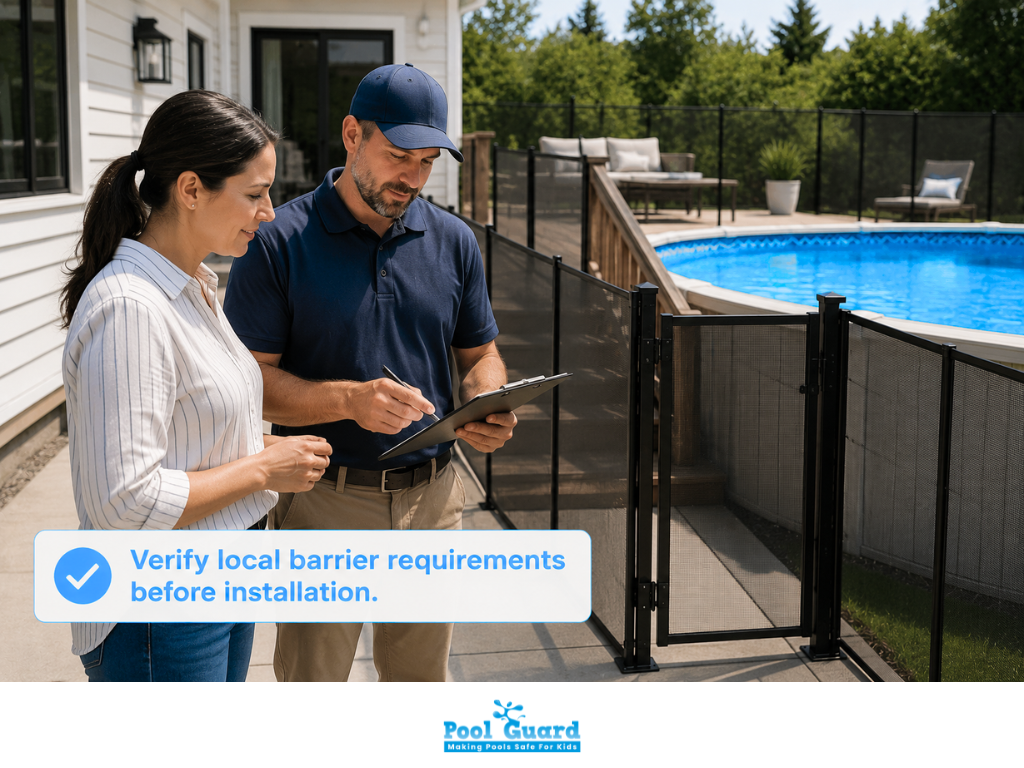
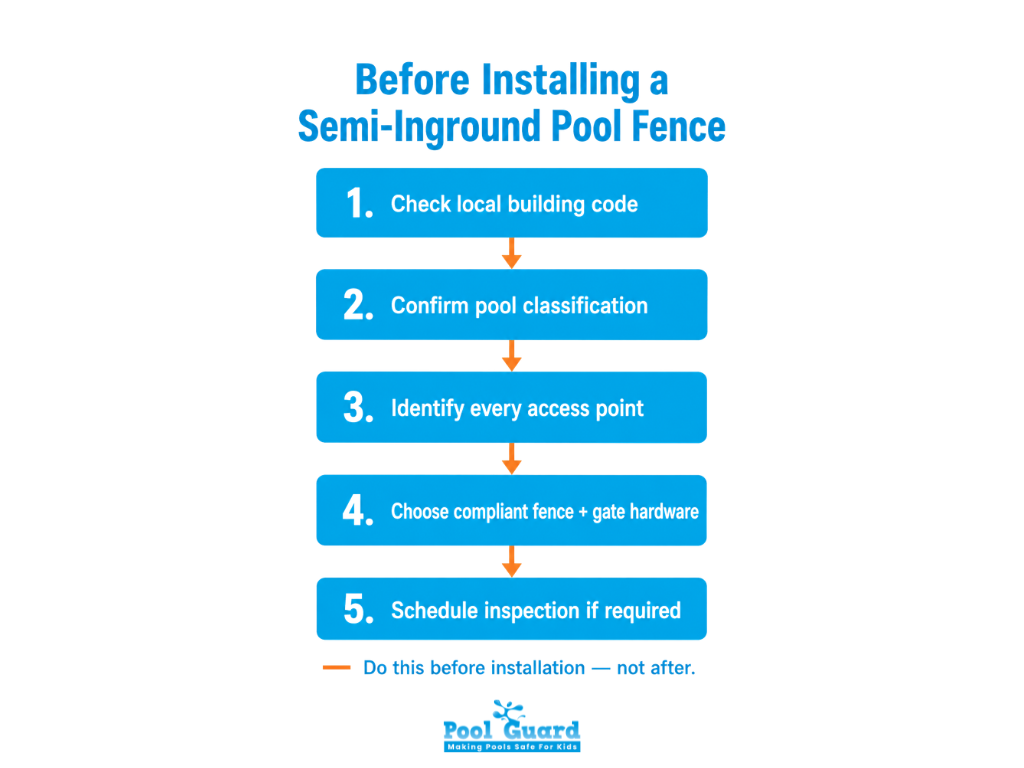
The Consumer Product Safety Commission (CPSC) recommends a four-sided pool fence around every residential pool. While states like Florida, California, and Texas enforce strict statewide pool safety laws, others delegate enforcement to local municipalities. Regardless of location, the core rule remains – if water is accessible, a barrier is legally required. Always verify your local building and zoning codes before installation.
Legally, classifications vary by jurisdiction. Some building departments classify semi-inground pools as above-ground pools because of their wall systems, while others treat them as inground pools based on their installation depth.
However, code enforcement is concerned with water accessibility, not the classification label. If a child or pet can reach the water from ground level or an attached deck, the pool must meet strict barrier requirements. Contact your local zoning office before purchasing to avoid costly compliance issues later.
Fencing extends well beyond legal compliance; it is a life-saving necessity. According to the CDC, drowning is the leading cause of unintentional injury death for children ages 1-4. To combat this risk, safety studies emphasize that a four-sided isolation fence reduces a child’s risk of drowning by up to 83% compared to standard property-line fencing. Beyond safeguarding lives, a proper barrier protects you from severe legal liability and potential insurance policy cancellations.
Here’s why fencing is typically required or strongly recommended:
Sometimes, but rarely without supplemental measures. If a pool’s exposed walls are 48 inches or more above grade and have no accessible entry points, some jurisdictions may treat the wall itself as part of a compliant barrier.
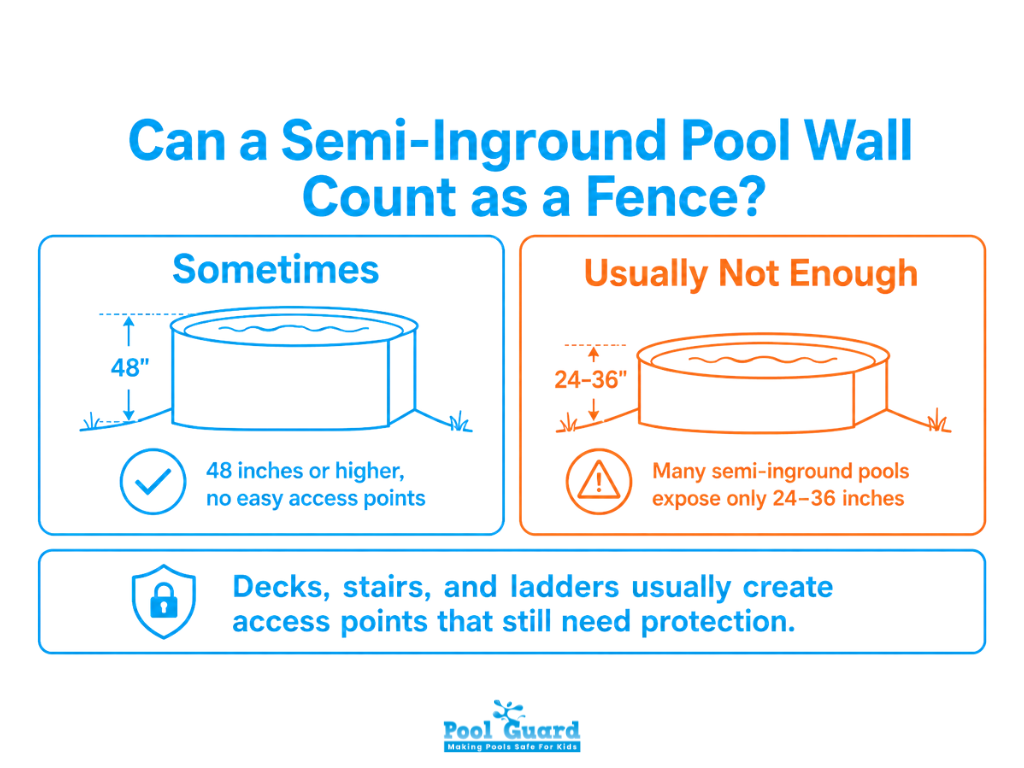
The problem is that most semi-inground pools are installed 24-36 inches above ground, well short of standard barrier height requirements. That gap almost always requires an additional fence.
More importantly, built-in stairs, attached decks, and other entry features create access points that typically invalidate any wall-as-barrier argument. Don’t assume your pool walls eliminate the need for fencing, always confirm with your local code office.
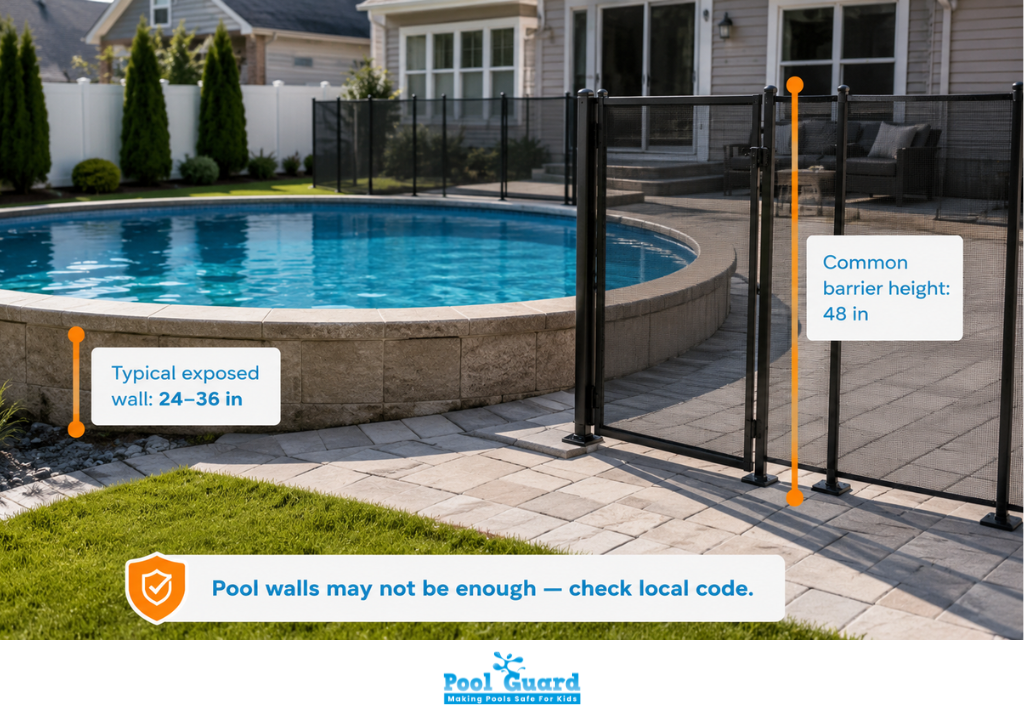
Requirements vary by location, but these standards are common across most U.S. jurisdictions:
| Requirement | Common Standard |
| Minimum Fence Height | 48 inches (4 feet); California requires 60 inches (5 feet) |
| Gate Operation | Self-closing and self-latching, opening away from the pool |
| Latch Position | Pool side, out of a child’s reach |
| Vertical Gap Clearance | No wider than 4 inches |
| Bottom Clearance | No more than 2 inches from grade |
| Climb Resistance | No footholds or horizontal rails that aid climbing |
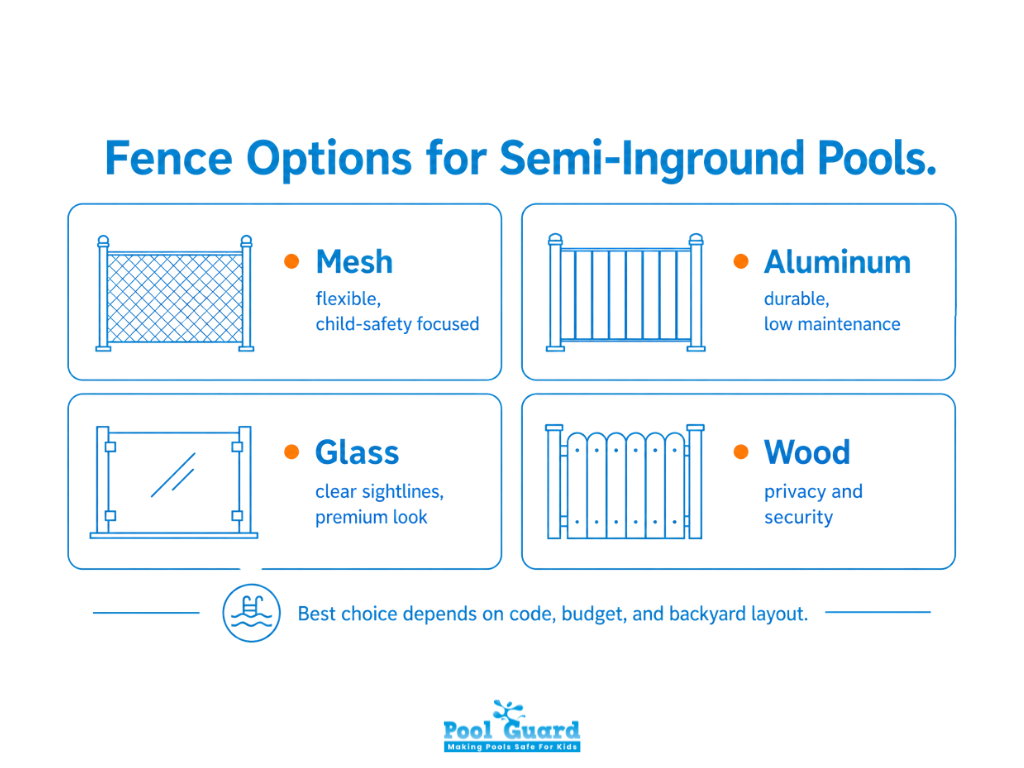
Safety doesn’t have to mean sacrificing your backyard’s aesthetic. Here are the most popular fencing options for semi-inground pools.
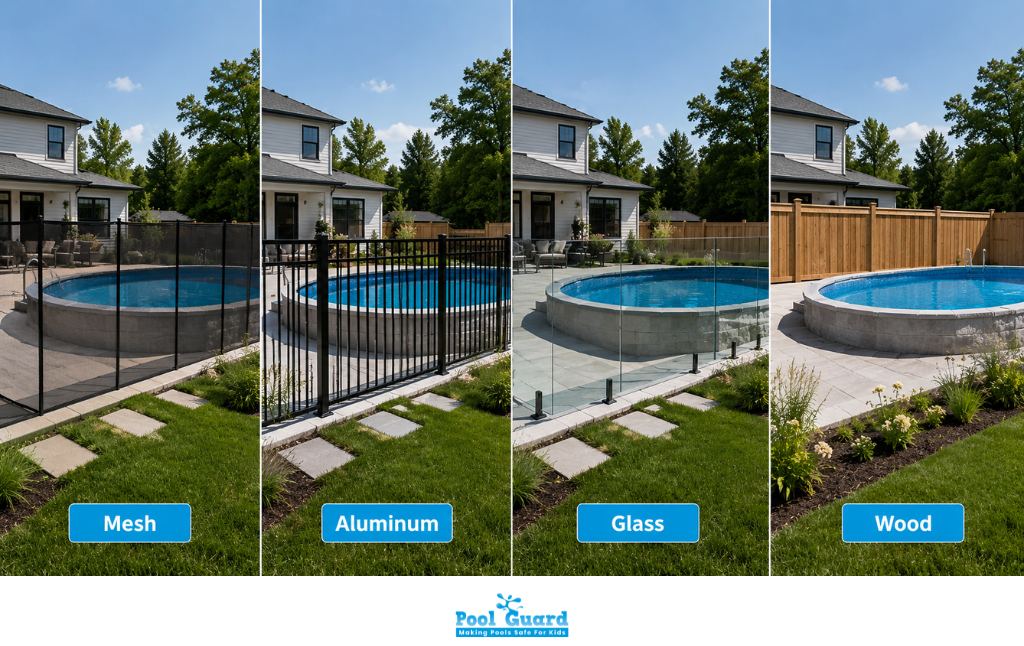
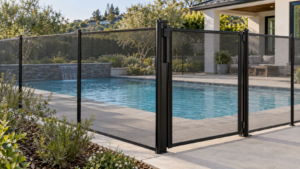
Removable mesh fencing is the top choice for families with young children. It’s nearly impossible for toddlers to climb, offers clear sightlines for supervision, and can be removed during adult-only use. Look for systems certified to ASTM F2286, the industry safety standard for removable mesh pool fencing.
Aluminum is rust-resistant, low-maintenance, and built to last, a strong, long-term option. It comes in a range of styles from simple vertical pickets to more decorative designs. Powder-coated finishes stand up to pool chemicals and harsh weather without degrading.
Frameless or semi-frameless glass panels deliver a sleek, modern look that integrates beautifully with high-end landscaping. Unobstructed sightlines make glass a genuine safety advantage where you can see the water from anywhere in the yard. It’s the premium option in terms of price but adds significant visual and property value.
For homeowners who want security and privacy, cedar or pressure-treated pine delivers both. Ensure any wood fence meets your local pool fence height requirements and uses compliant self-latching gate hardware rated for outdoor pool environments.
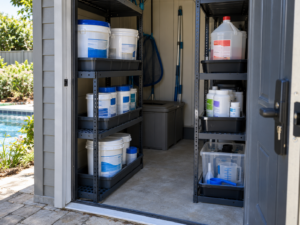
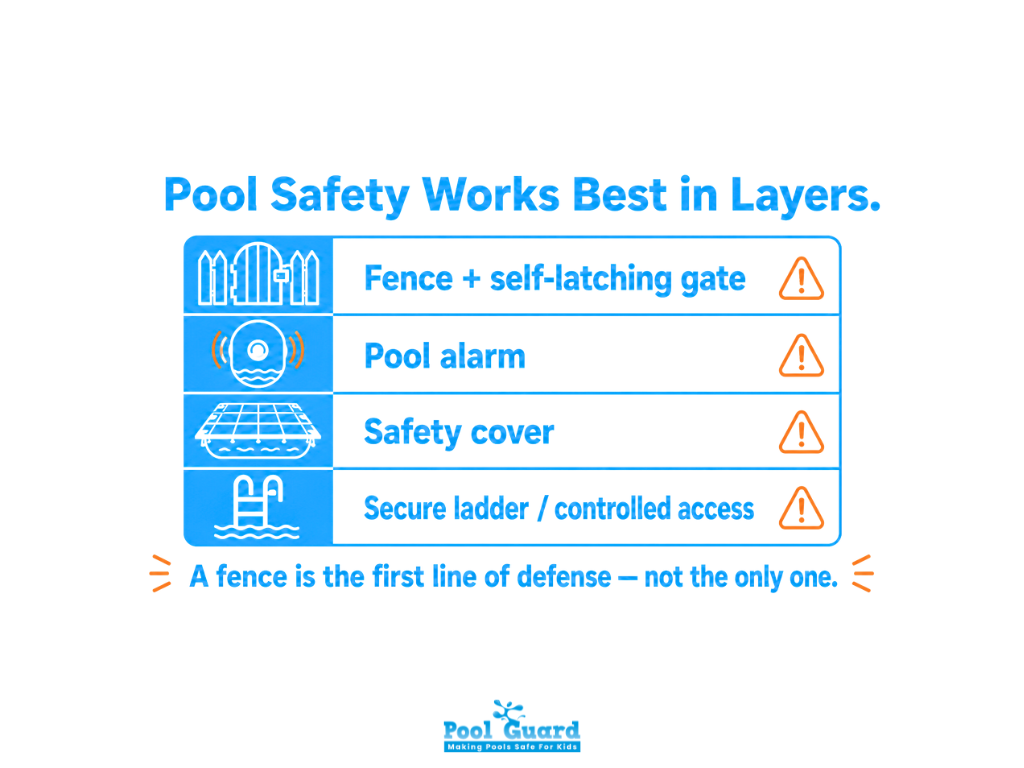
A fence is your first line of defense, not your only one. The CPSC and the American Red Cross both recommend a layered safety approach:
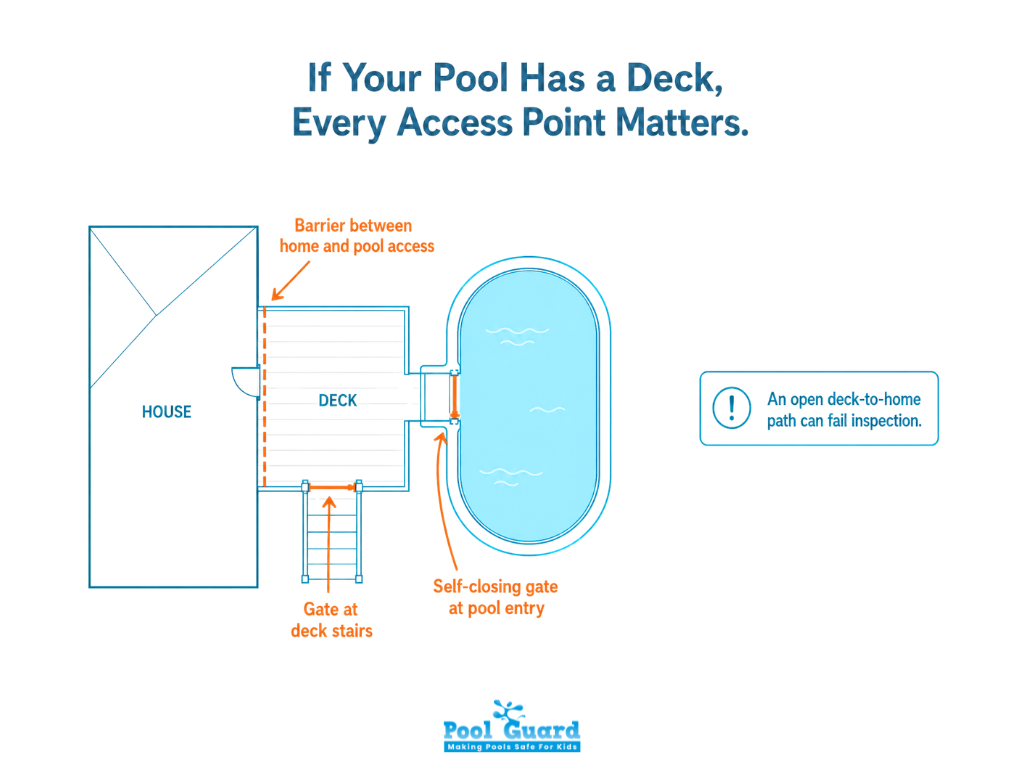
Yes, and arguably more so. A deck makes pool access significantly easier, which increases risk. If a deck connects your home or yard to the water, you’ll typically need:
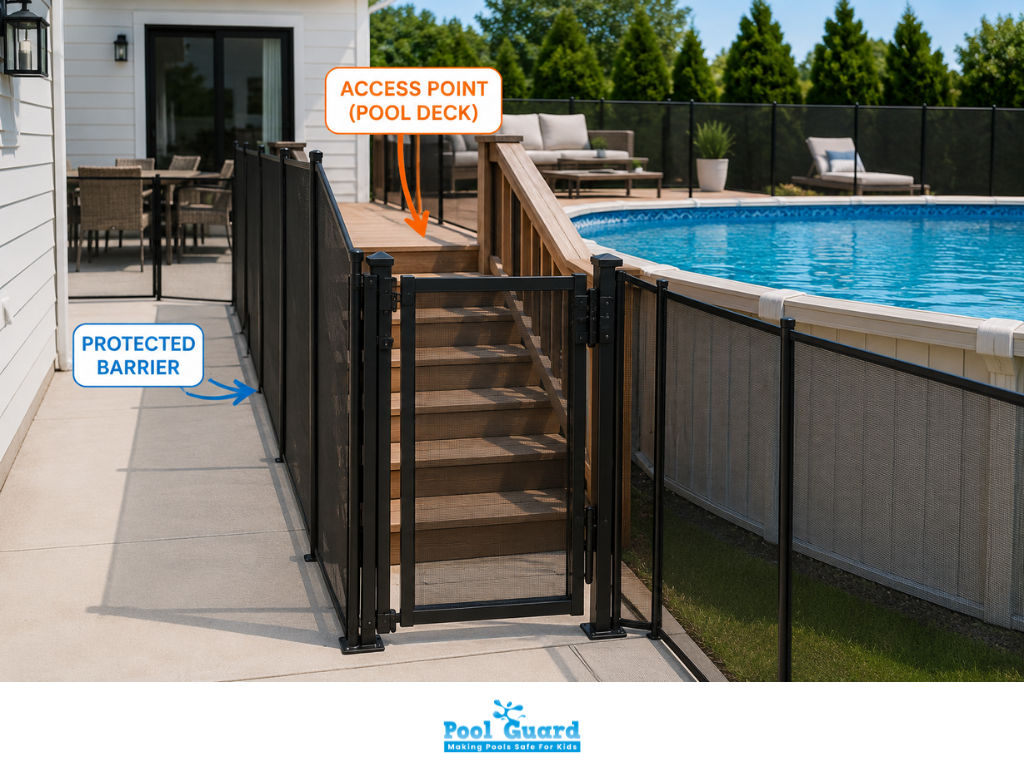
One of the most common compliance mistakes homeowners make is installing a fence around the pool itself but leaving the deck-to-home connection open. That gap alone can fail an inspection and expose you to liability. Every access point counts.
Do semi-inground pools need a fence? Yes, because while semi-inground pools blend above-ground affordability with inground aesthetics, they carry the same safety responsibilities and legal mandates as any residential pool.
Fortunately, modern safety barriers protect your family without ruining your backyard design. At Pool Guard USA, we specialize in durable mesh, aluminum, and glass solutions tailored to your layout. Explore our pool fence options or contact us today for a free consultation.
Find your local dealer by entering your zip code above.
Please fill out the form below with your information. Your local dealer will be notified about your inquiry.
Please fill out the form below with your information. Your local dealer will be notified about your inquiry.