There’s a moment every pool-owning parent dreads and hopes for at the same time – the day your child says, “I don’t need you to hold me anymore”. It’s a proud milestone, and also the exact moment when the wrong assumption can turn dangerous. You realize they are growing up fast, but you also feel a sudden wave of anxiety about their safety.
To navigate this shift safely, this guide breaks down exactly what independent swimming really means, what age can a child swim independently, and what skills to expect at each stage. It also details what safeguards must stay in place, including pool barriers, even after your child can swim across the pool on their own.
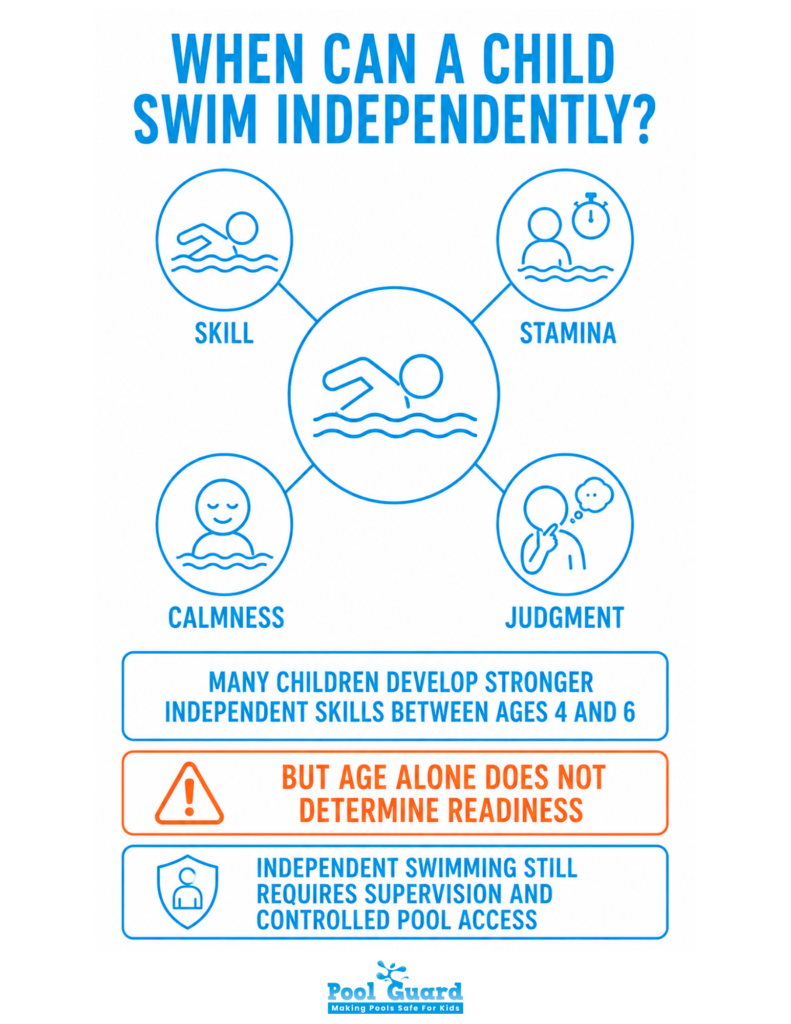
There is no single birthday that flips the switch. Most children build the physical coordination, breath control, and judgment to swim independently between the ages of four and six. However, every child develops at a unique pace based on their specific exposure to water, core strength, and natural confidence.
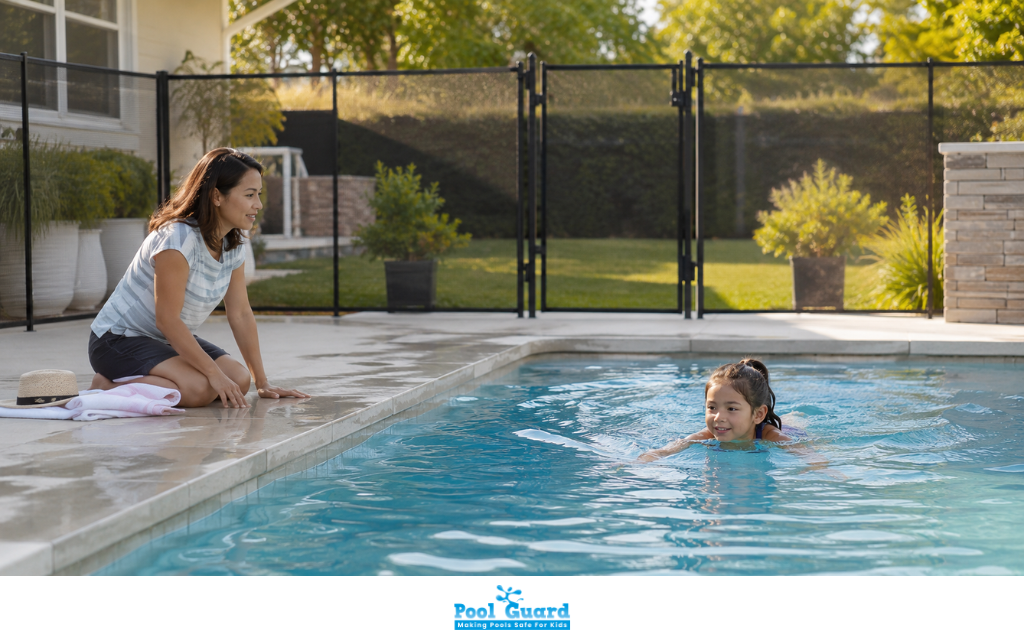
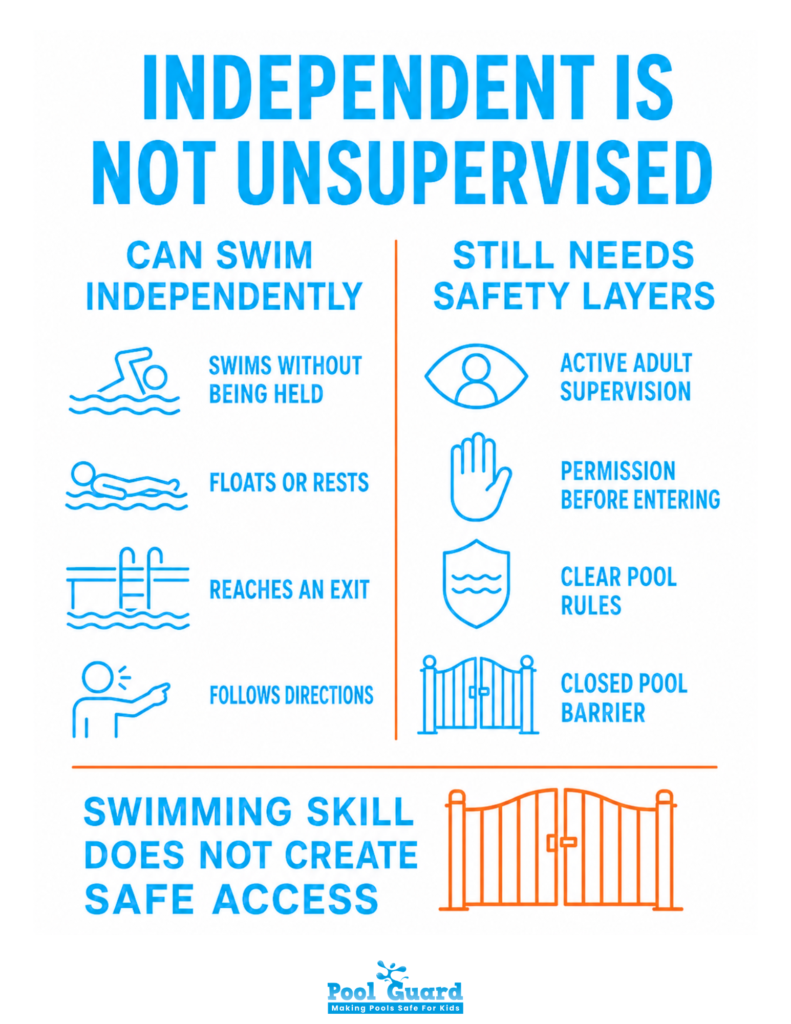
True independence is a sliding scale rather than a defined finish line. While a child might manage short distances alone, they still lack the cognitive judgment to handle sudden emergencies. For this reason, independent swimming doesn’t mean unsupervised swimming, and an adult must remain in sight of the pool.
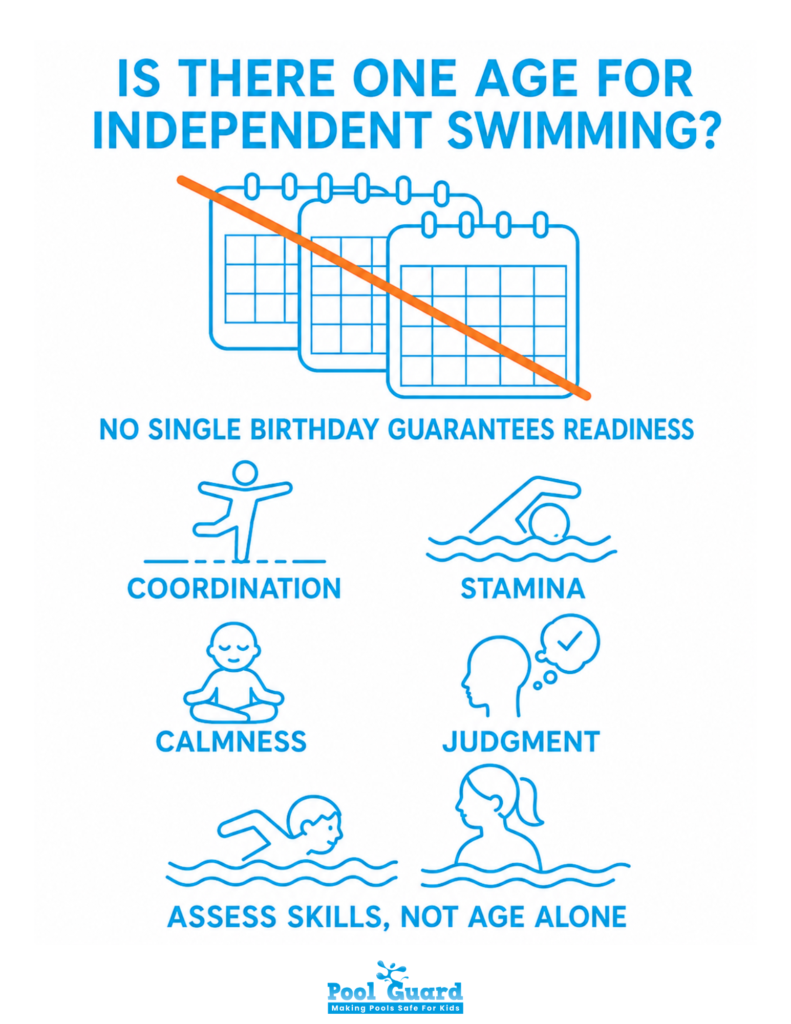
Before you can answer when, you have to define what. A child who can paddle five feet without help isn’t necessarily an independent swimmer; they’re a child who can paddle five feet.
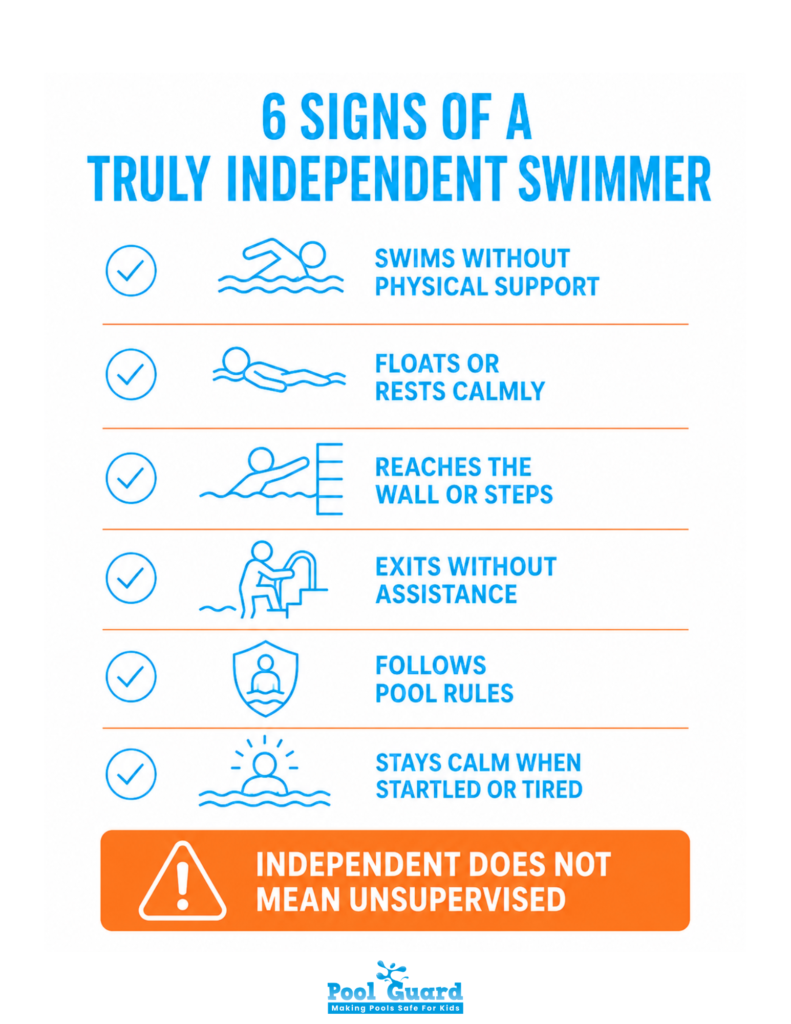
True independent swimming means a child can reliably:
That last point is the one parents most often overlook. Swimming a short distance and swimming safely are two different skill sets. A child can technically “swim” 10 feet and still panic the moment they’re out of their depth or catch a mouthful of water. Independent swimming is as much about emotional regulation and judgment as it is about stroke technique.
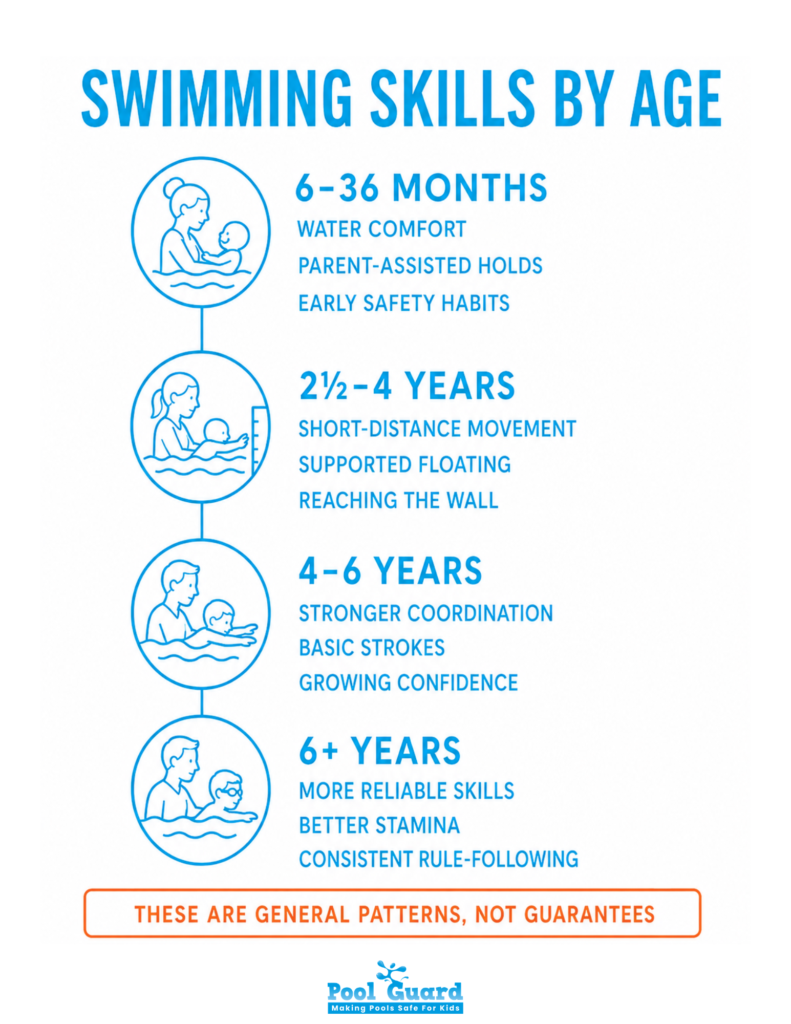
Every child develops differently, and factors like lesson frequency, pool access, and temperament all shift the timeline. That said, here’s a realistic, cautious breakdown of swimming skills by age that most pediatric swim programs and water-safety educators generally agree on:
| Age Range | Common Swim-Safety Focus |
| 6-36 months | Water comfort, parent-assisted holds, basic breath control, early safety habits |
| 2.5-4 years | Short-distance movement (a few feet), floating with support, reaching the wall |
| 4-6 years | Stronger coordination, basic strokes, longer distances, growing confidence |
| 6+ years | More reliable independent skills, better stamina, consistent rule-following |
The American Academy of Pediatrics notes that formal swim lessons can begin as early as age one as a layer of protection against drowning. However, most children are not developmentally ready for structured stroke instruction and reliable independent swimming until closer to age four.
Both facts are true at once. Early lessons build comfort and safety reflexes, while true independence takes longer to develop. Don’t let marketing from any swim program collapse that distinction; “started lessons early” and “swims independently” are not the same milestone.
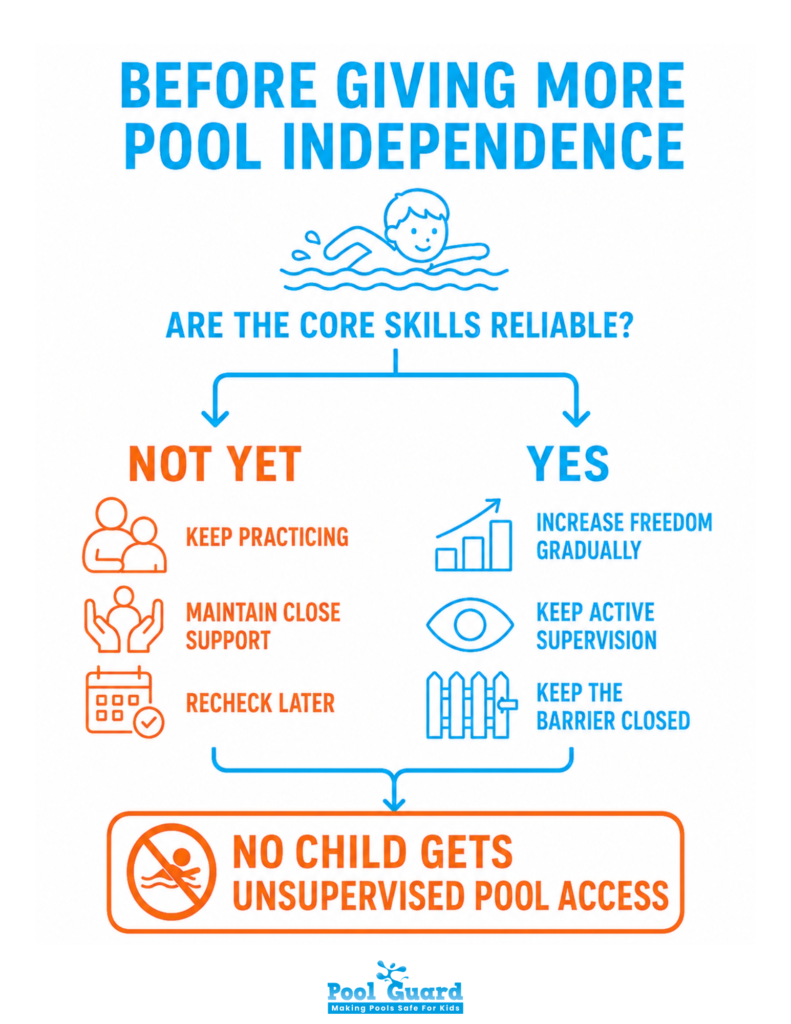
Understanding the single most important distinction in this entire guide is absolutely vital – no child, at any age, should treat a pool as risk-free.
Even strong, well-trained young swimmers can:
Backyard pools do not have lifeguards. There is no whistle, no rescue tube, and no trained professional scanning the water every few seconds. Because of this, the safety standard for a home pool must be higher than that of a public facility, not lower.
Even if a child has years of swim lessons, critical pool safety rules for kids must stay in place. You must enforce the buddy system for all swimmers. Adults must actively watch the water whenever someone is nearby. They must establish strict family rules about exactly when swimming is allowed.
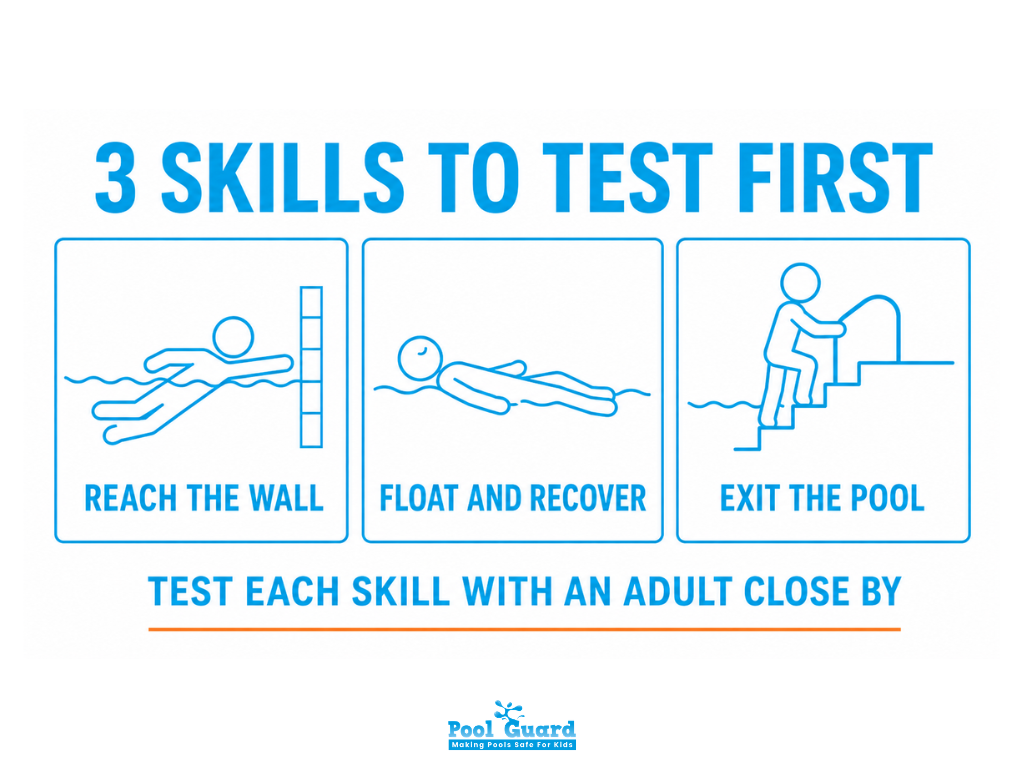
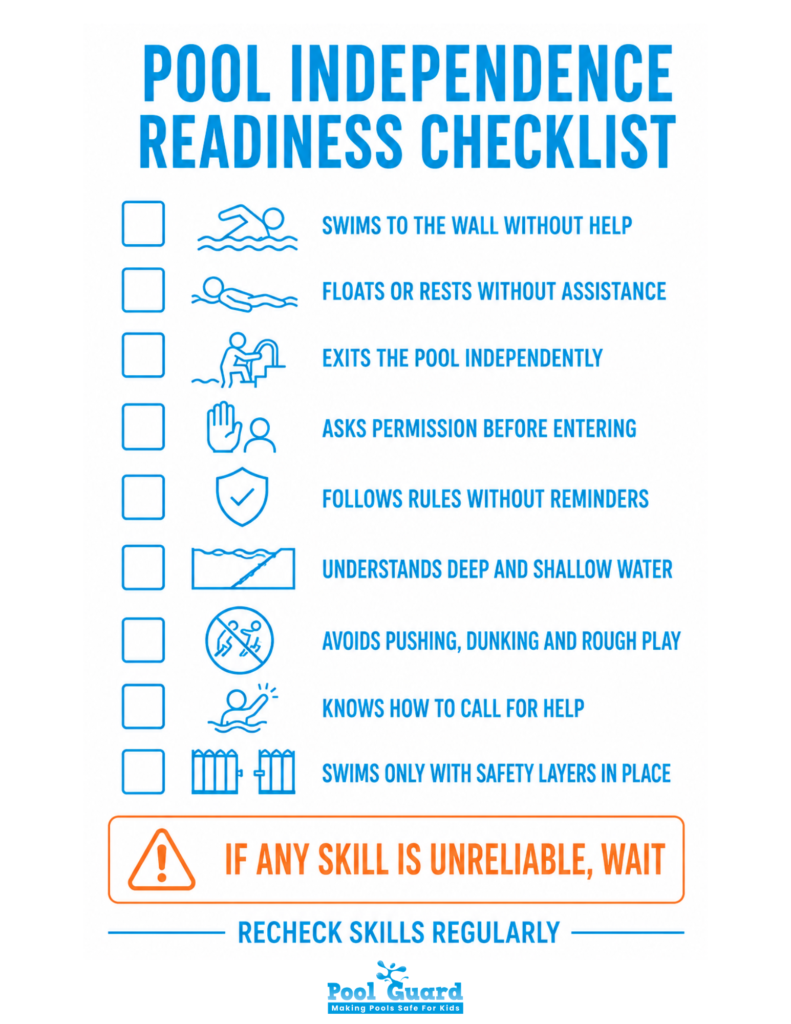
Forget age when granting pool freedom. Use a skill checklist instead. Your child must reliably perform these actions before you loosen supervision:
If any of these are shaky, more independence should wait, regardless of age or how many other kids their age already “swim alone”.
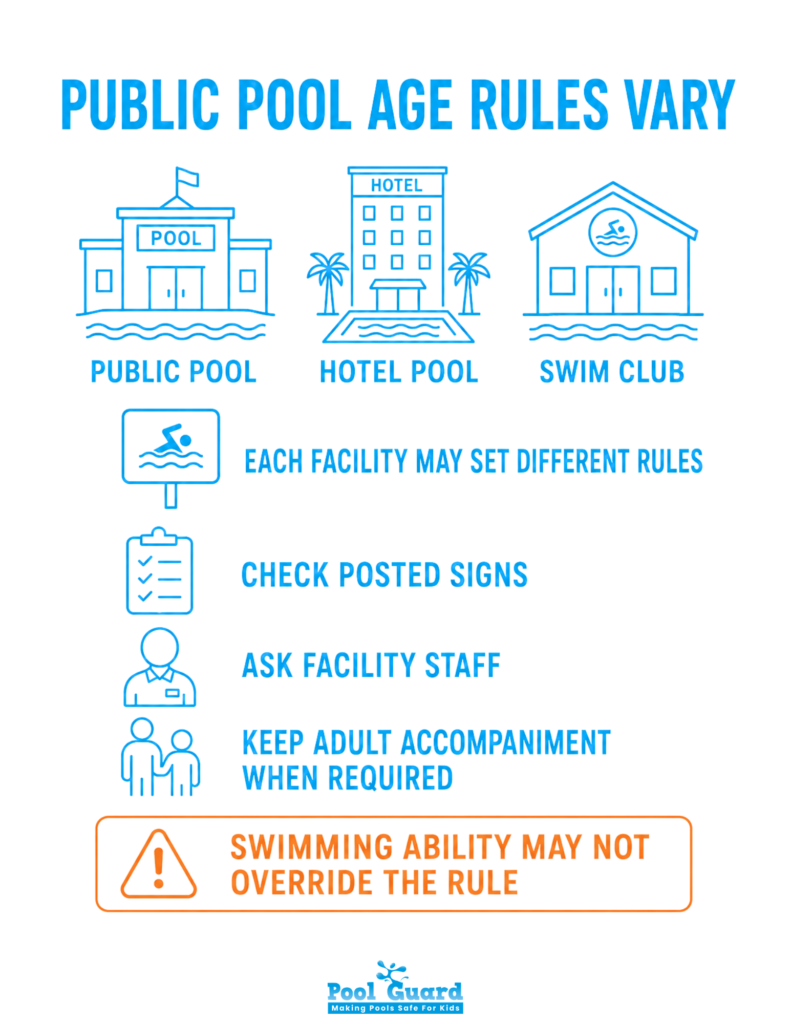
Public facilities, hotels, and clubs enforce strict swimming pool age restrictions. They usually require an adult to accompany children under 14 or 16, regardless of swimming ability. These rules protect organizations from liability based on lifeguard staffing. Always check posted signage or ask facility staff before assuming your child can swim unaccompanied.
At home, there is no official rulebook, so the safety choice falls entirely on you. Your backyard deserves stricter safety standards than a public facility because you lack professional lifeguards as a backup layer.
Swim lessons reduce the risk of drowning, but they do not eliminate it. Research cited by the CDC and the American Academy of Pediatrics confirms that formal instruction lowers risk, but drowning remains a leading cause of unintentional death for young children. It most often occurs in home pools, silently in mere seconds.
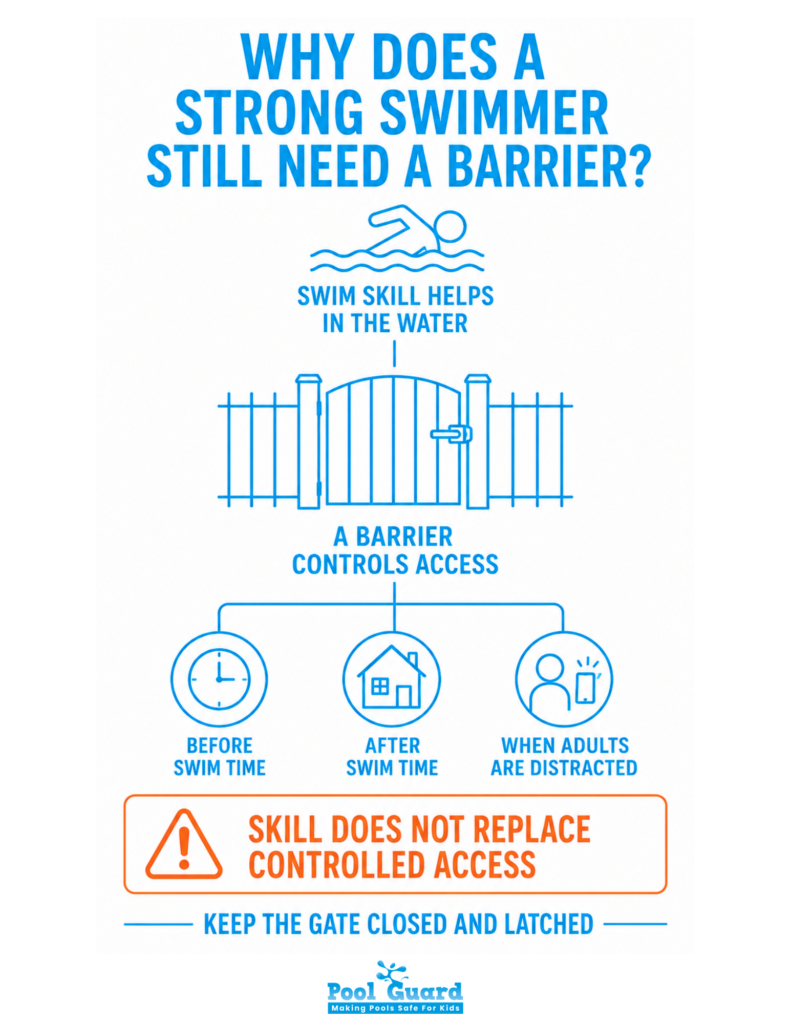
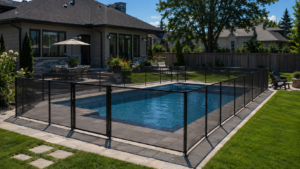
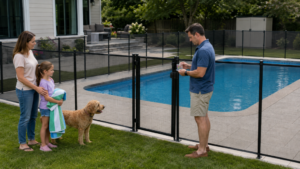
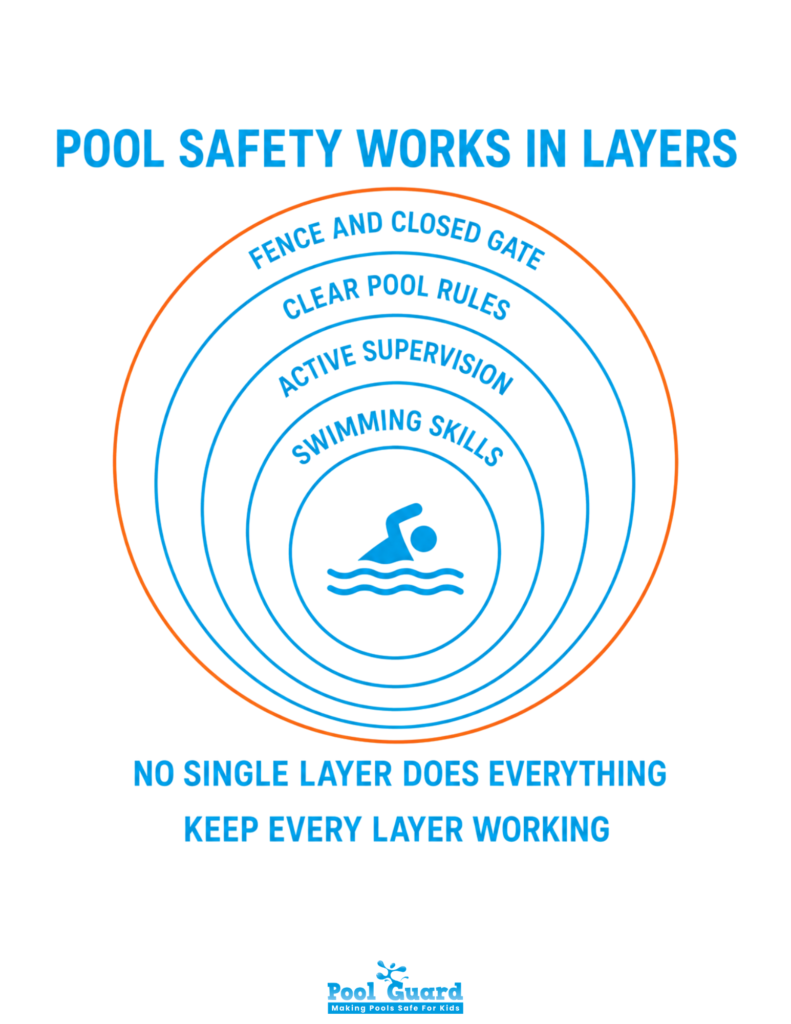
That’s why physical barriers provide a completely separate layer of protection from swimming skills. A proper pool fence with a self-closing, self-latching gate controls water access when adults are distracted or indoors. Alarms and pool covers add vital secondary layers. This protection doesn’t show a lack of trust in your child; it simply removes the opportunity for a brief mistake to become a tragedy.
Most children develop the coordination and stamina to navigate the pool alone between the ages of four and six. However, when determining what age can a child swim independently, readiness always depends on individual skill and rule compliance rather than a birthdate.
Independent swimming is a major milestone, but it never means unsupervised swimming. Keep physical pool barriers in place, respect public age limits, and maintain active supervision regardless of your child’s confidence.
Ready to add the strongest layer of protection to your pool? Explore Pool Guard USA’s safety fencing solutions and give your family’s pool the barrier it deserves — no matter how well your kids swim.

Please fill out the form below with your information. Your local dealer will be notified about your inquiry.
Please fill out the form below with your information. Your local dealer will be notified about your inquiry.