The backyard pool has quietly become one of the most resilient investments in American home life. Between rising demand for outdoor living upgrades, a wave of Sun Belt migration, and a growing awareness that a beautiful pool is only as good as the safety system protecting it, the swimming pool market is expanding on both the residential and commercial fronts.
This guide breaks down where the swimming pool industry actually stands today, including the real numbers, the trends reshaping demand, and the safety products increasingly treated as essential rather than optional. Whether you’re a homeowner planning a build, a builder tracking the market, or simply pool-curious, you’ll walk away with a clear, source-checked picture of an industry that’s evolving faster than most people realize.
The swimming pool industry isn’t a boom-and-bust category. It’s a steady, decades-long growth story with a few notable inflection points. Residential pools make up the clear majority of the market, reflecting a simple truth. Most demand for pools comes from homeowners investing in their own backyards, not from hotels or municipalities building public facilities.
That growth accelerated sharply after 2020. When travel and gyms shut down, homeowners redirected disposable income toward the one recreational space they still had full control over – their own property. Pool builders saw backlogs stretch into years in some markets, and while that initial surge has normalized, it left a lasting shift. Outdoor living and backyard recreation are now treated as core parts of home value, not luxury add-ons.
The result is a market that’s grown past its pre-2020 baseline and shows no signs of retreating back to it, even as the initial pandemic-era buying frenzy has cooled.
| Metric / Detail | Mordor Intelligence Analysis | Market Research Future Analysis |
| Market Size (2025) | USD 5.90 billion | USD 5.898 billion |
| Forecasted Market Size | USD 8.24 billion by 2030 | USD 9.231 billion by 2035 |
| Growth Rate (CAGR) | 6.91% (2025-2030) | 4.58% (2025-2035) |
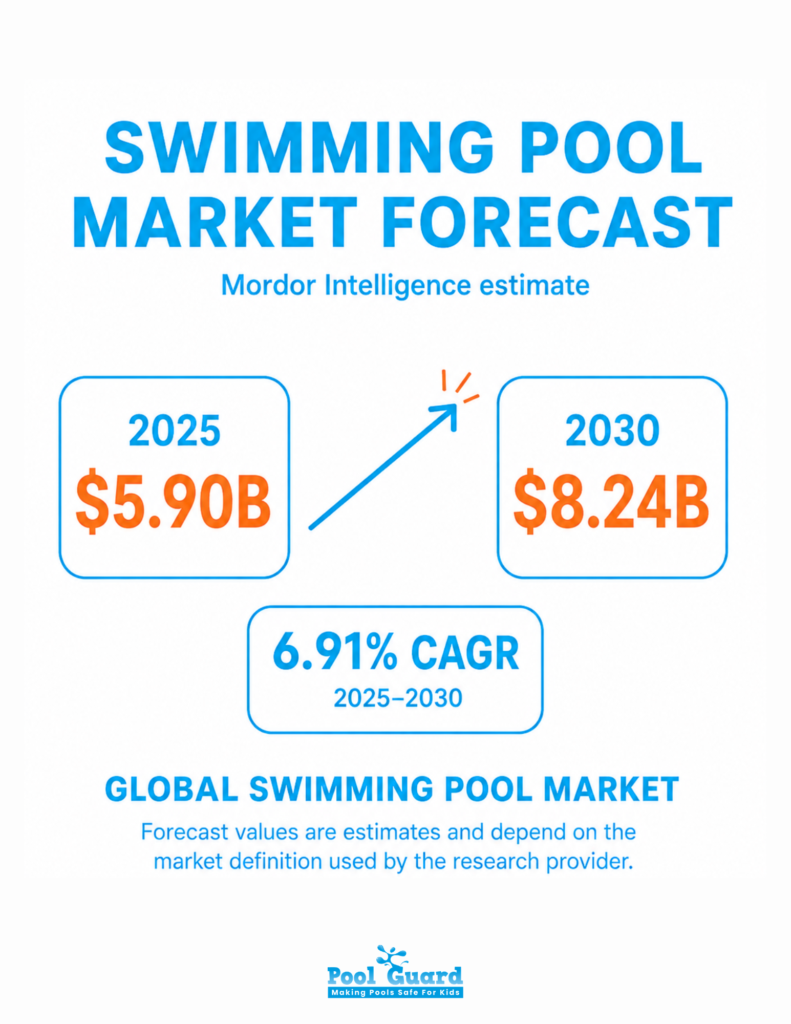
Market research firms don’t fully agree on the exact dollar figure for the global swimming pool market. Estimates vary depending on whether a report includes construction only, equipment and retail, or commercial hospitality spending. That said, credible recent estimates put the swimming pool market size in the mid-single-digit billions globally for 2024-2025, with steady mid-single-digit annual growth projected out toward 2030 and beyond.
In the U.S. specifically, the residential pool base is enormous by volume. Widely cited industry estimates put the total number of U.S. swimming pools at over 10 million, the vast majority of which are residential rather than commercial or public. In-ground pools account for a larger share of that residential total than above-ground pools, though above-ground and portable pools remain the faster-growing category thanks to lower cost and quicker installation.
The construction and installation segment, actually building or installing a pool, represents the largest single piece of the swimming pool market’s overall spend, ahead of equipment retail and ongoing maintenance services.
Zoom out, and the swimming pool industry’s growth curve tells a story of steady expansion punctuated by one major disruption. Growth was gradual and predictable through the 2010s, tracking closely with housing construction and disposable income trends.
Then came the 2020-2021 surge: with public pools, gyms, and travel largely unavailable, residential pool demand spiked dramatically, and builders reported multi-year waitlists in high-demand states. That surge inevitably cooled as the broader economy reopened and mortgage rates rose, softening new-construction demand in 2022-2023. But the pullback wasn’t a collapse; it was a normalization. Renovation, resurfacing, and equipment-upgrade spending have picked up the slack, meaning the overall pool market has kept growing even as new-build volume has moderated in some regions.
Residential pools dominate the swimming pool market, and that’s unlikely to change. Family recreation, backyard entertaining, and the simple appeal of private outdoor space continue to drive the bulk of new construction and renovation spending.
Commercial demand tells a different, equally interesting story. Hotels, resorts, and fitness clubs are increasingly treating pools as wellness and revenue infrastructure rather than a basic amenity. Think hydrotherapy programming, swim-fitness memberships, and resort-style rooftop pools designed to command higher room rates. While commercial pools represent a smaller slice of the total market by volume, they’re seeing some of the strongest growth rates within the industry, particularly in the fitness and hospitality sub-segments.
The line between “indoors” and “outdoors” has blurred for a lot of homeowners. Pools are now commonly built as part of a larger outdoor living package, like patios, outdoor kitchens, fire features, and integrated lighting, rather than as a standalone structure. This shift is partly lifestyle-driven (more time spent at home, more entertaining at home) and partly financial. Real estate professionals consistently point to well-maintained pools and outdoor living spaces as meaningful contributors to home resale value in warm-climate markets.
Population movement into the Sun Belt has a direct, measurable effect on pool demand. Florida, Texas, Arizona, and Nevada consistently rank among the states with the highest concentrations of residential pools, and Florida alone accounts for a disproportionate share of the U.S. residential pool base. Arizona stands out on a per-capita basis. Its arid climate and strong pool culture give it one of the highest pool-ownership rates of any state. As people and capital continue moving toward these warm-weather metros, builders in those regions are the ones seeing the most sustained demand.
Swimming remains one of the most widely recommended forms of low-impact exercise, and that reputation is translating into real purchasing behavior. Families are increasingly framing a pool as a wellness investment, a space for swim lessons, low-impact fitness, and stress relief, rather than purely a recreational luxury. This same wellness framing is showing up commercially too, with fitness clubs and spas expanding aquatic programming to meet demand from health-conscious members, including older adults for whom water-based exercise carries real physical benefits.
Automation has moved from novelty to near-standard expectation in new pool builds. App-connected controls now let owners manage lighting, temperature, and cleaning schedules remotely. Automated chemical monitoring and dosing systems reduce the guesswork and the risk of imbalanced water that used to require manual testing multiple times a week. Robotic pool cleaners have become mainstream rather than a premium add-on, and energy-efficient variable-speed pumps pair naturally with these smart systems to keep operating costs in check.
Among pool materials, fiberglass is consistently flagged as the fastest-growing category, and it’s not hard to see why. Fiberglass shells are manufactured off-site and installed in days rather than weeks; they resist algae growth better than concrete, and they require significantly less ongoing maintenance than either vinyl or gunite. For homeowners comparing total cost of ownership rather than just the up-front price tag, fiberglass increasingly wins the comparison, which is fueling its share gains against traditional concrete and vinyl-liner pools.
Water and energy efficiency have shifted from a “nice to have” to a genuine purchasing criterion. Variable-speed pumps use less electricity than older single-speed models. Solar pool heating and heat-pump systems are gaining ground as homeowners look to extend swim season without dramatically increasing utility bills. Automatic pool covers do double duty here, reducing water evaporation loss while also cutting the energy needed to maintain water temperature. In regions facing water-use restrictions, efficient filtration and recirculation systems aren’t just a sustainability choice; they’re increasingly a compliance one.
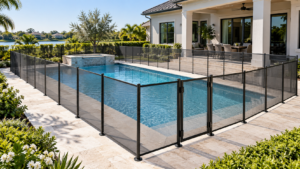
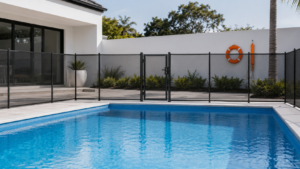
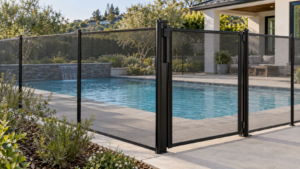
As pool ownership has grown, so has awareness of the responsibility that comes with it. Four-sided isolation fencing with self-latching, self-closing gates is widely recognized by public health researchers as one of the single most effective ways to prevent unsupervised access to a pool, and many states and municipalities now require it by code for new residential pool construction. That regulatory push, combined with growing parental awareness, has made fencing one of the steadiest-growing categories within the broader pool products market.
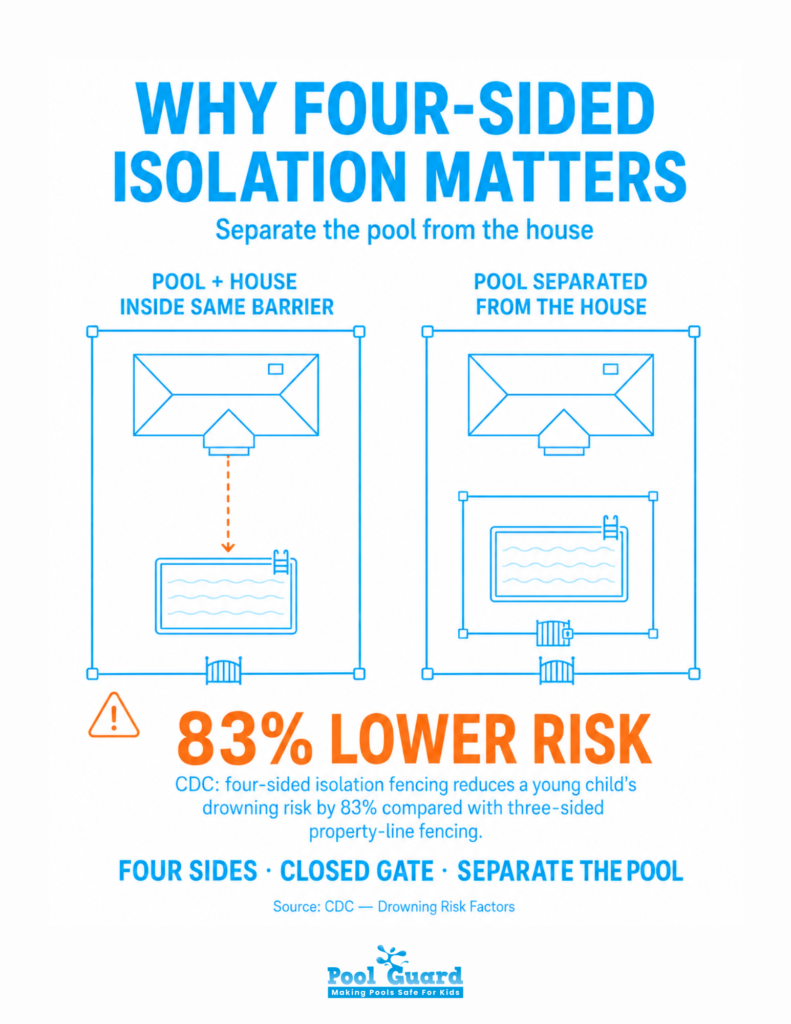
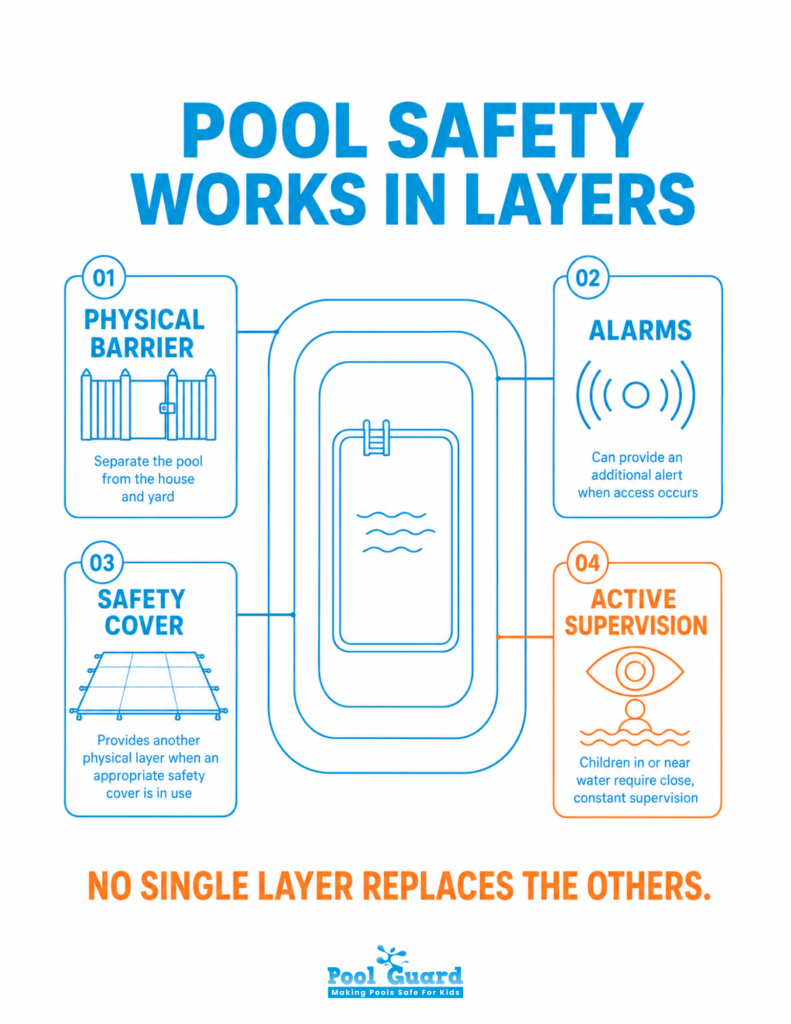
No single safety product is a complete solution on its own, which is exactly why “layered protection” has become the standard guidance from safety organizations and pediatric health experts alike. A well-protected pool typically combines:
Each layer compensates for the possibility that another layer fails or gets bypassed – a fence gate left open, an alarm battery that dies, a moment of distracted supervision. Together, they form a system that’s dramatically harder to defeat than any single measure alone.
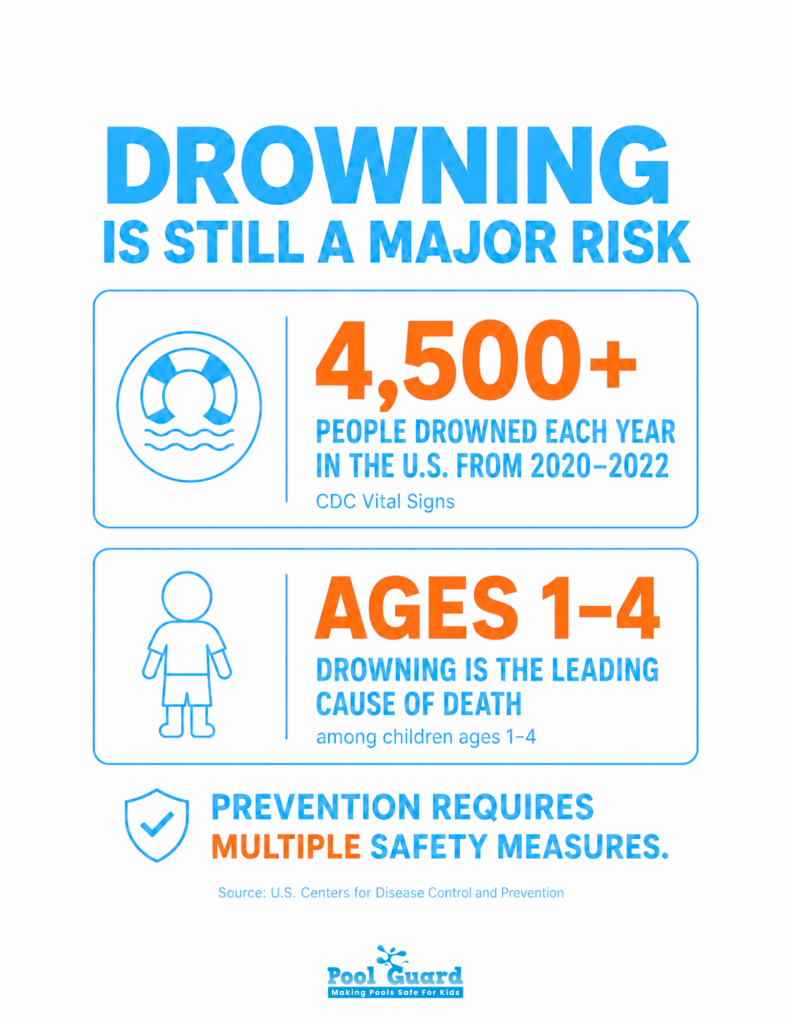
The urgency behind this trend isn’t abstract. According to CDC data, the U.S. reported more than 4,500 annual drowning deaths between 2020 and 2022, an increase over pre-pandemic levels that reversed decades of steady decline. Drowning remains the leading cause of unintentional death for children ages 1 to 4, and roughly three-quarters of child drowning victims under 15 are under age 5, a stark reminder of just how quickly a brief lapse in supervision can turn tragic.
Beyond the human cost, liability exposure is pushing safety products further into the mainstream. Homeowners insurers increasingly ask about fencing and barrier compliance before writing or renewing a policy on a property with a pool, and stricter local building codes have made safety equipment a standard line item in new construction rather than an optional upgrade. Between public health awareness, tightening regulation, and insurance pressure, pool safety has shifted from an afterthought to a core part of how the industry talks about responsible pool ownership.
Residential installations will remain the core of the market. Growth is heavily anchored by population shifts to the Sun Belt and an entrenched preference for enhanced outdoor living spaces.
Smart controls, automated maintenance, and energy-efficient systems are transitioning from premium upgrades to baseline expectations. This shift mirrors the rapid mainstream adoption of smart home automation seen in other industries.
Safety upgrades and water-conserving technologies are set for consistent, non-reversible growth. This momentum is strictly enforced by tightening regulations, rising insurance pressures, and strict environmental mandates in drought-prone areas.
The industry is moving away from explosive, volatile spikes toward predictable, mature expansion. Future market value will be defined by professionalization around resource efficiency and modern safety compliance rather than raw volume alone.
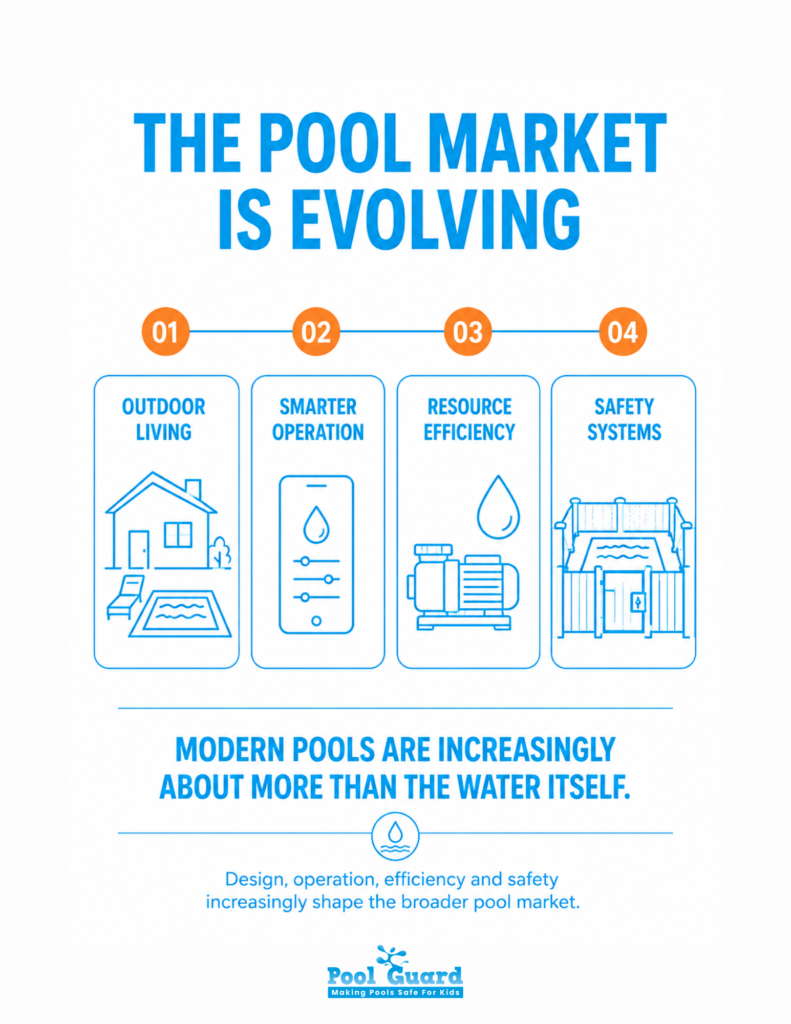
The swimming pool industry is shifting as modern tech and fiberglass construction become standard expectations. Crucially, backyard enhancement and safety compliance are no longer competing trends; they are two sides of the same swimming pool market growth story, meaning a residential investment is now considered incomplete without proper fencing, automated covers, and smart alarm systems.
Looking forward, the market is moving away from volatile spikes toward steady, mature expansion. The future landscape will be defined by an industry that professionalizes around energy efficiency and strict safety standards just as much as it grows to meet raw consumer demand.

Find your local dealer by entering your zip code above.
Please fill out the form below with your information. Your local dealer will be notified about your inquiry.
Please fill out the form below with your information. Your local dealer will be notified about your inquiry.