Pool safety is a major consideration for homeowners with young children. Even with careful supervision, having additional safety measures around a swimming pool can help reduce the risk of unsupervised access and accidents. Choosing the right protection involves understanding how different safety products work and what role they play in keeping the pool area secure.
When considering pool fence vs pool alarm, homeowners need to look beyond the products themselves and understand their practical uses. This guide explores access prevention, alert timing, everyday use, and potential limitations. It also explains whether an alarm can replace a fence and how both safety measures can work together.
| Pool Fence | Pool Alarm | |
| What It Is | A physical barrier | A sensor that sends an alert |
| When It Acts | Before someone reaches the pool | When its sensor is triggered, which may be before or after water entry |
| What It Depends On | Closed, latched gate and an intact barrier | Power, correct placement, being switched on, and someone hearing and responding |
| Main Limitation | Fails if the gate is left open or the barrier is compromised | Doesn’t physically stop anyone and may sound too late |
It’s important to understand that “pool alarm” refers to several types of devices, each designed to detect different activity. Door and gate alarms signal when an access point opens, while in-pool alarms detect disturbances in the water. Camera-based and perimeter systems can monitor activity around the pool. Because these devices detect different events, the timing and type of warning they provide can vary.
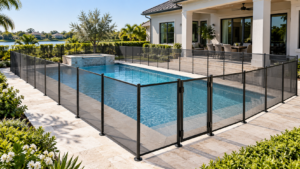
The CDC recommends four-sided isolation fencing that completely surrounds the pool and separates it from the house and yard. Unlike property-line fencing, which may allow direct access to the pool from the house, isolation fencing creates a separate barrier around the water. Research cited by the CDC shows that four-sided isolation fencing substantially reduces drowning risk compared with three-sided property-line fencing.
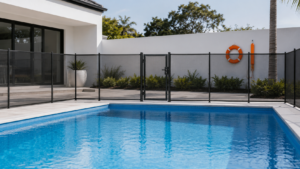
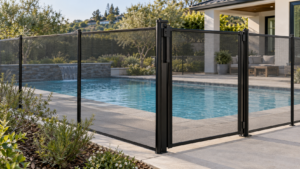
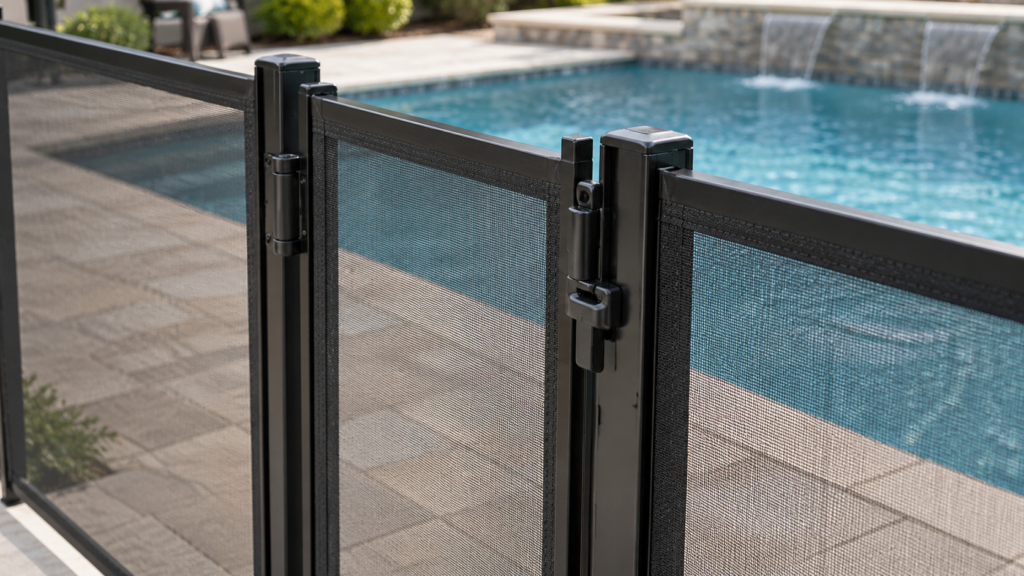
However, the fence’s effectiveness also depends on its gate. A self-closing and self-latching gate helps keep the pool area secured after someone enters or leaves. If the gate is left open or propped open during a gathering, the barrier can no longer prevent access as intended.
A properly installed and maintained pool fence provides a physical barrier without relying on electricity, batteries, or someone responding to an alert. Its main purpose is to help prevent children from reaching the water unsupervised, rather than warning someone after they have entered the pool area.
Pool alarms detect different types of activity depending on their design and placement.
Door and gate alarms sound when an access point opens, such as a door leading from the house to the backyard or a gate surrounding the pool. Depending on their placement, these alarms can provide an early warning before someone reaches the water.
However, they cannot physically prevent access. Their effectiveness depends on someone hearing the alert and responding promptly. They also cannot detect activity in the pool itself, so their protection is limited to the access points where they are installed.
In-pool alarms detect certain disturbances or entries into the water, depending on the device. Surface-based and subsurface designs react differently, and wind, rain, waterfalls, and cleaners can affect how any of them behave. The key limit is timing: an alert may come only after someone has entered the water.
Camera and perimeter alerts can detect activity near the pool, depending on camera coverage, sensor range, and settings. They can add awareness around the yard, but don’t assume every approach will be detected. Blind spots, lighting, and sensitivity settings all change what gets caught.
When comparing pool alarm vs fence, it’s important to understand that neither can guarantee complete protection. Both have limitations, especially when they aren’t properly maintained or used consistently. Recognizing these weaknesses helps homeowners identify potential safety gaps.
A pool fence depends on having a secure, continuous barrier around the water. If the gate is left open, fails to latch properly, or becomes damaged, children may be able to enter the pool area. Similarly, a missing or damaged fence section can create an opening that allows unsupervised access.
The surrounding area also matters. Furniture, planters, and other objects placed near the fence may provide climbing opportunities, reducing the barrier’s effectiveness. Regular inspections and keeping the area around the fence clear help maintain its protective function.
Pool alarms depend on proper installation, working components, and someone responding to their alerts. A device that is switched off, has a low battery, or uses unsuitable settings may fail to provide the intended warning.
Even when an alarm works correctly, its effectiveness depends on whether someone hears and responds to it. Background noise, distance, or distractions can delay that response. Depending on the alarm type and placement, an alert may also sound only after someone has already reached the water.
Both safety measures require regular attention. Pool gates should be checked to ensure they close and latch securely, while alarms need routine testing and a clear response plan. Neither should be treated as a replacement for active adult supervision.
On safety grounds, no. The CDC recommends a four-sided fence separating the pool from the house, along with close adult supervision. Alarms aren’t listed as a substitute for that barrier.
The reasoning is simple. A fence stops access, and an alarm reports it. Even the earliest-warning type, a door alarm, may give you more notice than an in-pool alarm, but it still doesn’t create a physical barrier. A child who moves quickly can pass through an open door before an adult reaches it.
On the requirements side, rules vary by location and may specify fencing, gates, door protection, or alarms in different ways. Check what applies to your property with your local building or code office rather than assuming one setup is enough everywhere.
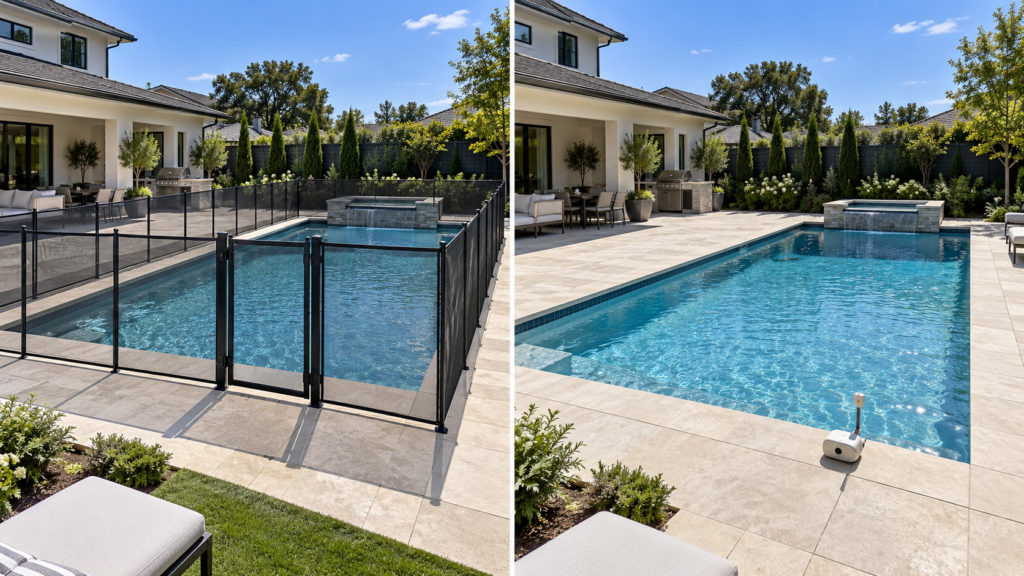
Yes, a pool alarm can provide an additional layer of protection even when a fence is already installed. For example, a door alarm can alert homeowners when someone unexpectedly enters the backyard, allowing them to respond before that person reaches the pool gate.
Similarly, a gate alarm can signal unexpected access to the pool area, while other types of alarms may be useful when the pool isn’t easily visible from the house. However, these alerts depend on someone hearing them and responding promptly.
Using a fence and an alarm together helps address different safety risks, but neither replaces active adult supervision. The fence must remain secure, the alarm must function properly, and both require regular checks to provide their intended protection.
Pool fences generally have a higher upfront installation cost, but their ongoing maintenance is relatively simple. Regular checks should focus on whether the gate closes and latches properly and whether nearby objects create climbing hazards.
Pool alarms, on the other hand, typically cost less initially but require more frequent attention. This includes checking batteries, testing the device, and ensuring alerts work as intended. A closer look at pool alarm options and their features can help homeowners compare detection methods, maintenance needs, and ease of use.
Beyond these costs, the priority is choosing safety measures that meet your pool’s needs. A lower price doesn’t necessarily mean better protection, especially if frequent false alarms lead household members to ignore or disable the device.
The right pool safety setup depends on your pool’s layout, access points, and daily use. Consider these factors:
Effective pool safety combines a secure barrier, appropriate alarms, and active adult supervision. Children require close, constant attention whenever they are in or near water, regardless of the safety measures installed.
The main difference between pool fences and alarms is how and when they provide protection. A fence limits access to the water, while an alarm alerts someone when specific activity is detected. Both have limitations, and their effectiveness depends on proper maintenance and consistent use.
When considering pool fence vs pool alarm, the goal shouldn’t be choosing one over the other. Combining a secure fence with appropriate alarms adds layers of protection, while close adult supervision remains essential. Together, these measures help reduce risks, although no pool safety setup can guarantee complete protection.

Find your local dealer by entering your zip code above.
Please fill out the form below with your information. Your local dealer will be notified about your inquiry.
Please fill out the form below with your information. Your local dealer will be notified about your inquiry.